
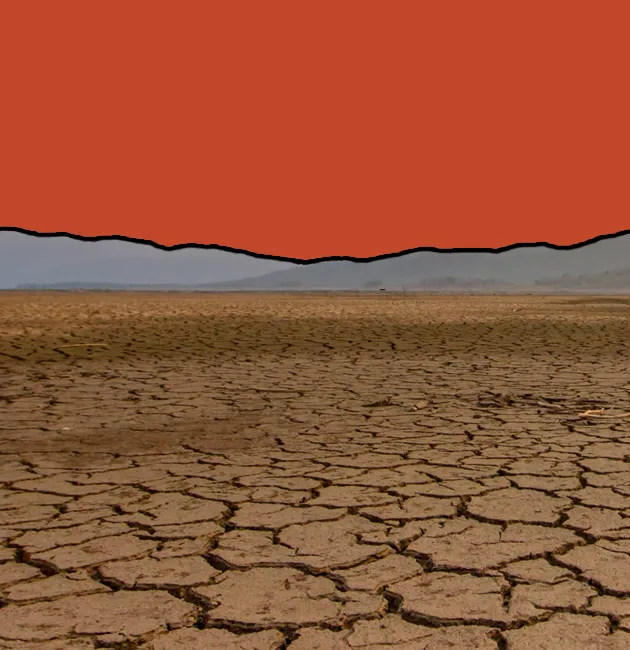
On August 31, 71 fire trucks dispatched in support from all over the country gathered at the Gangbuk Public Stadium in Gangneung. An unusual scene unfolded on a weekend morning. It was the day after the government declared a state of disaster for Gangneung, Gangwon, which is undergoing extreme drought. Even though the storage rate of Obong Reservoir, Gangneung's main water source, recorded 21%—the lowest since observations began—a situation with no clear precipitation forecast is continuing. Gangneung's cumulative rainfall as of August 10 was 394.1 mm, about half the average of 766.6 mm.
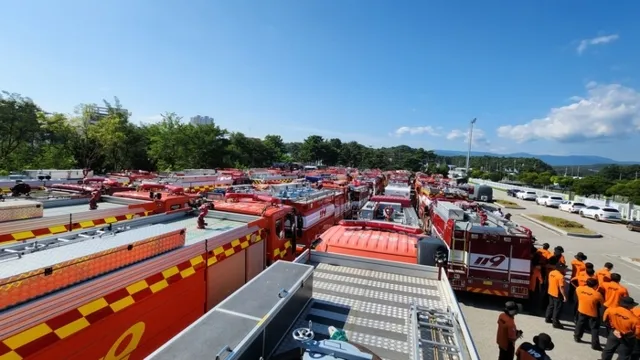
[Fire trucks gathered in Gangneung from all over the country at the "disaster-zone declaration" ©Gangwon Special Self-Governing Province Fire Headquarters]
Gangneung's Crisis, the Worst Drought in 48 Years
At a "drought-response emergency measures press conference" on the morning of August 19, Gangneung Mayor Kim Hong-gyu announced an extraordinary water-restriction measure cutting the supply of household water by 50%. The explanation was that it was an unprecedented disaster situation in which the storage rate was expected to fall to the 10% range.
This was a phenomenon entirely different from traditional drought. The general drought we think of is a natural disaster that progresses slowly over a long period. It occurs gradually over months to years, with a shortage of rainfall as its main cause. But this Gangneung drought is called "flash drought." "Flash drought," which appeared along with climate change, shows an aspect entirely different from existing drought.
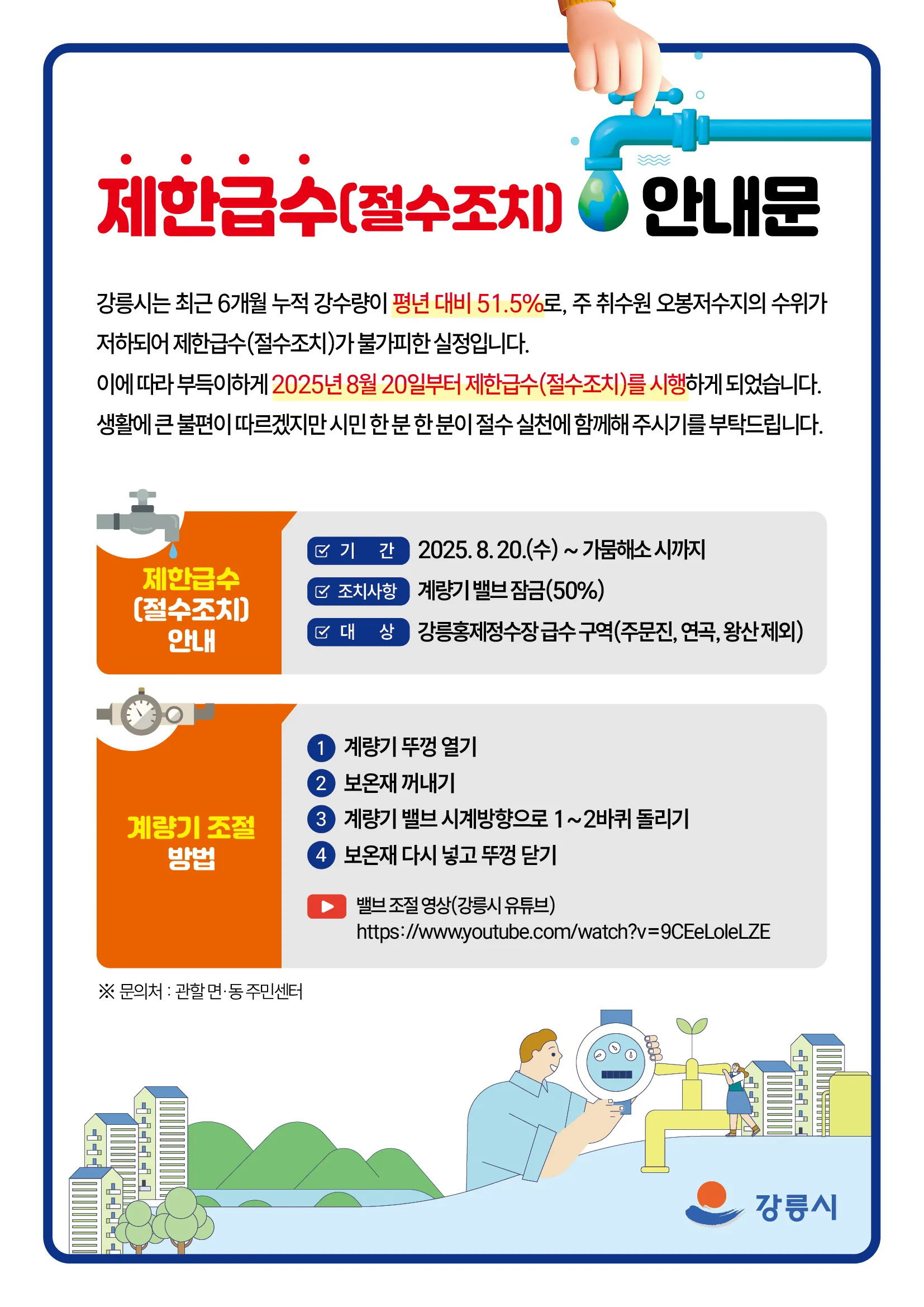
[The Gangneung City notice that entered water restriction (water-saving measures) due to extreme drought ©Gangneung City Hall]
Why Flash Drought Now?
Flash drought is a phenomenon in which abnormally dry weather spreads rapidly in a short period; unlike general drought, which occurs slowly over months due to a shortage of rainfall, it occurs as rapid moisture evaporation takes place within weeks. In particular, as the intensity and number of days of heat waves gradually increase, it is characterized by rapidly developing even without a large shortage of rainfall, because evaporation is high.
In other words, unlike traditional drought caused by little rain, flash drought occurs as soil moisture is rapidly lost due to high temperatures and strong evaporation. The phenomenon of soil moisture rapidly evaporating due to high heat is the core, and this is in the blind spot of the existing drought-response system. The problem is that flash drought is hard to predict. Korea's drought forecast-and-warning system is basically centered on a monthly unit, and weekly forecasts are used unofficially and supplementarily. Because of this, cases arise where it fails to reflect flash drought, which develops rapidly in a short period.
Another problem is that flash flooding can follow flash drought. Soil dried out by hot air becomes hardened, in a state where it is hard to absorb moisture. When a lot of rain suddenly falls on a drought-stricken area, the water cannot be absorbed, leading to flash flooding. One cannot but look back on the post-climate-change disasters, where drought occurs more severely and floods occur more suddenly.
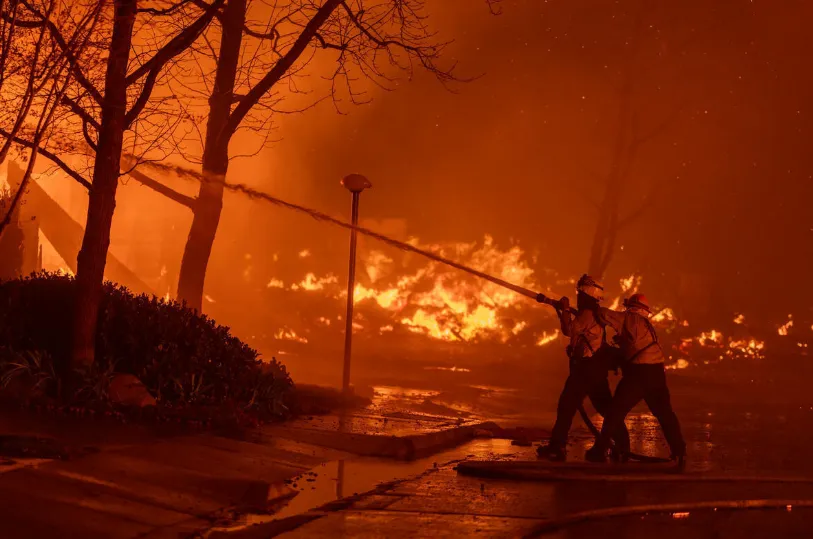
[The 2024 California wildfires ©Greenpeace]
We Must Prepare for New Disasters of a New Era
Flash drought is not a disaster ours alone. There is analysis by experts that the fundamental cause of the 2024 California and Hawaii wildfire damage, which shocked the world, was also flash drought. Now, a new definition of drought is needed that sufficiently considers not only rainfall but the effects of high temperatures and evaporation. Moving away from the past mindset that "if it rains, there is no worry of drought," an approach that considers the comprehensive moisture balance is needed.
Flash drought is a new kind of disaster made by climate change. In the current situation where heat waves are becoming frequent, the risk of flash drought is projected to keep increasing. Most important will be recognizing flash drought as an independent disaster type and building a prediction-and-response system suited to it. With the acceleration of climate change, flash drought is no longer a story of a distant country. We too must have the awareness that the Maui Island catastrophe is not someone else's affair, and set out to prepare preemptive countermeasures.
by Editor N