

On the 8th, Reuters reported that the European Union has agreed to significantly narrow the scope of the Corporate Sustainability Due Diligence Directive (CSDDD). Citing EU officials, Reuters reported that a plan to raise the applicable company thresholds to 5,000 or more employees and annual revenue of at least 1.5 billion euros (approximately KRW 2.5 trillion) has effectively reached the final coordination stage. This represents a dramatic increase from the original criteria of 1,000 or more employees or annual revenue of at least 450 million euros (approximately KRW 740 billion), and it is estimated that roughly 70% of European companies would be excluded from the regulation. As a result, concerns are growing over a retreat from corporate social responsibility obligations.
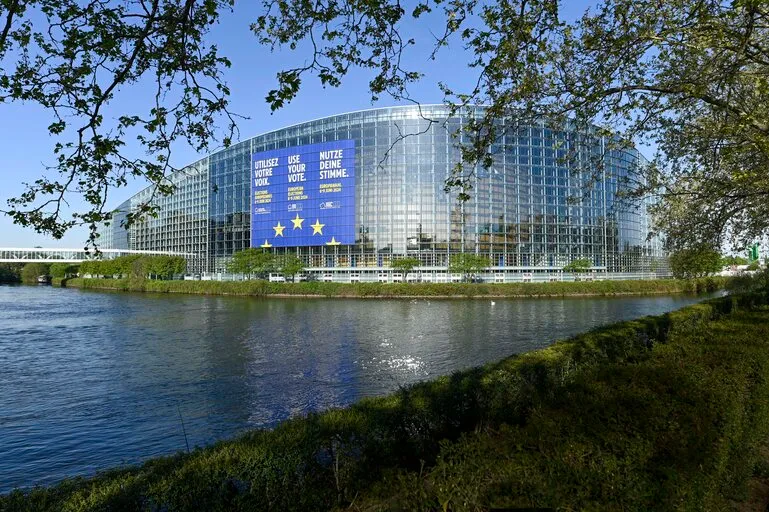
[EU headquarters ⓒ European Parliament Multimedia Center]
Time to Consider the Economic Burden on Companies
CSDDD is a core piece of supply chain-based ESG legislation that the EU has been advancing for several years. The directive requires companies to prevent risks such as human rights violations and environmental destruction that may arise throughout their supply chains and to disclose these efforts. Companies that violate CSDDD could face fines of up to 5% of global revenue. The shift in circumstances is primarily attributed to economic instability. As economic concerns driven by high interest rates and slowing growth have spread across European countries, major players such as France and Germany have argued for scaling back the legislation to ease burdens on businesses. Analysts note that even the majority bloc in the European Parliament has shifted toward narrowing the scope of CSDDD.
Concerns Over the EU's Retreat from Global ESG Leadership
Civic organizations focused on climate, human rights, and related issues are voicing unanimous opposition. This is because the EU, which has served as a global standard-setter for ESG regulation, climate change response, and sustainable management, now appears to be abandoning its own standards. There are growing concerns that the progress made in codifying corporate social responsibility is being undermined just over a year after formal implementation, under pressure from countries such as the United States and multinational energy giants like ExxonMobil.
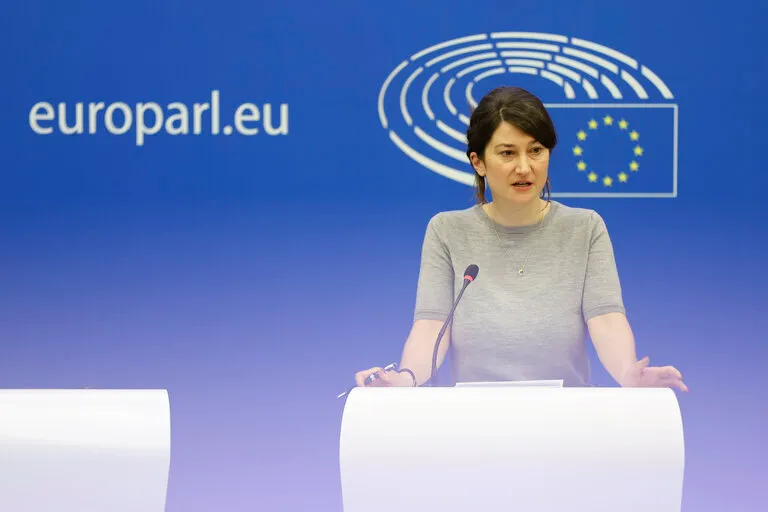
[Dutch MEP Lara Wolters of the Socialist Party, who resigned in protest against the CSDDD rollback ⓒ European Parliament Multimedia Center]
As the obligations stipulated under CSDDD are relaxed and companies are able to focus on their direct trading partners rather than the entire supply chain, critics point out that it will become even harder to address ESG-level issues such as climate change and labor exploitation in the developing world.
Global ESG Regulation: Entering a Period of Consolidation, Not Expansion
This decision signals that the ESG regulatory trend is shifting from full-scale expansion to a phase of adjustment. The EU, which has played a pioneering role in ESG regulation, has now chosen to retreat. In the U.S., President Trump does not even acknowledge climate change and is in the process of canceling budgets for clean energy projects. The situation in Asian countries is different. Japan and China are moving forward with implementation of their established ESG regulations without reversing their existing positions.
What does this mean for us? While major Korean companies operating in EU supply chains are now more likely to be partially excluded from the scope, firms that have already built ESG management systems face uncertainty about their return on investment. Demand for due diligence from European corporate clients is likely to persist for the time being, but a fluid period is likely to follow during which the extent to which ESG standards within global procurement networks are relaxed at the private-sector level cannot be confirmed.
ESG's Growing Pains Have Begun
The EU's move to relax ESG regulations reveals the tension between the institutionalization of the regulatory framework and its real-world application, rather than a simple retreat. In other words, ESG as a topic is transitioning from the stage of "moral declarations" or "establishing principles" to the stage of "policy-coordination for practical implementation." As a result, full-fledged discussions on applying ESG standards among global supply chains, regulators, and investors — all within the ESG management domain — may now begin in earnest.
Korean companies, too, need an approach that responds to this fluidity based on voluntary ESG strategy development and due diligence, rather than relying solely on changes in standards themselves.
by Editor N