
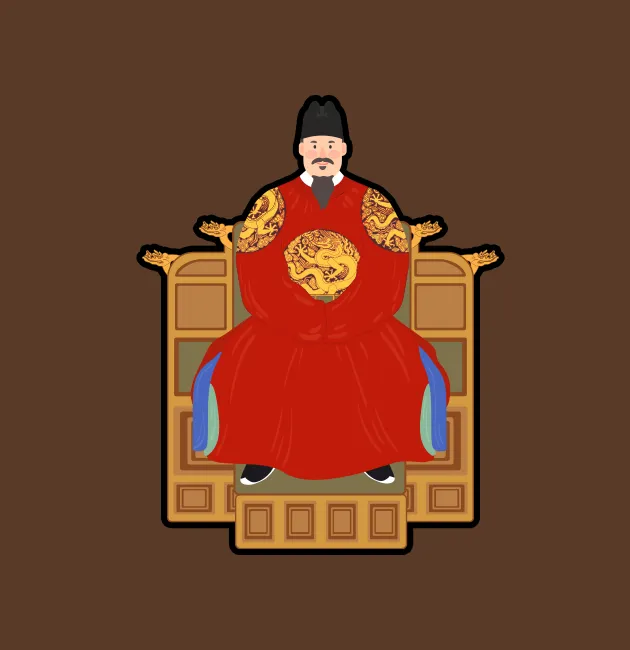
"Invention Day" on May 19 was established to commemorate the day King Sejong unveiled to the people the world's first rain gauge, the "cheugugi" (the 23rd year of Sejong's reign, May 19, 1441). The cheugugi, commonly known to have been developed together by Jang Yeong-sil, a scientist and engineer of Joseon, and King Sejong, recently drew additional interest for the fact that it began with an idea from Crown Prince Munjong.

["Invention Day" is the day King Sejong unveiled the rain gauge to the world ©ESG.ONL/ESG Today]
The history King Sejong left behind makes us realize how significantly "invention"—for the benefit of all people—influences social development. The invention of the rain gauge, going beyond mere scientific and technological progress, brought about innovation and change: the scientization of Joseon's agriculture and the realization of a fair society. On Invention Day, let us look at the achievements of King Sejong—who ran state affairs creatively with a heart that deeply cared for the people—and the essence of the ESG management we pursue today.
Building a Sustainable Agricultural Environment Based on Agricultural Data
Before Sejong, there were limits to determining the timing and methods of a year's farming, because rainfall could only be known roughly. But after the introduction of the rain gauge, accurate rainfall data was tallied across all eight provinces of Joseon, and farmers became able to respond scientifically to the weather changes they faced in farming. Surveying technologies introduced along with the rain gauge, such as the "calendrical system,*" also brought innovation to agricultural guidance and irrigation projects. Sejong also set about organizing farmers' experience into science. Breaking away from the practice of relying on China's past agricultural texts, he collected accounts of farmers' experience and compiled "Nongsa Jikseol," an agricultural manual that could be easily referred to when farming in our country. He spread farming methods suited to our climate and soil among the people.
• The calendrical system is a method of determining the cycle and timing of a year based on the cycles of celestial bodies.
Sejong—who institutionalized weather observation and compiled agricultural information to raise agriculture's sustainability—even reformed the tax system. Because rice was as good as money at the time, it was an important means of paying taxes. Listening directly to the opinions of hard-pressed farmers, Sejong abolished the unfair tax system that had been rampant and introduced the "Gongbeop," a groundbreaking tax system that fairly imposed taxes according to the fertility and productivity of the land, greatly easing the people's tax burden as well.

[A rain gauge currently kept by the Korea Meteorological Administration ©JoongAng Ilbo]
A Fair and Inclusive Society: Sejong's Protection of the Socially Vulnerable
Sejong carried out various welfare policies to protect the socially vulnerable and build a country where everyone lived well together. In times of famine and disaster, he lent grain through relief systems, and to vulnerable groups such as widowers, widows, orphans, and elderly people living alone, the government distributed grain directly. He actively looked after and supported the people's livelihoods, including lending seeds and food to people whose livelihoods were difficult due to disaster.
In finance, too, so that the people would not suffer from the harms of usury, he limited interest rates to within 3% per month and 10% per year and stipulated that the total interest could not exceed the principal. Beyond this, he hired people with disabilities into government posts and granted maternity leave to public slaves—implementing welfare policies so far ahead of their time that they seem striking even compared with today, thus carrying out the Diversity, Equity, and Inclusion policies that this era speaks of.

[The Annals of King Sejong ©Annals of the Joseon Dynasty]
The "Deliberation System" and Transparency: a Model of Governance
Sejong's rule—which leaves nothing to be desired even when viewed through ESG—also has parts worth examining on the governance side. The "deliberation system" carefully attended to the people's voices through many officials. This "deliberative politics" is quite similar to the concepts of transparent governance, stakeholder participation, and responsible management that today's companies and nations discuss—as seen in the premise that the voices of various classes are reflected in the policy decision-making process, and in fair, transparent procedures.

[The statue of King Sejong at Gwanghwamun ©Yeollin Gwangjang]
"Politics begins with loving the people. A good system is one suited to its time, and its core is the king's heart toward the people."
Sejong's words, left in the Annals of King Sejong, resonate in our hearts amid political and social turmoil. May 15, Teachers' Day, is also King Sejong's birthday. This May, let us reflect on the ESG spirit of King Sejong—a teacher who remains a powerful inspiration as today's Republic of Korea seeks a sustainable future.
by Editor N