

On February 25, 2026, the KOSPI broke through the 6,000 mark for the first time in history. Opening at 6,022.70, up 53.06 points (0.89%) from the previous trading day, the market capitalization also surpassed KRW 5,000 trillion for the first time on this day, as the KOSPI wrote a new chapter in Korean stock market history. In effect, 1,000 points had been added in just one month since settling above the 5,000 mark based on the closing price on January 27.
The KOSPI Party Driven by Semiconductors: ESG Stocks Not Invited
The growth engine that drove the KOSPI past the 6,000 mark for the first time was unmistakable. The share prices of Samsung Electronics and SK Hynix surged by 66.81% and 54.38% respectively this year alone, pushing up the index. This was the combined result of the explosive demand for High Bandwidth Memory (HBM) driven by the expansion of AI infrastructure and rising memory prices. In contrast, stocks in sectors classified as ESG investment leaders — new and renewable energy, carbon reduction materials, eco-friendly chemicals — largely missed out on this upward trend. Excluding Samsung Electronics and SK Hynix, the KOSPI that actual investors feel is estimated to be around the 3,900–4,000 level. This is why ‘semiconductor FOMO (fear of missing out)’ is spreading behind the glamour of the index.
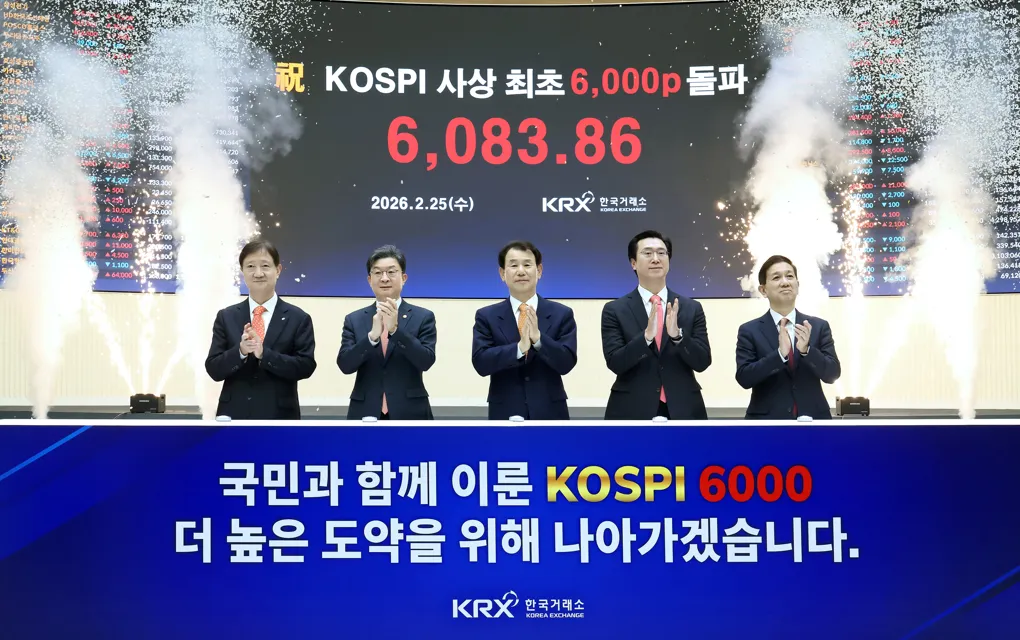
[KOSPI 6,000 breakthrough celebration © Korea Exchange (KRX)]
At this very moment, the global financial market and industrial ecosystem can be seen as a structure led by the semiconductor and AI value chain, with defense, shipbuilding, and finance backing it up. While ESG-related stocks are lagging in short-term momentum, once ‘Korean-style transition finance,’ which supports the low-carbon transition of high-carbon, high-emission industries such as steel, chemicals, and cement, is introduced, the ESG response capabilities of these industries will immediately become a criterion for investment screening.
Another Task Companies Face on the Day the KOSPI Celebration Rang Out
That said, February 25 was not a day without meaning for the ESG sector. On the very day the KOSPI celebration rang out, a quiet but meaningful announcement was also made. The Financial Services Commission (FSC) unveiled a roadmap to mandate ESG (Environmental, Social, Governance) disclosure for large listed companies starting in 2028. The FSC held the ‘Fourth Productive Finance Grand Transformation Conference’ at the Korea Chamber of Commerce and Industry in Jung-gu, Seoul. At the conference, FSC Chairman Lee Eok-won declared, “ESG is now a core task of productive finance,” and unveiled a draft roadmap for phased mandatory ESG disclosure starting from 2028 (FY 2027) for KOSPI-listed companies with consolidated total assets of KRW 30 trillion or more.
The disclosure standards were prepared based on International Sustainability Standards Board (ISSB) standards, and Scope 3 disclosure — requiring the disclosure of greenhouse gas emissions occurring in supply chains and the like — will have its application deferred for three years to ease the burden on companies.
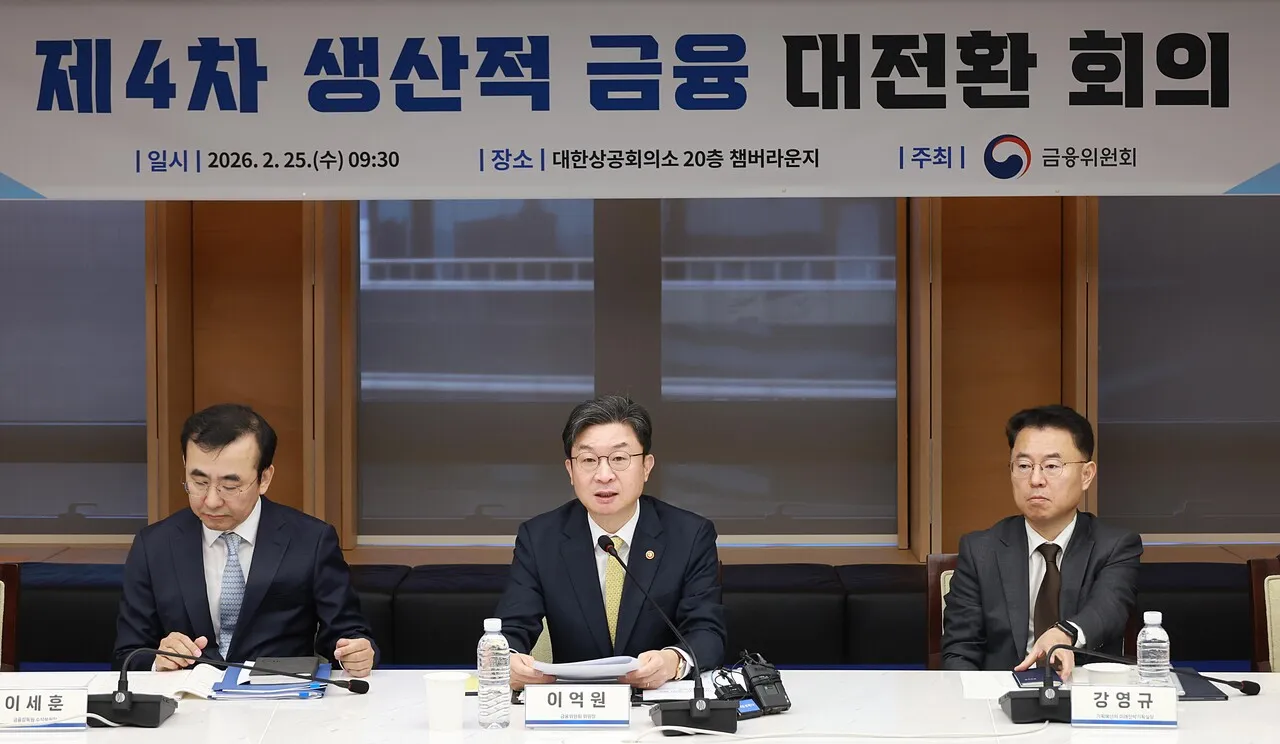
[Fourth Productive Finance Grand Transformation Conference © Erounnet]
The scale of climate finance (raising funds and providing financial services to respond to climate change) was also dramatically expanded from the previous plan (KRW 420 trillion for 2024–2030) to a total of KRW 790 trillion for 2026–2035, in line with the upward adjustment of the Nationally Determined Contribution (NDC). This is a measure to support the 2035 NDC target confirmed by the government last year of a 53–61% reduction compared to 2018. Given that a global investor network has officially expressed support for the amendment to the Capital Markets Act mandating sustainability disclosure, this is also expected to be a variable in the inflow of foreign capital.
The moment a company’s carbon emissions and climate risk response levels are disclosed in numerical form through disclosure is the moment investors can finally begin to compare and evaluate. The surging KOSPI has already surpassed 6,300. Whether ESG-related stocks, which appear marginalized for now, will become a variable in the next growth cycle will be decided at the point when mandatory ESG disclosure truly becomes the language of the market.
by Editor N