
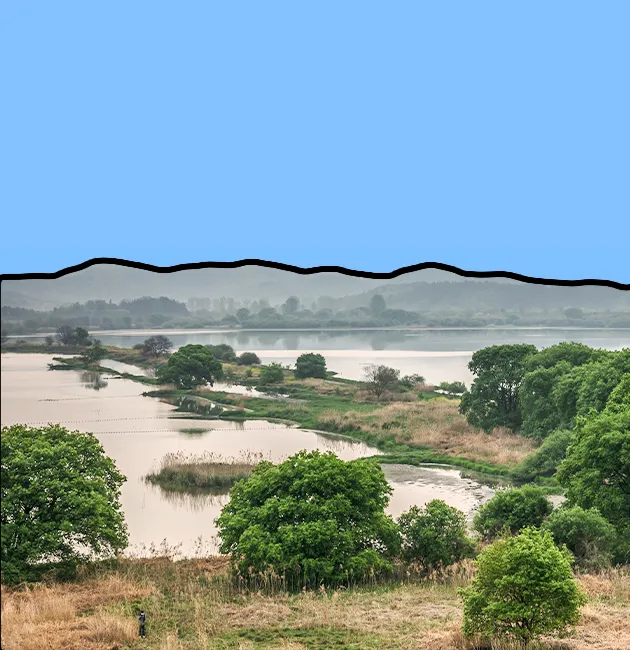
Wetlands Day has come around again this year. Every February 2 is ‘World Wetlands Day.’ It was designated as a global commemorative day to widely promote the value and importance of wetlands, in celebration of the signing of the ‘Convention on Wetlands of International Importance Especially as Waterfowl Habitat,’ commonly known as the ‘Ramsar Convention,’ in Ramsar, Iran on February 2, 1971.
Wetlands Disappearing Faster Than Forests
The Ramsar Convention is the first intergovernmental convention in the environmental field, created with the purpose of conserving and wisely using internationally important wetlands. Although wetlands cover only 6% of the Earth’s land surface, they store 30% of the carbon produced on the planet and perform many roles such as flood control and water purification. They also play a key role in maintaining biodiversity.
According to the ‘Global Wetland Outlook’ report published by the Ramsar Convention, such important wetlands are disappearing ‘more than three times faster than forests’ due to global development pressure. Already, more than 85% of the world’s wetlands have been lost from 1700 to recent times, and in particular, 35% of wetlands disappeared between 1970 and 2015. The rate of loss is accelerating.
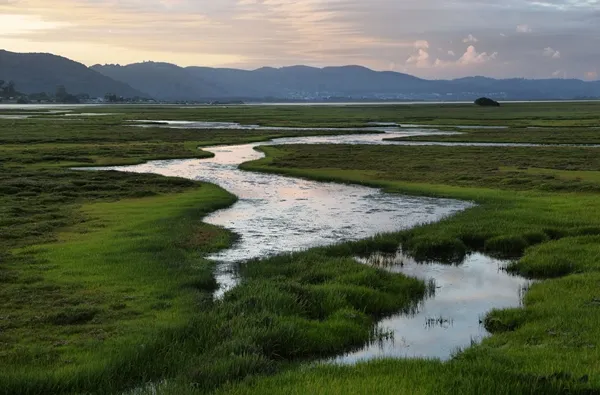
[Inland Wetland © Ilgan Today]
Why Korea’s Wetlands Are Special
South Korea is no exception. Korea is the 101st country to accede to the Ramsar Convention. Having joined the Ramsar Convention in 1997, the ‘Yongneup of Daeamsan Mountain,’ Korea’s only high moor, was designated as a Ramsar Wetland in the same year. Since then, South Korea has held 26 wetland sites to the present. In particular, the tidal flats of Seocheon, Gochang, Shinan, and Boseong-Suncheon were inscribed as UNESCO World Natural Heritage sites in July 2021, earning international recognition for their value.
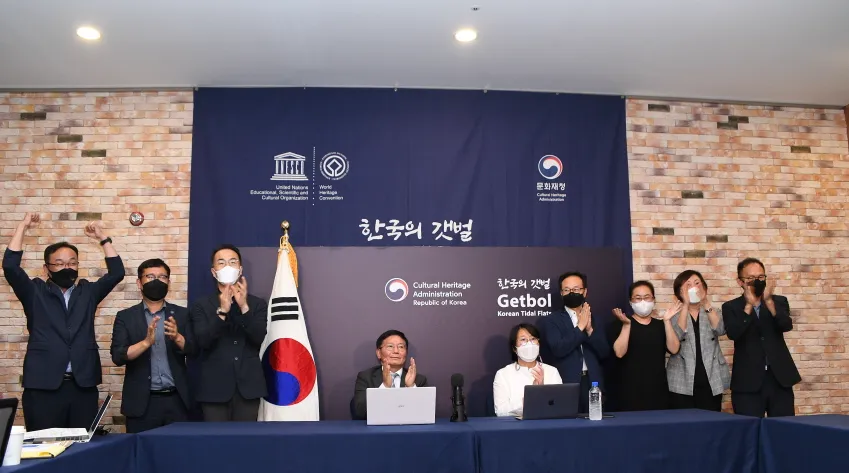
[Commemorating the 2021 UNESCO World Natural Heritage inscription of Seocheon, Gochang, Shinan, and Boseong-Suncheon tidal flats © Korea Heritage Service]
Given that there are approximately 2,500 Ramsar Wetlands worldwide, 26 sites may not seem like much. However, the UNESCO World Heritage Committee assessed that “Korea’s tidal flats are among the most important and significant habitats globally for the conservation of the Earth’s biodiversity, and are particularly valuable as a stopover for endangered migratory birds.” Korea’s tidal flats are home to 2,169 species of marine flora and fauna, including endangered migratory birds, and 27 species of waterbirds listed on the IUCN Red List (the International Union for Conservation of Nature’s Red List of Threatened Species) such as the spoon-billed sandpiper, black-faced spoonbill, oriental stork, and white-naped crane inhabit them. Furthermore, South Korea serves as a critical mid-way stopover on the East Asian-Australasian Flyway, playing a vital role in the protection of migratory birds. It is part of an international wetland network connected to the Yellow Sea-Bohai Bay Migratory Bird Sanctuaries in China and the Wadden Sea of Germany, the Netherlands, and Denmark. The reason Korea’s wetlands draw international attention is that, despite being a country with top-tier biodiversity and strong pressures from urbanization and industrialization, it actively maintains an interest in wetland conservation.
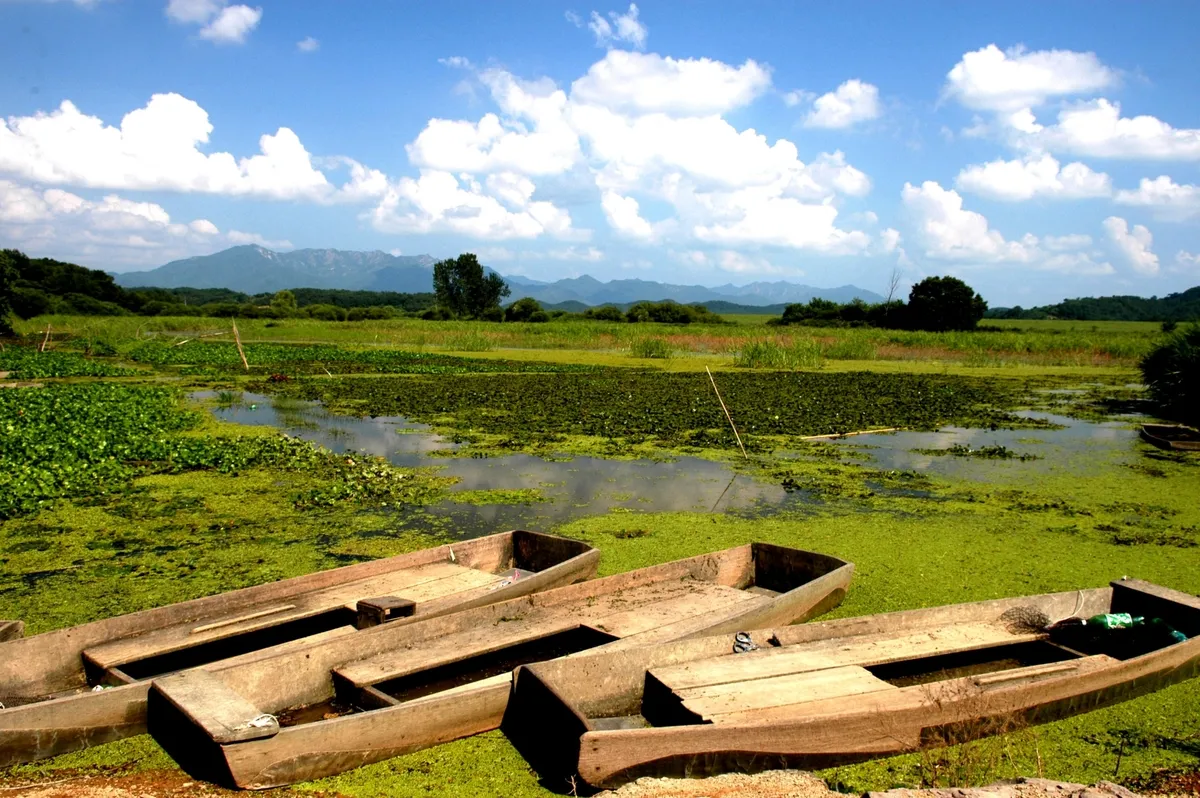
[Upo Wetland in Changnyeong-gun © Yonhap News]
Activities to register wetlands with international bodies based on their value are also steadily expanding. Currently, a total of nine cities in South Korea have designated Ramsar Wetlands (Changnyeong, Inje, Jeju, Suncheon, Seogwipo, Gochang, Seocheon, Gimhae, Mungyeong). For Gwangju Metropolitan City, a plan was announced in December 2025 to submit a Ramsar Information Sheet (RIS, an official document that specifically describes the ecological value of the wetland and the need for its protection in accordance with international standards for Ramsar Wetland registration) to the Ministry of Climate and Environment for the designation of the Jangrok Wetland as a Ramsar site. The designation decision will be made in the first half of this year. In 2025, the Korea Heritage Service submitted an application for the extended inscription of ‘Getbol, Korean Tidal Flats (Phase II)’ as a World Heritage site to the UNESCO World Heritage Centre, concerning the tidal flats of Seosan in Chungcheongnam-do and Yeosu, Muan, and Goheung in Jeollanam-do.
Although wetlands may seem removed from our daily lives, the benefits of clean water and a regulated climate that wetlands produce are being enjoyed by all of us at this very moment. From 2025, the Ramsar wetland registration of the Gwangju Jangrok Wetland is being pursued, and we look forward to the expanded inscription of the Yeosu, Muan, and Goheung tidal flats as World Natural Heritage sites. Let us also take an interest in wetland conservation policies.
by Editor N