

Games are no longer mere entertainment. The global gaming market is projected to grow to approximately USD 188.9 billion in 2025 — a market larger than the film or music industries. Games, accessed by billions of people, have now become a core axis of popular culture. And to that extent, games have also become mirrors that subtly reflect how we view the world and society, going beyond simple enjoyment.

[Nintendo’s ‘Game Boy’ console and game cartridges © Nintendo]
I had experienced that fact while playing ‘Civilization VI.’ This game, which once became a meme for its extreme addictiveness — once started, you end up playing through the night — is a simulation of advancing civilizations and growing cities and nations. What is interesting is that as you enter the latter stages, climate change appears in earnest. I intellectually knew, as numerous scientists and economic experts have publicly stated, that preemptive response is the wisest course. But when actually immersed in the game, the situation is different. Amid competition with neighboring cities, resources were always insufficient to maintain the system built over a long time, and stable energy was desperately needed to maintain population and industry. In the end, within the game, I had no choice but to delay the closure of coal power plants, and I could only postpone bold decisions while watching how the surrounding civilizations behaved. Even though in reality I work on urging the government and National Assembly to respond to the climate crisis, within the game, I keenly felt how difficult and political a choice responding to the climate crisis can be. Ironically, the game taught me before reality did that energy transition is ‘realistically’ difficult.
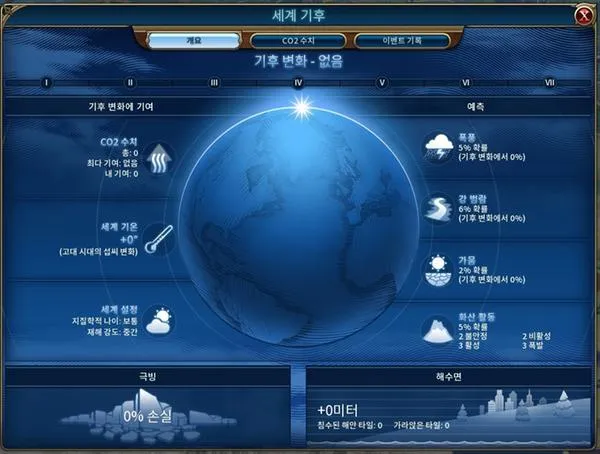
[Civilization VI dealing with climate change and natural disasters © Maeil Business Newspaper]
‘Final Fantasy VII’ unpacks this problem much more dramatically. Within the game, the mega-corporation ‘Shinra’ extracts the planet’s life force under the name of ‘Mako Energy’ to power its cities and weapons. Yet as a result, the planet gradually sickens and ultimately faces the threat of destruction. The entire game unfolds upon this dystopian backdrop. Released in 1997, ‘Final Fantasy VII’ was an innovative work that led the ‘cinematization’ of console games through the introduction of 3D graphics and cinematic direction, and simultaneously conveys the message that “corporate greed and energy abuse threaten the Earth.” Looking back now, this narrative appears not as simple fantasy but as a prophecy that overlaps with our reality, addicted to fossil fuels.
There are more familiar examples. Pokémon has also boarded the climate change discourse. ‘Pokémon Sword and Shield,’ released in 2019, is set in the ‘Galar’ region, which draws its motif from the United Kingdom, symbol of the Industrial Revolution. In this version, the chimney-shaped gas Pokémon ‘Koffing’ appears, as if embodying the factory chimneys of the Industrial Revolution era. The coral Pokémon ‘Corsola,’ originally pink in color, has turned white in this version and wears a somber expression. Having changed from Water/Rock type to Ghost type, it clearly reveals the intent of ‘extinction.’ Traces of climate change are thus directly reflected even in games enjoyed by many children. The Pokémon production company has decided to officially cooperate with the UN’s Sustainable Development Goals (SDGs), and has begun to move beyond the framework of over-catching and utilizing Pokémon in the early series to reveal the value of biodiversity and symbiosis. As the series progresses, the in-game settings show the transition from thermal power plants to renewable energy such as wind, solar, and geothermal power over the passage of time. Shattering our perception that ‘Pokémon are cute and harmless,’ even this most popular and familiar content shows that we cannot sidestep the climate crisis.

[The coral reef Pokémon gradually taking on an appearance as if going extinct © Pokémon]
These three case studies, while differing in character, tell a common story. ‘Civilization VI’ makes one feel the difficulty of responding as an experience; ‘Final Fantasy VII’ imprints the structural problem of energy exploitation like a drama; and ‘Pokémon Sword and Shield’ shows the symbols of the climate crisis even in a world familiar to children. Across generations and genres, games let us know that the climate crisis is not merely numbers in scientific reports but a reality that touches our lives.
Going forward, games will remain positioned at the center of the popular culture industry. The climate crisis, too, can only become an increasingly important narrative within games. Issues such as resource depletion, pollution, extinction, and disaster are already metaphorized in diverse ways. Even as gamers pass these scenes by without much thought, they are, in fact, gradually feeling the weight of the climate crisis.
What matters in the end is not ‘clearing the game’ but how we advance to the next stage. Whether we farm more resources or, as in team play, all cooperate together to protect the map called Earth. The climate crisis is not simply a set of virtual choices but a shared quest that we are undertaking in reality. It is not a problem to be solved through someone’s sacrifice or a cheat code but like a raid in which the entire party must gather its strength. What games let us know, in the end, is this: the way we play now will soon change the outcome screen of tomorrow.