
By Lee Choong-gul (essayist, former editor-in-chief of GQ Korea, author of the novel "Your Face") · September 19, 2025
I wondered every day. Why do people watch others eat? And what's so fun about it? (Here the word "fun" resembles, rather than science, your emptiness as you kneel to the urge to boil ramen at two in the morning.)
Sometimes I think mukbang is the Colosseum of the 21st century, a laboratory of digital crowd psychology. The Roman emperors' governing strategy was bread and circuses. Now it's pizza after chicken, chocolate cake after pizza. Algorithmic autoplay rules us. Roman citizens shed no blood thanks to sword-wielding gladiators; we, watching a circus substituted by others' satiety, forget our calorie worries.
A bite, a sip is a unit of flow. The title of the first review of a new menu item, the countdown of clearing ten pizzas in ten minutes. Speed instead of rules, curiosity instead of loyalty, updates instead of memory. Experience is paid in installments. The play button is more generous than a credit card, taking dwell time as its credit limit. The algorithm does not know your stomach. It knows only time spent, the probability of staying. Call it the streaming of appetite. No matter how full the belly, the feed is not sated. A night when not the belly but the fingers starve and cannot stop scrolling. Resolve is carried over to tomorrow. Diet from the weekend, unsubscribe from the next video.
[ⓒESG.ONL]
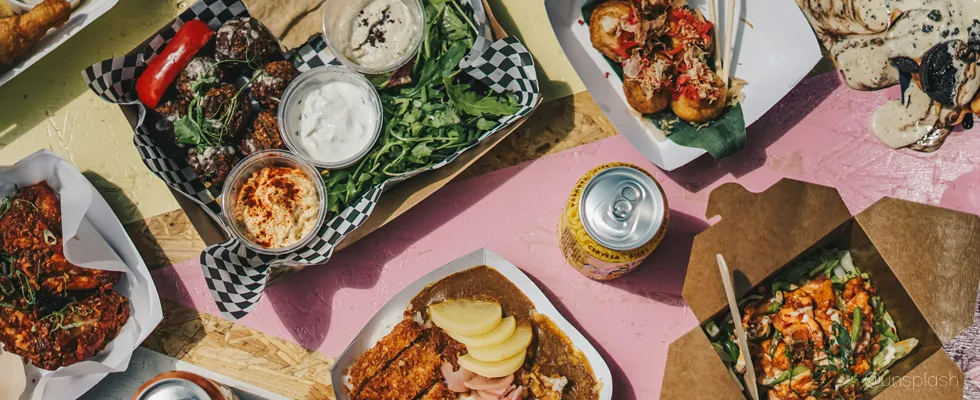
Mukbang disciplines while pretending to liberate desire. Following a recipe in which broadcasters and platforms, advertisers and restaurants join forces, broth flows on the screen. Every ingredient is standardized to a collective standard the algorithm has designed. Soy-marinated crab must be plump, jelly must be chewier than a heart, rice must gleam with luster. The cheese wound around chopsticks is the rope of click counts, matter of data converted into ad rates. Who directs the stage's hunger, commodifies overeating, and pockets profit from appetite is crystal clear. A considerable share goes to the platform, the YouTuber gets about living expenses, the small business owner gets new customers and an intermittent sales bump. The YouTuber who ate three bowls of monster jjajang may be embarrassed by hyperlipidemia numbers at a health checkup, but a channel casually flipped to sustains someone's livelihood. Some call this a virtuous economic cycle and the practice of social justice, but I still can't find another name for coexistence.
In any case, we willingly become captives. In the moment of being tamed, smiling, by the program, the smell of skate is sweeter than the smell of power. When the YouTuber takes a bite of chicken, our unconsciously opening a beer can may be a promise. The spicier the tteokbokki, the more resistance melts like spring snow. As if biting into bread, we chew and swallow the warning bell in our hearts.
ASMR demonstrates that mukbang has evolved beyond visual consumption into auditory experiment. (It sounds like a thesis title, but) something like the effect that the coincidence of sound has on humans? Solitude needs noise. Her breathing as she eats saves us. When the sound of dipping assorted sashimi in chojang fills the empty space of solitude, another person pulls the trigger of rage. Whatever it is, even when the food disappears the sound remains and props up the world we live in.
In fact, the YouTube algorithm gives generous scores to the sound of shaking off donut powder, the fricative of tearing open a hamburger wrapper, the sound of jjamppong broth coming to a boil, the performer's roaring laughter. The editing act of mukbang, which composes rhythm and time out of cut ASMR points, interlocks with this. On a stage that reveals human clumsiness, rhythm and time entwined, the happenings — hands flustered as broth spills, sneezing from the spice, scrambling to find tissues — raise the view count.
Mukbang always leaves the residual heat of salvation. A heart made a mess today can only be embraced by a wrist-thick roll of gimbap. Late at night, a hand hovering over the immortal delivery app clicks the mouse. Right on cue, the man who ate raw sea squirt yesterday puts a fried-vegetable chip into his mouth. Even if the crunching sound rings out through the speaker, no one is there to hear it directly. The molars of the YouTuber, eating on behalf of subscribers, are simply earnest.
The old dining table was a place to review the grammar of "we." Now a portfolio of tastes stands in for me. Vegan, carnivore, extreme spice, keto, halal, ramen ASMR. We carry several citizenships of taste and stamp them as the occasion demands. A like is a declaration, notification settings a signature. The playlist gains weight faster than the diet app sheds it.
Tonight again, without eating anything for two whole hours, I listen to the sound of a 15-meter scarf of gopchang disappearing into his intestines. Ingesting images? I'm hungry, yet somehow I feel full too. Is it the psychology of keeping cake in the kimchi fridge while claiming to diet? Is the very act of storing it a display of will? Why does watching someone else eat faintly fill my own empty stomach? Could mukbang be a calorie-free diet? If you ask what kind of nutrient-circulation system that is, I'll answer it's something like mental vitamin B12. Who's to blame someone for filling emptiness by watching another's gastroptosis?
[ⓒESG.ONL]
"Let's eat together" is, after all, the lubricant of present-day humanity. But now many live alone. They eat alone, wash dishes alone, scroll alone. Instead, they watch together. Mukbang is a digital banquet without a video call. The word "lonely" is common, but even oneself doesn't know when loneliness will strike. Mostly after 11 p.m., when there's nothing to eat in the fridge, mukbang fills the gap. Biology might explain this as the workings of mirror neurons. Comments like "it feels like eating together" drift across the chat window, but that is not a relationship but a connection. The banquet's conversation is anonymous laughter, the Korean abbreviation "ㅋㅋㅋ," the alphabet "Mukbang!!!" A connection can be undone, so if the heart cools and you leave, it's over. We are tourists of the feed, and the creator's body is a vagabond who takes on the excess. The tourist has the freedom of movement; the vagabond is forced to move. And yet the subscriber has the right to leave, while the creator must draw up a tomorrow more stimulating than today.
The algorithm joins in too, constantly whispering that where you should stay is "next." But when can we stay in "now" rather than "next"? Would some grand revolution be needed? If tonight I turn off the screen, boil one less ramen, and take one more spoonful of the story of the person beside me, could I stay, even for a moment? That moment might be the sturdiest dining table we can sit at in this virtual world.
In fact, mukbang is a narrative genre. The protagonist is the food, the narrator the one who eats. The one who stirs kimchi stew and brings up the old days of going hungry, the one who pokes at sundae-guk and unspools army stories, the one who chews crackers and pours out yesterday's love life. When food works as a medium of story, we, scrolling the video as if turning pages, glimpse the failures and peace of strangers. Because mukbang is, rather than a spectacle of overeating (or bizarre eating), a stage of a trinity seasoned with desire, deficiency, and isolation. Because it is a device that sets a communal consciousness in our stead, the socializing of a lonely city, evidence that we still, as a crowd, laugh, sigh, and are pitied.
The LCD screen at last becomes a folding-legged dining table, drawing people from every direction. Because that woman YouTuber says it's delicious, the solitary table seems to widen, and even cold rice seems needlessly warm. Mukbang's allure shimmers upon the illusion of connection. The delusion of not being alone, the sensation of eating together — whether real or fake, what matters is the fact that one is less lonely, even for ten minutes. If it's a moment when a monologue turns into a dialogue, then just then one is not alone. Even if, in trying to soothe solitude, one ends up proving solitude, everyone accepts the irony. Because no one can completely defeat solitude.
Delusion is a very efficient energy that maintains community. Believing in the imagined community of the nation, following the scrap of paper called money, insisting that love will be eternal — all are delusions. Ah, we've come back to delusion again. In a world of the class Mammalia, order Primates, genus Homo living on delusion, when the art of delusion runs wild, mukbang is the most easily digested version of delusion.
But now and then I think humans exist as a hole. A hole called the mouth, into which we shove things endlessly. Everything begins with a single piece of chicken. The ever-so-young woman YouTuber neither encourages nor restrains overeating. Exploring the middle ground, the moment she bites into chicken before the camera, she becomes two beings at once. One is a human getting through a meal; the other, an actor who becomes the subscriber's stomach and performs the chewing on their behalf. In the line "They said a new menu item came out, so I wanted to try it," the theater of demolishing 50 chicken wings shimmers. As the crowd cheered when a gladiator fell, when the chicken-leg bones pile up on the floor, the chat window catches fire.
In fact, sometimes the person shoving food in like a machine looks like a pipe. When the stomach expands to its limit, and the jaw and tongue labor to cramping. When the creator crosses the boundary of pain and pleasure and unfolds a strange, wondrous, subtle suction show, the followers enjoy the overload of that body. Here the comments of admiration and emotion are like a solemn collective rite. And that person's body will soon become a text inscribing power.
Ten giant pork cutlets, twenty packs of ramen, thirty chickens. Overeating disguises itself as a challenge, and the screen converts the quantity of food into capital. The sound of fried chicken poured onto a tray. Flesh being torn off. The chicken is already dead, yet it seems to die twice. Honestly, it's eerie and then funny. The face comedy of taking a big mouthful and shouting, "Wow, awesome!" The person who writes the comment "magnificent" is comedy too. The subscriber consumes the violence of mukbang and at the same time performs it in their own life. Eating more, buying more, watching more. Because in fact they too, little by little, live like a pipe.
But no one is full. The one who eats, the one who watches, alike grow the emptiness in their bellies. Mukbang is a system of eternal deficiency. The process by which laughter and reward, indulgence and morality, voyeurism and compassion, asceticism and transgression are mixed and tuned into a single piece of content is simply astonishing. Even while thinking "he's going to burst like that," the psychological nutrient that one didn't eat it oneself rises up this side's gastrointestinal tract...
Drugs are banned, sex is embarrassing, violence is dangerous. But food is a permitted pleasure, a guilt-free addiction, an easy festival. Police, priests, politicians, office workers — all are equal folk before a cut of top round. Mukbang blatantly shows who we are, what we yearn for, and in what way we are ruled. In an era past hunger, there is no narrative as powerful as overeating. Exaggerated abundance, paradoxically, reveals the memory of poverty. But can setting out a heap erase the famine of long ago? The paradox is not erased.
At last the wedding hall stages a carnival of DNA. Biological fear (you mustn't starve), social signal (let's all eat together), financial ostentation (I spent a lot laying this out). At this point a light stronger than the flash the bride and groom receive pours out from the dining hall. The guests, valuing food over ritual, swarm to the dining hall like wild beasts. The bride and groom are the background. Flowers are decoration. The buffet is the lead. In the procession of those lined up holding plates flickers the shadow of a rice-ration station a century ago. As spoons are raised in unison like a military review, the plates are partitioned like national borders. The white pleats of the wedding dress are empty as air, the flower decorations wilt in haste, the MC's remarks scatter like distant cannon fire. The spoon is faster than congratulations, the teeth applaud. That moment is the most frightening. Because it seems the stomach walks about.
Before the wall of hunger, everyone eats and laughs, eats and swallows. Laughter always goes awry because anxiety is not digested. Our ancestors starved for thousands of years, war was ceaseless, the table was never at ease. The alarm engraved in our cells sends its command whenever it gets the chance. Eat. Eat again. To starve is death. Miss the time to eat, and there is no next generation. But what could be more precious than the certainty of not starving, the promise that there will be food tomorrow too?
The camera catches the eater head-on and persistently follows their mouth and utensils. I'm dying under the pressure of not being able to eat everything I want, while the fully made-up woman YouTuber demolishes a whole chicken as if dismantling it. Chicken grease glistens at the tips of slender fingers, the paper wrapper rustles rhythmically. The snap of her wrist, the sound of white foam as garlic sinks into oil, sounds like a small chorus. The next day, the monitor is drenched all over with a tomahawk steak juicy enough to relieve Gangneung's drought. And the day after that, steam rises from a thread of cheese dangling from chopsticks. When the camera persistently close-ups texture and gloss like a forbidden body part, an ecological gloom briefly creeps in.
[ⓒESG.ONL]
A meat-grilling screen is like a smoke laboratory — no texture, no smell, no carbon — but before it can even be moved to a real table, the Earth has already taken on the debt. The water and soil and air that became the fuel for a single plate of steak are nowhere to be found. The oil droplets rolling on the grill are not heralds of taste but small carbon bombs, and the mad gloss of samgyeopsal is a weather forecast of methane gas. A single bite of beef is said to weigh on the Earth as heavily as a plane ticket, but the camera would never measure the weight. Yet everyone, whether the Earth boils or not, listens more closely to the sound of ramen boiling.
When indifferent-ized morality returns to the back alley of food, we share memes instead of guilt and stamp timestamps instead of asking questions. Through the crack of "10:12, the legendary meat-flipping clip," the politics of waste wafts up. Plates warmed and then cooled for filming, excess sauce hired for a single bite, wasted viewing time. But waste is converted not into sin but into performance. Dwell time is spoils, a skip is a loss, a revisit is loyalty. All that's left of the leftover food is a promise not to leave any next time. Even if this side cries out to make waste zero, that side unfolds a dazzling panorama of surplus. Upon the perverse bridge that connects the two poles of the LCD screen.
The lips of the YouTuber chewing highway rest-stop dumplings are not the same color as the lips of the young man who eats only convenience-store triangle gimbap all week long. When someone's salivary glands are happy, another's stomach is an empty granary. Discord is often obscene. Society may be unequal, but in half a day one is bound to get hungry. The gaze is never neutral. Because it is a gaze that looks at the Other.
In the days of Western imperialism, explorers recorded the tables of the East. The purpose of the record was to consume the strange customs of the Orient. It faintly overlaps with mukbang. Before the eyes of simultaneously connected viewers worldwide, Buldak spicy fried noodles are transformed into a challenge called extreme spice, and kimchi becomes an object of wonder called a biologically fermented food.
A person's life is probably the sum of what they ate and whom they ate with. In the end, mukbang, I think, is documentary evidence left for later humanity to study why 21st-century Koreans ate so much, why the camera watches while eating food. Because the moment someone eating sundae-guk says, "Today the offal ratio is high," the food of the age will be recorded. People of the Joseon era left diaries and paintings saying, "Today at the table I grilled and ate sweetfish." Now we save the crunching sound of cartilage in 4K resolution. If future archaeologists excavate the YouTube servers, they would render a complex answer — the peak and the regression of civilization — and write: "These people's stomachs are worth looking into. But what's really strange is the hobby of stretching cheese. Long enough to reach from Pil-dong in Seoul to Choryang-dong in Busan." I'm truly curious how they would understand the genre called the cheese waterfall.
Now I leave the last sentence. The reason tomorrow's me is less lonely than today's me is that I can eat something more delicious.
By Lee Choong-gul (essayist, former editor-in-chief of GQ Korea, author of the novel "Your Face")