
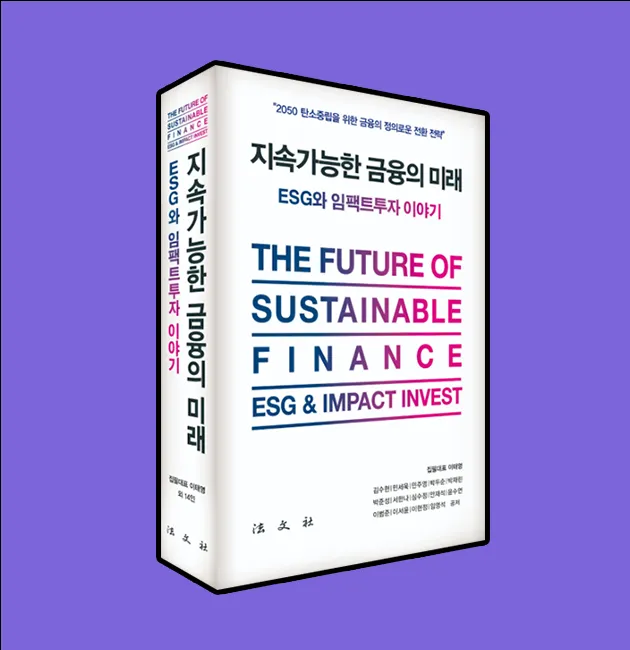
"The Future of Sustainable Finance," a new book dealing with the story of ESG and impact investing, is a book that offers guidelines to corporate ESG officers and green investors preparing to respond to the 2050 net-zero goal.
"The Future of Sustainable Finance," written by 15 authors including Lee Tae-young, is an up-to-date book covering ESG and finance. The book's appearance—boasting a solid thickness at a vast 672 pages—may feel somewhat hard to approach. Yet this volume was used to faithfully contain information about the investment environment surveyed through ESG-related standards and systems at home and abroad. Compiled in that way, this book has been put together as a resource providing comprehensive and in-depth information to readers interested in sustainable finance and ESG investing.
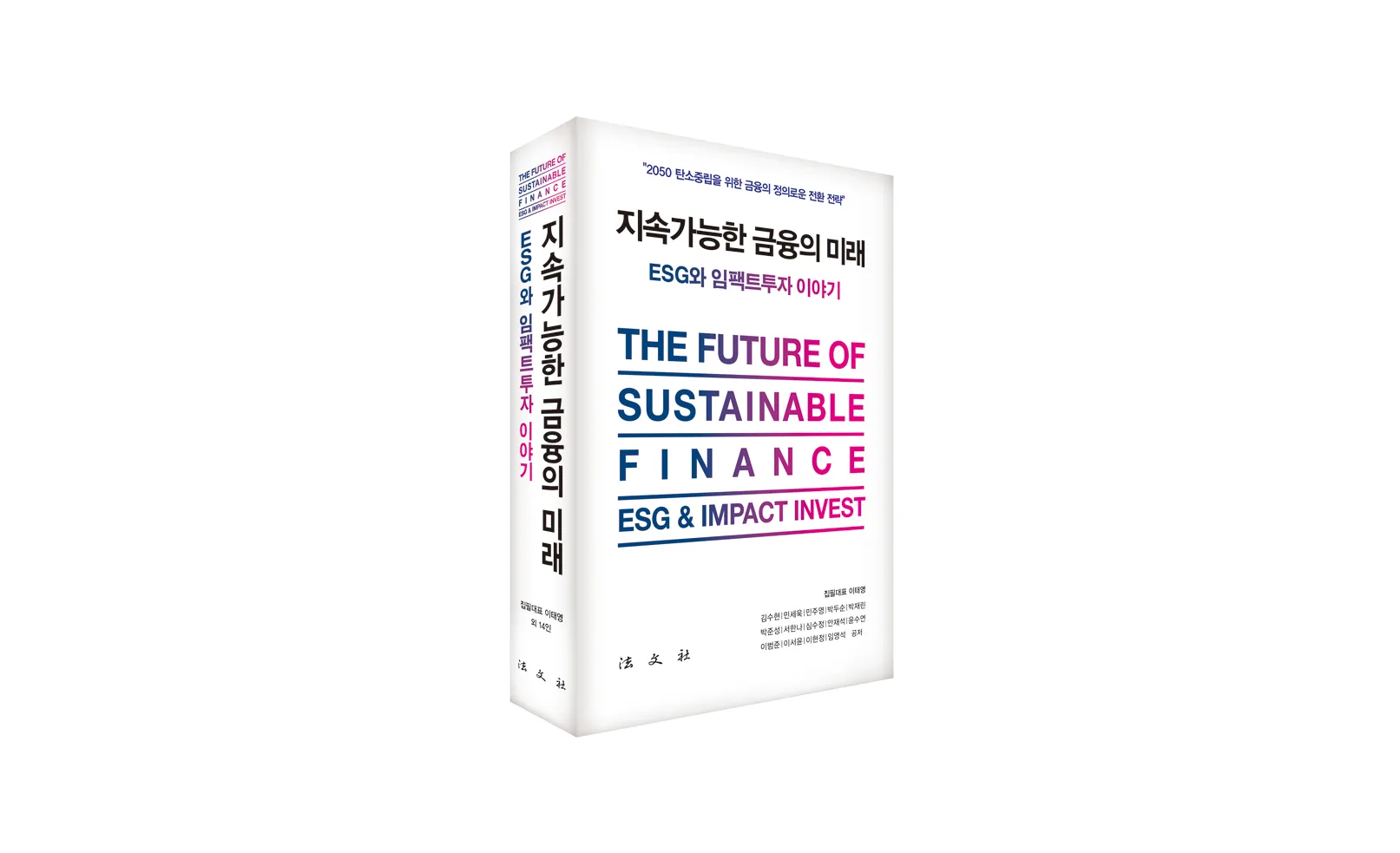
[The Future of Sustainable Finance ⓒESG.ONL]
A Guidebook for Sustainable-Finance Practitioners
"The Future of Sustainable Finance" substantially contains a wide range of topics—from the basic concepts of ESG investing, such as ESG and impact investing, to the background of sustainable finance's emergence, sustainable-finance systems at home and abroad, and cases of ESG and impact investing. In particular, it helps the reader's understanding by explaining in detail international sustainable-finance systems and policies such as the UN Sustainable Development Goals, the Paris Climate Agreement, the EU's sustainable-finance strategy, and Korea's Framework Act on Carbon Neutrality and Green Growth. It also provides practical knowledge related to our ESG-investment environment by introducing in detail domestic investment cases such as the National Pension Service's ESG investing, the impact-investment firm "Sopoong Ventures," and impact investing through crowdfunding. In the last part of the book, it also presents future prospects for sustainable finance, such as the "Carbon Border Adjustment Mechanism (CBAM)," the future of the ESG-disclosure system, and changes in climate risk and financial supervision.
The book's authors stated, "We wrote this book in the hope that it would help policymakers and officials at government agencies and financial authorities—who strive to solve the climate-crisis problem and settle sustainable finance—in preparing policy, and financial institutions in implementing sustainable-finance policy." Actually written based on the content of the "Sustainable Finance and Impact Investing" course at Yonsei University's Graduate School of Law, this book provides an expert-level understanding of ESG and sustainable finance, making it sufficient to use as a guidebook for responding to the global ESG-regulatory trend on the front lines of practice. We recommend drawing out "The Future of Sustainable Finance" by reading one chapter at a time, as if taking a class.
by Editor N