
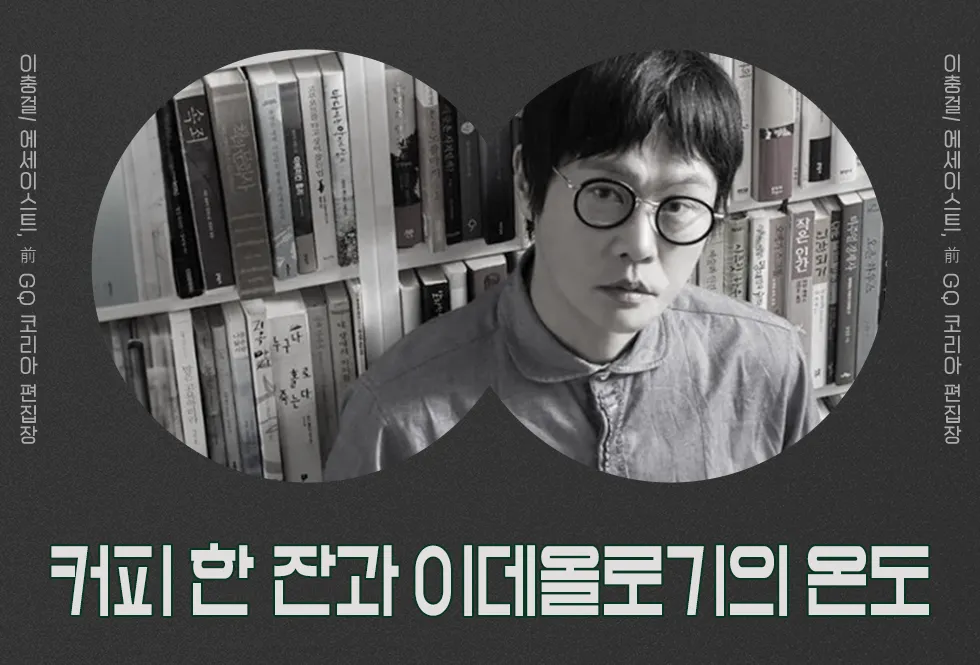
By Lee Choong-gul (essayist, former editor-in-chief of GQ Korea, author of the novel "Your Face") · June 9, 2025
Sometimes I imagine this. If the thousands of coffee machines in the city stopped at once, what would happen? In that silence, what would we hear? Might we not hear a voice beyond the system, a sound long ignored?
Seoul moves in "attoseconds" (an attosecond, an extremely short instant that divides one second into a quintillion). The subway stops at intervals of a few minutes, commercial districts change in a few months, and people pour several dictionaries' worth of emotion onto small screens. Whatever the case, there is exactly one place in this city where time flows slowly: the café.
The Pil-dong of a May afternoon — the second floor of a building that was once a print shop was saturated with the scent of coffee beans. People talking, people writing, people holding meetings, people with their eyes closed. Everyone was reconstructing the space through the conductor called coffee, swimming inside the engine of the megacity. As a single nervous system maintained only through caffeine.
To put the café back into the history of art, a coffee cup is a still life. It symbolizes the unresolvedness of relationships rather than the completeness of objects. Here coffee cuts the scenery into pieces, adds rhythm, and defines relationships. A sharp ritual that awakens a fear-soaked sense of reality, a way to endure the humiliation of work, a brief escape before a company dinner, a healing method that soothes the emptiness of a breakup. Eventually the latte foam became a shield that supports everyone in an era when mornings are hard, relationships are difficult, and emotions wear out quickly. Among the drinks of this planet, only coffee will grant the sense that one is holding on.
More impressive than the statistic that one Korean adult drinks hundreds of cups of coffee a year, twice as impressive, is how coffee has seeped into the high-density life that is Seoul. Franchises and independent cafés, dessert cafés and theme cafés, even cafés without coffee, have seized the city with a power stronger than churches. Is this some pathology, or a form of evolution? Utterly crazy about coffee. The barista of three in the afternoon explained that he had roasted Guatemalan beans himself to bring out the acidity, but in my mouth, before coffee, quiet spread first. The senses always speak quietly. To let me briefly hide my flesh within the coffee.
[ⓒESG.ONL]
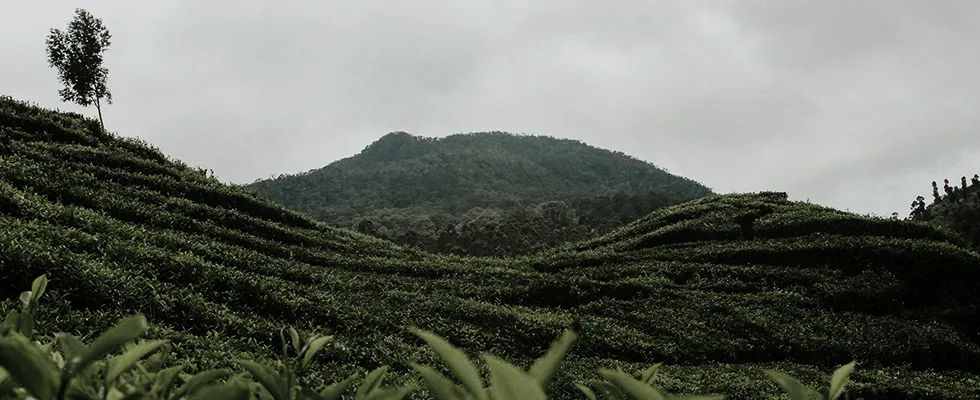
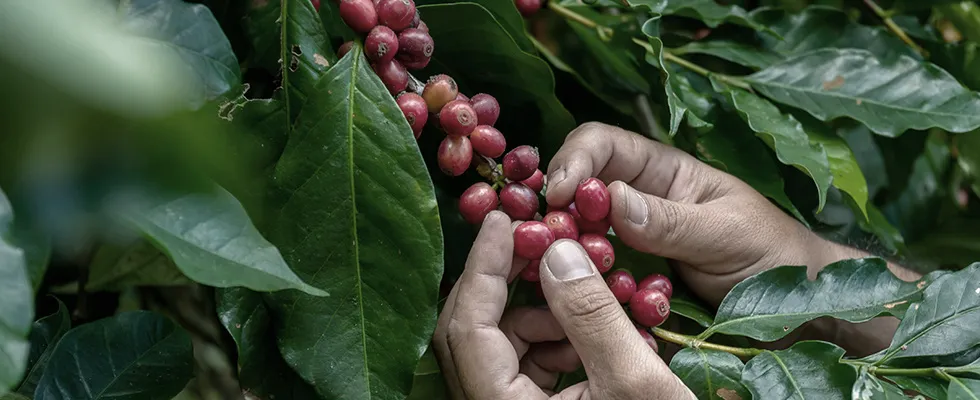
Coffee passes through two times. The consumer's time — choosing, under the lighting, a photo to post to social media while looking at the latte foam, then swallowing it down the throat. A pattern of excess and choice and self-esteem. There is also the producer's time — five in the morning in Colombia, the knees climbing a slope at an altitude of 1,800 meters. The time of knees clutching land drying up from climate change. When the two times mix in coffee, we understand something. Who made it? How did it come all the way here?
Here ESG is an incompleteness that smooths over unbalanced time.
To me, the reality thousands of kilometers beyond the coffee cup was too far away. But now I see that the bitter aftertaste that touches the tip of my tongue all day was the taste of the time a girl in the southern hemisphere harvested while inhaling dust. The humidity of the highlands in the early dawn, the prophecy of climate change, the weight of carbon, the shadow of an opaque supply chain, the knuckles of a boy sorting out worm-eaten coffee beans, the carbon footprint left by a single lungo, pesticide disguised under the part of speech "organic," the shell of fair trade's strange smile, the accounting ledger of a coffee brand, the scent of distant ports and sea routes faintly mixed in.
The heart-shaped steamed-milk foam of the 5,800-won latte I drink today is, so to speak, a crystal that set out from the hand of a tenant farmer trapped between a valley of Brazil and the sea, and came through a cooperative in Costa Rica, an importer in Switzerland, a price-negotiation table in Amsterdam, and a washing plant in Southeast Asia — a moral fluid, a liquid ejected by the Earth's pressure difference.
The labor is hot and long. Boy and girl workers, instead of going to school, hold baskets and turn like clockwork inside a disposable cup. A system designed to be beautiful yet not appear cruel. That is this coffee right now.
In the process by which the alarm that wakes the morning transforms into a never-sleeping narrative of self-reproach, a question crouched — about how one drinks rather than what one drinks. Is this coffee really good? If I drink this coffee, will I really become a good person? The important questions are always like that, complex, ambiguous, with subtle acidity and guilt swirling. Just like coffee.
[ⓒESG.ONL]
Koreans are fast. They love efficiency.
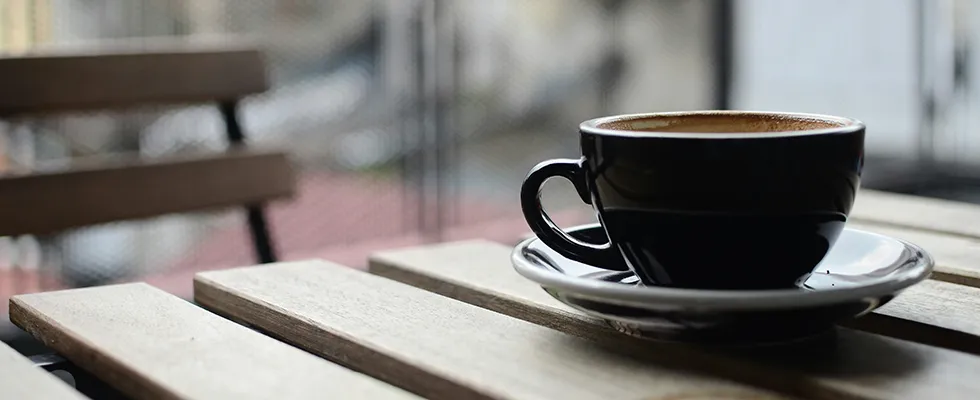
ESG's speed sometimes lags. Or it is so slow it wears you out. Some days even the process of drinking coffee is tiring. From the moment you open the café door. What should I drink? Latte? Americano? How should I ask them to grind the beans? Medium? Coarse? Milk? Half my personality is decision paralysis, the other half the guilt at the end of a decision. Ordering a single cup of coffee, I hesitate between helplessness and guilt. Too many choices, too much information, too much morality. The infinity of everything and everything. The act of drinking coffee is the product of labor that humanity has finely divided. I walk a tightrope between the compulsion to be a good consumer and ethical numbness. And even at the moment the ESG frame tries to grant legitimacy to that tightrope-walking, the motto of takeout coffee — drink it and throw it away right away — meddles not with the problem of paper cups or plastic straws but with the very attitude toward time itself.
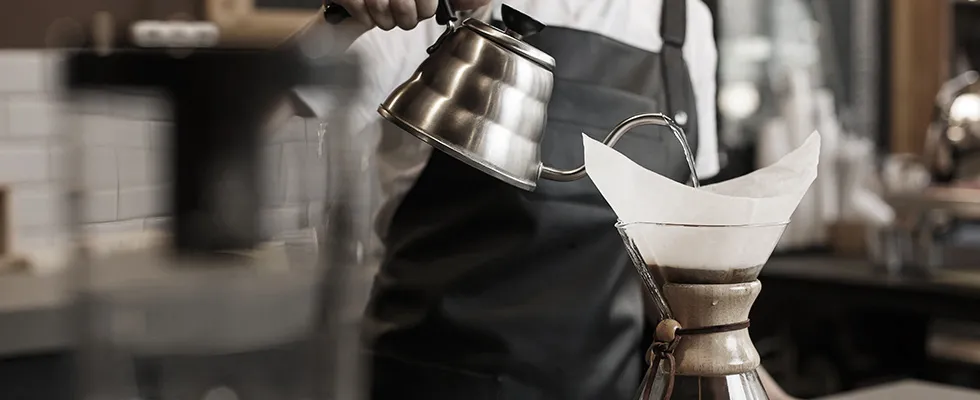
Just as a painter carefully lays color and line onto the canvas, today's barista, neither fast nor slow, adjusts the beans, water, temperature, time, and shape of the hand, quite like an ink-wash painter. The sound of ground beans falling as water droplets, the sight of the kettle's thin stream slowly sprinkled, abridges how this era handles coffee. Through that crevice, will is revealed. In fact, isn't ESG another name for will?
When I brew hand-drip coffee at home, I too pour the water that way and gaze at the coffee swelling as I slowly draw circles. For a few minutes, becoming a citizen of the world called coffee. But that sense was arrogance. I did not labor, I did not sweat, and I directly experienced nothing. Choosing and drinking coffee was a consumer's privilege given to me without my knowing.
The time I was truly convinced I had drunk ethical coffee was six years ago, at 11:37 a.m. on a Wednesday. I know the exact time because of guilt. In a Brooklyn café whose entire space was wrapped in exposed concrete, watching the shoulder of a barista dazzling with sapphire-dyed hair and the Chinese characters 李 (plum) and 竹 (bamboo) and lettering tattoos, I ordered a Colombian Cauca coffee, described in lowercase letters as "rich berry aroma and a multilayered citrus finish, with a floral scent rising at the end." The name of the coffee, which cost 7.25 dollars a cup, was, astonishingly, "The Scent of Your Child." There were also names like "Maria's Hill" and "The Warmth of a Rainy Afternoon," said to have been named by a community of Colombian women farmers. The fact that the menu marked the farm name, the processing method, and even the altitude of the origin was not a boast but a respect beyond imagination. Another narrative surrounding a single cup of coffee, a tender and clear message, mixed ethics into my discernment without threat or accusation. That sustainability could function as a design element.
But the relief when seeing the "fair trade" mark connected to ignorance. In the status of a consumer, looking at the badge, one buys a kind of indulgence. But does that guarantee a fair life for the coffee-growing farmer? As the politics of everyday consumption, or a very private matter, what kind of consumer will I be? Whom do I think of, what do I believe, and in what way will I touch the world? How much do I know, how much do I turn away from, and how much can I take responsibility for? I am not perfect. Nor am I in complete ignorance. But that day, with a single cup of coffee, I tried to save myself, soothing my moral self, captured by the narrative of "good consumption."
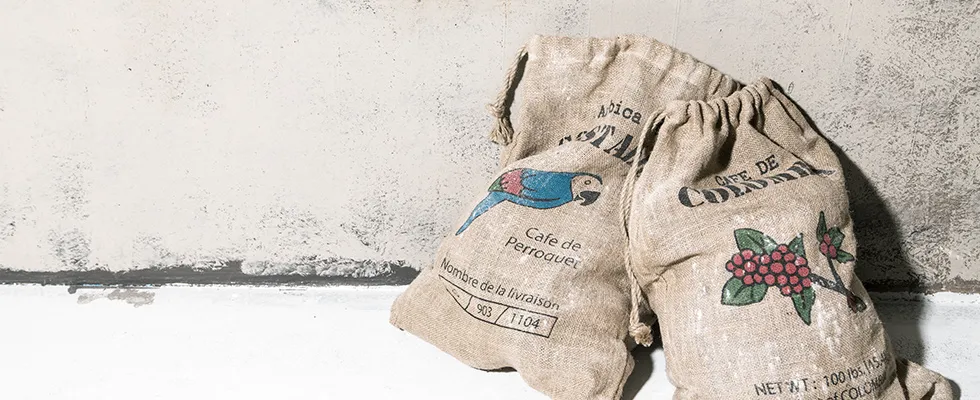
Space conceals responsibility. Or reveals it. The large franchise café on Gangnam-daero, while thousands of cups of coffee pass through in a day, lets you hear almost no information, no source, no voice. On the other hand, in the corner of a café on the third floor of an Euljiro shopping arcade, the edge of a coffee-bean sack was laid out. The gunny sack touching the floor declares that the coffee's origin, the land, and even the workers' body heat participate in the store. Here ESG would be revealed not as a slogan but as ethics in the choice and arrangement of space, in materials and structure, between the coffee cup and the trash can.
[ⓒESG.ONL]
Now some franchises have reduced disposable cups and give a small discount if you use a tumbler. Though I don't know how a few coins will handle the enormous vocabulary of corporate ethics and environmental protection. A coffee shop in Jeju melts plastic to use as cup coasters, a roastery in Gangneung creates a direct-trade structure with origin workers, a small café in Pohang provides coffee grounds as local fertilizer, and a coffee house in Mangwon-dong made tables from recycled wood. As a quiet and slow form of resistance, as an attitude that tunes cultural sensibility, slow and limited though it is. People are far more sensitive to the word "inconvenience" than to the word "sustainability." But detail is like a device that senses invisible pain.
ESG, in the end, arises from the generosity of accepting inconvenience. When the consumer briefly withholds convenience, the system will have room to leap. Not so much a revolution as a subtle crack. But cracks change the world.
This spring, I read a poem by a migrant worker who works at a coffee farm in Ethiopia.
Before sunrise,
this land catches its breath.
Until my footprints are printed on the muddy path,
[ⓒESG.ONL]
I am neither a shadow nor a name.
The basket is empty,
the hand recalls memory.
[ⓒESG.ONL]
Before the sweat falls on my brow,
the sunlight calls the red fruit.
Crouching under the tree,
I recall the sound of my daughter's footsteps.
Seeping under my fingernails,
the red juice of the husk,
the collapsed knuckles,
I do not leave the shade of the coffee tree.
Every morning I drink coffee. To be exact, I drink the aftertaste of my dream, lick the tail end of my hesitation, and wash the clarity of my morality. About to call this time recovery, I stop and murmur. Whose life did this coffee pass through? Without swallowing everything floating on top of the coffee, I can no longer say I know coffee.
By Lee Choong-gul (essayist, former editor-in-chief of GQ Korea, author of the novel "Your Face")