
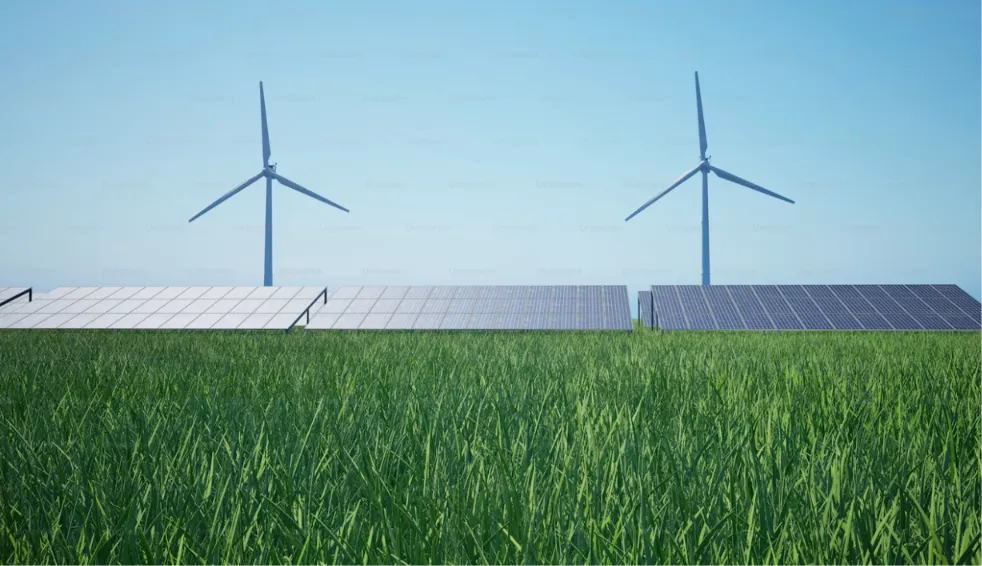
If I had a time machine, I would not go to the far future of 2050 but back to 1968. Returning to 1968, I would stand in front of a newsstand somewhere that year and read the articles debating the construction of the Gyeongbu Expressway.
During holidays, we worry about traffic jams on the expressway, talk about rest stop food, and check the arrival time shown on our navigation apps. For us today, the Gyeongbu Expressway connecting Seoul and Busan is not the future — it is everyday life.
Future Value That Cannot Be Explained by Numbers Alone
But for the people of 1968, the Gyeongbu Expressway was not routine — it was an adventure. Before its construction, questions arose: why build an expressway in a country with so few cars? The national budget was tight, and road pavement rates were low. Opponents of the construction at the time argued that considering Korea’s economic situation and automobile penetration rate, building the Gyeongbu Expressway was neither urgent nor a financially wise decision. With approximately 60,000 vehicles in Korea in 1967 and a road pavement rate of just 8% by 1969, theirs was a reasonable argument.
In the January 1968 issue of the monthly magazine Sedae (Generation), then-National Assembly member Park Young-rok of the New Democratic Party expressed the view that “while it is a matter to be resolved in the future, it should not be pursued too hastily.” His argument was that, considering the burden on the people, more urgent problems should be addressed first. Kim Dae-hwan, a sociology professor at Kookmin University at the time, also pointed out that pushing forward a new expressway project not included in the Second Five-Year Economic Development Plan would increase the burden on the national economy and could disrupt the development plan.
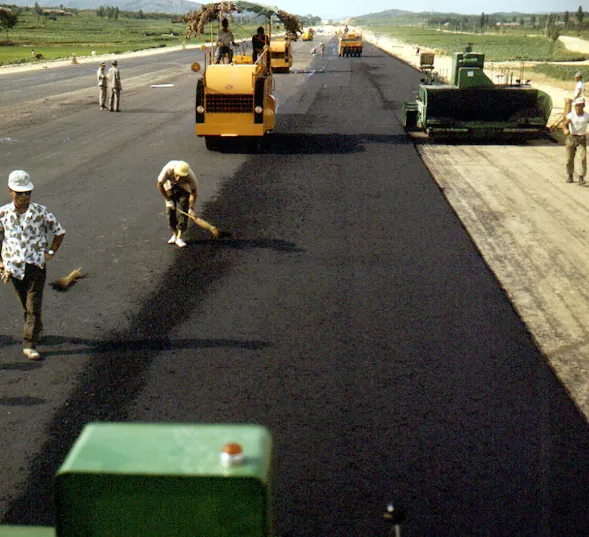
[Gyeongbu Expressway construction site, 1968 © National Archives of Korea ]
It is hard to scoff at the opinions opposing the road construction. Indeed, building a highway costing hundreds of billions of won in a poor country was not an easy decision. It would therefore be unfair to say that all opponents of the Gyeongbu Expressway were short-sighted people who failed to see the future. However, their concerns did not account for a reality that had yet to arrive. The value of the Gyeongbu Expressway cannot be explained at the time of groundbreaking solely by the number of cars traveling on it. It was a road built because there were cars, but it was also a road that summoned the era of automobiles and logistics. No one can refute the fact that the Gyeongbu Expressway, while avoiding overlap with existing railways and national roads, served as the arterial route connecting the capital region, the Yeongnam industrial belt, and the ports of Incheon and Busan, functioning as the backbone of economic development.
The Questions Left by a Reckless Challenge
Let us move the time machine a little further, to Pohang in 1970. Similar words were exchanged there. A country lacking iron ore, capital, and technology had declared it would build a large-scale steel mill. Today, we regard POSCO as the foundational strength of Korean manufacturing. But at the time, POSCO’s success was anything but a given. The criticism directed at the steel mill construction back then was even more explicit.
Looking back at past debates, prominent economists denounced the steel mill as “uneconomical, a waste of resources, and merely for wartime purposes.” The press argued that it would be better to simply import steel. In the National Assembly, lawmakers questioned why a steel mill with neither raw materials nor a use case should be built, and even criticisms along the lines of “let’s solve the food shortage from the lack of rice first” emerged.
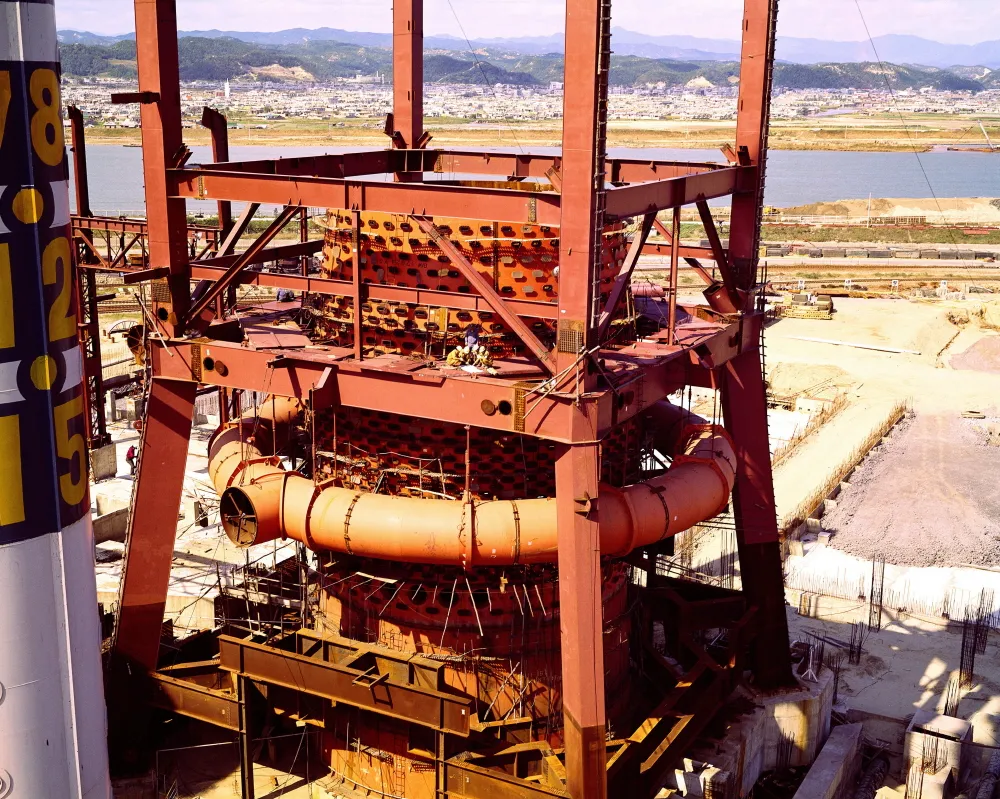
[Pohang Steelworks No. 3 Blast Furnace Main Construction © Pohang Museum of History]
By the calculations of the time, both the Gyeongbu Expressway and the Pohang Steelworks looked uncertain. The costs were clear, but the benefits were hazy. Everyone could see that investment was needed now, but no one could precisely calculate what industrial landscape that money would create in the future. Perhaps this is the shared fate of ‘things we now take for granted.’ Almost nothing was obvious from the beginning. The Gyeongbu Expressway at first looked like waste, and the Pohang Steelworks at first looked like a reckless gamble. But as time passed, the question itself changed. No longer “Why was it built?” but “What would things have been like without it?”
The Cost of Transition vs. the Cost of Delay: Which Is More Expensive?
Of course, we must not view this story merely as a tale of success from a bygone developing country. The history of the Gyeongbu Expressway and the Pohang Steelworks also carries shadows: regional inequality, insufficient democratic debate, and the sacrifice of labor. Therefore, when addressing the topic of ‘energy transition’ that Korean society faces today, we need not follow that era’s methods wholesale. Nevertheless, the past cases still pose questions toward the present. Can the infrastructure of the future be sufficiently explained by today’s economic viability alone? Should we expand renewable energy further? How fast must we build transmission grids? How should we reform the electricity market and rate system? The questions are many, and the answers are far from simple. Familiar opposition arguments also emerge: “It is uneconomical,” “It only increases the burden on the public,” “Electricity prices will rise,” “Industrial competitiveness will weaken.” But one cannot say these counterarguments are entirely wrong.
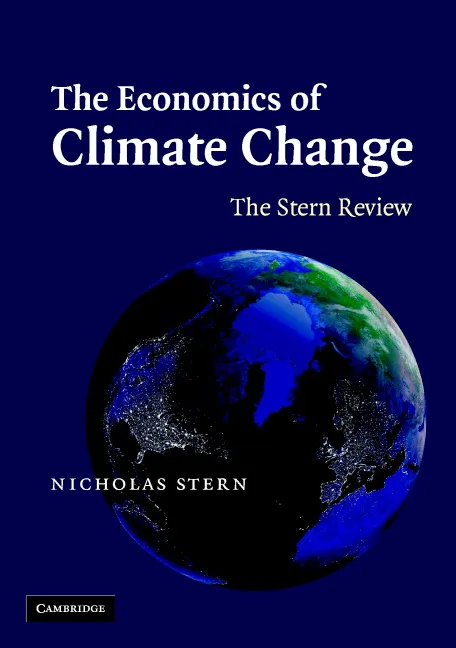
[Nicholas Stern’s report ‘The Economics of Climate Change’ © Cambridge University]
Energy transition genuinely entails costs. It is not something that ends with merely expanding solar and wind power. Transmission grid construction, electricity market reform, local acceptance, and industrial structural transformation must all move in tandem. Someone must bear the costs, and someone must accept changes to the existing order.
If we consider the future, several more questions arise. How much does energy transition cost, and what do we lose by delaying it? This very point was the crux of the argument made by British economist Nicholas Stern in the 2006 Stern Report, ‘The Economics of Climate Change.’ In the report, Nicholas Stern argued that the benefits of strong, early action on climate change far outweigh the economic costs of inaction.
Let us imagine someone living in 2050 unfolding today’s newspaper. That person would read the debates surrounding the expansion of renewable energy, the conflicts over power infrastructure, and the various disputes over electricity rates and industrial competitiveness centered on carbon emissions. And perhaps, like us today reading about the 1968 Gyeongbu Expressway debate, they might tilt their head and wonder: “Why was that so controversial?” Of course, we cannot be certain. Energy transition is more complex, and far more stakeholders are entangled in these issues.
Still, there is a scene I hope for. When the people of 2050 look back at the past, they will accept the energy transition not as a once-unnecessary fad, but as the ‘obvious choice.’ Just as we now look at the Gyeongbu Expressway and the Pohang Steelworks and think, “Why were they so doubted back then?” — that future generations, looking at today’s debates, might say, “If only they had started sooner.”
by Kim Won-sang (Climate Solutions, Media Communications)