
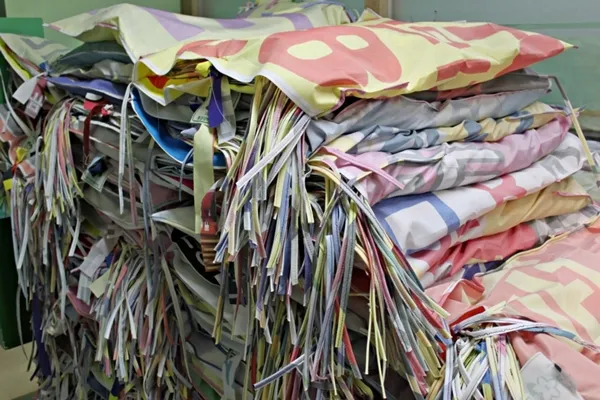
As the June 3 local elections concluded, thousands of tons of waste were left in their wake. According to the National Election Commission, approximately 1,500 tons of banners were collected nationwide during the 2022 local elections, and a similar volume of banner waste is estimated to have been generated in this June 3 local election. When paper campaign materials are added to the banners, the scale of election-generated waste is far larger than one might imagine. The banners used in elections are not mere pieces of fabric. They are made from polyester fiber derived from naphtha extracted during petroleum refining, coated with synthetic resins such as polyvinyl chloride. Moreover, the mixed structure of ink and coating makes them difficult to recycle.
Plastic That Occupied the Streets During the Election Period
During the 2022 local elections, 75% of banners collected nationwide could not be recycled and were incinerated or landfilled. The incineration process also releases hazardous substances. In particular, polyvinyl chloride components produce harmful substances such as dioxins when burned. Carbon emissions from the incineration process are also substantial. Climate Change Action Research Institute Fellow Lee Yoon-hee estimated the carbon footprint of a single banner at 9.38 kg. The analysis found that the raw material usage stage accounts for approximately 70% of total carbon emissions, with the disposal stage accounting for about 30%. In other words, the process of producing and disposing of a single banner emits greenhouse gases equivalent to the amount of carbon a single pine tree absorbs in a year.
The cost and administrative burden of banner disposal is also a recurring issue. Under the Public Official Election Act, candidates are required to remove banners after the election, yet in practice, removal is frequently delayed or neglected, leading to a recurring pattern where district and city offices end up carrying out collection and disposal work. Incineration costs reach approximately ₩290,000 per ton.


[Waste Banner Collection Point Guide ©Seoul Metropolitan Government Climate and Environment Bureau Instagram ]
The Seoul Metropolitan Government established a dedicated waste banner collection point in Seongdong-gu, building a system that collects waste banners from 25 autonomous districts into one location for processing. This raised the recycling rate from the previous 42% to 94%. However, this remains an effort at the Seoul city level and has not led to nationwide adoption.
Paper Campaign Materials Discarded Without Being Read
A problem even larger in scale than banners is paper campaign materials. For the 2022 local elections, 580 million copies of campaign materials were mailed, and the paper used for printing materials, ballots, and posters alone amounted to 12,853 tons. Considering that producing one ton of paper requires 17 thirty-year-old trees, this equates to the consumption of over 210,000 trees. Figures for campaign materials used in this June 3 local election have not yet been officially released, but given the more granular candidate and constituency breakdown, the figures are estimated to be similar or larger. The problem is that these materials are discarded without being properly read. In some apartment complex mailboxes across Gyeonggi Province, unopened campaign materials had piled up even after early voting had ended. They were papers that had become waste without ever being read. With smartphone penetration nearing 99%, producing and distributing massive quantities of paper campaign materials is increasingly criticized as inefficient.
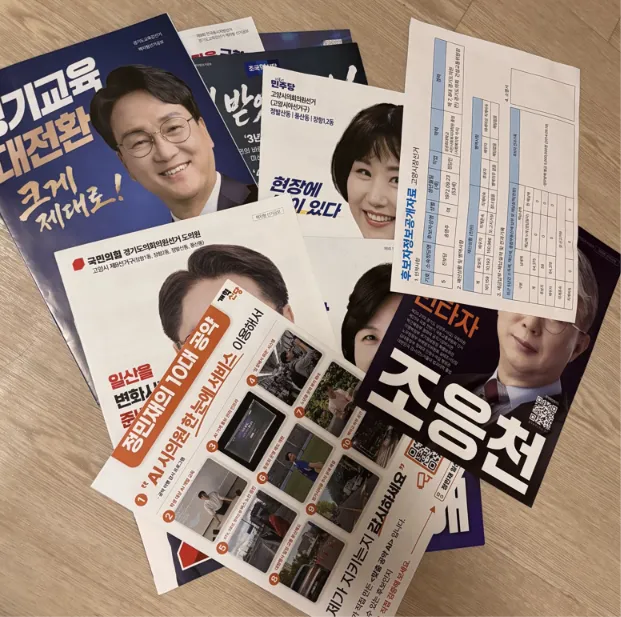
[June 3 Local Election Paper Campaign Materials © ESG.ONL]
The paper used for campaign materials is also difficult to process. Campaign materials often use coated paper that is hard to recycle, and are therefore mostly treated as general waste. This pattern — in which campaign materials produced at enormous expense are incinerated as general waste without ever being properly read — repeats with every election.
Discussions on transitioning to electronic campaign materials have been raised multiple times in the National Assembly. In the 22nd National Assembly, three amendments to the Public Official Election Act were proposed, including introducing electronic campaign materials or producing them on recycled paper, but all remain pending in committee. While counterarguments regarding accessibility for the elderly exist, voices calling for a reexamination of the current structure — which insists on full-scale paper distribution in an era of high smartphone penetration — are growing louder.
Environmental Responsibility Exempt from Elections
In corporate ESG management assessments, waste reduction and resource circulation are key environmental indicators. Companies are required to disclose the recycling rates and treatment methods for their waste and to set reduction targets. Yet the election system itself — which repeatedly produces thousands of tons of plastic banners and hundreds of millions of paper sheets — has no corresponding environmental responsibility standards.
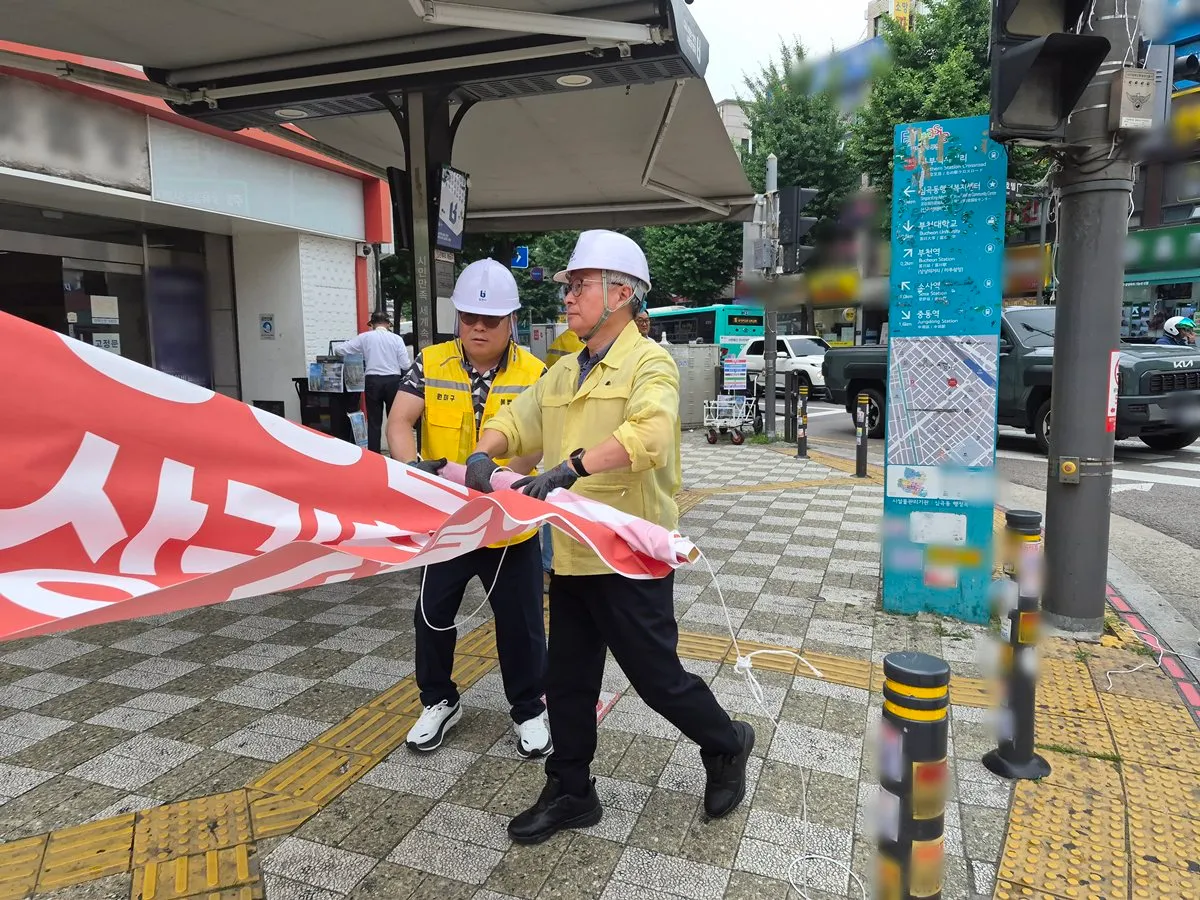
[Wonmi-gu Mayor Kim Won-kyung collecting banners after the June 3 local election © Bucheon City Official Integrated Public Relations Portal ‘Saengsaeng Bucheon’]
The terms of the 17 metropolitan government heads and 226 local government heads elected in this June 3 local election extend to 2030 — a period that also marks a critical checkpoint for evaluating national greenhouse gas reduction target performance. The paradox of elected leaders who campaigned on climate action pledges having to deal with thousands of tons of waste from day one of their terms was repeated in this election as well. Environmental groups point out that institutional reform is needed so that the National Election Commission, as the authority overseeing elections, also takes responsibility for waste disposal. Amendments to curb the proliferation of banners have failed to pass the National Assembly and remain pending. Unless the system governing election waste changes, the same scene will repeat itself in the election four years from now.
by Editor L