

Protests have continued day after day across France since September. Some 15,000 people have been arrested or detained in demonstrations led by student groups, labor unions, and civic organizations. The protests began with high school students demanding improved educational conditions, then grew into mass rallies as citizens and workers protesting soaring prices—particularly younger generations—joined in large numbers. France’s Interior Ministry estimated that 550,000 people participated in the October 17 protests, while organizers put the figure at 800,000. Looting, arson, and excessive police crackdowns have also continued, deepening the social turmoil.
The protests have since spread across Europe, including Italy, Portugal, Greece, and Germany. Today, we examine France’s educational conditions that sparked the protests, as well as labor, wages, and the cost-of-living issues that have become a major dimension of the demonstrations now spreading across Europe.
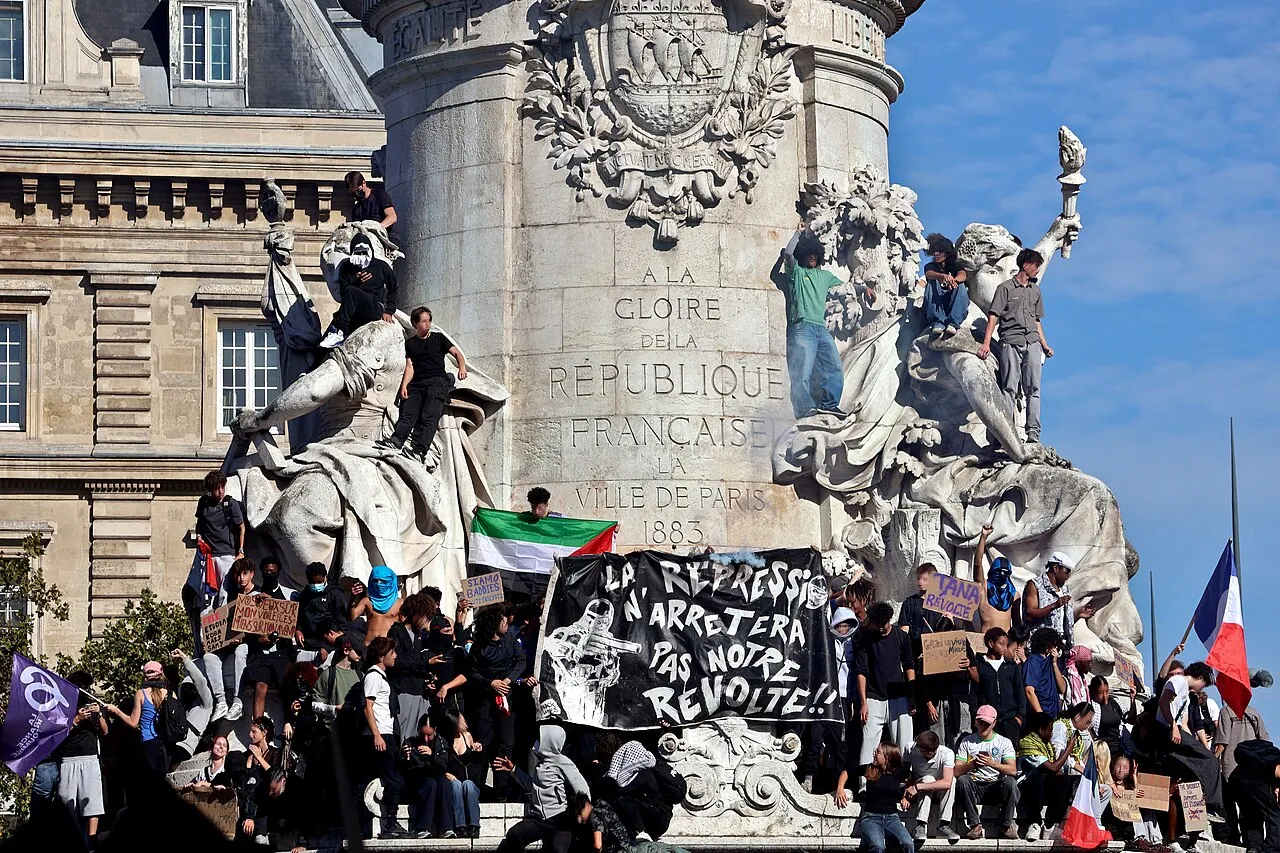
Why Did Students Start Protesting? — France’s Education Problems
On September 17, teachers at Antoine de Saint-Exupéry High School in the Créteil area of France began striking over a teacher shortage. Students then joined the protests and blockaded the school. The protests spread to students and citizens across France and continue to this day.
France’s schools and education system have long faced several problems. The first is aging school infrastructure, where rats appear and there is no air conditioning despite temperatures approaching 40°C. According to Education Ministry statistics, as of 2025, general and technical high schools were using buildings averaging 65 years old, while vocational high school buildings averaged 71 years. Only 15% had been newly built or renovated since 2015. The central government shifted responsibility for maintaining school facilities to local governments, while regions with severely insufficient local budgets struggle even to replace worn-out desks and chairs. The second problem is a teacher shortage. According to data from France’s High Commission for Strategic Planning, 3,200 teachers were lacking in 2024, and 9.8% of scheduled classes between 2024 and 2025 were not held. Other problems include excessively large class sizes, experienced teachers concentrating in Paris, and new teachers being assigned to areas with shortages. The third is France’s long school hours: middle school students receive 973 hours of instruction annually, far above the OECD average of 909 hours. At the same time, they have fewer school days, meaning the amount of instruction received each day is excessive. Analysts attribute this to the government’s failure to mediate between teacher unions concerned that reducing class hours would lead to staff cuts and tourism groups seeking more holidays. The fourth is Parcoursup. Previously, students could enter their preferred universities relatively freely if they achieved a certain score on the baccalauréat exam. Controversy began in 2018 when Parcoursup, an admissions system similar to South Korea’s, was introduced. Students are evaluated not only on their baccalauréat scores but also on their grades over three years of high school and teachers’ opinions. Critics allege that the selection criteria are vague and discriminate based on students’ schools of origin. An audit by the Cour des comptes confirmed that some universities and departments had used applicants’ previous high schools in ranking them.
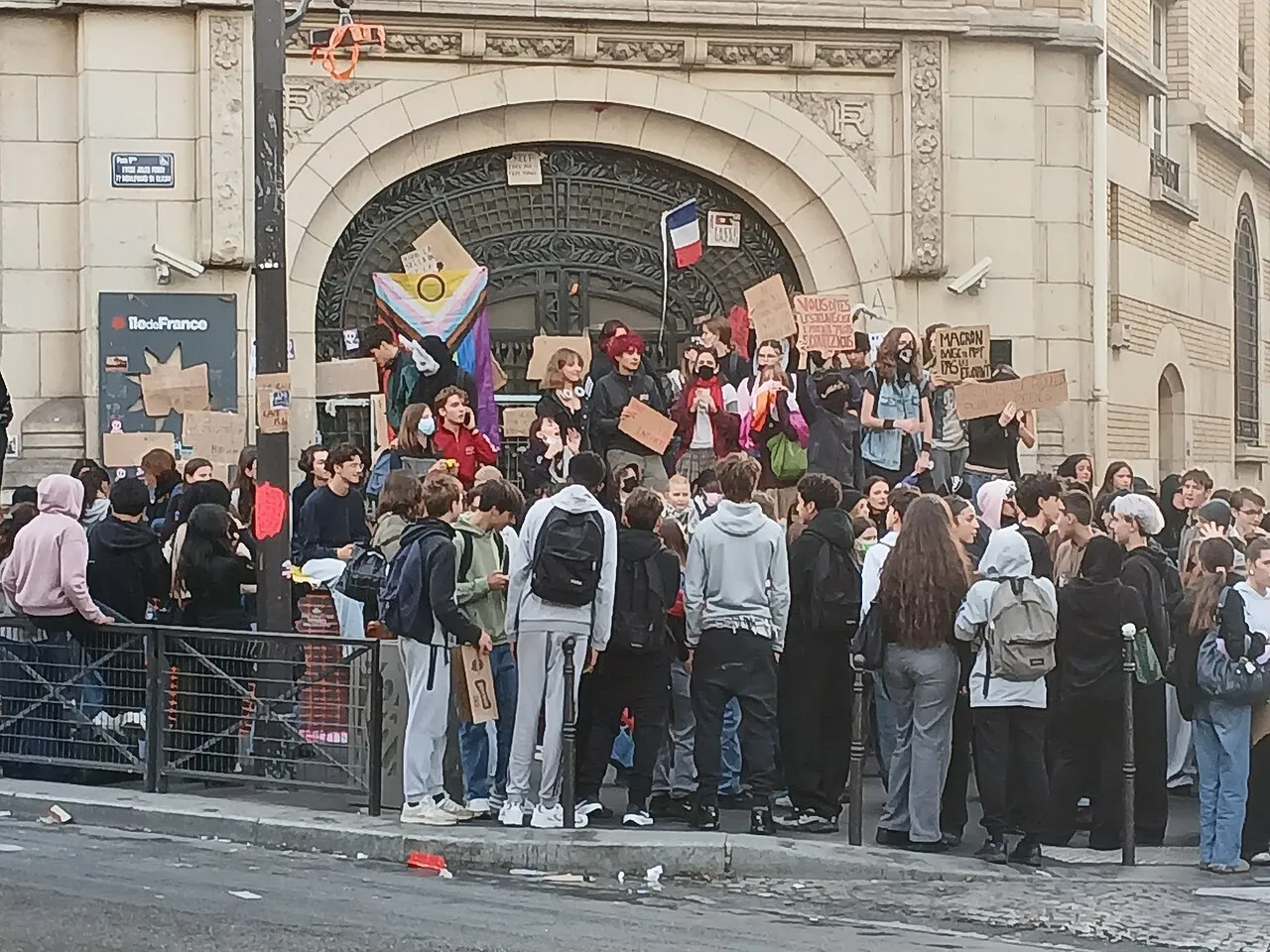
As excessive crackdowns continued—including a 15-year-old protester suffering severe hand injuries from a flash-bang grenade used by police and another participant losing their sight—the protests intensified. Finally, in late October, the French government announced improvement measures. Key proposals included reforming and replacing Parcoursup, reducing high school class sizes, reversing teacher cuts, and creating new teaching positions. It also announced €4 billion in low-interest loans through 2030 for renovating school facilities. However, many people question the effectiveness of these policies, and students believe the proposed solutions are insufficient to resolve the structural problems.
Europe’s Attention Turns Beyond Education to Labor and the High Cost of Living
The protests, which began with demands for better educational conditions, gradually broadened into protests against soaring prices and housing costs, spreading across Europe. According to the EU’s European Employment and Social Outlook 2026 report, the employment growth that had continued after the pandemic slowed in 2024. Youth unemployment in the EU rose for two consecutive years due to the energy shock caused by conflicts in the Middle East. Young people’s jobs are also unstable and poorly paid: across the EU, nearly one-third of workers under 30 are in temporary employment, six times the share among workers aged 50–64. Repeated temporary employment can prevent workers from building skills, reducing productivity not only for individuals but also for companies and countries as a whole. Employment insecurity also leads people to cut spending, weakening domestic demand.
The manufacturing sector that supported the EU’s welfare systems and middle class has been losing out to competition from countries outside the bloc. Across the EU, 524,700 manufacturing jobs have disappeared since 2022 alone. An estimated 440,000 fewer jobs will be created this year. Germany’s Halle Institute for Economic Research (IWH) counted more than 17,000 companies filing for insolvency in 2025, with manufacturing jobs suffering the greatest impact. Corporate restructuring has also continued, with announced net job losses reaching approximately 100,000 in 2024 and 70,000 in 2025.
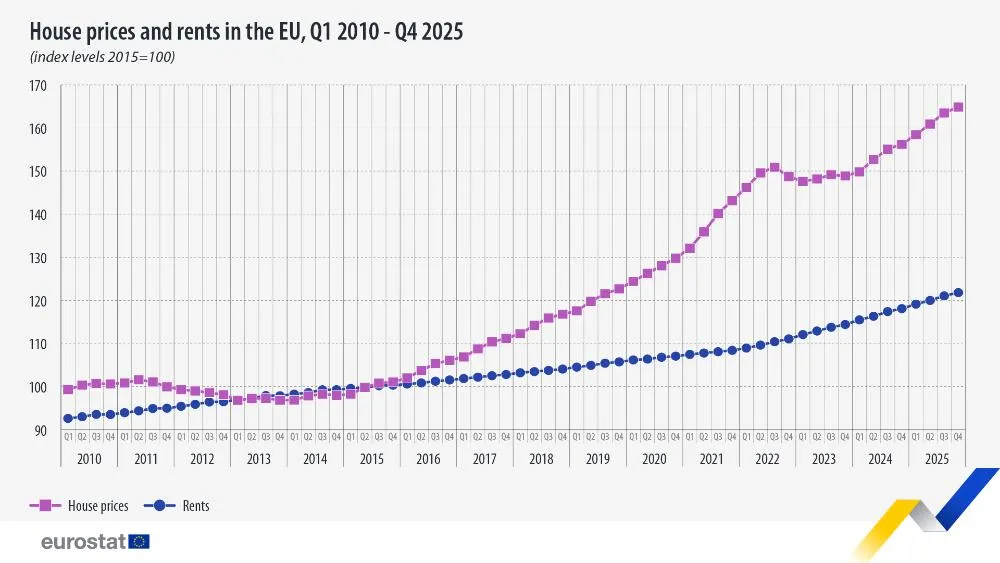
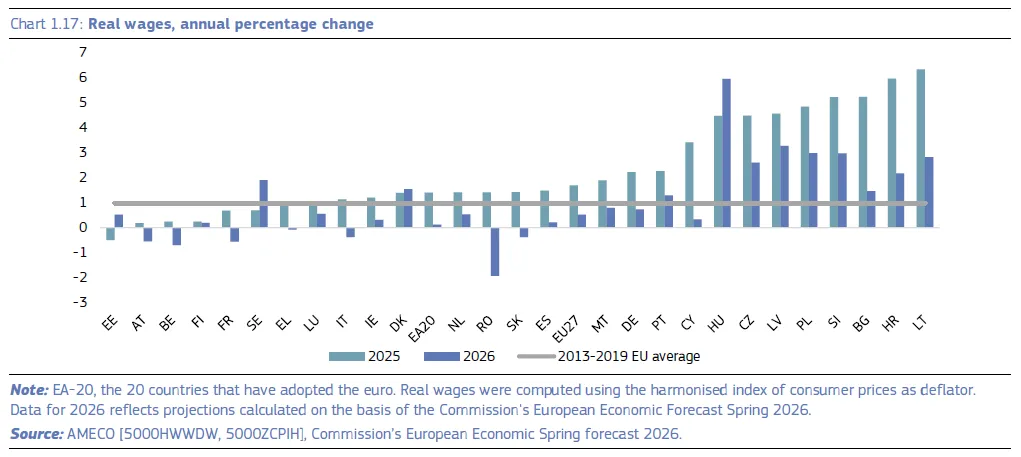
In particular, Eurostat statistics show that housing prices in EU member states rose 60.5% from 2010 through the second quarter of 2025, while rents increased 28.8%. Statistics also show that eight out of 10 Spaniards in their 20s live with their parents. Eurozone inflation reached 4% last October, its highest level in more than three years, while real income growth slowed. According to the European Commission’s 2026 spring economic forecast, real wage growth is expected to fall to 0.5% this year, with several countries forecast to turn negative altogether.
The reason these problems are unlikely to be resolved soon is that Europe’s national debt, driven by low growth, lies at their root. France’s national debt currently stands at €3.6 trillion, equivalent to 119% of GDP; Italy carries debt equal to 140% of GDP, and Spain 101%. Rising interest costs from higher government bond yields have made fiscal austerity unavoidable. With limited public finances concentrated on older people, support for younger generations and housing stability are likely to take considerable time.
Generation Z is particularly prominent among participants in the current European protests. Young people are protesting poor educational conditions, rising living and housing costs, increased defense spending, and inadequate responses to climate change. Regardless of their political ideology or orientation, they share the perception that their future and economic opportunities have been taken away. The questions raised by French students about educational conditions are now being directed at Europe as a whole: Will young people be able to find jobs, buy homes, and build their futures?
by Editor L