
How Far Has AI’s Unauthorized Use of Publications Gone?
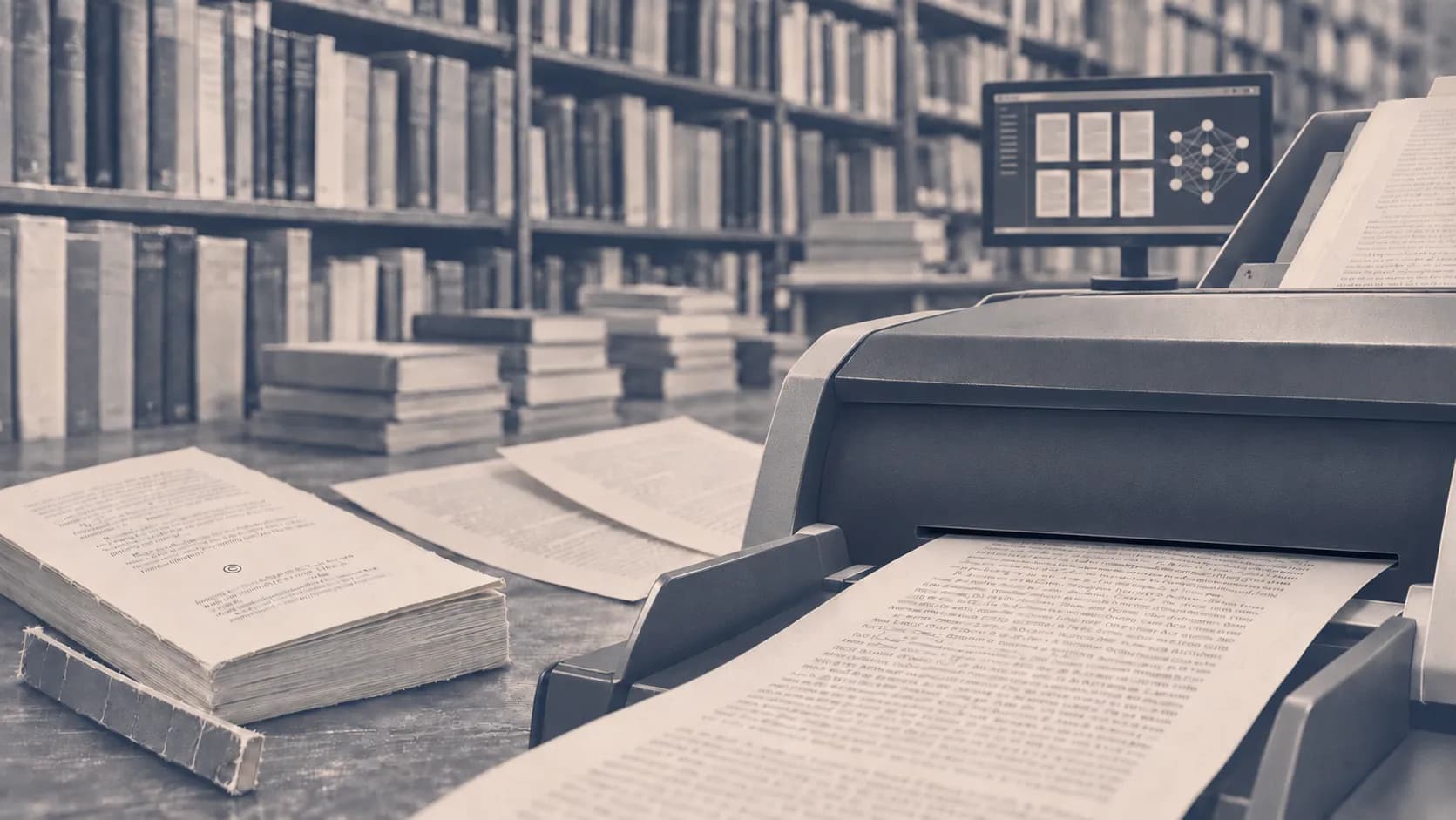
In October 2026, South Korea’s publishing industry was thrown into turmoil by news that an AI company had purchased books in bulk. Reports have continued to emerge overseas of AI companies buying large quantities of books, scanning them for large language model (LLM) training, and then destroying them. This time, it was confirmed that South Korea was no exception. The incident began when a U.S. book distributor expressed an intention to purchase large quantities of Korean books. It was later revealed that 22 Korean titles were included on the list of works covered by a copyright lawsuit settlement concerning U.S. generative AI company Anthropic’s use of illegally copied books. Here is an overview of the unauthorized use of Korean publications by AI companies, overseas cases and responses, and the legal issues involved.
AI Companies Reach Into Korean Publications
A U.S. book distributor has expressed an intention since last year to purchase large quantities of books suspected of being intended for AI training. Woongjin Book Center, South Korea’s largest book distributor, reportedly exported 165.69 tons—approximately 410,000 books—to Better World Books, a used-book distributor known to have participated in Anthropic’s book procurement, from March last year through June this year. Kyobo Book Centre also said it had received orders for nearly 100,000 titles from more than 10 overseas companies. However, Kyobo said it did not proceed because the buyers wanted to purchase one copy of every book and would not disclose the final recipient, suggesting possible use for AI training. Meanwhile, in Japan, a subsidiary of major publishing distributor Nippan Group Holdings sparked controversy by selling Japanese books to Anthropic without publishers’ consent.
Bartz v. Anthropic and Project Panama
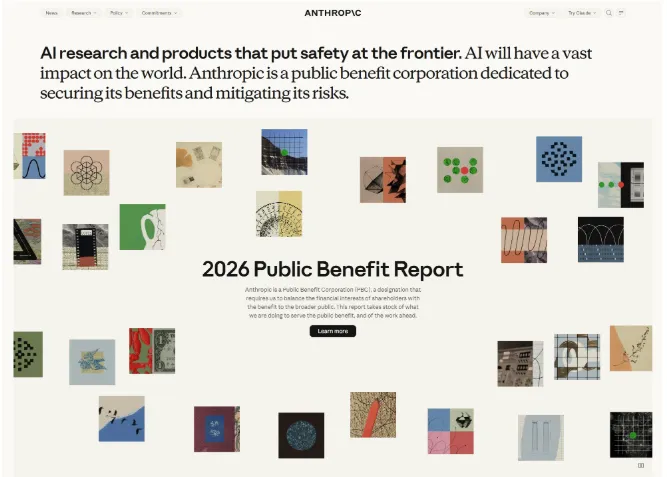
The U.S. lawsuit Bartz v. Anthropic lies behind AI companies’ mass purchases of physical books. In August 2024, American novelist Andrea Bartz and two nonfiction authors sued Anthropic, alleging that it had downloaded pirated books without authorization and used them for AI training. During the proceedings, it emerged that Anthropic had downloaded and stored more than 7 million books from pirate sites such as Books3 and Library Genesis (LibGen) since 2021. In 2024, its method changed. When licensing negotiations with publishers failed to progress, Anthropic bought millions of paperbacks from used bookstores and book distributors, cut off their bindings, scanned the individual pages, and discarded the originals. This mass-purchasing plan was called Project Panama.
In June 2025, the U.S. District Court for the Northern District of California assessed the two activities separately. It first found that using purchased books for AI training constituted fair use. The court reasoned that this was a “transformative use,” applying the original works for a new purpose, much as people read books, learn from them, and write new works; there was also no claim that the AI reproduced the original text verbatim. Converting paper books into digital files was likewise recognized as fair use because the originals were destroyed and the files were not distributed externally—only the format of books that had already been purchased had been changed. By contrast, downloading and storing pirated books was not deemed fair use. The parties later agreed to a compensation plan covering approximately 480,000 works, totaling $1.5 billion, or about $3,000 per work. The court’s final approval in July 2026 brought the lawsuit to an end. In South Korea, it was belatedly revealed in mid-October that 22 works by 15 Korean authors were included among the works eligible for compensation, followed by reports that as many as 250 Korean authors could have been affected. However, because many Korean authors are not registered as foreign rights holders, significant obstacles remain before they can actually receive compensation.
Anthropic is not the only AI company to face legal controversy; OpenAI has also been embroiled in such disputes. In 2023, prominent authors including George R.R. Martin and John Grisham filed copyright infringement lawsuits against OpenAI. They alleged infringement because ChatGPT produced detailed summaries of the main plots, characters, settings, and developments of original novels, and because it could create unpublished sequels. OpenAI filed motions to dismiss, but in October 2025 the court ordered the case to proceed, and the legal battle is still ongoing.
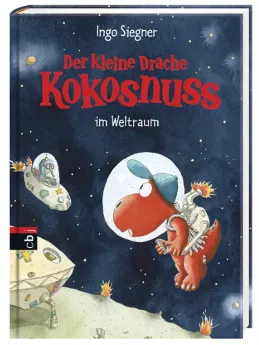
A lawsuit that began in March 2026 between German publishing group Penguin Random House and OpenAI follows a similar pattern. The publisher claimed that, with only a simple prompt, the content of author Ingo Siegner’s bestseller The Little Dragon Coconut could be reproduced verbatim or similar illustrations generated. Germany has already recognized as copyright infringement ChatGPT’s memorization and identical reproduction of famous lyrics in a lawsuit brought by the German Music Copyright Association against OpenAI, ruling in favor of the association. As a result, many are closely watching the progress of this case.
Japan and Europe Governed by Law, U.S. Decided by Courts
Major countries take two broad approaches to copyright issues involving AI training data. One is a text and data mining (TDM) exemption. When analyzing text or data in digital form, this system creates a legal exception allowing use without the copyright holder’s consent within a defined scope. The other is fair use. Even when a use does not fall under an expressly listed exception, courts assess the purpose and method of use and its impact on the market for the original work to determine case by case whether it is “legitimate use” rather than copyright infringement.
In 2018, Japan amended its Copyright Act to establish a TDM exemption allowing data to be freely used for AI training unless it unjustifiably harms the interests of copyright holders. The European Union (EU) combined its TDM exemption with an opt-out mechanism. An opt-out prevents use when a copyright holder declares that they do not consent to use for AI training. Accordingly, the TDM exemption applies to academic training for research institutions, while commercial AI training cannot use a work when the copyright holder has expressed an objection. Furthermore, through the AI Act, the EU requires general-purpose AI companies to disclose information about their training data and honor copyright holders’ opt-outs. The United States, by contrast, has no TDM exemption and leaves courts to decide cases individually under the existing fair-use system. In Bartz v. Anthropic, discussed above, training on purchased books was recognized as fair use, while no ruling has yet been issued on fair use in the lawsuits against OpenAI.
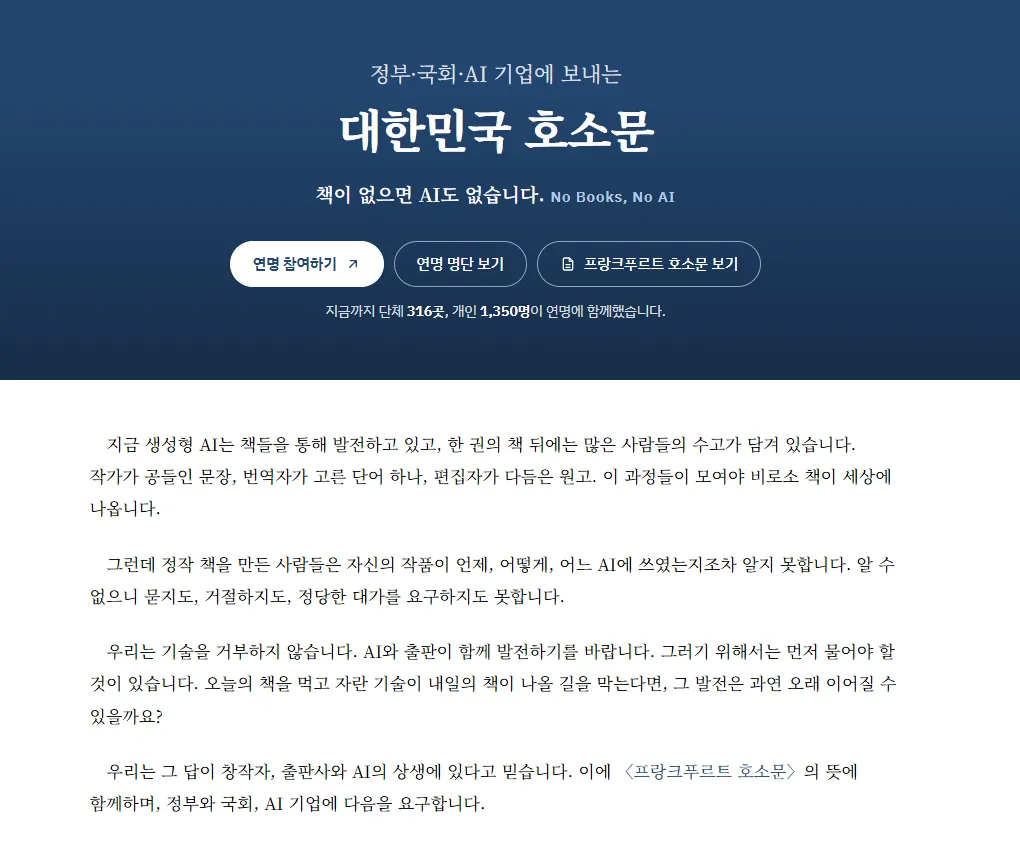
South Korea still has no clear TDM exemption, and the legality of such use is left to the interpretation of Article 35-5 of the Copyright Act concerning fair use. Various amendment bills have been proposed in the 22nd National Assembly, and at an October meeting of the Presidential Council on Intellectual Property on AI copyright, provisions concerning AI training centered on obtaining prior permission from rights holders were deliberated and passed. In an appeal to the government, National Assembly, and AI companies, the Korean Publishers Association stated: “Generative AI is advancing through books, yet the people who created those books do not even know when, how, or which AI has used their works.” It called on the government, National Assembly, and AI companies to disclose the sources of training data, obtain permission from rights holders, and provide fair compensation.
As cases of unauthorized training on publications and destructive scanning increase in the name of AI development, South Korea urgently needs policy measures beyond guidelines and notices. It is time to seek ways to protect creators’ rights alongside the development of the AI industry.
by Editor L