


The "Prayer for Our Earth" of Pope Francis, who passed away last month, contains the words "let us protect the world rather than harm it, and sow seeds of beauty, not of pollution and destruction." Sharing this spirit, the "Ecology and Environment Committee of the Catholic Diocese of Suwon" was established with the purpose of preserving the order of creation by having the church community achieve an ecological transition. Crossing between home and abroad, it carries out energy-transition and carbon-neutrality-related activities, and strives at various ecological-environmental ministry, such as publishing educational materials and conducting educational activities for ecosystem conservation.
• Ministry (samok) usually means, in Catholicism, the work of a priest guiding the faithful.
Father Yang Ki-seok (Stephen), chair of the Ecology and Environment Committee of the Catholic Diocese of Suwon, has, since his ordination as a priest in 1999, pondered while seeking the point of contact between social justice, ecological issues, and faith, and is playing a major role in raising interest in ecology and the environment within Catholicism today. Let us hear Father Yang Ki-seok's story about ESG as spoken of in Catholicism.
The "Eco Priest" Who Fused Faith and the Environmental Movement
Father Yang Ki-seok is called the "Eco Priest." Living up to that name, carrying a tumbler is basic; when doing everyday shopping, he always brings reusable containers to carry home what he buys, and strives to find products with less packaging. Pondering ecology and the environment even during his daily work, he has been deeply involved in environmental issues within the diocese since 2007. In the early days, he recognized environmental problems as issues of social justice and irregularity. But as he gradually began to realize the importance of life and ecology, his eyes opened even to the seriousness of environmental destruction carried out — within the range not defined by law — to the extent of harming human life. To prevent environmental destruction driven by economic logic, he began to live a "life of action." Those efforts connected with the major civil-engineering-project issues our society experienced. His activities — opposing the Korean Peninsula Grand Canal project in 2008 and issuing a statement against the Four Major Rivers project in 2010 — continuously created a fusion of faith and the environmental movement.
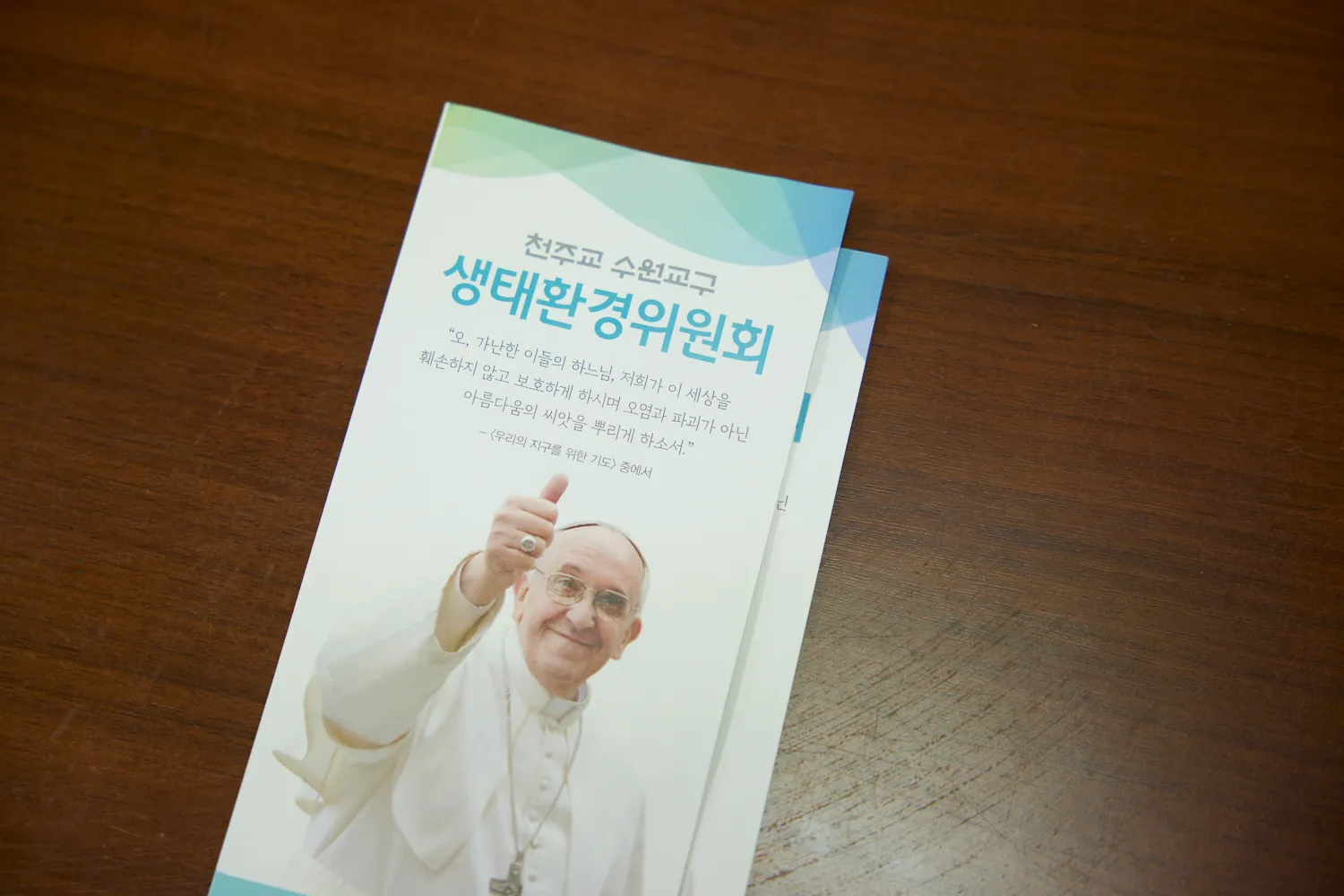
[The Ecology and Environment Committee, following Pope Francis's ecological spirituality © ESG.ONL]
The Catholic Community and a Catholic Way of Practicing ESG
In the Catholic faith, responding to the ecological crisis is a matter directly linked to religious salvation. The Catholic encyclical "Laudato Si'," proposed by Pope Francis in 2015, has the subtitle "an encyclical on caring for our common home" for the future of humanity. This was the first environmentally themed encyclical written by a pope. This encyclical, which points out that "humanity's attitude of prioritizing economic gain and slighting life" is the fundamental cause of the climate crisis, may be somewhat unfamiliar to non-Catholics, but it is an indispensable point when discussing ecological faith. This is because it also reveals the actual state of ecological problems and the approach and mode of action at the Catholic level, and contains in detail content calling for a climate-justice movement.
Accordingly, Father Yang said, the Catholic Church seeks to have all the faithful and good neighbors open a sustainable society through ecological conversion and achieve climate justice by practicing "the values of coexistence, care, and consideration." In particular, he emphasizes that, following the doctrine of keeping away from excessive growth-first thinking and forbidding the worship of material things, if this is not overcome, the path of human life and salvation is threatened. For this reason, Father Yang emphasized that a faith-based response to the climate crisis is also needed, in order to fulfill environmental, social, and ethical responsibility that touches on the ESG spirit.
Contrary to the outside perception that the Korean Catholic Church is a centralized organization, in reality the faithful's awareness and practice determine the ministry policies and operation each parish priest unfolds. Father Yang pointed out that a task is that, although there are already concrete practice guidelines such as energy transition and eco-friendly consumption, the faithful do not recognize these as their own concern. If the diocesan bishops deliver clear ESG-related messages, the faithful of each parish will accept them as a natural responsibility and be able to lead change in the church and society. If faith-based action guidelines based on Pope Francis's "Laudato Si'" encyclical are also clearly presented so as to be applicable to the Korean situation, Father Yang said, one can also expect a substantive spread of ESG culture and change within the church.
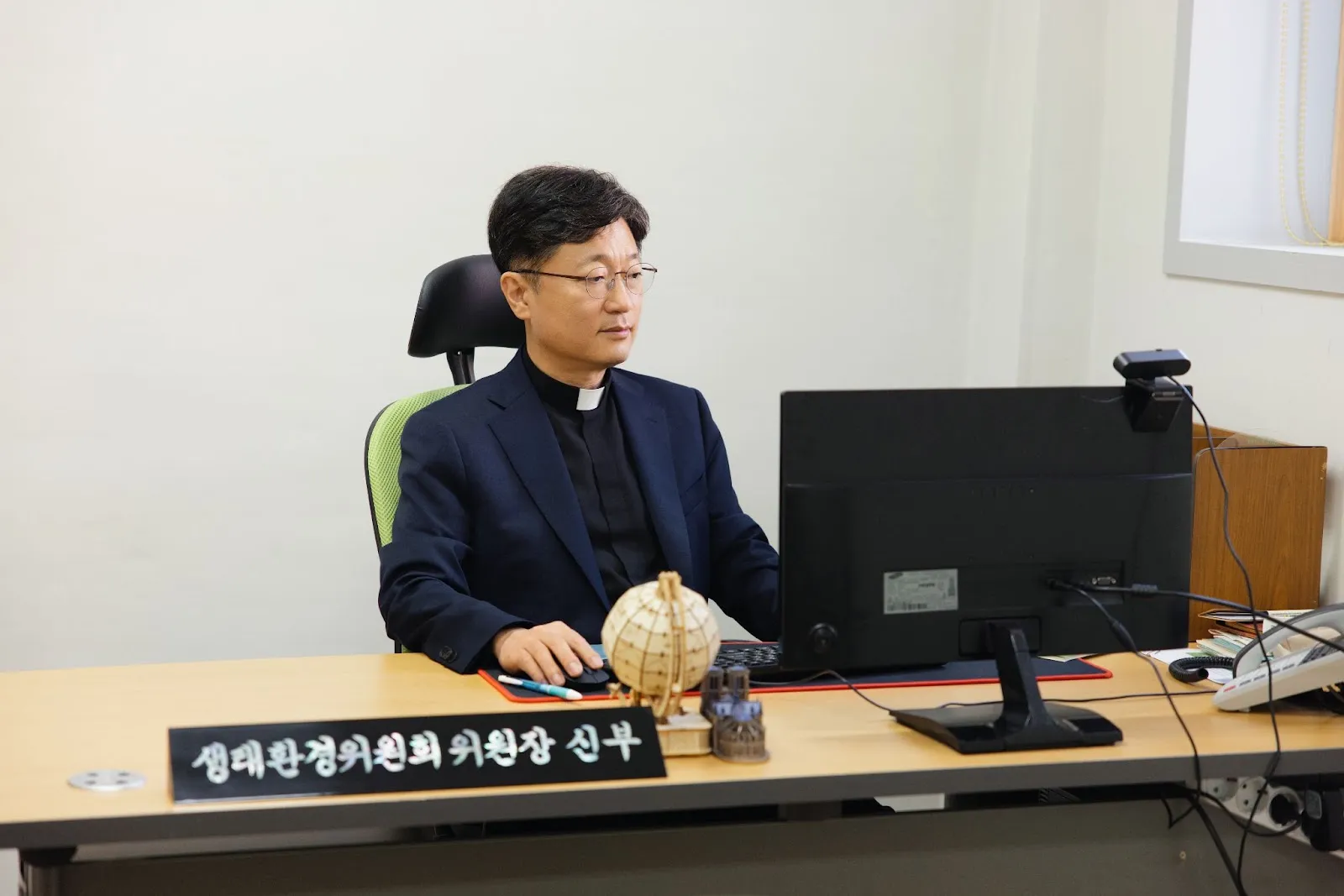
[Father Yang Ki-seok, chair of the Ecology and Environment Committee © ESG.ONL]
The Catholic Diocese of Suwon's 2040 Carbon-Neutrality Roadmap, Ahead of UN and Government Targets
The Catholic Diocese of Suwon, to which Father Yang Ki-seok belongs, seeks to achieve energy independence by converting 100% of the electricity used at the 222 churches within the diocese to renewable energy such as solar by 2030. It declared, as the first in Korea's religious community, that it would realize carbon neutrality by 2040. This plan, which reflects the Vatican's 2021 carbon-neutrality declaration and the climate-crisis warning of the "Intergovernmental Panel on Climate Change (IPCC)," is a target brought forward by ten years from the UN and government targets.
In fact, the Catholic Diocese of Suwon installs solar power plants on each church's roof and idle land, and secures funding through establishing energy cooperatives and cooperating with the government and local governments. It also commissioned the Energy & Climate Policy Institute to create a report examining whether the Suwon Diocese's carbon-neutrality plan is feasible. Newly built and remodeled churches apply zero-energy building certification to raise energy efficiency, and it also developed a carbon-reduction campaign with the faithful through "46 practice items in daily life." Despite such efforts, the outlook for achievement is not very bright. From 2022, when implementation began, to the present, it has achieved a target of about 2,000 kilowatts (kW), falling short of the target of 20,000 kilowatts.
It is a regrettable reality, but one cannot stop. Raising awareness of and expanding participation in solar power remain a task, he says. Father Yang carefully conveyed that, sadly, installing solar power plants in Korea often meets opposition depending on political and ideological conflicts and the local community's leanings. He added that even the faithful hold various political views, so opinions on installing solar power are divided. Because of this, he stated that when pushing solar projects, a strategy is needed of strengthening communication with local residents beyond ideological conflict, an approach considering convenience and consideration, and maintaining political neutrality. Creating a culture that naturally settles eco-friendly habits will also play an important role in easing conflict, he says. Still, Father Yang said with a smile that there are more supporters than before he took action, and revealed his resolve that the Suwon Diocese will lead a sustainable future through concrete, systematic practice for climate-crisis response.
Religious Solidarity for Climate-Crisis Response and Sustainable Development
Father Yang Ki-seok emphasized the importance of solidarity with other religions, beyond Catholicism. Expressing gratitude and respect to fellow religious figures who have long carried out the environmental movement together, Father Yang introduced the case of the Won-Buddhist order, the first in the religious world to open its eyes to the energy transition. Won-Buddhism worked hard with a plan for its 100 temples to create 100 "sunlight power plants," and, seeing this, Father Yang has worked with Won-Buddhism since 2008. Buddhism too, after various attempts, is carrying out activities to lead climate-crisis response and the energy transition through the "Birojana Natural Energy Cooperative."
There is another example too. The cooperation of Korea's five major religious orders (Catholicism, Protestantism, Buddhism, Won-Buddhism, and Cheondoism), which began in 2002 from opposition to the Saemangeum development plan, developed into a solidarity body called the "Korea Religious Environment Conference," which for 24 years has carried out activities for various purposes such as nuclear phase-out, expansion of renewable energy, and the realization of environmental justice. In particular, after the Fukushima nuclear-power-plant accident, the orders even visited Germany's nuclear-phase-out sites together, and each order, with strengthened interest in and cooperation on the energy transition, strives to spread faith-based environmental activism and ecological faith. Father Yang said that Catholicism's carbon-neutrality target again promoted collaboration with other religions and became an important occasion for religious joint action toward Korean society's climate-crisis response and sustainable development.
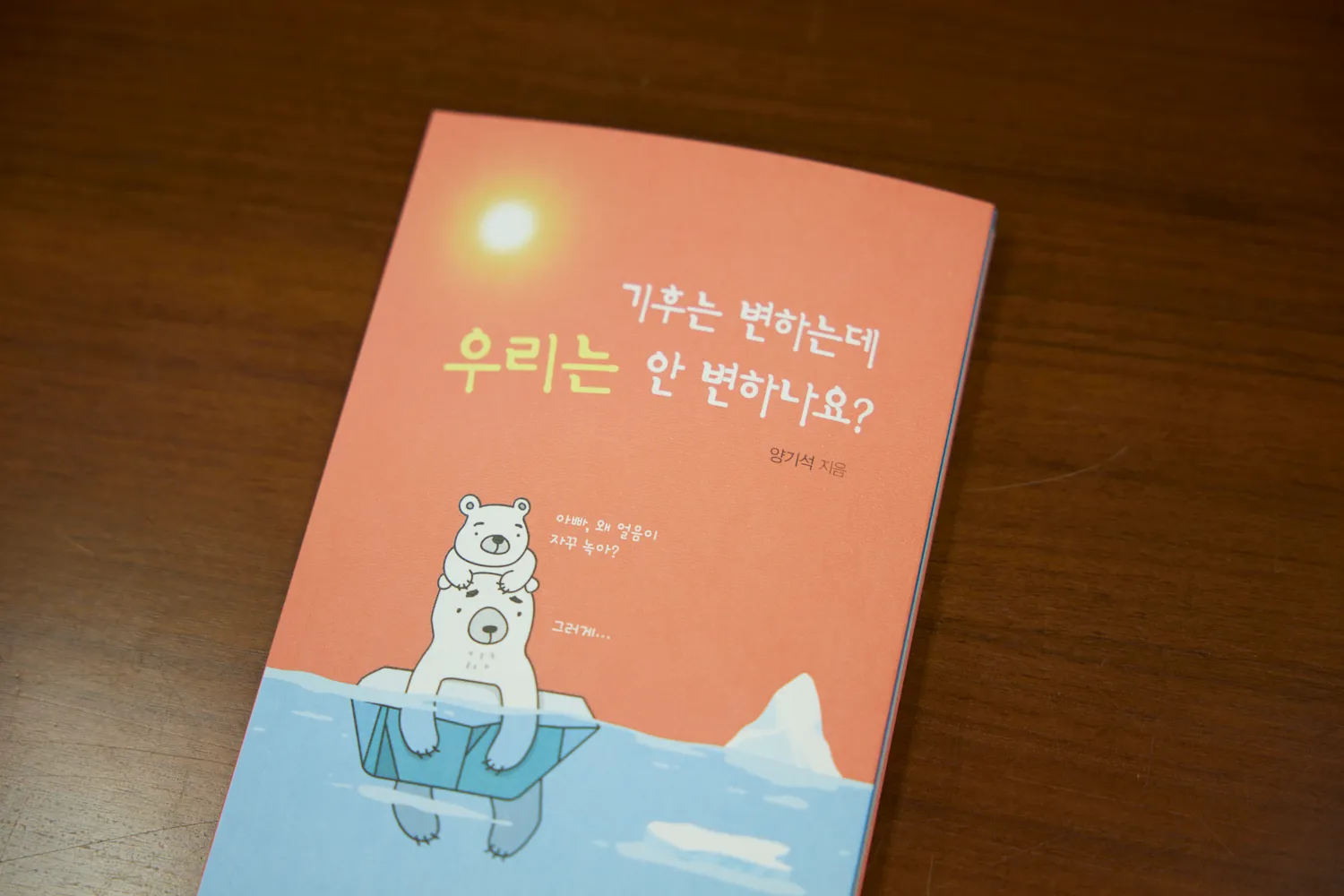
[Father Yang Ki-seok's book "The Climate Is Changing — Why Won't We Change?" © ESG.ONL]
"There Are So Many Environmental and Ecological Problems; We Must Change Our Actual Living Habits"
A large amount of carbon is emitted through our daily lives. So, Father Yang Ki-seok said, we need to recall the words Pope Francis left: "the present era is a time to distinguish what is most important from what is less important." "Is what I am about to buy really necessary, is it something I cannot do without?" Father Yang recommended thinking about this at least once, adding the thought that, to reduce consumption and save energy, we must make efforts to change our own daily lives.
Father Yang, who established the meaning of ecological faith, participated in the environmental movement, and sought solutions to the environmental crisis through faith. Realizing the values of ESG through pursuing the diocese's carbon-neutrality roadmap and broad solidarity with other religions, he is opening a new path of ecological spirituality for our society.
After meeting Father Yang, there was one sentence that came together clearly: "The climate is changing, so we too must change." What the quiet but sure footsteps of action he has walked tell us is that, whether one has a religion or not, we must, through reflection at this very moment, start with "one action."
By Editor L