
Drinking takeout coffee through a plastic straw, I suddenly think, "What if the polar bears go extinct?" What is this guilt I feel every time I see a coffee company's logo? Is it because humans are animals good at pretending to be sorry, so we can lessen our guilt just by pretending to reflect while our hearts aren't really in it?
Photo: Kang Bong-hyung; Design: ESG.ONL
ESG — this term abbreviating environment, society, and governance — evokes in people these days, slowly, painfully, perhaps long-windedly, a certain moral comfort and existential discomfort at the same time. That subtle awkwardness when you first encounter the acronym ESG in the news, at a barbecue restaurant, in a slogan engraved on a coffee cup. The incomprehension that it seems like a category soon to be forgotten.
Seoul's summer is hotter than expected, and New York's spring comes later than anticipated. The word ESG swims through the times like a sense of the seasons. But what is this feeling — at first not even glancing at it, and now having vaguely heard of it but not knowing it exactly, something seemingly important yet somehow someone else's story? In a way, it read like a newspaper editorial. Correct words, but a bit far away. Understandable, but without body heat.

When I see copy saying a product was made in a sustainable way, I reflexively feel sorry. What on earth is the person who chose a product made in a non-sustainable way thinking? But that's me, isn't it? (Then the "just one person like me" circuit soon switches on, and I put the plastic straw back in. Like the struggle of redefining the potato chips I ate a moment ago as a "naturalist snack containing dietary fiber," while declaring that from tomorrow I definitely won't eat junk food.)
Meanwhile, ESG has become the best PR of this era. Because it is moderately harmless, ethical, and packageable. This term, as if symbolizing humanity's contradictions, sounds, so to speak, like a cover letter that wants to make a good impression on everyone. An ambiguity that seems sincere yet not sincere yet sincere. Perhaps it is like a name tag capitalism has stuck on its chest saying, "I'm going to be good now." And companies use this word like the shampoo of marketing. To thoroughly rinse away the greasy truth.
A butterfly hits the office window. Crushed against the glass, it flaps its wings fiercely, squeezing out the last strength of its life. The glass reflects the sky as if imitating it, but there is no wind, no clouds. ESG, glossy like a windowpane, asks about the ethics and efficiency, transparency and responsibility of the times. And now it is time to talk about what we see, and fail to see, beyond the curtain of clear letters.
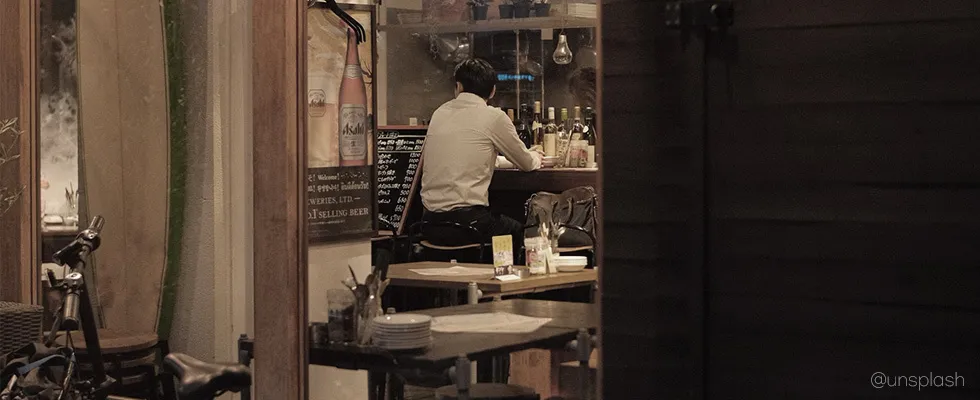
ESG is in fact a question, but few answer it. Perhaps it is a question mark too small to be seen. Or a question so big that everyone avoids it. I found a clue to this doubt two years ago, in an alley in Omotesando, Tokyo. A small eatery that had sold grilled-eel rice bowls for decades. The owner developed paper packaging to avoid using plastic containers. Moreover, he donates leftover food to the homeless. All the employees were regular workers, and the head chef was a person with a disability. Thinking back now, the very unspoken motto of that eel-rice eatery was itself ESG. At that time he did not know ESG, but he respected his customers. And I believed that such respect is what lasts. Longer than trends, longer than marketing. Astonishingly, at the eatery two doors down, they were carefully packing up the rice a customer couldn't finish. The paper packaging made of recycled paper was stamped with a cat-shaped stamp and written in Japanese, "Food is life." There was no system telling them to do so, nor any figures reported about it. His day was ethics built upon honestly washed grains of rice. That eatery owner had simply lived that way. Then I learned again that an improved society is completed by such small, repeated choices.
One night in Vancouver, at a factory that employed undocumented workers, the boss bought gimbap for a migrant worker who had finished a day's work. It was not in the contract, and it was recorded nowhere. That night, I was certain. Real sustainability is like that gimbap. ESG is not some standard but an attitude. The moments when ESG becomes truly wonderful are often seen outside the reports. Good things always begin quietly, and the beginning usually arises from a very small conviction. Excellent ESG is not something grand but doing the small things well. Washing cups, using less paper, keeping promises. Above all, having no shame in what one does. Some want to speak of turbulent transformation, but real change is always small. So small that it usually isn't even reported in the news. Yet we know. That it is real. That it lasts longer than words.
Sometimes even the person shouting ESG doesn't seem to properly understand it. To be exact, he mistakenly believes he understands ESG. The contradiction of refusing a disposable cup, clicking his tongue at the reality of the Amazon, or being aghast at the ratio of female executives in a board photo, while still holding stock in mega-corporations. A retort wriggles inside: so what? Is ESG, in essence, the (perhaps only) attempt to institutionalize human guilt? Or is it a struggle to survive by organizing the era's anxiety into concrete items?
Some company publicly declares it will reduce carbon. Those words are like wind, but you have to keep watching where the wind blows from. Words are easy, but monitoring is hard. That is the reason to take an interest in ESG, and precisely the reason we cannot give up. In truth, we pretend not to know while knowing. Because to know means to act. Everyone confesses inside: how tiring action is. But no one is exempt. On the endless treadmill called social responsibility. Sometimes the Earth looks like a huge bucket. The bucket, once full of water, now leaks little by little. Someone makes a hole, another blocks it with a finger, the rest listen to the sound of water. ESG is a story about that finger. The one who blocks. The one who pierces. The one who does nothing. And the one reading this text. In the end, ESG is how I behave decently even when no one is watching me. Not an ethical choice, just a good choice. Not an accounting risk, but human intuition. We all know. That such intuition isn't visible in reports but remains long in memory.
Whether ESG becomes a rare tool that changes the world, or ends up as just a report, is ultimately decided by people. Even if sustainability is shouted in the marketplace every day, isn't it in the end a series of small things? What cups the people working behind the company nameplate drink from, whether they turn off the computer when they leave, in what tone they begin a meeting. Not a large-scale declaration, a majestic case, or the ambition to overturn everything, but simply the habit of believing something is better, one person's quiet choice, will change the world little by little, ever so little.
Eternity sometimes dwells in unmeasured ways — the gesture of drinking coffee and washing the cup, the heart of adding a kind greeting to an email, the consciousness of taking responsibility for what one has made. Like old timber, like a relationship that grows sturdier the more it is used. Sometimes I think that might be enough. Because there is no such thing as a perfect structure in the world to begin with. Still, someone plants a tree every day. Nor is a tree necessarily planted only in a forest. Sometimes, even under an office desk, something quietly grows.
Someday I hope ESG remains as a story. Not in a chairman's interview, but in a factory worker's diary. Not in a brand's ad copy, but in the hands of an old person cleaning the seashore. That, I think, is a gesture without any reward and the purest form of ESG. Now one question remains. What face does your ESG wear? Is it shining like glass? Or is it dirtied with dust yet vividly alive? And what smell does it give off? The smell of paper? The smell of ink? Or a warm smell like freshly baked bread? The world is filled with lies, but if just one person tells the truth, the dry air might, for a moment, grow moist. If so, could I too become that one person? Could you too?
By Lee Choong-gul (essayist, former editor-in-chief of GQ Korea)