Loading Data
Please wait a moment...
Update Cal.
2026.08
03
Mon
04
Tue
05
Wed
06
Thu
07
Fri
08
Sat
09
Sun
Update Calendar
2026.08
01
Sat
02
Sun
03
Mon
04
Tue
05
Wed
06
Thu
07
Fri
08
Sat
09
Sun
10
Mon
11
Tue
12
Wed
13
Thu
14
Fri

Loading Data
Please wait a moment...
ESG keywords to ponder during a short lunch break.
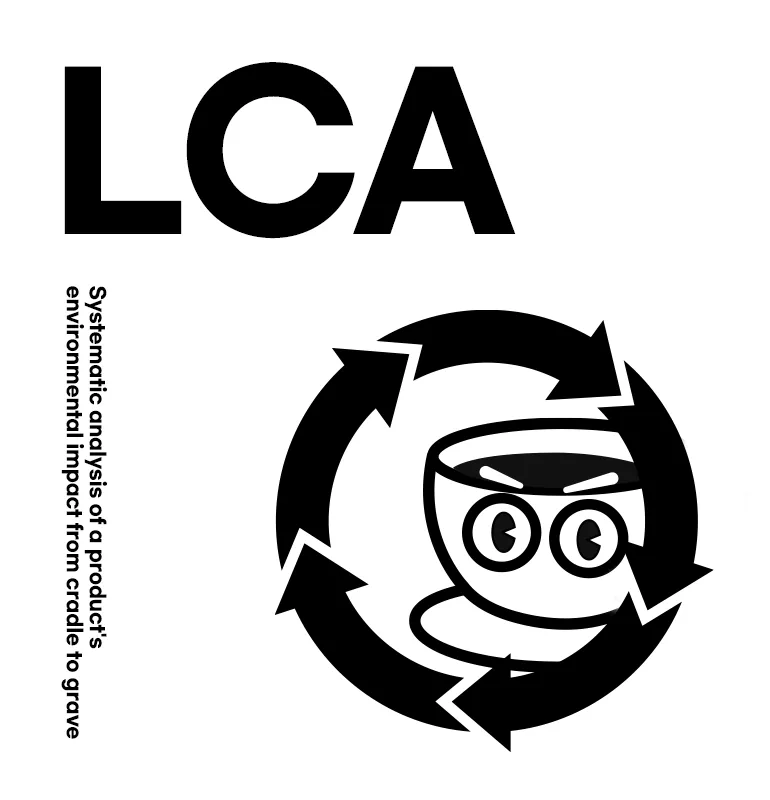
Life Cycle Assessment (LCA) is a methodology for evaluating the environmental impact of a product or service across its entire life cycle. First applied in the United States in the energy sector during the 1960s, LCA quantifies environmental information including carbon footprint.LCA analyzes resource consumption and environmental impact at each stage of the production process — from raw material extraction, processing, and assembly through transportation, use, and disposal — and measures the effect of decarbonization efforts. It can reveal a wide range of environmental impacts including carbon footprint, ozone layer effects, acid rain, and eutrophication. This information plays an important role in building a circular economy, finding practical application in areas such as eco-friendly product design, green marketing strategy, evaluation of environmental target achievement, and identification of improvements to reduce environmental burden.[Life Cycle Assessment (LCA) ⓒESG.ONL]As interest in sustainability continues to grow, LCA is being applied with increasing frequency. However, the methodology also has its limitations — including the difficulty of data collection, the time and cost involved, and the need to account for variability arising from regional or temporal differences. by Editor O
04/08/2025
2025.04.02Biodiversity refers, as the name suggests, to the variety of all living organisms on Earth. Broadly speaking, biodiversity encompasses species diversity, ecosystem diversity, and genetic diversity — with species diversity, covering the wide range of animals, plants, and even microorganisms around us, being the most commonly understood dimension. But biodiversity does not end with species diversity. Equal importance is placed on the diversity of interactions between living and non-living components across the many ecosystems of the Earth's environment — mountains, rivers, lakes, deserts, forests, wetlands, and farmlands alike. Genetic diversity is also essential, as it has enabled humanity to increase the productive capacity of natural resources. Genetics research can, however, carry unintended consequences, and studies into genetic variation within organisms and its potential effects on humans are ongoing.[Biodiversity ⓒESG.ONL]The abundance of food, clothing, and shelter that humanity enjoys today is built upon this biodiversity. Yet the severity of the climate crisis and the effects of environmental change are now threatening it, signaling a deterioration in the health of the Earth's ecosystems — which are, of course, directly connected to and mutually influential on human life. To protect biodiversity, the international community has sustained collaborative efforts from the 1992 UN Earth Summit in Rio de Janeiro through to the 16th Conference of the Parties to the Convention on Biological Diversity (CBD), held in Rome this year. by Editor O
04/02/2025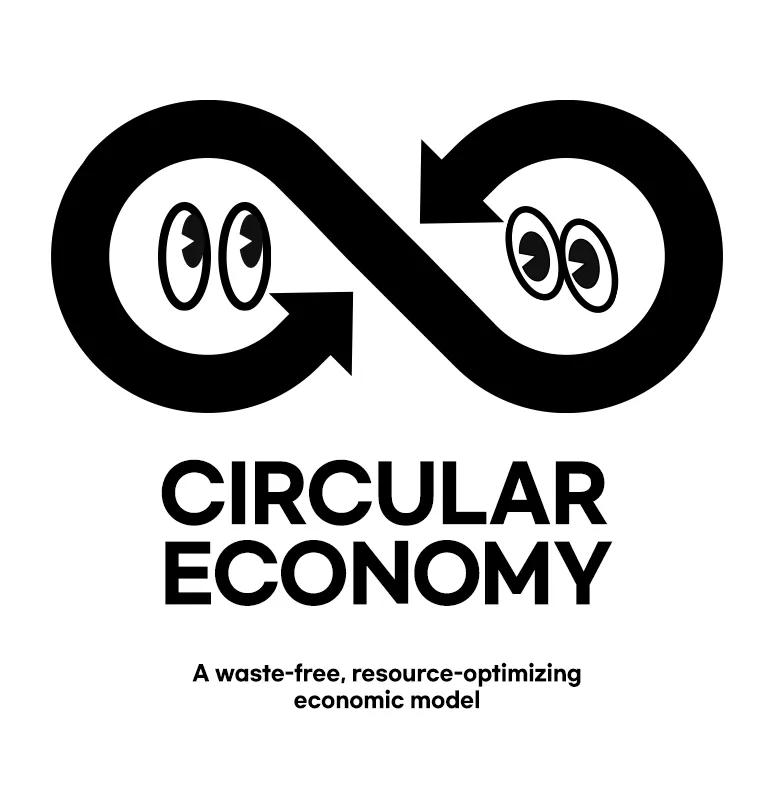
A circular economy is a sustainable economic model that aims to minimize waste by efficiently using, recycling, and regenerating resources. It stands in contrast to the conventional linear economy — characterized by a one-way flow from resource extraction through production, consumption, and disposal — by incorporating regeneration and recycling into the process. Beyond environmental protection, the circular economy offers economic and social benefits including resource conservation.Efforts toward a circular economy begin at the product design stage, where companies work to minimize waste generation and prevent pollution from the outset. Products and materials must be recycled to extend the lifespan of resources and reduce waste. Practical efforts to restore or maintain the regenerative capacity of the ecosystems that underpin all resources are also necessary.[Circular Economy ⓒESG.ONL]South Korea, a resource-scarce nation, is actively embracing the circular economy as part of its response to environmental challenges. The national strategy was set in motion in 2018, when the Ministry of Environment and relevant ministries announced the First Basic Plan for Resource Circulation to transition the country's economic and social structure toward a circular model. In 2022, the Act on the Promotion of a Circular Economy Society was enacted, establishing the framework for a stable transition. Companies are now applying circular economy principles by adopting environmentally friendly product design and production methods. The circular economy is becoming an indispensable paradigm across society for achieving sustainable development. by Editor O
04/01/2025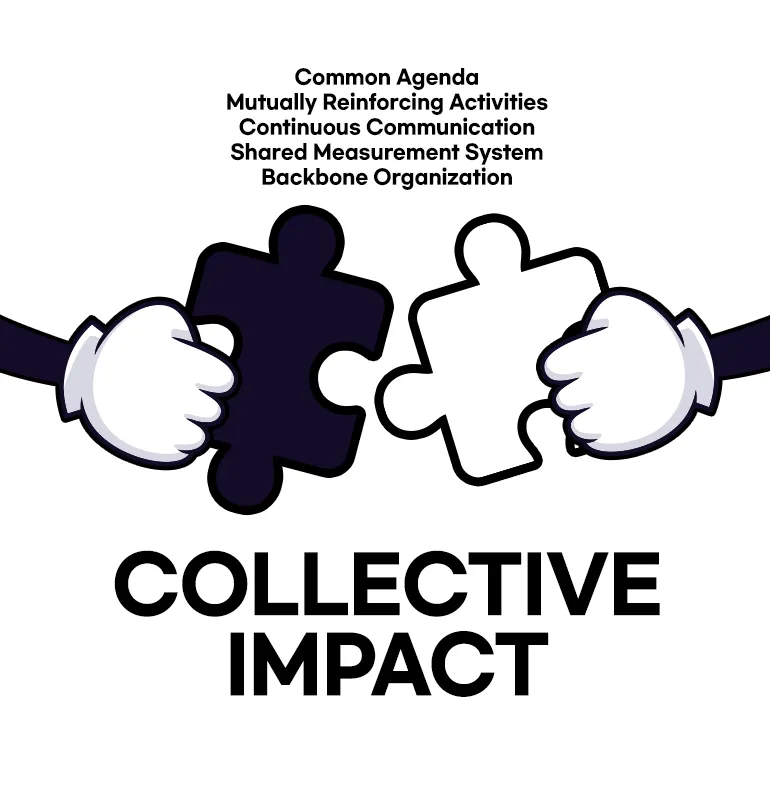
Collective Impact refers to an approach in which actors such as governments, corporations, and NGOs come together around a shared agenda to collaboratively address a specific social problem. Within the ESG framework, it is a concept that places particular emphasis on collaboration among diverse stakeholders, especially in the Social (S) dimension, with the aim of contributing to sustainable development and a more equitable society. It is regarded as a collaborative model capable of generating change at a scale beyond what any single organization could achieve independently — and as a creative approach to effectively addressing complex social challenges.For Collective Impact to work successfully, five conditions must be in place.[Collective Impact ⓒESG.ONL]First, there must be a Common Agenda — participants share a common understanding of the problem and a unified goal for solving it. Second, participants must engage in Mutually Reinforcing Activities, with each actor taking on roles suited to their respective strengths and working in coordination. Third, Continuous Communication — regular and transparent — is especially emphasized as the foundation for sustaining trust and collaboration. Fourth, a Shared Measurement System must be established so that progress and outcomes generated during the problem-solving process can be assessed using common indicators and methodologies. Fifth, a Backbone Organization — an independent entity that coordinates and supports the overall collaborative effort — must be in place to manage the entire system. by Editor O [Reference Article] [Interview] Jeong Min-cheol, Director of Tree Planet: "Until Everyone in the World Becomes a Tree-Planter" *
03/24/2025
The EUropean Green Deal is a comprehensive climate and environmental policy package announced by the European Union (EU) in December 2019. It serves as a roadmap for securing the long-term sustainability of the European economy, with the overarching goal of transforming the EU into a modern, resource-efficient, and competitive society.Faced with the escalating challenges of global climate change and environmental degradation, Europe recognized the need for a strategic framework to transition toward a more competitive and sustainable economy. In response, the EU launched the European Green Deal in December 2019, establishing a set of core objectives: achieving Net Zero — reducing net greenhouse gas emissions to zero by 2050 — decoupling economic growth from resource consumption, and ensuring that no citizen or region is left behind in the transition.[European Green Deal ⓒESG.ONL]The action plan underpinning these goals centers on transitioning to a clean and circular economy that uses resources efficiently, while working to restore biodiversity and reduce environmental pollution.The European Green Deal also addresses the scale of investment required and the mechanisms for financing it, alongside measures to guarantee a just and inclusive transition. In March 2020, the EU provided a legal foundation for these commitments through the European Climate Law. Delivering on these ambitions requires a coordinated set of actions: investing in clean technologies, supporting industries in driving innovation, introducing affordable and eco-friendly transportation options that benefit public health, and decarbonizing the energy sector. [Reference Article] Making Energy That Raises the Value of the Earth, 'Doosan Enerbility'[Reference Article] Why Is Europe So Serious About ESG?[Reference Article] EU Omnibus Simplification Package
03/21/2025
[Net Zero ⓒESG.ONL] 'Net Zero' refers to a state in which greenhouse gas emissions and absorptions are balanced, resulting in net emissions of zero. Under the 2015 Paris Agreement, 196 countries committed to reducing greenhouse gas emissions by 45% by 2030 and achieving Net Zero by 2050 — establishing these as shared international goals. Net Zero is thus an internationally agreed target set as part of broader efforts to halt the increase in atmospheric greenhouse gas concentrations caused by human activity and the resulting climate change. The greenhouse gases subject to reduction include the six major gases defined under the 1997 Kyoto Protocol: carbon dioxide, methane, nitrous oxide, and others. For this reason, some view Net Zero as a broader concept than carbon neutrality, which typically focuses on carbon dioxide alone. South Korea is currently working toward achieving carbon neutrality by 2050. The challenges are significant. Reaching Net Zero requires systemic national and institutional changes — including a transition away from fossil fuels toward renewable energy sources. Investment in and development of renewable energy — including solar thermal and photovoltaic energy, wind, hydropower, marine energy, biomass, and waste-to-energy — is also essential. Equally important is protecting forests, seaweed habitats, and wetland ecosystems to maintain and enhance the carbon absorption and storage capacity of natural ecosystems. Net Zero is thus emerging as a central strategy for humanity's sustainable coexistence — a foundational commitment to building a sustainable future. [Reference Article] [Brand & ESG] Patagonia School: Bearing the Seeds of a New Capitalism [Reference Article] [Trump 2.0 & ESG] Why Is Europe Serious About ESG? [Reference Article] European Green Deal
03/20/2025
The EU Omnibus Simplification Package refers to a comprehensive legislative amendment package announced by the European Commission on February 26, 2025. The package aims to simplify sustainability-related regulations, easing the compliance burden that companies have faced in responding to the EU's expanding ESG regulatory framework.The existing EU measures brought within scope for simplification include the Corporate Sustainability Reporting Directive (CSRD), the Corporate Sustainability Due Diligence Directive (CSDDD), the EU Taxonomy, and the Carbon Border Adjustment Mechanism (CBAM).Under the revised CSRD, the employee threshold for mandatory reporting has been raised from companies with more than 250 employees to those with more than 1,000 employees — reducing the number of companies subject to the directive by approximately 80%. Reporting obligations for small and medium-sized enterprises (SMEs) and mid-caps have also been eased. For the CSDDD, the implementation timeline has been delayed by an average of one year, with large companies now given until July 2028 to comply. The package also removes the harmonized EU-level civil liability provision, extends the monitoring cycle from annual to every five years, and narrows supplier risk assessments to cover direct suppliers only.Regarding the EU Taxonomy, the scope of companies subject to reporting obligations has been reduced, assessment criteria have been simplified, and reporting templates have been streamlined to reduce the volume of required disclosures. A financial materiality threshold has also been introduced, exempting companies from assessment obligations where the relevant activities account for less than 10% of total revenue, capital expenditure, or total assets. Finally, for the CBAM, obligations have been waived for small-scale importers.These changes are expected to reduce costs for businesses and stimulate investment, with an immediate easing of the compliance burden across affected companies.[Reference Article] Why Is Europe So Serious About ESG?
03/17/2025
The Corporate Sustainability Due Diligence Directive (CSDDD) is a directive that obligates companies to directly identify, prevent, and mitigate the actual and potential adverse impacts on human rights and the environment resulting from their business activities, and to disclose this information transparently. The "due diligence" referred to here does not mean the investigative due diligence of physical inspection, but rather a series of processes through which companies prevent and remedy adverse impacts.The CSDDD was developed as part of the European Green Deal announced by the EU in 2019. Proposed by the European Commission on February 23, 2022, it underwent extensive deliberation before being formally adopted at a plenary session of the European Parliament on April 24, 2024 — two years later — and officially entered into force on July 24 of the same year. Even before the directive came into force, some EU member states had enacted their own national due diligence laws, and large companies had voluntarily implemented due diligence processes. However, the absence of mandatory requirements and unified standards meant that participation and transparency remained limited.Through this directive, the EU has established common standards and legal obligations for sustainable management — a landmark achievement in that it is the first time due diligence processes and implementation principles have been codified into law at the level of a regional community rather than individual nations.The core objective of the CSDDD is to embed management practices that account for human rights and environmental impacts across all stakeholders throughout the entire supply chain. The due diligence items under the CSDDD are divided into two categories: human rights and the environment. The human rights category includes the right to life, freedom, labor rights, and the prohibition of child labor, based on instruments such as the Convention on the Rights of the Child and the International Covenant on Civil and Political Rights. The environmental category covers biodiversity, waste, pollutants, world cultural and natural heritage, oceans, and wetlands.The CSDDD requires companies — both within and outside the EU — that meet certain criteria to conduct due diligence not only on their own operations and subsidiaries, but also on the activities of their suppliers and business partners. The scope of due diligence covers both upstream and downstream operations — from raw material production through to product distribution — excluding the product disposal and consumer use stages.The due diligence process consists of nine stages, beginning with embedding due diligence into corporate policy: ▲ identification and assessment of adverse impacts ▲ prevention and mitigation of potential adverse impacts ▲ cessation and minimization of actual adverse impacts ▲ remediation of adverse impacts ▲ monitoring ▲ due diligence disclosure ▲ meaningful stakeholder engagement ▲ establishment and operation of notification mechanisms and grievance procedures.In February 2025, the EU announced the EU Omnibus Simplification Package, which reduces the scope of the CSDDD in an effort to ease the regulatory and administrative burden on companies. As a result, the implementation timeline was pushed back by one year — from 2027 to 2028 — and the monitoring cycle was simplified from annual to once every five years. Additionally, supplier risk assessments were adjusted to focus on first-tier direct supply chains, with the obligation to assess indirect supply chains (second- and third-tier suppliers) removed.Although the scope and pace of the policy may shift depending on political and economic circumstances, with the CSDDD's implementation approaching, companies need to internalize human rights into their corporate culture and commit to long-term efforts. Amid the intensifying global competition and uncertainty brought about by technological revolution, the CSDDD is expected to serve as a key instrument for substantially enhancing corporate sustainability.[Reference Article] Why Is Europe So Serious About ESG? by Editor O
03/13/2025