Loading Data
Please wait a moment...
Update Cal.
2026.08
03
Mon
04
Tue
05
Wed
06
Thu
07
Fri
08
Sat
09
Sun
Update Calendar
2026.08
01
Sat
02
Sun
03
Mon
04
Tue
05
Wed
06
Thu
07
Fri
08
Sat
09
Sun
10
Mon
11
Tue
12
Wed
13
Thu
14
Fri

Loading Data
Please wait a moment...
ESG keywords to ponder during a short lunch break.
Direct Air Capture (DAC) is a technology that directly captures carbon dioxide from the atmosphere — using large fans installed outdoors to extract CO₂ from the air, much like an air purifier filters out dust.As carbon neutrality pledges have spread worldwide, technologies for reducing carbon dioxide emissions continue to advance rapidly. Originally applied to purifying the exhaust from factory chimneys, DAC has gained popularity because — unlike that earlier application — it can be installed virtually anywhere, not just at specific facilities such as industrial smokestacks. Its ability to capture carbon dioxide even from ordinary ambient air, where CO₂ concentrations are relatively low, has further heightened interest in its potential for everyday applications.DAC operates through two main methods. The first is filter adsorption, in which air is passed through a specially designed adsorbent filter to separate out carbon dioxide. The filtered air is then heated to 100°C, at which point the CO₂ is released for capture. A leading company using this approach is Swiss firm Climeworks, whose facility "Mammoth," built in Iceland, operates using geothermal energy for heating — making it an eco-friendly system.The second method is chemical liquid capture. Air is passed through a potassium hydroxide (KOH) solution, which chemically absorbs the carbon dioxide. In this process, the solution must be heated to as high as 900°C to extract the CO₂. Canadian company Carbon Engineering uses this approach to produce liquid fuel.The captured carbon dioxide has a range of applications: it is supplied to Coca-Cola's factory in Switzerland, used as a component of synthetic fuels for aircraft and automobiles, administered in greenhouses to accelerate crop growth, and even injected into the ground to form rock.While DAC's ability to capture carbon dioxide without requiring factory chimneys has made it highly attractive, the technology faces significant cost challenges — capturing one tonne of CO₂ currently costs between USD 600 and 1,000, meaning that capturing the annual emissions of a single vehicle costs approximately KRW 600,000. Energy consumption is also a concern: a single DAC facility can consume as much electricity as an entire small city, making improvements in energy efficiency essential. With this in mind, companies in the field are focused on driving down costs to approximately USD 100 per tonne by 2030. South Korea began full-scale research and development in 2023 and is working to develop lower-cost technologies as well.With the promise of erasing past carbon emissions and generating clean energy for the future, DAC is a technology worth staking the planet's future on. Should the industry succeed in resolving the cost and energy challenges, it holds genuine potential as a solution to the environmental crisis.[Related Article] [Climate Tech Brand & ESG] Climeworks: Giving CO₂ a New Role][Related Article] [International Trends] Toward Gigaton Carbon Removal: 'Mammoth' Goes Online][Related Article] [ESG & Expo] Osaka Expo 2025 Opens: A Window into the Sustainable Future][Reference Article] Toward Gigaton Carbon Removal, "Mammoth" Begins Operation
05/09/2025
GrEenwaShing refers to the practice of "disguised Environmentalism" — in which a company falsely promotes or exaggerates an eco-friendly image to deceive consumers, without genuinely pursuing environmentally responsible management. The term is a compound of "green," meaning nature, and "washing," meaning whitewashing or deception. Even where a company genuinely aspires to environmentally positive activities, excessively inflating its claims or using imagery designed to fabricate a green image can qualify as greenwashing.How can greenwashing be identified? A good starting point is skepticism toward the use of terms such as "eco-friendly" or "zero carbon" without specific figures or certifications to support them. The claim "contains naturally derived ingredients" can be made even if those ingredients account for as little as 0.1% of a product's composition — checking the ingredient list is therefore an effective way to assess whether a product is genuinely eco-friendly. It is also worth asking whether advertising features images of forests or animals unrelated to the product itself, or whether eco-friendly technology applied to a limited product range is being presented as if it applies across an entire lineup. Watching out for proprietary certification marks created by the company itself — rather than recognized third-party certifications — is another useful check.The EU introduced the Green Claims Directive in 2024, prohibiting the use of vague environmental terminology and making it mandatory to substantiate claims across a product's full life cycle and to use credible certification labels. From 2026, this will be tightened further, with an outright ban on eco-friendly claims lacking scientific basis — requiring companies to cooperate in ensuring greater transparency around carbon neutrality assertions. In South Korea, companies found to have engaged in greenwashing face significant public backlash and boycott campaigns, making it all the more important for businesses to develop genuinely eco-friendly products and provide transparent information — free from any suspicion of greenwashing.[Related Article] [International Trends] Revisiting the Greenwashing Debate Through an ESG Lens[Related Article] [Interview] Attorney Hong Seung-pyo, Espée & Lancée: "Trump's Tariff Shock and the EU's CBAM — At the Crossroads of ESG Management"[Related Article] [Today's ESG Keyword] Greensumer[Related Article] [ESG & Brand] Sustainable Fashion: Our Choice for the Future
04/30/2025
Barrier-Free, meaning "free from barriers," is a movement aimed at eliminating the institutional, physical, and psychological barriers encountered in daily life by socially vulnerable groups — including people with disabilities, the elderly, and pregnant women.The term was first officially used in a 1974 UN report titled "Barrier-Free Design." In the 1990s, Japan and Germany began applying the barrier-free concept in earnest to physical obstacles — transportation facilities and public infrastructure. The wheelchair ramps beside staircases at building entrances, and the tactile paving blocks on sidewalks and subway platforms that are now familiar features of daily life, are all examples of barrier-free design. South Korea has actively implemented this approach since 2008.[Barrier-Free ⓒESG.ONL]The barrier-free concept continues to expand alongside technological advances. Today, not only transport facilities but also ordering kiosks are accessible via braille, and voice guidance systems are available to assist service users. A diverse range of AI-based solutions has also been developed, with services such as document recognition systems for the visually impaired and AI sign language avatars for the hearing impaired now entering commercial use.Barrier-free is also being extended into leisure activities. OTT services offer specially produced subtitles and audio description services so that people with visual or hearing impairments can enjoy films. Travel companies are developing barrier-free destinations, lowering the threshold for international travel among socially vulnerable groups.In this way, the barrier-free concept is being applied broadly across everyday life, transforming society so that socially vulnerable individuals can enjoy universal opportunities and rights alongside everyone else. by Editor O
04/29/2025
When preparing to travel across borders, the first thing we reach for is a passport. The Digital Product Passport (DPP), proposed by the EU, is a system that stores and shares information about a product's sustainability — encoded in a QR code or similar format. All tangible products distributed within the EU must carry a DPP. In other words, any product crossing into the EU by sea or air must carry this DPP like a passport to clear customs.The DPP became mandatory in 2024. To advance its 2050 carbon neutrality target, the European Commission enacted the EU Ecodesign Regulation on July 18, 2024, announcing the introduction of the Digital Product Passport for all physical goods distributed within the EU. Required information includes compliance with criteria such as durability, repairability, recyclability, and carbon footprint. From 2027, the DPP will be applied first to textiles and steel, before expanding to cover aluminum, furniture, tires, detergents, paints, lubricants, and chemicals. Companies in these sectors must begin preparing now.[ⓒESG.ONL]The Digital Product Passport was introduced to enhance product sustainability and resource efficiency, and to promote the transition to a circular economy. Anyone with a smartphone can scan the QR code or barcode on a DPP to access information about a product's raw materials and production process, as well as its carbon emissions and recyclability. The ability for all stakeholders — not just consumers — to transparently verify sustainability-related information about a product is the core value of the DPP. It also raises the likelihood that consumers will be able to identify which products are more eco-friendly and sustainable, driving the spread of ethically conscious consumption across society.[ⓒESG.ONL]Many companies are already preparing for the introduction of the DPP. International brands that have already adopted it include luxury houses such as Dior and Cartier, coffee brand Nespresso, and fashion brands H&M and Hunter. South Korean brands that have introduced the DPP include fashion labels RAW RAW, Matin Kim, and Andar, as well as outdoor brand Kolon Sport.However, the use of DPP may give rise to issues including the protection of personal data. Companies adopting the DPP must therefore pay close attention to user protection policies as well. by Editor O
04/25/2025
A GrEensumer is a portmanteau of "green," meaning nature, and "consumer" — referring to an environmentally conscious consumer who considers the environmental impact of a product or service when making purchasing decisions. Greensumers scrutinize environmental factors at every stage of a product's life cycle, from production and sale to distribution. The rise of the greensumer reflects the reality that, amid an increasingly severe climate crisis, green consumption has shifted from being a choice to a necessity. Younger generations in particular — especially the MZ generation — tend to avoid products perceived as unethical or environmentally harmful, preferring conscientious consumption, and have been known to organize swift boycotts against companies that cause environmental or social controversy.The Climate Crisis, a Shifting Consumption Paradigm, and "Value-Driven Consumption (Meaning Out)"Greensumers do not make purchasing decisions based solely on price-to-performance ratio. They place greater weight on what a company is doing for the environment and society, and what social values are embedded in its products — prioritizing "value-driven consumption" that goes beyond simple cost-effectiveness. They place importance on eco-friendly packaging that protects the environment and promotes sustainability, and factor in energy efficiency and recyclability when making choices.Because greensumers seek to express their own philosophy and values through value-driven consumption, design that poses a question to society and an element of creative interest also matter to them. Products that win sustainability awards at prestigious international design competitions often attract their attention.A Critical Eye for GreenwashingIn the face of greensumers' sharp scrutiny, some companies still engage in hollow gestures — promoting false eco-friendly activities while doing little of substance. Companies that engage in greenwashing — the practice of making false or misleading environmental claims — routinely find themselves shunned by greensumers. When a company pursues consistent, genuinely eco-friendly activities with a long-term vision and authentic commitment, greensumers respond with trust and loyalty.The greensumer is no longer just a consumption trend — it has become a mainstream pattern of consumer behavior. Greensumers are an important force driving social change and sustainable development, and their numbers are expected to continue growing. Their presence will serve as an important compass for how all members of society choose to act and live in relation to the environment and to each other.[Related Article] [ESG & Design] The Consumer's Choice: The Eco-Friendly Packaging Revolution] by Editor O
04/22/2025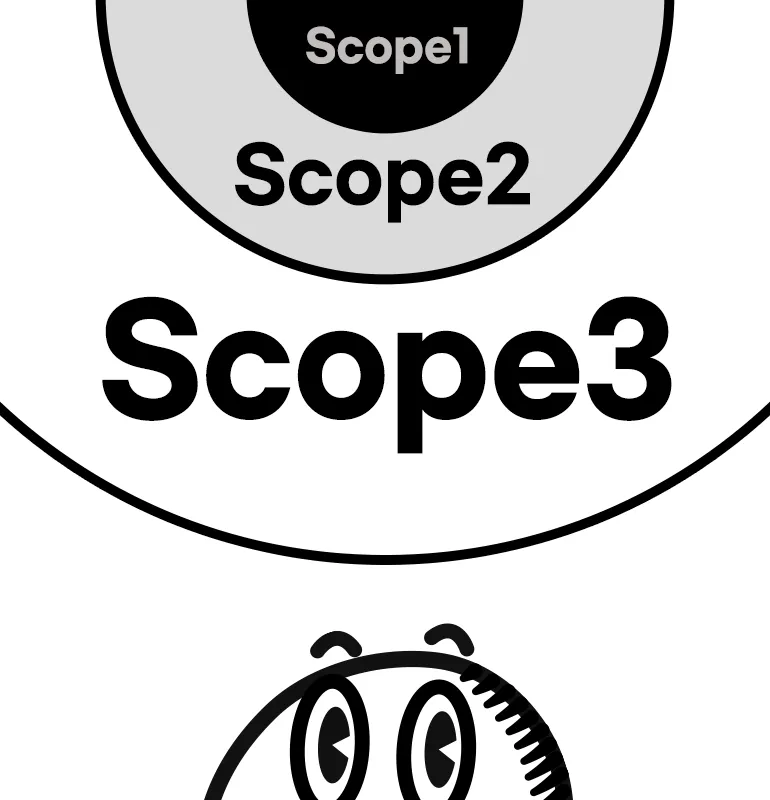
Scope 3 refers to indirect carbon emissions that a company cannot directly control. When greenhouse gas emission sources are categorized by degree of controllability, they are broadly divided into three tiers. Scope 1 covers direct emissions — from factory chimneys, company vehicles, and similar sources. Scope 2 covers emissions generated in the process of producing energy. Scope 3 then encompasses all emissions arising from resources not owned or directly controlled by the company — including carbon released during raw material extraction, employee commuting, and the use and disposal of products.The Importance of Scope 3 in ESG Management[ⓒESG.ONL]Scope 3 is the subject of intense discussion in ESG management because it represents the largest share of carbon emissions in most industries — accounting for 70 to 90% of a company's total carbon footprint. Amid growing international regulatory pressure from the EU and the United States, and the broader trend toward mandatory climate disclosure, managing Scope 3 is becoming a central variable in ESG assessments. For companies seeking recognition as genuinely environmentally responsible, managing Scope 3 has become an essential requirement.[ⓒESG.ONL]Scope 3 Amid International Regulations and Mandatory Climate DisclosureThe EU's CBAM (Carbon Border Adjustment Mechanism) and U.S. climate disclosure laws are now demanding carbon data from overseas supply chains as well. Ignoring this requirement risks a loss of competitiveness and a reduction in ESG ratings. To manage Scope 3 effectively, companies need to collaborate with their suppliers to map the carbon intensity of raw material production processes, and take practical steps — starting with achievable actions such as increasing the use of recycled materials, optimizing logistics, and extending product lifespans.Scope 3 Management Strategies and Practical ApproachesDigital carbon calculators — tools that help companies and individuals measure and manage their greenhouse gas emissions — can also assist with Scope 3 emissions management. By leveraging these tools, companies can efficiently manage their environmental impact across complex supply chains, strengthening both their ESG goal achievement and their long-term sustainable strategy. by Editor O
04/18/2025
The Carbon Border Adjustment Mechanism (CBAM), operated by the EU, is a system that imposes additional costs on products imported into the EU from non-EU countries, based on the carbon emissions generated in their production.This mechanism was designed to advance global carbon neutrality goals in line with the tightening of carbon emissions regulations within the EU. CBAM entered a transitional phase in October 2023 and is scheduled to come into full effect from 2026.Covered Products and How It Works[ⓒESG.ONL]CBAM applies costs to six major product categories: steel, cement, fertilizers, aluminum, electricity, and hydrogen. Organic chemicals, plastics, and ammonia are also expected to be added to the scope, and further expansion into the petrochemical and transportation sectors is anticipated — meaning that companies in related industries must begin preparing their responses now. The cost mechanism works by requiring importers of covered products to purchase CBAM certificates in proportion to the carbon emissions embedded in those products. The aim is to level the playing field by ensuring that imported goods bear the same carbon-related costs as goods produced within the EU, thereby promoting both fair competition and shared environmental responsibility.[ⓒESG.ONL]Impact on Korean CompaniesWith full implementation approaching in 2026, CBAM is expected to have a significant impact on Korean companies. South Korean steel products are among the country's major exports to the EU, and given the carbon-intensive nature of the steel industry, CBAM compliance is likely to increase costs considerably. There is also a risk of penalties for companies that fail to meet the EU's carbon emissions calculation standards.Responding to CBAM: A Call for Innovation in Carbon Emission ManagementCBAM is not simply a regulatory burden — it is becoming a new standard in global markets. Korean companies must therefore move beyond passive compliance and drive genuine innovation in carbon emissions management across their entire supply chains. This will require building robust carbon data management systems, pursuing low-carbon transformation of production processes, and preparing thoroughly for the EU's reporting framework. Collaboration between businesses and government will also be essential: domestically, support mechanisms must be established to help companies navigate international regulations; internationally, strategic approaches must be secured to maintain the competitiveness of Korean products in overseas markets. by Editor O
04/15/2025
Climate Change Adaptation refers to the process of responding to the impacts of climate change — both those already being felt today and those projected to occur in the future. Through adaptation, the damages anticipated from a changing climate and its effects can be mitigated or, in some cases, turned to advantage.Ecologically, organisms evolve to suit their environments. Animals and plants have no choice but to respond effectively to new conditions and change in order to survive in altered environments — in other words, they employ a strategy of minimizing risk.[Climate Change Adaptation ⓒESG.ONL]Every change carries the potential for both crisis and opportunity. Humans, too, seek to identify new potential opportunities amid the crises brought about by climate change, and to pursue the maximization of opportunity through socioeconomic adaptation. We may adapt by preserving the fundamental nature of existing systems while adjusting to change, or by modifying the properties of those systems in direct response to climate change. For example, when faced with water scarcity, societies reduce water consumption, select and develop crop varieties suited to drier climates, and transform their approaches accordingly. Industries develop products less dependent on water, while cities establish new building codes and early warning systems to respond to emerging risks. Governments draw up emergency response plans and build frameworks to address new disease outbreaks driven by environmental change.Despite humanity's efforts, the outlook for global warming remains far from optimistic. For this reason, climate change adaptation increasingly takes the form of creating new business sectors that transform crisis into opportunity, and of leveraging climate challenges as a catalyst for strengthening national competitiveness. Climate change adaptation is, ultimately, the collective wisdom of all living things on Earth — preparing for the climate impacts of both the present and the future. by Editor O
04/14/2025