Loading Data
Please wait a moment...
Update Cal.
2026.08
03
Mon
04
Tue
05
Wed
06
Thu
07
Fri
08
Sat
09
Sun
Update Calendar
2026.08
01
Sat
02
Sun
03
Mon
04
Tue
05
Wed
06
Thu
07
Fri
08
Sat
09
Sun
10
Mon
11
Tue
12
Wed
13
Thu
14
Fri

Loading Data
Please wait a moment...
ESG keywords to ponder during a short lunch break.
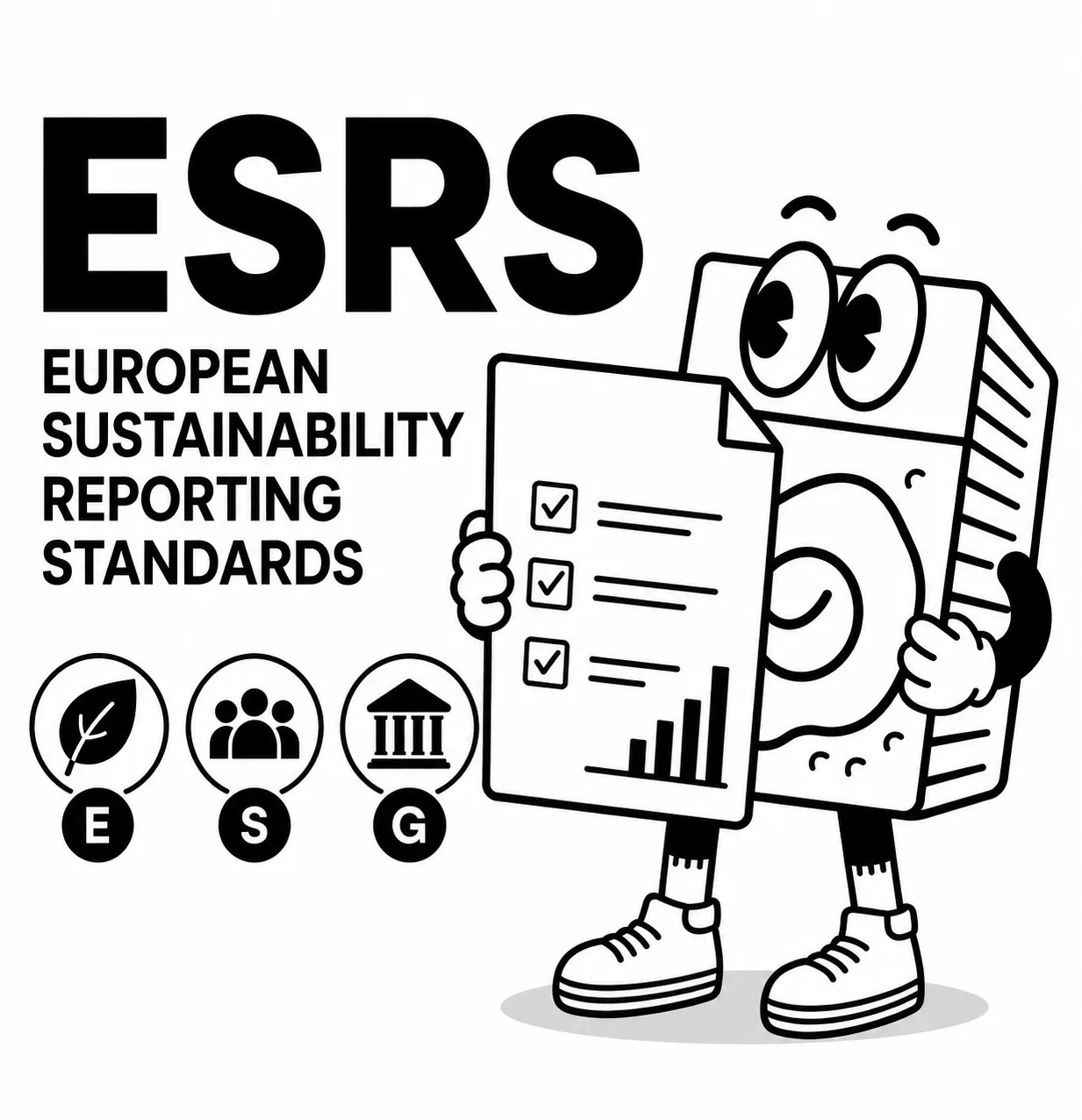
The European Sustainability Reporting Standards (ESRS) are the reporting standards that companies subject to the Corporate Sustainability Reporting Directive (CSRD) must comply with when disclosing ESG information. ESRS is commonly referred to as ESRS. The European Financial Reporting Advisory Group (EFRAG) officially adopted the ESRS as sustainability reporting standards in July 2023 for the implementation of the CSRD directive. The ESRS consists of 12 standards encompassing the three domains of Environmental (E), Social (S), and Governance (G). The standards are divided into 2 cross-cutting standards (General Requirements, General Disclosures) and 10 topical standards (5 environmental, 4 social, 1 governance). The environmental standards address Climate Change (E1), Pollution (E2), Water and Marine Resources (E3), Biodiversity and Ecosystems (E4), and Resource Use and Circular Economy (E5). The social standards cover Own Workforce (S1), Workers in the Value Chain (S2), Affected Communities (S3), and Consumers and End-users (S4). The governance standard (G1) addresses Business Conduct.[ESRS(European Sustainability Reporting Standards) © ESG.ONL/ESG Today]The scope of ESRS application is being expanded in phases. Among EU companies, it was first applied to listed large enterprises with 500 or more employees from 2024, and was expanded from 2025 to companies with 250 or more employees or €40 million or more in revenue. Listed SMEs were scheduled to become mandatorily subject to ESRS from 2026, but under the amended CSRD, they were excluded from mandatory application and converted to voluntary reporting. From 2029, subsidiaries or branches of non-EU companies with net revenue exceeding €150 million within the EU will also become subject to ESRS. The core principle of ESRS is double materiality assessment. Items deemed not material through double materiality assessment may be omitted from disclosure, but certain items of ESRS 2 and Climate Change (E1) remain mandatory. EU companies are building internal data management systems to comply with ESRS disclosure obligations. This is becoming a catalyst for spreading ESG disclosure pressure across global supply chains. by Editor O
05/18/2026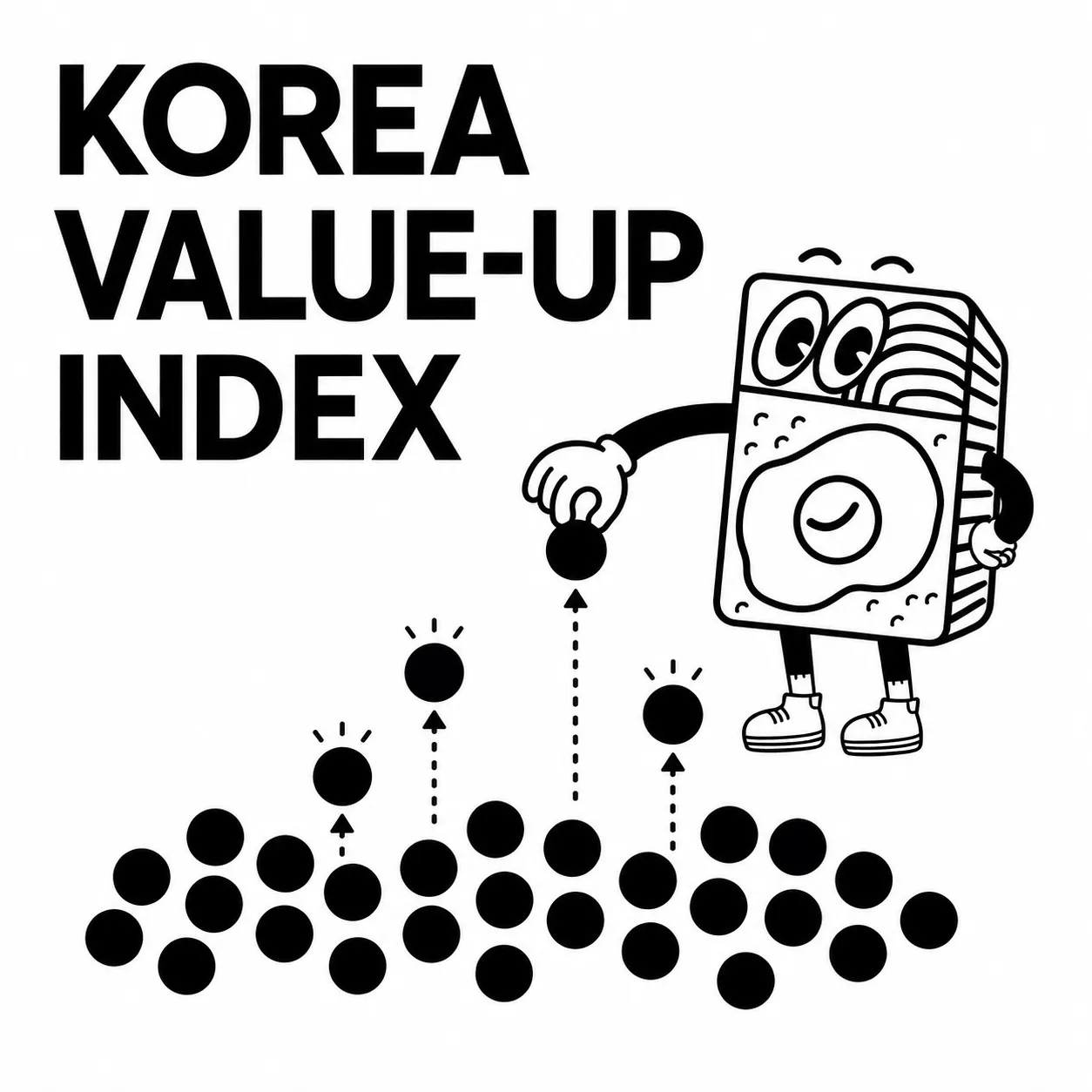
The Korea Value-Up Index is a stock index that weights the free-float market capitalization of 100 domestic listed companies with outstanding profitability and shareholder returns. The Korean stock market has long carried the label of the ‘Korea Discount,’ a structural undervaluation phenomenon in which stock prices are formed lower than warranted by corporate earnings, with low shareholder return rates and opaque governance cited as the main causes. There is a precedent in which the Tokyo Stock Exchange succeeded in revaluing the Japanese stock market in 2023 by demanding improvement in the Price Book-value Ratio (PBR). Subsequently, the Financial Services Commission and the Korea Exchange launched the Corporate Value-Up Program in early 2024.On September 24, 2024, the Korea Exchange officially announced the constituent stocks and selection criteria for the Korea Value-Up Index, and began providing real-time index data on September 30 of the same year. Stock selection passes through a five-stage screening process. First, companies meeting the basic requirements of ‘Market Representativeness’ — selecting those within the top 400 by market capitalization — and ‘Profitability’ — excluding companies in the red for two consecutive years — are filtered. Thereafter, ‘Shareholder Return’ screening selects companies with a history of dividends or share buybacks, followed by ‘Market Valuation’ selecting those with high PBR, and ‘Capital Efficiency’ selecting those with high Return on Equity (ROE). The final 100 stocks are selected through this phased evaluation. [Korea Value-Up Index © ESG.ONL/ESG Today]The base date of the Korea Value-Up Index is January 2, 2024, with the base index set at 1,000 points. The index constituents are regularly rebalanced every June. Unlike the conventional KOSPI 200, which selected 200 representative blue-chip stocks solely based on market capitalization size, the Value-Up Index was designed to avoid concentration in specific industries by introducing relative evaluation across industry groups. As a result, a diverse range of industries — including information technology, industrials, healthcare, and finance — are included in the Value-Up Index at a ratio of 67% from the KOSPI market and 33% from the KOSDAQ market. Shortly after its launch, the Korea Value-Up Index also became embroiled in controversy over the validity of its composition. Opinions were raised questioning whether the stocks included in the Korea Value-Up Index actually met the key purpose of value-up — discovering companies with high shareholder returns and capital efficiency to induce market revaluation. It has also been pointed out that there is a disconnect between the original goal of enhancing shareholder value and the actual index composition, as more than half of the constituent stocks have dividend yields below 1.97%. For the Korea Value-Up Index to achieve its original goal of resolving the Korea Discount, it will need to pursue refinement of the index design while also managing the substantive establishment of corporate governance reform and a shareholder return culture. by Editor O
05/11/2026
Energy Transformation refers to the process of shifting the fossil fuel-centered energy system to low-carbon energy sources. Discussion of energy transformation began in earnest after the adoption of the Paris Agreement at the 21st Conference of the Parties (COP21) to the United Nations Framework Convention on Climate Change in 2015. That year, 196 countries agreed under the Paris Agreement to limit the global average temperature rise to within 1.5°C above pre-industrial levels. Since then, governments and companies have been under pressure to fundamentally change the way energy is produced and consumed.According to the International Renewable Energy Agency (IRENA), global renewable energy generation capacity stood at 3,382 GW as of 2023, nearly tripling compared to ten years earlier. This ongoing energy transformation is spreading beyond the power generation sector into industry, transport, and buildings. Representative examples include the spread of electric vehicles, hydrogen-based steel production, and building energy efficiency. The global energy transformation market was valued at USD 3.08 trillion as of 2024 and is projected to reach USD 5.56 trillion by 2030, growing at an annual average rate of 10.3%.[Energy Transformation © ESG.ONL/ESG Today]South Korea is no exception. The government has set a Nationally Determined Contribution (NDC) of reducing greenhouse gases by 40% compared to 2018 levels by 2030 and is pursuing a plan to raise the renewable energy share to 21.6% by 2030. The expansion of solar and wind power facilities is being carried out alongside the early closure of aging coal-fired power plants. At the corporate level, RE100 has become a key implementation tool for energy transformation, and as of 2024, approximately 40 major domestic companies including Samsung Electronics, SK Hynix, and LG Energy Solution have joined RE100. As carbon regulations tighten across global supply chains, RE100 implementation is effectively becoming a mandatory condition for export companies.Energy transformation is simultaneously a climate goal and a matter of industrial restructuring. Without parallel investment in Energy Storage Systems (ESS) to complement the unstable supply and demand conditions of renewable energy, power grid modernization, and hydrogen infrastructure, the pace of transformation will struggle to keep up with the targets. While we have reached consensus on the direction of the transformation, how the speed and costs are to be shared among different actors remains a challenge to be resolved.[Related Article] ESS: An Essential Solution for the Carbon Neutrality Era by Editor O
05/06/2026
The Sustainable Finance Disclosure Regulation (SFDR) is a regulation that mandates financial institutions within the EU to disclose sustainability-related information on their investment products. Adopted in 2019 and implemented from March 2021, it was introduced to prevent greenwashing of financial products such as funds. Among the concepts first introduced by the SFDR, the most intuitive is the fund classification system. This classification system sorts funds into three categories based on how close they are to sustainable investment, and they are referred to as ‘Article 6,’ ‘Article 8,’ and ‘Article 9’ funds under the regulatory provisions. Article 6 funds are conventional funds that do not treat ESG as a primary objective. Financial institutions need only disclose the potential impact that ESG risk factors may have on the fund’s investment returns. Article 8 funds aim to promote Environmental and Social characteristics, but sustainable investment itself is not their core objective. Financial institutions must specify how the fund promotes those characteristics. Article 9 funds are funds whose core objective is sustainable investment. At the pre-contractual disclosure stage, financial institutions must specify not only the sustainability objective but also the concrete methods by which that objective is achieved.[Sustainable Finance Disclosure Regulation (SFDR) © ESG.ONL/ESG Today]However, the article numbers merely indicate the level of disclosure obligations. Since actual investment performance and the achievement of ESG objectives are separate matters, it is difficult to conclusively judge a fund’s sustainability level based solely on the classification system.An important purpose of the SFDR is the prevention of greenwashing. Since the SFDR Level 1 disclosure took effect on March 10, 2021, and Level 2 technical detailed rules were applied from January 1, 2023, the current SFDR prescribes 64 disclosure indicators, including 18 mandatory indicators for corporate, sovereign, and real estate investments. The disclosure indicators include specific quantitative items such as greenhouse gas emissions, biodiversity impact, water use, and hazardous waste generation. Under SFDR rules, national financial regulatory authorities may sanction asset managers within financial institutions and impose penalties including fines if the information disclosed by the financial institution is found to be inadequate.The SFDR requires financial institutions to disclose sustainability information in the market’s own language — that of disclosure, rather than through direct regulation. Through this information, investors can directly compare and judge which funds pursue sustainability and to what extent. by Editor O
04/30/2026
The United Nations Framework Convention on Climate Change is an international environmental treaty adopted in 1992 to reduce greenhouse gas emissions. In South Korea, it is commonly abbreviated as UNFCCC, from United Nations Framework Convention on Climate Change. The issue of climate change emerged as a full-fledged international agenda with the establishment of the Intergovernmental Panel on Climate Change (IPCC) in 1988. Subsequently, the international community adopted the UNFCCC at the Earth Summit held in Rio de Janeiro, Brazil in 1992, and the Convention formally entered into force in March 1994. Currently, 198 countries participate as Parties to the UNFCCC, making it effectively the only climate treaty signed by virtually the entire world.The UNFCCC Secretariat is located in Bonn, Germany, and carries out functions including reviewing the greenhouse gas emissions management systems of Parties, registering and managing Nationally Determined Contributions (NDCs), and strengthening capacity and providing support to developing countries.[UNFCCC (United Nations Framework Convention on Climate Change) Ⓟ ESG.ONL/ESG Today]The UNFCCC carries meaning beyond a mere treaty document in international climate response. The Convention institutionalized the principle of ‘common but differentiated responsibilities,’ making it the first legal framework to officially recognize the difference in greenhouse gas emission responsibilities between developed and developing countries. Climate diplomacy issues — such as support for irrecoverable damage suffered by developing countries due to climate change — are negotiated within the UNFCCC framework.However, the UNFCCC has also been criticized over whether it is a convention capable of responding effectively to climate change. NDCs are voluntary national targets with no enforcement mechanism, and the UNFCCC Conference of the Parties (COP) agreements operate on the principle of consensus, which means they can remain at the level of the lowest common denominator — these are pointed to as limitations. As the pace of the climate crisis outstrips the pace of international negotiations, voices are growing louder that the UNFCCC must become a driver of change that promotes substantive climate action. by Editor O
04/23/2026
Anti-Money Laundering (AML) is an institutional mechanism to prevent the act of disguising criminal proceeds as legitimate funds. The international standards for AML are established by the Financial Action Task Force (FATF), founded in 1989. FATF encompasses Europe, the Americas, the Middle East, and Africa, with 39 countries and 2 regional bodies as members. It establishes international standards to prevent money laundering and terrorist financing, and examines the level of implementation in each country through a periodic Mutual Evaluation review process. Countries placed on the FATF Black List (high-risk countries) or Grey List (countries under intensive monitoring) face severe disadvantages in international financial transactions.Recently, the scope of AML has been rapidly expanding into the virtual assets and ESG domains. The European Union significantly strengthened customer identification obligations for virtual asset service providers through its 2024 AML Package, and also simultaneously introduced a beneficial ownership registration system to block the disguised investment of corrupt funds into ESG.[Anti-Money Laundering (AML) Ⓟ ESG.ONL/ESG Today]South Korea’s AML oversight body, the Financial Intelligence Unit (FIU), strengthened the suspicious transaction reporting obligations of virtual asset service providers through a 2023 amendment to the Act on Reporting and Using Specified Financial Transaction Information. Sanctions for AML violations by domestic financial institutions are publicly disclosed by the FIU, allowing detailed confirmation of violations and sanction measures.From a corporate perspective, AML has emerged as a key indicator of ESG Governance, going beyond the realm of regulatory compliance. Global institutional investors are increasingly downgrading ESG ratings and excluding from investment companies with a history of AML violations, as the international community’s demand for financial transparency grows. AML implementation capacity is functioning as a yardstick of corporate sustainability beyond mere legal obligation. by Editor O
04/16/2026
The International Corporate Governance Network (ICGN) is a global non-profit organization specializing in corporate governance, founded in 1995. Abbreviated from ‘International Corporate Governance Network,’ ICGN operates under the laws of England and Wales and primarily conducts activities related to information exchange and research for the improvement of corporate governance. As the largest organization in the field of corporate governance, ICGN currently counts more than 300 asset owners, asset managers, advisory institutions, and other members from over 40 countries as active participants. Domestically, the National Pension Service and Korea Investment Corporation are active ICGN members. The establishment of ICGN dates back to the mid-1980s, when the importance of corporate governance was rising, particularly in North America and Europe. At that time, institutional investors recognized the need for international solidarity as they sought management strategies utilizing their equity holdings. In 1994, the establishment of ICGN was formally proposed at the International Roundtable of the Council of Institutional Investors (CII) General Meeting in the United States, and ICGN was founded the following year, in March 1995, in Washington, D.C.[ICGN (International Corporate Governance Network) Ⓟ ESG.ONL/ESG Today]ICGN’s primary activities are research on corporate governance principles and practices, and the formulation of guidelines presenting efficient standards that companies should observe in ESG. It enacted the Global Corporate Governance Guidelines in 1999 and the Executive Compensation Guidelines in 2006, and the domestic Stewardship Code introduced in 2016 also drew on ICGN materials as a reference. ICGN has been holding an annual regular conference since 1996, and since 2001, it has been awarding the ICGN Award to contributors to the improvement of corporate governance. Its organizational structure consists of a Board of Directors, an Executive Director and Secretariat, and Committees, with its Secretariat located in London, United Kingdom.In February 2026, ICGN expressed its support for the proposed amendment to the Capital Markets Act to mandate sustainability disclosure in South Korea. In an open letter sent to the National Assembly ESG Forum, the Financial Services Commission, and the Korea Accounting Standards Board, it recommended the swift announcement of an ESG disclosure roadmap and the adoption of International Sustainability Standards Board (ISSB) standards. As an authoritative body that has presented international standards for corporate governance and investor stewardship activities, ICGN serves as a key platform for improving global corporate governance. by Editor O
04/14/2026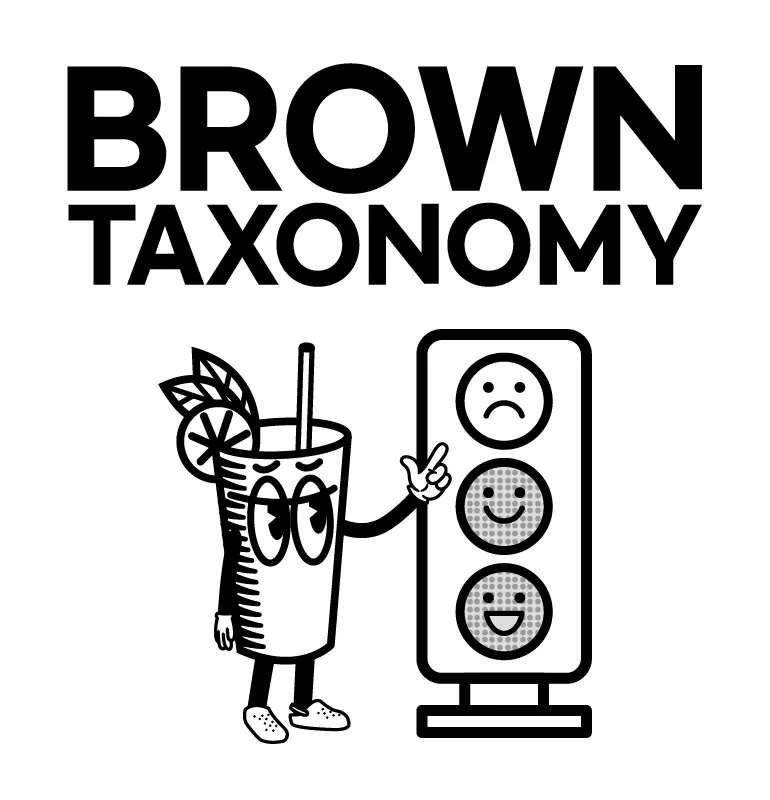
Brown Taxonomy is a system that defines and classifies economic activities that are environmentally unsustainable or involve high carbon emissions. In other words, Brown Taxonomy is a concept that contrasts with Green Taxonomy. While Green Taxonomy is a system that labels ‘this is eco-friendly,’ Brown Taxonomy is a concept that brands ‘this is harmful to the environment.’The EU Technical Expert Group on Sustainable Finance first formalized the need for the introduction of Brown Taxonomy in its 2020 final report. The need for introducing Brown Taxonomy arose from the recognition that activities incompatible with Europe’s carbon reduction targets — such as fossil fuels and high-carbon industries — were still receiving investment. That said, Brown Taxonomy does not simply mean an exclusion list. It is a financial infrastructure that systematically identifies how harmful certain activities are, steering capital away from them.[Brown Taxonomy Ⓟ ESG.ONL/ESG Today]In 2022, the EU Platform on Sustainable Finance (PSF) expanded the Green Taxonomy concept and proposed a ‘three-tier traffic light system’ consisting of three categories: Green, Amber, and Red.1. Green: Same concept as the existing Green Taxonomy. This applies to activities that substantially contribute to at least one of the six environmental objectives while causing no significant harm to the remaining objectives.2. Amber: Applies to activities that do not cause significant harm to the environment but are not yet green. They may receive investment conditional upon low-carbon transition plans.3. Red: Applies to activities that cause significant harm to the environment. If low-carbon transition is possible, they move to Amber; if impossible, they are immediately subject to phase-out. Brown Taxonomy corresponds to the Red category among these, and is therefore also referred to as ‘Red Taxonomy.’ Despite the PSF’s recommendation, Brown Taxonomy currently has no legal binding force. In the Omnibus Simplification Package announced by the European Commission in 2025, the Green Taxonomy regulation itself was simplified, and discussion on introducing Brown Taxonomy has yet to be concretized. South Korea also operates the K-Taxonomy but has not yet discussed a classification system for harmful activities corresponding to Brown Taxonomy. If Green Taxonomy is the signpost pointing where to go, it is also necessary to prepare Brown Taxonomy as the milestone telling us where to stop. by Editor O
04/03/2026