
The areas in which AI replaces human work are expanding rapidly. Yet human labor still exists behind it. Even AI designed to replace human work still has to learn how to work from people and pass through human hands to function properly. Nevertheless, what the people performing this labor actually do and the conditions under which they work are obscured by the attention surrounding AI.
Walking Robot Dogs to Train AI
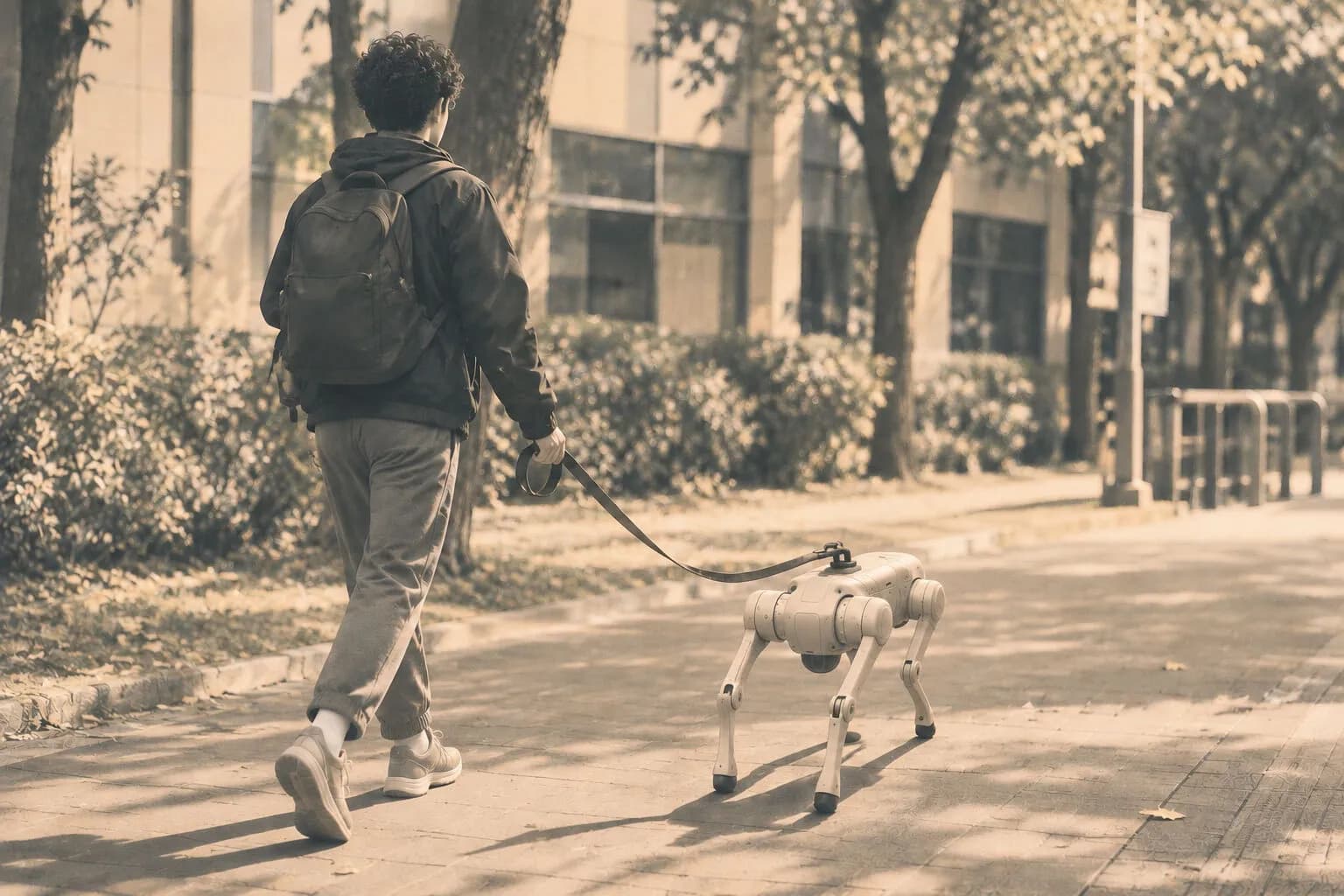
According to a report by The New York Times, Dimensional, a company developing an open-source operating system for robots, recruited people—regardless of experience—to walk the streets with robot dogs for four to six hours at a time, offering $20 an hour. While participants control the robot dogs with a remote control or mobile app, the cameras and sensors mounted on the robots record the surrounding environment. These recordings are used as reference data for AI to learn how to navigate real streets.
Dimensional does not build robots itself. Instead, it is developing a robotic operating system after purchasing more than 100 robot dogs and 50 humanoid robots from manufacturers in the United States, China, and Germany. The company aims to create a structure in which, once a person gives instructions, an AI agent within the operating system makes its own decisions and continues acting according to the assigned task, controlling the robot. In an interview with The New York Times, Dimensional CEO Stash Pomichter described tasks people still perform physically, such as moving heavy boxes, as “honestly barbaric.”

But the path to that future still depends on human bodies. Participants in the part-time work walk the streets for hours while controlling the robots, and when a robot dog stops because of overheating, they must carry the approximately 15-kilogram robot back to the office themselves. The physical labor Pomichter called “barbaric” has once again become the responsibility of people at the very site seeking to eliminate it. After comparing robots controlled by humans with those controlled by AI agents, Pomichter also said that AI agents are still very poor at handling machines and that people must remain directly involved in the development process for the time being. At least in this case, AI development could not happen without people controlling robots, keeping records, and responding to unexpected situations. And this is not limited to one startup.
The People Working Behind AI
The extent to which AI depends on human labor is also evident in the numbers. In its Technology and Innovation Report 2025, the United Nations Conference on Trade and Development (UNCTAD) divided the process of creating AI into three stages—data preparation, model training, and evaluation—and explained that each stage requires human input. During data preparation, people label objects one by one in photos or videos to create material for AI to learn from. According to the report, labeling just one hour of video can require around 800 hours of human work. At the evaluation stage, people read AI’s responses, rank better answers, and improve the AI.
Much of this work is performed by workers in developing countries. The report noted that they often work up to 10 hours a day while earning less than $2 per hour, with few opportunities to build careers. As AI becomes smarter, the work of the people creating data and selecting answers behind it also increases, but that work rarely comes into view.

Because they remain out of sight, protection for them has also lagged behind. The International Labour Organization (ILO)pointed out in its 2025 report on occupational safety and health that many of these workers supporting AI belong to the informal economy and are therefore not covered by occupational safety laws. The report highlighted risks in two occupations in particular. Data labelers work under strict surveillance and often receive insufficient support for the psychological impact of classifying harmful content. Content moderators who filter harmful posts may have to process 500–1,000 items a day and face mental-health risks such as post-traumatic stress disorder (PTSD) through constant exposure to violent material.
The Safety of People Working Alongside AI
In the same report, the ILO also addressed risks faced by people working alongside AI and automated equipment. Excessive reliance on automation can reduce people’s ability to respond to unexpected situations and increase the cognitive burden of continuously monitoring complex systems. The ILO therefore stated that digital tools should support, rather than replace, human judgment. There are also physical risks. Workers maintaining or repairing robots can be injured when software errors or sensor failures cause robots to move unexpectedly, while workers alongside robots may not get enough rest as they try to match the machines’ pace. As in the case of the walking participant who had to carry back a robot dog that stopped from overheating, the moment a robot stops, its task returns to people in the form of a heavy load.
Companies adopting AI must therefore include the work of training and monitoring AI in safety management and job design. People supervising AI should have the authority to stop operations when they identify a risk, as well as time and training to respond to errors. Those creating and reviewing data need reasonable workloads, rest, and mental-health protections; people working alongside robots need safety standards suited to their tasks.
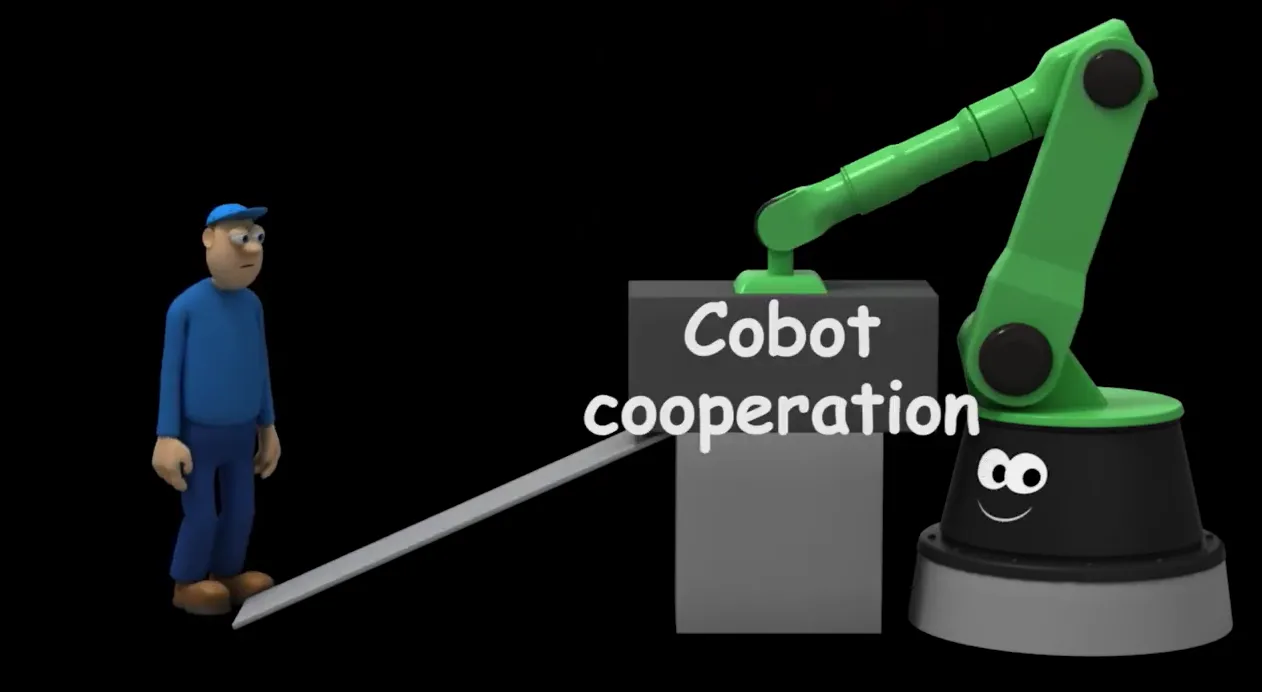
How these measures are determined also matters. The ILO recommended that workers participate at every stage of technology adoption. Authority, workloads, and safety standards can function appropriately in the workplace only when the people who perform the work help establish them. Robot dog-walking jobs show not only that AI development requires human labor, but also that the conditions protecting that labor must be designed from the earliest stages of technology adoption.
by Editor N