

What drove the KOSPI index to its all-time highs were large-cap stocks such as semiconductors and secondary batteries. While the KOSPI index makes headlines day after day and we discuss the business environments and performance of large-cap stocks like those in the semiconductor industry, there is something that goes unmentioned, as if it did not exist: the ecosystem usage of electricity, water, land, minerals, and other resources that forms the very foundation of that performance.
Natural Capital as the Real Foundation of Financial Capital
The semiconductor and battery industries that have driven the recent stock surge consume enormous amounts of energy and minerals. The International Energy Agency (IEA) projected in its 2020 Net Zero Emissions scenario that, with the expansion of electric vehicles, lithium demand could increase by up to 40 times or more by 2040. While the expansion of EVs is a core strategy of the climate transition, it simultaneously accompanies the ecological burden of expanded mineral extraction and water resource use.
Lithium-ion batteries — secondary batteries — the key component of electric vehicles, are connected to lithium salt flats in Chile, nickel mines in Indonesia, and cobalt mining in the Congo. At the salt flats, thousands of tons of brine evaporate daily for lithium extraction, and at the nickel mines, expanded mining is increasingly linked to tropical forest degradation and ecosystem fragmentation, heavy metal contamination, and child labor issues.
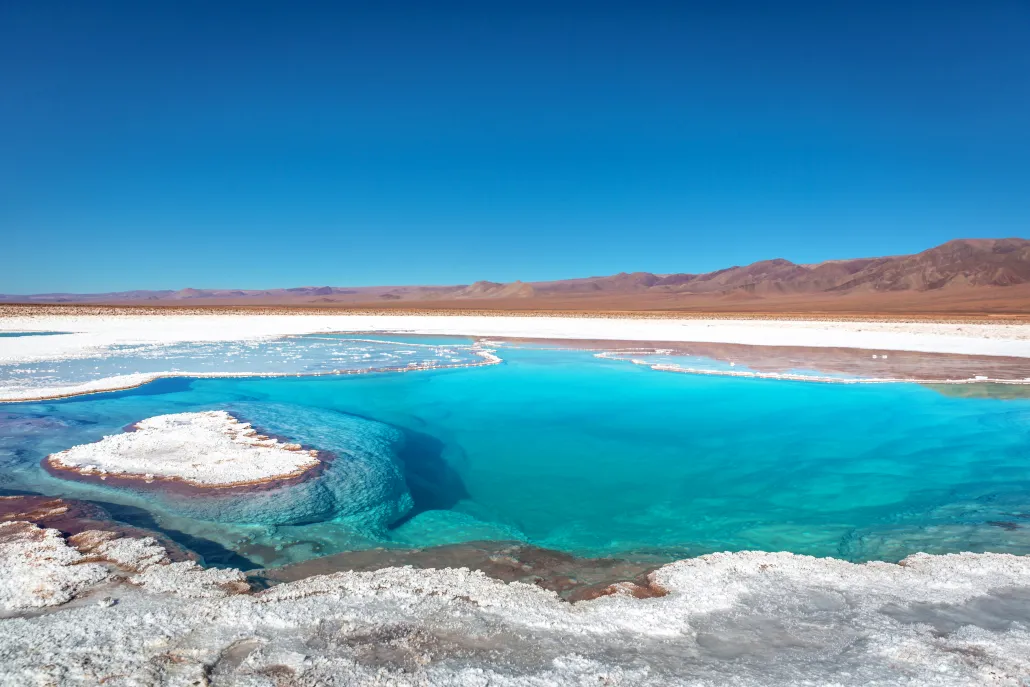
[Chile’s Lithium Salt Flats © THE NET-ZERO CIRCLE]
The semiconductor industry is no exception. Large-scale semiconductor complexes are known to use over 100,000 tons of industrial water per day. Industrial expansion leads to surging energy demand. The problem is that these costs are not sufficiently reflected in corporate valuations. As a result, the long-term cost burdens of labor ethics issues and ecosystem degradation become the responsibility of future society, while the immediate profits are recorded as corporate performance.
In particular, the Korean stock market has a high dependence on nature given that the top market-capitalization stocks are concentrated in resource-intensive industries such as semiconductors, secondary batteries, oil refining, and chemicals. These industries create high added value while simultaneously premised on the consumption of enormous amounts of electricity, raw materials, and water resources. A rise in the KOSPI index signifies an expansion of the structure of natural resource use, making financial performance and the consumption of ecological resources an inseparable relationship.
An Era Where Natural Capital Becomes a Financial Variable
In this way, the destruction of nature is moving beyond ethical debate into the realm of financial risk. According to the 2023 report ‘Nature-related Financial Risks: a Conceptual Framework to Guide Action by Central Banks and Supervisors’ issued by the Network for Greening the Financial System (NGFS), analysis and policy directions reveal that nature-related risks such as rising costs and supply chain disruptions can affect financial stability.
In its ‘Global Risks Report’ published in 2023, the World Economic Forum (WEF) identified biodiversity loss and ecosystem collapse as among the most severe global risks within the next ten years. Furthermore, its 2020 report ‘Nature Risk Rising’ analyzed that 55% of global GDP, an economy of approximately USD 44 trillion, is moderately or highly dependent on nature and ecosystem services.

[‘Project Natick,’ Microsoft’s eco-friendly data center development research experiment building an underwater data center. Container-type data centers were installed on the seabed to reduce cooling costs and energy use. © Microsoft]
In Europe and the United States, the Taskforce on Nature-related Financial Disclosures (TNFD) is spreading. Since the final recommendations were announced in 2023, more than 300 global companies and financial institutions have endorsed or adopted them. They have begun to analyze how dependent companies are on nature and how nature degradation can lead to financial risks. This trend is also connected to the International Sustainability Standards Board (ISSB) system, which creates international disclosure standards. In 2023, the ISSB incorporated ESG disclosure into the financial reporting framework with the issuance of the climate disclosure standard (IFRS S2). The European Union is institutionalizing corporate responsibility for human rights and environmental risks through the Corporate Sustainability Due Diligence Directive (CSDDD, an EU law mandating companies to directly identify, prevent, and mitigate the adverse human rights and environmental impacts of their own operations, subsidiaries, and supply chain partners, and to disclose them transparently). South Korea likewise plans to pursue mandatory ESG disclosure from 2028.
A rise in the KOSPI can clearly be a signal of economic growth. But if it is an outcome obtained at the cost of environmental degradation, it is no different from consuming future assets ahead of time. Only when the costs of resource use and sustainability are reflected in business budgets and ecosystem risks are incorporated into corporate decision-making processes can stable growth be discussed. This is why, even as we celebrate the KOSPI record, we should also ask what process produced those numbers.
by Editor N