

Disney+ original series <The Remarried Empress> became the most-watched Disney+ locally produced original worldwide, based on viewing records from its first three days after release on November 3, 2026. It also ranked first in viewing among Korean productions released in more than 50 markets, including the United States and the United Kingdom. Behind the drama enjoyed by viewers in dozens of countries was a production operation that built sets and moved filming equipment.
Disney’s 2030 goal is ‘carbon-free electricity’
The Walt Disney Company, the parent company of Disney+, has established group-wide 2030 environmental goals spanning theme parks, cruises, films, and streaming. The core targets are to reduce direct operational emissions (Scope 1and Scope 2) by 46.2% from 2019 levels and switch all electricity use to carbon-free electricity. Scope 1 refers to greenhouse gases directly emitted when a company burns fuel, while Scope 2 refers to indirect greenhouse gas emissions associated with purchased electricity. Disney has included film and television production within this scope. As of fiscal 2025, carbon-free electricity accounted for 48%, leaving 52 percentage points to reach the 2030 target of 100%. Separately from the electricity transition, reducing diesel fuel burned on film sets contributes to cutting direct emissions (Scope 1).
Greener production transforming film sets
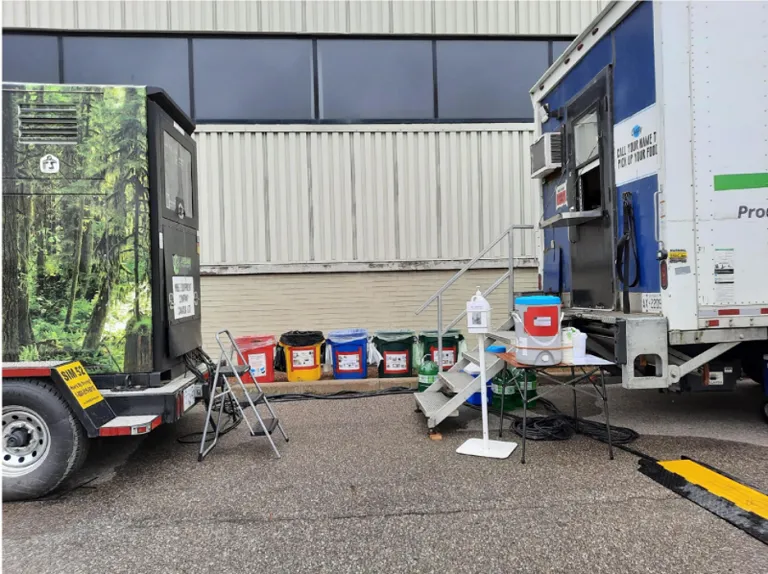
Since 2009, Disney has assigned environmental coordinators to every live-action feature film production team at Walt Disney Studios to manage recycling and reuse on film sets. Electricity is one of the biggest challenges on set. At outdoor locations where bringing in electricity is difficult, diesel generators have traditionally supplied power. The Clean Mobile Power Initiative, launched by Disney and Netflix in 2023, released an industry roadmap in December 2025 presenting batteries, hydrogen generators, and hybrid systems combining the two as alternatives to diesel generators. The roadmap projected that these power sources could significantly reduce air pollution and noise on film sets. In 2025, Disney productions received 17 Green Seal certifications from the Environmental Media Association (EMA).
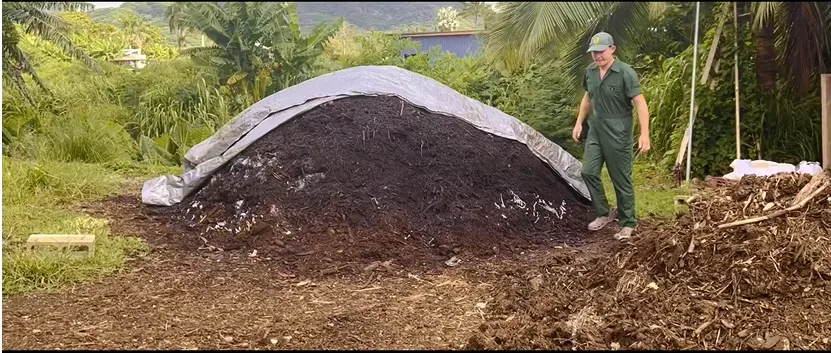
A notable example of waste management is the live-action film <Lilo & Stitch>, released in 2025. During 46 days of filming on Oahu, Hawaii, the production team worked with four local nonprofits to keep 80% of on-site waste out of landfills and reuse it locally. About 8.2 tonnes of food waste and compostable packaging generated on set became compost for local farms. Set materials such as props and lumber were passed on to local nonprofits and schools after filming, leaving resources in the community even after the crew departed.
Efforts to change the power supply through solar installations
The power challenge on film sets is not limited to outdoor generators. Lighting and equipment in indoor studios run on electricity purchased from the grid, linking them to indirect emissions (Scope 2). The production team for the 2024 film <Alien: Romulus> worked with its studio to source all electricity used for filming from renewable energy. This was the first Disney production to apply this approach at a rented studio, demonstrating that purchased electricity can also be changed at the individual-production level.
Across the group, theme parks are the main center of electricity use. According to Disney’s environmental goals white paper released in 2022, approximately three-quarters of the group’s electricity consumption comes from theme parks and resorts worldwide. This is why Disney has continued expanding large-scale solar facilities around its theme parks. Walt Disney World in Florida operates four solar facilities with a combined capacity of 212,000 kilowatts and more than 600,000 panels. The electricity generated can supply more than 19,000 Florida homes for a year. The most recently added facility is a 74,500-kilowatt plant in Levy County, Florida. This shows that progress toward the electricity target depends heavily on how quickly theme-park solar capacity expands.
Expanding the scope needed to meet the target
To meet its 2030 target, Disney must extend achievements demonstrated at individual sites across a broader scope. In its environmental goals white paper, Disney said it would use partnerships with utilities and renewable energy purchase agreements alongside its own solar facilities. To close the remaining 52% gap to carbon-free electricity, these tools must be expanded beyond theme parks to other operations. On film sets, the remaining task is to make production-level approaches—such as <Alien: Romulus>’s renewable energy procurement and <Lilo & Stitch>’s waste management—the standard across all productions.
by Editor N