
This autumn, numerous local festivals were held. The most talked-about local festival was surely the ‘Gimcheon Gimbap Festival.’ First launched in 2024, the Gimcheon Gimbap Festival achieved great success this year with 150,000 visitors. Restaurant sales rose 29% year-on-year, sales of agricultural and specialty products increased by 93%, and including the food, beverage, accommodation, transportation, experience, and souvenir spending by tourists beyond gimbap ingredients during the festival period, an economic ripple effect of over KRW 10 billion is estimated. Although successful local festivals like this are being held and the festival budgets of local governments nationwide have increased, the number of festival participants and the economic effects are not on an overall upward trend.
Even so, can regions still pin their hopes on festivals? Of course they can. The reason is simple. Unlike the Seoul metropolitan area, for regions with limited industrial bases and resources, festivals serve as strategic opportunities that go beyond mere sights to see — strengthening local identity, connecting residents and tourists, and revitalizing the local economy. So how was the Gimcheon Gimbap Festival able to overtake numerous competing festivals at once to gain fame and profit? Let us examine the strategy.

[Gimcheon Gimbap Festival Poster Ⓟ Gimcheon City]
What Was Placed at the Center of the Festival Was the ‘Visitor Experience’
The differentiating point of the Gimcheon Gimbap Festival is that it placed visitors at the center of the festival. It omitted the ceremonial opening ceremony and introduction of dignitaries that no local festival ever skipped and filled the festival with content that visitors could thoroughly enjoy. Having experienced the early exhaustion of gimbap supplies last year, it significantly expanded the number of gimbap suppliers from 8 to 32 this year. As a result, visitors were able to leisurely enjoy a wider variety of gimbap. The types of gimbap were also a fun element. It was arranged so that visitors could taste not only unique gimbap from across the eight provinces of Korea but also the winning entries of the festival’s gimbap contest on the spot.
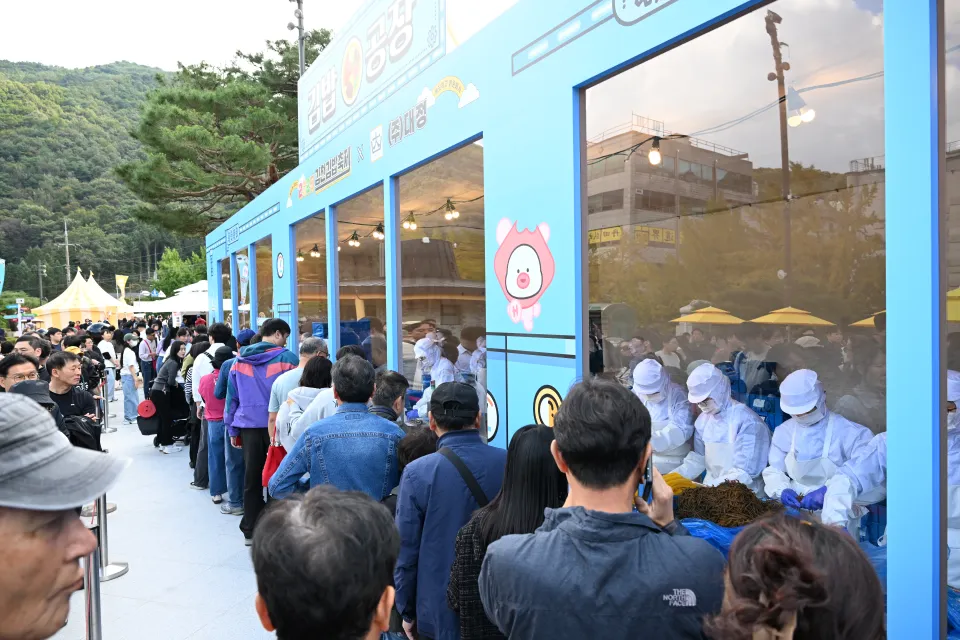
[The buzzworthy ‘Gimbap Factory’ space at the Gimcheon Gimbap Festival Ⓟ Gimcheon City]
It also added visual attractions to the food. At the entrance, the manufacturing process of Daejeong Co., Ltd. in the Gimcheon Industrial Complex, which produces over 1,000 rolls of gimbap per hour, was revealed in an open kitchen format, instantly capturing people’s attention. At the experience booths, diverse programs themed around gimbap were operated, such as gimbap nail art, making 70 cm gimbap, and gimbap keyring crafting. The invited performances were also themed accordingly, with singer ‘Jadu’ evoking thoughts of gimbap and ‘Norazo’ with their triangular gimbap-shaped hair taking the stage, solidifying the festival’s identity while raising the atmosphere even higher.
Amid the scene of people of all ages and genders naturally mingling and having fun, the festival organically combined a participatory structure, enjoyment, and local character to maximize the tourist experience.
A Festival Created Together by Local Resources and Industry
The starting point of the Gimcheon Gimbap Festival was surprisingly simple. When a survey conducted in a community in 2023 asked ‘What comes to mind when you think of Gimcheon?’ many responded with ‘Gimbap Cheonguk’ (Gimbap Heaven, a gimbap chain brand), and Gimcheon City connected this to local identity and the festival. A citizen’s lightly thrown response developed into a local brand strategy that reinterpreted regional identity. The city’s witty marketing drew the interest of many people.
In this way, the Gimcheon Gimbap Festival naturally revitalized local resources and industry through the medium of ‘gimbap.’ It presented local gimbap that could only be tasted in Gimcheon and created a structure in which anyone from inside or outside the region could participate, as long as they did not deviate from the theme. Small merchants even appeared selling triangular gimbap-shaped hand knitting and gimbap-shaped meringue cookies, with the participation of local residents and small businesses organically combining.
It is also worth noting that eco-friendliness was added to the festival operation, with the participation of local company EcoV Co., Ltd., which produces cargo electric bicycles. The electric bicycles carried gimbap around the event venue, increasing the efficiency of on-site programs, and after the event ended, they performed various roles such as waste collection and supporting movement routes. When local resources and industry came together, the festival produced a win-win outcome.
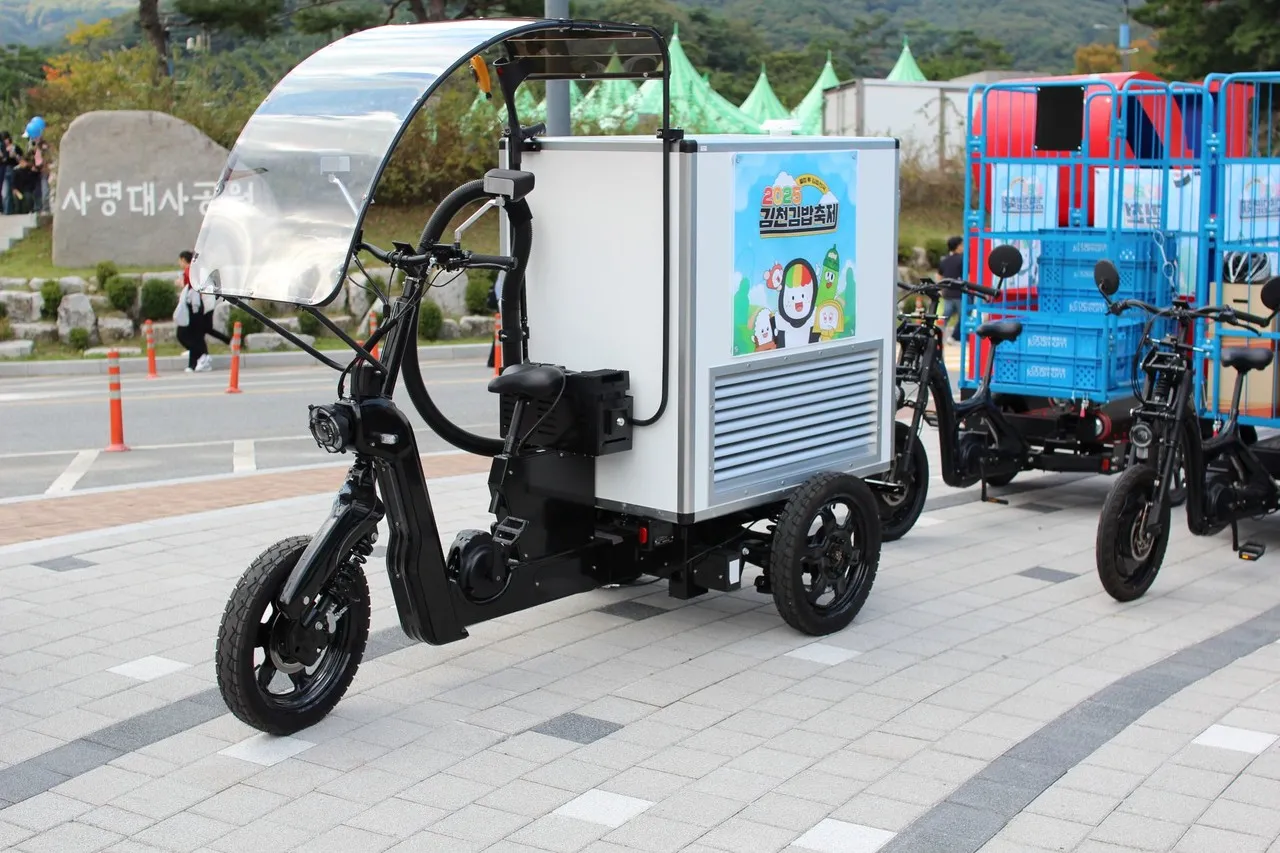
[Electric bicycle seen at the Gimcheon Gimbap Festival Ⓟ Gyeongsangbuk-do]
The Gimcheon Gimbap Festival demonstrates that local festivals can grow in an economically sustainable direction only when visitor-centered operation, the participation of local resources and industry, and eco-friendly methods mesh together. The task that local governments must now solve is clear: not simply to promote specialty products or repeat one-off events to secure subsidies, but to develop festivals into industrial and cultural platforms based on local resources. At the same time, the social value of festivals forming and connecting local communities must not be overlooked.
Adding imagination and interpretation to the cultural and environmental resources that each region possesses — it is precisely at that point that the path forward for future local festivals will open.
by Editor N