
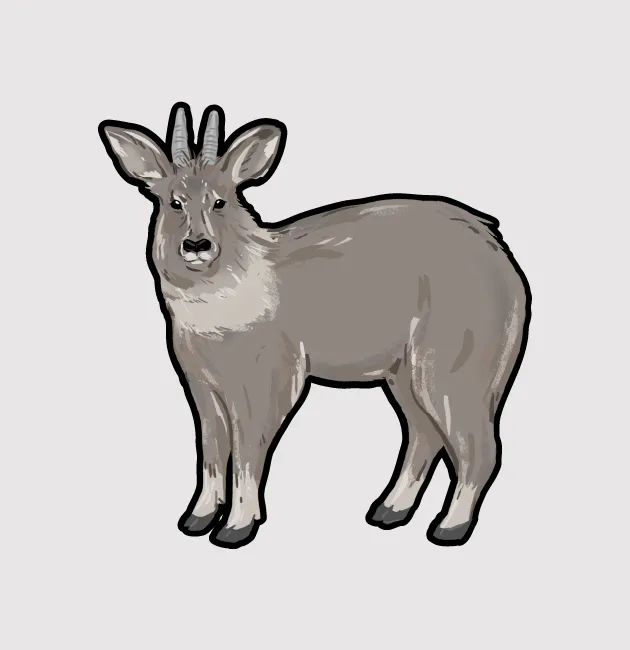
Mountain goats that have begun to be frequently sighted within our living radius in recent years. Mountain goats that should inhabit deep mountains came down to roadsides and around villages because they could not find food due to successive heavy snowfalls. As cases of them dying from exhaustion while wandering in the snow or starving after being trapped behind fences unable to escape followed one after another, the mountain goat became an example showing that the survival of wildlife is not easy within the human-made climate crisis.
On the 2nd, the Ministry of Climate, Energy and Environment designated the mountain goat as the endangered wildlife species of November 2025. This is to raise awareness of the crisis facing the mountain goat — a herbivore representing the Korean Peninsula’s forest ecosystem and Natural Monument No. 217 — and to heighten alertness regarding its protection.
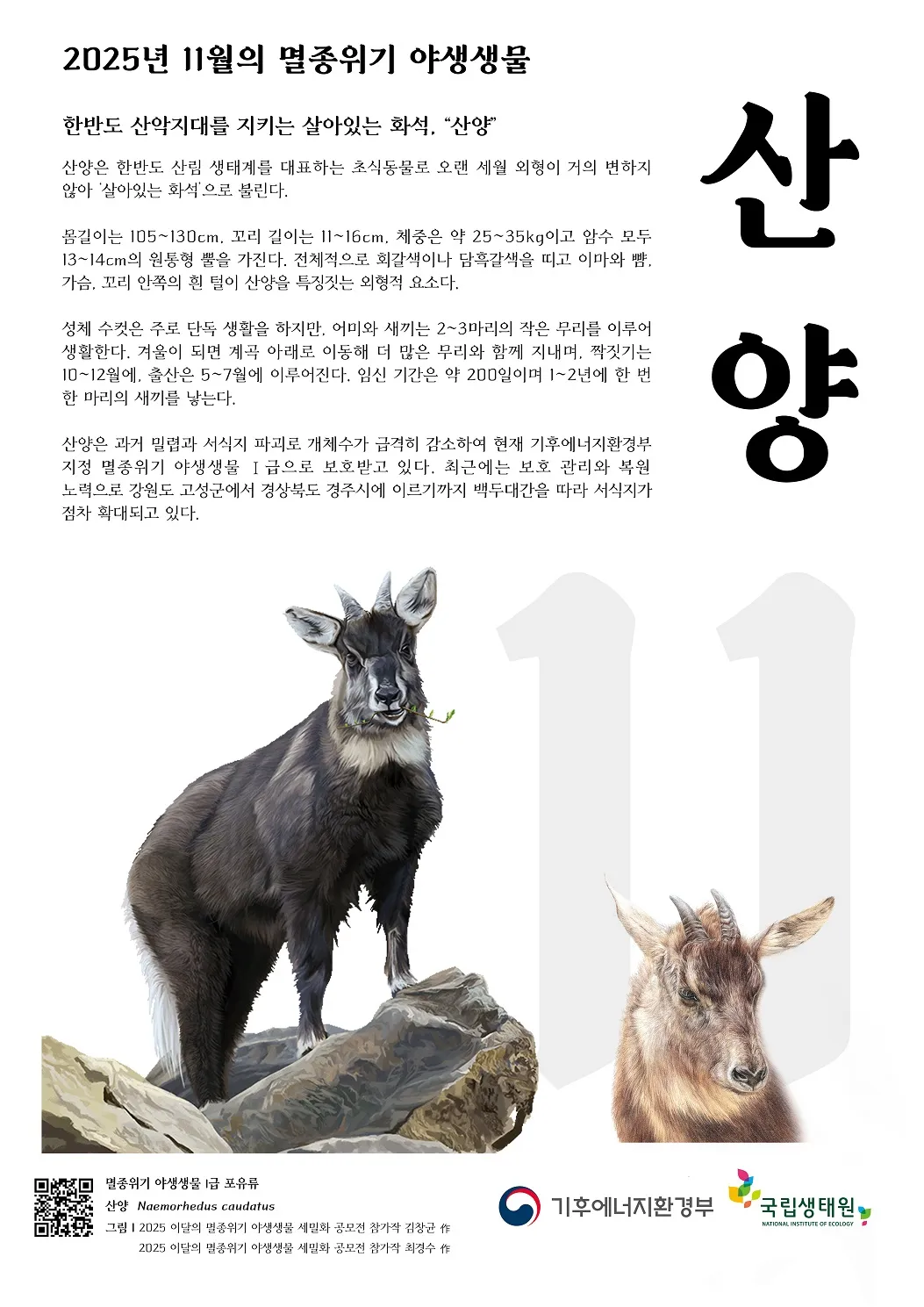
[Mountain goat designated as the Endangered Wildlife Species of November Ⓟ National Institute of Ecology]
A Life Form That Withstood Two Million Years Now Stands in Crisis
Despite its name, the mountain goat is not a goat but a medium-sized mammal belonging to the bovid family, possessing a body structure specialized for rugged environments such as cliffs and rocky terrain. Both males and females have horns, and their deeply cloven hooves cling to rocks like professional climbing equipment, enabling them to scale steep terrain with agility. In particular, the mountain goat retains much of the appearance it had when it first appeared on Earth approximately two million years ago, thus earning the name ‘living fossil.’ Only four species exist worldwide today, and among them, one species inhabits South Korea, with most of the population concentrated in the mountainous regions of Gangwon-do and the Gyeongsang provinces.
Originally, mountain goats were widely distributed across the entire Korean Peninsula. Their population declined sharply in the early 1900s due to industrialization, indiscriminate hunting, and forest degradation, and the mass die-off caused by heavy snow in 1964 accelerated the collapse of the mountain goat population. Accordingly, the mountain goat was designated as a Natural Monument in 1968 and began to be protected as a Grade 1 Endangered Wildlife Species in 1998, yet the mountain goat’s crisis remains ongoing.
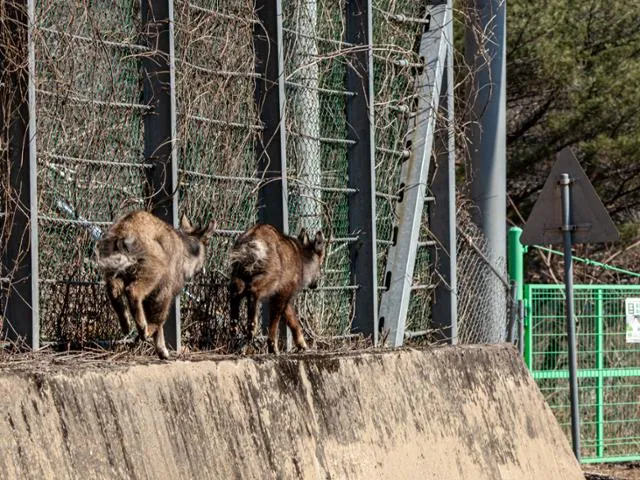
[Mountain goat walking along an ASF fence © Citizens’ Movement for National Park Protection]
Life Crumbled Before Human-Made Fences
In recent years, the most serious factor threatening the survival of mountain goats has been ASF (African Swine Fever) barrier fences. Originally installed with the purpose of blocking the movement of wild boars to prevent disease spread, they were installed lengthily in the form of traversing mountainous terrain along major roads, leaving unexpected side effects for various wildlife including mountain goats, roe deer, martens, and Asiatic black bears.
Mountain goats that came down the mountain in search of water and food lost their way upon encountering the fences, and some were structurally trapped in enclosed spaces, with repeated cases of exhaustion or starvation leading to death. Furthermore, the fences blocked genetic exchange between habitats, reducing the health of the population, and deprived them of spaces to evacuate to when climate disasters struck. For wildlife that must migrate seasonally in search of food, the fences did not act as mere ‘obstructions’ but as artificial boundaries that forcibly fragmented habitats and demolished survival strategies themselves.
In fact, from November 2023 to May 2024, as many as 1,022 mountain goats died due to heavy snow and ASF barrier fences. Considering the domestic population of approximately 1,600 estimated by the Ministry of Climate, Energy and Environment, about 75% of the mountain goats disappeared. This mass die-off is not a mere natural phenomenon but an event that starkly demonstrates what kind of danger the combination of climate disasters and human-made structures can pose to wildlife.
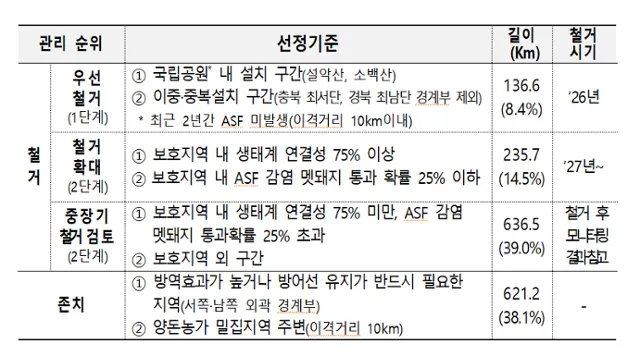
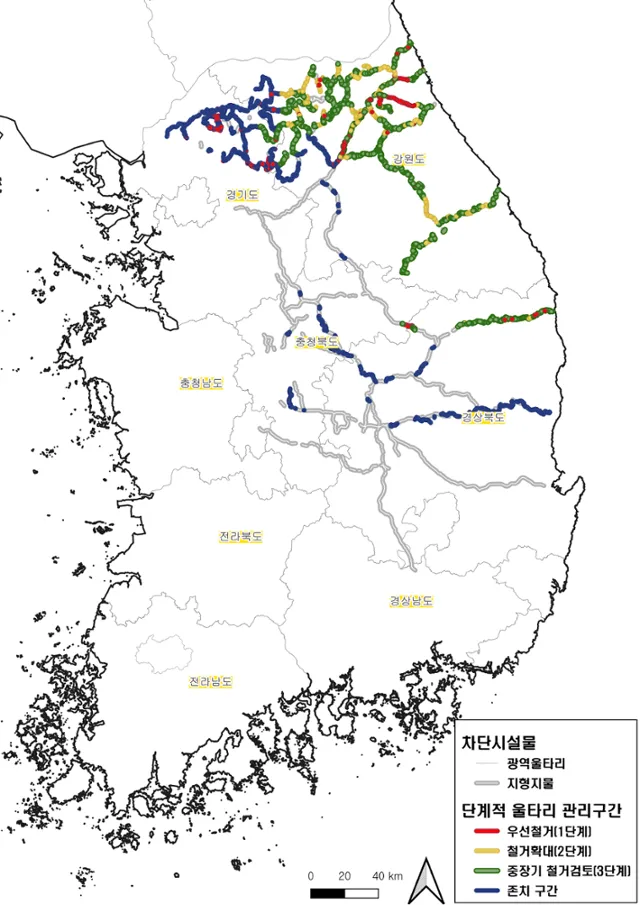
[Removal Roadmap © ASF Central Disaster Management Headquarters]
The Government Begins to Move, Albeit Late
Following the mass die-off, the government conducted a detailed investigation together with the Korea Environment Institute and the National Institute of Ecology to reexamine the effectiveness and ecological damage of the ASF fences. As the investigation concluded that the fences were causing structural obstacles to the survival of wildlife beyond their quarantine purposes, the government announced a full-scale fence removal roadmap.
The ASF Central Disaster Management Headquarters finalized a wide-area fence management plan oriented toward maintaining quarantine effectiveness while reducing ecological impact. Wide-area fence management is broadly divided into removal and retention, with removal scheduled to proceed in three phases from January next year: ▲Phase 1 priority removal, ▲Phase 2 expanded removal, and ▲Phase 3 mid- to long-term removal review. Additionally, in preparation for heavy snow this winter, the Ministry of Climate, Energy and Environment decided to expand the partially opened sections of national parks — currently under a pilot project — before fence removal, to secure movement routes for wildlife.
One Endangered Wildlife Species Highlighted Each Month: What Does It Mean?
Biodiversity does not simply mean the number of plants and animals but signifies a ‘safety net’ responsible for the survival of all life on Earth, including humans. When biodiversity declines, nature’s carbon absorption capacity falls, accelerating climate change, and climate change in turn destroys the habitats of species — a vicious cycle repeats.
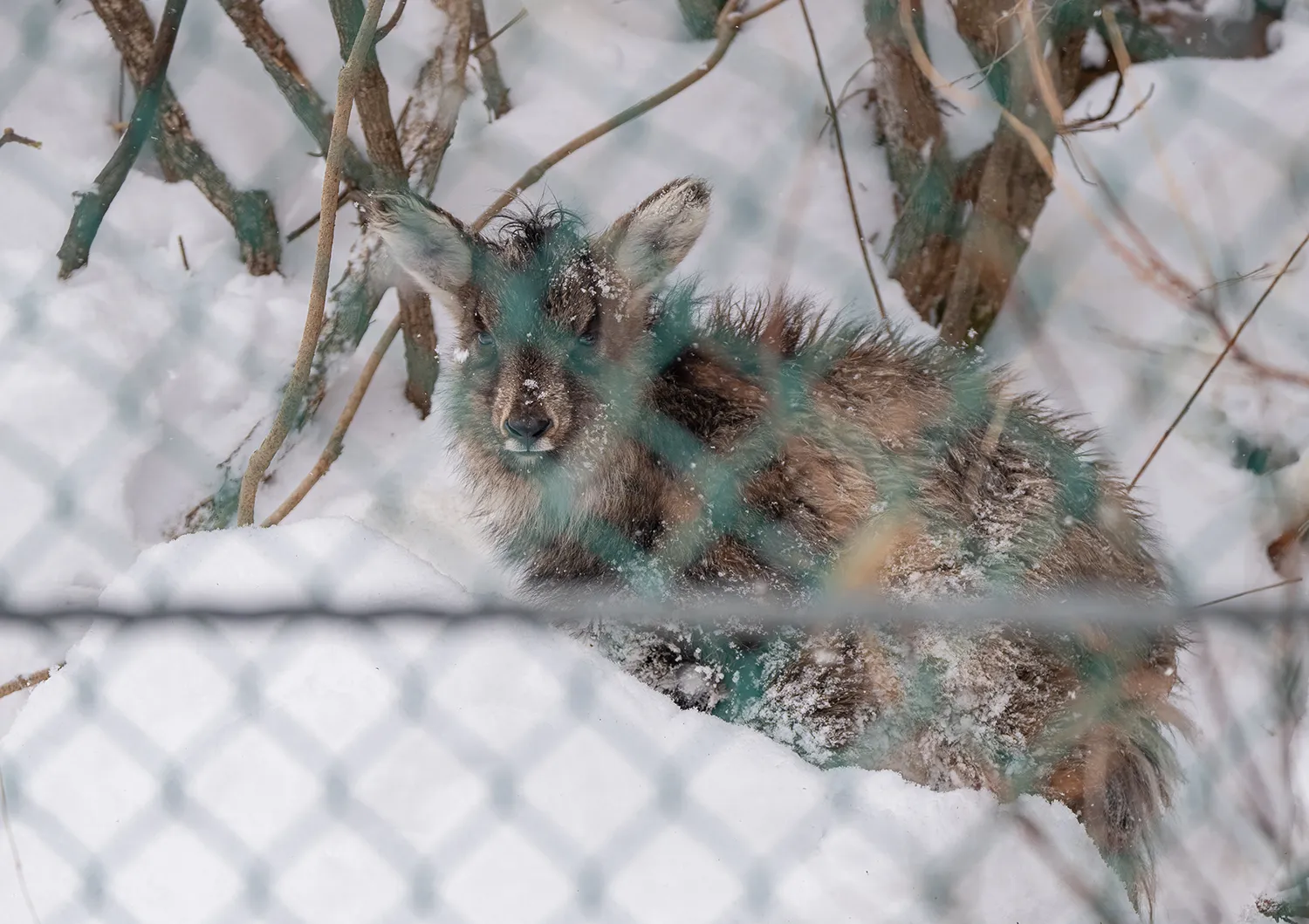
[Mountain goat that came down seeking food due to heavy snow © Citizens’ Movement for National Park Protection]
To raise awareness of this crisis, the Ministry of Climate, Energy and Environment selects and publicizes one endangered wildlife species each month. This means that as many species as we must pay attention to each month are in danger. From heatwaves and droughts to heavy snow and floods, and the mass death of mountain goats, the Earth has already sent warnings multiple times.
The reason we must remember endangered species is not simply to mourn them. It is because we must act before the safety net of biodiversity and the balance of the Earth’s ecosystem collapse. Protecting the mountain goat is ultimately protecting ourselves, and will serve as the starting point for restoring the resilience of the entire Earth’s ecosystem.
by Editor N