
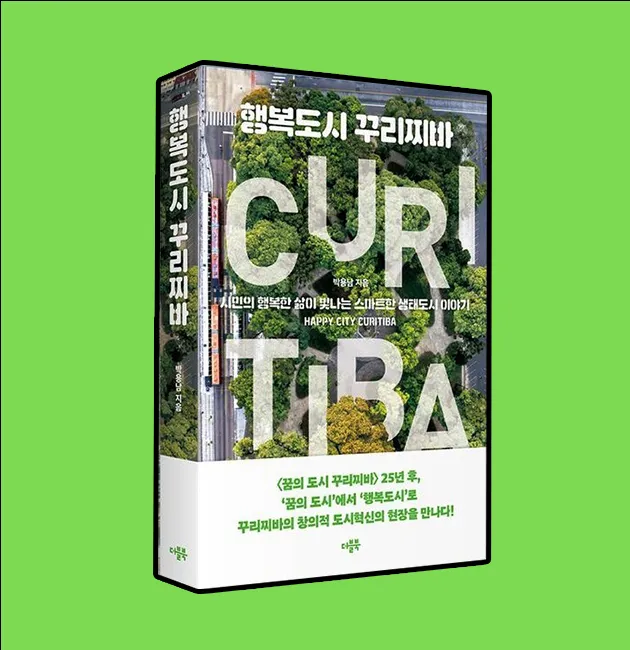
Park Yong-nam, director of the Sustainable City Research Center and author of "Happy City Curitiba"—a book that captures the secrets behind the success of Brazil's ecological city "Curitiba"—has, as an urban scholar of more than 30 years, compiled into a book this urban-innovation model that he has steadily researched. With concrete policy cases, Director Park introduces the story of how Curitiba grew into a green city, smart city, and citizen-happiness city boasting the world's finest reputation. Anyone involved in ESG relating to the urban environment—urban innovation, sustainable transport, urban-environment policy, citizen participation, and the like—should give "Happy City Curitiba" a read.
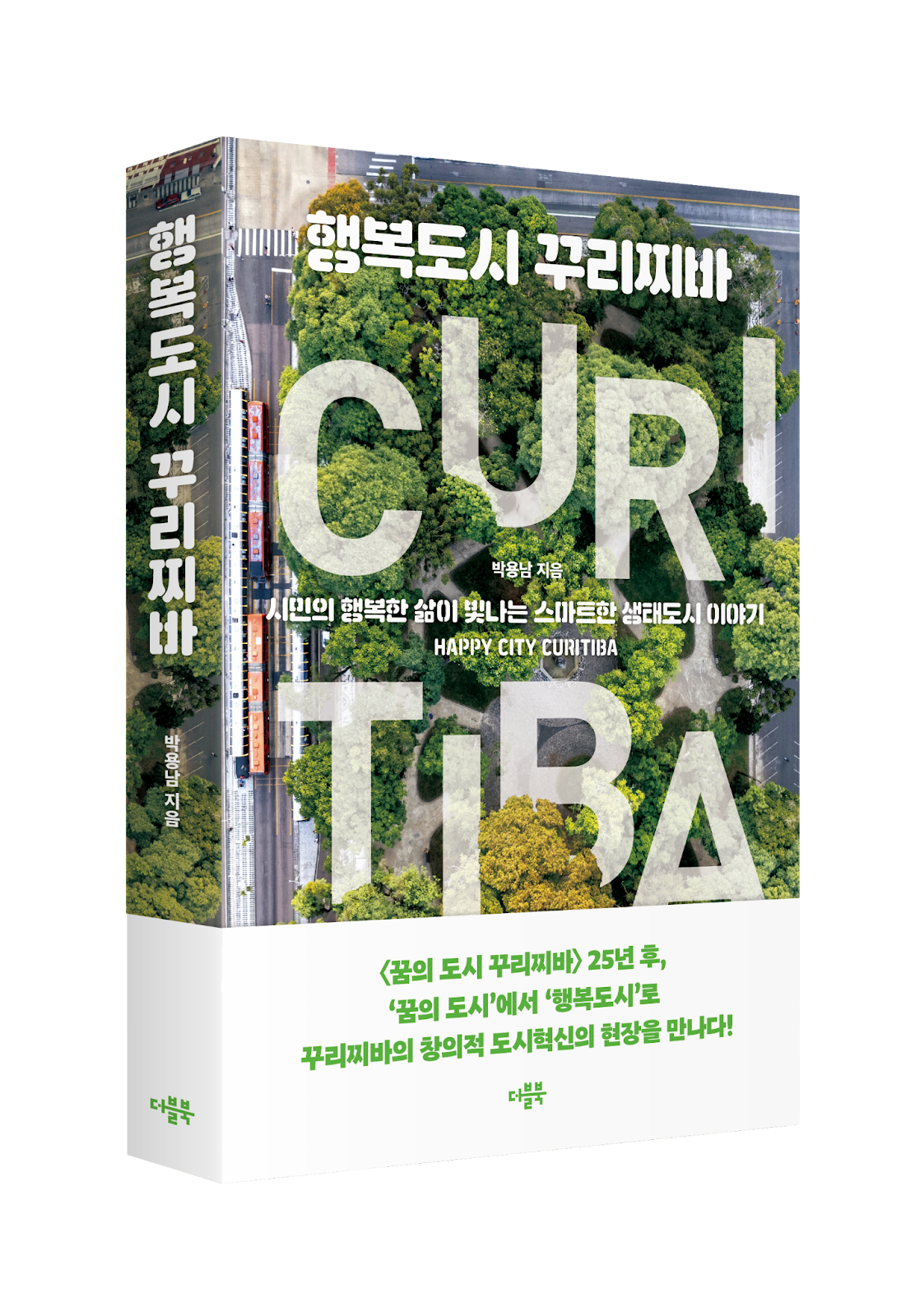
[Happy City Curitiba ©Doublebook]
A Symbol of Innovation: the "Bus Rapid Transit System"
In 2000, Director Park introduced Curitiba through "Curitiba, the City of Dreams." That book had a great influence on urban-environment policy, and it contributed especially to Korea's adoption of eco-mobility systems (car-free streets, public bicycles, bus rapid transit, walkable cities, and so on). Among these, the "bus rapid transit system"—the model for Seoul's central bus-only lanes and transfer system—is like a symbol of Curitiba's innovation. This policy, which we too now use routinely, is a groundbreaking case of shifting the transport system from conventional car-centered urban planning to a public-transport-centered one. On top of this, Curitiba improved the sustainability of public transport with 100% biodiesel buses and an intelligent transport system, and Curitiba's transport-system transformation was even selected as one of the "50 Most Influential Projects in the World."
Poverty and Food Insecurity: Creative Policy Cases the City Presented
Looking at Curitiba's systems, one finds them full of traces of deliberation—not only about transport but about the city's problems as a whole—with a sustainable future as the standard. Amid Brazil's poverty and food-insecurity problems, which grew serious after COVID-19, Curitiba protected citizens' basic standard of living, including the right to food, through a variety of creative city-led policies such as the free-meal "Solidarity Tables," the inexpensive public restaurants "Popular Restaurants," and the "Family Warehouses" that sell daily necessities cheaply. In particular, the "Green Exchange Program"—which exchanges 4 kg of recyclable waste for 1 kg of fresh fruit and vegetables—drew great response from citizens and is a creative policy case that produced the achievement of raising the city's recycling rate to the world's highest level.
Careful Policy Design to Improve Citizens' Quality of Life and the Environment Together
"Happy City Curitiba" also introduces policies closely tied to citizens' lives—housing, education, culture, urban landscape, parks, and more. The "Path of Wisdom" program is a kind of field-learning program that helps children and students experience the city's history and environment firsthand and cultivate local identity and pride. The book also contains living-oriented policy ideas that spark interest by their names alone, such as the "Innovation-type Lighthouses of Wisdom," created for civic education and the experimentation and making of ideas, and the small libraries "Houses of Reading" for expanding reading culture.
Through a climate-action plan, Curitiba is also pushing various projects toward the goal of becoming a carbon-neutral city by 2050. A representative example, the "Pyramid Solar do Caximba"—a landfill transformed into a solar power plant—is a globally noted success case of landfill utilization. One can also find resource-circulation program cases such as the "Municipal Composting Program," which composts organic waste generated in the city; projects like these show just how carefully designed a city Curitiba is.
Curitiba's ecological-city policies have been certified by major city-related awards around the world, such as the "C40 Cities Bloomberg Philanthropies Awards 2016," the "LatAm Smart City Awards 2022," the "World Smart City Awards 2023," and the "Global Green City Award 2024." "Happy City Curitiba" introduces in concrete terms the creative policies and citizen-centered urban management that have earned the city international renown.
Having continuously monitored Curitiba and organized its changes so they can be read at a glance, Director Park says, "Urban growth must be led by humans," and proposes applying Curitiba's spirit to Korean society. In June, with a new government beginning, it would be good to solve the tasks of the climate crisis, the future of cities, and citizen happiness while consulting Curitiba's creative innovation and citizen-centered urban-management cases.
by Editor N