

Fouls in football usually occur on the pitch. But what the Premier League has described as the most serious case in its history took place off the pitch, in Manchester City’s accounting books. The case concerns Manchester City (hereinafter “Man City”), which won the league eight times from the 2011/12 season through the 2023/24 season, and its alleged financial rule violations—so-called “Man City’s 115 charges.”
Man City Inflated Revenue Through Sponsorship Deals—and Even Obstructed the Investigation
The Premier League is the highest-level league in English professional football, where 20 clubs compete for the title. Approximately 1.9 billion people around the world watch it, and it generates the highest revenue among Europe’s five major professional football leagues. But where money gathers, clubs that invest excessively and end up under administration or facing bankruptcy have followed one after another. There have also been concerns that wealthy clubs could spend unlimited amounts and widen the gap with other clubs. To limit clubs’ excessive losses, the league introduced the Profitability and Sustainability Rules (PSR) from the 2013/14 season. The rules operated by limiting the scale of losses over a set period and will be replaced from the 2026/27 season by new rules linking squad spending to revenue and reviewing clubs’ financial stability.
On September 29, 2026, the league’s independent commission determined that Man City had violated the PSR and other league financial rules. According to the commission, Man City entered into contracts with several sponsors over nine seasons beginning in the 2009/10 season, drafting the contracts differently from the actual transactions. The commission found that the inflated revenue and reduced costs resulting from these contracts exceeded £900 million (approximately KRW 1.6 trillion) in total across the nine seasons. The determination was that Man City made its book revenue appear higher than it actually was, thereby evading the rules’ limits on spending in line with earnings. Man City appealed on October 1, claiming serious errors in the ruling, and the level of sanctions will be determined in separate proceedings.
Of the 115 charges, 80 alleged violations of the financial rules themselves. The remaining 35 alleged that Man City breached its obligation to cooperate with the investigation seeking to confirm those violations, from December 2018, when the league began its investigation, to February 2023, when the charges were brought. The commission upheld most of the charges and determined that Man City had made systematic efforts to block and obstruct the league’s investigation. Man City, however, countered that it had provided the league with extensive detailed materials when the charges were brought.
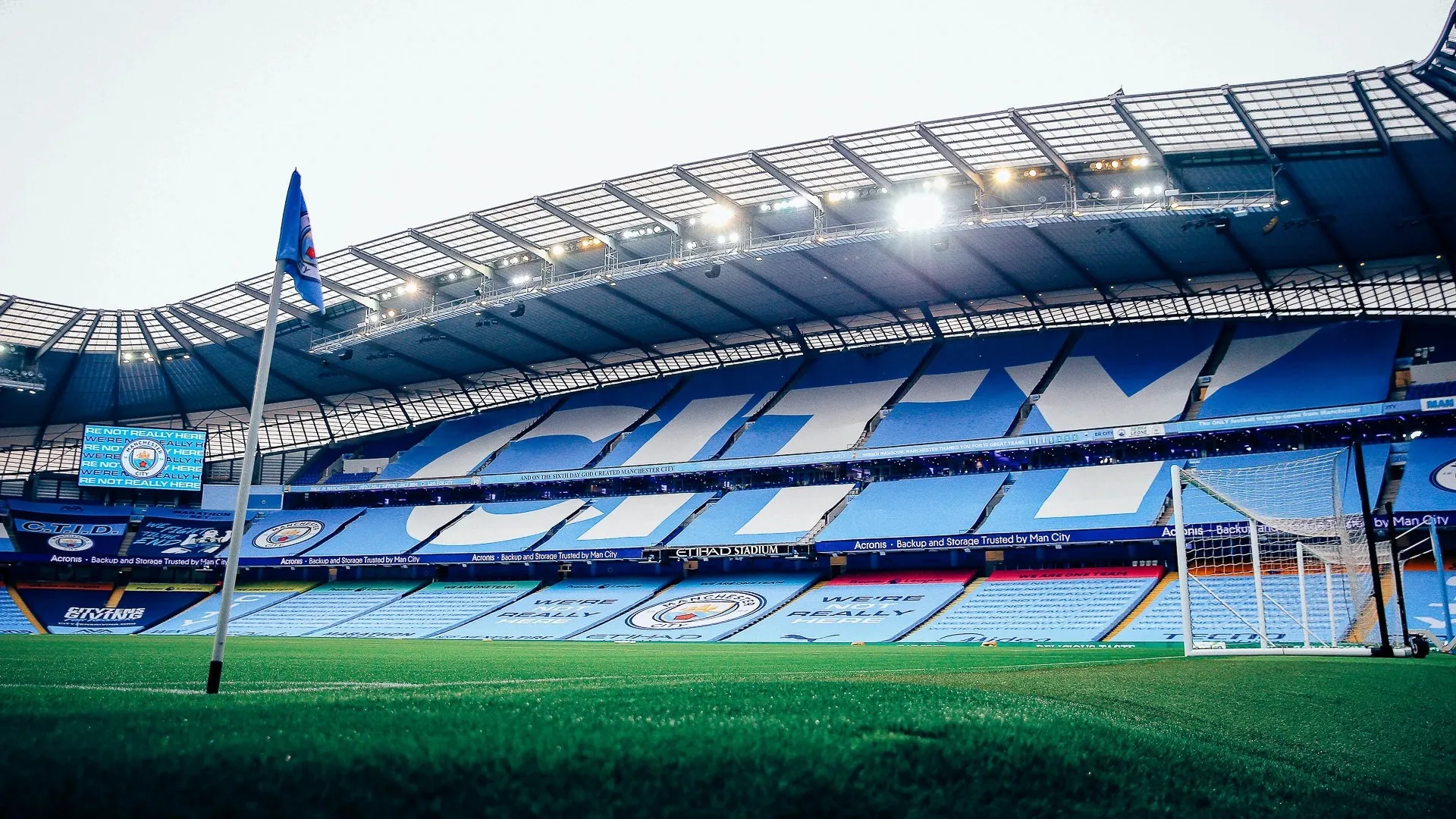
The Limits of a League Without Compulsory Investigative Powers
There is a reason the league treats breaches of the duty to cooperate separately from financial rule violations. As a private organization, the Premier League has no authority to conduct searches and seizures or compel the submission of materials like a law enforcement agency. League investigations proceed on the premise that clubs will voluntarily produce documents and answer questions faithfully. If a club breaks that premise, the investigation stops at the starting line.
If an investigation stops, the league cannot determine whether its financial rules were actually followed. There is no way from outside the club to know who actually provided the money for a sponsorship deal or through what route a manager’s compensation was paid. The league’s rules separately impose duties of cooperation and good faith on member clubs precisely because of these circumstances.
This is not the first time Man City has been held responsible for failing to cooperate with an investigation. In 2020, the Court of Arbitration for Sport (CAS) overturned the Union of European Football Associations’ (UEFA) two-year ban preventing Man City from participating in European competitions. Some of the financial rule violations alleged by UEFA were not proven, while the remainder were time-barred. Nevertheless, CAS imposed a €10 million fine (approximately KRW 15 billion) for Man City’s failure to cooperate with UEFA’s investigation. The decision established that even if financial rule violations are not upheld, non-cooperation with an investigation can be sanctioned separately.
Questions That Recur Beyond the Football Pitch
Such cases are not unfamiliar beyond the football pitch. Corporate disclosures of greenhouse-gas reductions and supply-chain due-diligence results, as well as test materials submitted to regulators, are largely based on internal corporate data. Although some aspects can be verified through external measurements, ultimately companies must provide the materials to show what data the figures were based on and how they were calculated.
South Korea has also seen a case in which Samsung Biologics destroyed and concealed materials during an investigation into suspected accounting irregularities. In 2018, the Financial Supervisory Service raised suspicions that Samsung Biologics’ accounting practices were problematic. Later, Samsung personnel deleted materials containing words such as “merger” and “Future Strategy Office” from mobile phones and laptops in preparation for a prosecution investigation. They also hid the company’s shared servers and laptops beneath the floor of the Incheon Songdo plant. When materials disappear, investigators have difficulty determining the basis and reasoning behind accounting decisions. In December 2019, a court convicted all eight Samsung employees indicted for destroying evidence at trial. However, in a separate trial involving the accounting-fraud allegations, the Supreme Court in July 2025 finalized the acquittals of 14 people, including Samsung Electronics Chairman Lee Jae-yong. Although the accounting-fraud allegations were ultimately not upheld, deleting and concealing materials in preparation for an investigation carried separate legal responsibility.

Becoming an Organization Capable of Answering Questions
Being prepared to answer questions cannot be achieved through the diligence of a single person in charge. The sustainability disclosure standard IFRS S1, issued by the International Sustainability Standards Board (ISSB) in June 2023, requires companies to disclose the roles of the board and management in overseeing sustainability information. Disclosure now covers not only the publication of figures but also who is responsible for them.
To meet this requirement, companies must keep the source data and calculation processes for every figure presented externally. That way, they can provide the same supporting evidence even when the person responsible changes. They must also prevent relevant materials from being deleted or altered once an investigation begins and establish procedures in advance for submitting requested materials.
Man City and Samsung Biologics operate in entirely different fields, but they left behind similar scenes. What was recorded in both cases was not only inflated figures. The organizations’ attitudes when faced with questions seeking to verify those figures were also recorded. Publishing good figures ends after one occasion, but answering questions about those figures continues afterward. The ultimate responsibility for building an organization capable of answering those questions at any time lies with management.
by Editor N