
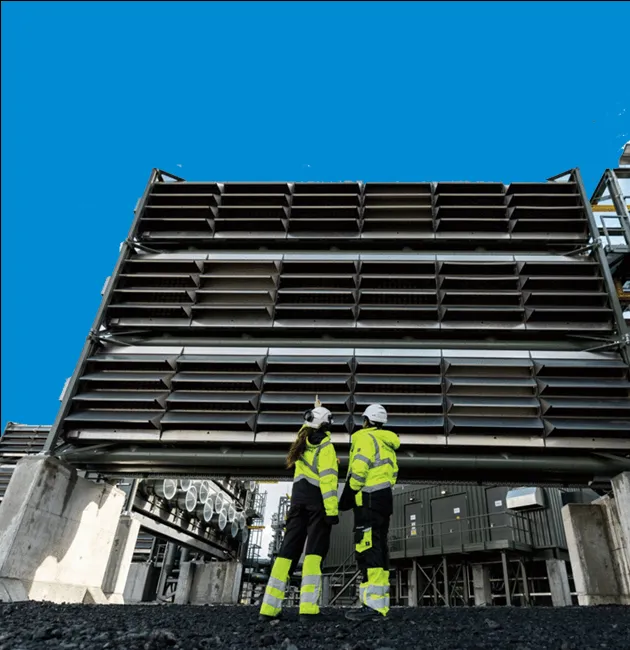
"Mammoth," which the Swiss climate-tech company "Climeworks" put into operation on the 9th, is the world's largest carbon-capture-and-storage (DAC+S) plant. Mammoth, which began operation in Hellisheiði, Iceland, can store 36,000 tons of carbon dioxide a year at a depth of 700 meters underground. For this reason, Mammoth will serve as an important milestone in Climeworks' roadmap of carbon-capture-and-storage facilities—megaton capacity by 2030 and gigaton capacity by 2050, which the company sets as its goal.
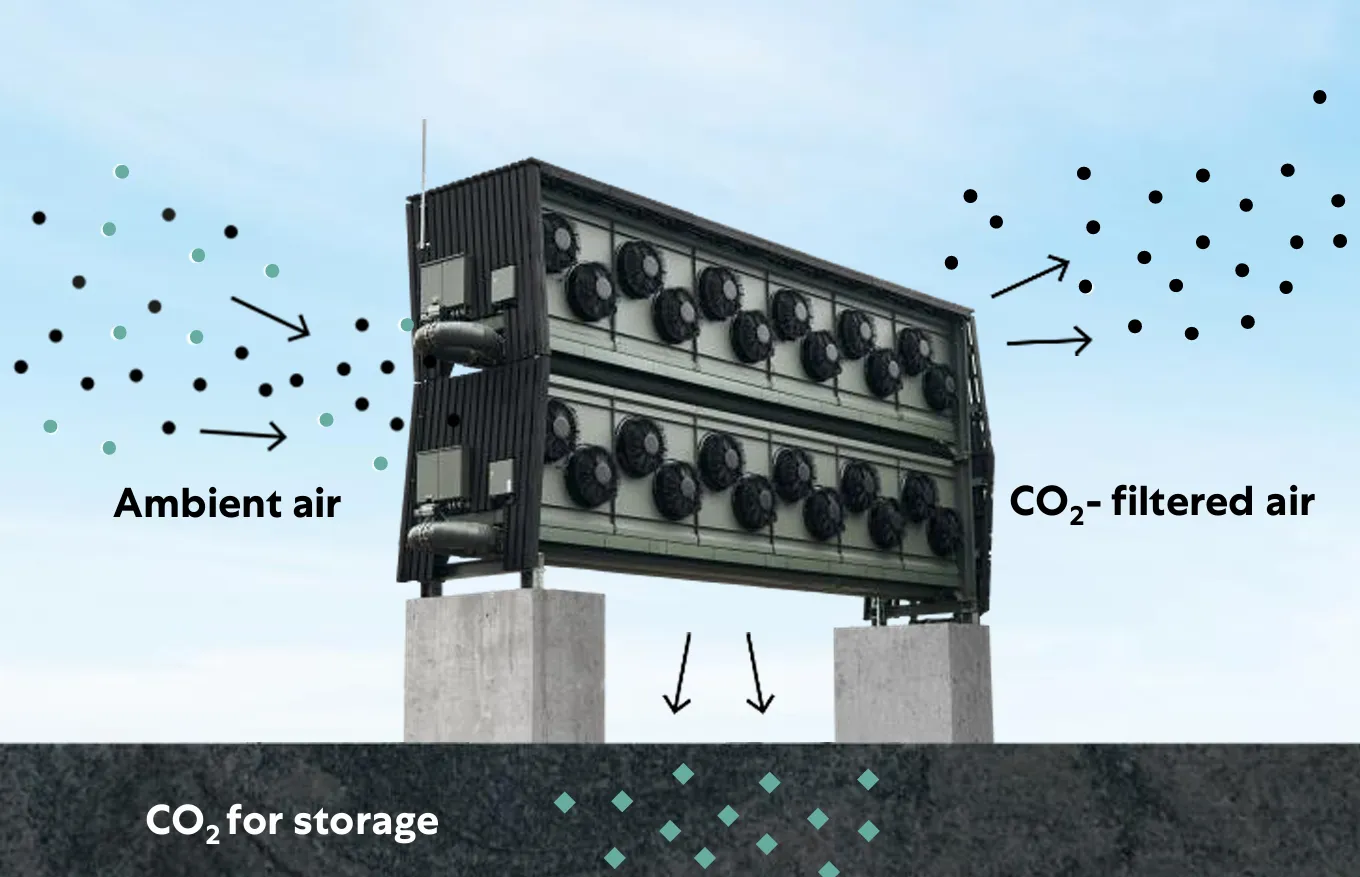
[The carbon-capture-and-storage principle of a Climeworks DAC+S facility ©Climeworks]
Mammoth boasts a scale 10 times larger than "Orca," Climeworks' carbon-capture-and-storage plant that Microsoft previously invested in. This facility implements DAC+S technology (Direct Air Capture and Storage)—one of the technologies for removing carbon from the air. DAC technology separates only carbon dioxide from air drawn in by huge fans and then stores it underground or reuses it. However, the cost is high, the energy consumed for carbon capture is also large, and the effect of removing carbon at a meaningful level has not been proven, so commercialization needs time.
Through Mammoth, Climeworks aims to make the technology a reality by lowering the cost of carbon capture and storage per ton to 300–350 dollars by 2030 and to 100 dollars around 2050. It also explains that, when operating Mammoth, it strives to minimize unnecessary energy waste by using Iceland's renewable, clean geothermal energy.
The carbon credits generated when Mammoth stores carbon underground are taken by companies that trade with Climeworks, such as Microsoft. The carbon-emissions-trading system is a policy created to limit greenhouse gases within an emissions range for companies allocated emission rights. A company that exceeds the standard must purchase carbon credits from outside, and a company that emits fewer greenhouse gases than the standard can sell its credits.
by Editor N