

Just days ago, we were still in short sleeves, but now it has grown chilly enough to need a padded jacket. Where has autumn gone? After the long heatwave had passed, we were expecting a crisp October, but reality was different. A persistent autumn monsoon and a sudden cold wave swept across the nation, and the autumn sky that should have been clear hardly showed itself. At a time when the harvest season and the foliage season coincide, the repeated monsoon has inflicted considerable damage on farms and tourist sites. With the changing seasons becoming increasingly difficult to predict, what is the cause?
The Reason the Monsoon Arrived in October
This year, from September onward, the number of rainy days and precipitation nationwide far exceeded the average year. The national average number of rainy days in September was 15.1, about six days more than average, and precipitation also reached 228.8 mm, exceeding the average of 155.1 mm. October was even more severe. In Seoul, it rained continuously for 12 days from the 3rd to the 14th, when the Chuseok holiday began, and within less than a month, the total had already exceeded double the average monthly rainfall for October.
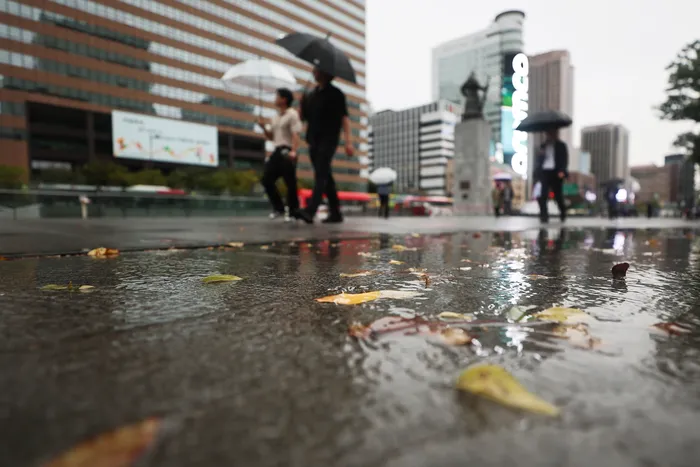
[Seoul Greeted by the Long Autumn Monsoon Ⓟ Yonhap News]
This abnormal precipitation pattern referred to as the ‘autumn monsoon’ is not appearing for the first time this year. Last year as well, the national average autumn precipitation was 415 mm, approximately 55% higher than the average of 266.1 mm. In this way, autumn precipitation has been steadily increasing in recent years.
This year, in particular, in contrast to the unusually short summer monsoon, it has been an anomalous year in which autumn rain fell nationwide for an extended period. Normally, as autumn arrives, the North Pacific High over the southern seas weakens, and the interior of the continent gradually cools, producing clear and dry weather. However, according to the Korea Meteorological Administration’s analysis, this year, cold air descending from the north and warm water vapor from the south met to form a stationary front, and with the North Pacific High lingering longer than the average year, warm, humid air flowed into the Korean Peninsula. As a result, the very structure of the atmosphere was different from the average year, and this can be seen as the greatest cause of this autumn monsoon.
Unyielding Rain Strikes Farms During the Harvest Season
Farms sustained the greatest damage from this autumn monsoon. With news of rain continuing even as harvest time approached, farmers who should have been enjoying the joy of harvest were plunged into anxiety. Various crops including rice, fruit, and vegetables suffered disease damage, and as timely harvesting became difficult, some farms reached the point of having to plow under the fields they had carefully cultivated.
In regions awaiting the rice harvest, rice growth was poor due to the prolonged rain, and the fungal disease narrow brown leaf spot spread. In particular, the Yeongdong region suffered the double hardship of having its fields and paddies flooded only about 20 days after having experienced extreme drought. Rice that had been unable to grow due to drought was again hit by rain, delaying harvesting work, and concerns grew over a decline in the quality of new rice, with phenomena such as pre-harvest sprouting appearing in rain-soaked rice. In the case of Samcheok City, as of the 16th, 61% of the total rice cultivation area was confirmed to be in an unharvested state.
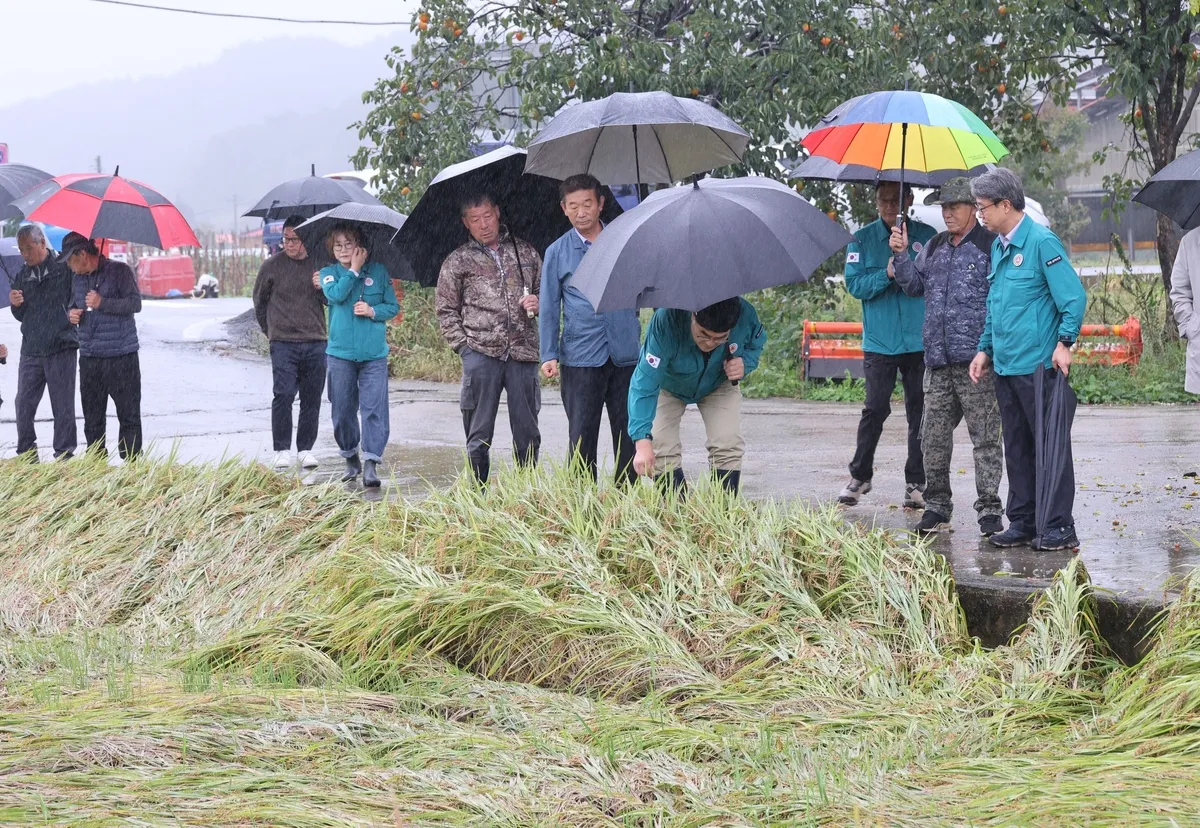
[Rice paddies in Samcheok collapsed from the autumn monsoon Ⓟ Samcheok City]
Not only rice but other crops such as napa cabbage, apples, and potatoes also took a direct hit. Fruit sweetness declined due to reduced sunlight, and the fruit cracking phenomenon occurred from the absorption of more moisture than needed, causing a significant drop in marketability. For kimchi-making season cabbages, the risk of major pests and diseases such as soft rot and downy mildew increased. On top of this, with the addition of concerns about cold damage from the sudden temperature drop, the anxiety of farmers continues to grow.
Rain Instead of Autumn Leaves: A Changed Autumn Landscape
The rain clouds that passed through the brief autumn have even altered the familiar autumn landscape. Those visiting famous foliage spots can easily spot leaves that have not yet fully turned color. This is because the summer heat continued until mid-October, and cold weather set in before the leaves had fully changed, preventing the conditions for foliage formation from being adequately met. Furthermore, concerns are being raised that with frequent rain and high humidity during the delayed foliage period, the autumn leaves may not turn vivid colors or may fall prematurely.
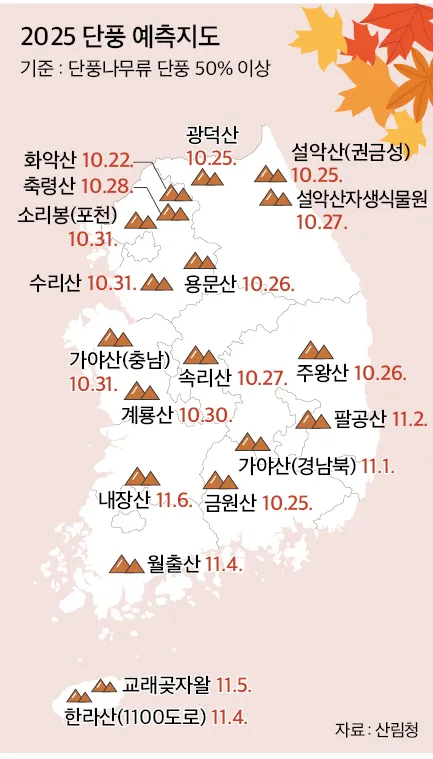
[Peak foliage period expected from late October to early November Ⓟ Farmers’ Newspaper]
According to the ‘2025 Forest Autumn Foliage Prediction Map’ published by the Korea Forest Service, the peak foliage period this year is projected to be late October to early November depending on the region. This is up to seven days later than the average year, a result that is markedly delayed compared to the past. In other words, anomalous weather phenomena including the autumn monsoon are even rendering the foliage season uncertain.
The Familiar Boundaries of the Seasons Are Disappearing
As soon as the autumn monsoon that lasted through the third week of October ended, a sudden cold air mass arrived starting last weekend. Winter has strode in before autumn could even properly begin. On October 20, the minimum temperature at Seoraksan Mountain dropped to -1.3°C, and roughly 1 cm of the season’s first snow accumulated in the high-altitude areas of Seoraksan. The order of the seasons became tangled, with snow falling before the leaves had even changed. Such abnormal seasonal disruptions will only become more frequent going forward.
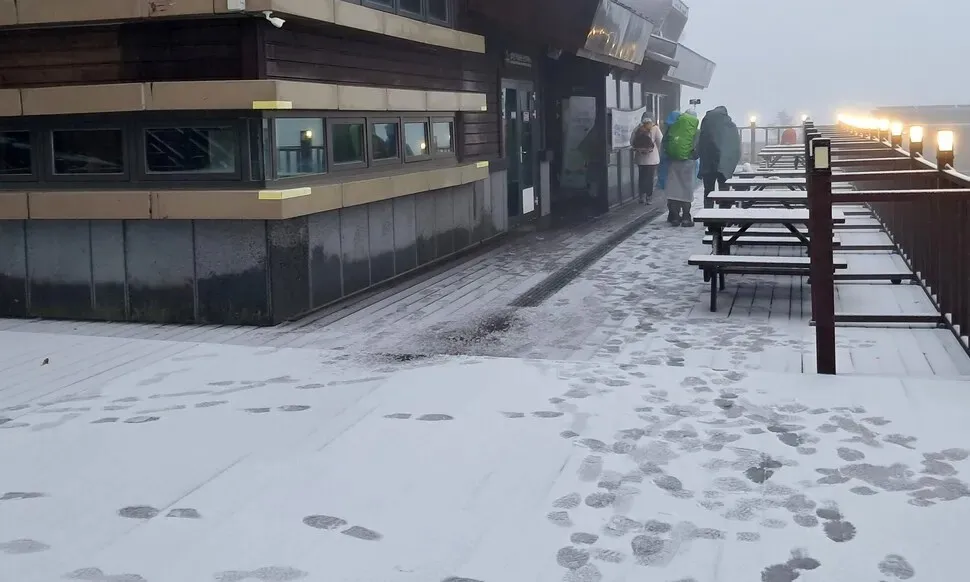
[First snow falling at the Socheong Shelter in Seoraksan National Park, October 20 Ⓟ Seoraksan National Park Office]
This year’s unusually long autumn monsoon is a signal that the balance of the seasons is collapsing. ‘Autumn-like weather’ is no longer a given. Within the new environment created by climate change, now is the time for us to prepare realistic response strategies for living alongside the changing seasons.
by Editor N