

On the 6th (local time), the U.S. Securities and Exchange Commission (SEC) voted to adopt a rule mandating corporate climate disclosure. A total of five commissioners took part in the vote, with three Democratic-leaning commissioners—including SEC Chair Gary Gensler—voting in favor, and two Republican-leaning commissioners voting against. The crux of the decision was determining the scope of corporate greenhouse gas emission disclosures, which are divided into Scope 1 through 3. The result landed in a middle ground that satisfied neither camp: companies will only be required to disclose Scope 1 and Scope 2 emissions, while Scope 3 emissions will not need to be disclosed. Scope 1 refers to greenhouse gases emitted directly by companies through the use of fuel to manufacture and sell products, while Scope 2 refers to greenhouse gases indirectly emitted through the use of electricity or thermal energy. Scope 3 refers to greenhouse gases emitted directly and indirectly across a company's supply chain. The mandate applies to large listed companies (market capitalization of $700 million or more) and medium-sized companies (market capitalization of $250 million or more), with disclosure required starting in 2026.
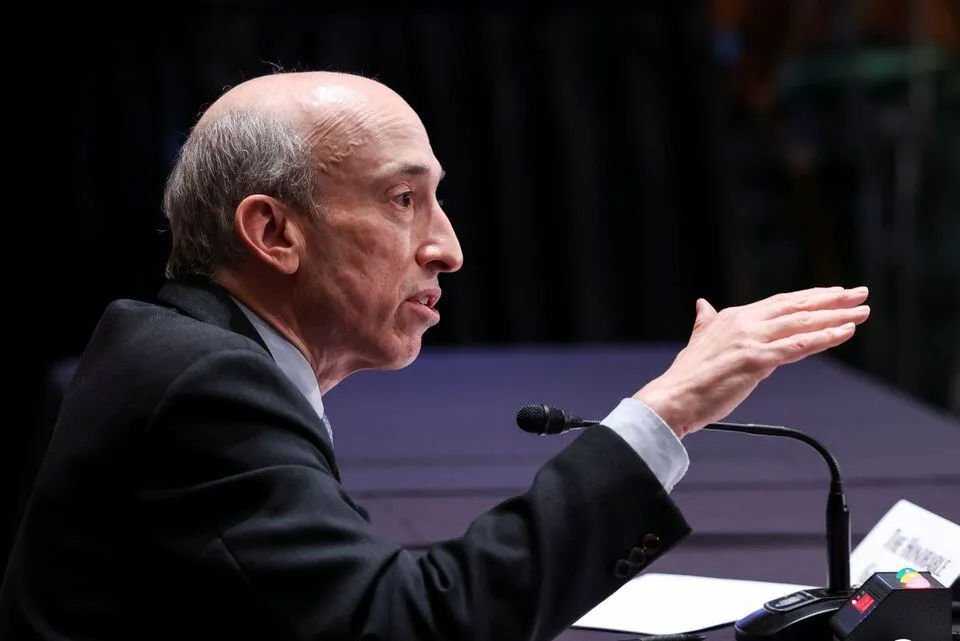
[SEC Chair Gary Gensler explaining the climate disclosure proposal at a 2022 hearing ©Reuters]
Environmental Groups Say "It's Not Enough"
As soon as it was announced that Scope 3 would be excluded from the climate disclosure rule, U.S. environmental groups immediately launched criticism. They argue that the regulation has been excessively watered down and lacks any real effectiveness. In fact, Scope 3 accounts for approximately 70% of total greenhouse gas emissions for the majority of companies. However, the SEC accepted companies' arguments that identifying greenhouse gas emissions across their supply chains is too difficult. Companies appear to have made strong and persistent demands of the SEC. The SEC disclosed that since first announcing the climate disclosure regulation in March 2022, it received over 24,000 comment letters, which it took into consideration before finalizing the rule.
Republicans Say "It's Overreach"
Republicans argue that the climate disclosure rule itself is unjustified and that the SEC is overstepping its mandate and authority to engage in environmental activism. According to Reuters, ten states where Republicans hold the advantage—including Georgia, Alabama, and Alaska—have already filed lawsuits against the SEC. The U.S. Chamber of Commerce has also mentioned the possibility of pursuing legal action on the grounds that the rule imposes an excessive burden on companies. The Chamber of Commerce has previously filed a lawsuit challenging California's climate disclosure law, arguing that it exceeds the state government's authority.
The SEC Says "Remember Roosevelt"
In announcing the adoption of the climate disclosure rule, the SEC invoked the 32nd U.S. President, Franklin Roosevelt. The SEC was established under the Roosevelt administration. It was a measure to protect investors in response to the 1929 Wall Street crash, which triggered the Great Depression. The Wall Street crash was an event in which a bubble of indiscriminate investment—built on blind faith in the market—burst. During the process of establishing the SEC, President Roosevelt emphasized the "complete and truthful disclosure" of corporate information. By invoking Roosevelt's words as the climate disclosure rule was adopted, the SEC Chair was reminding everyone of the agency's founding principles.
What Was the SEC's Role?
The SEC's core intent in adopting this rule was not to protect the environment or corporations, but to protect investors. The SEC stated that the background for discussing the rule was investor demand for companies to disclose more transparent and reliable information regarding climate risks. Indeed, under this rule, companies must disclose not only their greenhouse gas emissions but also the costs they incur to mitigate climate risks and the financial impacts. The SEC is not an environmental authority. It determined purely from a market perspective that climate risks are already affecting corporate operations and finances, and that investors therefore need to know about them. The decision that satisfied neither camp may, in the end, have been a decision made for the majority—or in the majority's interest.
by Editor N