It has been revealed that the global average temperature rose by 1.52°C in just one year—a shocking finding. Announced by the European Union's Copernicus Climate Change Service, this news has been met with the assessment that international efforts to prevent a 1.5°C rise in average temperature have been insufficient. The pace of global warming accelerated at an alarming rate last year, and we were able to feel the consequences through one extreme climate crisis after another. From massive wildfires in Canada and Australia to severe drought in Northeast Africa and catastrophic flooding in Pakistan, communities around the world spent their days scrambling to recover from natural disasters.

[Massive wildfire in Chile in February, with an estimated death toll of approximately 100 ©BBC]
There are various reasons why the 1.5°C average temperature threshold is critical. When climate change occurs, it can trigger extreme weather events such as heatwaves and heavy snowfall, cause sea levels to rise and inundate coastal areas, and threaten biodiversity—including the loss of 70% of the world's coral reefs. In an interview, Maya Singer Hobbs, a senior research fellow at the Institute for Public Policy Research (IPPR), stated: "It is important to keep the global average temperature rise below 1.5°C because the natural environment that produces the food we eat is known to be maintainable only when the temperature rises no more than 1.5°C." The target for limiting the average temperature rise was set based on the increase in the Earth's average temperature since the Industrial Revolution and is a medium- to long-term outlook established through the 2015 Paris Climate Agreement. However, recent research has shown that, on an individual daily basis, regions around the world are already exceeding the 1.5°C average temperature, raising growing concerns. The BBC reported that Arctic temperatures have been rising approximately four times faster than other parts of the world since 1979, and that Africa's rate of warming since the 1991-2000 period has been faster than that of other regions as well.
The pace of warming is faster than previously studied forecasts. Early last year, the Intergovernmental Panel on Climate Change (IPCC) had projected that half of the Earth's surface would not exceed the 1.5°C threshold until the mid-2030s, but research published this year has raised the possibility that this could occur as early as 2029.
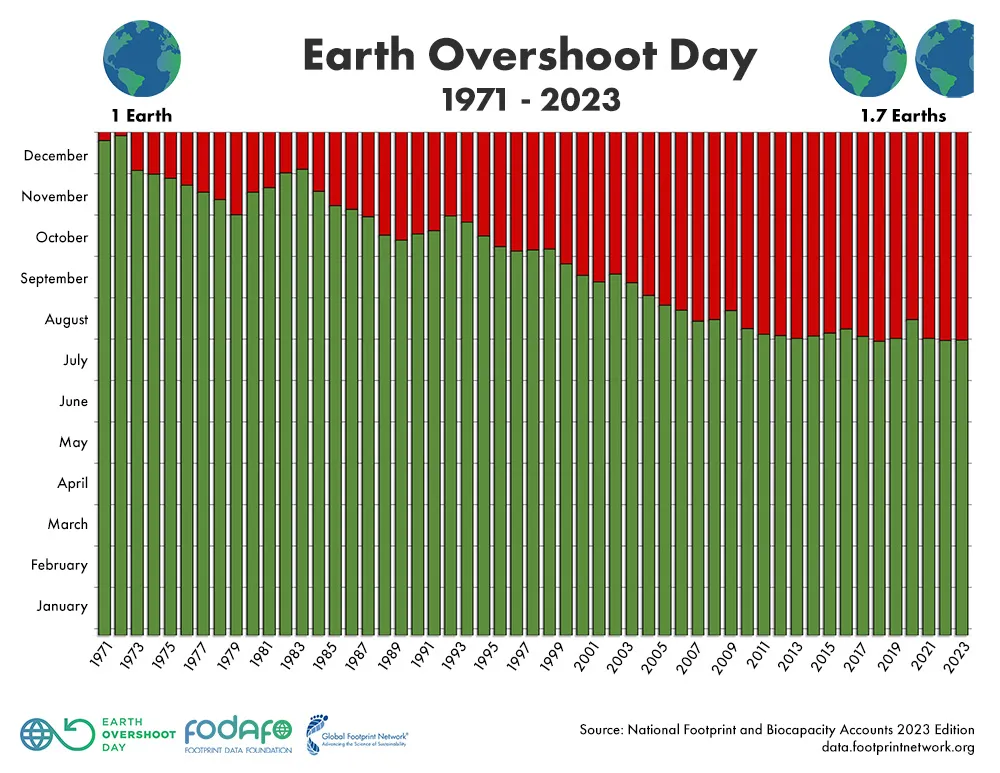
[Record of days with average temperature rise above 1.5°C from 1971 to 2023 ©Global Footprint Network]
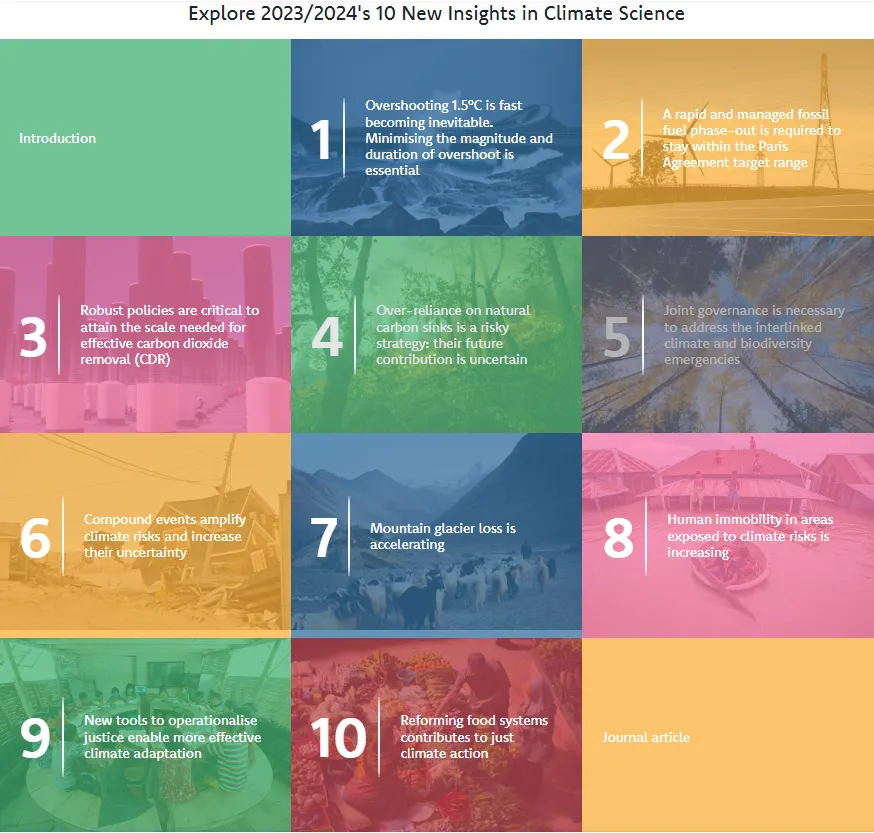
When we enter an "overshoot"* state—in which the average temperature has risen more than 1.5°C above pre-industrial levels—the likelihood of reaching a "climate tipping point," where the environment deteriorates to a level uninhabitable for humans, increases significantly. For this reason, preventing a 1.5°C rise in average temperature before entering overshoot is critically important. To completely avoid overshoot, greenhouse gas emissions would need to be cut by 43% compared to 2019 levels, but there are now opinions emerging that overshoot is an unavoidable phenomenon and that minimizing the scale of damage is the best we can do. Reversing the situation after overshoot would require carbon capture technology on a massive scale, but such an approach faces not only enormous costs but also industrial and social limitations; therefore, there is a consensus that preventing overshoot in the first place is the top priority.
*Overshoot: A situation in which greenhouse gas emissions exceed the amount that nature can absorb, causing the Earth's average temperature to rise beyond the 1.5°C threshold.
A Positive Signal Amid Crisis
Despite the grim outlook, there are positive developments underway. The cost of renewable energy continues to fall, and the scale of investment is growing. According to the International Energy Agency (IEA), investment in clean energy reached approximately 1.7 trillion USD in 2023, surpassing investment in fossil fuels for the first time. This can be seen as a positive signal of the transition to clean energy. Because the impacts of global warming are particularly harsh on the economically vulnerable extreme poor, we must join forces as quickly as possible to avert the climate crisis. This is a moment that calls for determination beyond the interests of individual nations, for the sake of our shared future. We must face reality for the sake of future generations, and it will be the path to defending the 1.5°C Maginot Line of global warming.
by Editor N