
This past Sunday, June 15, a special environmental-education workshop was held in Mullae-dong, Seoul. This "Climate Fresk" workshop — planned and promoted by "Jigureul Jikineun Baeumteo (Learning Ground That Protects the Earth)," a group of young environmental activists, and run on-site by the citizens' environmental group "People Who Think About the Environment" (hereafter "PWTE") — was a venue for ESG experiential learning that approached the climate crisis easily and enjoyably through play and discussion, heightening participants' immersion.
ESG.ONL met PWTE again — introduced at the "Earth Day" event this past April — and, by taking part in this workshop in person, had a meaningful time of learning together with various people interested in the climate crisis.
The Climate Crisis Unpacked with "Climate Fresk Cards"
The workshop uses cards made based on the sixth report of the "Intergovernmental Panel on Climate Change (IPCC)," which has published six reports from 1988 to the present. Arranging a total of 42 cards based on scientific data by group, it strengthens awareness of climate change. This movement began in 2015 when Cédric Ringenbach, a French engineer and expert in the field of climate and energy transition, did an exercise with students at a university, arranging IPCC graphs in order of cause and effect. It then spread rapidly worldwide, the "La Fresque du Climat (Climate Fresk) association" was established in 2018, and it has now established itself as a global education movement in which more than 1.9 million people in over 100 countries participate.
Workshop participants form teams and, following the facilitator's guidance, place and adjust the cards themselves to visually understand the causes and effects of the climate crisis. Because the cards are organically connected to one another, following the larger context lets you grasp more accurately the reasons that created the climate crisis we now experience.
[The scene of heated discussion during the Climate Fresk card game © ESG.ONL]
The Cause and Effect Surrounding the Climate Crisis
The fact that "when carbon emissions increase, sea levels rise, and this in turn leads to the destruction of ecosystems and the risk of humanity's collective demise" is now a well-known story. Looking at this in more detail, the climate crisis begins from the initial cause of human activity. Various human activities such as agriculture, industry, and deforestation caused environmental problems, and the excessive use of fossil fuels caused an additional greenhouse effect, accelerating global warming. Water temperatures rise, and as glaciers, ice sheets, and sea ice melt, sea levels rise. Sea-level rise not only floods low-lying areas but also seriously damages the water-circulation and exchange system, becoming the cause of the extreme weather anomalies we are directly experiencing — heat waves, droughts, wildfires, and more.
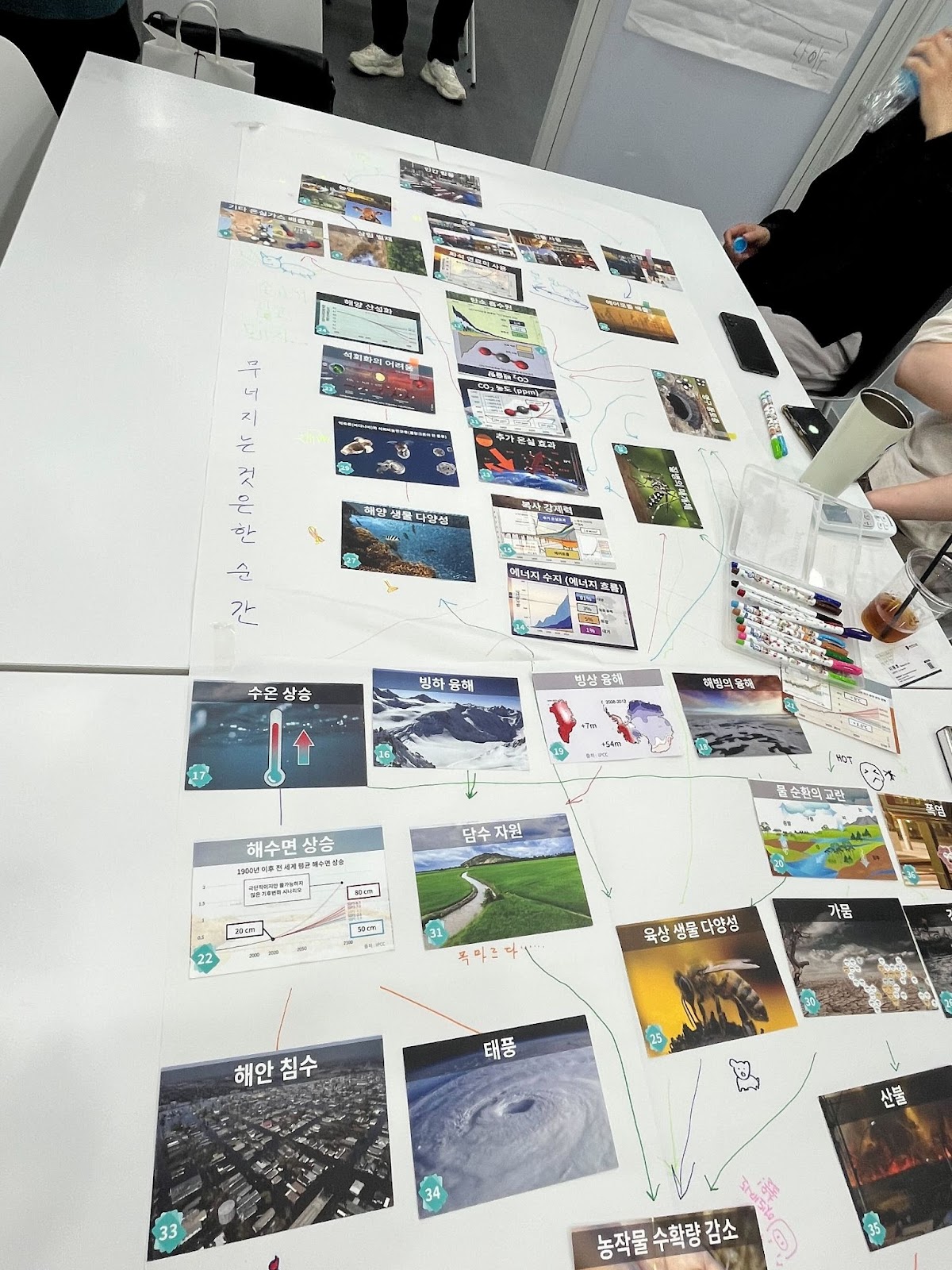
Such environmental problems reduce crop yields, threaten our health, and cause the loss of animal and plant habitats. Through a chain effect, they expand into global problems such as deepening inequality, famine, population movement, and armed conflict.
Through the game of arranging cards, participants explained the structure they understood, adding the power of collective intelligence, and built up learning by asking questions. Once the scattered cards found their places, and the connecting lines between cards were drawn with a pen to internalize the complexly entangled structure of the climate crisis, by the time the workshop ended, anyone who participated could explain the climate crisis in detail.
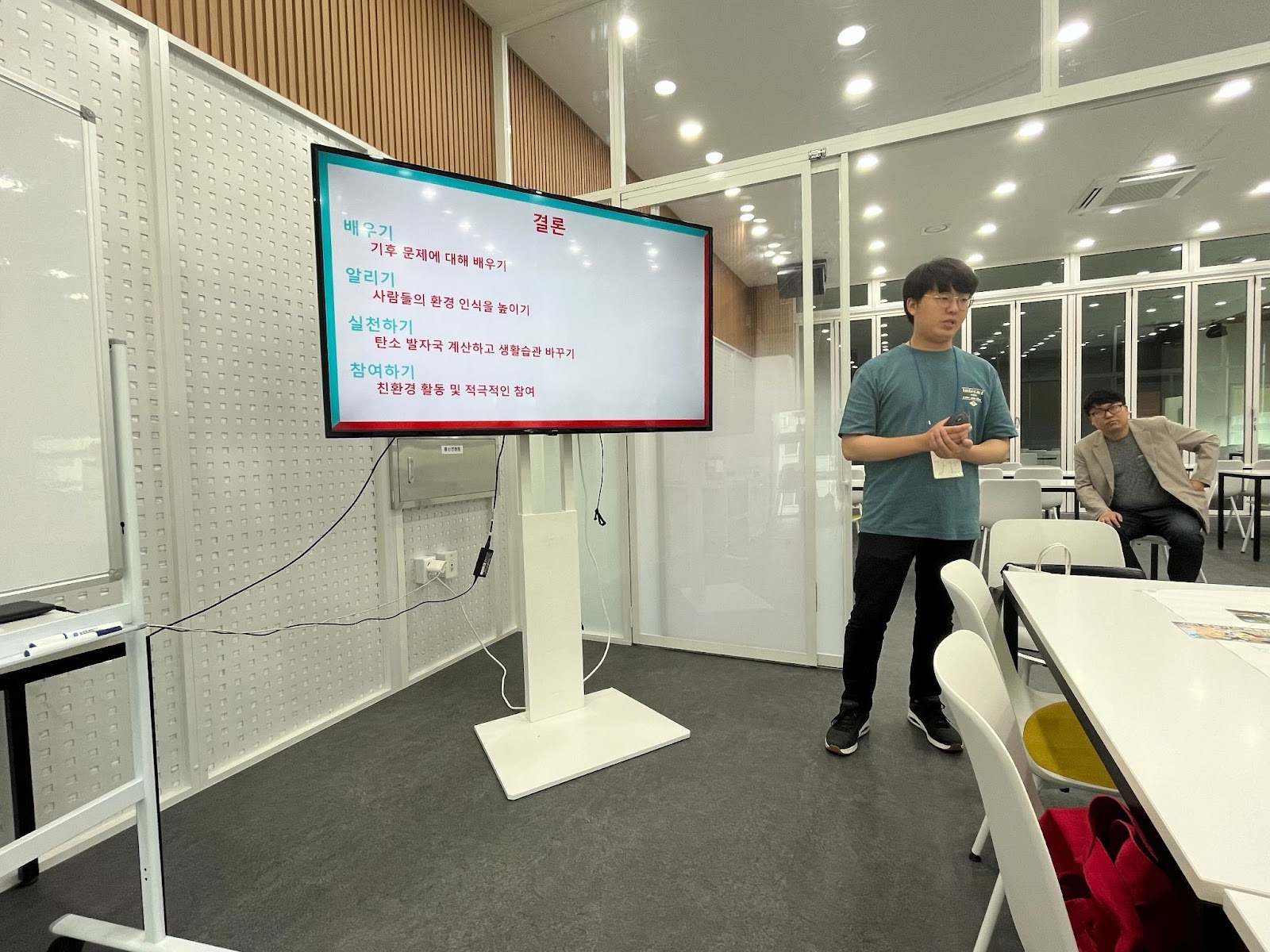
[PWTE head Lee Dong-ho © ESG.ONL]
Sharing Climate Emotions and Pledging Climate Action
The Climate Fresk workshop, beyond simply conveying knowledge, continued into a time for participants to share their thoughts and emotions with one another. The process in which people of various occupations and age groups gather and solve problems with the power of collective intelligence teaches the necessity of the citizens' environmental movement and the importance of participation. Participants shared impressions such as, "Sharing our anxiety about the climate crisis, I felt camaraderie communicating with those who have the same worries and want to act." Another attendee revealed the ambition to widely publicize such a citizen-action workshop to those around them, saying, "Behind one person are ten, and behind those ten are another ten, so I believe my actions and practice efforts can spread quickly."
[Seen on a five-year-average basis, 1.5 degrees still holds hope © ESG.ONL]
Before the 1.5-Degree Rise: The Chance Still Left to Us
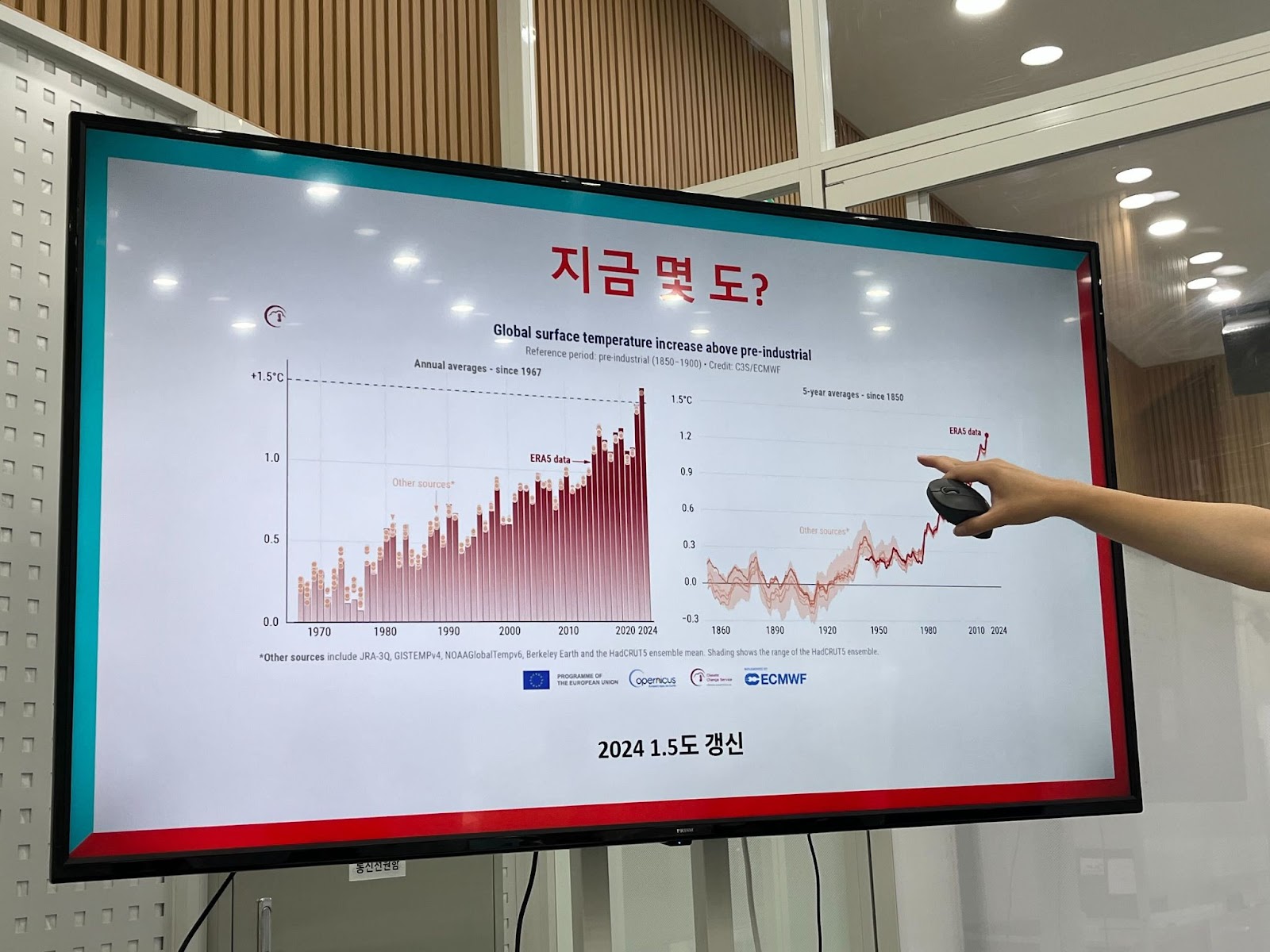
The news that the 1.5-degree line of the Earth's average temperature was already exceeded in 2024 dealt a shock to many people. At the Climate Fresk theory-education session, PWTE head Lee Dong-ho conveyed that there is still hope, saying, "If you set the period as a five-year average and check, it has not yet exceeded 1.5 degrees." The reason international organizations such as the WMO (World Meteorological Organization) and the IPCC look at a five-year average of temperature rise is to remove natural variability and grasp the essential trend of human-caused climate change. So Lee emphasized that an attitude of striving for individuals and society to change together, starting now, is important.
Climate Fresk gives ESG stakeholders good insight into the climate crisis and sustainable development, and gives general readers interested in environmental issues the stimulus to join in climate action. If there are ESG stakeholders who talk about ESG in practice but found it hard to share climate emotions in real life, or citizens who had a heart for the environment but pondered how to understand and confront this problem, we recommend experiencing the Climate Fresk workshop together. In the process of setting and presenting positive practice goals for a better future, you will encounter a small hope for the future that will change.
by Editor L