
Only Happy Employees Can Provide Happy Service
From back when it was a small coffee company with only four stores, Starbucks has carried out value-centered management based on a corporate philosophy that puts people first. Starbucks' own value-centered management can be said to have begun with and been built by former CEO Howard Schultz, called the father of Starbucks. In "Pour Your Heart into It," a book he published in 1999 — the year Starbucks first entered Korea — he said that employees come first, customers second. Howard Schultz believed that happy employees provide excellent service and create happy customers. Accordingly, during his time as CEO he always called employees "partners," and under the belief that the company's profits should be shared together, he provided a stock option called "Bean Stock" to all employees, including part-timers.
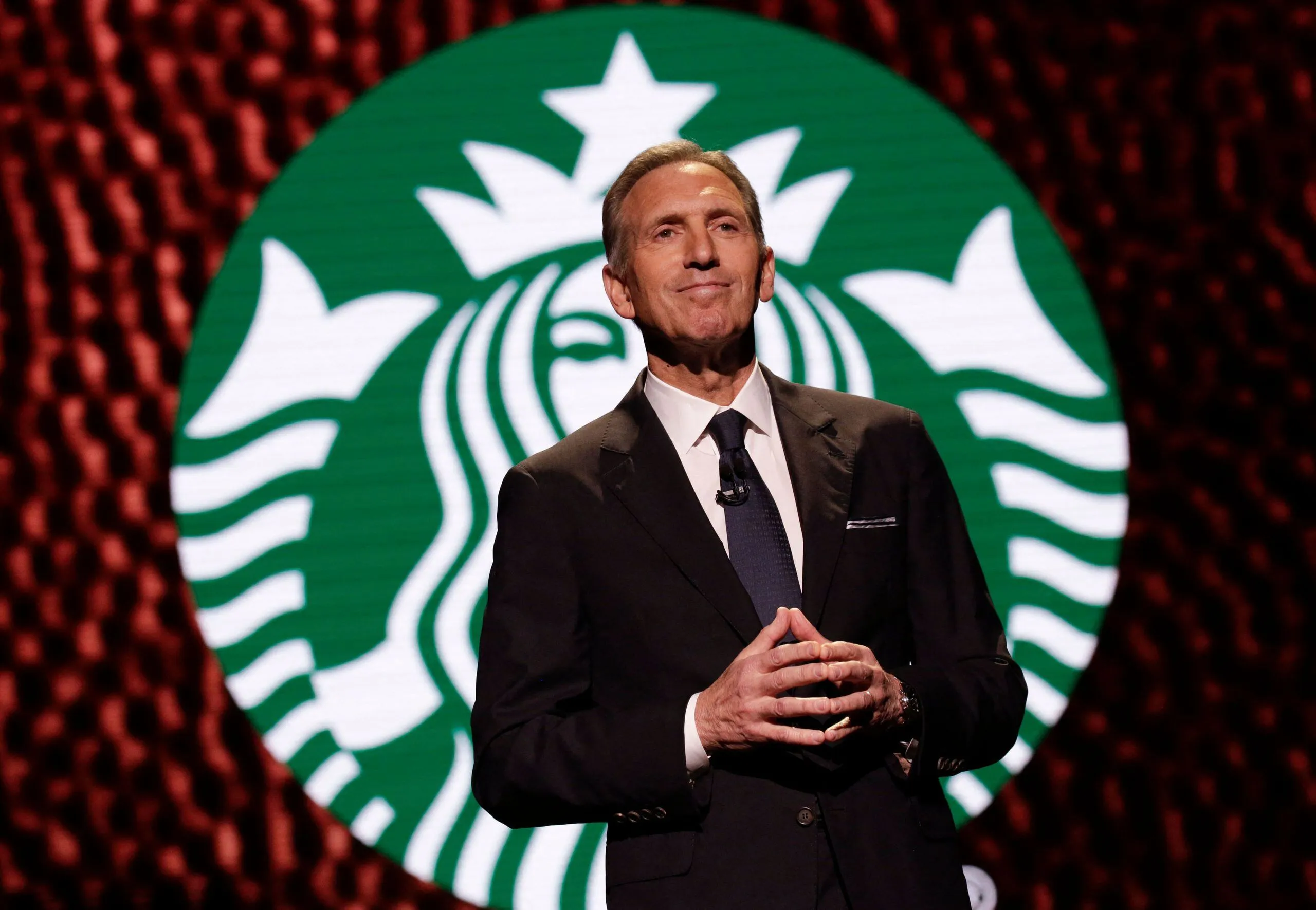
[Howard Schultz, Starbucks Chairman Emeritus © AFP/Yonhap News]
Managing risk from a social and ethical perspective is also one condition of good governance. Remembering his difficult childhood, Howard Schultz provided health-insurance benefits to all employees including contract workers, and this was firmly maintained even amid the crisis around the 2008 economic crisis, when Starbucks' stock price fell 42% and it closed 7,100 stores across the US. He also raised his voice to reduce wage gaps by race and gender. In particular, he showed a favorable attitude toward the poor and refugees. In 2011 he opened a "Community Store" in New York's Harlem, notorious as a high-crime area, hiring Harlem residents to create jobs and investing part of the profits in the local community. In 2017 he announced that Starbucks would hire 10,000 refugees over five years, thereby also standing against former President Donald Trump's anti-refugee policy.
In 2024, Starbucks announced a new store-design direction for the convenience of employees and customers with disabilities. Starbucks has, all along, made store accessibility and inclusivity core elements of the consumer experience. The core of this announcement is that it will apply to offline store spaces this value that it had also shared on its online channel, the mobile application. The new design plan, called the "Inclusive Spaces Framework," was first applied at a new Starbucks store located in Washington, and Starbucks said it plans to apply it to about 4% of the 16,000 stores located in North America going forward.
Greener "People" and "Places"
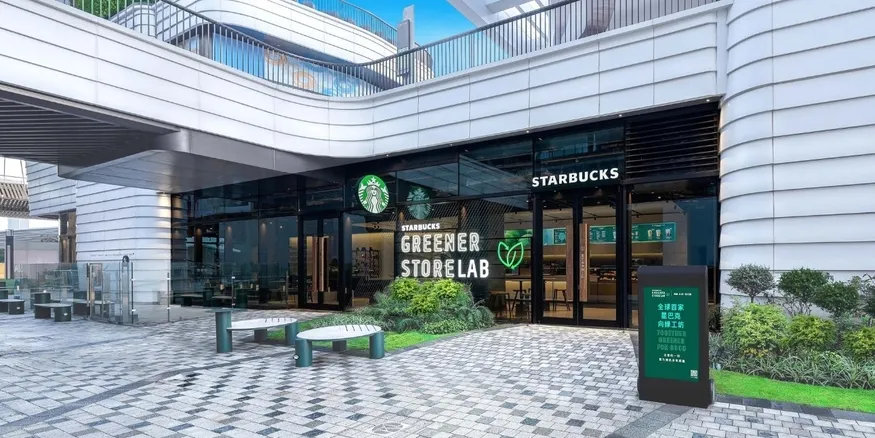
[A Starbucks Greener Store in Shanghai, China © Starbucks]
Beyond the social and ethical perspective, managing risk in environmental terms is also a condition of good governance. In 2018, Starbucks, together with the "World Wide Fund for Nature (WWF)," announced a plan to create 10,000 "Greener Stores"* by 2025, and to date has opened more than about 6,000 stores in 44 countries worldwide. A Greener Store is designed to use 30% less energy than existing stores, and the amount of energy saved this way is equivalent to the annual electricity use of more than 30,000 households. It also reduces water use by more than 30% each year, contributing to the company's sustainability goal of cutting carbon emissions, water use, and landfill waste by nearly 50% by 2030. As we are well aware, the coffee beans used at Starbucks have their origin and entire distribution process disclosed through a program called "Bean to Cup."** The realization of the fair-trade value implemented through this leads to consumer trust.
In 2018, Starbucks' headquarters announced that it would "phase out the use of single-use plastic straws at 28,000 stores worldwide," and Starbucks Korea is currently pursuing an eco-friendly campaign under the slogan "Greener Starbucks Korea — A Promise for the One and Only Earth." Through introducing paper straws, using eco-friendly packaging materials, and making natural fertilizer by recycling coffee grounds, its goal is to reduce carbon emissions by 30% going forward. It is also spurring product development for coexistence and shared growth with local regions. Starting with the Mungyeong Omija Fizzio in 2016, it has steadily developed and released beverages using Korean agricultural products — such as the Icheon New-Harvest Rice Latte and the Goheung Yuja Fizzio — and plans to expand these to as many as 10 kinds by 2025.
*Greener Store: a store that directly practices eco-friendly activities to reduce waste, energy, and water use in order to realize a sustainable future. To receive Starbucks' Greener Store certification, a store must meet 25 essential criteria across 8 environmental areas developed through a partnership between the World Wide Fund for Nature (WWF) and SCS Global Services, and must be certified by an external auditing body.
**Bean to Cup: a program that lets you scan the QR code attached to the coffee-bean packaging with a smartphone to check the bean's growing region and place of production, how Starbucks supports the farmers of that region, and more. Beyond the origin, it also provides detailed information such as the farm and farmer, the coffee's roasting time, and tasting notes.
The presence of the brand Starbucks has long surpassed the level of a company that merely sells coffee. Like the taste and aroma of coffee, which has settled unchanged over a long time as an essential beverage in our lives, let us look forward to Starbucks' own sincere ESG management taking root naturally in our lives.
by Editor L