
The content of the UN Framework Convention on Climate Change (UNFCCC), adopted at the 1992 UN Conference on Environment and Development (UNCED), was that developed and developing countries would reduce greenhouse gases according to "common but differentiated responsibilities." In effect, it is a promise to try to curb the rise in the Earth's temperature through greenhouse-gas reduction. The Paris Agreement, adopted at the 21st Conference of the Parties (COP) held in Paris in 2015, prescribes limiting the rise in the Earth's temperature to 1.5℃ above pre-industrial levels and, to this end, requires all countries to submit their post-2020 climate-change response plans to the UNFCCC every five years.
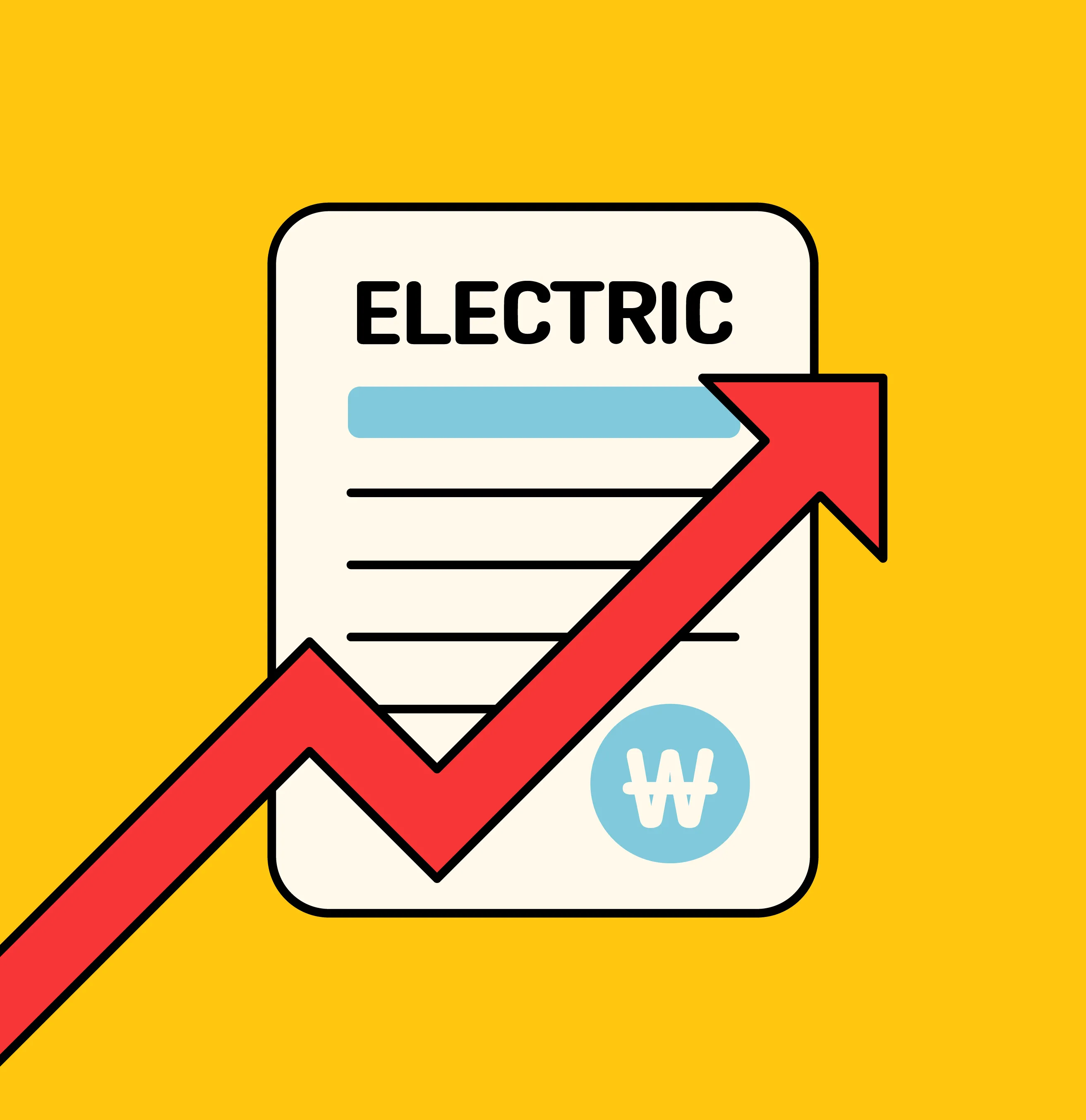
Since submitting its first Nationally Determined Contribution (NDC) in 2015, Korea revised its NDC in 2020 and is ahead of its second NDC revision this year. At this point, when various reduction plans are being considered to achieve the 2050 carbon-neutrality goal, on August 14, at a senior-secretaries' meeting, President Lee Jae-myung hinted at an electricity-rate increase.
Humanity, Already in Debt to the Earth

[Overshoot ©GFN]
Overshoot—that is, Earth Overshoot Day—is an indicator estimated by the international research organization the Global Footprint Network (GFN), converting into a date the point at which the ecological resources and environment that humanity consumes over a year exceed the Earth's regenerative capacity. This year's Earth Overshoot Day is July 24, and if converted using only the consumption of Korean citizens, that point is moved up to April 9. This means that, generously counted, more than three Earths would be needed to sustain Koreans' resource consumption.
The Cost of Failing to Stop Climate Change—We Are Already Paying It
President Lee Jae-myung's remark on raising electricity rates immediately caused a great stir in public opinion. This is because, regardless of scale, electricity is an essential good that cannot be absent from everyone's daily life. Also, this is closer to the investment costs put into the renewable-energy transition process than an incentive to reduce electricity use itself. It means it is a cost that is absolutely necessary to reduce greenhouse gases and to keep the Earth's temperature from rising further.
Even for such essential cost spending, people's nerves are on edge. But we are already paying the cost of the rise in the Earth's temperature caused by failing to sufficiently reduce greenhouse gases. According to a report by the multinational climate-change research organization World Weather Attribution (WWA), this spring's large wildfires that swept Korea were affected by the high temperatures of a long-term trend due to climate change. As high temperatures persisted, they dried out the soil and vegetation, and this doubled the likelihood of extreme wildfires occurring.

[The enlargement of wildfires caused by high temperatures ©Getty Images Bank]
According to the Korea Forest Service, wildfires occurring in Korea over the past 10 years averaged 545 per year, and large wildfires occur every year. In particular, the 2022 Uljin-Samcheok wildfire destroyed 16,302 ha of forest, and the scale of economic damage reached about 881.1 billion won. The damage from large wildfires occurring since 2020 is estimated at about 1.0727 trillion won.
Large wildfires are not the only problem. According to what the Ministry of the Interior and Safety announced on the 17th of last month, the damage from concentrated heavy rain that occurred this year is 1.0848 trillion won, and more than 2.7 trillion won will be invested for recovery. The heavy rain is caused by the hot, humid stationary front covering the Korean Peninsula, and behind this cause is global warming. In addition, because the tree roots that hold the soil of mountainous terrain were lost due to the spring wildfires, the probability of a compound disaster—in which landslide risk increases—is also growing.
The per-capita electricity consumption for 2023 presented by Statistics Korea is 10,637 kWh, and the average annual electricity bill per person, calculated by applying seasonal progressive rates, is about 3,106,820 won. People are on edge over electricity-rate increases, but the damage from wildfires over five years and this year's concentrated heavy rain each amount to about 345,000 people's worth of one year's electricity bill.
The Climate Crisis, Into the Realm of Survival, Not Morality
Natural disasters caused by climate change also greatly affect daily life. R. Jisung Park, an environmental economist at the University of Pennsylvania's Wharton School, analyzes in figures the damage climate change inflicts on society in his book "The Price of 1 Degree" (original title Slow Burn) (Willbook, 2025). For instance, when temperatures of 32.2℃ or higher persisted for a week, the monthly rape-crime rate increased by more than 5%, and murder and violence rose by about 3%.
Not only in cost but in the social and cultural realms, and even in the realm of survival, we are paying the cost of climate change. Do you still think we must protect the environment to prevent the extinction of polar bears and coral reefs? Climate change is real, and its consequences are revealing themselves in places we did not expect. If it is a cost that must ultimately be paid, it is a point that needs the wisdom of policy and civil society to choose when and in what way to pay it.
by Editor N