
In 1984, James Cameron’s film ‘The Terminator’ depicted a dystopia in which the machine civilization Skynet, having taken over the Earth, uses humanity as an energy source. The scenes in which human body heat and bioelectricity were used as fuel were dismissed at the time as science fiction grounded in abundant imagination. Yet the reality we now face is moving faster than imagination. As the AI industry grows at a pace exceeding expectations, a question confronts us: to coexist with AI, from where must we draw power, and how much of it?
Data Centers Shake the Power Grid
According to the report ‘Energy and AI’ published by the International Energy Agency (IEA) in 2024, global data center electricity consumption in 2024 was approximately 415 TWh (terawatt-hours), accounting for 1.5% of total electricity consumption. This figure is projected to more than double to around 945 TWh by 2030. In particular, the power consumption of accelerator servers dedicated to AI computation is expected to grow at an annual average rate of 30%. Hyperscale AI data centers consume over 100 MW (megawatts) of power 24 hours a day without rest, which is 4 to 10 times the level of conventional data centers. Goldman Sachs has projected that data center power demand will increase by 165% by 2030 compared to 2023, and that USD 720 billion (approximately KRW 1,056 trillion) in grid investment alone will be needed to meet it.
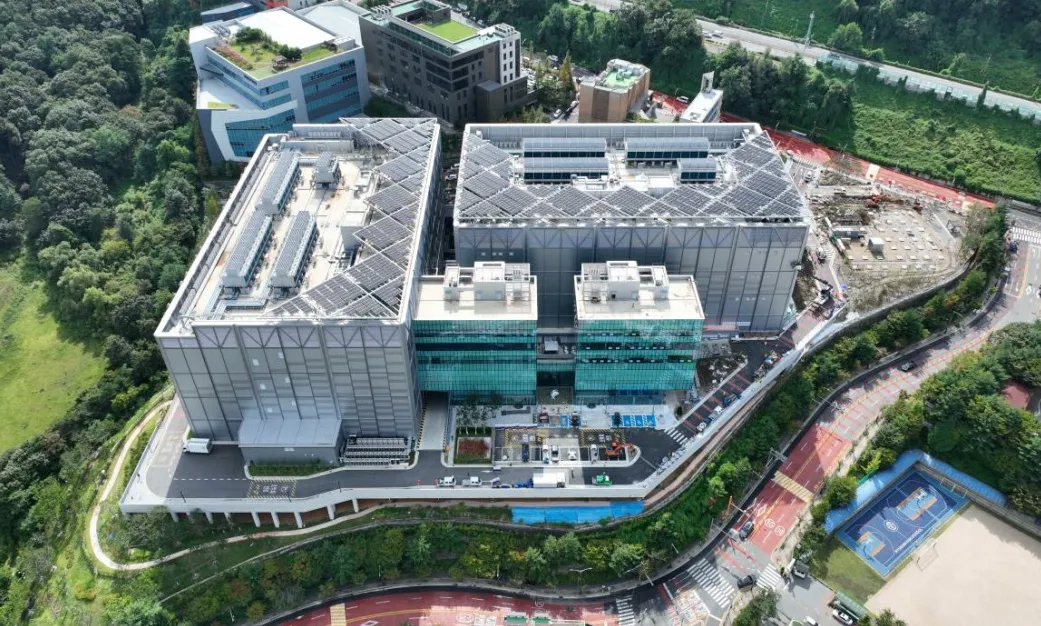
[Hyundai Engineering & Construction Yongin Jukjeon Pacific Sunny Data Center © Hyundai Motor Company Official Website]
South Korea is no exception. In its 2025 report ‘South Korea Datacenter Operations and Colocation Services Market Trends,’ IDC Korea projected that domestic data center power demand would increase from 4,461 MW in 2025 to 6,175 MW in 2028, at an annual average growth of 11%. Already, over the 11 months from August 2024 to June 2025, 290 applications for data center power use were filed nationwide, roughly two-thirds of which were concentrated in the Seoul metropolitan area. The requested capacity in the capital region alone reaches approximately 20 GW (gigawatts) — equivalent to the new power demand of 20 one-GW nuclear reactors. The National Assembly Research Service estimates that a single AI data center consumes up to six times the power of existing facilities and is urging countermeasures.
Insufficient Renewable Energy, Lagging Policy
As demand explodes, supply strategies are also fluctuating. The IEA foresees that while renewable energy will cover half of the additional data center power demand by 2030, natural gas-fired generation will still play a key buffering role amid the demand surge. Big Tech’s investment in Small Modular Reactors (SMRs) with electric output of 300 MW or less has also begun in earnest. It is in this context that Google, Amazon, and Microsoft invested trillions of won in SMR developers in 2024. Governments and companies across the globe are engaged in a complex balancing act between the ideal of energy transition and the reality of power supply.
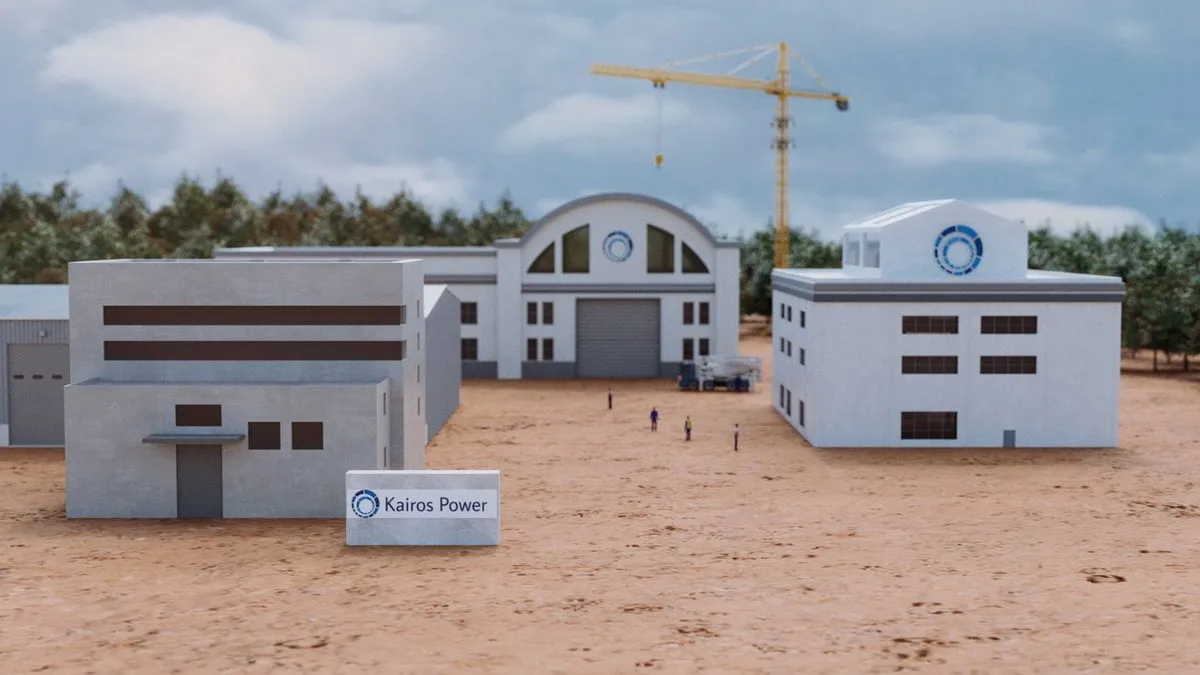
[Computer graphic image of Google SMR © Google Official Website]
The policy vacuum is already spilling over into social problems. In Ireland, where data centers are projected to account for 32% of total power demand by 2026, the power grid has become unable to sustain itself, leading to a situation in which new housing development has become impossible. Virginia in the U.S. and Germany have introduced regulations restricting data center permits in residential areas and mandating renewable energy supply and waste heat recycling. The EU has formulated the ‘AI Continent Action Plan’ to build a self-sustaining AI ecosystem across Europe, with the policy of tripling data center processing capacity within 5 to 7 years, but simplifying permits only for projects that meet energy and water efficiency requirements. In contrast, in South Korea, the structure in which energy consumption is concentrated in the Seoul metropolitan area has become entrenched, intensifying regional conflicts, yet a systematic energy supply and demand roadmap remains ambiguous.
The machines in the film ‘The Terminator’ use human skin and blood for the maintenance of their metal frameworks. Through this, the sci-fi film showed us both a vision of the future and a warning. Today, AI is rapidly depleting the power grids and industrial energy of cities. In this situation, the next generation faces the question of where to obtain fuel. If the pace of renewable energy expansion cannot keep up with the power consumption of AI, we may end up choosing yet another form of ‘energy exploitation.’ Now, as we must set the direction of the AI industry, a social consensus on the source of fuel and who bears the cost is more urgent than ever.
by Editor N