
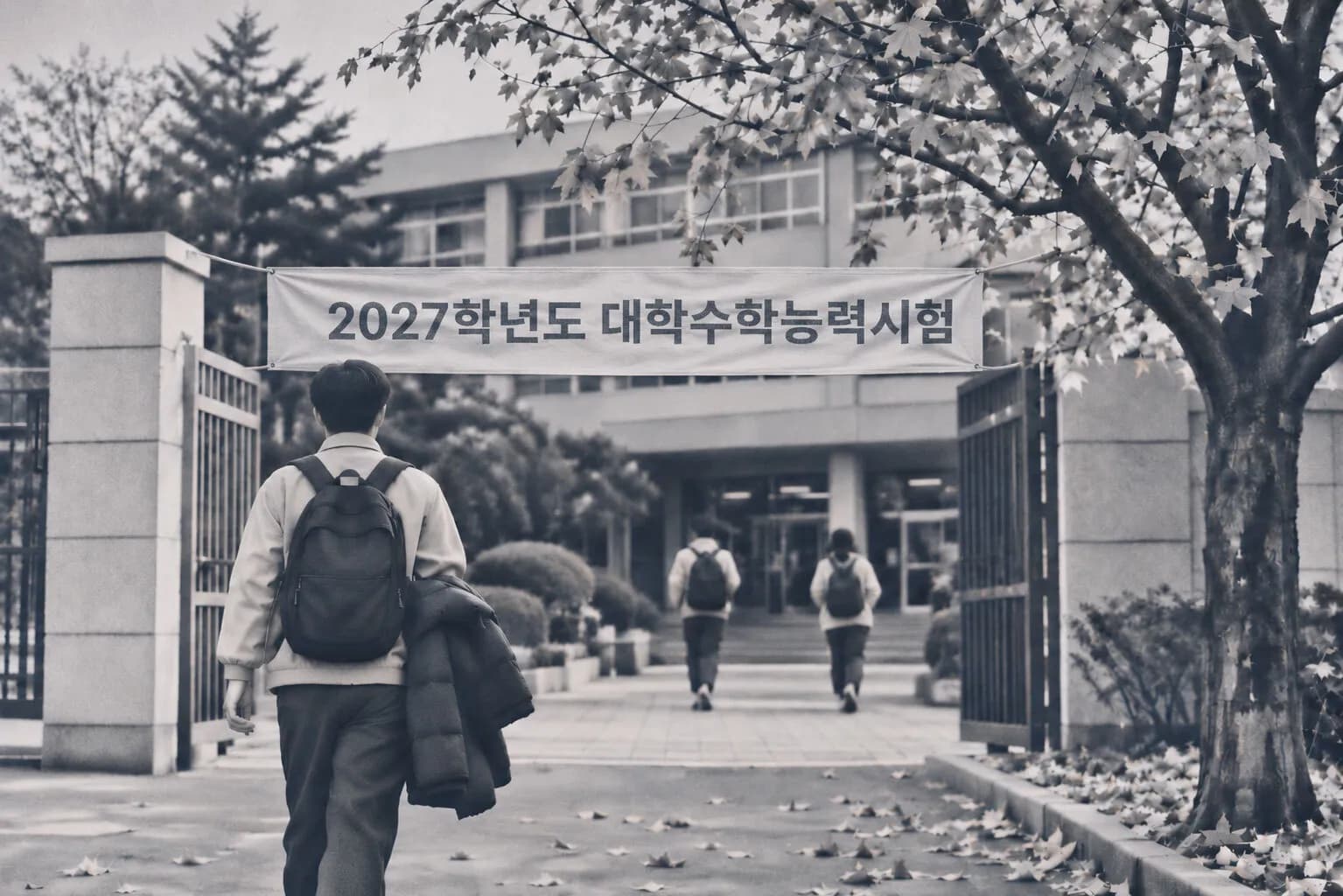
The 2027 College Scholastic Ability Test (CSAT) will be held on November 19, 2026. Cold weather on the exam day has long been a concern for students, but in recent years, warm exam days have become so common that the term ‘CSAT cold snap’ feels outdated. Warmer exam days are not merely a welcome change; they are a warning from the climate crisis. That warning is directly connected to the climate the students taking the exam today will experience decades from now.
Why the CSAT cold snap has weakened
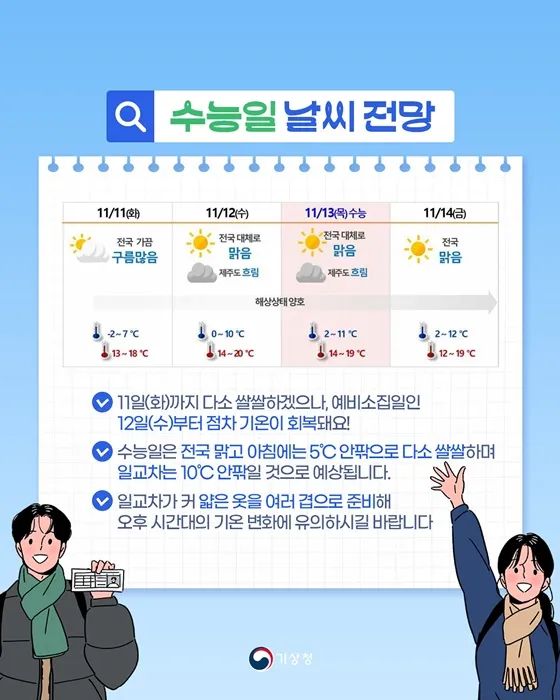
According to weather data for the CSAT day over the past 10 years released by the Korea Meteorological Administration in November 2025, Seoul’s morning low fell below zero in only three years between 2015 and 2024: 2017, 2019, and 2020. From 2021 to 2024, temperatures remained above freezing every year, reaching 13.2°C in 2024. Last year, the Korea Meteorological Administration forecast nationwide temperatures 1–4°C above average on the day of the exam and advised students to wear several thin layers to prepare for chilly mornings and large temperature swings rather than severe cold. This year, Seoul’s morning temperature on the exam day was forecast to fall to -1°C. If the forecast proves accurate, Seoul will hold the CSAT below freezing for the first time in six years, since 2020.
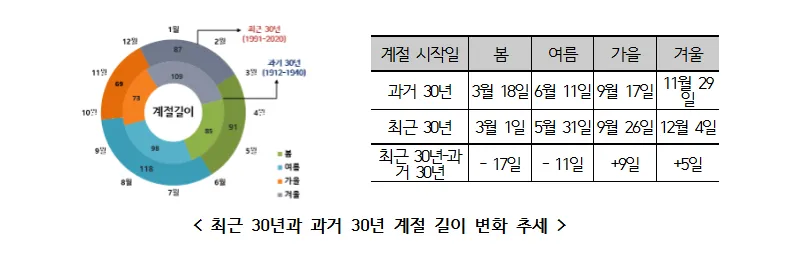
Whether this year’s CSAT cold snap or the mild exam days of recent years, climate change cannot be judged based on the weather on only a few CSAT days. However, long-term observational data also confirms a trend toward shorter and warmer winters. The Korea Meteorological Administration’s April 2021 report, ‘Analysis of 109 Years of Climate Change in Korea,’ shows how winters on the Korean Peninsula have changed over a century. The average annual temperature over the most recent 30 years was 1.6°C higher than during the first 30 years of the 20th century. Although this may seem like a small difference, an increase of this magnitude in the annual average temperature can shift seasonal boundaries. In fact, based on historical temperatures, winter has become more than three weeks shorter, and its onset has shifted from November to early December. Winter has not only become shorter; the cold has also weakened. In the past, winter began within 10 days of the CSAT, held in mid-November. Now, more than 15 days must pass before winter begins. Even if there are years like this one when cold air descends on the CSAT day, the observation that winter now begins later on average remains unchanged.
The change toward milder winters may seem welcome. However, the temperature rise that has shortened winter is the same cause that has intensified summer heat waves and torrential rains. If mild winters are accepted only as a benefit, responses to disasters arising from the same cause may be delayed accordingly. This is why warmer CSAT days should be read as a warning from the climate crisis.
2049: The Timeline of the Exam-Taking Generation
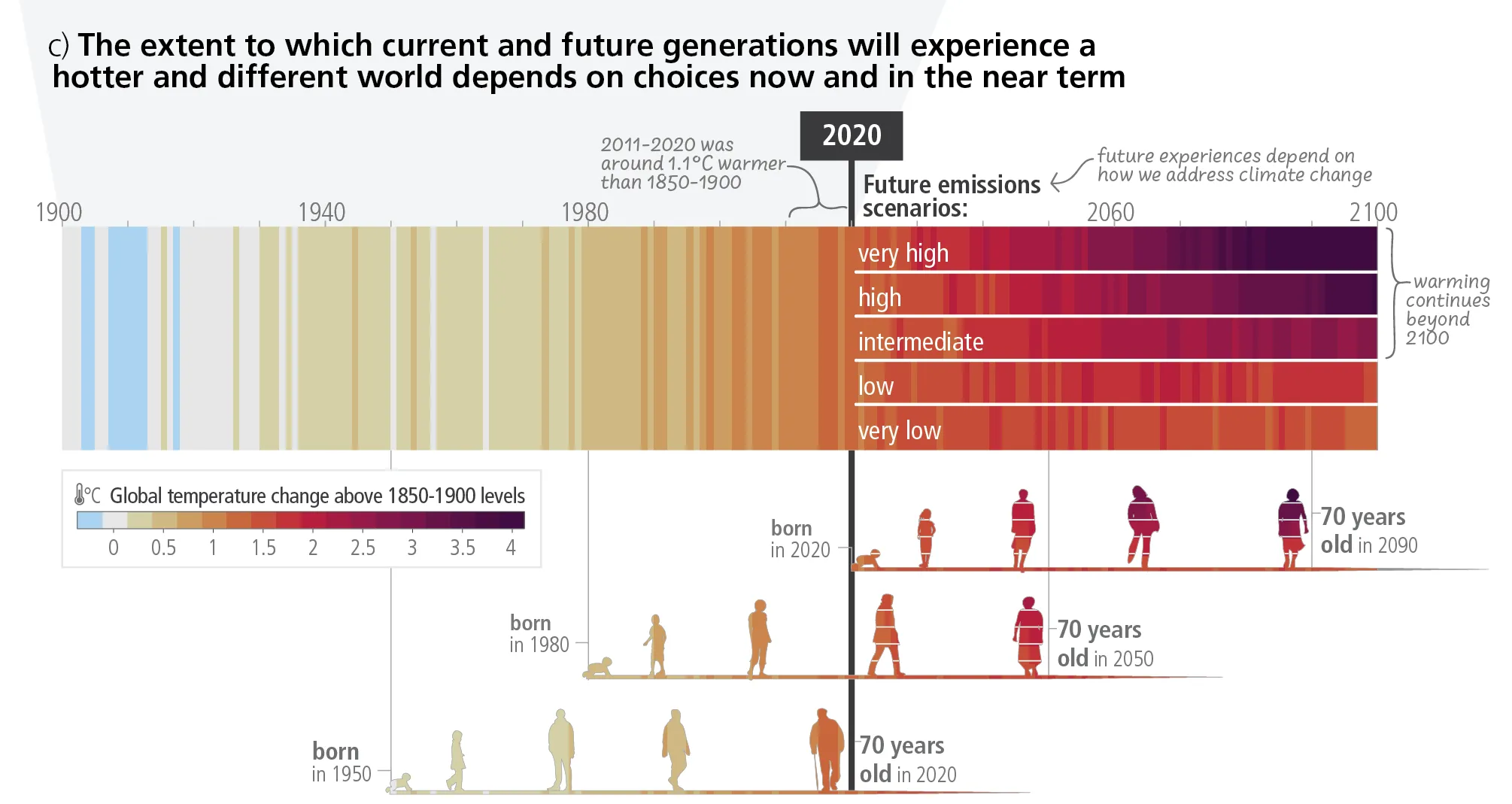
The United Nations body that brings together governments to comprehensively assess global climate science, the Intergovernmental Panel on Climate Change (IPCC),compared in its 2023 Sixth Assessment Report the temperature changes that people born in 1950, 1980, and 2020 will experience over their lifetimes. The report warned that the climate younger generations experience will differ substantially depending on today’s emissions pathway, and that choices made in this decade will have consequences for thousands of years. This means that the generation making policy decisions is different from the generation that will bear the consequences. In 2049, when those born in 2008 and taking the CSAT as high school seniors this year turn 41, they will face the full consequences of policies made today.
The issue of burdens between generations has also been addressed in Korean courts. In August 2024, the Constitutional Court ruled that the Framework Act on Carbon Neutrality was nonconforming to the Constitution because it failed to set emissions-reduction targets for after 2031 and could impose an excessive burden on future generations. A nonconformity-to-the-Constitution ruling means that although a legal provision violates the Constitution, it is not immediately invalidated; instead, the National Assembly is given a deadline to amend it. In response to the ruling, the National Assembly passed an amendment on August 26, 2026, incorporating the scope of the Nationally Determined Contribution (NDC)into law. An NDC is a greenhouse-gas reduction target that each country independently sets and submits under the Paris Agreement.The amendment sets targets to reduce emissions from 2018 levels by 53–61% by 2035, 69–80% by 2040, and 84–90% by 2045. This marks the first time a long-term emissions-reduction pathway through 2049 has been specified in law.
The Burden on Future Generations Depends on the Pace of Reductions
However, disagreement remains over how to set the pace of emissions reductions. The amended law uses the lower end of the target range as its baseline, based on a linear reduction pathway that cuts the same amount each year. Climate groups, including Youth 4 Climate Action, pointed out that a linear pathway could shift the burden of reductions into the future compared with a pathway involving steeper cuts at the outset, falling short of the spirit of the Constitutional Court’s decision. In the results of a public deliberation reported to the National Assembly’s Special Committee on Climate Crisis in April 2026, 77.9% of citizen representatives chose a pathway with greater reductions in the initial period after deliberation.
The timing of reductions matters because of cumulative emissions. Even if the same target is reached at the same time, a pathway that delays reductions produces higher cumulative emissions than one that cuts more in the initial period. The IPCC explains that there is an almost linear relationship between cumulative carbon dioxide emissions from human activity and global warming. Ultimately, the issue is not the target itself but the pace of reaching it, and the burden of increased cumulative emissions from delayed reductions will fall on the generation sitting in exam halls this year. This is why the warning sent by warmer CSAT days leads to the debate over the pace of emissions reductions.
by Editor N