Loading Data
Please wait a moment...
Update Cal.
2026.08
03
Mon
04
Tue
05
Wed
06
Thu
07
Fri
08
Sat
09
Sun
Update Calendar
2026.08
01
Sat
02
Sun
03
Mon
04
Tue
05
Wed
06
Thu
07
Fri
08
Sat
09
Sun
10
Mon
11
Tue
12
Wed
13
Thu
14
Fri

Loading Data
Please wait a moment...
ESG keywords to ponder during a short lunch break.

Human Rights Impact Assessment (HRIA) refers to the systematic process of identifying and analyzing the impact of a company’s business activities on the human rights of stakeholders, including employees and partner company workers. More than a mere fulfillment of legal obligations, it is a core tool constituting the ‘S’ dimension of ESG management.The concept of HRIA originated from the process of predicting and identifying the impact of business on human rights. It is regarded as one of the key instruments of Human Rights Due Diligence (HRDD) required by the UN Guiding Principles on Business and Human Rights (UNGPs). In 2011, the United Nations officially published the UNGPs, which clarify that while not legally binding, businesses have a responsibility to respect human rights. [Human Rights Impact Assessment(HRIA) © ESG.ONL/ESG Today]In South Korea, the National Human Rights Commission of Korea developed the ‘Human Rights Management Reporting and Evaluation Guidelines’ in 2022, which include content on human rights policy declarations, conducting Human Rights Impact Assessments (human rights due diligence), identifying and mitigating adverse impacts, human rights management information disclosure, and human rights education. The commission recommended implementation by public institutions and state-owned enterprises, and many organizations now conduct assessments and disclose results in accordance with these guidelines. The scope of HRIA evaluation includes not only employees and workers but also local community residents and consumers, with particular priority given to examining the rights of vulnerable groups such as persons with disabilities, non-regular workers, and women. The outcome of HRIA serves as foundational evidence for human rights-related items required by major ESG disclosure frameworks such as the Global Reporting Initiative (GRI) and the Sustainability Accounting Standards Board (SASB). Amid the strengthening of global supply chain due diligence requirements, HRIA functions as evidence of corporate human rights management that draws the attention of investors, regulators, and consumers. by Editor O
07/08/2026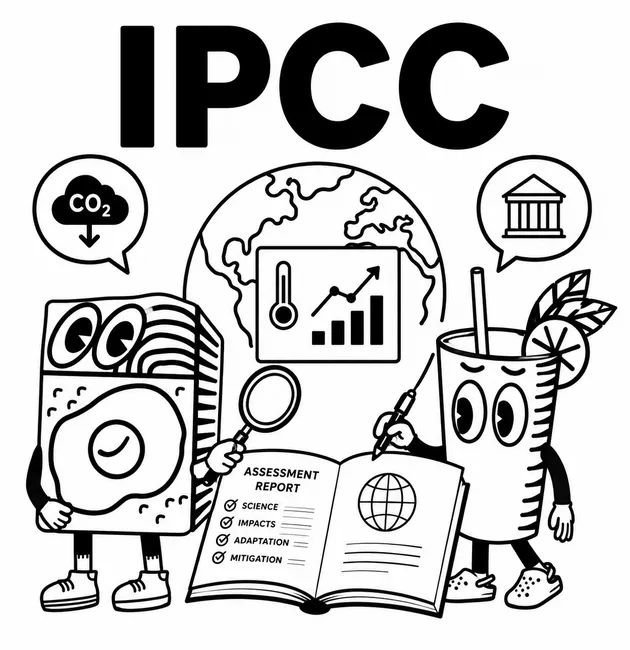
The Intergovernmental Panel on Climate Change (IPCC) is an international body jointly established in 1988 by the World Meteorological Organization (WMO) and the United Nations Environment Programme (UNEP). Its primary role is to synthesize the latest research on the scientific basis of climate change, its environmental and socio-economic impacts, and response strategies, and to provide this to policymakers worldwide. The IPCC does not conduct its own research; instead, hundreds of scientists and policy experts from around the world review and analyze existing studies and publish their findings in reports.The IPCC is composed of three working groups: Working Group I (WG I), which addresses the physical science basis of climate change; Working Group II (WG II), which analyzes climate change impacts, adaptation, and vulnerability; and Working Group III (WG III), which studies greenhouse gas mitigation options. It also operates the Task Force on National Greenhouse Gas Inventories (TFI), which develops methodologies for calculating and reporting national greenhouse gas emissions. [Intergovernmental Panel on Climate Change(IPCC) © ESG.ONL/ESG Today]The IPCC publishes comprehensive Assessment Reports on a 6–7 year cycle. Since the first report in 1990, it has released a total of six reports through the Sixth Assessment Report (AR6) in 2023. IPCC Assessment Reports serve as the scientific foundation for international climate agreements. The First Assessment Report in 1990 became the starting point for negotiations on the United Nations Framework Convention on Climate Change (UNFCCC), and subsequently provided key evidence for the adoption of the Kyoto Protocol and the Paris Agreement. In 2007, the IPCC jointly received the Nobel Peace Prize with former U.S. Vice President Al Gore for its efforts to raise awareness of the dangers of climate change and present response measures. In the Sixth Assessment Report released in 2023, the IPCC pointed out that to limit the global average temperature rise to within 1.5°C, greenhouse gas emissions must peak before 2025, decline by 43% by 2030, and reach net zero by 2050. While the IPCC functions as a key platform connecting climate science and policy, it also has limitations. It has been criticized that the political positions of national governments can be reflected in the report adoption process, potentially weakening scientific conclusions. There are also concerns that the long publication cycle for Assessment Reports makes it difficult to rapidly reflect the changing climate reality. Nevertheless, the IPCC remains the most authoritative scientific consensus body on climate change, and its findings are widely used in ESG disclosure standards and corporate climate risk assessments. by Editor O
06/29/2026
An Energy Storage System (ESS) refers to a device or technological system that stores electrical energy in various forms and supplies it when needed. ESS is a critical infrastructure for addressing the intermittency issues of renewable energy such as solar and wind power and enhancing grid stability. [Energy Storage System (ESS) © ESG.ONL/ESG Today]ESS, whose importance is rapidly growing in the transition to carbon neutrality, is classified by storage method into ‘electrochemical storage,’ ‘mechanical storage,’ and ‘thermal storage.’ Electrochemical storage converts electrical energy into chemical energy and then converts it back to electrical energy during discharge. Mechanical storage uses physical force, potential energy, or kinetic energy to store electrical energy, while thermal storage converts electrical energy into thermal energy such as cold or heat and stores it for use in heating and cooling when needed. The key driver behind the growing attention on ESS is the expansion of renewable energy. Since solar and wind power generation is irregular depending on weather and time, ESS is essential for storing surplus power and supplying it during peak demand. According to the International Energy Agency (IEA), global renewable energy generation capacity is expected to more than double by 2030, and ESS demand is rapidly increasing accordingly. In the ESS market, companies such as China’s CATL and BYD, along with South Korea’s Samsung SDI, are currently leading the market. In July 2024, Samsung SDI signed a contract worth approximately ₩1 trillion to supply 6.3 GWh of ESS batteries to U.S. clean energy company NextEra Energy. ESS is projected to grow 17-fold by 2050 and is closely tied to ESG investment as essential infrastructure for achieving carbon neutrality goals. The combination of renewable energy and ESS is regarded as a key means of reducing fossil fuel dependence and cutting greenhouse gas emissions. by Editor O
06/24/2026
The Rio Declaration on Environment and Development is an international environmental declaration adopted at the United Nations Conference on Environment and Development held in Rio de Janeiro, Brazil, in June 1992. Reaffirming and building upon the principles of the 1972 Stockholm Declaration (often referred to as the Declaration on the Human Environment), the Rio Declaration was the first to formally recognize that environmental protection and economic development cannot be separated. More than 175 countries have signed it, and it consists of 27 principles serving as national action guidelines for sustainable development. The core of the Rio Declaration is the institutionalization of the concept of ‘Sustainable Development.’ Principle 1 states that human beings are at the center of concerns for sustainable development and are entitled to a healthy and productive life in harmony with nature. Principle 3 stipulates that the right to development must be fulfilled so as to equitably meet the developmental and environmental needs of present and future generations. Alongside this, the Rio Declaration formally recognized that developed and developing countries bear differing environmental responsibilities through the principle of ‘Common but Differentiated Responsibilities (CBDR).’[Rio Declaration(Rio Declaration on Environment and Development) © ESG.ONL/ESG Today]Among the 27 principles of the Rio Declaration, Principles 10 and 15 are particularly noteworthy. Principle 10 centers on the idea that environmental issues are best handled with the participation of all concerned citizens, presenting three core rights: access to environmental information, the right to participate in decision-making, and access to judicial remedies. Principle 15, the Precautionary Principle, establishes that where there are threats of serious or irreversible damage to the environment or human health, lack of full scientific certainty shall not be used as a reason for postponing environmental protection measures. Since the adoption of the Rio Declaration, these two principles have served as important benchmarks in international environmental law and national environmental policies.The Rio Declaration became the starting point for the international climate and environmental framework that led to the 1997 Kyoto Protocol, the 2015 Paris Agreement, and the UN Sustainable Development Goals adopted in the same year. The concepts of environmental responsibility, stakeholder participation, and intergenerational equity emphasized in ESG management are also rooted in the principles of the Rio Declaration.by Editor O
06/17/2026
Polycrisis refers to a phenomenon in which crises of different natures — such as climate, economic, and geopolitical — occur simultaneously, creating damage greater than the sum of the individual shocks. The concept of polycrisis was first introduced by French thinker Edgar Morin in his 1990s works Terre-Patrie (Homeland Earth) and Pour une politique de civilisation. It gained global attention in 2023 at the World Economic Forum Annual Meeting in Davos, Switzerland, when Columbia University historian Adam Tooze defined polycrisis as “a state in which shocks interact, making the whole more threatening than the sum of its parts.”[Polycrisis(Polycrisis) © ESG.ONL/ESG Today]The core of polycrisis lies in the chain reactions between crises. For example, when extreme weather events reduce food production and geopolitical conflicts simultaneously destabilize energy supply, inflation accelerates. Any single crisis might appear manageable in isolation, but when multiple crises converge, they generate pressures far stronger than each individual shock. According to Adam Tooze, the current polycrisis phase can be traced back to around 2008 and onward. At that time, the financial crisis, Russia’s invasion of Georgia, the collapse of the WTO Doha Round, and the failure of the Copenhagen climate negotiations unfolded simultaneously, laying the foundation for today’s polycrisis. In the past, issues such as carbon emissions or occupational accidents could be managed individually. However, in a polycrisis environment, climate risks lead to supply chain disruptions, which in turn trigger social conflicts and financial losses. As a result, demands are growing for companies to identify and disclose the entire process. Accordingly, corporate resilience — the ability to absorb shocks and recover quickly — is emerging as a new criterion in ESG evaluation. by Editor O
06/15/2026
The Conference of the Parties (COP) is the supreme decision-making body in which nations that have entered into an international convention gather to review the status of implementation and discuss concrete action plans. COP most commonly refers to the Conference of the Parties to the 'United Nations Framework Convention on Climate Change (UNFCCC), where all countries that have acceded to the UNFCCC gather annually to review implementation and determine the direction of international climate negotiations. First held in Berlin, Germany in 1995, COP has been convened annually ever since, with participants including delegations from 198 Parties to the Convention, international organizations, and NGOs. It functions not merely as a meeting but as the central stage of international climate diplomacy.COP gained international attention through the birth of major climate agreements. At COP3 held in Kyoto, Japan in 1997, the Kyoto Protocol was adopted, stipulating greenhouse gas reduction obligations for developed nations. At COP21 held in Paris, France in 2015, the Paris Agreement was concluded, setting the goal of limiting the global average temperature rise to within 1.5°C above pre-industrial levels. In this way, COP has been the negotiating forum that has produced the key milestones of the international climate regime.[COP(Conference of the Parties) © ESG.ONL/ESG Today]COP negotiations proceed around core agenda items including Mitigation, Adaptation, Finance, and Loss and Damage. A representative agreement on a core agenda item occurred at COP27, held in Sharm El-Sheikh, Egypt, in 2022, where participating countries agreed to establish a Loss and Damage Fund to support developing countries affected by climate change. At COP28, held in Dubai, United Arab Emirates in 2023, a consensus text was adopted for the first time that explicitly stated the need to transition away from fossil fuels.COP31 is scheduled to be held from November 9 to 20, 2026, in Antalya, Turkey. It will operate under a co-presidency system, with Turkey serving as host country and Australia overseeing negotiations. COP31 is expected to focus on translating each country’s climate pledges into substantive action, based on the outcomes of the Global Stocktake agreed upon at COP30.COP operates on the principle of consensus, which means it can be limited to the lowest common denominator of agreement. While it has been criticized for lacking legally binding enforcement mechanisms, it continues to serve as the sole global platform for confirming the international community’s collective will and setting the direction for responding to the climate crisis. by Editor O
06/10/2026
Transition Finance refers to funding that supports high-carbon industries with substantial carbon emissions to progressively decarbonize. The International Capital Market Association (ICMA) established the concept and principles of transition finance with the publication of the ‘Climate Transition Finance Handbook’ in 2020. Transition finance began to draw attention as the transformation of existing high-carbon industries became essential for implementing the Paris Agreement and achieving carbon neutrality goals. The International Energy Agency (IEA) has analyzed that annual clean energy investments of over USD 4 trillion are needed by 2030 to achieve carbon neutrality by 2050, with a significant portion of this expected to be directed toward the transformation of existing industries. [Transition Finance(Transition Finance) © ESG.ONL/ESG Today]The key element of transition finance is a credible transition plan. In 2023, the EU published the European Union Green Bond Standard (EU GBS) for transparent green bond issuance, stipulating that companies with credible, science-based carbon reduction transition plans may issue transition finance bonds. South Korea included a ‘transition sector’ in the Korean Green Taxonomy (K-Taxonomy) in 2021 to support the carbon neutrality transition process of companies, as the transformation of existing high-carbon industries toward decarbonization is an economic activity necessary for reaching the ultimate destination of carbon neutrality.Transition finance carries the problem of not being free from greenwashing controversy. Concerns have been raised that companies could raise funds under the guise of transition finance without making substantive reduction efforts, or exploit it as a means to prolong fossil fuel operations. To prevent this, global financial institutions are strengthening transparent corporate disclosure and third-party verification when providing transition finance. Designing appropriate institutional frameworks and implementation processes to ensure transition finance leads to real carbon reductions is the key challenge. by Editor O
06/04/2026
Critical Minerals are minerals that are essential to the economy and national security, capable of dealing a blow to the national economy if the supply chain is disrupted. In 2024, the United States Geological Survey (USGS) designated 50 minerals — including lithium, cobalt, rare earth elements, and nickel — as critical minerals. Beyond the United States, countries around the world separately designate their own lists of critical minerals according to their industrial structures and strategic needs.The concept of critical minerals has gained attention due to the transition to clean energy and the advancement of digital technologies. Clean energy technologies such as electric vehicle batteries, wind turbines, and solar panels require six times more critical minerals than conventional fossil fuel-based systems. Advanced technology industries such as semiconductors, 5G communications, and AI data centers are also highly dependent on specific minerals. The problem is that the production and processing of the minerals needed in this process are concentrated in only a handful of countries. China accounts for 90% of rare earth processing and over 70% of cobalt refining, while the Democratic Republic of the Congo is responsible for 70% of global cobalt production.[Critical Minerals(Critical Minerals) © ESG.ONL/ESG Today]Numerous countries are pursuing various policies to stabilize the critical mineral supply chain in order to reduce mineral dependence on specific third countries such as China. In 2022, the United States granted tax credit benefits for electric vehicles using North American-sourced critical minerals through the Inflation Reduction Act (IRA), and the EU enacted the Critical Raw Materials Act (CRMA) in 2023, setting a target of expanding the mineral processing share to 40% by 2030. In South Korea, the Ministry of Trade, Industry and Energy designated 33 types of critical minerals essential to advanced industries in February 2023 when it announced its ‘Critical Mineral Securement Strategy.’ In addition, it set a target of reducing the Chinese import dependence for critical minerals essential to the secondary battery and semiconductor industries — such as lithium, cobalt, and graphite — from the current 80% range to the 50% range by 2030.The race to secure critical minerals is also closely linked to ESG issues. The issue of child labor at cobalt mines in the Democratic Republic of the Congo is continuously raised in connection with the mineral extraction process, and lithium mining is accelerating water resource depletion in arid regions such as Chile and Argentina. Ensuring that the clean energy transition does not generate additional environmental and social costs is emerging as a new challenge in the management of critical mineral supply chains. by Editor O
05/27/2026