Loading Data
Please wait a moment...
Update Cal.
2026.08
03
Mon
04
Tue
05
Wed
06
Thu
07
Fri
08
Sat
09
Sun
Update Calendar
2026.08
01
Sat
02
Sun
03
Mon
04
Tue
05
Wed
06
Thu
07
Fri
08
Sat
09
Sun
10
Mon
11
Tue
12
Wed
13
Thu
14
Fri

Loading Data
Please wait a moment...
Morning features and interviews. A morning story over a cup.
"J.P. Morgan Chase" (hereafter "JPMorgan"), the largest bank in the United States, announced a carbon-credit tokenization project. This innovative project, announced on July 2, is an ambitious attempt to solve the fundamental problems of the existing carbon market with blockchain technology. Tokenization refers to the technology of converting physical carbon credits into digital tokens on a blockchain. Each token represents the removal or prevention of one ton of carbon dioxide, and it guarantees perfect traceability based on the immutability and transparency of the blockchain. JPMorgan's solution directly tokenizes carbon credits registered in registry systems, making it possible to track the entire life cycle in real time, from issuance to retirement. Through this, it can remove the risk of double counting — in which a single carbon credit is simultaneously recognized or traded in different trading systems — in the carbon trading market, and build a consistent tokenized carbon ecosystem between sellers and buyers.[JPMorgan Chase © JPMorgan]A Technical Approach to Solving the Market's ProblemsJPMorgan's private blockchain network "Kinexys" concluded partnerships with three major carbon registries — S&P Global Commodity Insights, EcoRegistry, and the International Carbon Registry (ICR). The core is developing an application that converts carbon credits registered in the registry systems these institutions manage into blockchain tokens.EcoRegistry and the International Carbon Registry have each already successfully completed testing of their respective solutions. S&P Global Commodity Insights begins its test through "Environmental Registry," a customized registry-service platform for whole-life-cycle tracking and improved management of carbon credits. Going forward, a meta registry — a system that integrates and manages multiple carbon registries — is also to be included in the testing.This pilot program focuses on managing accounts, projects, and the credit life cycle — that is, the process from the creation to the recovery of credits. The goal is to test technical connectivity, data-model compatibility, and overall functionality so that external stakeholders can more easily read and use registry data. This is also a measure to solve various problems in the current carbon-credit market. Problems that have long created concern about carbon trading are becoming a threat to the credibility of the credit market as well. The tracking of carbon credits from issuance to retirement is still assessed as opaque. Concerns about greenwashing also persist.Alastair Northway, head of natural-resources advisory at JPMorgan Payments, emphasized, "The voluntary carbon market is in desperate need of innovation. Tokenization can support the development of a globally interoperable system that will improve trust in the underlying infrastructure. With this technology, greater information and price transparency can be secured, and ultimately market liquidity can be increased."[The Kinexys logo © Kinexys by J.P. Morgan]The Rapidly Growing Carbon Trading Market, an Investment OpportunityJPMorgan's carbon-credit tokenization is part of its digital-asset strategy. Kinexys, in operation since 2015, has established itself as a global leader in the field of moving funds, assets, and information through blockchain-based infrastructure. This past May, it succeeded in cross-settlement between private and public blockchains, and it is actively pursuing the integration of the existing financial system and blockchain — such as recognizing shares of BlackRock's US bitcoin spot ETF (IBIT) as loan collateral. In June, it also applied for a trademark for "JPM Coin (JPMD)," a digital deposit token backed 1:1 in US-dollar value on the crypto-based Base network. In addition, JPMorgan is strengthening its role in the carbon market — for instance, contracting with the Canadian carbon-capture company "CO280" for 450,000 tons of carbon-removal services over 13 years at a price of less than 200 dollars per ton.As of 2025, the global carbon-credit market is valued at 933.2 billion dollars, and its value is expected to grow to the level of trillions of dollars by 2030. The demand for carbon-offset purchases by major companies facing their 2030 carbon-neutrality targets is also projected to surge. A carbon offset means pursuing activities that reduce carbon emissions in order to offset or reduce carbon emissions. Carbon-offset prices are currently formed in a wide range from 1 dollar to 100 dollars per ton, and their value is determined by the type and efficiency of the pollution-prevention activity. Over the next few years, offset purchases by companies to meet their carbon-emission quotas are expected to increase greatly.[EcoRegistry, which announced its participation in the project © EcoRegistry]The Partners' Roles, and Expected EffectsJonty Rushforth, head of product and portfolio for the energy-transition division at S&P Global Commodity Insights, expressed the expectation, "We are glad that JPMorgan's Kinexys has recognized the value and mission of 'Environmental Registry,' and if this collaborative test proceeds as expected and eventually includes the meta registry, we will be able to expand the Environmental Registry infrastructure solution into the financial industry and create an innovative expansion of the carbon market."Juan Durán, CEO of EcoRegistry, also explained a positive outlook: "The carbon market is continuously evolving, connecting core elements to strengthen trust and transparency across the ecosystem. Integration with Kinexys digital assets is an important step in expanding the role of the financial sector in this field."This project foreshadows a paradigm shift in environmental finance beyond a mere technical experiment. If successful, it could become the foundation of an international verification standard, building a more robust cooperation system among the market, registries, and regulators. As the use of blockchain technology spreads in the global climate-finance market, let us watch whether a new environmental-finance ecosystem that can secure transparency and efficiency at the same time will be built. by Editor L
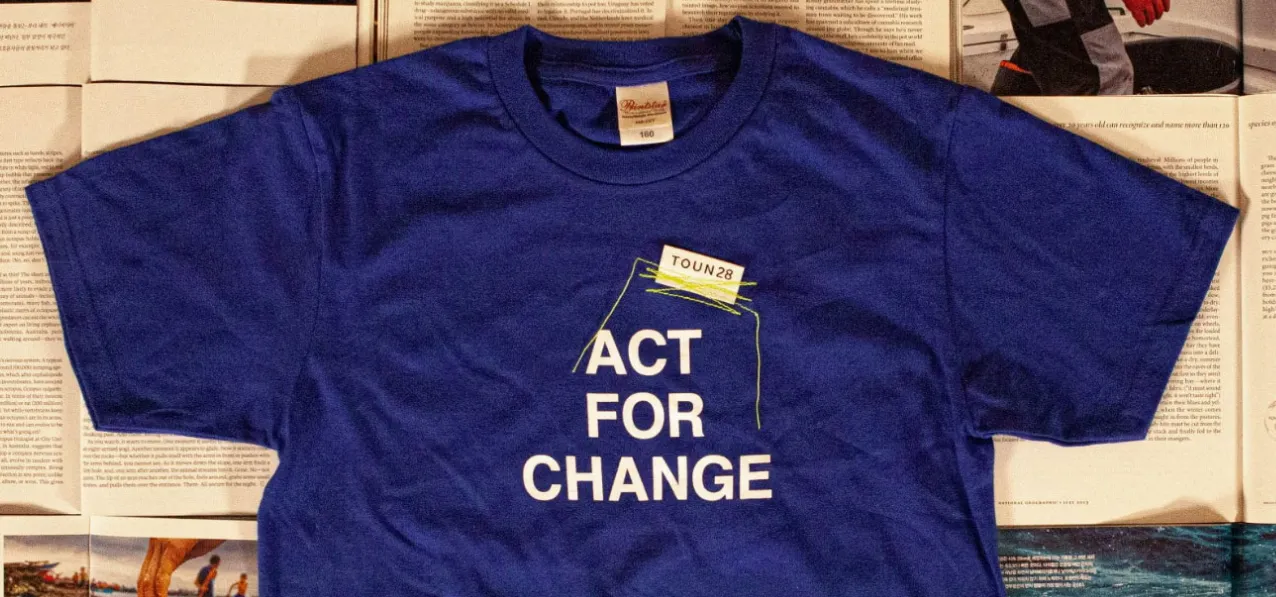
There are many brands that call for changing our thinking about the Environment. But there are not many brands whose goal is changing our behavior itself. Toun28 belongs to the latter. CEO Park Jun-su, shocked by the number of animals falling victim to the plastic waste humans produce, and CEO Jung Maria, deeply versed in natural cosmetics, lead the brand with the emphasis on our "action."In its early days, what drew attention to Toun28 was that it was "vegan cosmetics that invested more in ingredients than in containers." That it made cosmetics with good seasonal raw materials whose origins were transparently disclosed, tailored to the skin of each individual who sought Toun28, quickly spread by word of mouth. The packaging, considered less important than good-quality cosmetics, was based on paper. That ingredients matter more than a fancy container for cosmetics seems obvious at a glance, but for a beauty brand raised under the competitive logic of the era of overproduction, it would not have been an easy choice.[Toun28 CEO Jung Maria © Toun28 official Instagram]But Toun28 created the brand's distinctiveness by practicing its philosophy not as one-off marketing but as continuous action. And it is transparently disclosing how much that distinctiveness is leading to concrete results.The Power of a Brand That Leads to Better ChoicesWhen you access the Toun28 website and click "Mission," multi-digit numbers catch the eye. The numbers represent the amount Toun28 has contributed to date toward supplying biodegradable fishing gear, and the number of plastic bottles we have reduced. The amount of trash picked up through plogging activities, and the number of the "Toun28 Earth Task Force" who took part in plogging, are also considerable. From its early days, Toun28 has supported the supply of biodegradable nets with 1% of the sales funds of the brand's official online store. It is the result value of efforts focused on the action of making and clearing away less of the marine trash — such as waste fishing nets that take the lives of more than 200 million animals a year.[Their meaningful action results, confirmable in concrete numbers © Toun28 website]The philosophy that action is important to draw out results is also expressed through practice. Designating the 28th of every month as "Ton Day," all of Toun28's employees act for the environment, such as through plogging. On Ton Day this past May, they carried out "Hongdae City Plogging," and on Ton Day in June, ocean plogging. On Ton Day, they pick up not only marine trash — the origin of Toun28's problem awareness — but also trash from urban streets around us like Hongdae and from construction sites. This routine of Toun28 shows that it is settling the company's mission not as a mere declaration but as a culture.[The reef-guardian campaign together with Outrigger and Toun28 © Outrigger Resorts]Its connections to outside the company are also active. Recently, Toun28 is carrying out a "reef-safe campaign" together with the global resort brand "Outrigger Resorts & Hotels," to mark June's "World Ocean Month." As part of the environmental campaign, it raises awareness of the importance of "reef-safe sun-care products" that do not threaten marine ecosystems, and encourages consumers' environmentally conscious choices by providing harmless sunscreen and more.A World Inconvenience Will Change: A Challenge Toward a Sustainable FutureThe concrete result of choices for the environment is precisely Toun28's solid-beauty product line. Toun28 is the brand that first coined the term "solid beauty," and a pioneer that popularized in Korea plastic-package-free solid products such as shampoo bars and body-wash bars. Its natural shampoo bar, with kelp, black beans, and bamboo charcoal as main ingredients, surpassed a cumulative 1.6 million units in sales.[Toun28 shampoo bar © Toun28]With ten times the ingredients concentrated compared with liquid products and containing no preservatives, the solid products are excellent not only in being eco-friendly but also in efficacy. A soap-form shampoo bar, unlike liquid shampoo, needs no packaging and thus creates no plastic waste. However, the "inconvenience" of consumers who think the method of use is more cumbersome than liquid-beauty products — which can be pressed to use as much as one likes — could also become a barrier to approaching the brand. The paper packaging that made Toun28 widely known can also be more inconvenient than a plastic container.Through the website, CEO Park Jun-su made Toun28's path clear with the message, "The era in which convenience changes the world is now over. Now comes the era in which inconvenience changes the world." And that meaningful inconvenience is being accepted by consumers as a new value can be confirmed by Toun28's growth.[Toun28's skincare using eco-friendly paper packaging © Toun28]The results of Toun28's growth — sales that grew rapidly after 2020, settling in the upper ranks of vegan-cosmetics brand reputation on par with formidable global and large-corporate brands, and environmental-campaign collaborations with various brands — are all the result of the "good inconvenience" that consumers willingly choose. The "acting beauty" that Toun28 pursues is not a mere slogan but the realization of a new consumption paradigm. Here is a sustainable future of beauty, made together by a brand that acts directly for the environment beyond thinking about it, and consumers who join in that action.An SNS event is in full swing, together with "Toun28," tomorrow's skincare that acts, and "ESG.ONL," today's reading for tomorrow. Visit the ESG.ONL Instagram right now :)>> ESG.ONL Instagram (click!) by Editor L

By Lee Choong-gul (essayist, former editor-in-chief of GQ Korea, author of the novel "Your Face") · July 9, 2025My first car was a 3-door Pride FS. A blood-colored, seven-year-old used car. I sealed the cracked taillight lamp with box tape, the wiper drew a fan shape on the glass, cigarette smoke that had gone in and out of someone else's insides invaded through the gap in the window, and it stalled once on a road in Sinchon — but I loved my car. Back then, a car was a matter of conviction. The belief that there is a road, the fantasy that the road will always continue, the self-deception that the fuel will never run out.[ⓒESG.ONL]In the old days, everyone loved speed. Nor were we prepared to give up speed. Because we had been trained as such a moving species, and because we long believed the lie that speed is the proof of existence. And because there was no pleasure quite like it. Thus humans made engines, burned fuel, and swallowed roads. Essentially, even if you park the car, the Earth turns and we too are accelerating. The sense of stopping is so impractical that it reads rather as regression. Zero-to-sixty is class, the speedometer coordinates, the fuel gauge a bank balance. Here, Seoul, jammed every single day, became the front line of speed, and the roads willingly schemed for the physical extension of a fast-forwarded life.The people growling with engines on the morning road reflect back not the destination the GPS tells them but the things behind it — the inside of the worn tire's skin, the moisture cooling the radiator, the shouts blocked out between the soundproofed doors. The world rotates twice. Once along the reciprocating motion of the piston, and once within the vapor called ethics. The former's rhythm is mechanical; the latter's rotation is morally irregular.[ⓒESG.ONL]When the automobile civilization that arose from the Detroit factory floor a century ago covers the planet with the murmur of 100 million internal-combustion engines, weaves a million feedback circuits, and races into the heart of capitalism, finished-car companies assemble and procure these through a monstrous supply chain extending to first-, second-, and third-tier suppliers. (Like a relative abruptly bringing up a philosophical story, my emotions churn on their own.) This structure is surely efficient, but what's beneath the wheels is hard to see.Nitpicking like a fussy village schoolmaster, some report describes that 6 to 17 tons of carbon dioxide are emitted when making a single car. It reduces carbon dioxide roughly, they say, but electric-vehicle batteries would presuppose high-density mining of lithium, nickel, and cobalt — and in which country, by what method, through what route it came to the factory is opaque. Lithium dries up the salt lakes of Chile, cobalt is extracted under the shadow of child labor in the Congo, nickel digs up the lowlands of Uzbekistan. Here a few questions fill every corner of the car's blueprint. Is the electricity at that charging station really renewable energy? On whose life was the supply route laid?[ⓒESG.ONL]In chemistry class at fifteen, in a classroom where a globe rolled about, while everyone wilted without even a fan's breeze, the teacher said the Earth was dying. The Earth was dying then too, and it is dying more each day now. Only, these days the way it dies has become a bit more expensive. Recycling, circulation, carbon neutrality, electric cars, hydrogen cars. All these words have become a luxurious religious rite by the name of eco-friendliness, so behold, the day of being saved with a single button has come.To me, the acronym ESG — vaguely abstract and at times hard as a matchbox — gives off a strange pheromone smell. Something like a spell that Shakespeare's three witches brewed by mixing guilt, imbalance, and some nightmare. In any case, the presence that the neologism ESG now has in the auto industry is as heavy as a single drop of oil and as delicate as a single watt of electricity. Yet in a situation where a dozen buckets of cars pour out every day and the roads can't even handle it, ESG sometimes appears as a detour that avoids controversy. And it is too technical to speak of the future. So more footnotes are needed.Right on cue, the car companies moved. One company uses recycled fabric in large quantities, another installs solar panels, and yet another announces it will do away with internal-combustion engines. There is no slogan as hungry as this — one where it's unclear whether the words "for the Earth" are symbol or system, or an apology for values already broken. What? So you're saying you'll bring light to the factory, eyes to the supply chain, questions to the board?When ESG works not as a question but as a declaration, it becomes unsettling. Something like hastily putting on a straight face. The feeling that when someone proclaims "I've decided to live good now," they're already not good. Because a declaration of apology also looks like a statement of account, a report, or a brochure rather than an apology. In any case, industry seems to have an aspect of keeping balance with hidden facts, concealed relationships, structured silence, and unpronounced things. Whether it's a new market strategy or the consumerization of ethics, the obsessive systematization of the public good exposes how anxious they are, and at the same time how sorry.[ⓒESG.ONL]The name "eco-friendly car" also invites slight suspicion, but I don't want to condemn it blindly. Suspicion is an efficient purification mechanism, and we justify ourselves through condemnation, persuading ourselves that we are the better axis. What is clear is that Toyota, which persuaded the world with hybrids, or Tesla, which molded desire with batteries, or Hyundai, which took the lead in hydrogen fuel-cell technology, are surely not a squad of superheroes saving the Earth — but at least they would have wished to wreck it a little less.But, in a moment of carelessness, the era that shimmered with the pleasure of engine sound set. No one is even seen arguing over which engine is strongest. To think, the dream of speed is now the days of asking speed's guilt. Whatever the case, speed itself is not a sin. Only the direction is the problem.A friend who had only ever driven diesel cars changed his electric car twice in three years. The first time, it was because of the government subsidy, the charging station near his home, and the half-price rate at the public parking lot in front of his company. The second time he changed, the biggest reason was jealousy that an ugly junior had bought a Tesla, but anyway he searched the battery's country of origin and chose fabric seats over leather. (But when the charging line grew as long as a National Assembly hearing, the Earth was saved, but the citizen's patience died.)[ⓒESG.ONL]This summer, I sat in the passenger seat of that friend's car, and it was so quiet that I felt a little uneasy. Because the quieter the car gets, the less we exist. Because the more the car thinks, the less we think. Some technology will easily exclude humans and, using convenience as an excuse, shrink the human's place. Still, it wasn't that I disliked it. Because being peaceful is, in any case, addictive.Rather, there was comfort. Inside the car, I could hear the city's minute breathing. Vapor rising from the drain, the sound of a bicycle chain, the sound of a child dropping a milk bottle. When I suddenly grew drowsy, I couldn't tell whether the car was running, veering off onto a side road, or passing through a heat haze."The car is so quiet I feel like I've disappeared."Once I said it, it sounded to my own ears like a really good metaphor explaining the dilemma of the auto industry.Everything seethed with antinomy. The engine grew quiet, but the city grew noisier. We reduced exhaust gas, but couldn't turn off the anger within us. However fast we ran, the destination was far. At such times even the word "stop" becomes part of speed and disguises itself in the name of acceleration. At that very moment, if you slam the brakes, you'll gain even a bit of moral satisfaction.My love for the Pride was at times irresponsible, and nostalgia was often ignorant. But a car was, from the beginning, not a machine to me but a narrative. The night harbor, the morning rice fields, the utility poles along the national highway. In my youth, riding a moving box, I tasted what lay beyond the city's edge.[ⓒESG.ONL]Now I drive a more ethical car than my father's generation, but my father's generation treated cars with a more ethical attitude. My father's car is memory, my car is a social weathervane, and my son's car is, well, like the only chance at advice given to me. We tell our children "don't live like me," yet still commute at the same hour. Even while sitting in a hydrogen car reciting things about being for the environment, our hand turns the air conditioning to maximum. Still, when passing through the middle of the city in a way no one teaches, I suddenly ask, somewhere between reason and mechanical instinct. Can one be moving and quiet at the same time? Can one reduce carbon while enduring desire? I haven't even solved all the problems — which road should I take to get out?With my weakened and worsened eyesight I cannot drive, but I ride in a car every day. Late on a Friday night, when I see the line of headlights stuck and unable to move on the highway, my heart grows cold and warm at once. I don't know whether it is the fruit of technology or the loneliness of the year, but the car, whether jammed or flowing well, was carrying me somewhere.In July, when raindrops flow down the windshield of a Genesis GV60, everything looks beautiful. When you slow down and lower the window, you see another face of the city you didn't know as a pedestrian. A person leaning against a traffic light, a handcart disappearing into a bent alley, the fingertips of a woman sorting a garbage bag, some waiting hung on a single electric-vehicle charging cable. Upon the overlooked face of silence, so many mysterious invisible relationships are entangled.Changing the energy source doesn't mean the way of moving will change. The road is not an asphalt route but a collective fantasy about how the world works. We still go somewhere. We still race down the highway, still drink coffee in the car, still listen to music over Bluetooth.[ⓒESG.ONL]And so, someday, I want to write a single aphorism in black ink.Let all that runs, run.By Lee Choong-gul (essayist, former editor-in-chief of GQ Korea, author of the novel "Your Face")
This past Sunday, June 15, a special environmental-education workshop was held in Mullae-dong, Seoul. This "Climate Fresk" workshop — planned and promoted by "Jigureul Jikineun Baeumteo (Learning Ground That Protects the Earth)," a group of young environmental activists, and run on-site by the citizens' environmental group "People Who Think About the Environment" (hereafter "PWTE") — was a venue for ESG experiential learning that approached the climate crisis easily and enjoyably through play and discussion, heightening participants' immersion.ESG.ONL met PWTE again — introduced at the "Earth Day" event this past April — and, by taking part in this workshop in person, had a meaningful time of learning together with various people interested in the climate crisis.The Climate Crisis Unpacked with "Climate Fresk Cards"The workshop uses cards made based on the sixth report of the "Intergovernmental Panel on Climate Change (IPCC)," which has published six reports from 1988 to the present. Arranging a total of 42 cards based on scientific data by group, it strengthens awareness of climate change. This movement began in 2015 when Cédric Ringenbach, a French engineer and expert in the field of climate and energy transition, did an exercise with students at a university, arranging IPCC graphs in order of cause and effect. It then spread rapidly worldwide, the "La Fresque du Climat (Climate Fresk) association" was established in 2018, and it has now established itself as a global education movement in which more than 1.9 million people in over 100 countries participate.Workshop participants form teams and, following the facilitator's guidance, place and adjust the cards themselves to visually understand the causes and effects of the climate crisis. Because the cards are organically connected to one another, following the larger context lets you grasp more accurately the reasons that created the climate crisis we now experience.[The scene of heated discussion during the Climate Fresk card game © ESG.ONL]The Cause and Effect Surrounding the Climate CrisisThe fact that "when carbon emissions increase, sea levels rise, and this in turn leads to the destruction of ecosystems and the risk of humanity's collective demise" is now a well-known story. Looking at this in more detail, the climate crisis begins from the initial cause of human activity. Various human activities such as agriculture, industry, and deforestation caused environmental problems, and the excessive use of fossil fuels caused an additional greenhouse effect, accelerating global warming. Water temperatures rise, and as glaciers, ice sheets, and sea ice melt, sea levels rise. Sea-level rise not only floods low-lying areas but also seriously damages the water-circulation and exchange system, becoming the cause of the extreme weather anomalies we are directly experiencing — heat waves, droughts, wildfires, and more.Such environmental problems reduce crop yields, threaten our health, and cause the loss of animal and plant habitats. Through a chain effect, they expand into global problems such as deepening inequality, famine, population movement, and armed conflict.Through the game of arranging cards, participants explained the structure they understood, adding the power of collective intelligence, and built up learning by asking questions. Once the scattered cards found their places, and the connecting lines between cards were drawn with a pen to internalize the complexly entangled structure of the climate crisis, by the time the workshop ended, anyone who participated could explain the climate crisis in detail.[PWTE head Lee Dong-ho © ESG.ONL]Sharing Climate Emotions and Pledging Climate ActionThe Climate Fresk workshop, beyond simply conveying knowledge, continued into a time for participants to share their thoughts and emotions with one another. The process in which people of various occupations and age groups gather and solve problems with the power of collective intelligence teaches the necessity of the citizens' environmental movement and the importance of participation. Participants shared impressions such as, "Sharing our anxiety about the climate crisis, I felt camaraderie communicating with those who have the same worries and want to act." Another attendee revealed the ambition to widely publicize such a citizen-action workshop to those around them, saying, "Behind one person are ten, and behind those ten are another ten, so I believe my actions and practice efforts can spread quickly."[Seen on a five-year-average basis, 1.5 degrees still holds hope © ESG.ONL]Before the 1.5-Degree Rise: The Chance Still Left to UsThe news that the 1.5-degree line of the Earth's average temperature was already exceeded in 2024 dealt a shock to many people. At the Climate Fresk theory-education session, PWTE head Lee Dong-ho conveyed that there is still hope, saying, "If you set the period as a five-year average and check, it has not yet exceeded 1.5 degrees." The reason international organizations such as the WMO (World Meteorological Organization) and the IPCC look at a five-year average of temperature rise is to remove natural variability and grasp the essential trend of human-caused climate change. So Lee emphasized that an attitude of striving for individuals and society to change together, starting now, is important.Climate Fresk gives ESG stakeholders good insight into the climate crisis and sustainable development, and gives general readers interested in environmental issues the stimulus to join in climate action. If there are ESG stakeholders who talk about ESG in practice but found it hard to share climate emotions in real life, or citizens who had a heart for the environment but pondered how to understand and confront this problem, we recommend experiencing the Climate Fresk workshop together. In the process of setting and presenting positive practice goals for a better future, you will encounter a small hope for the future that will change. by Editor L

· June 19, 2025There are brands that place at the center of their branding the practice of ESG management for a sustainable future in which ecosystems and humans achieve harmony, beyond simple beauty. Representative eco-friendly beauty brands that many people would think of in connection with ESG — Lush, Aesop, Toun28, Biotherm, and others — win consumers' response by weaving various social responsibilities into their brand philosophies, such as ecosystem protection, respect for animal rights, zero waste, and the restoration of oceans and forests. As summer arrives, when demand for new beauty products grows, ESG.ONL introduces four beauty brands that can help with conscious choices that consider not only oneself but even the environment.Lush's Species-Protection and Habitat-Restoration Project"Lush," the UK's representative eco-friendly naturalist cosmetics brand, has aimed since its founding for a healthy ecosystem cycle in which humans and nature achieve harmony, beyond simple sustainability. As part of such eco-friendly moves, Lush Korea recently, to mark the "International Day for Biological Diversity," released the "Hutan Bath Bomb" for the restoration of the long-tailed macaque — a "keystone species" (a core species of the ecosystem) living on Simeulue Island in Indonesia — and its tropical rainforest. The Hutan Bath Bomb, characterized by a sweet, refreshing fruit scent, is a product that takes on a green color and spreads when it dissolves in water, evoking the forest where the animals live. Lush, which stated that it directly contributed to the protection of endangered species and habitat restoration by donating 75% of the product's sales proceeds to the nonprofit foundation "Ecosystem Impact," plans to expand its keystone product line for endangered core species and habitats in urgent need of conservation efforts.[Hutan, a bath bomb modeled after the keystone species long-tailed macaque © Lush]Aesop, Striving for Ethical Sourcing and Expanded Local-Ecosystem Protection"Aesop," an Australian global eco-friendly beauty brand and a company that has also obtained B-Corp certification, places importance on ecosystem protection. It also strives for ESG management with a life-cycle-assessment system that goes through environmental-impact assessment across the entire[Eleos Aromatique Hand Balm © Aesop]product-production process and manages a decarbonization roadmap. Aesop recently released the "Eleos" series, including a body cleanser and an aromatic hand balm; the Eleos line, meaning "mercy, compassion" in Greek, contains the meaning of taking time to consider and respect oneself, others, and nature. Aesop's ESG policy for practicing animal rights and ecosystem protection — that all Aesop products are vegan products that use no animal testing and no animal-derived ingredients — also helps with the choice. Furthermore, Aesop is seeking partnerships with local communities for ecosystem restoration and the enhancement of agricultural diversity.[Haenam 404 Pepti-Cica Dawn Cream © Toun28]Toun28: A Customized Vegan Beauty Brand's Protection of Local Agricultural Diversity"Toun28 (TOUN28)," a representative domestic vegan beauty brand, makes 100% vegan-certified products that use no animal testing and no animal-derived ingredients. Toun28, which seeks to provide smart, fresh skincare reflecting the consumer's skin concerns, climate, and even the environment through a customized subscription service, is characterized by a service that custom-makes products once a month to match the user's skin condition and seasonal change. It also takes the lead in practicing zero waste by using recycled paper containers instead of plastic containers and by developing solid beauty products, gaining great response from consumers who value conscious consumption. Among Toun28's products, which minimize skin irritation with plant-derived preservative ingredients, the Haenam 404 Pepti-Cica Dawn Cream is distinctive in that it is made from 100% pesticide-free centella — certified eco-friendly produce grown directly by purchasing a field in Haenam. Such a production process also contributes to protecting the local ecosystem and agricultural diversity, and has the meaning of creating a sustainable beauty culture for both the environment and humans.Biotherm: Marine Biodiversity Protection and Marine-Pollution Prevention"Biotherm," a French premium skincare brand, is focusing in 2025 on protecting marine biodiversity and preventing marine pollution. Through a program called "Water Lovers," Biotherm supports various projects such as collecting marine trash for the restoration of marine ecosystems and protecting marine-life habitats, which are a treasure trove of Blue Carbon, and it is developing campaigns that raise awareness of marine plastic pollution. It uses ingredients that do not harm marine biodiversity, and also carries out sustainable management activities such as a life-cycle-assessment system. In addition, it operates eco-friendly practice campaigns together with consumers, working to improve the awareness of more people. Through such activities, Biotherm conveys the message that it "will continuously strive for a healthy Earth where all life coexists."[Biotherm Aquapower Advanced Gel Pro © Biotherm]The beauty brands loved by many consumers — Lush, Aesop, Toun28, and Biotherm — are creating ecosystem protection and a sustainable future, with the common point of having good brand philosophies and with their respective points of differentiation. The activities they unfold aim, beyond the level of mere promotion and marketing, at positive change through consumers' everyday use of products. There is a forecast that this summer, having entered the era of the climate crisis, will be as hot as last summer, which was scorching. This summer, how about thinking about where and how your beauty products — including the products introduced in this article — came from, what environmental impact they have, and what campaigns they run through what programs to lead to better practice? by Editor L [Reference Article] Life Cycle Assessment (LCA)
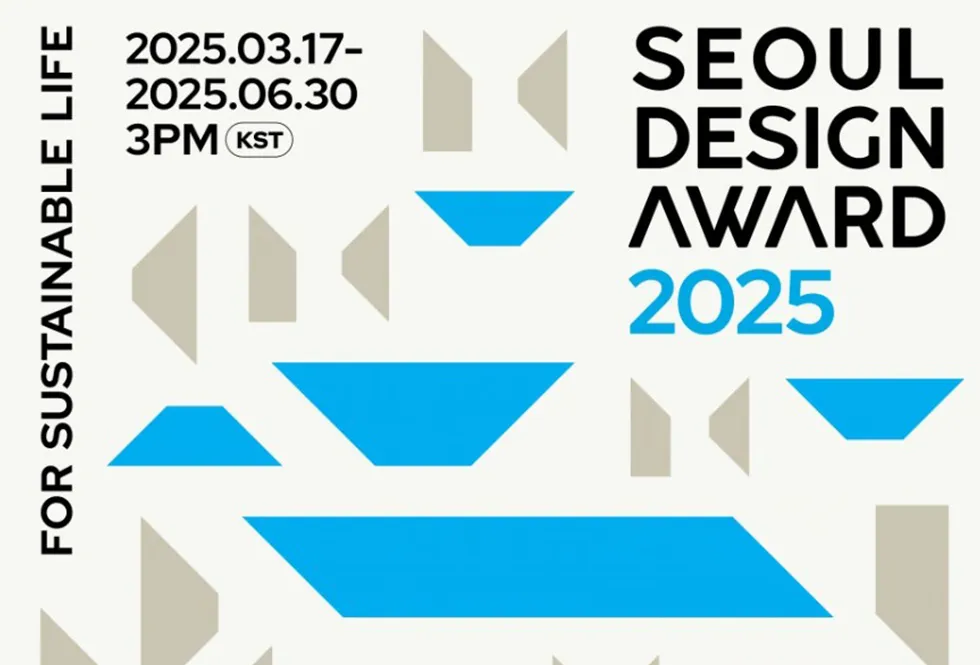
The World's Only "Sustainable Design Award," Together with Global Design LeadersEntries for the "Seoul Design Award 2025" are in full swing. The Seoul Design Award, which marks its 6th edition this year, is the world's only "sustainable design award," developed with sustainability and social value at its center. The Seoul Design Award, established by the Seoul city government in 2019 and organized by the Seoul Design Foundation, has discovered design projects that solve real social problems and have a positive impact on the local community and the environment. Starting with 75 entries at its launch, last year this award gathered 575 projects from 65 countries, establishing itself as a truly internationally prestigious platform.2025: The Further-Evolved "Seoul Design Award"The core philosophy of the Seoul Design Award, which once again seeks to gather with designers from around the world and deliver a powerful message about sustainability, is that "design is the language of problem-solving, and a practice of advancing toward a better society." Keeping the message that illuminates the true "role of design" beyond mere aesthetic excellence, this year's Seoul Design Award proposes a broader stage and an innovative format to participants.An Opportunity to Receive Feedback from 32 World-Class Global Experts from 21 CountriesThis year's Seoul Design Award operates a panel of judges made up of 32 design experts from 21 countries around the world, to further strengthen the fairness of judging. The judges, composed of the highest authorities in the design world, will provide participants with in-depth feedback throughout the entire process from the preliminary round to the final round. Design leaders from various countries who will make designers' hearts flutter join in — Ezio Manzini, a scholar in the field of sustainable social-innovation design; Patricia Moore, a pioneer of universal design; Andrea Cancellato, an expert in design policy and public culture; Pradyumna Vyas, a global leader driving India's design policy and the incoming president of the World Design Organization (WDO); and Dawn Lim, who leads Singapore's design ecosystem. The judges will evaluate the essential value of design, focusing not simply on form or function but on the relationship design forms with society.The judging method is also new. In particular, this year "on-site presentation judging" is newly introduced, so that the 10 teams advancing to the final round will present their projects in person at the "Dongdaemun Design Plaza (DDP)" on October 24. The grand-prize winner is to be selected by combining the scores of the global judging panel and a citizen evaluation panel, confirming a meaningful and original structure in which design experts and ordinary citizens together evaluate "valuable design."Submissions Until June 30 — Now Is the Moment to Take the ChallengeSubmission to the Seoul Design Award is free. Any project in which a designer participated, such as a social-value project, can be entered. The eligibility range is also broad so that anyone — individual designers, studios, companies, students, and more — can participate. The entry categories are divided, based on the "UN Sustainable Development Goals (SDGs)," into four categories: health and peace, equality of opportunity, energy and environment, and cities and community. Realized projects can be entered in the "Main Award" category, and prototypes and ideas in the "Concept Award" category; the total prize money is to be awarded to a total of 61 winning works on a scale of 150 million won, including one grand-prize team (50 million won), nine best-award teams (10 million won each), and two concept-award teams (5 million won each).If you want to be a designer who seeks to change the world through sustainable design, it is now your turn. The Seoul Design Award seeks to provide not a mere chance at an award but a stage where change can be realized. Submit an idea that will change the world to the Seoul Design Award right now.[How to Submit] Apply through the [Submission] menu on the website (www.seouldesignaward.or.kr) by 3 p.m. (KST) on June 30, 2025.] by Editor L

Ahead of the 21st presidential election on June 3, the candidates' policies naturally include ESG. Amid discussion of the climate crisis — now a reality before our eyes — and renewable-energy policy for carbon neutrality, interest cannot help but concentrate on the Environment-related ESG policy direction each party's major candidate holds. At this point, when making sustainability disclosure mandatory is also emerging as a key policy task, the "Korea Sustainability Investing Forum (KoSIF)" sent an "ESG·Climate·Renewable Energy Policy Questionnaire" to each party's presidential candidate and disclosed the candidates' responses on May 26.The questionnaire consisted of asking, on 7 key policy tasks such as enacting a Framework Act on ESG, making sustainability disclosure mandatory, and reflecting climate risk by financial institutions, whether the candidate was for or against and their concrete implementation plans. Candidate Lee Jae-myung and Candidate Kwon Young-guk submitted official answers, but the camps of Kim Moon-soo and Lee Jun-seok, who had withheld a statement of position on ESG policy as a whole, did not submit answers. ESG.ONL has organized, in an easy-to-understand way, the ESG-related positions even of the candidates who did not submit answers, adding their existing statements and pledges related to climate and renewable energy.Lee Jae-myung, Seeking to Secure a Sustainable Future Through Active ESG PolicyDemocratic Party candidate Lee Jae-myung, together with Candidate Kwon Young-guk, expressed intent to actively pursue ESG policy. First, Candidate Lee expressed strong will to make ESG policy a key task of national innovation, and presents climate-crisis response, industrial transition, and balanced regional development as measures to add to our society's sustainability.An eco-friendly economic transition adding corporate responsible management and Green FinanceCandidate Lee Jae-myung promised to "realize ESG information disclosure." The point is to make it mandatory for listed companies with assets of 2 trillion won or more to disclose ESG information first. Through this, he said companies would not hide their impact on society and the environment but transparently reveal it before citizens and investors, completing responsible management. He also revealed the goal of having global climate leadership by encouraging an eco-friendly transition across industry and society to build circular-economy infrastructure. Policies such as expanding "RE100 industrial complexes (industrial complexes operated on 100% renewable energy)" and introducing a "sunlight and wind pension system (a system for sharing renewable-energy generation profits with local residents)" also fit this context, aiming to make both regions and industry agents of the eco-friendly transition.Along with a circular-economy infrastructure plan, there is also a policy to change the flow of money in the financial sector toward eco-friendliness. He is pursuing the introduction of a financed-emissions reduction indicator that has financial institutions carefully assess the risks from climate change when lending or investing, and take responsibility even for the greenhouse-gas emissions of the companies they invest in. That is, it is a strategy to accelerate the green transition of the economic sector by inducing more funds to flow to eco-friendly industries and companies. His will is also clear to strengthen the institutional foundation — enacting a Framework Act on ESG, amending the Stewardship Code (the responsible-investment principles of institutional investors), and establishing a Green Finance Corporation — so that ESG management and green finance take root as a national standard rather than a temporary trend.An energy-network plan to strengthen global climate leadership and companies' eco-friendly competitivenessCandidate Lee Jae-myung plans to hasten carbon neutrality by completely abolishing coal power by 2040 and expanding electric vehicles, reducing fine dust, and expanding Biodiversity protection zones. In addition, he pledged the goal of reducing greenhouse gases by 2030 and securing global climate leadership, such as by hosting "COP33 (the UN Climate Change Conference)" in Korea. It is his aspiration to have the Republic of Korea leap forward as a leading nation guiding the world in the era of the climate crisis.There is also a policy to open the way for renewable energy by building an energy highway. It is the conception of newly installing a power grid that can send electricity produced from renewable energy such as solar and wind quickly and efficiently anywhere in the country, and a plan to create a "self-reliant energy society" structure by making a regionally self-sufficient renewable-energy system that can produce energy to be consumed directly within the region. Candidate Lee stated that he would also lead the strengthening of companies' eco-friendly competitiveness by improving the "PPA (power purchase agreement) system," in which companies sign direct contracts with renewable-energy generators.[Comparison table of each party's answers to the ESG-policy inquiry © Korea Sustainability Investing Forum (KoSIF)]Kim Moon-soo, an Advancement Strategy and Energy Mix Relying on the Role of Autonomy and the MarketPeople Power Party candidate Kim Moon-soo did not respond to the inquiry on "the climate crisis and renewable energy." However, one could confirm the candidate's thinking on policies related to the Environmental sector of ESG, such as strengthening energy infrastructure.Candidate Kim, emphasizing the role of autonomy and the market on ESG issues, is maintaining a deferring attitude of "deciding after gathering the opinions of stakeholders once the ESG disclosure standards are announced." Candidate Kim has a strong tendency to view ESG as a supplementary means for economic growth and strengthening industrial competitiveness, and tends to raise questions about the global ESG trend — a concern over feasibility. For example, regarding "RE100," he expressed a skeptical position, saying it is a good slogan in itself but virtually impossible.An energy mix centered on nuclear power rather than expanding renewablesTo realize carbon reduction in the energy field, the candidate also revealed a plan to expand the share of nuclear power among energy supply sources to 60% — rather than expanding renewable energy — through measures such as building and commercializing six large nuclear reactors and one small modular reactor (SMR) and extending the lifespan of aging reactors. Candidate Kim's position is to further strengthen industrial competitiveness through such cheap electricity supply based on nuclear power. He did not answer about the realistic limits of nuclear power, such as the treatment of high-level spent nuclear fuel.Lee Jun-seok, Aiming First at Education and Awareness Improvement for Climate PolicyReform Party candidate Lee Jun-seok did not put forward an official questionnaire answer or a concrete policy roadmap on ESG policy. He did not state an official position on the "Korea Sustainability Investing Forum"'s 7 ESG policy tasks either, and the term ESG cannot be found in the presidential debates or his policy-proposal document. Instead, Candidate Lee and the Reform Party focus on industrial competitiveness, education, and awareness improvement in climate and environmental policy. The Reform Party's campaign committee emphasized that "the most important thing in solving climate and environmental problems is education and awareness improvement in which all generations can participate," presenting as a key task the strengthening of basic environmental education such as waste-separation education and climate-sensitivity education in kindergartens and elementary schools. Also, according to the perception that "climate is industrial competitiveness itself," he pointed out that insufficient "RE100" preparation could create constraints on exports, and mentioned the need for various energy-transition strategies rather than a single method such as solar or ocean power.Proposing a gradual approach considering the burden on industryCandidate Lee Jun-seok proposed gradual promotion, considering the burden on industry and realistic conditions from realizing the energy-transition strategy. He stated that discussion is needed on realistic burdens such as increases in industrial electricity rates in the process of implementing climate policy, and his position is to disclose related detailed policies later. Overall, he did not present concrete ESG policies, but an industry-friendly approach considering realistic burdens appears likely to be a major standard for establishing his policies.Kwon Young-guk, Climate-Crisis Response and Transition to a Just Decarbonized SocietyDemocratic Labor Party candidate Kwon Young-guk is the candidate who put forward the most active and concrete position on ESG among the candidates. Candidate Kwon fully agrees with the 7 ESG policy tasks presented by the Korea Sustainability Investing Forum, and presented a concrete roadmap to also expand mandatory ESG disclosure for unlisted large corporations in 2027.A bold energy-transition policy putting forward exact target timelinesCandidate Kwon Young-guk promised to establish a "Ministry of Climate and Energy" overseeing climate, energy, and industrial policy, and to set up a presidential "Committee for Transition to a Decarbonized Society" and a National Assembly "Climate Economy Committee." He also stated that, with the goal of achieving carbon neutrality by 2050, he would sharply raise the "Nationally Determined Contribution (NDC)" to 70% by 2035. Bold energy-transition policies putting forward target timelines are a feature of Candidate Kwon's policies — a ban on new coal-fired power plant construction in 2030, a declaration of coal phase-out in 2035, achieving a 60% share of renewable-energy generation, a ban on the sale of fossil-fuel cars from 2035, and the closure of reactors reaching their design lifespan and the halt of new reactor construction.A climate transition encompassing even the protection of the socially disadvantagedCandidate Kwon Young-guk presented, as his core vision, important considerations of ESG such as a just transition and the realization of climate justice. He plans to enact a "Just Transition Act" and an "Energy Welfare Act" to support the groups harmed in the energy-transition process. He also seeks to pursue the expansion of social safety nets and green-finance infrastructure together — expanding green investment equivalent to 4% of the economy each year, and strengthening the Korea Development Bank's role as a green investment bank. Candidate Kwon also advocates a nuclear phase-out, opposite to Candidate Kim Moon-soo's nuclear policy.[21st presidential election promotional poster © National Election Commission]Looking at each party's presidential candidate's opinions on climate and renewable-energy-related ESG policy, one can confirm that clear differences are revealed among the candidates in concrete will to implement and in direction. Regarding this, Korea Sustainability Investing Forum Secretary-General Lee Jong-oh pointed out, "The Democratic Party and the Democratic Labor Party generally revealed clear positions on major ESG policies, but it is a very regrettable point that the second-largest party in the Assembly, the People Power Party, and the Reform Party did not submit official answers." Whatever the outcome of this presidential election, we hope that, on ESG-related matters requiring bipartisan handling, policies for a sustainable society will be realized through constructive discussion and responsible legislation and implementation. by Editor L

There is a forecast that "in 2050, the amount of ocean plastic will exceed the amount of fish." This is content frequently mentioned since it was noted in a report released in 2016 by the "World Economic Forum (WEF)" and the "Ellen MacArthur Foundation," a nonprofit that promotes the Circular Economy and works to solve the plastic problem. There are already 150 million tons of plastic waste in the ocean, and given the trend of more than about 11 million tons flowing in additionally each year, such a result is anticipated.Environmental problems from marine plastic are at a serious level, and beyond simply a crisis of marine ecosystems, they are being treated as a key ESG issue to which companies and society as a whole must respond responsibly. According to recent research, as many as 171 trillion microplastic particles (solid plastic 1 mm to 5 mm or less in diameter) are floating in the ocean, weighing about 2.3 million tons. Because plastic, once used and thrown away, is hard to disappear in nature — taking up to 450 years to decompose — it poses a long-term threat to ecosystems and human health.[2025 World Environment Day, held in Jeju in June © World Environment Day official website]The Official Theme of 2025 "World Environment Day," Held in Jeju, Is "Ending Plastic Pollution"Given its nature, plastic quickly breaks into small pieces by sunlight, waves, and wind, and the microplastics in the sea accumulate in the bodies of marine life and are transmitted even to humans through the food chain. The speed of plastic's miniaturization proceeds very fast, and it is now being detected in various marine life, including endangered species. Amid an overall sense of crisis, the official theme of "World Environment Day" on June 5 this year was also set as "Ending Plastic Pollution."This time, it is significant that the global official commemorative event is held in Jeju, Korea. Jeju declared a vision aiming for "zero plastic pollution" by 2040. Our government too has recently created a comprehensive plastic strategy encompassing the entire cycle — from the production, design, and consumption of plastic to reuse and recycling — and is pursuing a transition to a Circular Economy. The plan is to reduce the amount of marine plastic waste generated by 60% by 2030 and to completely remove it, making it zero, by 2050. In addition, it is accelerating the supply of eco-friendly fishing gear, the collection of marine trash, and the development of recycling technology.[A faucet dripping plastic bottles, exhibited next to the "international plastic negotiation venue" in Ottawa, Canada © Reuters]Production Management Rather Than Waste Management, but Complex InterestsOn the plastic issue, all respondents in a survey of the government delegations of 27 countries that recently participated in the "UN Global Plastics Treaty" negotiations expressed great concern about the impact of plastic pollution on human health. Some delegations even pointed out that plastic is being detected in human organs, blood, and even in the bodies of fetuses. Amid the international community's such worry, the "Global Plastics Treaty" final negotiation is scheduled for this coming August in Geneva, Switzerland.But ahead of much discussion, there are also loud voices that reducing plastic production should take priority over waste management or recycling. This is because current plastic recycling and waste management alone find it hard to keep up with the rapidly increasing plastic use, so much plastic still flows into the natural environment. However, as the main raw material of plastic is petroleum, major oil-producing countries such as China and the US and the petrochemical industry strongly oppose production reduction, citing maintaining industrial competitiveness, so preparing a solution is not easy.[Marine trash floating in the sea © UNEP]If Production Cannot Be Reduced, Solve Plastic Pollution Through Technological AdvancementThanks to plastic, humanity has enjoyed much convenience. If plastic cannot be avoided entirely right away, alternatives are needed, so the development of substitute materials such as bioplastics and research on microplastic-removal technology are actively under way. At existing fishing sites, "ghost fishing" — in which marine life gets caught and dies in lost fishing gear made from plastic-based synthetic fibers such as nylon and polyethylene — occurred. Because of this, "biodegradable fishing gear (nets, traps, etc.)," which naturally decomposes over time by water and carbon dioxide, is being used.Of course, 100% biodegradation of the bioplastics currently distributed in the market is difficult, and there is controversy over whether their environmental problems are sufficiently resolved. For problems that cannot be solved in a short time, direction matters. Experts emphasize that only when scientific research, policy, and international cooperation combine, aiming to solve the problem, can this complex plastic-pollution problem be solved. When government, companies, and civil society pool their strength and take an active interest in reducing plastic use, expanding recycling, and developing effective technology, we will be able to pass on a healthy sea and a sustainable Earth to the next generation. by Editor L