Loading Data
Please wait a moment...
Update Cal.
2026.08
03
Mon
04
Tue
05
Wed
06
Thu
07
Fri
08
Sat
09
Sun
Update Calendar
2026.08
01
Sat
02
Sun
03
Mon
04
Tue
05
Wed
06
Thu
07
Fri
08
Sat
09
Sun
10
Mon
11
Tue
12
Wed
13
Thu
14
Fri

Loading Data
Please wait a moment...
Evening ESG news and briefings to wrap up your day.

As the year-end tax settlement season approaches, we naturally start going over what deduction items exist and whether there are any we might have missed. Not infrequently, this leads to situations where one expects a refund but ends up facing an unexpected tax burden. This is why many people think at least once of the ‘charitable contribution tax credit.’ From 2023, the ‘Hometown Love Donation System’ (Regional Love Donation System), which expanded the target of donations from individuals to regions, was introduced. It is a system that provides a tax credit benefit by donating to one’s hometown where one was born and raised, or to a region one personally wishes to support. The Hometown Love Donation System, operated with the purpose of revitalizing the local economy, connects individuals’ tax-saving choices to regional support. Now, roughly three years after implementation, is the Hometown Love Donation System being implemented as well as expected?Amazing Changes Brought by Small GesturesThe Hometown Love Donation System has gained great popularity as a ‘cost-effective donation’ because, in addition to a full tax credit of up to KRW 100,000, donors can receive thank-you gifts such as local specialties or services from the relevant region within a certain range of the donation amount. In terms of numbers, the nationwide Hometown Love Donation fundraising amount in 2025 was KRW 150 billion, a 72% increase from the previous year, with the number of donations also increasing by 80%, showing clear quantitative growth.Amid this trend, the Hometown Love Donation System is creating direct changes in the lives of local economies and residents. Gokseong-gun in Jeollanam-do used the Hometown Love Donation funds to open its only pediatrics clinic in the county, resolving a medical gap. In Cheongyang-gun, Chungcheongnam-do, participation from all across the country poured in for designated donations to support a specialized table tennis school, far surpassing the target amount. [‘Pediatrics You See Every Day’ operated with Hometown Love Donation funds © Gokseong-gun]The utility of the Hometown Love Donation System has also proven itself in crisis situations. In multiple local governments declared special disaster zones due to the large-scale wildfires in 2025, donations for recovery purposes proceeded rapidly through the system, with donation funds on the scale of tens of billions of won being utilized for disaster response and resident support. Going beyond a simple tax benefit, the Hometown Love Donation System functions as a system that sustains regions in both ordinary daily life and crisis situations.[Table tennis team members of Jeongsan Elementary, Middle, and High Schools who raised competition fees through the Hometown Love Donation System © Cheongyang-gun]Challenges Encountered Behind the Positive ChangesHowever, not everything has been smooth. As the system entered its third year of implementation, side effects have emerged in which competition over thank-you gifts among some local governments has overheated. Exploiting the fact that the gift display structure of the integrated Hometown Love Donation system ‘Hometown Love e-eum’ arranges items in ‘order of new registration,’ cases have arisen in which some local governments repeatedly register the same gift items or use automated tools to artificially boost their display ranking. An ‘exposure competition’ that is far removed from the system’s purpose has occurred.Moreover, there are cases in which the actual donation amount does not even reach 0.1% of some local governments’ budgets, raising questions about whether the system’s original purpose is being sufficiently realized. For this reason, local governments are raising their voices that, in order to vitalize the Hometown Love Donation System, the tax credit limit should be expanded and corporate donations should also be permitted. There is an expectation that if corporate donations are allowed, a structure in which regions and companies grow together can be established through the inflow of corporate ESG funds.[Screen showing items using macro systems pushing out new gifts and being displayed on the main page © Hometown Love e-eum]Toward a System for Regional SustainabilityThe goal that the Hometown Love Donation System should pursue is to resolve the pressing challenges of regions through donations and to mitigate fiscal disparities and the risk of extinction across regions. To this end, the discussion surrounding the system must also not remain at the level of ‘participation rates’ or ‘gift competition’ but expand to what public value the donation funds create for local communities.When the system can clearly explain what policies and projects the donation funds led to, and what changes those results left in the lives of local residents, the credibility of the system will also rise. The next stage of the Hometown Love Donation System should be not to stop at maintaining the system but to become a long-term policy instrument that enhances regional sustainability and supports community restoration. by Editor N

Wherever you go these days, talk of the ‘Dubai Chewy Cookie’ (hereinafter Du-Cheon-Coo) can be heard. People willingly engage in open runs and wait in long lines to get their hands on one. This unfamiliar dessert, which harmonizes crispy kadaif, savory pistachio, and chewy marshmallow, has gone beyond being a mere food item to become a cultural phenomenon. But there is a fact we have overlooked, intoxicated by the flashy visuals and sweet taste: the ‘uncomfortable truth’ left behind by the ingredients that crossed the globe to complete this single piece.The popularity of Du-Cheon-Coo has gone beyond scarcity to lead to market distortion. As the supply of the key ingredients — kadaif and pistachio — cannot keep up with demand, prices have skyrocketed. Some businesses and consumers complain of fatigue from dessert inflation fueled by industry collusion or the pretext of rising costs. Let us examine the questions we missed, buried in the consumer psychology of ‘it’s trendy so I have to try it’ — where these ingredients came from and how they reached our tables. [Dubai Chewy Cookie © Newsen Talk]The Pistachio Craze: The Environmental Cost Behind ItPistachio, the key ingredient of Du-Cheon-Coo, has been on a steady upward popularity trend. From 2023, the franchise beverage and bakery industries began utilizing pistachio as an ingredient in drinks and croissants. In the same year, Capital Press (an American agricultural newspaper) reported that California’s pistachio economy was booming and projected further expansion. Then in December 2023, a Dubai chocolate video posted on TikTok by influencer Maria Vehera went viral, sparking the global Dubai chocolate craze, which led to the current Du-Cheon-Coo trend. The market is moving quickly to catch up with demand. According to the Administrative Committee for Pistachios, pistachio trees are increasing by approximately 35,000 each year in California alone, the largest growing region. Environmental costs are hidden here too.[Pistachio Tree © Treeinfo]The amount of water consumed to obtain 1 kg of pistachios reaches a staggering 10,000 liters. The main growing regions, California and the Middle East, already face severe drought and groundwater depletion. Furthermore, the method of large-scale monoculture cultivation causes soil degradation and loss of biodiversity, while the excessive use of chemical fertilizers to meet increased demand leads to water pollution. Pistachio consumption, which has surged globally under the name of a trend, is even impacting the environment.Carbon from Transportation, Waste from ConsumptionWhat is easily overlooked is the environmental cost embedded in the import process of the ingredients. The core ingredients of Du-Cheon-Coo — pistachio, kadaif, marshmallow, and others — mostly rely on imports. The longer the distance food travels from its place of origin to reach consumers, the proportionally greater the environmental burden.According to the Korea Rural Economic Institute, imported agricultural products emit far more carbon dioxide in the transportation process than domestic ones. Imported grapes leave 4.4 times more carbon than domestic ones, and kiwis leave 3.3 times more. As of 2019, the carbon dioxide emissions from South Korea’s food imports amounted to approximately 11.46 million tons, a figure exceeding half of the emissions from the entire domestic agricultural production sector. A single thoughtlessly enjoyed bite of Du-Cheon-Coo contains the massive carbon emitted while crossing the Pacific Ocean from the other side of the planet. [Packaged Dubai Chewy Cookie © Yonhap News]And the Du-Cheon-Coo made in this way is delivered to consumers surrounded by disposable items. To handle the explosive demand, most stores handling Du-Cheon-Coo focus on packaged sales. The plastic boxes, vinyl shopping bags, and cooling packs used to package a single cookie are discarded intact as waste after a single use. In effect, we are discharging waste that will not decompose for hundreds of years for the sake of a moment’s sweetness.Enjoying rare ingredients from across the world airlifted in real time is an unprecedented privilege enjoyed by modern humanity. However, as the UN Food and Agriculture Organization (FAO) has pointed out, 33% of global greenhouse gas emissions originate from the food system. The reason the European Union is pursuing the ‘Farm to Fork’ strategy for carbon neutrality is that the sustainability of food is directly tied to our survival.The money paid for a single Du-Cheon-Coo may not simply be the price of taste, but a debt incurred for drawing forward the Earth’s resources. We need to maintain awareness of the real cost we are paying amid the sweet trend. by Editor N

At year-end, various awards ceremonies were held, and the ESG field is no exception. From environmental protection to social value creation and transparent governance, companies and institutions that sought to practice the true meaning of ESG drew attention. Which companies and institutions were recognized for ESG management, and for what activities were they recognized? Let us examine the award results across each category of the major ESG awards ceremonies held in 2025.A Representative Domestic ESG Awards Ceremony Based on the K-ESG Guidelines2025 K-ESG Management AwardsEstablished in 2022, this awards ceremony grants awards to outstanding companies that practice sustainable management across the Environmental (E), Social (S), and Governance (G) domains and have contributed to exemplary ESG management. It also selects outstanding companies and institutions based on the Ministry of Trade, Industry and Energy’s K-ESG Guidelines. The grand prizes are divided into comprehensive, environmental, and social categories, and a total of 41 companies, institutions, and organizations received awards across various categories, including the Minister of Land, Infrastructure and Transport Award and the Minister of Health and Welfare Award. Key grand prize winners are as follows.[K-ESG Management Awards Ⓟ Hanseo University][Social ESG Grand Prize — Woowa Brothers]Woowa Brothers, which operates Baedal Minjok (Baemin), is the first private company to operate a credit guarantee loan product in partnership with a first-tier domestic bank for small business owners in the food service and traditional market sectors and food service industry workers who face operational difficulties due to lack of credit and guarantees. It also contributed to fostering startups by operating ‘Startup Square’ for the growth of domestic startups.[Environmental ESG Grand Prize — Hansae Co., Ltd.]Having declared carbon neutrality in 2023, the company is transparently disclosing its target for reducing direct and indirect greenhouse gas emissions by 2030. It was recognized for having set and practiced a goal of reducing greenhouse gas emissions by 2030 through the introduction of new and renewable energy and the transition to electric vehicles. [Comprehensive ESG Grand Prize — Hanseo University]By fully adopting electronic administration to systematize ‘Paperless Administrative Work,’ the university drastically reduced its annual copy paper usage. It was also evaluated as striving for sustainable management by creating and annually operating an ESG self-diagnosis checklist. Hanseo University enjoyed the honor of winning the grand prize in this category for two consecutive years.An Awards Ceremony Recognizing ESG Practice by Companies, Institutions, and Individuals2025 Korea ESG Management Awards ‘THE BEST ESG’Held since 2023, this awards ceremony evaluates the ESG practice achievements not only of domestic companies, local governments, and educational institutions leading ESG management but also of individuals and youth. At the ‘2025 Korea ESG Management Awards THE BEST ESG’ ceremony jointly hosted by the Korea ESG Council and ESG Korea News, a total of 31 institutions and individuals were selected, comprising 5 grand prizes, 8 excellence awards, 5 merit awards, 3 youth frontier awards, 7 special awards (outstanding lawmakers), and 3 special awards (individuals). [Public Institution Grand Prize — Korea Midland Power Co., Ltd.]Korea Midland Power sought to realize carbon neutrality by expanding zero-energy housing and smart cities. It also contributed to residential stability through support for lease fraud victims and technology to reduce inter-floor noise. It was evaluated as having strengthened trust in the company through the introduction of the Labor Director System.[Local Public Enterprise Grand Prize — Chungbuk Development Corporation]It attempted carbon neutrality education campaigns and eco-friendly architectural design. It was praised for leading the low-carbon transition in the region. It was also evaluated as a transparent and trusted institution through improvements to the fair contract system and the operation of a human rights management committee.[Educational Institution Grand Prize — Chungnam National University]It strove for mutual prosperity with the local community through the provision of health and nutrition programs and lifelong learning opportunities. [Group photo of the 3rd Korea ESG Management Awards The Best ESG Ⓟ ESG Korea News]Individual awards also followed. In the Youth Frontier Award, three students, including Seo Yoo-jun of Gwanggyo High School, who participated in educational volunteer activities in the Philippines to address the educational infrastructure and learning opportunity gaps for the educationally underprivileged, received the honor of the award. ESG-Practicing Companies Recognized Directly by Consumers2025 Consumer ESG Innovation AwardsAn awards ceremony in which consumers directly evaluate the ESG management performance of companies was also held: the ‘Consumer ESG Innovation Awards.’ Last year’s ceremony was organized by Future Consumer Action and the Consumer Rights Forum, and through expert evaluation and deliberation by a panel of 50 consumer evaluators, a total of 24 companies and institutions were selected across 5 fields and 20 categories. The format involves selecting outstanding companies and institutions in each category and awarding the grand prize.[Consumer ESG Innovation Awards Ceremony Ⓟ HBN News][Environmental Innovation Award (Zero Waste Category) — Sempio]Reflecting customer VOC, the company applied a ‘removable label’ that can be easily detached under various storage conditions to its pasta sauce bottles, and obtained the ‘Glass Bottle Recycling Excellence Grade’ from the Ministry of Climate, Energy and Environment.[Consumer Rights Enhancement Award — Coreana Cosmetics]It was recognized for operating an independent customer service (CS) organization directly under the CEO and creating a system that quickly responds to consumers. [Consumer Safety Award (Child Safety Category) — Health Insurance Review & Assessment Service]Having won this category for three consecutive years, the Health Insurance Review & Assessment Service established a ‘Birth Information Linkage System’ for operating the birth notification system. The birth information linkage system links information across medical institutions, the Supreme Court, and the National Center for the Rights of the Child to ensure that birth registrations are not missed. It was recognized for its contribution to improving consumer safety by ensuring that all children can be publicly and safely protected.In this way, throughout 2025, various ESG awards recognized companies and institutions that practiced environmental protection, social value creation, and transparent governance. We look forward to seeing which companies will blaze new trails in ESG management this year as well. by Editor N
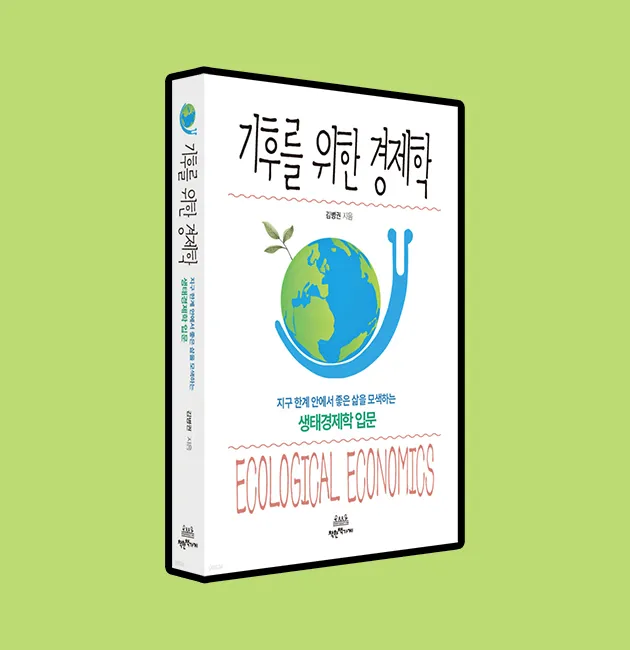
‘Economics for the Climate’ begins with an uncomfortable question. Climate crisis response has now reached a stage that demands changes in economic and social systems beyond the realm of the natural sciences, so why is our economics still repeating old answers? Kim Byung-kwon, a research fellow at the Green Transition Institute and the author of this book, notes that mainstream economics has failed to find answers in the face of the climate crisis and draws readers’ attention to the unfamiliar economic tradition of ecological economics.If you are curious about a new perspective on the climate crisis and economics, read this book.[Economics for the Climate Ⓟ Chakhan Chaekgage]Why Mainstream Economics Has Failed to Find Answers to the Climate Crisis‘Economics for the Climate’ states that the climate crisis cannot be resolved with the existing economic paradigm. Policies to date have failed to fundamentally solve the climate crisis and ecological problems, and it argues that new answers must be found through ecological economics. The book conveys that solving the climate crisis requires ecological economics — an economic perspective that understands the human economy within the Earth’s ecosystem. Ecological economics fundamentally prioritizes sustainability based on optimal economic scale and focuses on the long-term process toward that end. Even if not yet theoretically perfect, the crisis will deepen if we do not attempt new approaches. Degrowth: Beyond Misunderstanding to Its EssenceAuthor Kim Byung-kwon focuses on the inverse proportional graph formed by carbon neutrality and unlimited economic growth. Let us recall the time of the COVID-19 pandemic. Governments around the world chose citizens’ lives over economic growth and mobilized fiscal resources to respond to the crisis. This was the actual experience of degrowth we went through. The degrowth spoken of in the book does not mean reducing the scale of the economy and consumption for the sake of the environment, but rather reducing energy throughput to restore the balance of the living world. It means bringing resource and energy use back to a level the ecosystem can sustain. We stand at a fork in the road: whether the climate crisis will forcibly halt economic growth, or whether we will first practice actions for the environment within a degrowth economy. ESG: The Limits of VoluntarismMark Carney, former governor of the central banks of Canada and the United Kingdom who served as the UN Special Envoy for Climate Action and Finance, emphasized ESG management in his book <Value(s)> as follows: pursuing a balance between financial returns and social value benefits shareholders in the long term as well. However, this book poses the question of whether investors can pursue social value to the end even when returns decrease. Whether a company can forgo even a portion of profits and performance for the pursuit of values is a question that must inevitably be addressed when discussing ESG management. Author Kim Byung-kwon, while encouraging companies that voluntarily practice ESG, emphasizes the need for methods that ensure companies comply with socially agreed-upon carbon emission rules and systems. It is a sober diagnosis that the climate crisis cannot be averted by relying solely on voluntary commitments.‘Economics for the Climate’ poses the question of how economics ought to explain the era of the climate crisis. Those who are pondering climate crisis response and ESG practice will be able to confirm through this book the questions we must ask and the direction of change needed to find the answers. by Editor N

We tend to lump countless different lives together into the single framework of ‘the life of the elderly.’ Defining the lives of the elderly as a single image is an excessively one-dimensional perspective. Just because their ages are similar does not mean their ways of living, values, and tastes are the same.According to the National Data Agency, the elderly population aged 65 and over has surpassed 11 million this year, accounting for 21.6% of the total population. Going forward, the proportion of the elderly in our society will only increase. Now, we must move beyond debating the causes or assigning responsibility and discuss how to accept the changed social structure and adapt to such a world. Faced with the reality already unfolding before us, what attitudes and choices will we make?The Content Market Where Active Seniors Have EmergedThe image of seniors in the past often remained confined to ‘objects of protection’ or ‘beings who must be supported.’ The ‘active seniors’ emerging recently are different. ‘Active seniors’ refers to the 50s and 60s generation who have time and financial leeway and are active in social activities. This is different from an attitude of imitating youth or denying aging.The reason so-called ‘young forties’ is caricatured is the awkwardness that comes from mimicking youth while erasing age. In contrast, ‘active seniors’ focus on recognizing the beauty and completeness of old age itself and revealing their own colors within it. The desire to age gracefully is not a desire unique to any particular generation. It is simply that this desire has now begun to express itself naturally even in old age.[Actress Kim Young-ok, who participated as a muse in the final mission of the variety show ‘Just Makeup’ Ⓟ BAZAAR]In the recently concluded beauty survival program ‘Just Makeup,’ a makeup mission featuring seniors as models was conducted. In a similar vein, in November 2024, Jung-gu in Incheon operated a ‘Senior Healing Beauty Care’ course targeting the elderly and older adults aged 50 and over in the region. These are attempts to view the appearance of old age as a unique beauty in itself rather than as something to conceal or correct.The senior brand ‘The New Grey’ also emphasizes the same perspective. Ironically, by setting seniors as its customer base, it has revealed the individual personalities that had been obscured under the name of ‘the elderly.’ In this way, the senior market is expanding beyond simple age classification into an independent lifestyle genre that respects individuality.[Active Seniors Ⓟ The New Grey Website]The Power of Institutions Connecting Real Old Age to SocietyOf course, it is not sufficient for such cultural changes to remain confined to the market and content domains. Aging is a global trend, not a problem unique to South Korea, and policies for the economic stability of the elderly are also diverse.Singapore, which is aging rapidly, is actively investing in its lifelong education system and continuing efforts to alleviate economic anxiety in old age by operating pension and longevity insurance systems. This is an approach that perceives the elderly not as mere welfare recipients but as members continuously connected to society.South Korea is also expanding employment support policies for old age alongside the pension system. The Mid-to-Older Age Career Support System is a program that increases the possibility of re-employment through career transition for those aged 50 and over, and a senior internship system in which the government supports companies’ labor costs to induce employment of those aged 60 and over is also in operation.[Movie ‘The Intern’ still cut Ⓟ Warner Bros.]Joseph Coughlin, founder of the MIT AgeLab, has pointed out that “the experience of aging differs across individuals and cultures, and there is insufficient scientific basis for concluding productivity and vitality based on a specific age.” In fact, the elderly wish to work longer than the standards set by society. According to the National Data Agency’s ‘Economically Active Population Survey Supplementary Survey Results for the Elderly,’ the average age at which they left their longest-held job (main job) was 52.9 (as of May 2025). Considering that the same survey found the average age at which the elderly wish to work is 73.4, the gap is substantial.The elderly are still agents who choose, decide, and live. A society in harmony with the elderly is a society in which we all can maintain dignity and individuality even as we age. Everyone becomes elderly. Stories for the elderly of today are soon stories for our future selves. How should we position our perspective on the elderly? Depending on this, aging may remain merely a social problem, or it may move forward as a guide that expands our lives. by Editor N

A Green Christmas, unlike a White Christmas with falling snow, refers to a Christmas spent in an environment where snow does not fall or there is little accumulated snow on the ground. Recently, with growing interest in environmental protection, ‘green’ is also being used to mean ‘environment.’ Accordingly, on Green Christmas, as befits the meaning of the day, people practice environmentally conscious actions such as recycling Christmas supplies or using reusable dishes and containers instead of disposables. They also convey feelings toward neighbors they have not been able to reach out to until now. Let us take a look at what events were held and are being held during this December to mark Green Christmas.Green Christmas: Thinking of Regional Co-ProsperityGangbuk-gu Christmas Market <Green Santa’s Gift Box>Seoul Gangbuk-gu held the 2025 Gangbuk Christmas Market ‘Green Santa’s Gift Box’ from December 19 to 21 in the area around the Gangbuk-gu Office. This year’s event was the third edition of the Christmas Market, which has established itself as Gangbuk-gu’s representative winter commercial district festival, and was special in that it was the last winter event to be held at the current government building before the relocation to the new office. This market, filled with colorful experiences, featured a Christmas flea market, busking performances, and photo zones under the name ‘Green Santa’s Gift Box.’ Additionally, the ‘Green Santa’s Snack Warehouse’ on the sidewalk in front of the district office offered winter snacks, while the Sonyeosang Street was arranged as a local brand zone. Local artists also participated, with craft experience programs drawing direct participation from attendees.[2025 Gangbuk Christmas Market ‘Green Santa’s Gift Box’ Ⓟ Munhwa Ilbo]Gimpo Cultural Foundation <Our Family’s Green Christmas>How about experiencing the value of sharing and exchange with family at Christmas? The Gimpo Cultural Foundation held the family-friendly year-end event ‘Our Family’s Green Christmas!’ on December 20–21 at the Hanok Village in Gimpo Art Village. ‘Our Family’s Green Christmas’ carries the meaning of ‘a Christmas that the family draws together while thinking of the environment.’ The Hanok accommodation experience building, which was normally operated only for a fee, was specially opened and set up as a Christmas market and experience space. The main programs included family experience activities such as making pop-up book cards and creating Christmas ornaments. Additionally, the ‘Toy Circulation Market,’ where neighbors shared toys and clothing, and the ‘Green Christmas Market’ featuring local artists allowed participants to experience the value of sharing with neighbors. A foundation official stated, “We will create a new year-end culture unique to Gimpo through an eco-friendly festival utilizing the Hanok space.”[Our Family’s Green Christmas Ⓟ Gimpo Cultural Foundation]Spending an Environmentally Conscious ChristmasKORA Circular Resource Promotion Center <Pubel Santa’s Green Christmas> EventWhat if you could write a letter to Santa and receive an eco-friendly gift in reply?The eco-friendly experience program ‘Pubel Santa’s Green Christmas’ was held every weekend from December 6 to 23 at the Circular Resource Promotion Center under the Korea Circular Resource Distribution Support Center (KORA). The event, themed around ‘Pubel Santa’s Eco Post Office,’ featured a special program in which visitors wrote letters with heartfelt sentiments and sent them. The experience was conducted in the form of completing a workbook stamp mission at the promotion center. 1) Explore various parts of the promotion center and collect all 5 stamps in the workbook. 2) Submit the fully stamped sheet, receive a postcard, and write a letter to Dr. Pubel.3) Place the completed letter in the mailbox and receive a gift.Participants, including child visitors, who sent their letters could receive a special ‘eco’ gift along with a reply personally written by Pubel Santa. A KORA official conveyed, “We hope you will not miss the special sentiment of a Green Christmas that both protects the environment and warms the heart.”[Pubel Santa’s Green Christmas Ⓟ Environment Broadcasting]Lexus <CONNECT TO 2025 GREEN CHRISTMAS>There is an event where you can enjoy various programs themed around a Green Christmas in one space. It is Lexus Korea’s <CONNECT TO 2025 GREEN CHRISTMAS>, held from December 1 to December 31 at the multi-cultural space CONNECT TO. Programs are prepared through which you can experience Lexus’s philosophy of community contribution and the value of carbon neutrality. Suited to the eco-friendly concept, you can taste winter dessert menus including strawberry and matcha beverages made from Lexus Young Farmers’ produce. Additionally, a book donation campaign was held throughout December to deliver books to small libraries in the community. The book donation campaign is a representative participatory social contribution program of Toyota Korea, which has been donating to small libraries in communities in need since 2014. Last year, approximately 14,000 diverse books were collected and delivered to children in the community. [CONNECT TO Green Christmas Ⓟ Lexus Korea]How about thinking of the environment this Christmas season by experiencing the diverse events prepared for Green Christmas? Even without going out, there are ways to spend a Green Christmas at home. Anyone can easily spend a Green Christmas by keeping the environment in mind — whether by composing a vegetable-centered meal instead of meat, preparing just enough food to eat, or renting Christmas decorations. To all who put into practice a mindset of environmental consciousness even at Christmas, Merry Green Christmas! by Editor N

We are in an era that needs companies responsibly connected to our world more than companies that pursue mere profit. In that process, CSR (Corporate Social Responsibility) and ESG (Environment, Social, Governance) have gained prominence and are frequently mentioned, but as they are used similarly, they are often confused. The conflation of the two concepts does not stop at a simple misunderstanding of terminology. Failing to distinguish between them can lead to mistaking social contribution campaigns for sustainable management strategies, causing confusion in judging substantive performance. So what is the difference between the two terms? Let us confirm the concepts of CSR and ESG through two case studies.CSR Completed Through Participation, Going Beyond One-Way EffortsCoca-Cola has long faced criticism surrounding issues directly tied to its business structure. The point that approximately 150 liters of water are required, directly and indirectly, to produce a single 500ml bottle of beverage demonstrates that Coca-Cola’s water use issue falls within the domain of structural responsibility. Such issues surfaced as social conflict in the Plachimada region of India in the early 2000s. As agricultural damage including drinking water shortages caused by the factory’s excessive groundwater extraction came under scrutiny, the factory was eventually shut down in 2004.Subsequently, Coca-Cola shifted its CSR strategy in the direction of strengthening its responsibility for water use. From 2007, it pursued the ‘Water Replenishment Project,’ aiming to return the total amount of water used in its global production processes to local communities. In South Korea as well, Coca-Cola has been carrying out water resource restoration activities since 2017, including dredging agricultural reservoirs, improving waterways, and forest cultivation, centered on areas with high water stress. In this way, CSR refers to activities in which companies voluntarily practice social responsibility — such as environmental protection and contribution to local communities — going beyond the mere pursuit of profit. [Coca-Cola Wonderful Campaign © Coca-Cola Korea]The specific methods and character of CSR have been undergoing repeated change in response to the demands of the era and society and the corporate environment. Whereas past CSR had a strong character of one-way corporate social contribution such as donations and sponsorship, recent CSR is expanding in the direction of directly supplementing and resolving the social and environmental impacts arising from corporate activities, as in the Coca-Cola case.Coca-Cola’s ‘Wonderful (ON THE PL) Campaign,’ which began in 2020, is a case of participatory CSR designed so that consumers directly take part in the resource circulation process. It demonstrates the expanded direction of CSR in that it created a resource circulation structure through the proper segregation and collection of transparent PET bottles and led behavioral change by extending corporate responsibility to the participation of consumers and local communities.Ultimately, CSR can be said to be the philosophical foundation for companies to practice responsible management in the long term, going beyond simply doing ‘good deeds’ for society. Through CSR, companies can build brand trust, instill pride and motivation in their members, and lay the foundation for sustainable management.ESG: The Final Button for Sustainable ManagementESG is, literally, a standard for comprehensively judging the sustainability of a company by reflecting Environmental, Social, and Governance factors across management. If CSR is the philosophical foundation of the responsibility a company pursues, ESG can be seen as the concrete tool through which such philosophy is connected to actual management activities, decision-making, and evaluation indicators.McDonald’s Korea is counted among the companies actively practicing ESG management under the slogan ‘What’s Good for the World Is Good for McDonald’s.’ The ‘Taste of Korea’ project utilizing domestic ingredients created a win-win structure through collaboration with local farms and contributed to promoting the value of regional specialties. Kim Hee-soo, the county governor of Jindo-gun which participated with the ‘Jindo Green Onion Burger,’ revealed that “if McDonald’s chose it, it is trustworthy,” and that purchase inquiries about various agricultural products have since continued. McDonald’s projects together with Korean farms were estimated to have created approximately KRW 61.7 billion in social and economic value from 2021 to 2024.[McDonald’s Taste of Korea Project © McDonald’s Korea]In this way, social responsibility activities no longer remain at the level of describing a company’s attitude. ESG, which was previously classified as non-financial performance, is now directly connected to corporate value and financial performance, and operates as a standard for investment and regulation. Accordingly, ESG has established itself as an obligation rather than an option, and the trend of its utilization as a core indicator of corporate growth is becoming clear.In the end, while CSR presents the direction of the responsibilities and obligations that companies hold toward society, ESG functions as the standard for measuring and evaluating whether such responsibilities are actually leading to management activities and performance. When the two concepts are understood as existing in an organic relationship and utilized in the right places, companies can solidly practice sustainable management. Furthermore, it is companies that achieve a balanced integration of these two elements that will be able to position themselves as trusted future enterprises in the changing environment. by Editor N

The Netflix variety show ‘Physical: Asia’ drew global attention. Riding on the popularity of the previous installment ‘Physical 100,’ the newly produced Physical: Asia entered the global Top 10 for three consecutive weeks after its first release on October 28, recording 2.5 million viewing hours from November 10 to 16. As a national competition in which eight countries — South Korea, Mongolia, Indonesia, Japan, Thailand, Turkey, the Philippines, and Australia — flew their flags, it drew great interest not only from the participating nations but from sports fans around the world.[Physical: Asia Mongolia Team Ⓟ Netflix]Team Mongolia, Elevated to National HeroesSouth Korea took the victory. However, there was a team that garnered as heated a response as Korea from this program: the Mongolia team. Centered around Erkhenbayar Bayarsaikhan, a champion of Mongolia’s traditional wrestling ‘Bukh,’ the Mongolia team captured the hearts of viewers with their humble and sincere attitude and outstanding strategy. Former Mongolian President Tsakhiagiin Elbegdorj came out to cheer them on, and the Mongolian media covered the team’s performance. Mongolian viewers sent enthusiastic support by posting proof shots of group viewings on large screens on social media, and after the program ended, the members of the Mongolia team were elevated to national heroes and were invited to commemorative events including Genghis Khan’s birthday. Chinbat Undram, Minister of Culture, Sports and Tourism, acknowledged it as a matter of national interest, calling Physical: Asia “a program I watch every week with my son” and stating that it “not only elevates Mongolia’s honor but will also be a great help to the tourism industry.”Mongolia, Close to Us: The Current ‘Strategic Partnership’Mongolia is a country linguistically and culturally close to us. There are children born with Mongolian spots, and we are similar in appearance to the extent of being difficult to distinguish. Since the establishment of diplomatic relations in 1990, bilateral relations developed into a ‘Comprehensive Partnership’ in 2011 and further to a ‘Strategic Partnership’ in 2021. The trade volume, which was USD 2.71 million at the time of establishing ties, showed a more than 200-fold increase to USD 570 million in 2024. Korean companies, noting Mongolia’s abundant mineral resources, entered the mining, wholesale and retail, and construction industries, and in Mongolia, approximately 50,000 Mongolian nationals migrated to South Korea in search of work. Among these, about 11,000 Mongolians are employed, working in manufacturing, agriculture, construction, and the like, forming one axis of the Korean economy.[Mongolia’s ‘Orgil’ Store Displaying Homeplus Private Brand Products Ⓟ Homeplus]The Mongolia team, who received the interest and affection of Koreans through Physical: Asia — yet the environment for Mongolians working in South Korea, especially workers, is marked by both light and shadow. As of 2024, approximately 2.6 million foreign nationals reside in South Korea, of which one million are employed workers. While not a small number, the labor conditions they face are often poor. Representative issues include wage arrears, low wages below the minimum wage, long working hours, and industrial accidents. Particularly regarding Mongolian workers, the issue of industrial accidents cannot go unmentioned. Tragic news stemming from poor environments — such as the fatal fall at a Seoul apartment construction site in April 2025 and the fatal fall at a Gangwon-do waste recycling company in November — continues without end. Housing conditions and health insurance are also problematic. Approximately 65% of employed workers reside in employer-provided accommodations, but 40% of these are illegal temporary structures or provisional lodging. Seventy percent of migrant workers in agriculture and fisheries live in illegal buildings and work under the daily threat of accidents. The health insurance enrollment rate is also only 60%, leaving weak preparation for emergency situations. [Foreign Workers Working in South Korea Ⓟ gettyimages]The perseverance and outstanding physical strength that we saw from the Mongolia team in Physical: Asia are virtues they also demonstrate at Korean labor sites. Yet while we enthusiastically applaud them in the program, are we not indifferent to, and at times prejudiced against, the problems of migrant workers we encounter in everyday life? If the cheers we sent to their impressive appearance in Physical: Asia expand into interest in Mongolian migrant workers, we will be able to coexist with them and create a better future. by Editor N