Loading Data
Please wait a moment...
Update Cal.
2026.08
03
Mon
04
Tue
05
Wed
06
Thu
07
Fri
08
Sat
09
Sun
Update Calendar
2026.08
01
Sat
02
Sun
03
Mon
04
Tue
05
Wed
06
Thu
07
Fri
08
Sat
09
Sun
10
Mon
11
Tue
12
Wed
13
Thu
14
Fri

Loading Data
Please wait a moment...
Evening ESG news and briefings to wrap up your day.

On the 8th, Reuters reported that the European Union has agreed to significantly narrow the scope of the Corporate Sustainability Due Diligence Directive (CSDDD). Citing EU officials, Reuters reported that a plan to raise the applicable company thresholds to 5,000 or more employees and annual revenue of at least 1.5 billion euros (approximately KRW 2.5 trillion) has effectively reached the final coordination stage. This represents a dramatic increase from the original criteria of 1,000 or more employees or annual revenue of at least 450 million euros (approximately KRW 740 billion), and it is estimated that roughly 70% of European companies would be excluded from the regulation. As a result, concerns are growing over a retreat from corporate social responsibility obligations.[EU headquarters ⓒ European Parliament Multimedia Center]Time to Consider the Economic Burden on CompaniesCSDDD is a core piece of supply chain-based ESG legislation that the EU has been advancing for several years. The directive requires companies to prevent risks such as human rights violations and environmental destruction that may arise throughout their supply chains and to disclose these efforts. Companies that violate CSDDD could face fines of up to 5% of global revenue. The shift in circumstances is primarily attributed to economic instability. As economic concerns driven by high interest rates and slowing growth have spread across European countries, major players such as France and Germany have argued for scaling back the legislation to ease burdens on businesses. Analysts note that even the majority bloc in the European Parliament has shifted toward narrowing the scope of CSDDD.Concerns Over the EU's Retreat from Global ESG LeadershipCivic organizations focused on climate, human rights, and related issues are voicing unanimous opposition. This is because the EU, which has served as a global standard-setter for ESG regulation, climate change response, and sustainable management, now appears to be abandoning its own standards. There are growing concerns that the progress made in codifying corporate social responsibility is being undermined just over a year after formal implementation, under pressure from countries such as the United States and multinational energy giants like ExxonMobil.[Dutch MEP Lara Wolters of the Socialist Party, who resigned in protest against the CSDDD rollback ⓒ European Parliament Multimedia Center] As the obligations stipulated under CSDDD are relaxed and companies are able to focus on their direct trading partners rather than the entire supply chain, critics point out that it will become even harder to address ESG-level issues such as climate change and labor exploitation in the developing world. Global ESG Regulation: Entering a Period of Consolidation, Not ExpansionThis decision signals that the ESG regulatory trend is shifting from full-scale expansion to a phase of adjustment. The EU, which has played a pioneering role in ESG regulation, has now chosen to retreat. In the U.S., President Trump does not even acknowledge climate change and is in the process of canceling budgets for clean energy projects. The situation in Asian countries is different. Japan and China are moving forward with implementation of their established ESG regulations without reversing their existing positions. What does this mean for us? While major Korean companies operating in EU supply chains are now more likely to be partially excluded from the scope, firms that have already built ESG management systems face uncertainty about their return on investment. Demand for due diligence from European corporate clients is likely to persist for the time being, but a fluid period is likely to follow during which the extent to which ESG standards within global procurement networks are relaxed at the private-sector level cannot be confirmed.ESG's Growing Pains Have BegunThe EU's move to relax ESG regulations reveals the tension between the institutionalization of the regulatory framework and its real-world application, rather than a simple retreat. In other words, ESG as a topic is transitioning from the stage of "moral declarations" or "establishing principles" to the stage of "policy-coordination for practical implementation." As a result, full-fledged discussions on applying ESG standards among global supply chains, regulators, and investors — all within the ESG management domain — may now begin in earnest.Korean companies, too, need an approach that responds to this fluidity based on voluntary ESG strategy development and due diligence, rather than relying solely on changes in standards themselves.by Editor N
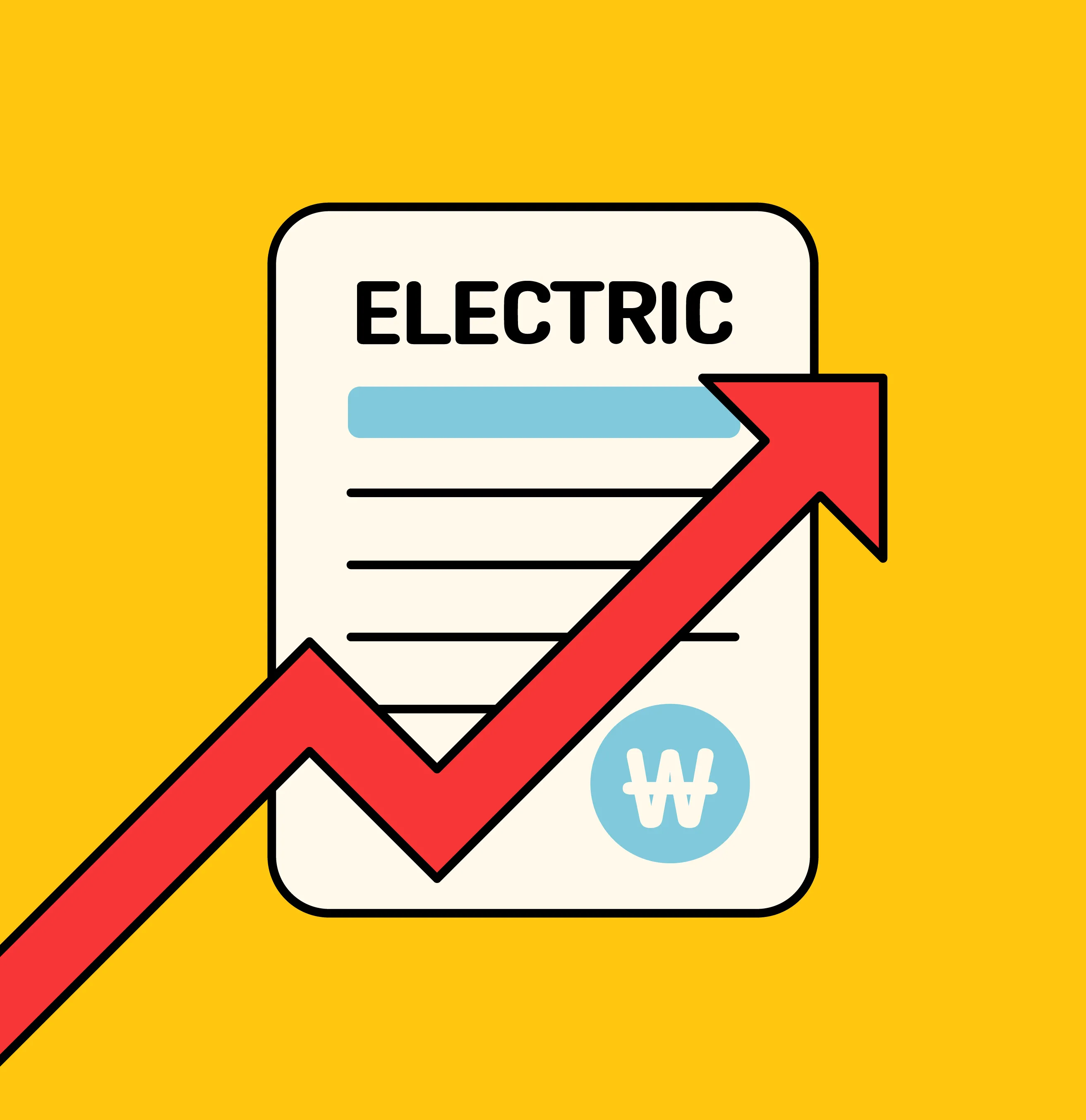
The content of the UN Framework Convention on Climate Change (UNFCCC), adopted at the 1992 UN Conference on Environment and Development (UNCED), was that developed and developing countries would reduce greenhouse gases according to "common but differentiated responsibilities." In effect, it is a promise to try to curb the rise in the Earth's temperature through greenhouse-gas reduction. The Paris Agreement, adopted at the 21st Conference of the Parties (COP) held in Paris in 2015, prescribes limiting the rise in the Earth's temperature to 1.5℃ above pre-industrial levels and, to this end, requires all countries to submit their post-2020 climate-change response plans to the UNFCCC every five years.Since submitting its first Nationally Determined Contribution (NDC) in 2015, Korea revised its NDC in 2020 and is ahead of its second NDC revision this year. At this point, when various reduction plans are being considered to achieve the 2050 carbon-neutrality goal, on August 14, at a senior-secretaries' meeting, President Lee Jae-myung hinted at an electricity-rate increase.Humanity, Already in Debt to the Earth[Overshoot ©GFN]Overshoot—that is, Earth Overshoot Day—is an indicator estimated by the international research organization the Global Footprint Network (GFN), converting into a date the point at which the ecological resources and environment that humanity consumes over a year exceed the Earth's regenerative capacity. This year's Earth Overshoot Day is July 24, and if converted using only the consumption of Korean citizens, that point is moved up to April 9. This means that, generously counted, more than three Earths would be needed to sustain Koreans' resource consumption.The Cost of Failing to Stop Climate Change—We Are Already Paying ItPresident Lee Jae-myung's remark on raising electricity rates immediately caused a great stir in public opinion. This is because, regardless of scale, electricity is an essential good that cannot be absent from everyone's daily life. Also, this is closer to the investment costs put into the renewable-energy transition process than an incentive to reduce electricity use itself. It means it is a cost that is absolutely necessary to reduce greenhouse gases and to keep the Earth's temperature from rising further.Even for such essential cost spending, people's nerves are on edge. But we are already paying the cost of the rise in the Earth's temperature caused by failing to sufficiently reduce greenhouse gases. According to a report by the multinational climate-change research organization World Weather Attribution (WWA), this spring's large wildfires that swept Korea were affected by the high temperatures of a long-term trend due to climate change. As high temperatures persisted, they dried out the soil and vegetation, and this doubled the likelihood of extreme wildfires occurring.[The enlargement of wildfires caused by high temperatures ©Getty Images Bank]According to the Korea Forest Service, wildfires occurring in Korea over the past 10 years averaged 545 per year, and large wildfires occur every year. In particular, the 2022 Uljin-Samcheok wildfire destroyed 16,302 ha of forest, and the scale of economic damage reached about 881.1 billion won. The damage from large wildfires occurring since 2020 is estimated at about 1.0727 trillion won.Large wildfires are not the only problem. According to what the Ministry of the Interior and Safety announced on the 17th of last month, the damage from concentrated heavy rain that occurred this year is 1.0848 trillion won, and more than 2.7 trillion won will be invested for recovery. The heavy rain is caused by the hot, humid stationary front covering the Korean Peninsula, and behind this cause is global warming. In addition, because the tree roots that hold the soil of mountainous terrain were lost due to the spring wildfires, the probability of a compound disaster—in which landslide risk increases—is also growing.The per-capita electricity consumption for 2023 presented by Statistics Korea is 10,637 kWh, and the average annual electricity bill per person, calculated by applying seasonal progressive rates, is about 3,106,820 won. People are on edge over electricity-rate increases, but the damage from wildfires over five years and this year's concentrated heavy rain each amount to about 345,000 people's worth of one year's electricity bill.The Climate Crisis, Into the Realm of Survival, Not MoralityNatural disasters caused by climate change also greatly affect daily life. R. Jisung Park, an environmental economist at the University of Pennsylvania's Wharton School, analyzes in figures the damage climate change inflicts on society in his book "The Price of 1 Degree" (original title Slow Burn) (Willbook, 2025). For instance, when temperatures of 32.2℃ or higher persisted for a week, the monthly rape-crime rate increased by more than 5%, and murder and violence rose by about 3%.Not only in cost but in the social and cultural realms, and even in the realm of survival, we are paying the cost of climate change. Do you still think we must protect the environment to prevent the extinction of polar bears and coral reefs? Climate change is real, and its consequences are revealing themselves in places we did not expect. If it is a cost that must ultimately be paid, it is a point that needs the wisdom of policy and civil society to choose when and in what way to pay it. by Editor N
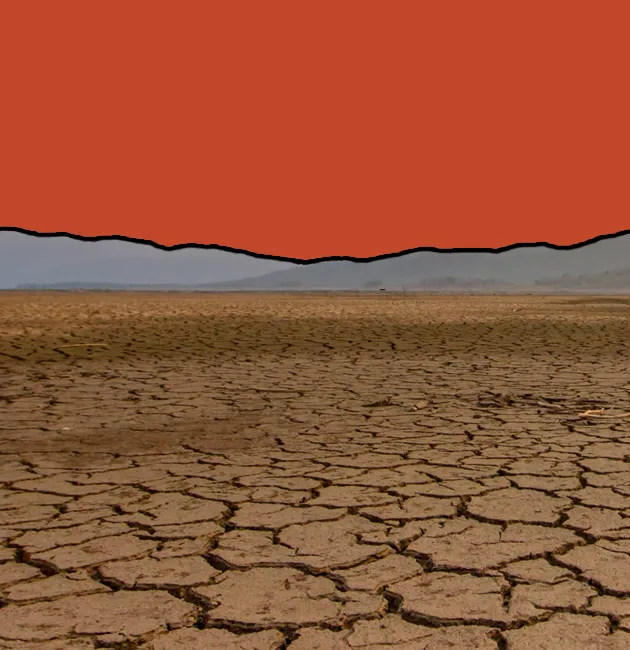
On August 31, 71 fire trucks dispatched in support from all over the country gathered at the Gangbuk Public Stadium in Gangneung. An unusual scene unfolded on a weekend morning. It was the day after the government declared a state of disaster for Gangneung, Gangwon, which is undergoing extreme drought. Even though the storage rate of Obong Reservoir, Gangneung's main water source, recorded 21%—the lowest since observations began—a situation with no clear precipitation forecast is continuing. Gangneung's cumulative rainfall as of August 10 was 394.1 mm, about half the average of 766.6 mm.[Fire trucks gathered in Gangneung from all over the country at the "disaster-zone declaration" ©Gangwon Special Self-Governing Province Fire Headquarters]Gangneung's Crisis, the Worst Drought in 48 YearsAt a "drought-response emergency measures press conference" on the morning of August 19, Gangneung Mayor Kim Hong-gyu announced an extraordinary water-restriction measure cutting the supply of household water by 50%. The explanation was that it was an unprecedented disaster situation in which the storage rate was expected to fall to the 10% range.This was a phenomenon entirely different from traditional drought. The general drought we think of is a natural disaster that progresses slowly over a long period. It occurs gradually over months to years, with a shortage of rainfall as its main cause. But this Gangneung drought is called "flash drought." "Flash drought," which appeared along with climate change, shows an aspect entirely different from existing drought.[The Gangneung City notice that entered water restriction (water-saving measures) due to extreme drought ©Gangneung City Hall]Why Flash Drought Now?Flash drought is a phenomenon in which abnormally dry weather spreads rapidly in a short period; unlike general drought, which occurs slowly over months due to a shortage of rainfall, it occurs as rapid moisture evaporation takes place within weeks. In particular, as the intensity and number of days of heat waves gradually increase, it is characterized by rapidly developing even without a large shortage of rainfall, because evaporation is high.In other words, unlike traditional drought caused by little rain, flash drought occurs as soil moisture is rapidly lost due to high temperatures and strong evaporation. The phenomenon of soil moisture rapidly evaporating due to high heat is the core, and this is in the blind spot of the existing drought-response system. The problem is that flash drought is hard to predict. Korea's drought forecast-and-warning system is basically centered on a monthly unit, and weekly forecasts are used unofficially and supplementarily. Because of this, cases arise where it fails to reflect flash drought, which develops rapidly in a short period.Another problem is that flash flooding can follow flash drought. Soil dried out by hot air becomes hardened, in a state where it is hard to absorb moisture. When a lot of rain suddenly falls on a drought-stricken area, the water cannot be absorbed, leading to flash flooding. One cannot but look back on the post-climate-change disasters, where drought occurs more severely and floods occur more suddenly.[The 2024 California wildfires ©Greenpeace]We Must Prepare for New Disasters of a New EraFlash drought is not a disaster ours alone. There is analysis by experts that the fundamental cause of the 2024 California and Hawaii wildfire damage, which shocked the world, was also flash drought. Now, a new definition of drought is needed that sufficiently considers not only rainfall but the effects of high temperatures and evaporation. Moving away from the past mindset that "if it rains, there is no worry of drought," an approach that considers the comprehensive moisture balance is needed.Flash drought is a new kind of disaster made by climate change. In the current situation where heat waves are becoming frequent, the risk of flash drought is projected to keep increasing. Most important will be recognizing flash drought as an independent disaster type and building a prediction-and-response system suited to it. With the acceleration of climate change, flash drought is no longer a story of a distant country. We too must have the awareness that the Maui Island catastrophe is not someone else's affair, and set out to prepare preemptive countermeasures. by Editor N

The merch sold at the National Museum of Korea is becoming the starting signal of a new consumption trend. The "Pensive Bodhisattva Liberation Edition" and "Deny Taegeukgi keyring" sellout frenzy, which occurred this year marking the 80th anniversary of Liberation, is being treated as a phenomenon beyond mere souvenir popularity. Companies' merch fervor is already a familiar picture—bookstores including Kyobo Book Centre hold online events that sell Liberation Day special souvenirs on the side. The point to note in the renewed merch craze is not the merch itself but the fundamental change in consumption culture hidden behind it.[The National Museum of Korea online merch shop screen showing sold-out status ©National Museum Foundation of Korea online shop]Looking Back at the Value-Consumption Trend on Liberation DayThese days, the most popular space at the National Museum of Korea is not the exhibition hall but the souvenir shop, the merch shop. The National Museum of Korea's merch, rooted in our traditional culture, has risen to a "it-item" that stimulates the collecting desire of a broad range of consumers, including the MZ generation. The fervor for National Museum of Korea merch, whose influence is expanding globally, can be seen as arising from three reasons. First, consumers want to know the "story" of merch containing history and culture. Second, they want to share the story they learned this way on social media and express their own "cultural taste." Third, they want merch that expresses their taste this way to become a tool that explains themselves.On online channels where the MZ generation gathers, the scene of sharing the backstory—"this badge is actually a design inspired by Joseon folk painting"—has become a fairly familiar daily occurrence. Now merch is not simply an object a consumer owns but a means of revealing someone's cultural sense and identity. The merch drawing attention in the National Museum of Korea merch craze faithfully performs this role. A paradigm shift from conspicuous consumption to meaningful consumption is also taking place together.The Meaning of the Successive Sellouts of NMK MerchThe phenomenon of the National Museum of Korea's 80th-anniversary-of-Liberation merch selling out one after another was fully expected. Following sellouts, there is already much merch available only through pre-orders that endlessly stack up rounds. The Pensive Bodhisattva Liberation Edition, of which 500 were to be released, quickly sold out and 1,500 additional units went into production, and the Deny Taegeukgi keyring exhausted its initial batch of 1,000, with about 3,000 additional units currently in production. Purchase reviews poured out comments such as "because I want to remember the meaning of history in daily life," "to explain the meaning of Liberation to my child," and "as a resolve not to forget the sacrifice of the grandfather generation." This response is not a flow suddenly created this Liberation Day. It is the result of "value consumption," which has been called an MZ-generation consumption trend. A consumption trend that pays attention to the value and story behind a product, beyond its function and price, has taken root at the base of daily life.[The Pensive Bodhisattva miniature Liberation Edition, an 80th-anniversary-of-Liberation limited product scheduled for restock in mid-September ©National Museum Foundation of Korea online shop]The "Condition of Authenticity" That Brands Did Not Miss"Starbucks," another brand that draws attention with merch, also leaves a meaningful message around Liberation Day each year. Last year, the 79th anniversary of Liberation, it released dancheong merch supervised by Kim Seok-gon, a transmission-trainee of the state-designated intangible heritage dancheong master. The reason the dancheong merch drew attention at the time was not simply because it used a Korean design. The authenticity shown by merch supervised by a transmission-trainee of the intangible-heritage dancheong master, and the act of donating part of the proceeds to a national-heritage protection-activity fund, was recognized. This year, marking the 80th anniversary of Liberation, Starbucks donated "Bungjeong Manri (鵬程萬里)," a handwritten calligraphy of Baekbeom Kim Gu, to the National Trust for Cultural Heritage. It also released collaboration merch themed on the National Museum of Korea's popular section "The Room of Quiet Contemplation," explained earlier. As consumers' standards rise in a way that distinguishes commercial marketing from authentic support for social value, it is a case for companies and brands to reference in how they should approach history and culture.[The Starbucks Liberation Day dancheong merch released in 2024 ©Starbucks Korea]The consumption of 80th-anniversary-of-Liberation merch appears to be a point where personal satisfaction and social-value creation connect. The act of posting a purchase verification photo on social media leaves the social message that one is "a person who remembers history." If companies and brands want to naturally join this context, they must create the common denominator of authenticity. Not simply following a trend, but when the value the product contains and the brand's philosophy align, it moves consumers' hearts. by Editor N

Global Big Tech companies' ESG-investment competition is growing to the level of megadeals. A representative company that closed a megadeal—meaning a large deal on the scale of a major corporation—is Google. On the 31st of last month, Google announced that it would invest 6 billion dollars (about 8.2 trillion won) in Visakhapatnam, Andhra Pradesh, India, to build Asia's largest data center and renewable-energy hub. The core of this project is the construction of a large-scale data center with 1-gigawatt capacity. Of the 6-billion-dollar amount for this project, which builds India's first large-scale data center, 2 billion dollars is to be invested in renewable-energy development.[Inside a Google data center ©Google]Why India? India's Data-Center Hub Strategy and Policy SupportBEhind Google's investment is India's active data-center hub strategy. That the Indian government classifies data centers as "infrastructure" to ease financing and provides clear guidelines is attractive to tech companies. Moreover, with a renewable-energy generation cost of 4.98–4.99 rupees per unit (about 79 won)—cheaper than natural-gas generation, which requires 5.4 rupees per unit (about 86 won)—economic viability is also secured. Google already supplies 50% of its power with renewable energy at the Yotta NM1 data center near Mumbai, and it has set and is operating toward a goal of expanding this to 70% by 2025.The Intersection of Surging Power Demand in the AI Era and a Decarbonization StrategyThis investment is also part of the 75 billion dollars Google planned to invest for global data-center expansion. In particular, it is directly connected to Google's "24/7 Carbon-Free Energy (CFE)" goal of covering the power demand surging with the spread of AI services with renewable energy. The carbon-free energy goal can be seen as an environmental goal one level higher than RE100, which matches annual renewable-energy purchases. This is because it is an aggressive plan to use only grid carbon-free power.Google plans to operate the new data center in connection with the "Blue Raman submarine cable system," scheduled for completion in Q4 2025. The submarine cable system, with a landing station in Mumbai, will greatly expand bandwidth between India and the world. Nara Lokesh, IT Minister of India's Andhra Pradesh state, stated that "the state government has already secured commitments for 1.6 GW of data-center capacity and plans to build up to 6 GW within the next five years." He also added that by building three submarine-cable landing stations in Visakhapatnam, it will secure about twice the submarine-cable capacity Mumbai currently holds.[The Big Tech ESG-investment megadeal rush ©ESG.ONL/ESG Today]A New Direction in the Big Tech ESG-Investment CompetitionGoogle's investment shows that the Big Tech industry's ESG-investment competition has entered a new dimension. In May last year, Microsoft signed a 10-billion-dollar renewable-energy development contract with Brookfield Asset Management to secure 10.5 GW of renewable-energy capacity between 2026 and 2030, and it recently signed a 10-year, 1.1-million-ton carbon-removal contract with Norway's Hafslund Celsio.Amazon signed a 650-million-dollar nuclear-power-plant power-purchase agreement with Talen Energy in Pennsylvania, and Meta also announced a 13.5-billion-dollar contract to purchase 1.1 GW of nuclear energy for 20 years from the Clinton Clean Energy Center in Illinois.What these companies have in common is that, beyond solar and wind, they include nuclear power, geothermal, and carbon-removal technology in their portfolios to try to achieve both the 24-hour power demand of the AI era and carbon-neutrality goals at once. We should pay attention to this investment competition in that the Big Tech companies leading the rapidly arrived AI era are leading not only technological pioneering but also the ways to achieve carbon-neutrality goals. by Editor N[Reference Article] The Evolution of Carbon-Neutrality Strategy—the Carbon-Removal Contract Between MS and Hafslund Celsio
The European Union (hereafter EU) haS shifted its policy in a direction that greatly reduces companies' sustainability-reporting burden. On August 1, the "European Financial Reporting Advisory Group (hereafter EFRAG)" released a revised draft of the European Sustainability Reporting Standards (hereafter ESRS), stating that it had greatly simplified the reporting requirements under the Corporate Sustainability Reporting Directive (CSRD).Seeking a Balance Between Corporate Competitiveness and Sustainability ReportingThe core of this revision is the easing of the reporting burden. EFRAG removed all voluntary disclosure items and cut reporting data points by 68%. Mandatory data requirements were also reduced by 57%. This standard simplification was pursued as part of the European Commission's "Omnibus I" proposal. This proposal aims to reduce the burden of sustainability-related regulations—not only the CSRD but also the Corporate Sustainability Due Diligence Directive, the Taxonomy Regulation, and the Carbon Border Adjustment Mechanism.In the revision process, EFRAG focused on organizing sustainability reports to be more readable and concise and on strengthening their connectivity with corporate reporting. It also adopted the same terminology as far as possible to increase interoperability with the sustainability-reporting standards of the "International Financial Reporting Standards (hereafter IFRS)," and it emphasized a "Fair Presentation" framework.Patrick de Cambourg, chair of EFRAG's Sustainability Reporting Board, explained that "EFRAG is fully aligned with the strategic vision presented by the European Commission," and that "this revision provides what Europe needs at this point—a more focused and practical sustainability-reporting system that maintains ambitious goals while not placing an excessive burden on companies."[EFRAG releases simplified draft ESRS standards ©ESG.ONL/ESG Today]The Strategic Meaning in the Global ESG-Reporting Standardization CompetitionThis ESRS simplification is interpreted as aiming, beyond mere regulatory easing, for the EU's strategic repositioning in the global ESG-reporting-standard competition. Amid the U.S.'s ESG-policy retreat and the accelerating establishment of Asia's own ESG frameworks, the EU is assessed as having presented a "third way" that satisfies both practicality and effectiveness.In particular, strengthening consistency with IFRS sustainability standards is analyzed as an intention to reduce global companies' multiple-reporting burden. This can be seen as the EU taking a practical approach for the global spread of its own standards.The ESRS simplification also offers several implications for Korean companies. First, the practical burden on Korean companies operating in the EU is expected to decrease considerably. The 68% reduction in data points allows for great savings in report-writing time and cost. It is also expected to affect the domestic ESG-disclosure standards being developed by the "Korea Sustainability Standards Board (hereafter KSSB)." The KSSB is already preparing Korean-style standards based on IFRS sustainability standards, and the EU's simplification direction can be a reference for enhancing the practicality of Korean standards.In a situation where Korea's large companies are subject to the CSRD, this simplification is welcome news. CSRD reporting obligations apply in stages from 2025 to Korean companies operating in the EU, such as Samsung Electronics, LG Electronics, and Hyundai Motor, and the reporting burden is expected to decrease greatly under the revised standards.The Future of Sustainability-Reporting StandardsEFRAG plans to conduct 60 days of public consultation on this draft. The European Commission extended the deadline for EFRAG's technical advice submission, originally scheduled for the end of October, to the end of November. The final standards are scheduled to be finalized at the end of 2025. Experts assess that this simplification will greatly improve the practicality and efficiency of ESG reporting. However, how the delicate balance—reducing the reporting burden while maintaining the transparency of core ESG information—will work in the actual application process remains to be seen. by Editor N
2024 was a year that became a meaningful turning point for Korea's social-value ecosystem. This is because SOVAC (Social Value Connect), which had been run under private-sector leadership for five years since its first start in 2019, joined hands with the Korea Chamber of Commerce and Industry to expand into the "Korea Social Value Festa," showing that social value had established itself in the domain of mainstream economic activity. As the participant composition expanded to government, large companies, academia, and civil society, it was reborn as a rich event with 247 partner companies, 132 exhibition booths, and 22 sessions.[The 2024 Korea Social Value Festa site ©Korea Social Value Festa]Gather Together—We Who Gather for a Better LifeAnd from August 25 to 26, this year's "Korea Social Value Festa" is held at COEX Hall C and the conference rooms. Held under the theme "Designing the Sustainable Future," this event focuses on designing substantial change, beyond mere discourse. In terms of content, too, major partners such as the Daum Foundation, Happynarae, Impact Alliance, Impact Square, MYSC, and SK Telecom are participating from the event-planning stage, adding substance from booth events to participant networking at the festa, which has been expanded to two days.New programs are also drawing interest, such as "SKT FLY AI X SOVAC Challengers" for social enterprises, social ventures, and university-student groups hoping to advance their solutions through the adoption of AI technology; the SOVAC Flagship session, where ecosystem leaders and government officials participate to share the key status and outlook of the social-value ecosystem; and the SOVAC Bazaar, a participatory event sharing experiences of value consumption.[The 2025 Korea Social Value Festa ©Korea Social Value Festa]Points to Anticipate at the 2025 Social Value FestaThe event is expected to be held amid the attention of more stakeholders, including not only companies but even the government. Due to the mandatory ESG disclosure that begins in earnest from 2025, more companies are expected to take an interest in social-value creation. This festa, where a session by the Ministry of the Interior and Safety is also being prepared, is expected to serve as a platform that connects companies with practical guidelines and cooperation partners.That one will be able to see at a glance the diverse terrain of social-value-creation models is also expected to draw the ecosystem's attention. From the cases of regional impact business that drew great interest at the 2024 event, to academia including students, there are also sessions expanding globally. In 2025, through the sharing and study of more impact-business cases, one will be able to check information on concrete, actionable models. How technological innovation such as AI and digital transformation can contribute to solving social problems—the fusion of technology and social value—will also be dealt with as a major theme.In an era when social value has become not a choice but a necessity, let us look forward to what new change the 2025 festa will bring about. by Editor N
An analysis has emerged that the world's major cities are achieving carbon reduction at a faster pace than national governments. While the per-capita greenhouse-gas emissions of major cities belonging to the "C40 Cities Climate Leadership Group (hereafter C40)*" decreased by an average of 7.5% from 2015 to 2024, global emissions still show an increasing trend, so city-level climate policy is drawing attention as a new breakthrough.*C40 Cities Climate Leadership Group: a council formed in 2005 at the proposal of London Mayor Ken Livingstone, in which 40 major cities worldwide actively respond to climate change; Seoul joined in 2006.Three-Quarters of C40 Cities Show Faster Reduction Results Than Their National GovernmentsAccording to a report released on July 2 by the U.S. environmental media outlet "Grist," about three-quarters of the major cities that joined C40 are reducing greenhouse-gas emissions at a faster pace than their national governments. The population of cities belonging to C40—Seoul, as well as New York, London, Paris, Tokyo, and others—accounts for about 12% of the world's population, but they account for about 25% of greenhouse-gas emissions, so their reduction results can have a decisive impact on achieving global climate goals. New York City reduced its emissions by 22% compared with 2015, and London achieved a 35% reduction over the same period. Paris recorded a 10% decrease over the three years from 2019 to 2022, meaning it achieved a rapid reduction of more than 3% per year.[The 2022 C40 World Mayors Summit ©Juan Pablo Barrientos/C40]The Reason Cities' Results Are Faster Than Nations' Is "Rapid Policy Execution"The reason cities achieve faster results than nations lies in the difference in policy-execution capacity. At the level of a nation's executive branch, one cannot but consider diverse stakeholders. Relatively, city politics is smaller in scale than the national unit. Therefore, cities can pursue execution after relatively rapid decision-making.In fact, many cities are quickly pursuing policies aimed at immediate effects—improving building energy efficiency, expanding public transport, transitioning to renewable energy. For example, New York City set and enforced by law a cap on the carbon emissions of large buildings, and London introduced and regulated zero-carbon standards for new buildings. Innovative approaches are also possible in the transport sector: Paris greatly expanded bicycle lanes on the occasion of the 2024 Summer Olympics, and Los Angeles accelerated the introduction of electric buses. These policies directly affect citizens' daily lives while leading to visible reductions in greenhouse-gas emissions.Seoul is also active as a C40 member, but its concrete reduction results are still inadequate compared with leading cities. There is much room for improvement in building energy efficiency and the renewable-energy transition. The key is the execution of the "2050 carbon-neutral city achievement" that Seoul has recently set as a goal. Not only Seoul but also Korea's major cities such as Busan, Incheon, and Daegu are establishing carbon-reduction strategies suited to their own characteristics. Attention is on whether Busan's "Green New Deal policy," Incheon's "RE100," and Daegu's "Smart-Green City project" can achieve substantial results by benchmarking the achievements of leading C40 cities.A New Climate Governance Created by Inter-City CooperationIn a situation where inter-national climate negotiations struggle to gain speed, the more cities accelerate climate action, the more the policy initiatives that C40 cities jointly pursue will become verified best practices and direct references for other cities' policy-making. Major cases that cities share across borders—eco-friendly building standards, circular-economy policies, low-carbon transport systems—are increasing. It is a point at which we must more actively use international cooperation and experience-sharing through the C40 network to actively create and share substantial carbon-reduction results.[Cities faster than nations, the carbon-reduction leadership of global cities ©ESG.ONL/ESG Today] by Editor N