Loading Data
Please wait a moment...
Update Cal.
2026.08
03
Mon
04
Tue
05
Wed
06
Thu
07
Fri
08
Sat
09
Sun
Update Calendar
2026.08
01
Sat
02
Sun
03
Mon
04
Tue
05
Wed
06
Thu
07
Fri
08
Sat
09
Sun
10
Mon
11
Tue
12
Wed
13
Thu
14
Fri

Loading Data
Please wait a moment...
Evening ESG news and briefings to wrap up your day.
A "Zero-Energy Building (ZEB)" refers to an eco-friendly building that minimizes the building's energy consumption through insulation, high-performance windows and doors, and heat-exchange ventilation systems, and that produces energy directly at the building with new and renewable energy such as solar power, making its actual energy use nearly "zero." In fact, Korea's energy self-sufficiency rate is about 9%, and more than 60% of total power generation relies on coal or fossil fuels. Considering that the OECD average share of fossil-fuel dependence is in the 50% range, we are still a country centered on fossil-fuel energy. To reduce fossil-fuel-energy dependence and realize carbon neutrality, our government is expanding the policy of making zero-energy buildings mandatory in stages.[A symbol of zero-energy buildings ©Zero Energy Building]Zero-Energy Building Certification Standards — When Do They Apply?Originally, Korea was set to apply zero-energy-building certification to private apartments and other multi-family housing from 2024, but in consideration of the construction industry's burden and economic conditions, implementation had been deferred by one year to 2025. According to the rules, from this year, private multi-family housing of 30 or more households and private buildings of 1,000㎡ or more must also meet the standard of zero-energy-building Grade 5. This certification is graded according to the energy self-sufficiency rate: 100% or more is Grade 1, and 20–40% is Grade 5. From late June, private apartments become subject to the mandatory Grade-5-standard zero-energy-building requirement.[The Seoul Energy Dream Center, a case of a zero-energy building ©Zero Energy Building]Higher Initial-Cost Burden and Disputes over Effectiveness Remain Tasks to SolveThe zero-energy-building certification system plays an important role in spreading eco-friendly construction, but there are also several concerns. First, the introduction of high-efficiency materials and new-and-renewable-energy equipment greatly increases initial construction costs, which can be a large burden for small and mid-sized construction firms or individual building owners. Because a zero-energy building must make its energy consumption "zero"—the amount of energy used over a year being equal to, or less than, the amount produced directly at the building—planning is needed from the design stage. For this reason, a realistic problem is that advanced design and construction, efficient operation of equipment, and the cost and capacity for maintenance are all greatly required.Administratively, there are also concerns that the certification procedure is complicated and that additional costs, such as certification fees, arise. In fact, it is pointed out that a considerable number of certified buildings remain at low grades, so there are limits to achieving policy goals. The fact that a post-completion management system meeting the standards has not been established is a part that must be steadily supplemented along with the policy's application going forward.Although there are piles of tasks to solve, zero-energy buildings have the great advantage of minimizing a building's energy consumption and greatly reducing energy costs over the long term. It should also be considered that high-performance insulation, airtightness, and ventilation systems maintain a comfortable indoor environment, which can improve our health and quality of life.Despite the limits, zero-energy buildings are our homework for increasing the share of renewable energy. Accordingly, voices are growing that the effectiveness of eco-friendly construction should be raised by improving the shortcomings and expanding support.Policy Incentives for Energy-Cost-Saving EffectsOf course, the initial investment cost will be somewhat high, but the spread of zero-energy buildings can realize economic benefits through continuous energy-saving effects, and it is a way to be less affected by unstable energy conditions such as electricity-rate increases. The government plans to ease building owners' burden and work to settle the certification system by providing various incentives—such as acquisition-tax and property-tax reductions, floor-area-ratio easing, and financial support—for buildings that have received zero-energy-building certification.Now, ahead of the national goal of carbon neutrality by 2050, the introduction of zero-energy buildings is an option that can realize environmental responsibility and social value at the same time. If policy effectiveness continues to be strengthened, the possibility of achieving carbon neutrality in sustainable cities will also rise. by Editor N

This past April, the biggest topic in the cultural world was, without question, "Coldplay's" concert in Korea. The concerts of global stars—into which enormous human and material resources are poured and which move large fandoms—also stir controversy for generating large-scale carbon emissions. Yet world-class artists are each realizing ESG in their own original ways, presenting sustainable-development models in the music industry. Let us look at the ESG cases pursued by the British alternative-rock band "Coldplay," which drew attention with its recent visit to Korea; the American singer-songwriter "Billie Eilish," who performed last year; and the Korean girl group "BLACKPINK," which is set for a world tour this year.[Coldplay's Chris Martin singing his heart out during a concert ©Live Nation Korea]A "Sustainable Concert" Completed Through Fans' Participation: ColdplayAs Coldplay's Korea visit drew near, a new campaign began online. It called for making Korea the No. 1 country in return rate by all returning the "Xylo Bands (LED wristbands)" handed out at Coldplay's venues. Coldplay is famous for collecting the wristbands provided at each concert—recycling these glow-stick-function wristbands to reduce resource consumption—and disclosing the return rate. The fandoms of the countries Coldplay visits compete on this indicator, and the previous record high was 97%, set by a concert in Japan. The April Korea concert recorded a 99% return rate—the highest of all Coldplay's concerts—responding to the band's goal of "delivering a concert with no carbon emissions."Including the wristband recycling, Coldplay's exceptional consciousness for sustainability was revealed in various elements of the venue and surprised people. First, once a fan who has decided to attend a Coldplay concert buys a ticket, they are automatically enrolled in "One Ticket, One Tree," a forest-restoration campaign that plants one tree per ticket. Fans who enter the venue participate in producing energy for the concert using the "Kinetic Dance Floor," which creates stage energy directly, and the "Power Bikes," which are bicycle generators. It is a fan-participation eco-friendly energy-production idea that turns the synergy generated when fans and stars meet into physical energy. Part of the power uses solar energy. In addition, Coldplay transparently discloses its tour goals and outcomes and donates 10% of its revenue to a social-contribution fund, creating a special, sustainable concert culture together with fans.[Billie Eilish communicating with fans during a concert ©Brent Ben Hordijk/shutterstock]A Carbon Footprint Reduced Together with the Audience: Billie EilishThe popular pop star "Billie Eilish"—familiar to us as well through exchanges with Korean artists—has been running "Action Village," in partnership with the environmental and social-movement organization "REVERB," at the venues of the world tour she has been holding since last year. Action Village is a space where the audience visiting the venue can directly reflect on and take part in climate action and climate justice. Billie Eilish asked audiences coming to her concerts to join in low-carbonization when traveling, separately providing services such as public-transport and walking guidance linked with Google Maps. She also encouraged the use of tumblers and installed facilities providing drinking water at venues, cutting consumption of about 87,000 plastic water bottles. In this way, Billie Eilish induced fans to practice actions that directly reduce their carbon footprint; during the concert period, she partnered with REVERB to measure carbon-footprint indicators and publicized fans' efforts as an achievement. It can be seen as a positive case of connecting her own influence to social interest in the carbon footprint.[BLACKPINK together with fans at a venue ©YG Entertainment]Adopting a Sustainable-Concert Framework: BLACKPINK"BLACKPINK," a global top girl group in name and reality, has adopted a method of systematically measuring and disclosing greenhouse-gas emissions by tour, based on the "Sustainable Concert Framework" developed at the level of its agency, YG Entertainment. Through the framework, BLACKPINK's concerts quantify carbon emissions arising in various sectors—audience travel, venue energy use, waste treatment, and so on—and establish carbon-reduction strategies. They also strive to spread campaigns and messages to raise awareness of the climate crisis. BLACKPINK considered not only the environmental side but also strove to realize social inclusion—introducing venue-accessibility managers to improve concert access for marginalized groups, and adopting a step-by-step safety-management system.BLACKPINK announced its resumption of group activities with news of a world tour that will begin this July. Let us look forward to the new heights that BLACKPINK's concerts—encompassing the various aspects of ESG—will show.Global artists at home and abroad are, each in their own way, presenting ESG-practice models that combine environmental protection, social responsibility, and transparent governance, leading positive change across the entertainment industry. The efforts of stars and fandoms—who share not only the joy and emotion of music but also responsibility for a sustainable future—will continue to be a new milestone in global concert culture. by Editor N

On April 28, a large-scale blackout occurred, throwing Europe into great chaos. In this outage that struck Western Europe, all of Spain and Portugal and some southern regions of France experienced a cutoff of power supply, and major infrastructure such as transport, communications, and finance was paralyzed. For the transport systems of large cities like Madrid and Barcelona in Spain to stop means that hundreds of thousands of citizens are isolated. Humans, facing a world without electricity, were powerless.[*[Image unavailable: Europe thrown into chaos by the great blackout ©Reuters]*]Was the Cause of the Blackout a Sudden Frequency Change Due to the Climate Crisis?The exact cause of the blackout is currently under official investigation. However, according to experts interviewed by major European media, the expectation is that abnormal climate and the expansion of renewable energy likely acted as causes of this great blackout. First, regarding abnormal climate, attention is on a phenomenon in which the density and pressure of air layers changed abruptly amid recently severe daily temperature ranges in inland Spain. When cold air and warm air mix and atmospheric-molecule activity becomes abnormally active, ultra-low-frequency atmospheric vibrations occur. The analysis is that these vibrations resonated with a 2.8 GW (gigawatt)-class extra-high-voltage power line connecting Spain and France, shaking the transmission lines. Weight is placed on the possibility that this sudden change in frequency vibration automatically shut down the power system, which must maintain a constant frequency.[*[Image unavailable: Citizens shine their phone lights in a supermarket to hurriedly buy groceries ©Reuters]*]Or Was It a Problem with the Renewable-Energy System?There is also analysis linking the Western European blackout to the expansion of renewable energy. As the share of renewable-energy generation such as solar and wind within Europe has recently risen, problems can arise in the real-time control of the power grid. Among the countries where the blackout occurred, Spain relies on solar and wind energy for 60% of its energy and Portugal for 80%—so high is their dependence on renewable energy. The "energy storage system (ESS)," which stores and supplies renewable energy, is supposed to play the role of stabilizing the power supply when grid frequency changes abruptly, but there is also a possibility that the ESS in these regions could not produce a sufficient response speed. An imbalance—the ESS deployment rate lagging relative to the pace at which renewable energy is expanding in southwestern Europe—can also be a cause of the problem.[*[Image unavailable: Citizens wait inside a station as subway operations are suspended ©Reuters]*]Concerns over the "Energy Island" of the Iberian Peninsula: the Chaos the Great Blackout Left BehindThe great blackout caused social and economic shock to the European continent at the same time. With banks and electronic-payment systems paralyzed, all commerce stopped. With the internet and communications cut off, smooth emergency-rescue requests and the provision of medical services also became impossible, and citizens had to experience anxiety beyond merely being unable to carry on daily life. In particular, there was an accident in which more than 100 trains of Spain's state railway made emergency stops, trapping some 35,000 passengers in the cars for about six hours. At airports, too, hundreds had to tremble in fear, stranded on the runway. International events such as the Madrid Open tennis tournament were immediately postponed. The economic loss of the great blackout, in which such incidents continued, is estimated at up to 7.3 trillion won (4.5 billion euros). Europe's GDP fell by 0.1%, and the cost of production disruptions from the paralysis of corporate activity was added on top.Eighteen hours after the outage began, 99% of the power grid was restored and citizens cheered the return of electricity, but the weakened grid connectivity and the inadequate renewable-energy management system of the Iberian Peninsula—isolated as an "energy island" due to its geographic position at the far end of Europe's power grid—remained as problems to be solved.Spain's power company "Red Eléctrica" announced that it would reinforce extra-high-voltage transmission lines in preparation for the expanding share of renewable energy and accelerate the "adoption of a Smart Grid," grafting information and communications technology onto the existing power grid. It also stated that it would introduce AI-based power-supply-and-demand forecasting technology to strengthen risk management regarding the "intermittency of renewable energy." It further set a goal of expanding transmission-line capacity with France—raised as a major problem—to resolve the "energy island" state of the Iberian Peninsula. Portugal's state-owned power and gas supply company "Redes Energéticas Nacionais (REN)" stated that it would proceed with decentralizing the system for regional power stability by building "microgrids"—meaning small-scale ESS and distributed power grids.[*[Image unavailable: Citizens walk through dark streets because of the great blackout ©Reuters]*]The Importance of "Grid Resilience," Highlighted by the Great European BlackoutThe great European blackout occurred as a complex interplay: facing situations such as extreme climate change and the transition of generation facilities to renewable energy, the intermittency problem deepened, and a shortage of ESS deployment combined with weakened transmission-grid connectivity. In particular, the point that extra-high-voltage-line resonance and the shutdown of the France-Spain transmission line triggered the grid collapse suggests that, when expanding renewable energy, technical stability, social stability, and risk management must be considered at the same time. This incident left the lesson that innovative infrastructure investment is needed for energy management—AI forecasting technology, distributed ESS, smart grids, and the like—and that "grid resilience" is as important as achieving carbon-neutrality goals. by Editor N

In this era of climate crisis, "An Environmental-Invention Class That Saves the Earth"—a book that helps children find fresh ideas to solve environmental problems themselves—has been published. Let us open this book, full of a special quality that makes you look forward to the next page each time you turn a leaf, with its free illustrations and photo composition designed to let readers infinitely expand their boundless imagination.[Ideas to save the Earth are all around us ©’Myeongnanghan Chaekbang’]"An Environmental-Invention Class That Saves the Earth"—created by Dominic Wilcox, inventor at "Little Inventors," a company that brings children's creative ideas to life, and Katherine Mengardon, its head educator—gathers the imaginings created by Little Inventors and children. As children observe and explore in everyday life blended with nature, they turn the ideas that come to them into writing, drawings, or models, add the opinions they have shared with family, friends, and schoolteachers, and submit the ideas to the Little Inventors website. Little Inventors then selects the good ideas among them, turns them into inventions, and makes them known to the world.Showing the entire process—from conception to realization—of the ideas gathered through Little Inventors, this book places its emphasis on letting readers go beyond simply acquiring environmental knowledge to build the ability to act by pondering a sustainable future. Children's original ideas—a flowerpot that moves following the sunlight, a magic cleaner that gathers trash in the sea, an umbrella that purifies rainwater—also stimulate readers' imagination. Each environmental-invention idea is guided so that it can be examined in more detail by scanning a QR code, going beyond the page.Examined closely, this book is designed to cultivate the creative thinking, community capacity, and ecological sensitivity that our curriculum emphasizes. Rather than for a child to read alone, it is a good book for parents, teachers, and friends to read together—pondering environmental problems from many angles and discussing the new solutions each has devised. This book kindly provides idea notes to use in such discussions, leading everyone to conceive their own invention.[An example of the flowerpot-that-moves-following-the-sunlight invention ©’Myeongnanghan Chaekbang’]This book has one more merit: it also presents ways to put the ideas into practice. The ideas of the child inventors introduced in this book begin from environmental problems in daily life. The children's ideas—conceiving inventions on themes such as everyday recycling, water saving, and energy reduction—make adults repent of their own lack of imagination. The story of "biomimetic invention"—exploring the ecology and ways of life of living things in nature, such as spider webs, the flapping of bees' wings, and the spreading of seeds, and creating something new by imitating nature—lets child inventors nurture great dreams."An Environmental-Invention Class That Saves the Earth," a convergence-education book spanning various fields such as science, environment, and art, is a book that can build a challenging spirit and confidence toward invention by leading children to come up with and develop ideas in a systematic way of thinking. As you marvel at the environmental problems and ingenious ideas seen through children's eyes, you naturally come to realize why adults must ponder a sustainable future and hand down a safe Earth to children. Let all children and adults living in this era of climate crisis read this book and recharge the strength to overcome the crisis. by Editor N

Environmental crisis and shifts in consumer awareness are making sustainable fashion a trend. Even as vintage grows in popularity, we also hear stories of people who don't buy clothes at all. Yet it is also we who, opening the closet, grumble again today that we have nothing to wear. If you decide to buy clothes again today, what should you consider?[MUSINSA, which created "greenwashing" guidelines ©MUSINSA]MUSINSA: Building Trust Through Transparent Disclosure of Information"MUSINSA," a fashion platform much frequented by the MZ generation, recently published "greenwashing guidelines." The brands listed on the MUSINSA platform number about 8,000. The guidelines guide each brand to provide accurate and transparent product information without false promotion disguised as eco-friendly. MUSINSA—including its own brand, MUSINSA Standard—aims to have all brands apply the "anti-greenwashing guidelines" within the second quarter. It is also preparing for the 2027 mandating of the "Digital Product Passport (DPP)"—which contains information such as product production, sales, and recycling—by applying the DPP to products exported to the EU. MUSINSA's efforts aim at trust with consumers and the building of a sustainable fashion ecosystem.[A dress made of hanji ©VEGAN TIGER]VEGAN TIGER, Leading the Evolution of Vegan Fashion"VEGAN TIGER"—meaning a tiger that eats vegetables—is known as a front-runner of vegan fashion that completely excludes animal-derived materials. This brand's fur or leather garments are not made from materials obtained from animals. VEGAN TIGER's slogan, "Cruelty-free"—stating that it pursues vegan fashion free from cruelty—clearly expresses what VEGAN TIGER wants to say through fashion.The materials VEGAN TIGER uses are eco-friendly: traditional hanji (Korean paper), nylon recycled from waste fishing nets, regenerated polyester made from waste PET bottles, and more. There are also materials that make use of fruit. Namely, it makes a 100%-biodegradable plant-based leather material using persimmon peels from Cheongdo. Recognized for the authenticity of its vegan-material development not only at home but also at overseas fashion shows, VEGAN TIGER appears set to continue its innovation for sustainable fashion materials.[Re;code, which makes clothes through upcycling ©Re;code]Re;code: the Potential of a Circular Economy"Re;code," a brand launched by Kolon FnC, is a brand that puts resource circulation through upcycling as its top value. Re;code upcycles unsold inventory clothing that is three or more years old to make new products. These clothes take on life again through a process of disassembly and recombination. And they are sometimes produced as limited editions of five pieces or fewer. The "Military Collection," in which military tents and uniforms are reborn at designers' fingertips, drew popularity among the MZ generation with its unique designs. As materials, it also, uniquely, recycles airbags and car seats to make bags.What Re;code wants to achieve through this brand is to realize social responsibility and environmental protection at the same time. In this context, it collaborates with the "Goodwill Store," an organization for people with intellectual disabilities, contributing to job creation for the socially vulnerable, and also runs eco-friendly-related educational workshops and the like—realizing a vision beyond resource circulation.Sustainable fashion redefines the concept of clothing consumption. The fashion industry—frequently mentioned alongside the topic of ESG—offsets problems related to clothing consumption and presents a new perspective on consumers' consumption orientation. In this way, the fashion industry, which is settling sustainable directions in the industry—production, consumption, recycling, and beyond a mere trend—is opening the road to practicing sustainability through the disclosure of product information via the introduction of digital electronic passports and the strengthening of anti-greenwashing policies. by Editor N
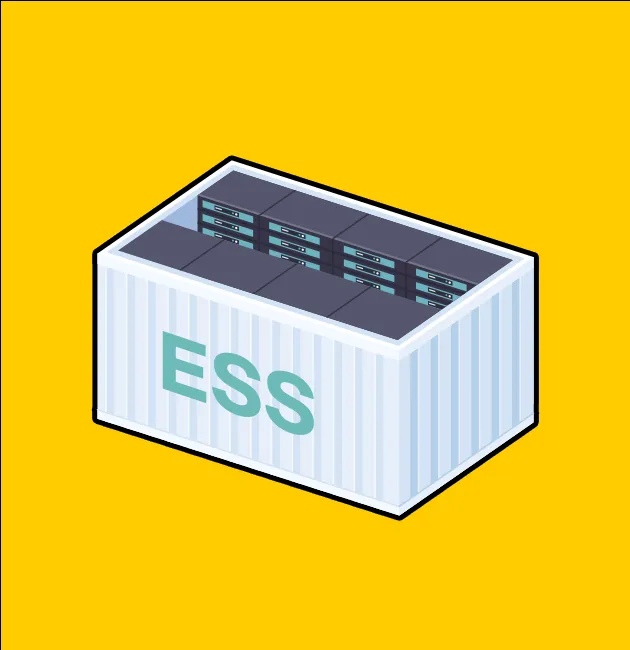
Energy obtained through sunlight and wind has the variable of being generated intermittently, so power production is irregular. For this reason, an "ESS (Energy Storage System)"—which stores the electricity produced and supplies it when needed—is necessary.[An ESS that stores wind and solar energy ©LG Energy Solution]Driven by government policy support, ESS saw one wave of an investment boom, but after 2017, more than 50 ESS-related fire incidents occurred domestically, and interest slowed. The causes of the fires were internal battery defects and operational problems in the charging and discharging processes. Due to the successive fire accidents, the number of ESS installations in Korea also plunged. But as a result of efforts to strengthen safety, the ESS battery market is rising again.Companies Responding to Tariffs by Entering the U.S. ESS MarketMany of our companies are entering the U.S. market as they seek countermeasures to the tariff problem. "LG Energy Solution" recently signed a partnership with "Delta Electronics," a global energy-management company in the U.S., to supply residential ESS batteries from 2025 to 2030. LG Energy Solution has already supplied batteries to "Vistra Energy Corp.," a U.S. power-generation company that operates "Moss Landing," the world's largest ESS facility. In addition, it plans to operate—from 2025—the plants it is currently building to produce ESS batteries in states such as Arizona and Michigan."Hanwha Qcells," a comprehensive renewable-energy solutions company, is also in an important position in the U.S. renewable-energy market. Hanwha Qcells is currently pushing the "Atlas ESS Project," which is creating a standalone ESS complex of 4 gigawatt-hours (GWh)—the world's largest on a single-site basis—in Arizona, and it is set for completion this June. It is also carrying out a renewable-energy-supply project for the U.S. IT company "Meta," building an ESS complex in Borrego Springs, California. Such advances by our companies onto the American continent are expected to show the utility of responding to rising ESS demand within the U.S. and of reducing tariffs.Our Companies Handling the Growing Demand of the European ESS MarketAt this point, along with companies advancing into North America, companies advancing into Europe must also be examined. Europe is interested in energy issues in the aftermath of the Russia-Ukraine war. Against this backdrop, the use of renewable energy and the ESS to store it have clearly emerged as important industries. "Samsung SDI" operates a battery production facility in Hungary. On top of this, it is investing about 1 trillion won more to expand its production scale. Hungary in particular is a supply-hub region for ESS within Europe, and "SK On (formerly SK Innovation)" also operates two production facilities in Hungary. In Hungary, our companies provide high-quality ESS equipment and are meeting European market demand—expanding market share with products of guaranteed safety and efficiency.Recently, LG Energy Solution has begun business in earnest not only in the U.S. but also in Europe. On the 24th of last month, LG Energy Solution met the good news of being selected as a major partner in a large-scale ESS project pushed by "PGE (Polish Energy Group, Poland's state-owned power corporation)." With this, our companies have become able to greatly contribute to expanding the ESS supply chain in the European market. In tandem with the trend of the expanding renewable-energy market in Europe, interest and investment in ESS are expected to continue going forward.Strengthening Safety and Technological InnovationThat ESS plants are newly built or expanded in places such as the U.S. and Europe is welcome news, but the news that our ESS technology is evolving into advanced technology with heightened safety is also encouraging."LS Electric" developed an "all-in-one ESS platform" based on real-time data analysis to strengthen the safety of ESS. It monitors the state of the ESS in real time and can prevent fire accidents by detecting abnormal temperature rises or voltage and current anomalies. In particular, using AI algorithms, it optimizes the timing of charging and discharging and extends battery life, maximizing safety."Samsung SDI" also developed a system that directly sprays a fire-suppression agent when a fire occurs inside a battery module, immediately blocking the spread of fire, and "Hanwha Aerospace" and "SK Enmove" even developed the world's first non-flammable ESS. In Hanwha Aerospace's case in particular, it has the advantage of being usable in various industrial fields, such as ESS for marine vessels.Because ESS is a core technology that lowers dependence on fossil fuels, it is both an essential solution for the carbon-neutral era and a core technology leading the renewable-energy era. Now the fruits of the technology-development efforts our companies have poured into the safety problem are also appearing. For the time being, we can expect to watch our country's ESS technology establish itself as an efficient energy-storage solution and be active in the global market. by Editor N

In this era of climate crisis, marine ecosystems are drawing attention as the last relief pitcher that will save the Earth. The sea's carbon sinks—called "blue carbon," such as seaweeds, mangrove forests, halophytes, eelgrass, salt marshes, and tidal flats—boast a carbon-absorption and storage capacity 50 times faster than that of land forests.Jeju Island is rich in these blue-carbon resources. The "Knowledge Exchange on Blue Carbon" event, organized by the "World Bank," is held in Seoul and Jeju from March 31 to April 4. Jeju's resource-management activities have recently drawn attention in connection with responding to climate change, and during the event Jeju Island introduces on-site blue-carbon policy locations within Jeju—such as the marine-forest creation site off the coast of Jongdal-ri in Gujwa-eup, wind-power complexes, and the carbon-reduction facilities and solar facilities of Jeju Port. Kang Ae-suk, director-general of Jeju's Climate and Environment Bureau, said, "This event is a meaningful occasion in which the international value of Jeju Island's blue-carbon policy is recognized."[The "Carbon-Eating" Sea — the Potential of Blue Carbon ⓒESG.ONL]The environmental organization "Friends of Jeju's Nature" raised its voice, saying that along with Jeju's marine-forest creation and port carbon-reduction facilities, attention should also be paid to "measures to conserve existing halophytes." It also stressed that a policy to conserve "coastal dunes"—one of the important forms of blue carbon—is as important a strategy as growing halophytes, urging the importance of balanced ecological formation.Currently, there are not many blue-carbon-related social enterprises active in Korea. But blue-carbon-related technology is evaluated as having great growth potential, and many companies are interested. In 2024, the Hyundai Motor Chung Mong-koo Foundation invested in a blue-carbon climate-tech startup. "Blue Carbon," an eco-friendly climate-tech company founded by Professor Hwang Dong-soo of Keimyung University and others, holds source technology for carbon capture. With Hyundai Motor's support, Blue Carbon received an innovation award last year at "CES (Consumer Electronics Show)," the world's largest IT expo. GS Caltex carries out blue-carbon creation activities at the Ramsar wetland in Buan-gun, North Jeolla Province, and Kia is also cooperating with the Ministry of Oceans and Fisheries to restore domestic tidal-flat vegetation. Companies such as Hyosung, POSCO, and KB Kookmin Bank are also lending strength to eelgrass-propagation projects—eelgrass being a plant effective for spreading marine forests.In responding to global climate change, we should pay attention to the growth and contribution of Korea's blue-carbon-related climate-tech companies. by Editor N

Korea has suffered serious human and economic damage from the worst wildfires in its history. The cause of the wildfires appears to be human error. Large wildfires also occurred in Japan, Thailand, and Chile. In the U.S., wildfires broke out in North Carolina, causing damage over an area eight times that of Yeouido. In this way, wildfire damage continued around the world. As reasons this Korean wildfire spread, environmental factors are also drawing attention—such as abnormal high temperatures due to the climate crisis, extremely dry weather, and typhoon-class winds generated by abnormal atmospheric-pressure patterns.[Wildfires directly linked to the climate crisis ©Yonhap News]This Korean wildfire began on March 21 in Uiseong-gun, North Gyeongsang Province, due to a grave-visitor's mistake. In Gimhae, South Gyeongsang Province, too, a fire spread during burning after grave maintenance. In Sancheong, North Gyeongsang Province, an ember caused by a brush cutter spread into a large fire. The causes are various, but the problem is why the wildfires grew so large. Given our topography, which originally has many mountains, once a fire breaks out, it is difficult for firefighting crews to approach. Also, with much wind, the "spot-fire" phenomenon—embers riding the wind and spreading far—commonly occurs.But these are unchanging conditions. If there is something that has changed among our environmental conditions, it is that abnormal high temperatures have arisen in spring. Currently, Korea's temperatures are about 4.5 to 10 degrees higher than the annual average temperature of the 1990s. Not only in Korea, but the average temperature of major wildfire-damaged areas across East Asia showed figures about 2 degrees higher on average compared with recent decades.The nonprofit climate-change research organization "Climate Central," in a report released on March 26, forecast that human-caused climate change will continue to increase wildfire risk in the future. In particular, viewed through the "Climate Shift Index (CSI)"—an indicator that shows the degree of climate change—high-temperature phenomena during the current wildfire-damage period occurred about five times more than before.Not only abnormal high temperatures, but drought that continued from last winter—that is, dry weather and insufficient rainfall—is also cited as a cause of the large wildfires. The Yeongnam region had rainfall of only about 50% of an average year, and the minimum humidity was 14% in Sancheong and 17% in Uiseong, North Gyeongsang—conditions in which fire spreads easily. Amid this, the hot, dry winds that blew from the Taebaek and Sobaek Mountain ranges also made fire suppression difficult.According to research by the "National Institute of Forest Science," if the temperature rises 1.5 degrees, the wildfire weather index increases by 8.6%, and if it rises 2 degrees, it climbs 13.5%. Large wildfires, which in the past were concentrated in Gangwon Province in April, now occur nationwide. Now is the time not only for much investment in wildfire prevention and the expansion of specialized personnel but also for long-term climate-change-mitigation efforts to be carried out together. Only then will it be possible to protect precious lives and forests. by Editor N