Loading Data
Please wait a moment...
Update Cal.
2026.08
03
Mon
04
Tue
05
Wed
06
Thu
07
Fri
08
Sat
09
Sun
Update Calendar
2026.08
01
Sat
02
Sun
03
Mon
04
Tue
05
Wed
06
Thu
07
Fri
08
Sat
09
Sun
10
Mon
11
Tue
12
Wed
13
Thu
14
Fri

Loading Data
Please wait a moment...
Evening ESG news and briefings to wrap up your day.

2024, Which Became a Major Turning Point for Climate ChangeThe "World Meteorological Organization (WMO)" announced on March 19 that in 2024 the global average surface temperature rose 1.55°C (±0.13°C) above the pre-industrial average from 1850 to 1900. With this, 2024 was officially confirmed as the first year in which the global average temperature exceeded 1.5°C above pre-industrial levels. 2024 was the warmest year in the WMO's 175 years of observational records, and can be seen as a major turning point for climate change. The comprehensive analysis of international data from six institutions—the "European Centre for Medium-Range Weather Forecasts (ECMWF)," the "Japan Meteorological Agency," the "U.S. National Aeronautics and Space Administration (NASA)," the "U.S. National Oceanic and Atmospheric Administration (NOAA)," the "UK Met Office" together with the "University of East Anglia," and "Berkeley Earth," a climate-science institution in California—also reported the fact of exceeding 1.5°C.[2024 Confirmed as the First Year to Cross 1.5°C, the Last Line of Defense Against Climate Change ⓒESG.ONL]Achieving the Paris Agreement's Goal Has Not Yet FailedThrough the 2015 Paris Agreement, the world set "keeping the average temperature rise below 1.5°C" as a long-term goal. But humanity—having piled up the record of the hottest decade ever from 2015 to 2024—saw 2024 achieve the Earth's highest temperature. That said, because the Paris Agreement's goal refers to a 20-year average temperature, it is difficult to conclude that the goal has failed based on a single year's exceedance in 2024 alone. The "World Meteorological Organization" estimated that, based on the current situation, long-term global warming will lead to a temperature increase of between 1.34 and 1.41°C. Whether it exceeds 1.5°C or not, as long as temperatures rise, ecosystem changes such as biodiversity destruction, glacier reduction, and threats to polar ecosystems are expected to continue to progress. There is also an observation that the extreme weather anomalies and natural disasters that have astonished the world—great floods, wildfires, heat waves, droughts, and the like—will likewise continue. Scientists' warnings about the problem of carbon-dioxide concentration, which is being maintained at a high level in the atmosphere, also continue."Celeste Saulo, Secretary-General of the World Meteorological Organization," said, "Climate history is unfolding before our eyes," also emphasizing the need to strengthen early-warning systems. "UN Secretary-General Antonio Guterres" expressed the view that "limiting the level of the Earth's temperature rise to below 1.5°C (presented as a long-term goal) is still possible, and the whole world must strive through the '2035 National Climate Plans (NDCs; Nationally Determined Contributions),' which are scheduled to be held in 2025." Unless the whole world shows the will to achieve the long-term goal of reducing fossil-fuel emissions, it appears that stopping global warming will be difficult. Now is the time for the international community to put all its strength into efforts to reduce greenhouse gases through even stronger climate-change-response measures. by Editor N
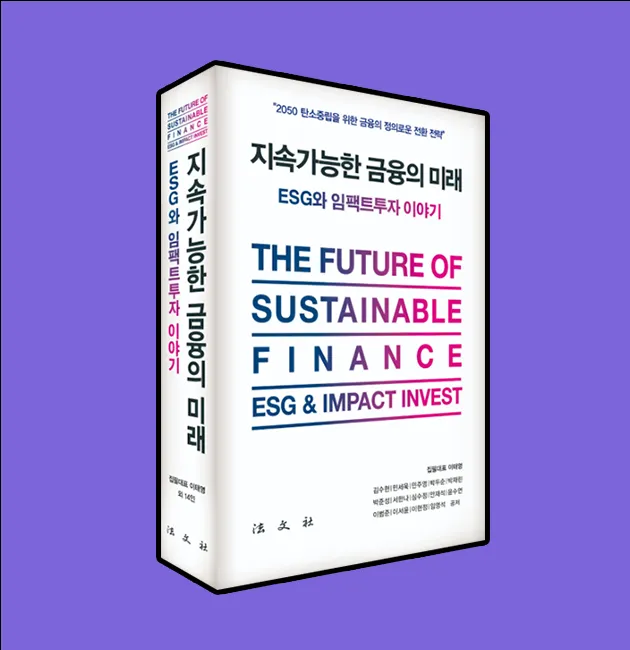
"The Future of Sustainable Finance," a new book dealing with the story of ESG and impact investing, is a book that offers guidelines to corporate ESG officers and green investors preparing to respond to the 2050 net-zero goal."The Future of Sustainable Finance," written by 15 authors including Lee Tae-young, is an up-to-date book covering ESG and finance. The book's appearance—boasting a solid thickness at a vast 672 pages—may feel somewhat hard to approach. Yet this volume was used to faithfully contain information about the investment environment surveyed through ESG-related standards and systems at home and abroad. Compiled in that way, this book has been put together as a resource providing comprehensive and in-depth information to readers interested in sustainable finance and ESG investing.[The Future of Sustainable Finance ⓒESG.ONL]A Guidebook for Sustainable-Finance Practitioners"The Future of Sustainable Finance" substantially contains a wide range of topics—from the basic concepts of ESG investing, such as ESG and impact investing, to the background of sustainable finance's emergence, sustainable-finance systems at home and abroad, and cases of ESG and impact investing. In particular, it helps the reader's understanding by explaining in detail international sustainable-finance systems and policies such as the UN Sustainable Development Goals, the Paris Climate Agreement, the EU's sustainable-finance strategy, and Korea's Framework Act on Carbon Neutrality and Green Growth. It also provides practical knowledge related to our ESG-investment environment by introducing in detail domestic investment cases such as the National Pension Service's ESG investing, the impact-investment firm "Sopoong Ventures," and impact investing through crowdfunding. In the last part of the book, it also presents future prospects for sustainable finance, such as the "Carbon Border Adjustment Mechanism (CBAM)," the future of the ESG-disclosure system, and changes in climate risk and financial supervision.The book's authors stated, "We wrote this book in the hope that it would help policymakers and officials at government agencies and financial authorities—who strive to solve the climate-crisis problem and settle sustainable finance—in preparing policy, and financial institutions in implementing sustainable-finance policy." Actually written based on the content of the "Sustainable Finance and Impact Investing" course at Yonsei University's Graduate School of Law, this book provides an expert-level understanding of ESG and sustainable finance, making it sufficient to use as a guidebook for responding to the global ESG-regulatory trend on the front lines of practice. We recommend drawing out "The Future of Sustainable Finance" by reading one chapter at a time, as if taking a class. by Editor N

Korea's climate-tech industry is growing rapidly. Along with it, government support is also gradually strengthening. But as several problems with climate-tech investment have been raised, there are also voices of awakening that it is time to re-examine the situation.Is It Time to Re-Examine Korea's Climate-Tech Investment?[Shall We Re-Examine Korea's "Climate-Tech Investment"? ⓒESG.ONL]The Government's Vision of Fostering 10 Climate-Tech UnicornsOur govErnment set a goal of investing 450 trillion won in Green Finance by 2030 and fostering 10 climate-tech unicorn companies. It plans to invest 145 trillion won through public-private cooperation, but currently there are no climate-tech unicorn companies in Korea. With the total number of unicorn companies at 15, the question is being raised of whether the goal of fostering 10 from climate-tech companies alone is excessive optimism.Startup Alliance pointed out the problems of this government policy in a recently released report.As of February 2025, a total of 272 climate-tech companies are active in Korea. Among these, "eco-tech" (25.7%) and "food-tech" (27.6%) account for more than half, because they are fields where small-capital startups are possible compared with other fields. On the other hand, "geo-tech" (11.4%)—related to carbon observation and carbon-emission rights—shows a relatively small share. "Geo-tech" has a comparatively small share of companies in that domestic regulatory barriers trip it up first, it requires advanced technology and infrastructure, and it is hard to start without large-scale investment.Currently, investment in climate tech is concentrated in clean-tech companies related to renewable energy and carbon-tech companies related to carbon-capture technology. This is because the technologies have already entered the commercialization stage, so returns relative to investment are clear. Solar, wind, energy-storage systems, and the like have high market growth potential, and global initiatives such as RE100 are stimulating this market. Since 68% of global climate-tech companies belong to the clean-tech and carbon-tech fields, this concentration of investment can be seen not as Korea's problem alone but as a global trend.Although eco-tech and food-tech are numerous in company count, they are being pushed out of investment priority. Currently, the domestic average cumulative investment amount is about 25 billion won for clean-tech and about 15.8 billion won for carbon-tech. On the other hand, eco-tech is about 7.5 billion won, food-tech about 7.1 billion won, and geo-tech only about 2.5 billion won. This shows that a clean-tech- and carbon-tech-centered investment strategy is relatively suppressing investment in eco-tech and food-tech.The Need for Consistency in Government Policy and a Long-Term VisionLooking at the climate-tech-fostering cases of the U.S. and China, one can see that a long-term roadmap and consistent policy are important. The U.S. achieved large-scale investment in the climate-tech field through powerful government support programs such as the "Inflation Reduction Act (IRA)." China, given its political characteristics, grew competitive companies through investment with policy consistency and a long-term vision. From these cases, Korea can draw the lesson that it should choose a more long-term plan and a way of concentrating investment first on specialized technologies.Yoon Min-hye, senior researcher at Startup Alliance, emphasized, "Because the climate-tech field requires long-term investment and stable market formation for technology development and commercialization, creating a sustainable ecosystem and support strategy should take priority over simple numerical targets." For this reason, it is important to invest in the climate-tech field with a long-term outlook and form the market. In particular, since Korea is a country that shows strength in food-tech, biased investment even within climate tech should be avoided.In conclusion, Korea's climate-tech industry needs the fostering of innovative companies that can substantially contribute to responding to climate change, rather than simply fostering unicorn companies. The government must strive to resolve market uncertainty and must reorganize its support policy by improving regulations and overcoming the limits of individual companies. Through this, it will be possible to overcome the climate crisis and build a world where we can all live well together. by Editor N

The relationship between generative AI and ESG is drawing ever greater attention as the technological progress of recent years dovetails with interest in the sustainability of technology. Now that generative AI—which sparks innovation across industries and offers opportunity and challenge at the same time—has settled into our daily lives, it is a good time to question whether we may enjoy AI technology without limit simply because it is convenient.Carbon Emission vs. Carbon Reduction: the Two-Sidedness of AI Technology's Effects[What Is the Relationship Between Generative AI and ESG? ⓒESG.ONL]Viewed from the environmental side, one cannot ignore the criticism that generative AI is burdening the environment with its enormous power consumption. To train AI models, countless servers must be run at data centers. Because of the problem of increased carbon emissions in this process, the advancement of AI technology becomes entangled with environmental issues. Recently, a Chinese AI model called "DeepSeek" drew attention by touting low cost and high efficiency. Even so, data-center power use across the AI industry is surging, so it is not easy for the environmental problem to come off the chopping block. In particular, when electricity is drawn from regions highly dependent on fossil fuels, the carbon footprint inevitably grows larger.On the other hand, news is also heard at the same time that generative AI is contributing to establishing companies' carbon-reduction strategies by analyzing greenhouse-gas emission sources. AI can also contribute to the planning and design of sustainable products. Therefore, it is not right to lean only toward the negative thought that generative AI simply harms the environment.Privacy Controversy and the Possibility of Solving Social Problems CoexistOn the social side, data-privacy and ethical problems remain. An AI model like DeepSeek—which drew hot attention on a global scale—became embroiled in controversy over suspicions that it stores user data on Chinese servers, and in Korea there was even an incident in which access to DeepSeek was blocked. Such cases are also problems directly linked to consumer trust in AI technology and social responsibility. In addition, AI's learning of erroneous data can produce biased results such as racial or gender discrimination, and advanced deepfake technology carries the risk of leading to crime. Because social responsibility at the ESG level is also connected to protecting personal information and fair use of technology, there is a need to pay attention to such problems of AI technology.There are also cases opposite to the worrisome ones. Projects like Microsoft's "AI for Good" continuously show AI's positive social impact by using AI to contribute to disease diagnosis, the improvement of public health, and the advancement of human rights.Contributing to Strengthening Information Transparency... Unclear Accountability and Data-Security Problems Are HomeworkViewed from the governance side, AI can contribute to raising corporate transparency in ways such as monitoring regulatory compliance in real time. Of course, the risk of posing risks to governance due to data-security problems coexists. To prevent negative outcomes, global companies have begun to introduce new standards for digital ESG and seek transparent modes of operation suited to the AI era.In this way, the topic of generative AI and ESG has become an inseparable relationship. From the environmental side, there is the two-sidedness of the burden of carbon emissions and improved efficiency; socially, it carries both privacy controversy and the possibility of solving social problems at the same time; and in governance, there is the possibility of it acting as a tool that strengthens ethics and transparency. Considering the ESG-level impacts during AI development and use is not merely jumping on a trend but an essential task to consider. We must watch how the producers and consumers of AI technology strike this balance going forward. by Editor N

As rising gold prices dovetail with concerns over resource shortages, companies' movements are also becoming active. Let us take a look at the companies building attractive "urban mining"—which can aim for environmental sustainability and economic benefit at the same time.[Obtaining gold from waste resources ©Gettyimagesbank]With Rising Gold Prices, Interest in Urban Mining Also SurgesAs gold prices have recently soared, urban mining is drawing attention. Urban mining is the recycling of valuable resources hidden inside electronic products or waste discarded in cities by digging them out again. For example, old smartphones, computers, and other home appliances hide expensive metals such as gold, silver, and copper. If waste is thrown away, it becomes garbage and leads to resource waste and environmental pollution, but urban mining—extracting resources from waste as if mining ore from a mine—is also an important asset from the environmental side. The reason we must pay attention to urban mining now is the forecast that by 2100 the world's natural-resource reserves will also hit bottom.Famous Overseas Urban-Mining Companies... Umicore, Li-Cycle, Dowa HoldingsBelgium's "Umicore" is a world-leading company in the urban-mining field. This company recovers precious and rare metals such as gold, cobalt, and lithium from waste electronics and batteries. Based on its own refining technology, it disassembles mobile phones and batteries to extract even the rare metals that other companies miss. With the continued rise in gold prices, more than about 30% of Umicore's revenue has been generated from urban mining in 2025. In the European market, where environmental regulation is strong, Umicore is building its competitiveness with a recycling process that reduces carbon emissions, and it operates in 11 countries worldwide, including Korea.Let us also pay attention to Canada's "Li-Cycle." This company is especially specialized in waste-battery recycling and, along with rising gold prices, is leading the North American urban-mining market by focusing on recovering metals contained in batteries, such as gold, nickel, and cobalt. LG Chem signed a strategic partnership with this company, and LG Energy Solution even selected Li-Cycle as its battery-recycling partner for North America. As gold prices rise, gold recovery from battery recycling is also becoming a secondary revenue source, and Li-Cycle is broadening its market share by crushing waste batteries with eco-friendly technology and improving the process of extracting metals.Japan's "Dowa Holdings" cannot be left out either. Japan is where the concept of urban mining began, and Dowa Holdings—together with subsidiaries such as "Dowa Eco-System" and "Dowa Metals & Mining"—holds technology to recover 22 kinds of metals, such as gold, silver, and germanium, from waste electronics. As the economics of recycled gold grew with rising gold prices, Dowa Holdings is investing in raising process efficiency. In particular, it is working to secure raw materials by strengthening its waste-appliance collection network in the Asian market, and its operating profit has more than tripled since the 2020s, fully reaping the effects of rising gold prices.The Future of Urban Mining, a Sustainable IndustryThe European and North American companies leading the urban-mining industry, which is thus in the spotlight, are strengthening their recycled-gold supply chains in tandem with carbon-emission-reduction goals. Asian companies, meanwhile, are broadening the market by leading with their technological capabilities and networks. Experts forecast that the price of gold, a rare resource, will continue to rise for the time being. The things we use every day are, in fact, like small mines. Urban mining is a means of saving resources by making good use of this, and a smart method that also protects the environment instead of traditional mining. Such urban mining is expected to continue growing beyond a mere trend into an essential, sustainable industry. by Editor N
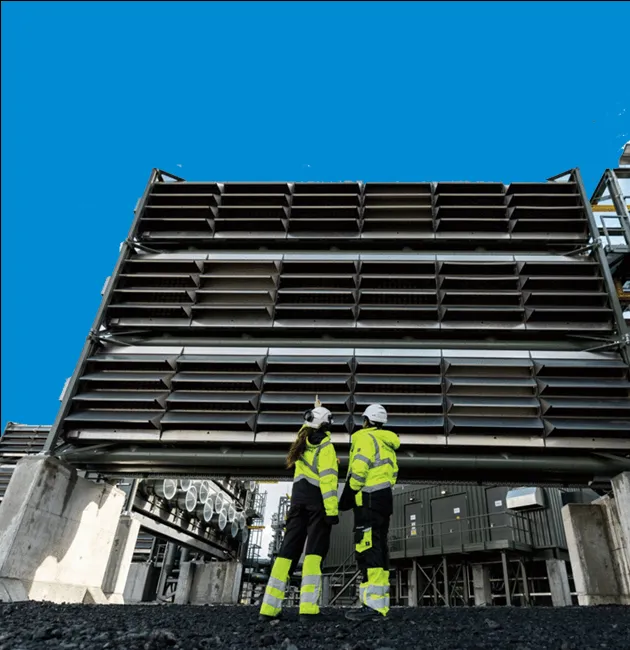
"Mammoth," which the Swiss climate-tech company "Climeworks" put into operation on the 9th, is the world's largest carbon-capture-and-storage (DAC+S) plant. Mammoth, which began operation in Hellisheiði, Iceland, can store 36,000 tons of carbon dioxide a year at a depth of 700 meters underground. For this reason, Mammoth will serve as an important milestone in Climeworks' roadmap of carbon-capture-and-storage facilities—megaton capacity by 2030 and gigaton capacity by 2050, which the company sets as its goal.[The carbon-capture-and-storage principle of a Climeworks DAC+S facility ©Climeworks]Mammoth boasts a scale 10 times larger than "Orca," Climeworks' carbon-capture-and-storage plant that Microsoft previously invested in. This facility implements DAC+S technology (Direct Air Capture and Storage)—one of the technologies for removing carbon from the air. DAC technology separates only carbon dioxide from air drawn in by huge fans and then stores it underground or reuses it. However, the cost is high, the energy consumed for carbon capture is also large, and the effect of removing carbon at a meaningful level has not been proven, so commercialization needs time.Through Mammoth, Climeworks aims to make the technology a reality by lowering the cost of carbon capture and storage per ton to 300–350 dollars by 2030 and to 100 dollars around 2050. It also explains that, when operating Mammoth, it strives to minimize unnecessary energy waste by using Iceland's renewable, clean geothermal energy.The carbon credits generated when Mammoth stores carbon underground are taken by companies that trade with Climeworks, such as Microsoft. The carbon-emissions-trading system is a policy created to limit greenhouse gases within an emissions range for companies allocated emission rights. A company that exceeds the standard must purchase carbon credits from outside, and a company that emits fewer greenhouse gases than the standard can sell its credits. by Editor N
[An image of Ulsan City's hydrogen-electric tram ©Ulsan City]Last week, 17 cities and provinces nationwide, including Seoul, each announced climate-crisis-response policies. Seoul stated that it would disclose the greenhouse-gas emissions of private buildings in 2026, and local governments submitted their First City/Provincial Basic Plan for Carbon Neutrality and Green Growth to the Ministry of Environment. They are drawing attention for having taken up the climate-crisis response through policy, but opinions continue that these policies are nothing more than a guideline role and have no policy effectiveness.Seoul is implementing a "low-carbon building certification" policy by introducing LEED (Leadership in Energy & Environmental Design), an eco-friendly, low-carbon evaluation and certification system. On the grounds that 70% of Seoul's greenhouse-gas emissions occur in the building sector, it is pushing a project for 1 million low-carbon buildings and has also set out to introduce a total-cap system on building greenhouse gases. Representative LEED-certified buildings are Seoul's Gangnam Finance Center, Yeouido IFC, and Jamsil Lotte Tower. However, criticism follows that, without enforceability, it does not help actual greenhouse-gas-emission reduction. It has significance in being the first in Korea to set out to measure the total energy of private buildings, but the view is that it does not help actual reduction.The U.S., which is actively taking up the climate-crisis response, has run the "Energy Star" system, which evaluates buildings' energy use, since the 1990s. It is a system for voluntarily measuring energy use, but New York City and Seattle are moving quickly for actual greenhouse-gas-emission reduction.Under the Climate Mobilization Act enacted in 2019, New York City has been imposing fines from this year to reduce greenhouse gases emitted from mid- to large-sized buildings in New York by 2050. If a building's energy-efficiency grade is not submitted within the deadline, it is charged $1,250; if a report is not submitted within the deadline, $500; and depending on conditions, a fine of up to $2,000 per year is imposed. The fine system that Seattle will apply from 2031 carries a bit more enforceability. Buildings exceeding the greenhouse-gas-emissions standard are fined up to $10 per 0.1 square meter, depending on building type. Under alternative-payment rules, one may have to pay $190 per MTCO2e (million tons of carbon-dioxide equivalent).[Examples of region-specific projects in the First Basic Plan for Carbon Neutrality and Green Growth ©Ministry of Environment]The First Basic Plan for Carbon Neutrality that the 17 local governments submitted to the Ministry of Environment is likewise evaluated as a plan lacking in concreteness and sincerity. This is because it appeared to focus only on region-specific projects instead of connecting energy sectors—such as district heating and cooling, which are effective for actual energy-use reduction. Besides the Seoul case, the basic plan contains content such as Daegu planting 60 million trees by 2026 and Ulsan newly establishing two tram lines operated by hydrogen-electric power by 2032. A skeptical view follows that, unlike the reduction targets set, it presents plans that still remain at the level of specifics, so it will have no effect on actual reduction.This basic-plan submission was carried out according to nationwide local-government plans aligned with the national target of the Ministry of Environment reducing greenhouse-gas emissions by 40% compared with 2018 by 2030. Each local government, after considering on-site conditions and reflecting residents' opinions, prepared the basic-plan action guidelines through deliberation by the local Carbon Neutrality and Green Growth Committee. The Ministry of Environment is known to plan to report the analysis of the local governments' basic plans to the presidential "2050 Carbon Neutrality and Green Growth Commission" next month. by Editor N

Humanity's carbon footprint is relentless. Even by burning our own dead bodies, we leave carbon dioxide in the atmosphere as we depart. Cremation, one of the methods of handling the deceased, is on a rising trend worldwide. In particular, in the East Asian countries with small national territories—Korea, Japan, and Taiwan—the cremation rate is said to exceed 90%. Japan's is close to nearly 100%. It is true that cremation is an alternative to cramped territory and complicated burial procedures. The words "When I die, just cremate me" sound almost like a thoughtful gesture to do less harm to the world and to those around us.But in reality, that is not so for the Earth. Cremating a single body generates about 160 kg of carbon dioxide. The number of deaths in Korea in 2023 was 352,700. If we estimate that 90% of these were cremated, the carbon dioxide generated by cremation procedures in 2023 comes to about 50,000 tons (CO2eq). This is similar to the amount of carbon dioxide emitted in one year by about 10,000 internal-combustion vehicles. Cremation, which had seemed like the solution to a problem, has become a problem itself as the climate crisis arrives. Just like death with dignity, which has already settled in as an active social discussion, it is worth diligently pondering the environmental impact when choosing the process and method of one's own death.[The interment facility of "Recompose," a U.S.-based company that turns a body into soil in 30 days ©Recompose]A Way to Return to the SoilIn May 2019, in the U.S. state of Washington, a "Human Composting" bill passed. Literally, it made it possible to turn a body into compost. Until that bill passed, burying or cremating a body were the only legal methods of handling it. A company called "Recompose" made a great effort in getting the law passed. Recompose, taking a hint from turning livestock carcasses into compost, succeeded in research on turning bodies into soil, and afterward, through meetings and discussions with policymakers, brought about the bill's introduction. After the bill passed, companies providing funeral services similar to Recompose sprang up one by one. And Colorado, Oregon, Vermont, and New York passed bills in succession.A Way to Return to WaterThere is also the "Alkaline Hydrolysis" method, which treats a body in an alkaline solution at high temperature and high pressure. When the body's decomposition ends, bones and a sterile liquid containing sugars, salts, and the like remain. Because the liquid is harmless to the environment, sewage treatment is possible, and the remains can be made into bone ash and returned to the family, the same as after cremation. This method—also called "Water Cremation"—is evaluated as using far less energy than burial or cremation. The U.S. state of Minnesota first passed a bill in 2003, and now water cremation is legally possible in more than 20 states. Outside the U.S., some Anglophone countries, such as the UK and four Canadian provinces, carry out water cremation.Implementation Is Possible, but Practice Is Not YetAlthough the methods of handling bodies are thus gradually diversifying, worldwide the share of burial or cremation is still overwhelmingly high. The same is true even in regions where a bill has passed and implementation is possible. This is because it is still blocked by the walls of perception and custom. Burial is a time-honored method that humanity has practiced since 100,000 years ago. Cremation has a short history by comparison, but its share is gradually rising. Religious reasons are also large. Both Christianity and Islam have carried on the custom of burying bodies in the ground, and Buddhism has a cremation culture. When the human-composting bill passed in Washington State, the Catholic community even sent a letter to the Senate with the content that it was "a method lacking respect for the body." But whether confining a body in a hard-to-decompose coffin and burying it in the ground is a more respectful act toward the body than returning to a handful of soil and becoming nourishment for nature is a matter to think through and weigh. by Editor N