Loading Data
Please wait a moment...
Update Cal.
2026.08
03
Mon
04
Tue
05
Wed
06
Thu
07
Fri
08
Sat
09
Sun
Update Calendar
2026.08
01
Sat
02
Sun
03
Mon
04
Tue
05
Wed
06
Thu
07
Fri
08
Sat
09
Sun
10
Mon
11
Tue
12
Wed
13
Thu
14
Fri

Loading Data
Please wait a moment...
Morning features and interviews. A morning story over a cup.
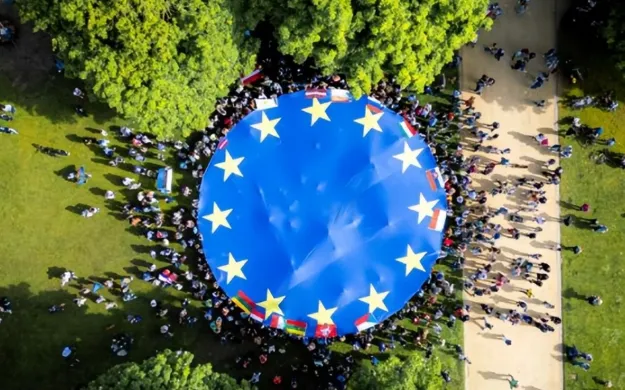
Due to the so-called "anti-ESG keynote" of the Trump second administration, the global ESG environment is greatly changing in 2025. Looking at the impact of this change across Europe and at the ESG policies of leading European countries and companies, we predict the future direction of European ESG policy.[People of member states holding the EU flag together © EU]Europe's ESG Is an Essential for Tangible ProfitWhy is Europe so serious about ESG? After the Industrial Revolution that began in the UK, Europe experienced serious environmental problems and came to recognize the importance of sustainable development relatively quickly. Because of this, Europe's early environmental policy established itself not as the realization of a mere ideal but as an essential strategy for tangible profit. Europe designated the environment as an object of legal-level protection. On this basis, the idea that acts threatening the environment need "more deterrent" punishment for effective environmental protection took hold among EU member states.The active investment in eco-friendly companies as the perception spread that companies practicing ESG succeed managerially and financially is also in line with this background. It is naturally the reason European large and small companies alike cannot help but attend to ESG. Europe, judging that environmental protection and solving structural social problems are a real profit, also premises this on the international-relations side and is pursuing the European Green Deal, aiming to become a net-zero greenhouse-gas emitter by 2050.The EU, Divided Over Trump's Abolition of ESG RegulationThe EU anticipated the possibility of trade conflict even before Trump's reinauguration. Now the EU faces a difficult choice. It is not to the extent of scrapping existing ESG policies on the grounds of the US policy change, but for the industrial competitiveness of EU countries, it has begun to consider loosening corporate regulation or delaying the timing of regulatory application. But EU countries are offering different opinions on easing the Corporate Sustainability Reporting Directive (CSRD).The CSRD stipulates a due-diligence-obligation law under which companies check human-rights and environmental issues in the supply chain. Spain requested that the EU not ease this obligation. Spain's Minister for the Environment, "Sara Aagesen," argued in writing, "Let us support the values and priorities of the European Union across borders and set an example of leadership." Italy also urged the EU not to delay the CSRD, stating that there are tens of thousands of companies that will report the CSRD this year under the existing regulations. On the other hand, Germany and France are demanding that the EU postpone the CSRD by two years.[A Volkswagen plant using solar energy for carbon neutrality © Volkswagen]Germany, Strengthening ESG with Renewable Energy and Electric CarsGermany has actively pushed CSRD implementation. So, as it stands, from 2025 large companies with 250 or more employees by German standards must begin sustainability reporting. But due to the aftermath of the Trump second administration's policy, Germany is troubled by the risk that US subsidiaries within Germany may resist Europe's environmental standards and cause confusion in industry. Even amid such risk, the German carmaker "Volkswagen" has already introduced energy-efficiency technology and achieved complete carbon neutrality as of January 1 this year. Volkswagen's Ingolstadt plant, which produces 340,000 cars a year, built renewable-energy infrastructure through the use of solar modules. Volkswagen announced a plan to raise the share of electric-vehicle production and establish a battery-recycling plant for eco-friendliness going forward. This is entirely the result of following Germany's existing ESG strategy of reducing carbon emissions. It is worth watching a little more whether the German government's and German companies' ESG strategy plans will meet great change in 2025 due to the US's influence.[The "L'Oréal for the Future" campaign video © L'Oréal]France, Leading on the CSRDFrance is a country paying great attention not only to climate issues but also to society's sustainability. France was the first among EU countries to transpose the CSRD into domestic law. From 2024 already, French large companies began CSRD-related reporting, such as carbon-emission supply-chain reporting. Meanwhile, it was also French companies that offered opinions on the move to simplify corporate environmental regulation by pushing the introduction of the EU Omnibus Simplification Package, which collectively refers to matters such as the EU Taxonomy — the standard classifying whether industrial activity is eco-friendly or not — and corporate sustainability due diligence.The French company "L'Oréal Group," which influences the whole world in the beauty field, also publicly emphasized the need to keep maintaining ESG standards by sending a letter to the EU. L'Oréal plans to use 100% recycled resources in its product packaging by 2030. It also stated that it would further expand hiring for vulnerable groups and women.France has so far led climate action within the EU. Therefore, it is expected to continue showing a leading stride, making balanced efforts toward the environment, society, and governance even amid Trump's anti-ESG policy.The UK, Implementing Its Own ESG RegulationThe UK, which left the European Union, has prepared its own ESG regulation separately from the EU and is maintaining a 2050 carbon-neutrality target. The UK energy company BP is pursuing a "Net Zero strategy" of increasing renewable-energy investment to 5 billion dollars annually by 2025 and reducing the share of oil-and-gas exploration. As a financial hub, the UK also had a plan to introduce a "Green Taxonomy" to clearly define ESG investment while making the "Task Force on Climate-related Financial Disclosures (TCFD)" mandatory for all listed companies this year. In an environment that contrasts with such policy, what choice the UK will make going forward is a matter to watch a little more.2025 ESG, a Challenge for EuropeHong Seung-pyo, an EU foreign attorney at Espée & Lancée based in the EU, predicted that "in the Trump 2.0 era, the conflict between the US's realist international politics and Europe's ESG policy could intensify." The point is that "Europe's ESG policy is based on realist interests and can change flexibly according to indicators such as the economic growth rate." He also explained that Europe, in particular, with the economic pressure from the current war in Ukraine and a deepening defeatist perception due to the absence of cutting-edge technology within Europe, says it is "simplifying" Green Deal regulation but is in reality pushing it at the level of "restructuring."With the launch of the Trump second administration, European countries too face challenges regarding ESG. Amid already-begun trade conflict and shifts in global investment strategy, countries with high export dependence, such as the Netherlands and Germany, are in a situation of having to find new outlets. Changes in the economic environment cannot help but drive changes in the ESG-policy trends that had aimed at a better life and sustainability. How the changed ESG flows of the US and Europe will affect Korea's economy and trade continues in the next installment.ESG.ONL's Three-Line Summary 💡- With the Trump second administration's "anti-ESG" move, Europe faces a situation where it could have difficulty in trade with the US and in attracting global investment.- European countries such as Germany and France are considering easing ESG-related corporate regulation and extending its implementation, but positions within Europe are also divided, with Spain and Italy arguing that existing ESG policy should be maintained. The UK operates its own ESG regulation separately from the EU.- In an environment where the ESG stride is apt to weaken — economic pressure faced by European countries such as the war in Ukraine, and the absence of cutting-edge technology — what choice Europe will make is still a fluid situation to watch.By Editor L
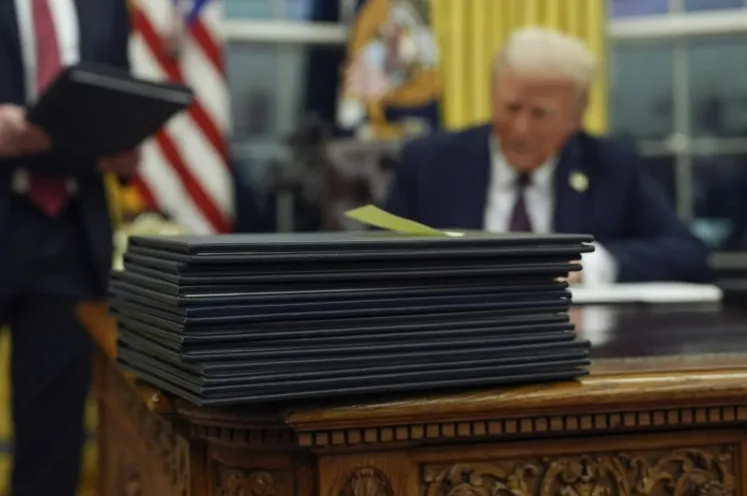
Before the launch of the Trump second administration, it was expected that there would be great change in ESG policy. But can the global effort that agonized over a sustainable future stop here? For those interested in ESG, what are the ESG-related changes of the Trump administration that one must know? How will the ESG policies of Europe and Korea change? ESG.ONL seeks to approach the global ESG environment expected in 2025 by finding answers to these questions through a total of three planned content pieces.[US President Trump signing an executive order abolishing ESG-related policies © AP]Trump 2.0's E: Climate-Change Response Is a Green Scam?The Trump second administration, launched in January 2025, is releasing negative views on ESG day after day. Each time President Trump releases opinions on ESG policy that run counter to the existing flow, a heated debate unfolds worldwide. Calling ESG a "Green New Scam," he puts forward thinking close to that of a climate-crisis disbeliever. Following the Trump second administration's executive orders, the US is withdrawing from the Paris Agreement — the global climate-crisis-response effort — and all agreements and treaties concluded under the UN Framework Convention on Climate Change. President Trump has shown such antipathy toward ESG since his first administration. He also has a history of having already withdrawn from the Paris Agreement, the promise to keep the world's temperature rise within 1.5 degrees.The Meaning of the Trump Second Administration's Re-withdrawal from the Paris AgreementThe Trump second administration has stated that it will run state affairs by prioritizing the interests of the US (America First) over global-level environmental agreements. This is the essential reason for withdrawing from international agreements such as the Paris Agreement. It can also be interpreted as a stepping stone to facilitate the US's fossil-energy business. In fact, he lifted the ban on offshore oil-and-gas drilling, and is showing the ambition to freely develop and use the abundant fossil energy from America's land and sea — natural gas, coal, and more — to make America strong again (MAGA; Make America Great Again) and recover its former glory.Trump 2.0's S: Is DEI (Diversity, Equity, Inclusion) a Leftist Ideology?America is a land where the living victory of the human-rights movement breathes. The "DEI (Diversity, Equity, Inclusion) policy," which began with the US Civil Rights Act of the 1960s, has gradually provided equality of opportunity for socially disadvantaged groups such as women, racial minorities, and people with disabilities. DEI was, over the past decade, a means of expanding human-rights protection widely applied not only to the US government and public institutions but to companies. But President Trump, criticizing DEI as a "leftist ideology," is forcing through its abolition. President Trump, going further, argues that DEI policy violates the US Civil Rights Act and is pressuring companies to reduce policies for sexual minorities as well. Saying, "I will return American society to when it was a merit-based system," he even shut down major diversity-related sites of government departments. The US White House, in a statement, justifies its discriminatory policy, stating that abolishing DEI is implemented "to end illegal preference and discrimination." This atmosphere raises concern about room for the strengthening of discrimination-permitting policies against the socially disadvantaged whom DEI had protected.Signs of Change at US Government Agencies and Global CompaniesThe movements of global companies within the US following Trump's such measures are also not to be taken lightly. Leading US global companies such as Google, Meta, Amazon, and Disney stated that they would restrict socially responsible investment through retirement pensions. Also, those in charge of DEI-policy-related programs within companies are being put on paid leave, and preparations are under way to carry out large-scale restructuring.[Apple CEO Tim Cook, who requested the board vote against abolishing DEI policy © Gettyimagesbank]Trump 2.0's G: The Great Upheaval in Global Governance Trump CausedThe more sensitive issue of international trade, in which the international community is densely intertwined, must (however much one must protect one's own citizens first) inevitably entail understanding and cooperation between nations. President Trump is releasing, one after another, policies that go beyond mutual understanding and cooperation — such as raising tariffs even on US allies and neighboring countries and further raising trade barriers. And these policies are having a great impact on America's global governance and on corporate governance within the US. Global governance refers to the way and system of dealing with global problems that nations, international organizations, multinational companies, non-governmental organizations, and civil society must cooperate to solve. Even if a counterpart country takes retaliatory measures against the US's such high-tariff policy, Trump's position is that he does not care. Therefore, from 2025, an invisible war among nations related to trade tariffs is anticipated.Governance Changes at America's Global IT CompaniesAmerica's large IT companies appear to be all accepting the Trump second administration's measures. "Google" changed its organizational-workforce composition, conscious of Trump's DEI abolition. "Meta" also eliminated its DEI team. "OpenAI" deleted DEI-related items from its website and said that going forward, "for intellectual freedom, even if controversial," ChatGPT will answer with relaxed DEI-related censorship. Meanwhile, unlike such moves by US companies, "Apple" CEO "Tim Cook" also revealed a position supporting DEI policy, before the February annual meeting stating a position asking the board to vote against abolishing the DEI program.Summary of the US ESG Outlook: The US ESG Keynote May Retreat, but the Global Flow Will ContinueAll of the preceding happened within two months of the Trump administration taking office. Overall, the Trump second administration is revising ESG-related policy in a direction that prioritizes US interests above all. Due to the Trump administration's such measures, the worldwide effort that had aimed at establishing global climate norms and building a fair society and reasonable governance has been put at risk of being shaken. But along with the great concern comes an optimistic prediction that the long-term direction of ESG that each country is pursuing will continue to be maintained. Yang Chun-seung, Standing Director of the Korea Sustainability Investing Forum, foresees, "With Trump's return to power, the ESG keynote within the US may retreat, but the ESG flow of the global financial world and Europe will still continue."Let us continue to learn, through the following articles, what change the fallout of the US's changed ESG policy will bring to Europe and Korea, and how we will cope going forward.ESG.ONL's Three-Line Summary 💡- The Trump second administration, following the first, is still negative on ESG-related policy and is pushing an "America First" policy.- With this stance, the Trump administration is inducing "anti-ESG changes" in various fields such as climate-change response, DEI policy, and global governance.- The US's policy change is highly likely to affect the global ESG environment, but there is also a positive outlook that the global ESG direction, including Europe's, will continue.By Editor L