Loading Data
Please wait a moment...
Update Cal.
2026.08
03
Mon
04
Tue
05
Wed
06
Thu
07
Fri
08
Sat
09
Sun
Update Calendar
2026.08
01
Sat
02
Sun
03
Mon
04
Tue
05
Wed
06
Thu
07
Fri
08
Sat
09
Sun
10
Mon
11
Tue
12
Wed
13
Thu
14
Fri

Loading Data
Please wait a moment...
Morning features and interviews. A morning story over a cup.
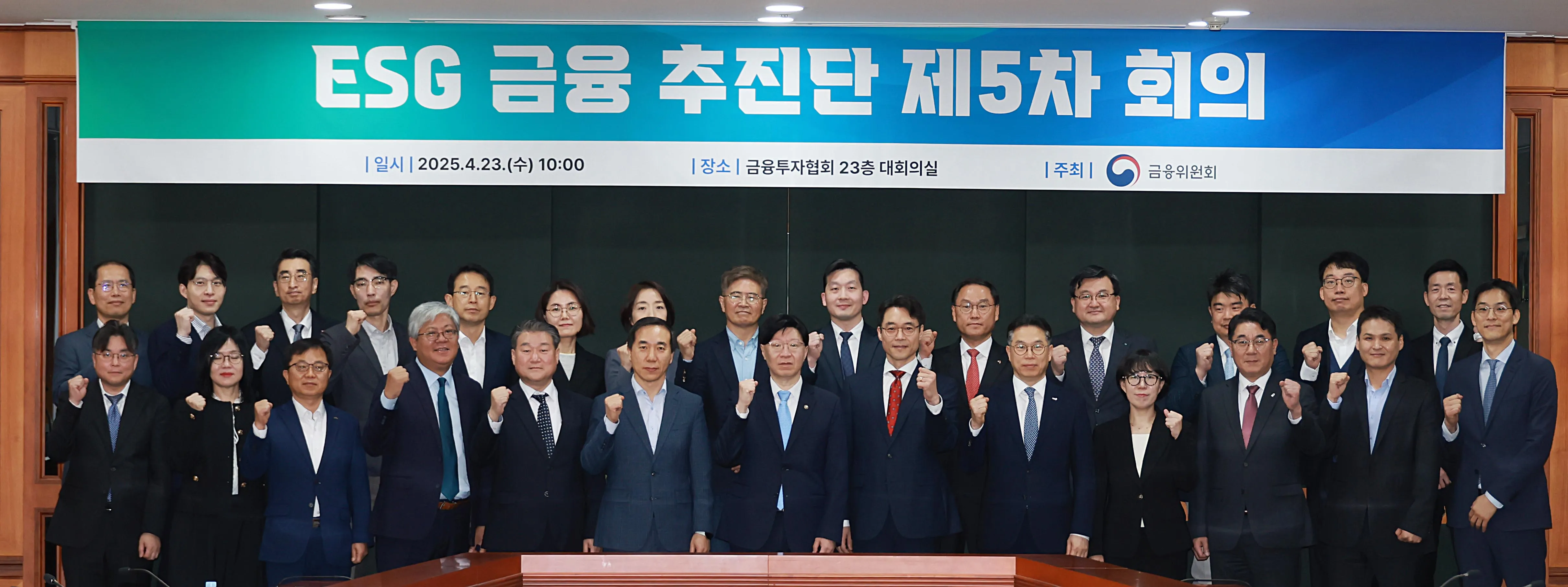
Efforts toward ESG are expected to continue in 2026 for everyone’s sustainable life. In 2025, with a new government taking office, much attention was focused on ESG-related pledges and policies, and overseas, changes in ESG policies suited to new political and economic circumstances also emerged. Let us examine what policies lie ahead in the new year.Mandatory ESG Disclosure: Will It Progress This Year?In 2026, many are focusing their attention on the mandatory disclosure of ESG. ESG disclosure refers to the disclosure by companies of non-financial information such as ESG-related activities and performance. If disclosure becomes mandatory, the currently fragmented ESG evaluation standards will be organized, making it possible not only to respond to global investment standards but also for people to understand the ESG information of many companies and make better consumption and investment decisions. Such mandatory disclosure is essential for promoting the practice of corporate ESG management. South Korea pre-announced phased mandatory disclosure in its 2021 ‘ESG Disclosure Roadmap,’ initially scheduled from 2025, but in October 2023 this was postponed to after 2026. Accordingly, disclosure standards and timelines were expected to be decided in 2025, but at the 5th ESG Financial Promotion Group meeting last April, this was effectively postponed once again. In March 2024, the Korea Sustainability Standards Board (KSSB) under the Korea Accounting Standards Board released a draft disclosure standard following ISSB standards, but this has yet to be finalized.[5th ESG Financial Promotion Group meeting held last April Ⓟ Financial Services Commission]However, as mandatory ESG disclosure is an international trend, substantive discussion is expected to continue this year. From 2025, the EU began mandatory disclosure in earnest under the Corporate Sustainability Reporting Directive (CSRD), and major Asian countries including Singapore, Taiwan, Hong Kong, and Japan have already scheduled or are in the process of mandatory disclosure. With the financial authorities currently reviewing a plan for ‘sequential application starting from listed companies above a certain size from 2026 onward,’ once the KSSB standards are finalized, phased mandatory implementation is highly likely. Plans to expand mandatory disclosure from large KOSPI-listed companies with total assets of KRW 2 trillion or more to all KOSPI-listed companies and large KOSDAQ-listed companies are being discussed in the market. Although it is not ESG disclosure, there is another related information disclosure scheduled to take effect in 2026. The Ministry of Economy and Finance announced the ‘Public Institution ESG Guidelines’ last December. Accordingly, public institutions will be subject to disclosure and evaluation based on standardized ESG criteria including greenhouse gas emissions, safety management, labor-management relations, and board operations. Going beyond simple quantitative indicators, the plan is to disclose the degree of achievement against ESG targets, implementation processes, outcomes, and future plans, with measures to link these to management performance evaluations also being pursued. The disclosure of the Corporate Governance Report — which falls within the G dimension and discloses to shareholders whether companies are abiding by the core principles of governance — will apply to all listed companies on the securities market from 2026. The obligation, which was previously applied to 541 securities market-listed companies, will be expanded to the entire pool of 842.[Public Institution ESG Guidelines Ⓟ Ministry of Economy and Finance]Government Moving Toward K-GXLast November, the ‘2035 Nationally Determined Contribution (NDC)’ and the ‘4th Emissions Trading System (ETS) Allocation Plan’ were confirmed at a Cabinet meeting. Decided through six public hearings between the demands of industry and civil society, South Korea aims to reduce greenhouse gases by 53–61% compared to 2018 levels by 2030. When compared to the targets of the EU, the United States, or Japan, achieving the maximum of 61% would place Korea at a mid-to-upper international level. The ETS, in which the government sets per-company greenhouse gas emission allowances, will be operated based on the 53% reduction standard to ease the burden on companies. Companies that exceed their greenhouse gas emissions must purchase emission allowances, and this measure alleviates that purchase burden. In addition, the government has signaled that it will prepare and present a ‘K-GX (Green Transformation) Strategy’ by the first half of 2026. [Excerpt from the 2026 Ministry of Climate, Energy and Environment Key Work Promotion Plan press release Ⓟ Ministry of Climate, Energy and Environment]Taken together, the NDC and ETS announcements and the Ministry of Climate, Energy and Environment’s 2026 work plan from last December suggest that 2026 will be a year of active amendment and enactment of legislation and establishment of policy plans for K-GX. First, a target has been set to expand renewable energy facilities from the current 34 GW to 100 GW by 2030. This year, a special law will be enacted to vitalize agrivoltaics, and new solar power sites will be sought through pan-governmental collaboration. Wind energy regulations will also be streamlined, and renewable energy development and demonstration will be supported. Furthermore, to assist companies’ transition to decarbonized industries, the processes of high-carbon-emission sectors such as steel and petrochemicals will be improved, and low-carbon technologies will be supported. In the second half of this year, the ‘Carbon Neutral Industry Act’ will be enacted to induce the transition to low-carbon facilities. Beyond this, electric vehicle deployment policies will be expanded, and legal arrangements for the decarbonization of building energy consumption will also proceed. The ‘12th Basic Plan for Electricity Supply and Demand,’ the 2040 ‘Coal-Fired Power Transition Roadmap,’ and a decarbonized power mix plan that mutually complements the issues of renewable energy and nuclear power will also be formulated. To this end, the Ministry of Climate, Energy and Environment announced that it will form a pan-governmental K-GX Promotion Group in the first half of the year to identify sector-specific tasks and gather industry opinions. More detailed information can be found in the Ministry of Climate, Energy and Environment Key Policy Promotion Plan.2026 will be a year in which numerous regulations and plans for sustainability are established or scheduled. Not only in South Korea but in many countries around the world, ESG-related policies are being established or revised, adjusting to and accommodating the demands of companies, governments, and civil society. We look forward to seeing what changes will unfold in the ESG practice of governments and companies going forward. by Editor L
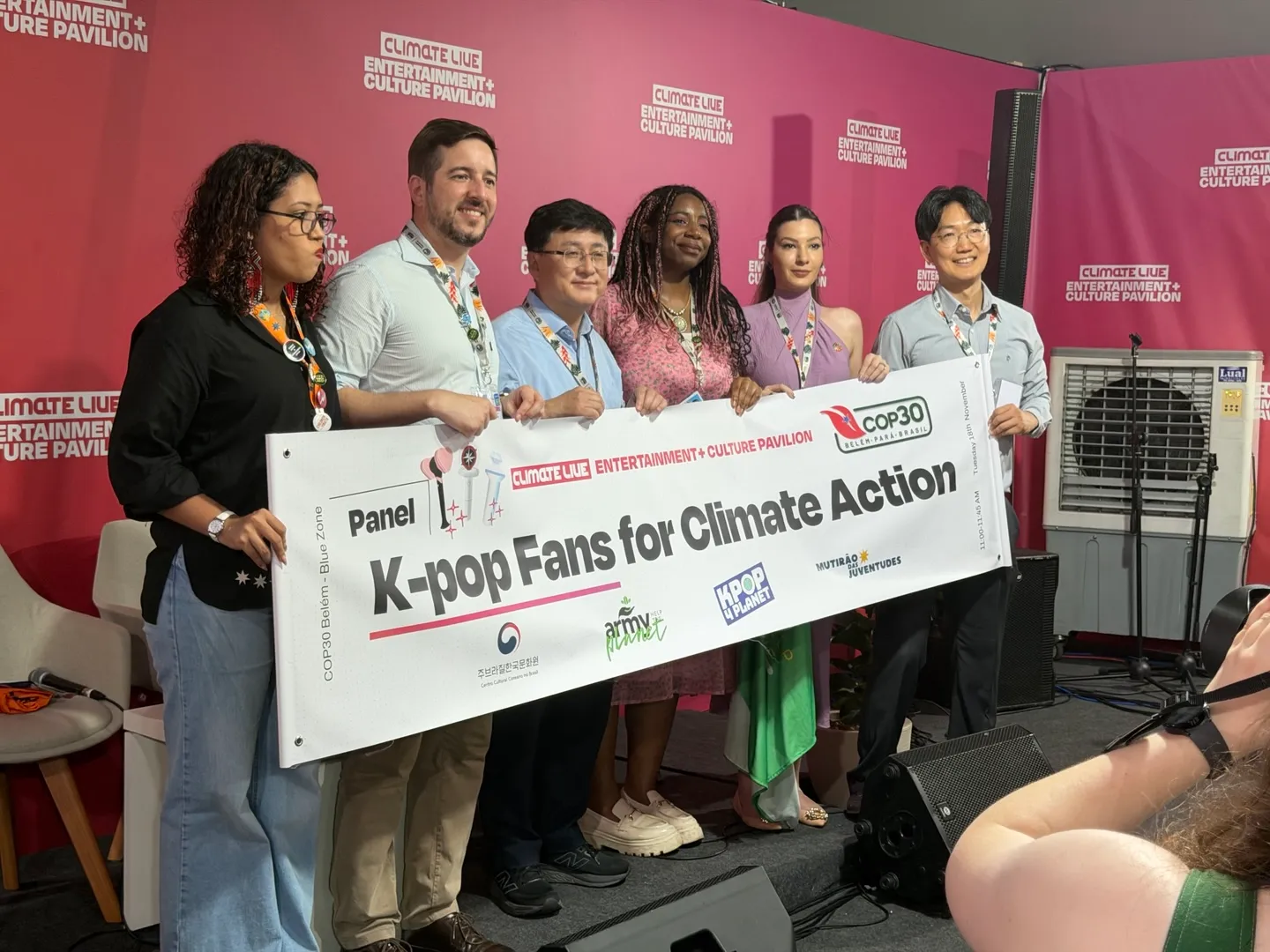
Last November, the COP30 venue (the 30th Conference of the Parties to the United Nations Framework Convention on Climate Change, held in Belém, Brazil from November 10–21, 2025), located in the city of Belém at the mouth of the Amazon with a population of 1.5 million, was a point where the urgency of the climate crisis and the harsh reality of international politics intersected. Climate negotiations are frequently stalled or in a standstill as economic interests and political and diplomatic calculations become complexly entangled. This General Assembly likewise once again failed to codify the phasing out of fossil fuels, leaving room for regret. But what was witnessed in the gaps of this sluggish negotiation was a completely different possibility: the ‘power of culture’ that unties the knots that politics could not.[COP30 Venue © Kim Won-sang, Climate Solutions Media Communications]At this General Assembly, Climate Solutions teamed up with global organizations to carry out actions calling for an end to fossil fuel investment. What breathed life into this campaign, which could have been stiff and formulaic, was the cosplay of characters from the animated film ‘K-Pop Demon Hunters.’ Perhaps thanks to the power of global content, the response from participants and press was heated. Multiple foreign media outlets including the AP gave it concentrated coverage, and this soon became an opportunity for climate issues to be translated into popular language and delivered across the globe. This trend even led to actual discussion venues, with a session themed around K-pop and climate response being organized. When Minister of Climate, Energy and Environment Kim Sung-hwan, who visited the venue, delivered an encouraging message through a congratulatory speech, a natural point of connection was formed through which the cultural approach linked to policy interest.The anecdotal experience of a journalist I met on site was even more dramatic. When covering indigenous people in the Amazon rainforest, where public access is strictly restricted, the people who were normally exclusive toward outsiders changed their attitude at the journalist’s single remark that they had ‘come from Korea.’ They mentioned Korean dramas they had watched on Netflix and called out actors’ names, showing goodwill. It was the same at street marches held in downtown Belém. Citizens welcomed them simply for being Korean, and reached out first to take photos together or share social media accounts. The ‘finger heart’ that appeared in every group photo was a symbol of cheerful solidarity that transcended ideology and language.[COP30 Venue © Kim Won-sang, Climate Solutions Media Communications]Such experiences did not flow only one way. To an average Korean, the communities of Pacific island nations were distant both geographically and emotionally. But the ‘Moana Pavilion’ they set up was different. Drawn in by a name made familiar through a famous animated film, people listened at length to the reality of the climate crisis they faced and the messages they conveyed. It was a moment in which the suffering of others, which would have been passed by without culture, was transposed into one’s own issue through the catalyst of culture. Amid the COP30 venue, filled mostly with stiff language and business attire representing companies or nations, the only point of contact that eased the tension and evoked a warm feeling was this kind of informal cultural exchange.As a longtime football fan, Brazil had been a distant country connected only through football. Prior to this, I had only vaguely known of the vast nature of the Amazon ecosystem and had no experience whatsoever of perceiving the indigenous communities within it or their culture. I was able to encounter a country I was uncertain I would ever visit in my lifetime, thanks to the unfamiliar stage of the Climate Assembly, and the two countries broke down each other’s psychological barriers through culture. In the enormous international task of climate response, what is as important as technological solutions or policy consensus is ultimately ‘the will to connect.’ This is because no matter how sophisticated the policy, it is difficult to gain momentum if it cannot move the hearts of the public.[COP30 Venue © Kim Won-sang, Climate Solutions Media Communications]The role of culture as one axis of climate negotiations will become even more important going forward. Even if we do not share a language and even if our political stances differ, we watch the same films and enjoy the same songs, thereby recognizing each other’s existence. This soft link could become the key to solving the planetary conundrum of the climate crisis. This is why more cultural artists and influencers must gather under the value of climate. The power to rescue climate politics from deadlock may lie not on the cold negotiating table but in the site of the vibrant culture we enjoy together.by Kim Won-sang (Climate Solutions, Media Communications)
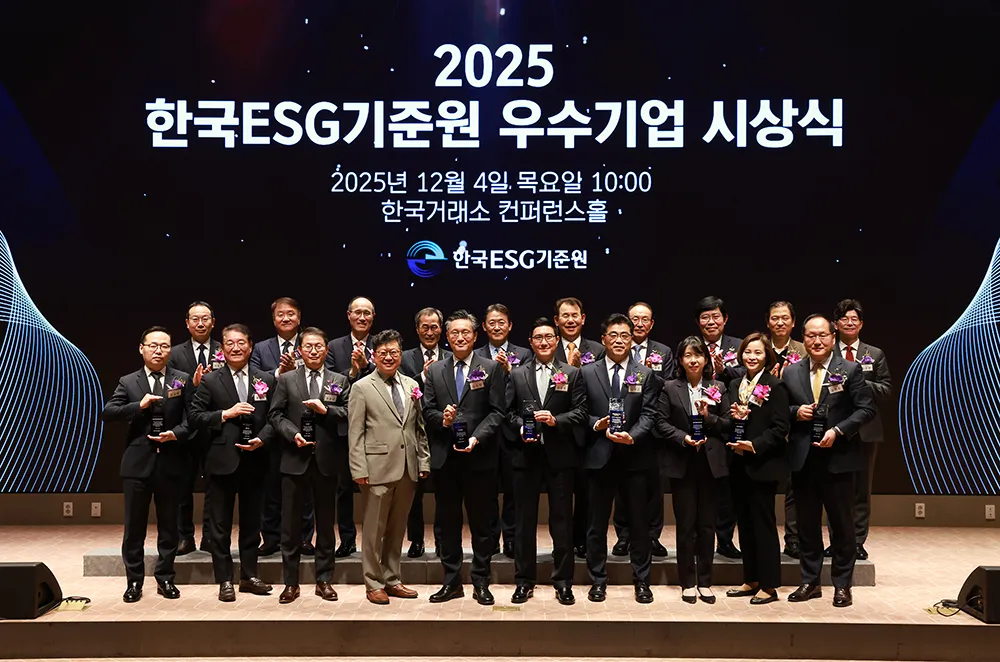
With the arrival of December, companies’ ESG report cards are being released one after another. Companies with excellent ESG performance publicized this year’s ESG achievements, while the reasons for the relatively low ratings of other companies are being analyzed by the media and the market. ESG stands for the three core elements for achieving sustainability in corporate management. So what is ESG evaluation, and what kinds of evaluation agencies exist? Let us also learn about what ESG evaluation is, the differences between domestic and international ESG evaluators and their respective evaluation criteria, and the comprehensive ESG evaluation elements through the K-ESG Guidelines.[2025 Korea ESG Standards Institute (KCGS) Excellent Company Awards Ⓟ KCGS]What Is ESG Evaluation?Now, both investors and consumers are utilizing ESG to evaluate companies. According to a 2021 survey, over 60% of consumers responded that they consider ESG activities in their consumption, and several global credit rating agencies including Moody’s also reflect ESG in their credit ratings. While it is important to receive good ESG evaluations, there is no single common evaluation standard. Currently, more than 600 evaluators worldwide assess companies using differing ESG definitions and processes. This is precisely why ESG evaluation grades differ significantly from one evaluator to another, regardless of whether they are domestic or international. ESG disclosure is scheduled to become mandatory in South Korea from 2026 onward, and if evaluations can be conducted with a common standard in this way, it appears that somewhat more accurate evaluation and comparative analysis will be possible going forward. The ESG evaluation grades of representative companies can be grasped at a glance on the ESG Portal jointly created by the Korea Exchange and the Financial Services Commission. [ESG Portal Site Mobile Screen Ⓟ ESG Portal]Where Should ESG Evaluations Be Received?ESG evaluation institutions each set the definition of evaluation items, measurement methods, and the weighting of each item differently. For example, for the same electric vehicle company, Evaluation Agency A focuses on the emission of pollutants during the operation of the electric vehicle, while Agency B focuses on the emission of pollutants during the production process of the electric vehicle. This is how evaluation scores diverge.If a domestic company is evaluated by a domestic evaluator, a qualitative ESG evaluation based on non-financial information is possible compared to an overseas evaluator. A major advantage is that even companies without an English-language sustainability report can receive an evaluation. In addition, the ability to encompass domestic-specific ESG risks such as chaebol owner risk within the evaluation scope can also be seen as a strength. The broad framework for evaluation by institutions providing scores on the ESG Portal, such as KCGS, Sustinvest, and the Korea ESG Research Institute, is similar. They use corporate disclosures, business reports, sustainability reports, and publicly available materials on company websites as evaluation data, and may also utilize media such as news articles. Each of the E, S, and G domains are divided into detailed items to assign scores, points are deducted where risk factors exist, and weightings are applied to each item score reflecting industry-specific characteristics. Evaluation results are expressed in 7 grades; for Sustinvest, AA is the highest grade, while for the other two institutions, S is the highest grade.[Ⓟ Sustinvest]Examining the characteristics of each evaluator more closely, KCGS is a non-profit incorporated foundation in which capital market-related institutions including the Korea Exchange participate. Its evaluation purpose is to help companies examine and improve their current level of sustainable management. Among ESG, it evaluates the G domain by dividing it into ‘general listed company governance’ and ‘financial company governance,’ and also awards companies with excellent evaluations. Sustinvest’s evaluation purpose lies in investment. It helps investors make investment decisions that consider ESG factors as well. It also verifies information that companies have not disclosed, which is reflected in the ‘controversy assessment,’ where points are deducted by monitoring issues that may be controversial from an ESG perspective, and the ‘large corporate group assessment,’ where points are deducted from the G domain score for risks arising when the owner family influences the corporate group with a minority stake. Meanwhile, the Korea ESG Research Institute is a relatively new institution launched in 2021 from the Daishin Economic Research Institute. It is carrying out improvement work to refine industry-specific weightings on an annual basis and calculates evaluation grades by applying relative evaluation. [Ⓟ KCGS]There are also advantages to being evaluated by overseas evaluators. Cross-comparison of scores with global companies becomes possible. The most widely used evaluation standard, MSCI, evaluates based on publicly available information, selecting and weighting issues of high financial materiality by industry. It is also designed to measure a company’s resilience to ESG risks. S&P reflects global corporate sustainability assessment scores in publicly available materials such as corporate disclosures. This sustainability assessment includes industry-specific questionnaires that companies can directly answer. S&P produces results by scoring from 0 to 100 points instead of grades. Beyond these, Sustainalytics and Refinitiv are representative overseas evaluation institutions. [Ⓟ MSCI]ESG Evaluation Items: Based on the K-ESG GuidelinesSince ESG evaluation methods differ so much, companies may be confused about which indicators to use as the basis for establishing their ESG response direction. The Sustainable Management Support Center provides the ‘K-ESG Guidelines,’ which are materials analyzing the key points of major domestic and international ESG evaluation indicators and disclosure standards, and can be considered suitable for understanding common evaluation criteria across evaluators.[K-ESG Guidelines v2.0 Cover Ⓟ Sustainable Management Support Center]The Guidelines add a P (disclosure) domain to E, S, and G. First, Environmental (E) is composed of a total of 25 items. It checks whether environmental management objectives have been established, how resources (energy, water) are being managed, and the volume of greenhouse gases, waste, and pollutants being emitted. Whether there are any violations of environmental laws and regulations, and how many eco-friendly certified products exist also have an impact. It includes climate change response methods including climate change governance, as well as biodiversity conservation activities. Social (S) is composed of a total of 22 items. These include the labor domain, which checks new recruitment, the proportion of regular employees, and the guarantee of freedom of association, as well as the diversity and gender equality domain, which evaluates the proportion of female members and the employment rate of persons with disabilities. Governance (G) has a total of 17 items. It evaluates board composition and activities, shareholder rights, and so forth. Additionally, ESG Information Disclosure (P) refers to the act of publicly informing about environmental, social, and governance-related information that influences the decision-making of investors and diverse stakeholders. The disclosure domain checks the method, frequency, and scope of information disclosure.Since ESG does not yet have a long history, its evaluation standards are diverse as described. With both South Korea and the world set to begin ESG regulations in earnest from 2026, the importance of ESG evaluation is expected to grow even further. Next year, checking ESG evaluation methods and inferring the ESG level of our companies will also be an interesting activity. by Editor L
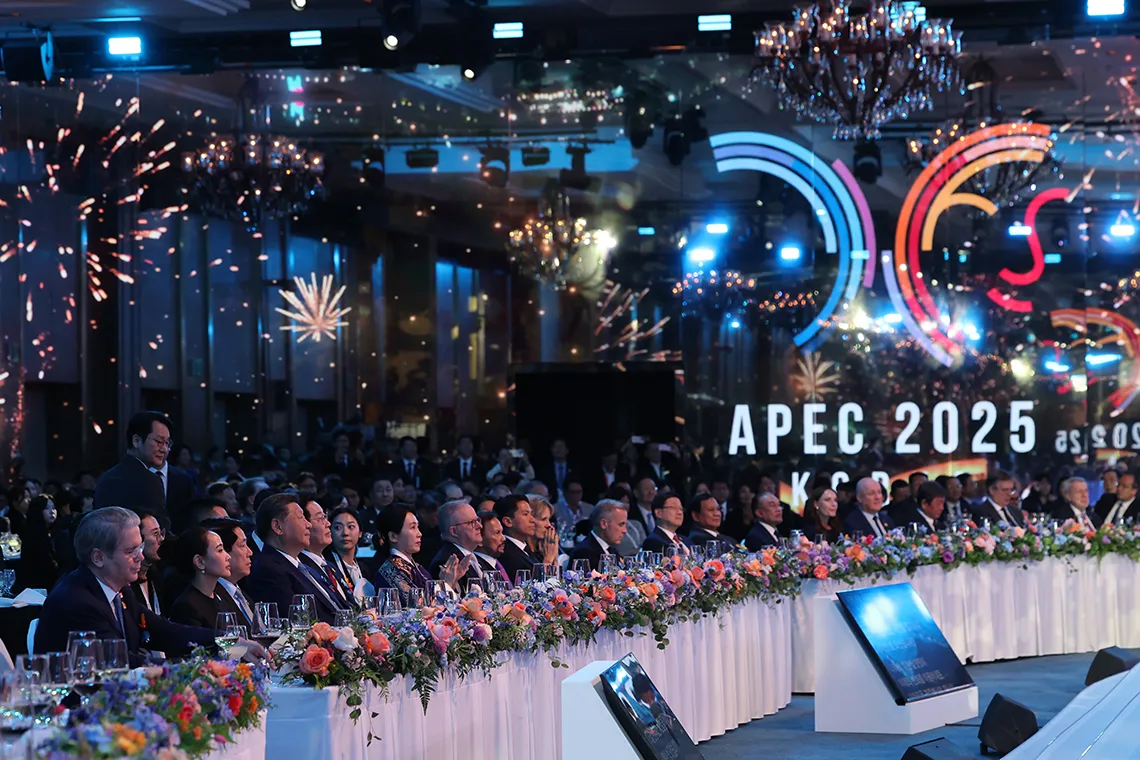
The Asia-Pacific Economic Cooperation (APEC) Summit held this time in Gyeongju was not merely an economic meeting. The venue was a stage where culture shone more brightly than politics and diplomacy. A Silla-era golden crown was presented as a gift to President Trump, and the CEO Summit was adorned with a keynote speech and music by BTS. The scene of NVIDIA’s Jensen Huang, Samsung Electronics Chairman Lee Jae-yong, and Hyundai Motor Group Chairman Chung Euisun sharing a meal at a chicken restaurant in Seoul was more talked about than anything else. Through this series of scenes, one thing became clear: there are times when soft power is more effective than hard power in the international community. The doors of relationships, which do not open through numbers, strategies, and statements, opened gently before the language of culture.[‘Swallowtail Butterfly’ drones active during the gala show Ⓟ APEC2025KOREA]The brief conversation between President Xi Jinping and President Lee Jae-myung shared on the subject of butterfly drones inspired by Korea’s ‘swallowtail butterfly’ also falls in the same vein. President Xi said, “Butterflies were fluttering at the banquet venue and it was truly beautiful,” and tossed out a topic, saying, “President Lee asked me, ‘Next year, will you make the butterflies fly this beautifully?’ and I replied, ‘I hope this beautiful butterfly here will fly all the way to Shenzhen and even sing.’” The dialogue between the two was as concise as a poem, yet contained within it was a symbol of change and connection. It was a moment that left a much softer and richer lingering impression than official statements reconciling the interests between nations. It can be evaluated that such cultural rhetoric and symbols contributed to easing the overall atmosphere of the talks and fostering a positive outlook.It is hoped that such a language of communication will also exist in climate negotiations. At the talks held each year, technical discussions on reduction rates, financial burden-sharing, and emissions trading pour out, but progress is slow. Countries clash over responsibility, and consensus statements always stay at the level of principle. Science is precise and economics is cold, but people’s emotions are still far away. Yet the essence of the climate crisis is not a problem of data but of relationships. It is not that technology is lacking but that the grain of trust is broken.Culture is the power that reconnects this grain. Art and music, food and stories restore the human dimension that cannot be captured by political language or economic indicators. Culture lowers the barrier of language and restores the circuit of emotion. It is ultimately culture that loosens the atmosphere of the conference hall stiffened by numbers and clauses, and creates space for empathy within the competitive structure. It is not a procedure of consensus but the soil of trust.[The Kkanbu Chicken gathering of NVIDIA, Samsung Electronics, and Hyundai Motor leaders that drew major attention during APEC © Hyundai Card CEO Chung Tae-young’s Instagram]Now, as multilateralism is losing trust in its function, a new breakthrough lies outside rigid institutions. Culture may seem like the periphery of talks and negotiations, but in reality it acts as an invisible needle that adjusts the direction of the talks. Instead of documents that are forgotten after the talks end, long-lasting exhibitions and performances, songs and stories carry on the memory of cooperation. Just as cultural symbols and communication raised the temperature of relationships at APEC, a human language is also needed at climate talks. This will interlock each other’s grain and set the rigid structure in motion again.In the era of the climate crisis, culture must further radiate that power. Culture must exert the power to seep through the gaps in negotiations and softly connect the grain of relationships. If hard power builds walls, soft power carves a path between those walls. Just as chicken and beer (chimaek) and the swallowtail butterfly changed the atmosphere of diplomacy and negotiations, we hope that a new language of climate diplomacy will also begin on that path.by Kim Won-sang (Climate Solutions, Media Communications)

That "promoting the growth of the social solidarity economy" was included in the government's national policy tasks reflects the urgent recognition that our society is no longer sustainable by the logic of money alone. The core task of "invigorating social solidarity finance" contains the demand of the times that finance must recover its original role as a public good. Social finance, beyond simply pursuing profit, aims at a "people-centered economy" that serves people and communities and lifts up those in need of help. One of the areas where social solidarity finance is most urgently demanded in the Korean context is precisely "Inclusive Finance." The modern financial market divides accessibility starkly according to the size of assets and credit scores, and citizens below a certain standard are deprived of the opportunity to use finance at all. Under a "financial system that takes away the umbrella when it rains," these people are apt to pay the opportunity cost of high interest or become prey to predatory lending. Inclusive finance has its social value in filling such deficiencies and, by providing opportunities for financial access to those excluded from the financial market, restoring individual dignity and breaking the chain of deepening social inequality. The most important thing in carrying out this special and difficult mission is a social-solidarity-finance intermediary such as the incorporated association Community of Building a World Together (Social Solidarity Bank), which builds a demand-centered financial delivery system. Unlike existing financial institutions that demand collateral or guarantees and avoid the risk of loss, an intermediary of a social-solidarity-finance character takes on the "special" role of accepting risk and seeking its solutions together. Inclusive finance should be viewed as, for those already struggling with low credit and heavy debt in institutional finance, supplying finance again not as imposing a "burden" but as creating an "opportunity for recovery." Behind the heartbreaking stories, often mentioned in the media, of all members of a family ending their lives, there is in most cases a situation of financial crisis. Amid such a crisis of severed cash flow, finance supplied in a timely manner on reciprocal terms becomes a lifeline that creates new opportunities for individuals and families. Even if there are problems such as existing debt, by supplying finance in various ways suited to an individual's situation, one can create an opportunity for the person to recover on their own. The repaid money is used again for people in another crisis situation, creating a virtuous cycle, and through the experience of participating as a producer, a sense of solidarity and responsibility — "the money I repaid becomes someone's next opportunity" — is also cultivated together. The social-value creation of inclusive finance is recognized as an important task even in the United States, where financial inequality has deepened. The nonprofit financial institution "Mission Asset Fund (MAF)" in San Francisco is a representative case of helping low-income and immigrant families for whom entering the mainstream financial system is difficult. Operating the "Lending Circles" program, inspired by Mexico's communal-fund method "tanda," it helps participants, based on mutual trust, take turns receiving interest-free small loans and form credit by reporting repayment records to credit-rating agencies. This opens a path into the institutional system for those who could not access finance for lack of credit, and shows that inclusive finance can create the new social value of "credit formation." Korea's Community of Building a World Together (Social Solidarity Bank), with the philosophy that finance can be a power of recovery through trust and solidarity, is cooperating with KakaoBank through "Project Dasi, Bom (Again, Spring)" to convert the high-interest debt of young people excluded from institutional loans to a 1% interest rate, and supporting credit management and the improvement of financial awareness. It is also expanding financial support based on "will and possibility" rather than credit scores to youth preparing for self-reliance and low-income, low-credit start-up founders in financial crisis, by creating the "Hamkke-on Fund." In this way, the inclusive-finance models of Mission Asset Fund and Social Solidarity Bank create, beyond simple funding, social resilience based on trust and relationships. This leads to individuals' financial self-reliance and the restoration of dignity, and ultimately realizes the public value of reducing costs for society as a whole and building a denser financial safety net. In an era that judges everything only by numbers, the human story is gradually disappearing from finance. Finance is not an end but a means and tool made by humans, yet it has long since been reduced to a "product" that suppliers sell selectively. But social solidarity finance, which fills excluded places in a reciprocal way and, within them, speaks of trust in and the possibility of people, will become a new alternative of "cooperation and solidarity" for our society, which has grown harsh and where gaps have deepened. By Ahn Jun-sang, Standing Director, Community of Building a World Together (Social Solidarity Bank)

The title of the Lee Jae-myung government's national policy task No. 81 is "promoting the growth of the social solidarity economy." The national-governance plan specifies four action items for achieving this agenda: enacting a Framework Act on the Social Solidarity Economy, building a public-private cooperation support system, invigorating social solidarity finance, and supporting the growth of social solidarity organizations. As the term "social economy," aiming at a "people-centered economy," has been changed to "social solidarity economy," and the invigoration of this economic area has been registered as a national policy task, social finance — or social solidarity finance — is drawing attention. Social finance means finance for society, finance that helps members of society. It contains the meaning and will that, because real-world finance does not serve society and covets only economic gain, a financial order beneficial to people and communities must be built. It is about creating institutions and systems that reach out a hand to those in desperate need of help, rather than banks that privatize profits and socialize losses, or finance that takes away the umbrella when it rains and offers it only after the rain has stopped. Although finance is a public good that all citizens should enjoy, the difference in accessibility is large according to asset size and credit score, and those below a certain standard are deprived of the opportunity to use finance at all. Those excluded from the financial market are apt to borrow money at high interest or become prey to loan sharks who engage in predatory lending. Filling this "deficiency," lifting up those placed in desperate situations, and giving wings to companies that pursue value over money — that is the role of social finance. In the Korean context, there are largely four areas where social finance is demanded: inclusive finance, which helps marginalized groups through unsecured small loans and the like; reciprocal finance, which operates based on cooperation and solidarity among participants, such as mutual aid; impact finance, which supports organizations pursuing social and environmental value, such as social ventures and social-solidarity-economy enterprises; and regional finance, to revive underdeveloped local and regional economies. In reality, the four areas sometimes overlap and sometimes move separately. For the social-finance ecosystem to be alive and moving, there must be intermediaries connecting demanders and suppliers. The reason intermediaries are needed is that the supply and circulation of funds are difficult through existing financial channels. Banks do not lend money without collateral or guarantees, because there is no incentive to bear the risk of loss. In contrast, social-finance intermediaries do not demand collateral or guarantees; they accept risk and seek solutions. The only place that can carry out this "special" mission is a social-finance intermediary. The cause of the failure of the Moon Jae-in government's "social-finance invigoration policy" in 2018 lies at this point. In their impatience to create results quickly, they did not foster intermediaries and instead used existing delivery systems such as commercial banks and policy financial institutions. As a result, the majority of social-solidarity-economy organizations were often excluded for reasons such as insufficient credit scores, and benefits were given only to a few. To avoid repeating the same mistake, a new delivery system that allows demand-centered supply must be built. For social finance to be invigorated, the government's role is more important than anything. The government must take the lead in building a social-investment wholesale fund in which public and private participate together, invigorating a public-purpose investment system so that the funds of public-interest corporations can be used in socially meaningful places, allocating a portion of policy financial institutions' funds to support social-solidarity-economy organizations, and overhauling a regional-reinvestment evaluation system so that financial companies' money can flow into the regions. Finance is a means, a tool, a creation made by humans. How to use finance depends on our choice. What we need now is social imagination that breaks free of old path dependency and dreams of a better future. Humans, the chief culprits of environmental pollution, are blinded by money and turning the land and sea into a hell where life cannot live, and social inequality is deepening by the day. Somewhere in the "background" that creates such tragedies, finance is coiled up. The emergence of social finance, which pursues value over profit, tells us the fact that finance in a "different" way from the order we have seen so far is possible. The protagonists are those who carry out inclusion and reciprocity, impact and regional finance even in difficult circumstances. These black swans, which appeared breaking the world's conventional wisdom that all swans must be white, are heralds of hope. What the government must do is help them take flight. If we change the flow of money, we can create a world where money is used for good. By Moon Jin-soo, Director, Korea Social Finance Institute

The Ministry of Environment has been expanded and reorganized into the "Ministry of Climate, Energy and Environment." The establishment of a "Ministry of Climate and Energy (hereafter 'Climate Ministry')" — one of President Lee Jae-myung's major campaign pledges — was decided in the form of transferring the energy policy of the Ministry of Trade, Industry and Energy (hereafter "Industry Ministry") to the Ministry of Environment. On October 1, when the launch ceremony was held, Minister Kim Sung-hwan, in a launch address that opened with the seriousness of the climate crisis, revealed his ambition to make a sustainable future through a "great transition to a decarbonized green civilization centered on renewable energy," not fossil fuels. The newly launched Ministry of Climate, Energy and Environment is receiving both expectation and concern all at once. Various voices are heard, from the forecast that effective climate-crisis response will be possible to the problems anticipated in the energy-policy transfer. Let us look more concretely at the expectations for, or concerns about, the Climate Ministry. [The Ministry of Climate, Energy and Environment © Ministry of Climate, Energy and Environment] The Ministry of Climate, Energy and Environment: What Has Changed from the Ministry of Environment? The Climate Ministry is a department combining the Ministry of Environment's overall climate-policy function and energy functions. The Ministry of Environment had one vice minister and three offices, but the Climate Ministry, transferring even most of the functions of the energy-policy office under the Industry Ministry's second vice minister, was reorganized into a structure of two vice ministers and four offices. The Resource Industry Policy Bureau, which handles resource security and petroleum-, gas-, and coal-related affairs, is still under the Industry Ministry's jurisdiction, while the Climate Ministry manages renewable energy and nuclear power, separated as "carbon-free power." However, nuclear-power export affairs remained with the Industry Ministry, and the Climate Ministry takes charge of nuclear-power construction and operation. Meanwhile, the Ministry of Trade, Industry and Energy had its name changed to the Ministry of Trade and Industry. To summarize, the Climate Ministry has come to oversee, on top of the existing functions of ecological conservation, pollution management, and environmental regulation, carbon neutrality, the expansion of renewable energy, and the adjustment of electricity supply and demand. On top of this, the Climate Response Fund and the Green Climate Fund, which had been under the jurisdiction of the Ministry of Economy and Finance, were transferred to the Climate Ministry, so the Climate Ministry can design the entire process of climate-crisis response and execute the budget. Why Is the Ministry of Climate, Energy and Environment Needed Now? In the first half of this year, the world's renewable-energy generation surpassed coal generation for the first time. While many countries are increasing their renewable-energy generation, Korea's share of renewable-energy generation was 10.5% as of 2024, still the lowest level among OECD countries. The "national greenhouse-gas reduction target" is at a low level compared with advanced countries, but even this is expected to be difficult to achieve, and in the climate-change-response performance index, Korea was ranked 63rd out of 67 countries. One of the causes cited for this is the gap between the ministry in charge of climate-crisis-response affairs and the ministry in charge of the greenhouse-gas-emitting sector. The Industry Ministry manages the energy sources that account for 76.2% of greenhouse-gas emissions, but given the ministry's nature it is hard for it to prioritize carbon neutrality, while the Ministry of Environment, which responds to the climate crisis, cannot control other ministries. A stark example is the case in which, in the 10th and 11th Basic Plans for Electricity Supply and Demand, the Ministry of Environment and the Presidential Commission on Carbon Neutrality and Green Growth requested that the Industry Ministry increase the renewable-energy ratio, but the Industry Ministry repeatedly refused. [The Climate Change Performance Index (CCPI) © CCPI] Concerns have risen that, as the climate crisis worsens, energy demand continuously increases due to industries such as AI, and a late transition to renewable energy will affect industrial competitiveness as well. Accordingly, President Lee Jae-myung, from his candidate days, showed his will to solve the problem by putting forward the pledge of "establishing a Ministry of Climate and Energy." The process was not smooth. It faced difficulties as several reorganization proposals were presented and debate continued over the form of the new ministry — establishing a Ministry of Climate and Energy, transferring the energy sector to the Ministry of Environment, transferring the Ministry of Environment's climate sector to the Industry Ministry, and so on. Many agreed on the need for a Ministry of Climate and Energy, but social discussion continues even over the finalized form. Cases of Integrating Climate, Environment, and Energy Government Ministries We are not the only ones who have carried such concerns. Among OECD countries, 15 have established a ministry integrating climate, environment, and energy; 3 have integrated climate and energy; and 20 operate them separately. The new government's "industrial-policy promotion system and government-reorganization plan," announced this past May, stated that four countries that newly established a ministry integrating energy and climate policy, like the current Climate Ministry, showed the result of their greenhouse-gas reduction rate over the five years before and after the ministry's establishment increasing from an average of 5% to 18%. Denmark, a representative success case of establishing a Ministry of Climate and Energy, established such a ministry in 2007 and covered 50% of its total generation with wind power by 2020. It developed the industry by integrating wind-power licensing into a single window to reduce procedures, and advanced all the way to carbon neutrality. Germany, cited as a failure case, launched a Ministry for Economic Affairs and Climate Action in 2021, integrating the climate policy of the Federal Ministry for Economic Affairs and Energy and the Ministry of Environment, but energy costs soared and manufacturing competitiveness weakened, so it reverted to its pre-reorganization form. The UK, which in 2024 became the first among G7 countries to achieve coal phase-out, is mentioned as both a success and a failure case. In 2008, the UK established a Department of Energy and Climate Change and achieved results, and it still maintains the policy framework of that time. However, in 2017 this department was merged with the Department for Business, Innovation and Skills to manage industry and energy policy simultaneously, drawing criticism that it caused energy costs, security problems, and manufacturing weakening due to the Russia-Ukraine war. It is now operated after being separated and changed again into the Department for Energy Security and Net Zero (DESNZ). Thus, the integration of energy- and climate-related ministries is, rather than a finished policy, a new attempt that must be managed to produce policy effects in accordance with each country's circumstances. [Minister Kim Sung-hwan at the launch ceremony of the Ministry of Climate, Energy and Environment © Ministry of Climate, Energy and Environment] Beyond Concern and Expectation: The Path the Climate Ministry Must Take What the ruling and opposition parties, industry, and environmental groups worry about regarding the launched Climate Ministry falls largely into three points. The first is that the Climate Ministry is given the opposing policy goals of "climate-environment regulation" and "energy-industry promotion" at the same time, so both could end up fizzling out. The second is that, with nuclear-power export affairs remaining with the Industry Ministry, domestic energy-industry policy and overseas nuclear-power exports become dualized, and confusion is anticipated. The third is the point that carbon power and carbon-free power are all organically connected, and electricity (generation) and gas (resources) are also connected, but by dividing the ministries managing these, the unity of policy is damaged and effectiveness falls. Both ruling and opposition parties raised their voices that separating nuclear-power generation and export policy, and separating the ministries managing electricity and gas, has no precedent in the world and that the pace of industrial development may slow. Environmental groups worry that, as the Climate Ministry takes on an industry-promotion function, regulation will weaken, and that there is a high possibility the Climate Ministry will lean toward energy-transition policy. Industry pushed back against the Climate Ministry's recently raised national greenhouse-gas reduction target and even anticipated high electricity rates. Many express worry, but there is also a positive outlook that the Climate Ministry will prepare climate-crisis-response measures that consider greenhouse-gas reduction, the expansion of renewable energy, and ecosystem conservation together, and that, now that a responsible ministry has been created, faster execution will occur. Regarding electricity rates, which many worry about, one can also expect that stable operation will ultimately become possible through falling renewable-energy unit costs and the expansion of the power grid. Right after the launch, the Climate Ministry's minister visited the Taean coal power plant, scheduled for closure, and showed his will for a coal-phase-out, renewable-energy transition. Attention turns to whether the Climate Ministry can become, true to its name, a genuine control tower responding to the climate crisis at the balance point of climate and energy. by Editor L
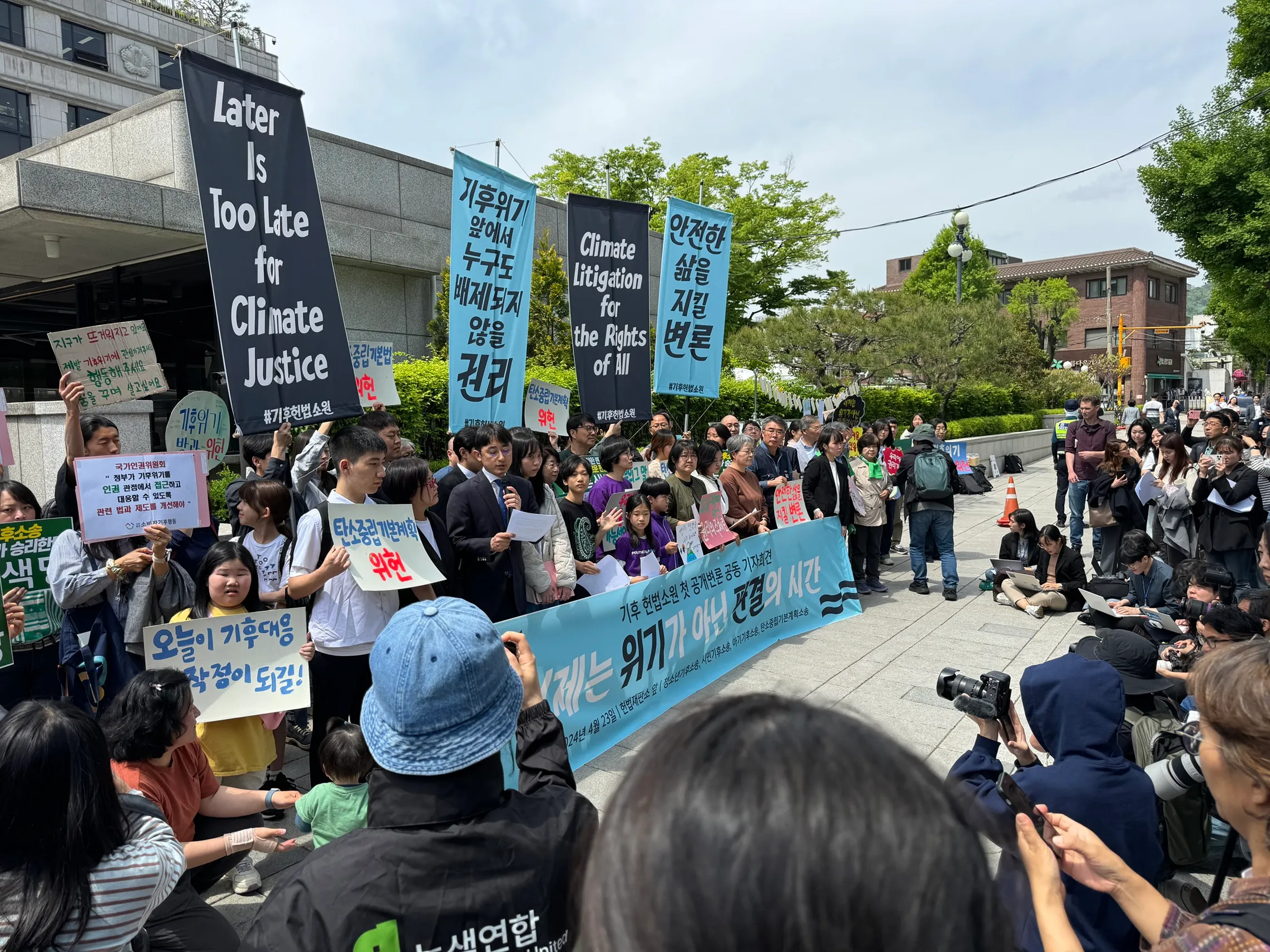
In 2013, the film "The Attorney" surpassed 10 million viewers, and in 2022 the drama "Extraordinary Attorney Woo" saw its domestic ratings soar to nearly 20% and drew great popularity abroad as well. The reason a trial as drama is attractive is not simply genre fun. It is because a courtroom dispute is a narrative that most vividly reveals the themes of social justice, institutional contradiction, and the protection of the weak's rights, while at the same time containing the catharsis in which conflict is dramatically resolved through a verdict. The history of content that takes courtroom narrative as its material goes far back to ancient times. Trials presided over by gods in the Greek tragedies of the BC era, or the Judgment of Solomon handed down in the Bible, were the first scenes in which human society tried to resolve conflict through law and justice. This tradition continued into the early Hollywood era of the 1930s–40s, and the courtroom established itself as a stage with powerful appeal in film and drama. In Korea, as democratization progressed in the 1980s, the independence of the judiciary was institutionally guaranteed, and due process and legalism began to settle into daily life. As litigation became a relatively familiar subject to citizens, films and dramas began to use courtroom scenes as the climax of dramatic tension, and entering the 2000s, full-fledged courtroom works featuring lawyers and judges as main characters gained popularity, and over time the courtroom work firmly established itself as a genre. At the same time, it became a genre that reflects the changes in society. Watching "Woo," I was greatly moved and inspired. Seeing the news that Season 2 was confirmed and going into production, I wrote a proposal email to the head writer asking them to deal with climate litigation. It was because the thought came to me that, since what moves us as we watch courtroom dramas is, in the end, the fight for justice and rights, the case that best suits that stage in reality right now is precisely climate litigation. Putting on the courtroom, beyond the rights and wrongs of a particular individual, generations and society as a whole, and further the future of the Earth and humanity — could there be any story more dramatic than this? Unfortunately, at that time I did not receive a reply. [The joint press conference for the first public hearing of the climate constitutional complaint © Solutions for Our Climate] In the era of the climate crisis, demands containing the implementation of carbon neutrality and everyone's sustainability are also emerging clearly in the form of litigation. Courts around the world are facing lawsuits with no precedent or case law — claims that greenhouse-gas emissions have infringed on life, liberty, and property rights, or that sea-level rise has infringed on cultural rights or the right to housing. The climate problem has aspects that are unfamiliar or vast to handle within law's traditional framework. But because a challenge of the times that cannot be turned away from is dissolved within it, the majority of climate lawsuits are treated as significant not only by each country's judiciary but also in the media. Symbolic climate lawsuits are appearing in Korea too. There was a constitutional complaint filed against the state, with young people and various citizens as complainants, arguing that the government's response to climate change was not sufficient and thus infringed on the basic rights of citizens, including future generations. In August 2024, the Constitutional Court ruled that the level of the government's climate-crisis response partly violated the Constitution. This ruling was assessed as a historic milestone in climate litigation, both in Korea and internationally. This past August, too, a climate lawsuit that drew social interest appeared. Six farmers from across the country who grow apples, rice, tangerines, peaches, strawberries, and more filed a lawsuit for damages against the Korea Electric Power Corporation and five power-generation subsidiaries over harm caused by the climate crisis. This is greatly significant in that it is the first civil lawsuit in Korea to directly hold the corporate group with the largest greenhouse-gas emissions legally responsible for climate damage in the agricultural sector. Depending on the judiciary's judgment, it means that going forward, high-emitting companies — that is, the parties who actually contributed to the climate crisis — could directly or indirectly compensate those who suffered harm. [The press conference for the farmers' climate-damage compensation lawsuit held at Gwanghwamun © Solutions for Our Climate] The reason climate litigation is special does not lie simply in distinguishing the fault of one individual or company. Different in form though they are, climate lawsuits all converge on one question: the question of what kind of society we will move toward now. The inadequacy of the climate-crisis response, the responsibility of high-emitting companies, and the question of future generations' rights are all questions asking what kind of society we will move toward now. In that it is a verdict staking complex interests, a long-term time axis, and the fate of society as a whole, climate litigation is in itself a new narrative that can contain genre tension and emotion. Recently, the JTBC drama "Esquire" ended amid great viewer response. At the base of each episode's case was "love" in a broad sense. PD Kim Jae-hong explained the drama as "a drama that deals with law but ultimately talks about people." In fact, climate litigation is no different. The actions of farmers and fishers who lose their livelihoods due to the climate crisis, and of young people who worry about the future, also ultimately arise from the heart of wanting to protect people and lives. If today's conflict and tomorrow's hope intersect on the stage of the courtroom, that alone can make a story with enough resonance. This time, I intend to pester the production team to deal with climate litigation. If I use as a weapon the old connection continued since university days, might I not expect a slightly different result? By Kim Won-sang (Media Communications, Solutions for Our Climate)