Loading Data
Please wait a moment...
Update Cal.
2026.08
03
Mon
04
Tue
05
Wed
06
Thu
07
Fri
08
Sat
09
Sun
Update Calendar
2026.08
01
Sat
02
Sun
03
Mon
04
Tue
05
Wed
06
Thu
07
Fri
08
Sat
09
Sun
10
Mon
11
Tue
12
Wed
13
Thu
14
Fri

Loading Data
Please wait a moment...
Morning features and interviews. A morning story over a cup.
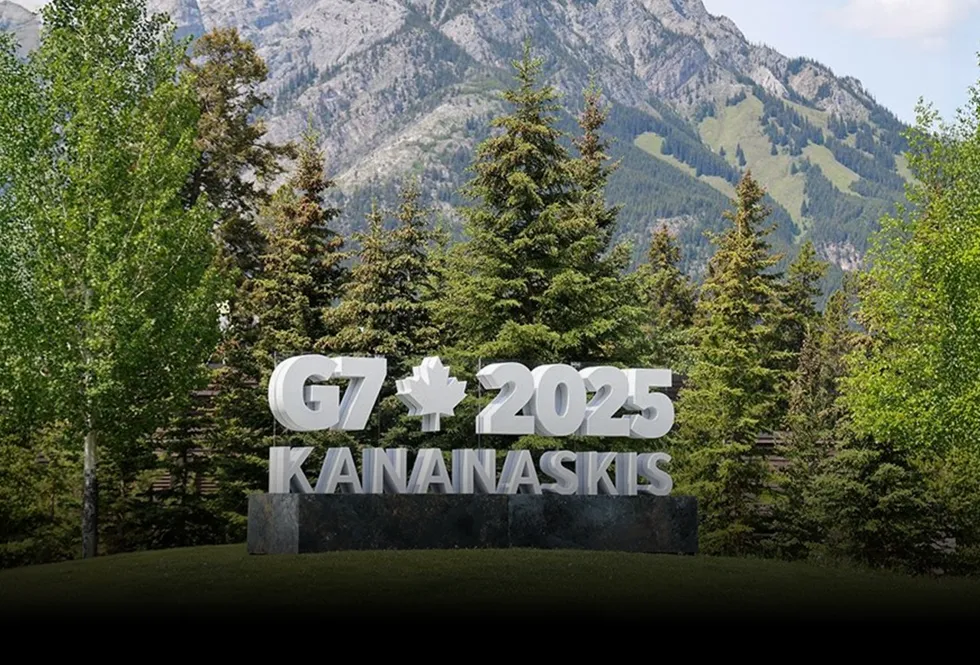
President Lee Jae-myung, just two weeks after his inauguration, attended the G7 Summit held in Canada last week, announcing an early debut on the international diplomatic stage. This summit attendance carries the meaning of informing the international community of the recovery of Korean democracy — having overcome political turmoil — and of its diplomatic stability. There was also active discussion of sustainable growth and ESG. The heads of state who gathered in one place for the G7 Summit discussed future-oriented policy measures such as an integrated approach to energy security and climate-change response, the expansion of renewable energy and enhancement of energy efficiency, the stabilization of critical-mineral supply chains, and the integration of AI and energy systems. Agenda items related to sustainable development, such as biodiversity conservation and sustainable finance, were also included.The "ESG Theme" at the Center of the G7 SummitLet us look at how this year's G7 Summit dealt with sustainability and ESG. This summit was conducted by adopting ISO 20121, the international standard certification for managing sustainable events in consideration of environmental sustainability, and by checking carbon-emission accounting, renewable-energy use, and zero-waste practices during the summit period. Operations that reduced single-use plastic use during the event and improved waste-management measures were also actively reflected. In addition to such practical efforts, the heads of state at the G7 Summit presented concrete policy recommendations for ESG-related fields such as energy transition, industrial decarbonization, sustainable finance, and biodiversity conservation. T7 (Think7), a private-sector expert group for proposing policy to the G7 Summit, also proposed ideas such as optimizing energy grids using AI, sustainable mining of critical minerals and the introduction of circular-economy models, and international cooperation to halt biodiversity loss.[Representatives of each country attending the G7 Summit © G7 joint press corps]The Policy Proposals President Lee Jae-myung Announced at the G7 SummitPresident Lee Jae-myung, who attended the G7 Summit, informed the international community of Korea's will to actively contribute to global energy security and sustainable development under the theme "the future of energy security." President Lee particularly emphasized the need to diversify energy supply chains and to integrate AI and energy in order to respond to the surge in power demand caused by the advance of AI technology, as well as climate change and geopolitical instability. He also proposed to the international community the innovative energy systems he had promised through his pledges — such as expanding the share of renewable energy using domestic resources, building an "energy highway" using high-voltage direct-current (HVDC) transmission networks, and introducing "microgrids" in which energy production and consumption take place at the local level. In fact, Korea plans to invest 14.8 billion dollars in renewable-energy research and development in 2025 to greatly increase the installation of solar and offshore-wind generation facilities, and it has also secured the world's second-largest position in lithium-ion battery production. The government is undertaking investment in clean-energy projects in emerging countries and the development of common standards for hydrogen infrastructure through a 5-trillion-won Green Transition Fund and Green Resilience facilities.[President Lee Jae-myung with Japanese Prime Minister Ishiba Shigeru © BBC]Our Challenge Unfolded at the G7 Summit, the World's FutureThis G7 Summit was an occasion that laid the foundation for Korea to play a key role among global sustainability and ESG issues. It is a cornerstone for strengthening a leading position in the future industries dealt with at the summit. On the global diplomatic stage, Korea and the international community are expected to strengthen practical action centered on the agenda discussed at this summit. They will expand financial support so that the G7 countries — as well as the middle-power and developing countries that attended this meeting — can pursue policies, and will hurry to handle common tasks such as strengthening the resilience of global supply chains mired in a worldwide recession and accelerating industrial decarbonization.[President Lee Jae-myung attending the G7 Summit © Yonhap News]US President Donald Trump returned home hastily on the first day of the G7 Summit, saying it was to resolve the Middle East conflict, so a Korea-US summit unfortunately did not come to pass. However, President Lee Jae-myung strove to fill the diplomatic vacuum of the intervening period by conducting summit diplomacy with a total of nine countries, including South Africa, Australia, Japan, and Brazil. As discussion of ESG finds momentum again from the start of the popular-sovereignty government, Korea will build a new paradigm centered on sustainability and ESG on the international stage.by Editor L
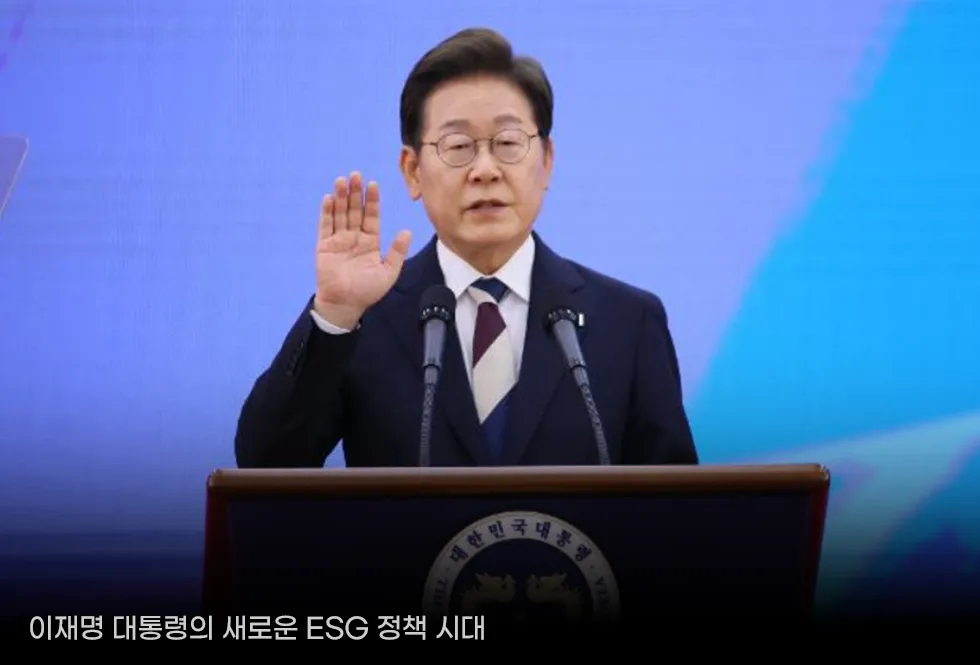
At last, a new president has been inaugurated. The 21st presidential election — which drew citizens' interest to the point of recording the highest turnout of 79.8% in 28 years — concluded with the victory of President Lee Jae-myung, who won 17.28 million votes, the most ever. The political and economic turmoil that all citizens had to experience due to the former president's martial law and impeachment is finding some stability amid the new president's inauguration.The same goes for ESG-related policy. It is worth noting that President Lee Jae-myung's inaugural address, which emphasized a message of integration and recovery, contains content related to ESG policy, unlike previous presidents' inaugural addresses. President Lee emphasized that his would be a pragmatic market-oriented government, backing corporate growth while, on the other hand, protecting citizens' lives and safety, workers' rights, and the weak, and preventing market threats from unfair trade. In addition, along with aspirations for national growth and development, concrete implementation plans for responding to the climate crisis — such as transitioning to a renewable-energy-centered society, replacing energy imports, and responding to RE100 — were also contained in the inaugural address. On the occasion of President Lee Jae-myung's "People's Sovereignty Government," where more active ESG-related policy discussion is expected to follow than before, we would like to organize the ESG policy direction promised in his campaign pledges and inaugural address.Climate-Crisis Response as an Economic-Growth StrategyIn his inaugural address, President Lee Jae-myung defined the present as "a time to revive people's livelihoods, restore growth, and create a happy tomorrow for all," expressing the will to keep pace with the global trend of responding to the climate crisis. Specifically, President Lee had stated as a campaign pledge that he would push to establish a "Ministry of Climate and Energy" to realize carbon neutrality. This is intended to create an entity that will integrally manage climate and energy policy, which had been dispersed across the existing Ministry of Environment, Ministry of Trade, Industry and Energy, and Ministry of Economy and Finance. If a Ministry of Climate and Energy is created, it is expected to carry out the inaugural address's declaration of transitioning the industrial structure to an eco-friendly focus and integrally managing national energy policy with a renewable-energy focus. Also included in the inaugural address were the introduction of a dedicated PPA planned-siting system for expanding renewable energy — which progressed somewhat slowly under the previous government — and infrastructure expansion such as an energy highway connecting West Coast offshore-wind complexes with the metropolitan area. In addition, President Lee's pledges include the complete abolition of coal-fired power generation by 2040, the overhaul of the greenhouse-gas reduction roadmap, RE100 achievement for industrial complexes, and the reform of the greenhouse-gas emissions-trading system, so an active overhaul and application of carbon-neutrality policy is anticipated.President Lee's inaugural address contains both the content of "creating a country that grows and develops vigorously again" and a climate-crisis response strategy, giving rise to the expectation that he will pursue overcoming the economic crisis and the climate crisis — the pressing tasks of our society — from a perspective of integration. We should pay attention to the presentation of a growth model that catches two rabbits — economic growth and climate-crisis response — beyond the frame that renewable energy and eco-friendly policies are progressive policies.Inclusion of the Socially Disadvantaged and Realizing a Fair Society Through Strengthening Labor RightsPresident Lee Jae-myung also stated, on the premise that "growth is possible only when citizens' basic living conditions are guaranteed," that he would expand support for the socially disadvantaged and marginalized groups and raise the quality of workers' working environments through labor-market reform. As he led the labor-rights policy discourse of the presidential-election arena by emphasizing policies such as abolishing the comprehensive wage system, making a workers' representative committee permanent, and re-pushing the Yellow Envelope Act, a strengthening of the substantive protection of labor rights is expected going forward.Along with this, policies aimed at realizing a fair society are also expected to take shape. The enactment of a "Framework Act on Guaranteeing Workplace Rights" for platform workers and special-type employees, who have found it hard to receive labor-law protection; the phased expansion of the Labor Standards Act to small businesses with fewer than five employees; policies for work-family balance and for eliminating gender discrimination in the workplace; and the premise of the principle of equal pay for equal work were already foreshadowed as campaign pledges. President Lee revealed the will to create a society where all citizens can enjoy equal opportunity through strengthening social responsibility and inclusiveness. Through this, he appears to aim at strengthening the foundation of a sustainable society by improving the structure of the labor market and expanding the social safety net.[President Lee Jae-myung's inaugural greeting © Democratic Party of Korea]Governance Innovation for Improving Trust and TransparencyAs can be seen from President Lee Jae-myung's inaugural address, which premised both social protection for the weak and a warning about threats to market order from unfair trade, the pursuit of policy in a direction that raises the trust and transparency of economic actors — including private and public — and emphasizes social responsibility is anticipated. Through his pledges, President Lee foreshadowed swift governance-innovation policy such as making ESG information disclosure mandatory, strengthening sustainability management reports, and amending the Commercial Act.Such policies also appear to drive the effect of raising the trust of domestic and foreign investors. Inducing listed companies to cancel treasury stock, separately electing audit-committee members, and standardizing ESG investment criteria for public funds such as the National Pension Service are also cited as major tasks. Governance-reform measures such as strengthening minority-shareholder rights and mandating the appointment of independent directors and audit-committee members are policies for resolving the stock market's "Korea Discount" (the undervaluation phenomenon of the domestic stock market) and creating a transparent, fair management environment that meets global standards.National Integration and Sustainability: Will a New Horizon of ESG Open?Sustainability is a central agenda for many countries and organizations. For this, ESG is emphasized. Looking at President Lee Jae-myung's policy pledges and inaugural address, one can see that we too are not outside this. President Lee, who during the presidential-election period fully agreed to the "7 major ESG policy tasks" presented by the Korea Sustainability Investing Forum (enacting a Framework Act on ESG, making sustainability disclosure mandatory, amending the Stewardship Code, reflecting climate-risk assessment by financial institutions, transitioning public finance to net zero, establishing a Green Finance Corporation, and a dedicated PPA planned-siting system for renewable energy), presented a blueprint for the next five years containing policies encompassing the major axes of ESG — climate-crisis response, protection of the socially disadvantaged, and strengthening transparent governance. Therefore, ESG is highly likely to function as a rudder for the national integration and restoration of trust that will secure our society's sustainability.With the inauguration of President Lee Jae-myung, ESG policy too has entered a new era. Hoping that the five years of the People's Sovereignty Government can be a great-transition momentum for a country with a sustainable future in which all citizens live well together, let us become citizens who take ceaseless interest in the drafting and pursuit of ESG policy for this.by Editor L
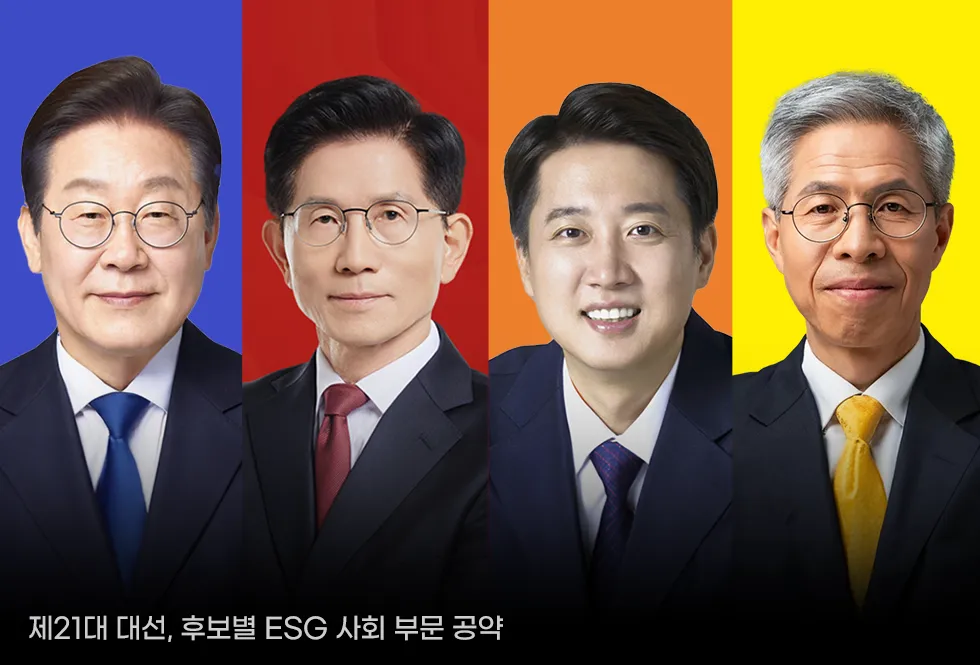
At last, tomorrow is the day of the 21st presidential election. Regarding the situation of holding an earlier-than-scheduled presidential election, the international community has offered commentary from various perspectives on the power of democracy and the public sphere that Korean society has shown. Will Korean society be able to keep protecting the policy realization of ESG, which had been solidifying its place as a standard of national competitiveness and social trust? The candidates are appealing for voters' choice, expressing their own and their parties' stances on various social values such as labor, safety, gender equality, and regional balance. Democratic Party candidate Lee Jae-myung and Democratic Labor Party candidate Kwon Young-guk revealed active stances on strengthening labor rights and protecting the socially disadvantaged, while People Power Party candidate Kim Moon-soo and Reform Party candidate Lee Jun-seok focused on labor-market flexibility and decentralization.ESG.ONL would like to look at the social-policy pledges among each party candidate's ESG policies, through which we can anticipate the society of the next five years we will live in.[Democratic Party candidate Lee Jae-myung © Lee Jae-myung's Facebook]Lee Jae-myung, Seeking to Protect Working People Through Strengthening Labor Rights and Improving Working ConditionsWage systems and labor-management relations improvement for labor-rights innovationCandidate Lee Jae-myung emphasized that improving the wage system is also necessary, and presented a pledge to introduce a phased 4.5-day workweek (a 36-hour work system) without a wage reduction, with the goal of achieving actual working hours below the OECD average by 2030. This is the will to improve Korea's long-working-hours practice and guarantee work-life balance. He also promised to improve the system so that "atypical workers (delivery and platform workers, special-type employees, freelancers, the self-employed)," who had not been covered by the existing Labor Standards Act, can also receive legal protection, saying he would reflect the changed labor-market environment and achieve the social value of "guaranteeing the rights of everyone who works."Candidate Lee, who says he will create a "society where labor is respected," also promised to re-push the "Yellow Envelope Act (amendment of Articles 2 and 3 of the Trade Union Act)." This law is pursued with the aim of improving inequality in labor-management relations by letting subcontractor workers also negotiate directly with the prime contractor, and preventing the company from filing retaliatory damage claims against disputes and legal strikes arising in this process. This bill, which has already gone through two proposal processes in the National Assembly, was scrapped in the previous administration when the president exercised a veto; Candidate Lee strongly advocates this policy to guarantee labor rights and improve labor-management relations.He also spoke of a plan to realize the "equal pay for equal work" principle — an unresolved task of our society — through a "wage-disclosure system" by job, rank, and gender.Successive accidents, improving citizens' working conditions and welfareThere is a strong perception that repeatedly occurring industrial accidents are also man-made disasters that could have been avoided. He announced a direction of strengthening safety measures across the entire construction-work process so as to fundamentally reduce industrial accidents. To raise the quality of life of Korean workers, who spend among the longest working hours in the world, concrete welfare proposals are also presented — pursuing a "national vacation-support system" policy, and encouraging "workation" (a combination of "work" and "vacation," i.e., "remote work at a vacation spot") by connecting local governments and companies.[People Power Party candidate Kim Moon-soo © Kim Moon-soo's Facebook]Kim Moon-soo: Labor-Market Flexibility, Improving the Business Environment, and Support for Youth, Women, and RegionsSupporting growth engines through a "business-friendly environment"Candidate Kim Moon-soo puts forward business-friendly policies that consider practicality — "labor-market flexibility and business-environment improvement," "support for youth and women," and "strengthening decentralization." First, for labor-market flexibility, he stated that he would ease the rigidity of the 52-hour workweek and activate telework and flexible-work systems so that, under labor-management agreement, both workers and companies broaden their options. For small and medium-sized enterprises, his position is to ease or exempt the application of the "Serious Accidents Punishment Act" to reduce companies' realistic burden. Pointing to regulatory issues as a factor hindering corporate investment, he plans to enact a "Free Economy Innovation Framework Act" for new-industry and new-technology fields to overhaul them. Besides this, he announced pledges for creating a "business-friendly environment," such as cutting corporate and inheritance taxes and indexing comprehensive income tax to prices.Sustainable-society solutions through decentralization and youth-and-women policiesCandidate Kim Moon-soo, who approaches our society's various agendas centered on practicality and growth, shows a balanced approach through decentralization and youth-and-women policies for social inclusiveness and sustainable development. Candidate Kim spoke of various balanced-regional-development pledges — a decentralization constitutional amendment, the transfer of central authority, region-specialized development, the nationwide expansion of the GTX, and the complete relocation of the National Assembly to Sejong City. His explanation is that resolving inter-regional imbalance will make the nation's balanced growth possible.For youth, the "3.3.3 Youth Housing" plan stands out. Candidate Kim promised to ease the housing burden by having the government support young people's housing costs for a total of nine years — three years of marriage, three years for the first child, and three years for the second child. He also seeks to contribute to expanding women's labor-market participation and improving families' quality of life by resolving the workplace wage gap for women, and supporting the re-employment of career-interrupted women and "work-family balance" through expanding the "gender-equality hiring-target system." Besides these, Candidate Kim also put forward his own solutions to youth and women's issues, such as a second reform of the National Pension, expanding large-corporate open recruitment, reviving the military-service bonus-points system, and introducing a voluntary military-service system for women.Reform Party candidate Lee Jun-seok © Lee Jun-seok's FacebookLee Jun-seok, Emphasizing Efficient Strengthening of Industrial Competitiveness and Social ReformSecuring industrial competitiveness through labor-market flexibility including the wage systemCandidate Lee Jun-seok, who points to the inefficiency of a single nationwide minimum-wage system and argues that the authority to set the minimum wage should be transferred to local governments, stated that he would grant local governments the autonomy to adjust the minimum wage by up to ±30% according to regional economic conditions. He also presented a pledge for "support for reshoring (relocation of production facilities back home) companies" that, only for "companies returning to national industrial complexes," would "allow foreign workers to be paid wages lower than the minimum wage for ten years." The aim is to bring companies that went abroad back home. This pledge, presented as a measure to secure industrial competitiveness, drew public attention for its unconventionality — in that it violates International Labour Organization (ILO) conventions and is a discriminatory policy that removes the incentive for migrant workers to work in Korea — but could not avoid criticism that its feasibility is low.Reformist social-development measures beyond the traditional concept of social inclusionCandidate Lee Jun-seok's regional-differentiation bills also include corporate tax. He presents, as a balanced-regional-development policy, applying the tax system differentially by region and expanding local governments' discretion over attracting investment and creating jobs. He criticizes working-hour reductions such as the four-day workweek or 4.5-day workweek — which, since social discussion began, were also included in Candidate Lee Jae-myung's pledges — as "populist" policies pandering to public popularity, and emphasizes that structural reform such as productivity and technological innovation should be prioritized. The point is that our society's economic activity should be changed based on efficiency-strengthening policies such as small government, regulatory innovation, and shortened approval procedures, for an environment where companies work well. There are also worker-oriented policies, such as introducing a "worker representative system" so that the diverse voices of working people, including women and non-regular workers, can be reflected.[Democratic Labor Party candidate Kwon Young-guk © Kwon Young-guk's X (formerly Twitter)]Kwon Young-guk, Seeking to Lead a Coexistence Economy Based on Guaranteeing Workers' RightsProtecting workers' rights by securing the right to industrial safety and the right to equalityCandidate Kwon Young-guk foreshadowed an expansion of labor-related policy — strengthening the "Occupational Safety and Health Act" to fundamentally reduce recurring serious accidents and safety accidents, and protecting vulnerable groups such as subcontractor and non-regular workers to ease inequality within the labor market. Like Candidate Lee Jae-myung, he promised the passage of the "Yellow Envelope Act." He also presented many substantive measures for strengthening workers' rights, such as expanding the "right to immediately stop work" for dangerous work to subcontractor and non-regular workers, and strictly holding employers responsible in the event of a safety accident. He revealed the stance that he would also guarantee the rights of "platform workers (those who work based on delivery apps, secondhand-trading apps, and transport apps)," who have been excluded from labor rights including the Labor Standards Act.In addition, Candidate Kwon stated that he would make it mandatory for companies to disclose key indicators such as employment rates by gender, the ratio of managers, wages, and the ratio of those on parental leave, so that companies realize gender equality in the labor market. Through this, the point is that companies raise their transparency and sense of social responsibility and create a substantively gender-equal working environment.Strengthening state guarantees, such as jobs for which the state takes responsibilityAmong Candidate Kwon Young-guk's policies, the state-responsibility job-guarantee system is a policy to guarantee citizens' right to work. It is a plan to greatly expand public investment to create public jobs for care, medical care, safety, and climate-crisis response, and to solve the employment problem. This policy, also reported as a "Swedish-style youth job-guarantee system," has the goal of raising the current 3% mandatory-employment ratio for unemployed youth to 10%. To realize tax justice, he also announced a policy of raising inheritance and gift taxes.The presidential candidates' social-sector policies are not limited to welfare or labor-related topics. This is because the environment surrounding the nation's sustainability, securing global trust, and the quality of life to be provided to future generations holds countless agendas. Each candidate's policies and vision will have a direct impact on creating the standards by which to consider how to approach those countless agendas.Tomorrow, on the main polling day of the 21st presidential election, we can choose what standards and values we will bring to the countless problems our society will solve going forward. The wise choice of each and every voter will create a new path for Korean society. Be sure to exercise your right to vote — a precious right as a democratic citizen — and let us open the start of the new government together.by Editor L
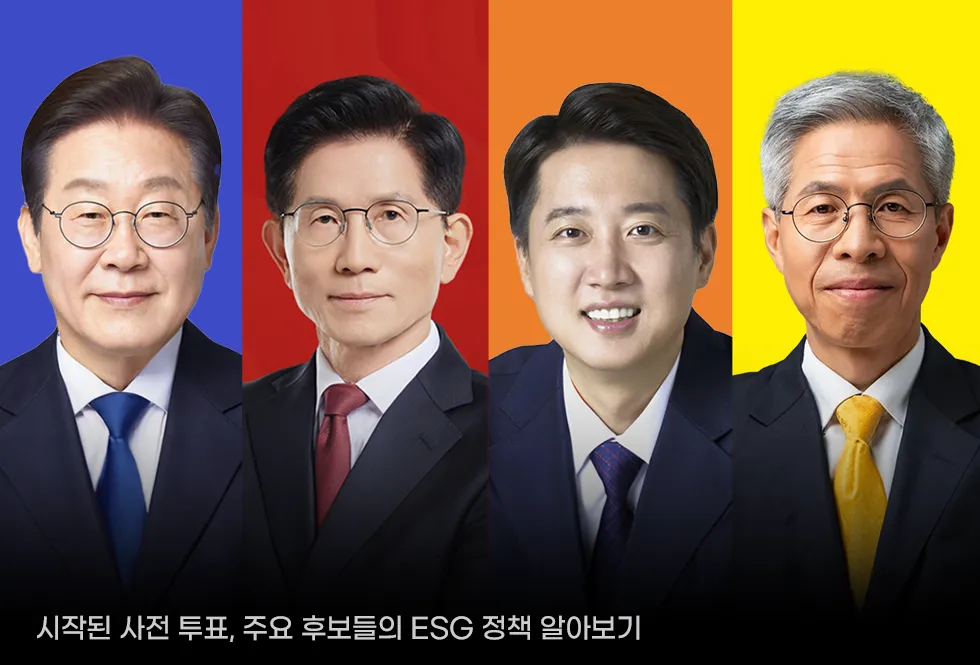
Ahead of the 21st presidential election on June 3, the candidates' policies naturally include ESG. Amid discussion of the climate crisis — now a reality before our eyes — and renewable-energy policy for carbon neutrality, interest cannot help but concentrate on the environment-related ESG policy direction each party's major candidate holds. At this point, when making sustainability disclosure mandatory is also emerging as a key policy task, the "Korea Sustainability Investing Forum (KoSIF)" sent an "ESG·Climate·Renewable Energy Policy Questionnaire" to each party's presidential candidate and disclosed the candidates' responses on May 26.The questionnaire consisted of asking, on 7 key policy tasks such as enacting a Framework Act on ESG, making sustainability disclosure mandatory, and reflecting climate risk by financial institutions, whether the candidate was for or against and their concrete implementation plans. Candidate Lee Jae-myung and Candidate Kwon Young-guk submitted official answers, but the camps of Kim Moon-soo and Lee Jun-seok, who had withheld a statement of position on ESG policy as a whole, did not submit answers. ESG.ONL has organized, in an easy-to-understand way, the ESG-related positions even of the candidates who did not submit answers, adding their existing statements and pledges related to climate and renewable energy.Lee Jae-myung, Seeking to Secure a Sustainable Future Through Active ESG PolicyDemocratic Party candidate Lee Jae-myung, together with Candidate Kwon Young-guk, expressed intent to actively pursue ESG policy. First, Candidate Lee expressed strong will to make ESG policy a key task of national innovation, and presents climate-crisis response, industrial transition, and balanced regional development as measures to add to our society's sustainability.An eco-friendly economic transition adding corporate responsible management and green financeCandidate Lee Jae-myung promised to "realize ESG information disclosure." The point is to make it mandatory for listed companies with assets of 2 trillion won or more to disclose ESG information first. Through this, he said companies would not hide their impact on society and the environment but transparently reveal it before citizens and investors, completing responsible management. He also revealed the goal of having global climate leadership by encouraging an eco-friendly transition across industry and society to build circular-economy infrastructure. Policies such as expanding "RE100 industrial complexes (industrial complexes operated on 100% renewable energy)" and introducing a "sunlight and wind pension system (a system for sharing renewable-energy generation profits with local residents)" also fit this context, aiming to make both regions and industry agents of the eco-friendly transition.Along with a circular-economy infrastructure plan, there is also a policy to change the flow of money in the financial sector toward eco-friendliness. He is pursuing the introduction of a financed-emissions reduction indicator that has financial institutions carefully assess the risks from climate change when lending or investing, and take responsibility even for the greenhouse-gas emissions of the companies they invest in. That is, it is a strategy to accelerate the green transition of the economic sector by inducing more funds to flow to eco-friendly industries and companies. His will is also clear to strengthen the institutional foundation — enacting a Framework Act on ESG, amending the Stewardship Code (the responsible-investment principles of institutional investors), and establishing a Green Finance Corporation — so that ESG management and green finance take root as a national standard rather than a temporary trend.An energy-network plan to strengthen global climate leadership and companies' eco-friendly competitivenessCandidate Lee Jae-myung plans to hasten carbon neutrality by completely abolishing coal power by 2040 and expanding electric vehicles, reducing fine dust, and expanding biodiversity protection zones. In addition, he pledged the goal of reducing greenhouse gases by 2030 and securing global climate leadership, such as by hosting "COP33 (the UN Climate Change Conference)" in Korea. It is his aspiration to have the Republic of Korea leap forward as a leading nation guiding the world in the era of the climate crisis.There is also a policy to open the way for renewable energy by building an energy highway. It is the conception of newly installing a power grid that can send electricity produced from renewable energy such as solar and wind quickly and efficiently anywhere in the country, and a plan to create a "self-reliant energy society" structure by making a regionally self-sufficient renewable-energy system that can produce energy to be consumed directly within the region. Candidate Lee stated that he would also lead the strengthening of companies' eco-friendly competitiveness by improving the "PPA (power purchase agreement) system," in which companies sign direct contracts with renewable-energy generators.[Comparison table of each party's answers to the ESG-policy inquiry © Korea Sustainability Investing Forum (KoSIF)]Kim Moon-soo, an Advancement Strategy and Energy Mix Relying on the Role of Autonomy and the MarketPeople Power Party candidate Kim Moon-soo did not respond to the inquiry on "the climate crisis and renewable energy." However, one could confirm the candidate's thinking on policies related to the environmental sector of ESG, such as strengthening energy infrastructure.Candidate Kim, emphasizing the role of autonomy and the market on ESG issues, is maintaining a deferring attitude of "deciding after gathering the opinions of stakeholders once the ESG disclosure standards are announced." Candidate Kim has a strong tendency to view ESG as a supplementary means for economic growth and strengthening industrial competitiveness, and tends to raise questions about the global ESG trend — a concern over feasibility. For example, regarding "RE100," he expressed a skeptical position, saying it is a good slogan in itself but virtually impossible.An energy mix centered on nuclear power rather than expanding renewablesTo realize carbon reduction in the energy field, the candidate also revealed a plan to expand the share of nuclear power among energy supply sources to 60% — rather than expanding renewable energy — through measures such as building and commercializing six large nuclear reactors and one small modular reactor (SMR) and extending the lifespan of aging reactors. Candidate Kim's position is to further strengthen industrial competitiveness through such cheap electricity supply based on nuclear power. He did not answer about the realistic limits of nuclear power, such as the treatment of high-level spent nuclear fuel.Lee Jun-seok, Aiming First at Education and Awareness Improvement for Climate PolicyReform Party candidate Lee Jun-seok did not put forward an official questionnaire answer or a concrete policy roadmap on ESG policy. He did not state an official position on the "Korea Sustainability Investing Forum"'s 7 ESG policy tasks either, and the term ESG cannot be found in the presidential debates or his policy-proposal document. Instead, Candidate Lee and the Reform Party focus on industrial competitiveness, education, and awareness improvement in climate and environmental policy. The Reform Party's campaign committee emphasized that "the most important thing in solving climate and environmental problems is education and awareness improvement in which all generations can participate," presenting as a key task the strengthening of basic environmental education such as waste-separation education and climate-sensitivity education in kindergartens and elementary schools. Also, according to the perception that "climate is industrial competitiveness itself," he pointed out that insufficient "RE100" preparation could create constraints on exports, and mentioned the need for various energy-transition strategies rather than a single method such as solar or ocean power.Proposing a gradual approach considering the burden on industryCandidate Lee Jun-seok proposed gradual promotion, considering the burden on industry and realistic conditions from realizing the energy-transition strategy. He stated that discussion is needed on realistic burdens such as increases in industrial electricity rates in the process of implementing climate policy, and his position is to disclose related detailed policies later. Overall, he did not present concrete ESG policies, but an industry-friendly approach considering realistic burdens appears likely to be a major standard for establishing his policies.Kwon Young-guk, Climate-Crisis Response and Transition to a Just Decarbonized SocietyDemocratic Labor Party candidate Kwon Young-guk is the candidate who put forward the most active and concrete position on ESG among the candidates. Candidate Kwon fully agrees with the 7 ESG policy tasks presented by the Korea Sustainability Investing Forum, and presented a concrete roadmap to also expand mandatory ESG disclosure for unlisted large corporations in 2027.A bold energy-transition policy putting forward exact target timelinesCandidate Kwon Young-guk promised to establish a "Ministry of Climate and Energy" overseeing climate, energy, and industrial policy, and to set up a presidential "Committee for Transition to a Decarbonized Society" and a National Assembly "Climate Economy Committee." He also stated that, with the goal of achieving carbon neutrality by 2050, he would sharply raise the "Nationally Determined Contribution (NDC)" to 70% by 2035. Bold energy-transition policies putting forward target timelines are a feature of Candidate Kwon's policies — a ban on new coal-fired power plant construction in 2030, a declaration of coal phase-out in 2035, achieving a 60% share of renewable-energy generation, a ban on the sale of fossil-fuel cars from 2035, and the closure of reactors reaching their design lifespan and the halt of new reactor construction.A climate transition encompassing even the protection of the socially disadvantagedCandidate Kwon Young-guk presented, as his core vision, important considerations of ESG such as a just transition and the realization of climate justice. He plans to enact a "Just Transition Act" and an "Energy Welfare Act" to support the groups harmed in the energy-transition process. He also seeks to pursue the expansion of social safety nets and green-finance infrastructure together — expanding green investment equivalent to 4% of the economy each year, and strengthening the Korea Development Bank's role as a green investment bank. Candidate Kwon also advocates a nuclear phase-out, opposite to Candidate Kim Moon-soo's nuclear policy.[21st presidential election promotional poster © National Election Commission]Looking at each party's presidential candidate's opinions on climate and renewable-energy-related ESG policy, one can confirm that clear differences are revealed among the candidates in concrete will to implement and in direction. Regarding this, Korea Sustainability Investing Forum Secretary-General Lee Jong-oh pointed out, "The Democratic Party and the Democratic Labor Party generally revealed clear positions on major ESG policies, but it is a very regrettable point that the second-largest party in the Assembly, the People Power Party, and the Reform Party did not submit official answers." Whatever the outcome of this presidential election, we hope that, on ESG-related matters requiring bipartisan handling, policies for a sustainable society will be realized through constructive discussion and responsible legislation and implementation.By Editor L
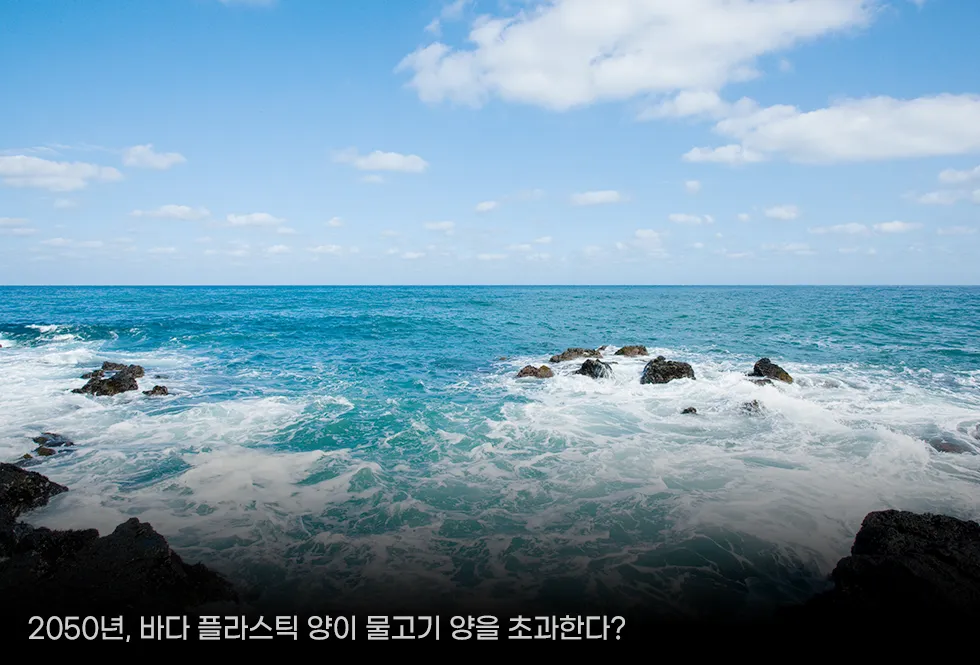
There is a forecast that "in 2050, the amount of ocean plastic will exceed the amount of fish." This is content frequently mentioned since it was noted in a report released in 2016 by the "World Economic Forum (WEF)" and the "Ellen MacArthur Foundation," a nonprofit that promotes the circular economy and works to solve the plastic problem. There are already 150 million tons of plastic waste in the ocean, and given the trend of more than about 11 million tons flowing in additionally each year, such a result is anticipated.Environmental problems from marine plastic are at a serious level, and beyond simply a crisis of marine ecosystems, they are being treated as a key ESG issue to which companies and society as a whole must respond responsibly. According to recent research, as many as 171 trillion microplastic particles (solid plastic 1 mm to 5 mm or less in diameter) are floating in the ocean, weighing about 2.3 million tons. Because plastic, once used and thrown away, is hard to disappear in nature — taking up to 450 years to decompose — it poses a long-term threat to ecosystems and human health.[2025 World Environment Day, held in Jeju in June © World Environment Day official website]The Official Theme of 2025 "World Environment Day," Held in Jeju, Is "Ending Plastic Pollution"Given its nature, plastic quickly breaks into small pieces by sunlight, waves, and wind, and the microplastics in the sea accumulate in the bodies of marine life and are transmitted even to humans through the food chain. The speed of plastic's miniaturization proceeds very fast, and it is now being detected in various marine life, including endangered species. Amid an overall sense of crisis, the official theme of "World Environment Day" on June 5 this year was also set as "Ending Plastic Pollution."This time, it is significant that the global official commemorative event is held in Jeju, Korea. Jeju declared a vision aiming for "zero plastic pollution" by 2040. Our government too has recently created a comprehensive plastic strategy encompassing the entire cycle — from the production, design, and consumption of plastic to reuse and recycling — and is pursuing a transition to a circular economy. The plan is to reduce the amount of marine plastic waste generated by 60% by 2030 and to completely remove it, making it zero, by 2050. In addition, it is accelerating the supply of eco-friendly fishing gear, the collection of marine trash, and the development of recycling technology. [A faucet dripping plastic bottles, exhibited next to the "international plastic negotiation venue" in Ottawa, Canada © Reuters]Production Management Rather Than Waste Management, but Complex InterestsOn the plastic issue, all respondents in a survey of the government delegations of 27 countries that recently participated in the "UN Global Plastics Treaty" negotiations expressed great concern about the impact of plastic pollution on human health. Some delegations even pointed out that plastic is being detected in human organs, blood, and even in the bodies of fetuses. Amid the international community's such worry, the "Global Plastics Treaty" final negotiation is scheduled for this coming August in Geneva, Switzerland.But ahead of much discussion, there are also loud voices that reducing plastic production should take priority over waste management or recycling. This is because current plastic recycling and waste management alone find it hard to keep up with the rapidly increasing plastic use, so much plastic still flows into the natural environment. However, as the main raw material of plastic is petroleum, major oil-producing countries such as China and the US and the petrochemical industry strongly oppose production reduction, citing maintaining industrial competitiveness, so preparing a solution is not easy.[Marine trash floating in the sea © UNEP]If Production Cannot Be Reduced, Solve Plastic Pollution Through Technological AdvancementThanks to plastic, humanity has enjoyed much convenience. If plastic cannot be avoided entirely right away, alternatives are needed, so the development of substitute materials such as bioplastics and research on microplastic-removal technology are actively under way. At existing fishing sites, "ghost fishing" — in which marine life gets caught and dies in lost fishing gear made from plastic-based synthetic fibers such as nylon and polyethylene — occurred. Because of this, "biodegradable fishing gear (nets, traps, etc.)," which naturally decomposes over time by water and carbon dioxide, is being used.Of course, 100% biodegradation of the bioplastics currently distributed in the market is difficult, and there is controversy over whether their environmental problems are sufficiently resolved. For problems that cannot be solved in a short time, direction matters. Experts emphasize that only when scientific research, policy, and international cooperation combine, aiming to solve the problem, can this complex plastic-pollution problem be solved. When government, companies, and civil society pool their strength and take an active interest in reducing plastic use, expanding recycling, and developing effective technology, we will be able to pass on a healthy sea and a sustainable Earth to the next generation.By Editor L
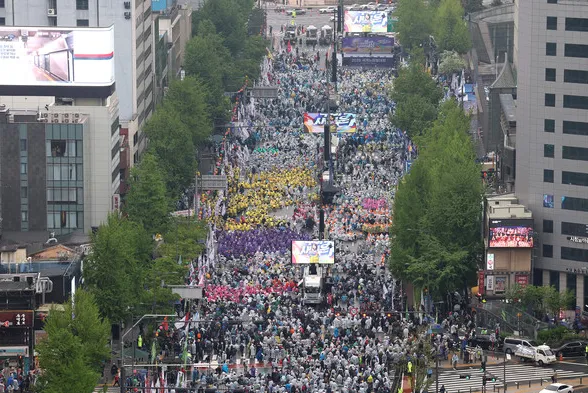
May 1, 2025 — the start of a holiday for some — was May Day. On this day, the two major umbrella unions in Korea, the "Korean Confederation of Trade Unions (hereafter KCTU)" and the "Federation of Korean Trade Unions (hereafter FKTU)," held simultaneous large-scale rallies in central Seoul and across the country, demanding the guarantee of workers' basic rights — strengthening labor rights, raising the minimum wage, amending the Trade Union Act, and protecting non-regular workers. The working population is decreasing more and more, but the reality is that solving problems in the labor field is slow. Let us look at the discussions pointed out at the 2025 May Day rallies and talk about the essence we should reflect on for May Day.[The "2025 World May Day Rally" held near Sungnyemun © Yonhap News]Workers' Basic Rights Viewed from an ESG PerspectiveMay Day is a day to remember sacrifice and struggle through the "Haymarket affair" — the large-scale general strike in which hundreds of thousands of workers in Chicago, USA, in 1886 demanded humane working hours, and the bloody incident that occurred in the process. Today, around May Day, workers, remembering this history, still raise their voices for a humane life and rights. Now that ESG management has established itself as an essential corporate value, in the "S (Social)" area, guaranteeing workers' human rights and basic rights becomes an indispensable evaluation criterion. The "International Labour Organization (ILO)" presented a guideline called "Just Transition," which holds that in the process of transitioning from a high-carbon economy to a low-carbon economy, the burden and harm on vulnerable groups must be minimized. Under this concept, companies must practice, for workers, improving the working environment, respecting human dignity, creating "Decent Work" in which productive labor takes place, and inclusive management in which no one is marginalized. But reality is not easy.[Hanjin delivery workers opposing 7-day-a-week delivery © Newsis]Delivery Workers, a Symbol of "Labor Without May Day"Ahead of May Day, Hanjin delivery workers announced a position denouncing the forced implementation of 7-day-a-week delivery, which does not guarantee delivery workers' right to health and rest. The delivery workers opposed 7-day delivery, informing people of a labor reality in which — due to long working hours reaching 72 hours a week, cuts to delivery fees, and unstable forms of employment — even basic rights to health and rest are not guaranteed. Behind the convenient logistics service in which a package ordered the previous night arrives at the door when you wake up lies the ever-present reality of delivery workers who face excessive workloads and the risk of death from overwork due to the forced implementation of 7-day delivery without additional staffing.To handle the delivery volume that surged after the COVID-19 pandemic and the shift to online commerce services, delivery workers have suffered hardship over the past several years. Over the eight years from 2017 to 2024, the number of delivery workers whose deaths from illness, including overwork, were recognized as industrial accidents totals 36. Including other causes such as accidents during this period, the total number of delivery-worker fatality accidents over the last five years rises to 51 (36 from illness, 15 from accidents). Including "hidden accidents" not captured in official statistics due to non-enrollment in industrial-accident insurance, the figure could rise further.The solution presented by labor organizations including the KCTU to resolve delivery workers' burden is to induce appropriate working hours by preventing long, high-intensity labor — setting a maximum daily working time, restricting late-night delivery, and so on. These labor organizations are also strongly voicing the need for a five-day workweek and the guarantee of the right to rest, which is recognized as a natural right for workers in other occupations but is not observed for delivery workers alone. Labor organizations argue that overhauling the system so that workers are not disadvantaged even when delivery is delayed is also necessary.Women, Youth, Migrant Workers... Why We Must Pay Attention to Vulnerable Labor GroupsA topic that has drawn attention for a long time in relation to labor issues is the problem of non-regular workers. The non-regular-worker problem refers to experiencing structural discrimination and inequality — not being paid the same wage for the same work, lower welfare and employment stability besides wages, and non-enrollment in essential social-security insurance. Korean law limits non-regular work to two years and regards fixed-term workers who exceed two years as indefinite-contract workers, but the reality of non-regular workers is one where employment insecurity is rampant — this is abused, for example, by restricting employment of more than two years itself.The non-regular-worker problem is directed at vulnerable labor groups who have conditions that make it relatively hard to access quality jobs.[The human-rights issue of women workers, still a task to be solved © Minjung-ui Sori]Although it is said to have improved, society still views women workers with a double standard. Even amid declaring a national emergency over low birth rates and labor shortages, the gaze toward policies supporting women's work-family balance — women who stand before the burden of childcare and housework, conversion to non-regular status, and the threat of career interruption — is not always kind. Structural gender discrimination such as the gender wage gap also cannot be ignored. Korea has very few female leaders compared with other countries. The structure that limits women from becoming leaders is called the "glass ceiling index"; the average ratio of female corporate executives among OECD member countries is about 30%. That the ratio of female executives at domestic large corporations is about 6% — only one-fifth of that level — and has ranked last for 11 straight years alone shows our reality.[Migrant workers demanding guaranteed freedom to change workplaces © News1]Another vulnerable labor group is migrant workers. To put it in the extreme, Korea's dependence on migrant workers has now grown to the point that industrial sites cannot be operated without them. Migrant workers, placed in the most dangerous and poor working environments, currently number one million, but they suffer from low wages, high-intensity labor, unpaid wages, and violence and sexual assault. In particular, the current "Employment Permit System" places constraints on migrant workers freely choosing and changing their workplaces, a structure that makes it hard for migrant workers to actively escape poor working environments. Each labor organization, publicizing the migrant-worker issue on this May Day, argued the need for a minimum respect for human rights for the sake of Korean society's sustainability and the realization of justice.[A protest for guaranteeing the human rights of youth workers © Newsis]Youth workers, though few in number, also attended the May Day rally and raised their voices for youth workers' human rights. Youth workers, like adult workers, provide labor to our society, but due to the limitation of being newcomers to society, they frequently face unreasonable situations and suffer harm. There are also not a few cases where they suffer harm because they have not sufficiently learned about their rights as workers. For youth workers, whose numbers are increasing day by day, labor-human-rights education should be conducted starting from school, and it is necessary to strengthen the writing of employment contracts to protect them from excessive night and holiday work and unpaid wages when they provide labor. In addition, practical mechanisms are also needed so that young people can be protected from various rights violations and exploitation problems in the workplace — such as sexual harassment, which can also lead to serious crimes including crimes against children and youth.The Korea Employment Information Service officially announced a prediction that from 2028, Korea's economically active population — that is, the working population — will decrease. Therefore, coexistence with the potential labor force that will support the insufficient workforce — women, foreigners, youth, and others classified as vulnerable labor groups — is essential for our government and companies.A Call for a "Just Transition" for the Labor Market and SocietyOn this May Day, too, various worker groups gathered to publicize their respective pressing issues. The problems each worker group pointed out are not unfamiliar. We must undergo overall industrial-structure changes led by the climate crisis and the advance of AI technology, while carrying familiar problems long left unsolved. Of course, there are also new agendas. Discussion of introducing a four-day workweek has begun, and measures to improve the quality of life of older workers and resolve polarization as we enter a super-aged society have also become topics.Considering the "Just Transition" — that support is needed so that no one is left behind in the process of transitioning toward a sustainable society — it is time to seek a transition to a society in which labor, welfare, and the environment achieve harmony, beyond simply preserving jobs. As satisfaction and joy in life through work are precious, let us all ponder together ways to guarantee the labor rights of various worker groups, replenish the insufficient workforce, and form better jobs.By Editor L

With the overlap of the Trump second administration's tariff strengthening and the EU's Carbon Border Adjustment Mechanism (CBAM), Korean companies face a double burden. ESG.ONL met "foreign attorney Hong Seung-pyo," who specializes in EU law and international law, to learn about the ESG competitiveness needed in an era of global trade that is becoming blocked around interests.President Donald Trump's second administration put the brakes on ESG policies from the start. Following withdrawal from the Paris Agreement and the abolition of DEI policy, it has recently caused confusion for companies worldwide with tariff pressure. Furthermore, our country is expected to see politically turbulent circumstances continue for the time being. Amid the absence of national leadership, Korea faces the difficulty of the public and private sectors each having to join forces and newly devise a trade strategy toward the US.ESG.ONL met foreign attorney Hong Seung-pyo, an international-law specialist at "Espée & Lancée," from whom we had sought advice on the direction of Europe's ESG after Trump took power, and asked about the position Korea's ESG policy should take at the prologue of the global trade war triggered by the US-originated tariff bomb.Europe's CBAM, America's Tariff Policy: "In Fact, the Risk Has Doubled"Attorney Hong Seung-pyo began the interview with concern about the current turmoil in the trade market, which is pressuring from both Europe and the US. The EU is scheduled to fully implement the Carbon Border Adjustment Mechanism (CBAM) from 2026. Through this, it imposes a carbon cost on imports such as steel and aluminum. It is a situation in which trade barriers are rising — Europe with carbon costs, the US with an expanded tariff policy. When the same item is simultaneously subject to both sides' regulations, a double burden of carbon cost and tariff arises, and so companies' compliance officers need to move quickly to respond to such cost issues.In particular, the role of the new government to come is important. It should strengthen cooperation systems with companies to support carbon-emission verification and reporting systems, and prevent discriminatory application from occurring through negotiations with the EU. In this process, the possibility of trade disputes is also high. Attorney Hong said that it is wise to keep watching the situation and for the government and companies to enter joint negotiations in a timely manner.Attorney Hong Seung-pyo © ESG.ONLResponding to Tariff Risk Through Local Investment and Market DiversificationExpanding local production within the US is one method of avoiding tariffs. So the news that POSCO, Hyundai Steel, and others are pushing to build factories in the US was recently a big topic. Korea has exported 2.63 million tons of steel to the US annually, and it is obvious that, when tariffs are applied, maintaining the market and entering it will become difficult due to worsening profitability. In particular, if auto parts and steel sheets for electric vehicles are included in the tariff targets, an increase in the production cost of eco-friendly vehicles is inevitable. Because of this, related companies are striving to bypass the tariff burden and respond to demand through local production. Is there no other way?Attorney Hong recommends entering markets with low geopolitical risk besides the US, such as India and the BRICS bloc. Expanding entry into emerging countries with populations over 100 million, such as Nigeria, Indonesia, and Bangladesh, would also be a good alternative. He said there is also the method of Korea strengthening regional trade agreements. Building a cooperation model with European companies when entering the African market by utilizing our "Free Trade Agreement (FTA)" with Europe can also be seen as an effective strategy.In particular, Attorney Hong added the opinion that, to respond to the dispute-mediation vacuum that arose because the Trump administration refused to appoint judges to the "World Trade Organization (WTO)," it is necessary to actively utilize dispute-resolution bodies such as the "Regional Comprehensive Economic Partnership (RCEP)." RCEP is an agreement in which 15 Asia-Pacific countries participate; as an institution that manages trade disputes through structured procedures, it includes in its work a plan to review its dispute-resolution provisions.A Clue to a Solution for Finding Stability in an Unstable Environment: ESG ManagementThere are concerns even with the solutions presented above. Attorney Hong said, "The biggest problem domestic companies face when they build production bases abroad is the problem of managing workers," continuing his voice of concern for Korean companies currently abroad. The number of Korean SME corporate entities that have entered Mexico and Canada reaches about 200. In particular, "Samsung Electronics," "LG Electronics," and "Hyundai Motor" are in Mexico, and "LG Energy Solution" and "EcoPro BM" have entered Canada. A worsening of these companies' profitability is foreseen due to the US tariff policy. And this situation can lead even to the reduction of jobs for local workers in labor-intensive industries and to unpaid-wage problems. The concern that conflict between local workers and companies could spread into an international controversy cannot be ignored either.It is important to prepare response measures for this too, and the solution Attorney Hong presented is that a "localization strategy" must first be strengthened. "SK Hynix" in Indiana, USA, showed a good case of supplying manpower and building the local community's trust by operating a technical-manpower training program in cooperation with the local "Purdue University." Amid the continuing movements of global-level power and companies' management directions, not only in Korea, ESG management through harmony with the local community where a company is located and building transparent labor-management relations will become the foundation of competitiveness — securing business stability.["Attorney Hong Seung-pyo," active in Europe and Korea © Espée & Lancée]Ways for Korean Companies to Sustain ESG ManagementIf the tariff burden grows, will Korean companies reduce ESG investment such as eco-friendly technology development? Attorney Hong, a foreign attorney well-versed in European circumstances — having long resided in Europe and with an office also in Luxembourg — stated, "In Europe, as greenwashing lawsuits over exaggerated disclosure of environmental performance increase, the legal risk of ESG activities is coming to the fore," saying that companies will find it hard to easily choose to reduce ESG investment. In particular, for carbon-intensive industries, purchasing emission allowances is essential to respond to the EU's CBAM. There is a possibility that this will lead to profitability pressure. Because of this, Attorney Hong advised that, to avoid the carbon tax, one must hurry to convert to low-carbon product lines starting now. He also emphasized that one should gain momentum to sustain ESG management by actively utilizing the ESG cooperation clauses of the "RCEP" and the "Comprehensive and Progressive Agreement for Trans-Pacific Partnership (CPTPP)" for the Asia-Pacific region.Attorney Hong said, "The US is currently dreaming of bringing in competitive manufacturing plants from other countries to create jobs at home and revive the nation," and thinks that President Trump's sweeping tariff-related policy push is a kind of courtship, seeking to take global companies hostage. The active attitude of our companies in responding to the US tariff policy — building factories, investing, and pursuing change — can be a good plan in the mid-to-long term. Attorney Hong also said, "It's hard only at first, weighing the anxiety factors, but once success cases arise, other companies can follow the precedent." He proposes a shift in thinking — focusing on mid-to-long-term response rather than excessive worry about what might happen during the adjustment period.Attorney Hong Seung-pyo's interview can be summarized as: to avoid being swept up in the wave of global protectionism, it is important first to prepare response measures combining compliance with international law and a localization strategy. A win-win-type cooperation model with developing countries is also a good idea for market expansion. As the saying "crisis is opportunity" goes, if we approach even a blocked trade environment with prepared technology, the use of global networks, and the spirit of ESG management, our sustainable growth will not stop here.By Editor L
Even amid the flow of global ESG change in the US, Europe, and elsewhere, domestic ESG policy has, entering this year, trended toward becoming more full-fledged than before. This is because, in the global market, ESG is already accepted as an institutionally settled flow. ESG.ONL has summarized the direction of major Korean companies' ESG responses amid a rapidly changing environment.In 2025, there was worldwide turmoil due to the US Trump administration's declaration of withdrawal from the Paris Climate Agreement and its ESG-policy reversal. But Korea, undeterred by this, is trending toward further strengthening climate-change response and ESG policy. Our government decided to make a large-scale investment of more than 2.7 trillion won in "climate-change response technology development." It has also stated that it will join international cooperation to solve the global climate crisis, and domestic companies too are maintaining a keynote of strengthening ESG management.From 2025 to 2050... Efforts to Strengthen Global CooperationSince the 1990s, Korea has actively participated in the international response to climate change, joining the "UN Framework Convention on Climate Change (UNFCCC)" and the "Kyoto Protocol." After the Paris Agreement in 2016, it set a national greenhouse-gas reduction target of 40% compared with 2018 by 2030, and continues to push concrete policies to realize this. In particular, it reflected in domestic policy the goals of tripling renewable energy and doubling energy efficiency, agreed at the "28th Conference of the Parties to the UN Framework Convention on Climate Change (COP28)," and received positive evaluation in the international community. That said, there are realistic adjustments — for instance, the representative ESG-related policy of "mandatory ESG disclosure," originally scheduled for sequential introduction in 2025, was decided to be applied from after 2026, considering industry's difficult current situation. "Mandatory ESG disclosure," which raises companies' transparency and accountability while providing investors with more accurate information, is planned to expand in stages from 2025 to 2030. Let us look at the ESG-management status of the domestic large corporations that will be included among the mandatory-disclosure targets — how far along they are.[Realizing carbon-neutrality goals © Samsung, © Hyundai Motor][1] Samsung Electronics and Hyundai Motor's Realization of Carbon-Neutrality GoalsTo achieve carbon neutrality by 2050, "Samsung Electronics" is currently pushing to convert to 100% renewable-energy use at its global sites. It is also focusing on reducing water use and expanding wastewater recycling in the semiconductor process. "Hyundai Motor," which decided to produce 670,000 electric and hydrogen cars to replace fossil-fuel-based cars by 2025, currently plans to lead the eco-friendly mobility market and is carrying out carbon-reduction projects linked to electric vehicles. It is also practicing ESG management through methods such as introducing solar-power generation systems into the production process.[Building circular-economy systems © LG Chem, © SK Innovation][2] LG Chem and SK Innovation's Circular-Economy Activity Models"LG Chem," which developed bio-raw-material-based recycled plastic and achieved a 95% waste-recycling rate, is building a resource-circulation economy by commercializing waste-battery recycling technology. LG Chem plans to invest 10 trillion won in eco-friendly-material development and mobility- and battery-related businesses, with the goal of carbon-neutral growth by 2025. "SK Innovation" also focuses on circular-economy activities. It is practicing a "net-zero-waste" goal through a circular-raw-material-based production process that recycles waste plastic. "SK geo centric" aims to build a waste-plastic recycling cluster in Ulsan by 2025, producing 150,000 tons of pyrolysis oil annually and achieving a carbon-reduction effect of 400,000–500,000 tons per year.[Establishing and applying ESG standards © CJ Group, © NCSOFT][3] The "CJ Group," Striving for ESG InternalizationThe "CJ Group" places emphasis on internalizing ESG throughout the entire organization. Therefore, it operates a sustainability-management committee and consultative bodies so that organization members make decisions from an ESG perspective. It strives to create a virtuous-cycle structure by putting forward the values of environment, safety, and health, from raw-material purchasing to production, consumption, and disposal. Also, on the social-responsibility front, along with promoting diversity, equity, and inclusion (DEI), it made efforts for human-rights protection through human-rights due diligence, achieving results such as raising the ratio of female executives and managers and lowering the employee industrial-accident rate.[4] The IT Industry, Setting AI Ethics StandardsDomestic IT companies are creating codes and programs to respond to concerns about ethical problems emerging along with the advance of AI technology. "NCSOFT" operates an ethics-and-security system for AI services through an "AI Red Team," managing data protection and transparency. Also, "NAVER" continues to update its AI ethics code in cooperation with the "Seoul National University AI Policy Initiative (SAPI)." "Kakao" operates an AI-algorithm ethics-education program for all employees, providing an environment where AI ethics can be practically applied to general work. Companies are establishing AI ethics to secure reliability along with corporate competitiveness and to prepare for internal and external risks.Continuous Domestic ESG Policy Keeps the ESG Investment Flow GoingIn this way, despite changes in the international ESG-policy environment, Korea is continuing the ESG-related policies it had been pursuing. It will be hard to avoid the effects of changes in the economic environment, but the principles and technological environment established at the government and corporate level for net-zero goals aim at a long-lasting effect and will continue to create sustainable models in 2025 too.By Editor LESG.ONL's Three-Line Summary 💡- In 2025, despite the Trump administration's ESG-policy reversal, Korea is strengthening climate-change response and ESG policy.- Korea's mandatory ESG disclosure has been postponed to after 2026 but is set to expand in stages by 2030.- Domestic large corporations are striving to achieve carbon-neutrality goals and build circular-economy models, and the IT industry is setting AI ethics standards.