Loading Data
Please wait a moment...
Update Cal.
2026.08
03
Mon
04
Tue
05
Wed
06
Thu
07
Fri
08
Sat
09
Sun
Update Calendar
2026.08
01
Sat
02
Sun
03
Mon
04
Tue
05
Wed
06
Thu
07
Fri
08
Sat
09
Sun
10
Mon
11
Tue
12
Wed
13
Thu
14
Fri

Loading Data
Please wait a moment...
Morning features and interviews. A morning story over a cup.
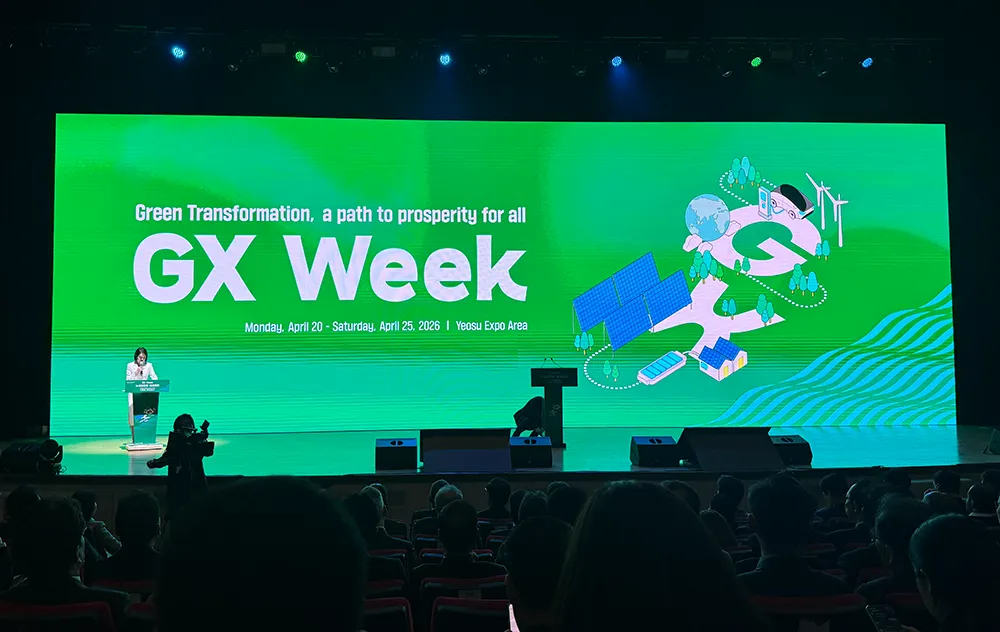
The 3rd United Nations Framework Convention on Climate Change (UNFCCC) Climate Change Week is being held for the first time this year in Yeosu, Jeollanam-do, South Korea. UNFCCC Climate Change Week is an international environmental event that pre-coordinates the official agenda of the annual Conference of the Parties (COP), held each November. At the COP, the 198 countries that have acceded to the UNFCCC gather to discuss climate change response measures and determine greenhouse gas reduction targets. In conjunction, the government is hosting the ‘Republic of Korea Green Transformation International Week (GX Week)’ during this Climate Change Week. We report from the field on the significance of GX Week, which shares the direction of South Korea’s energy transition policy with the international community.[Yeosu Expo Convention Center, venue for UNFCCC Climate Change Week and GX Week © ESG.ONL]Yeosu’s Determination Reaches All the Way to BrazilThe road to hosting Climate Change Week in Yeosu was, in fact, preceded by a long preparation period. In September 2025, Yeosu in Jeollanam-do was selected as the host candidate through a nationwide open call by the Ministry of Climate, Energy and Environment. Then in November of the same year, the city of Yeosu went so far as to form a delegation and fly directly to the COP30 venue in Brazil. The delegation held a policy presentation at the COP30 Korea Pavilion, explaining the strategy and response measures for attracting Climate Change Week, as well as Korea’s carbon neutrality vision, while conducting a panel discussion. At the same venue, Jeollanam-do Governor Kim Young-rok personally delivered a letter to UNFCCC Executive Secretary Simon Stiell, succeeding in securing the bid.What It Means for South Korea to Stand on the International StageSince launching the nation’s first Climate Protection Week in 2008, Yeosu issued the ‘Yeosu Declaration’ urging marine ecosystem conservation at the 2012 World Expo. In 2021, it created a forum through the Yeosu Summit of the Urban Environment Convention to discuss carbon neutrality with city leaders from around the world. It was the history of climate action built up over some 20 years that brought Yeosu to this position. Fittingly, at the GX Week opening ceremony held this morning alongside the start of Climate Change Week, one could savor the significance of Yeosu as the key stage setting the climate agenda for the Asia-Pacific region. The opening ceremony was attended by approximately 800 people, including Minister of Climate, Energy and Environment Kim Sung-hwan, UNFCCC Executive Secretary Simon Stiell, Japanese Vice Minister of Economy, Trade and Industry Takehiko Matsuo, EU Ambassador to Korea Ugo Astuto, ministers and vice ministers of climate and energy ministries from various countries, senior officials from international organizations, academic experts, and citizens. Prime Minister Kim Min-seok and Jeollanam-do Governor Kim Young-rok also added to the significance of the event through their congratulatory remarks and attendance. [Participants taking part in the GX Week Declaration © ESG.ONL]The World’s Resolve Gathered in YeosuSpeakers participating in the Yeosu GX Week opening ceremony and discussions pointed to the crisis arising from fossil fuel dependence. At the same time, they emphasized that, given the global energy crisis including the surge in super-scale power demand in the AI era, energy transition has become a core task that determines national competitiveness and future survival, going beyond environmental protection. In their presentations, each country shared the current state and pace of their concrete implementation strategies. The South Korean government is speedily advancing green transformation as a core national strategy, including expanding the renewable energy ratio to 20% by 2030 and spreading solar and wind income nationwide. Jeollanam-do is stepping forward as a leading hub for low-carbon transition through the hydrogen conversion of the Yeosu World Petroleum Complex and the expansion of blue carbon. Japan is accelerating decarbonization with its GX2040 vision, the introduction of an emissions trading system, and a 150 trillion yen investment over 10 years. The EU is legally driving forward a 55% reduction in greenhouse gases and 45% expansion of renewable energy by 2030 under ‘Fit for 55.’ [GX Week opening ceremony discussion © ESG.ONL]In the second part of the opening ceremony’s panel discussion, senior figures from various countries — including GGGI Director-General Kim Sang-hyup, UNFCCC Deputy Executive Secretary Noura Hamladji, the Norwegian Ambassador to Korea, and vice ministers from Bolivia and Vietnam — engaged in in-depth discussion on the theme of how to simultaneously achieve energy transition and security. With a shared recognition that energy security and climate policy are inseparable and must be pursued simultaneously, substantive implementation strategies were discussed, including resolving geopolitical risks through diversification of renewable energy sources, establishing stable regulatory frameworks such as carbon pricing, and measures to attract private investment. The need for expanded international technology cooperation in offshore wind and hydrogen sectors was also emphasized.[Outdoor event booths at the Yeosu Expo Convention Center © ESG.ONL]A Sustainable Everyday Life Encountered at the Exhibition HallOutside the Expo Hall where the agenda was presented, exhibitions and hands-on programs conveying the message of green transformation are underway. At the Ministry of Climate, Energy and Environment booth, a quiz was held through which recycled umbrellas and turtle-shaped bottle openers made from discarded fishing nets were given as souvenirs, raising interest in marine waste upcycling. The Sudogwon Landfill Site Management Corporation, which leads the eco-friendly treatment and resource recovery of Seoul metropolitan area waste, directly demonstrates the possibilities of resource circulation in everyday life through a craft activity making pot holders from sock toe offcuts left over from sock manufacturing.At an exhibition hall lined with government and public institution booths, H&M stood out as a private fashion brand, sharing information on its Stella McCartney collection based on innovative materials to present the direction of sustainable fashion, as well as its supply chain management in which 91% of all materials are procured through recycled or sustainable methods. All the booths at the event venue share a common significance in demonstrating that carbon neutrality is not a grandiose policy goal but is already being practiced across everyday life and throughout industry.Starting with today’s opening ceremony, Yeosu GX Week continues through the 25th. During this period, a total of 67 sessions will be held sequentially, including the AI Era Energy Strategy Dialogue on the 21st, the Climate Technology Innovation Forum on the 23rd, and the Green Taxonomy and Transition Finance Global Forum on the 24th. Through this event, the government plans to preemptively build international consensus on the ‘Republic of Korea Green Transformation (K-GX) Promotion Strategy’ scheduled for announcement in June, and to concretize the foundation for global climate and energy cooperation. With Yeosu standing at the center of international agenda-setting, attention now turns to what resolutions and outcomes will fill this one week. by Editor L

Can virtual assets be donated? Even when individuals or companies holding virtual assets wished to participate in donations for public interest purposes, doing so had been difficult. This was because no official procedure had been established for non-profit corporations to receive and convert such assets into cash within the institutional framework. However, virtual asset donations, which had long remained only a possibility, have now begun to actually materialize. The Institutionalization of Virtual Asset DonationsIn June 2025, the financial authorities announced guidelines for the sale of virtual assets by non-profit corporations and virtual asset exchanges, and permitted qualified non-profit corporations to open real-name accounts for selling such assets. These guidelines are significant in that they focus on ensuring internal control systems for non-profit corporations and virtual asset exchanges, imposing pre- and post-sale disclosure obligations, and preventing money laundering. The conditions of public interest and transparent operation necessary for virtual assets to be utilized as public benefit resources have thus been institutionally established. [Comparison of Sale Guidelines for Non-Profit Corporations and Virtual Asset Exchanges © Financial Services Commission]How Virtual Asset Donations Are OperatedFrom December 18, 2025, to March 18, 2026, Korbit, South Korea’s first virtual asset exchange, and the non-profit corporation Social Solidarity Bank conducted a virtual asset donation campaign to support the self-reliance of vulnerable groups. Korbit utilized its technical capabilities to build a donation platform environment and support donors in safely and conveniently donating virtual assets. The donations raised through the campaign will be used to strengthen the foundation for self-reliance of vulnerable groups supported by the Social Solidarity Bank. This campaign is an example demonstrating the conditions and procedures required for virtual asset donations to be converted into actual public benefit resources.[Korbit x Social Solidarity Bank Virtual Asset Donation Campaign Representative Image © Social Solidarity Bank]In the specific operational stages of the campaign, the two organizations verified whether participants qualified as related parties based on the participant list, and established operating procedures for a Virtual Asset Donation Review Committee, disclosing the appropriateness of the donations and the monetization plan to internal and external stakeholders. They also enhanced operational transparency by proceeding with monetization without delay according to the schedule announced by the Review Committee and informing participants of the results. Beyond Investment Instruments, Toward Tools for GivingThe Social Solidarity Bank announced its plan to use the virtual asset donations raised through this campaign for the ‘Together Warmth Fund.’ The Together Warmth Fund is a social finance fund operated by the Social Solidarity Bank, aimed at supporting the livelihood stability and financial education of the financially vulnerable. [Korbit x Social Solidarity Bank Virtual Asset Donation Campaign Image © Social Solidarity Bank]This campaign, in which Korbit and the Social Solidarity Bank collaborated, demonstrated the possibility that virtual assets — which had until now only been used as investment vehicles and means of payment — can play a role as social finance and be connected to sustainable funding sources. The campaign is also a meaningful attempt in that participants familiar with existing financial structures and asset flows resonated with the fund operation model in which they help those outside the institutional financial system achieve self-reliance and ensure that such support continues steadily.This campaign, which has broadened the scope of virtual asset utilization by one step, will serve as one answer to the question of how companies can design virtual asset donations for public interest purposes and build the trust of donation participants. by Editor L
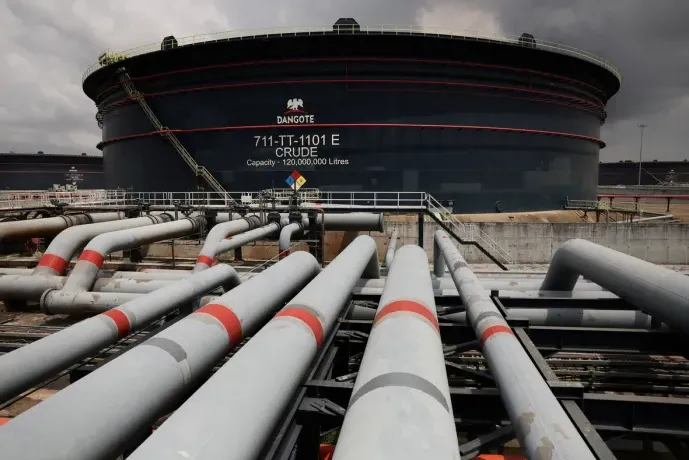
A Monday morning in March 2026. Mr. Park, a public servant working in Gangnam-gu, Seoul, left home an hour earlier than usual. With a license plate ending in ‘3,’ he had to take the subway to work due to the public sector five-day vehicle rotation system that went into effect that day. On his way home, he picked up a pack of instant noodles at a convenience store near his house. Looking at the price tag, it had gone up by 400 won compared to two months ago. “Ah, oil!” crossed his mind. The noodle packaging, the plastic bag holding it, the logistics truck delivering it… the end of that chain of thought points to one place: the Strait of Hormuz, the heart of the world’s energy artery.The World’s Energy Artery Is BlockedMaritime transport volume through the Strait of Hormuz — a critical chokepoint through which 20 million barrels per day, or about 20% of global oil consumption, passes — has plunged. The crisis, which began when Iran declared control of the strait in the aftermath of the U.S.-Iran war, is brutally demonstrating how immediate and all-encompassing a shock geopolitical tensions can deliver to the energy supply chain. From the moment the strait blockade was announced, crude oil prices have been steadily rising, and the resulting logistics bottleneck has strained the market. Crude oil prices instantly exceeded USD 100 per barrel. According to analysis by the Korea Ocean Business Corporation, cargo volume passing through the Strait of Hormuz has decreased by approximately 80% compared to normal levels, and freight rates for large crude oil carriers on the Middle East-China route have risen roughly 3.3-fold. What about taking alternative routes? When the Strait of Hormuz is closed, additional transport costs from alternative routes are estimated to surge by at least 50–80% compared to existing maritime freight rates. That cost will ultimately be passed on to consumers’ wallets.[Strait of Hormuz © gettyimages]Daily Life Changes: Rising Prices and Intensified Five-Day Vehicle RotationThe ways in which this crisis reaches South Korean consumers are denser and faster than one might think. What hits home first is the price display at the gas station. As diesel and gasoline prices surge, the logistics and delivery industries are taking a direct hit. Increases in courier fees and delivery charges are already a foregone conclusion. The airline industry is also seeing its operating costs rise due to higher jet fuel prices, while the shipping industry is suffering from further increases in tanker freight costs. Food prices at the table are also serious. Coffee, chocolate, meat, and seafood prices are expected to rise due to increased fuel and fertilizer costs. Off-season agricultural products and imported seafood are particularly expected to be heavily affected by higher transport costs.[Qatar LNG © QatarEnergy]To respond to the energy supply crisis related to the Middle East situation, the government intensified the five-day vehicle rotation system for the public sector starting March 25. As the prolonged Middle East situation increased energy supply uncertainties, the resource security crisis alert for crude oil was upgraded from the ‘Attention’ level to ‘Caution’ on the 18th. The business community is also quickly joining in. Samsung has implemented a 10-day vehicle rotation system across all domestic workplaces, and SK Group, while applying a 5-day rotation system, has decided to mandate lights-off during lunch breaks and after work hours, and to apply temperature standards of cooling at 26°C or above and heating at 18°C or below. The Korea Chamber of Commerce and Industry and the Federation of Korean Industries are also promoting daily energy-saving activities such as switching to video conferences, collective lights-off during lunch hours, and encouraging the use of public transportation. At a Cabinet meeting, President Lee Jae-myung urged public cooperation, noting that “there is no place in daily life where petrochemical products are not used, from delivery containers to medical tools.” [12 National Action Items for Energy Conservation by the Ministry of Climate, Energy and Environment]The IEA’s 10 Commandments, and Remote Work as a VariableThe International Energy Agency (IEA) has pointed out that demand suppression is essential, warning of prolonged oil supply disruptions due to the Middle East war. It presented ten recommendations including expanding remote work, using public transportation, implementing private car rotation by day of the week, and expanding carpooling. Among the ten commandments, remote work is drawing attention as the most powerful demand reduction measure. The IEA assessed that if workers in occupations capable of remote work did so for an additional three days a week, automobile oil consumption could be reduced by 2–6%, with potential reductions of around 20% on average for individual drivers.However, in South Korea, expanding remote work carries implications beyond simple energy conservation. While the five-day vehicle rotation system is a regulation that ‘restricts driving,’ remote work eliminates the commute itself, cutting fuel consumption at the source. At the same time, the changes it brings to daily life are far more complex. If the shift to remote work increases, lunchtime demand at downtown restaurants and cafés decreases, and public transit congestion eases, but office commercial districts such as bakeries and convenience stores take a hit. The so-called ‘energy transfer’ effect — in which commuting fuel decreases but household heating, cooling, and electricity use increases — must also be considered. The government has stated that it will examine whether recommending remote work would be possible if the crisis alert is raised to the ‘Alert’ level. CJ has already established a plan to adjust its entire work mode — including remote work, satellite offices, and flexible work — to reduce energy use if the alert level is raised. This is a point where the speed of crisis response policy diverges between companies and government.The Real Question Posed by the Oil CrisisEvery time an energy crisis strikes, South Korea repeats the cycle of demand reduction, expansion of strategic oil reserves, and conservation campaigns — and this very pattern reveals the structural vulnerability of its energy policy. Since most of the crude oil that South Korea imports from the Middle East passes through the Strait of Hormuz, a blockade of the strait is expected to deliver a fatal blow to the manufacturing supply chain. If the same prescription is repeated every time a crisis hits, it means we are still waiting for the same crisis. If expanding strategic reserves and diversifying supply sources are the immediate breakwater, then expanding renewable energy and restructuring industrial and lifestyle systems based on energy efficiency are the seawall that can absorb repeated shocks. When Hormuz is blocked, our daily lives are shaken along with it. For this shaking not to be repeated in the next crisis, we must accept today’s discomfort not as a ‘temporary sacrifice’ but as a ‘starting point for structural transformation.’ by Editor L
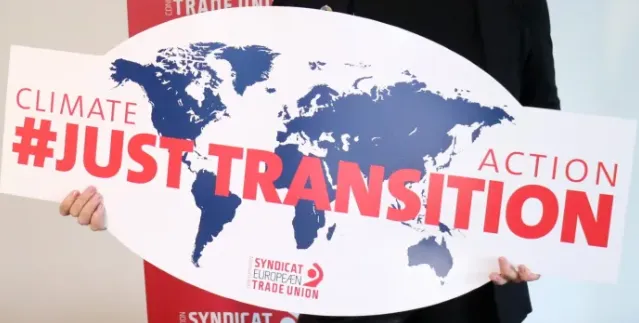
Every March, hundreds of thousands of job seekers organize their resumes and portfolios as recruitment season arrives. And 2026 is a year when the statement that AI is quietly but rapidly replacing positions that once required human hiring feels more real than ever. Now, with the benefits and harms of technological transition unfolding simultaneously, just transition is no longer solely the story of coal miners.Entry-Level Positions Quietly Disappearing Every Recruitment SeasonThe National Data Agency’s ‘Korean Social Trends 2024’ analyzed that approximately 2.7 million domestic jobs — 10% of all jobs — can be replaced by AI. The World Economic Forum (WEF) projected that while 92 million jobs will disappear due to AI over the next five years, 170 million new jobs will be created. At first glance, this seems positive, but more important than the sum of the numbers is ‘who occupies the positions that are disappearing.’ Companies facing change prefer not to dismiss existing employees but rather not to hire new ones in the first place. According to 2025 U.S. labor market research, companies that adopted generative AI reduced new-graduate hiring by 7.7% one and a half years after adoption compared to companies that did not. In contrast, experienced hiring was relatively maintained or showed an increasing trend.In this situation, the decline in new-graduate hiring in South Korea is even steeper. According to an analysis by the employment platform Catch, regular new-graduate job postings at large companies dropped by 43% year-on-year in 2025. In particular, the IT and telecommunications sector reduced new-graduate hiring by 67% over the same period. A situation is also emerging in which roughly half of those who passed the certified public accountant exam are effectively unemployed. This is because AI has replaced the simple repetitive tasks that first- to third-year new accountants used to handle, prompting accounting firms to reduce new hires altogether. This is not simply a job shortage but a signal that the very structure of labor market entry is changing.[© gettyimages]Countries That Designed the TransitionNew jobs do not naturally come to those who have lost their jobs to new technology. Unless someone designs it deliberately, the benefits of labor transition will be concentrated among a few, while the costs will be borne by the many. German labor circles, judging the phase-out of coal as central to the energy transition for carbon neutrality, launched the ‘Coal Commission’ in 2018, composed of 28 members including workers, companies, the government, and regional stakeholders. After six months of deliberation, it adopted a roadmap to phase out coal mines and coal-fired power plants by 2038. In this process, it promised social security for workers who could lose their jobs and decided to invest finances for 20 years in regions hosting coal-fired power plants for regional development. The same principle applies in the AI transition phase. The German Metalworkers’ Union (IG Metall) identified participation, co-determination, retraining, collective agreements, and a strong social safety net as the key elements of the transition process, emphasizing that workers are not ‘objects of protection’ but ‘future skilled professionals.’ Italy has moved to proactively secure financial resources for the AI era. The Italian government allocated €30 million for employed workers at high risk of losing their jobs to AI automation and for the unemployed. Of this, €10 million is directed toward upskilling employed workers at high risk of automation replacement, and the remaining €20 million toward developing the digital capabilities of the unemployed and the economically inactive population. It is significant in that it includes not only those already unemployed but also those who are still working yet at risk.South Korea’s response is just beginning to gain momentum. With the launch of the New Economic, Social and Labor Council on March 19, 2026, the tripartite social dialogue among labor, business, and government, which had been suspended for over a year, has resumed. The ‘Labor-Management Win-Win Committee for AI Transformation’ is scheduled to discuss labor-management cooperation models in response to the changing job environment brought about by the introduction of AI. [© gettyimages]Just Transition: The ConditionsEvery year when the March recruitment season comes around, applicants face the question of ‘what qualifications are needed.’ But the answer to a more fundamental question still remains society’s responsibility. Only when the cost of labor transition is not borne by individuals alone, a social safety net guarantees income during the transition period, and a consensus structure is established in which business, society, and government share the costs — only then can the word ‘fair’ be placed in front. Ensuring that technological progress does not result in the profit of a few and the anxiety of the many is why ESG’s ‘S’ remains important even in the AI era. by Editor L

The Strait of Hormuz, called the ‘world’s energy artery,’ has been blockaded. The news that the Iranian Revolutionary Guard Corps (IRGC), which came under airstrikes from the United States and Israel, blockaded the Strait of Hormuz to block vessel passage reached us even before the March 1st Independence Movement Day holiday was over. The Strait of Hormuz is not merely a logistics passage. With approximately one-fifth of the world’s oil supply passing through it, it is a critical energy transport chokepoint. What changes will the blockade of the Strait of Hormuz — a wake-up call to our dependence on fossil fuels — bring across the world?Energy Supply Shaken by a Single StraitThe economic research firm Capital Economics projected that due to the blockade of the Strait of Hormuz, international oil prices would rise to USD 100 per barrel and the global average inflation rate would increase by 0.6–0.7 percentage points. Global manufacturing companies that have declared RE100 also saw the reality surface that they have been heavily dependent on fossil fuels at every stage of raw material and component procurement, irrespective of their renewable energy transition roadmaps. The shipping and aviation industries, which had been putting their all into reducing carbon emissions ahead of the implementation of the Carbon Border Adjustment Mechanism (CBAM), faced the dual dilemma of surging oil prices and increasing carbon emissions. Domestic carrier Korean Air decided to fully suspend operations on the Incheon–Dubai route through March 8. The Strait of Hormuz is the very energy foundation of the global manufacturing supply chain, with most of the crude oil passing through it heading to Asia.[The Strait of Hormuz (red circle location) © gettyimages] One of the routes mentioned as an alternative to the Strait of Hormuz — the Saudi Arabia–UAE pipeline — has a transport capacity of only one-seventh of the daily crude oil cargo volume. Thus, the use of the alternative route around Africa’s Cape of Good Hope is expected to become unavoidable. If many vessels choose to detour around the Cape of Good Hope, transport distances will increase by thousands of kilometers, and vessel fuel consumption and carbon emissions will also surge substantially. In contrast to the trend in which the international community is making carbon emissions management mandatory for companies through ISSB disclosure standards and the TCFD framework, the risk that energy supply itself could be cut off has been placed in a blind spot.The One Line ESG Reports Missed: Energy Supply Chain UncertaintySouth Korea stands at the front line of this crisis. It imports 70.7% of its crude oil and 20.4% of its LNG (liquefied natural gas) from the Middle East, and most of this cargo volume passes through the Strait of Hormuz. The Korea International Trade Association (KITA) foresees a chain of shocks: a 10% rise in oil prices leading to a 0.39% decrease in exports, a 2.68% increase in imports, and a 0.38% rise in corporate production costs. RE100 member companies such as Samsung Electronics and Hyundai Motor rushed to transition their own workplaces to renewable energy, but the energy supply chain uncertainty of their partner companies was beyond their control. Amid the trend of global ESG rating agencies strengthening the management of supply chain Scope 3 emissions, this incident has become one that confirmed in numbers the consequences that occur when energy supply is delayed.[Oil tankers passing through the Strait of Hormuz on December 21, 2018 (local time) © Reuters] This incident, in which the Strait of Hormuz was blockaded, has laid bare the blind spots of ESG management head-on. While the ESG reports submitted by companies include climate scenario analysis, scenarios concerning energy supply chain uncertainty due to geopolitical risks are largely absent. Experts point out that the geopolitical risk of physical disruption to energy supply routes must be codified within the physical risk items of the ISSB S2 standard. A Vice Minister of Trade, Industry and Energy stated, “Given that a significant proportion of the oil and gas we import passes through the Strait of Hormuz, there is a need to closely examine the possibility of expanded oil price and maritime transport risks.”Paradoxically, this crisis has also become an incident that proves the necessity of renewable energy transition and the expansion of energy import routes. This crisis has created new industrial opportunities for energy transition, expanded renewable energy investment, and supply chain restructuring. As long as the vulnerability of the energy supply structure — in which crude oil prices spike every time the Strait of Hormuz is blockaded — is repeated, RE100 and carbon neutrality declarations can only remain as half-baked ESG. Now is precisely the time for companies and governments to treat the geopolitical risks of the energy supply chain as a core variable of ESG strategy. by Editor L

As of February 2026, the number of non-wage workers classified as ‘workers without rights’ in the Republic of Korea reaches approximately 8.7 million — an increase of roughly 80,000 from 2023. Their numbers are continuously growing due to the expansion of the platform economy and the diversification of employment forms. Against this backdrop, let us examine the ‘Workers Without Rights Protection Package Legislation’ that the government is pursuing with a target of the upcoming Labor Day on May 1. Workers Without Rights and Changes in Corporate GovernanceFrom insurance salespeople, home-school teachers, and delivery riders to IT freelancers and broadcast writers, workers without rights form a substantial pillar of our economy, yet they stand in a legal blind spot. Although they effectively exhibit forms of labor similar to wage workers, under the name of ‘sole proprietors,’ they have been excluded from basic social safety nets such as severance pay, minimum wage protection, and the four major social insurances. The blind spots in the law not only threaten the lives of individual workers but can also bring back legal risks to companies in the form of massive claims for unpaid allowances and severance pay. This is also the backdrop for the government’s push for the ‘Workers Without Rights Protection Package Legislation.’ [Workers Without Rights image © ChatGPT]The core of this legislation is the introduction of the ‘Worker Presumption System.’ Previously, workers had to prove their own worker status themselves, but under the amendment, as long as the fact that they directly provided labor for another person’s business is confirmed, they are first presumed to be a worker. If an employer wishes to claim that the person is not a worker, the employer must now find that evidence themselves. In addition, the authority of labor inspectors to directly verify data from the National Tax Service is strengthened. The intent is that the state, on behalf of workers who lack informational resources, will secure substantive labor data such as income reporting records to prove their dependency. A mediation procedure that can swiftly resolve worker status disputes at the stage before court litigation is also being established.In the ESG Era, a Shift in Corporate Perception of Labor Is NeededHowever, because this legislation does not expand the coverage by changing the definition of ‘worker’ itself under the Labor Standards Act, tasks remain to be resolved. At this point, labor circles have raised questions about the effectiveness, criticizing that ‘merely shifting the burden of proof while leaving the scope of workers unchanged is protection in name only.’ In particular, there is also criticism that if the provisions for improving treatment are limited to non-binding ‘duty to endeavor,’ companies could evade them under the logic of having done their best under the circumstances, making it difficult to bring about substantive change on the ground.[Framework Act on the Rights of Working People © Ministry of Employment and Labor]Although this legislative push is controversial in terms of its effectiveness, companies should not dismiss this change as something to merely observe. The discussion of institutionally protecting various forms of labor providers ultimately demonstrates that social inclusion is settling in as a key indicator of ESG evaluation. Companies must now accept this not as mere regulatory tightening but as a process in which the governance of labor practices itself is fundamentally changing. This is because legal risk management related to human resources is no longer a matter of choice but an issue directly tied to corporate survival. Until now, companies have drawn the line with the logic that ‘if they are not directly employed affiliates, there is no responsibility.’ But they must break away from such practices and recognize all human resources that support the substantive pillar of their business as ‘partners within the system.’ They must bring previously unclear risks within the institutional framework to manage them transparently and design a win-win structure with these partners. by Editor L

We consume an average of three to four hours of entertainment every day. We watch dramas, variety shows, and sports broadcasts, spending our time laughing and crying. Until now, there was no need to scrutinize what processes the content that brought us joy in those hours had gone through to be made. However, now that climate change is no longer an issue confined to a specific field, one question may be worth adding: What processes did this content we enjoy go through to be created, and how much greenhouse gas was left behind in that process? This question is not meant to criticize entertainment. Rather, it is closer to a proposal to harness the influence and scalability of entertainment to expand the space in which more citizens can be naturally exposed to and participate in the theme of climate change response. Climate Disclosure for Sustainable EnjoymentGenerally, ‘information’ becomes a tool that broadens consumers’ discernment, and this in turn has led to a virtuous cycle that raises the competitiveness of the entire industry. When buying food, we check the nutrition facts label, and through the eggshell code stamped on eggs, we examine the rearing environment and production history. Even when buying clothes, information on raw materials and country of manufacture is close to the default. Such information broadened the criteria for choice rather than shrinking consumption, and before we knew it, consumers verifying information about the production and operation processes has become an established practice. If entertainment content also came accompanied by such information, it could become ‘yet another point of interest worth knowing’ for viewers.This trend is already partially emerging in the sports industry. Some European football clubs disclose their energy use in stadium operations, carbon emissions from travel, and renewable energy transition plans. Several clubs in the English Premier League are attempting to reduce away-match travel, operate eco-friendly stadiums, and run emission-reduction campaigns linked to fan travel, and similar cases are being observed in the K League as well. This is not about giving up sports but closer to an experiment in enjoying sports more sustainably.[Tottenham Hotspur Stadium, using 100% renewable energy © Populous]The ‘Process’ by Which Content Is Made Matters as Much as the ‘Message’ of the ContentThe entertainment industry has also begun to take its first steps. Domestically, Studio Dragon has attempted climate disclosure by measuring and publicly releasing the environmental impact of its production processes. The global OTT platform Netflix is also calculating the carbon emissions from the filming and production processes of some of its productions and operating production guidelines and pilot projects to reduce them. Disney, through its ESG sustainability report, specifies the greenhouse gas emissions occurring during the film and drama production process as objects of management and is pursuing the energy efficiency of filming sites and the expanded use of renewable energy. Warner Bros. Discovery is also treating energy use and travel reduction at production sites as one pillar of its sustainability strategy. While it is difficult to say that this has spread across the entire entertainment industry, it is significant in showing that not only the ‘message’ of content but also the ‘process’ by which content is made can become a subject of social discussion.[Studio Dragon Sustainability Report © Studio Dragon]Beyond this, what we should pay attention to is the ‘scope’ and ‘reliability’ of such climate information. This is because not only the physical travel of the production site but also the ‘digital carbon footprint’ generated in the process by which the completed content reaches us cannot be overlooked. The climate impact of entertainment can be fully grasped only when the power consumption of the data centers operating for high-definition streaming is transparently disclosed as well. Moreover, if such figures are derived not through the arbitrary calculations of the production company but through authoritative production guidelines or standardized calculation tools, the credibility of the information felt by viewers will increase further.A New Culture to Be Formed Through the Disclosure of Climate InformationSuch disclosure of climate information can become a new arena for experimentation and competition, rather than regulation or obligation. One production company might reduce travel, another might utilize renewable energy, and yet another might offset unavoidable emissions with reduction efforts in other ways. In this process, a new axis of competition could form among creators: ‘who created content more creatively and with fewer emissions.’For viewers as well, change approaches not as coercion but as a new form of participation. A culture could form in which people discuss per-episode emissions, voluntarily compare them online, and pose questions about the production methods of content they enjoy. This produces the effect of naturally bringing the climate crisis into everyday conversation topics without heavy preaching.Entertainment is an industry that creates social imagination. Adding one line of ‘climate information’ to that imagination does not take away the enjoyment. On the contrary, it can become an opportunity to make us recognize together on what kind of world the enjoyment we experience rests. In that sense, the disclosure of climate information in entertainment is closer to a new invitation through which more citizens can indirectly participate in climate response.by Kim Won-sang (Climate Solutions, Media Communications)

A scene in which cup prices are separately charged when ordering a drink at a café and straws are provided only upon request may not be far from becoming everyday life. Last December, the Ministry of Climate, Energy and Environment officially reported its 2026 key work plan and presented ten major tasks for implementing the 2035 NDC (Nationally Determined Contribution). Among these, the Plastic-Free Comprehensive Plan directly targets our everyday consumption patterns, including a system reform that separately charges for disposable cups and restrictions on straw use.Why has the government introduced the plastic-free policy now?A Necessity, Not a Choice: The Plastic-Free PolicyThe backdrop to the government’s strong push for the plastic-free policy is the global environment. The European Union (EU) is already implementing a directive that completely bans single-use plastics, and the United Nations (UN) is also discussing global-level regulatory measures through the ‘International Plastics Treaty.’ As plastic use is directly tied to climate and environmental issues, our government is likewise pursuing the plastic-free policy in step with the situation in which individual countries and international organizations are taking action.[Plastic-Free Comprehensive Plan Public Debate © Ministry of Climate, Energy and Environment]The problem identified by the Korean government is the ‘excessive use’ of plastics. Domestic waste plastic emissions were approximately 7.71 million tons in 2023, and if the current trend continues, they are projected to exceed 10 million tons by 2030. It is the government’s judgment that, even if plastic is an essential material in our lives, the consumption of disposables and packaging materials has exacerbated the problems of waste increase and environmental persistence.Accordingly, the government has presented ‘source reduction,’ which reduces plastic from the usage stage, as the core of its policy. Alongside this, it plans to lower waste plastic generation to the 7 million ton level by 2030 by concurrently expanding the use of recycled raw materials. In this way, the plastic-free policy has arrived at cafés — spaces closely connected to daily life. The ‘separate cup billing system,’ which separately charges for disposable cups, and the restriction on providing straws in stores have already become topics of discussion. The government’s calculation is that by making consumers feel the cost and inconvenience at the consumption stage, it will reduce the unconsciously repeated use of disposables.Between Environment and Reality: The Challenges of the Plastic-Free PolicyThese policies go beyond simple regulation to herald a change in café culture as a whole. The ordering method in which disposable cups were the default gradually shifts to a structure premised on the use of reusable cups or personal cups, and straws likewise become an option rather than an ‘item provided as a matter of course.’ For example, when purchasing a drink priced at KRW 5,000, an additional KRW 100–200 for the use of a disposable cup would be separately added and indicated together on the receipt.In this process, consumers become directly aware of the cost of cup use, and the responsibility for the choice regarding the use of disposables also returns to the individual. At the same time, as fines may be imposed for providing disposable cups free of charge under the revised law, cafés also face a situation in which they must contemplate changes to their operating methods premised on compliance with the system.[Disposable Cup © Unsplash]Meanwhile, voices of concern are also emerging from the field. Alongside the naturally ensuing complaints of everyday inconvenience, it is also pointed out that for small business owners with small-scale establishments, the process of implementing the system itself could act as an operational burden. In particular, the issue is also raised that confusion is unavoidable in actual practice, as there is no clear standard on how beverage prices and disposable cup prices should be separately determined and communicated.The plastic-free policy has been put to the test between the unavoidable choice for the environment and the changes that daily life and business sites must bear. To reduce confusion, phased application and clear standards must be established together so that consumers and the industry can adapt to the change.Moreover, there is a need to actively utilize incentives such as discounts when bringing a tumbler, so that the transition for the environment is perceived as a choice rather than a burden. When citizens naturally join in for the environment and feel that responsibility, the plastic-free policy will become a substantive opportunity to move toward a sustainable future. by Editor L