Loading Data
Please wait a moment...
Update Cal.
2026.08
03
Mon
04
Tue
05
Wed
06
Thu
07
Fri
08
Sat
09
Sun
Update Calendar
2026.08
01
Sat
02
Sun
03
Mon
04
Tue
05
Wed
06
Thu
07
Fri
08
Sat
09
Sun
10
Mon
11
Tue
12
Wed
13
Thu
14
Fri

Loading Data
Please wait a moment...
Morning features and interviews. A morning story over a cup.

Son Heung-min's MLS debut match, held on August 10 at BMO Stadium in California, USA, carried meaning that was more than a mere soccer game. That Son Heung-min, substituted in at the 61st minute, drew a penalty kick and contributed to the team's 2-2 draw was an expected scenario. But what should really be noted is the change happening outside the stadium.Why did the EPL's best Asian player wrap up his ten years at Tottenham and head to the United States? Was it simply because of a high salary? Or was it a strategic choice to adapt for the 2026 World Cup? The answer lies in a far deeper place than one might think.[ LAFC officially announces the signing of Son Heung-min © LAFC]Four Years of Building Trust That Began Before the Club's FoundingLet us learn about the club called LAFC. LAFC's real point of differentiation began long before its founding announcement in 2014. When most sports teams try to build a stadium first and then gather fans, LAFC took the exact opposite approach. It first put down roots in the community.[LAFC, which declared it would exert a positive influence on LA as a medium of positive change beyond the game of soccer © LAFC]"LAFC built a presence in LA before the team was even created," sports-marketing experts note. The analysis is that it deliberately engaged with the community and focused on creating positive impact in order to build its fan base. In fact, LAFC built up trust in the LA community for four years until it played its first match in 2018. The result was astonishing. In its founding year, it recorded an average home-match attendance of 22,000, marking the most successful team debut in MLS history.The Discovery of Son Heung-min's Value, Proven by 26.5 Million DollarsTo understand Son Heung-min's choice of LAFC, one must consider his philosophy. What Son Heung-min showed over the past ten years at Tottenham was not simply goals and wins. That alone is hard-pressed to fully explain the love he received as an Asian foreign player. What mattered was communion with the local community, communication with fans, and spreading positive influence through soccer. LAFC provides the optimal stage for precisely such a player who pursues these values. The philosophy of this team, which has given real help to more than 30,000 underprivileged youth since its founding in 2018, also connects with Son Heung-min's philosophy.This is exactly where Son Heung-min's belief that "soccer is not merely a sport but a power that makes people one" connects with LAFC's mission of "uniting the cities of the world through the game of the world."LAFC's Sincerity Proven by the NumbersLAFC's sincerity is proven not by slogans but by data. The installation of 36 futsal courts, youth programs for more than 30,000, and the 2024 Kevin Payne Community Impact Award* are the evidence. In addition, through participation in the LA84 Alliance, it is pursuing diversity, equity, and inclusion (DEI) cooperation together with 11 LA-area pro teams. A player who considers sincere impact could find it appealing.*Kevin Payne Community Impact Award: an award given annually by the U.S. Soccer Foundation to a professional soccer team that has brought about social change through soccer, established in 2022 to honor the achievements of Kevin Payne, founder of D.C. United and a contributor to the early development of MLS.[The result of Son Heung-min's debut match © LAFC]The Perfect Timing Made by Asian Fandom and LA's MulticulturalismSon Heung-min's joining of LAFC goes beyond a mere player signing. As his Asian fandom meets LA's multicultural character, an entirely new synergy is expected to be created. LA is one of the US cities with a high proportion of Asian population. About 15% of the total population — 1.5 million — is Asian, and of these, Koreans alone number about 120,000. Excluding the Korean mainland, it is where the most Koreans reside. Until now, the Asian community has been relatively marginalized in mainstream sports. But with Son Heung-min's appearance, this situation is changing.LAFC's judgment in paying Son Heung-min 26.5 million dollars, the highest transfer fee in MLS history, proved its worth from the very first match. That 22,000 seats sold out at the debut match against Chicago Fire was expected, but that fans wearing Korea, Tottenham, and Leverkusen jerseys were spotted throughout the stadium was a new phenomenon. What is interesting is that LAFC already has a success case. Just as the LA Dodgers, a baseball team based in the same LA, secured Asian fandom through Shohei Ohtani, LAFC too appears to be employing a similar strategy through Son Heung-min. But there is a difference. If the LA Dodgers rely on promotion based on Ohtani's personal brand, LAFC reads as a picture of adding the global star Son Heung-min on top of an already-built community foundation.[Son Heung-min at BMO Stadium © LAFC]The True Conditions for Global-Local Synergy Where 1+1=3With Son Heung-min's joining, LAFC's social-contribution programs have entered a new dimension. As Son Heung-min's global influence combines with LAFC's local impact, a synergy where 1+1=3 is being created.Concrete changes are already appearing. After the Son Heung-min announcement, partnership inquiries to the LAFC Foundation surged, and cooperation proposals from Asian community organizations in particular poured in. With Asian media's intensive spotlight on this transfer, LAFC's global recognition also rose greatly. Korea's major broadcasters began broadcasting LAFC matches, and Japanese and Chinese media are also showing interest.The greatest lesson the meeting of Son Heung-min and LAFC gives is that true synergy comes from value alignment. Many companies focus on marketing that puts a celebrity front and center, but what really matters is how well that person's values match the company's philosophy. The success factors of the LAFC–Son Heung-min synergy are clear. First, there was the "already-built trust" that LAFC created through seven years of community investment. LAFC generated value through its belief in social impact, and shared with the local community a long-term vision pursuing sustainable change rather than short-term buzz. Above all, sincerity proven by action rather than words was the foundation.This gives an important implication to companies as well. The success of star marketing depends not only on that star's recognition but on how naturally the company's sincerity and the star's values blend together.by Editor L
My first car was a 3-door Pride FS. A blood-colored, seven-year-old used car. I sealed the cracked taillight lamp with box tape, the wiper drew a fan shape on the glass, cigarette smoke that had gone in and out of someone else's insides invaded through the gap in the window, and it stalled once on a road in Sinchon — but I loved my car. Back then, a car was a matter of conviction. The belief that there is a road, the fantasy that the road will always continue, the self-deception that the fuel will never run out.In the old days, everyone loved speed. Nor were we prepared to give up speed. Because we had been trained as such a moving species, and because we long believed the lie that speed is the proof of existence. And because there was no pleasure quite like it. Thus humans made engines, burned fuel, and swallowed roads. Essentially, even if you park the car, the Earth turns and we too are accelerating. The sense of stopping is so impractical that it reads rather as regression. Zero-to-sixty is class, the speedometer coordinates, the fuel gauge a bank balance. Here, Seoul, jammed every single day, became the front line of speed, and the roads willingly schemed for the physical extension of a fast-forwarded life.The people growling with engines on the morning road reflect back not the destination the GPS tells them but the things behind it — the inside of the worn tire's skin, the moisture cooling the radiator, the shouts blocked out between the soundproofed doors. The world rotates twice. Once along the reciprocating motion of the piston, and once within the vapor called ethics. The former's rhythm is mechanical; the latter's rotation is morally irregular.When the automobile civilization that arose from the Detroit factory floor a century ago covers the planet with the murmur of 100 million internal-combustion engines, weaves a million feedback circuits, and races into the heart of capitalism, finished-car companies assemble and procure these through a monstrous supply chain extending to first-, second-, and third-tier suppliers. (Like a relative abruptly bringing up a philosophical story, my emotions churn on their own.) This structure is surely efficient, but what's beneath the wheels is hard to see.Nitpicking like a fussy village schoolmaster, some report describes that 6 to 17 tons of carbon dioxide are emitted when making a single car. It reduces carbon dioxide roughly, they say, but electric-vehicle batteries would presuppose high-density mining of lithium, nickel, and cobalt — and in which country, by what method, through what route it came to the factory is opaque. Lithium dries up the salt lakes of Chile, cobalt is extracted under the shadow of child labor in the Congo, nickel digs up the lowlands of Uzbekistan. Here a few questions fill every corner of the car's blueprint. Is the electricity at that charging station really renewable energy? On whose life was the supply route laid?In chemistry class at fifteen, in a classroom where a globe rolled about, while everyone wilted without even a fan's breeze, the teacher said the Earth was dying. The Earth was dying then too, and it is dying more each day now. Only, these days the way it dies has become a bit more expensive. Recycling, circulation, carbon neutrality, electric cars, hydrogen cars. All these words have become a luxurious religious rite by the name of eco-friendliness, so behold, the day of being saved with a single button has come.To me, the acronym ESG — vaguely abstract and at times hard as a matchbox — gives off a strange pheromone smell. Something like a spell that Shakespeare's three witches brewed by mixing guilt, imbalance, and some nightmare. In any case, the presence that the neologism ESG now has in the auto industry is as heavy as a single drop of oil and as delicate as a single watt of electricity. Yet in a situation where a dozen buckets of cars pour out every day and the roads can't even handle it, ESG sometimes appears as a detour that avoids controversy. And it is too technical to speak of the future. So more footnotes are needed.Right on cue, the car companies moved. One company uses recycled fabric in large quantities, another installs solar panels, and yet another announces it will do away with internal-combustion engines. There is no slogan as hungry as this — one where it's unclear whether the words "for the Earth" are symbol or system, or an apology for values already broken. What? So you're saying you'll bring light to the factory, eyes to the supply chain, questions to the board?When ESG works not as a question but as a declaration, it becomes unsettling. Something like hastily putting on a straight face. The feeling that when someone proclaims "I've decided to live good now," they're already not good. Because a declaration of apology also looks like a statement of account, a report, or a brochure rather than an apology. In any case, industry seems to have an aspect of keeping balance with hidden facts, concealed relationships, structured silence, and unpronounced things. Whether it's a new market strategy or the consumerization of ethics, the obsessive systematization of the public good exposes how anxious they are, and at the same time how sorry.The name "eco-friendly car" also invites slight suspicion, but I don't want to condemn it blindly. Suspicion is an efficient purification mechanism, and we justify ourselves through condemnation, persuading ourselves that we are the better axis. What is clear is that Toyota, which persuaded the world with hybrids, or Tesla, which molded desire with batteries, or Hyundai, which took the lead in hydrogen fuel-cell technology, are surely not a squad of superheroes saving the Earth — but at least they would have wished to wreck it a little less.But, in a moment of carelessness, the era that shimmered with the pleasure of engine sound set. No one is even seen arguing over which engine is strongest. To think, the dream of speed is now the days of asking speed's guilt. Whatever the case, speed itself is not a sin. Only the direction is the problem.A friend who had only ever driven diesel cars changed his electric car twice in three years. The first time, it was because of the government subsidy, the charging station near his home, and the half-price rate at the public parking lot in front of his company. The second time he changed, the biggest reason was jealousy that an ugly junior had bought a Tesla, but anyway he searched the battery's country of origin and chose fabric seats over leather. (But when the charging line grew as long as a National Assembly hearing, the Earth was saved, but the citizen's patience died.)This summer, I sat in the passenger seat of that friend's car, and it was so quiet that I felt a little uneasy. Because the quieter the car gets, the less we exist. Because the more the car thinks, the less we think. Some technology will easily exclude humans and, using convenience as an excuse, shrink the human's place. Still, it wasn't that I disliked it. Because being peaceful is, in any case, addictive.Rather, there was comfort. Inside the car, I could hear the city's minute breathing. Vapor rising from the drain, the sound of a bicycle chain, the sound of a child dropping a milk bottle. When I suddenly grew drowsy, I couldn't tell whether the car was running, veering off onto a side road, or passing through a heat haze."The car is so quiet I feel like I've disappeared."Once I said it, it sounded to my own ears like a really good metaphor explaining the dilemma of the auto industry.Everything seethed with antinomy. The engine grew quiet, but the city grew noisier. We reduced exhaust gas, but couldn't turn off the anger within us. However fast we ran, the destination was far. At such times even the word "stop" becomes part of speed and disguises itself in the name of acceleration. At that very moment, if you slam the brakes, you'll gain even a bit of moral satisfaction.My love for the Pride was at times irresponsible, and nostalgia was often ignorant. But a car was, from the beginning, not a machine to me but a narrative. The night harbor, the morning rice fields, the utility poles along the national highway. In my youth, riding a moving box, I tasted what lay beyond the city's edge.Now I drive a more ethical car than my father's generation, but my father's generation treated cars with a more ethical attitude. My father's car is memory, my car is a social weathervane, and my son's car is, well, like the only chance at advice given to me. We tell our children "don't live like me," yet still commute at the same hour. Even while sitting in a hydrogen car reciting things about being for the environment, our hand turns the air conditioning to maximum. Still, when passing through the middle of the city in a way no one teaches, I suddenly ask, somewhere between reason and mechanical instinct. Can one be moving and quiet at the same time? Can one reduce carbon while enduring desire? I haven't even solved all the problems — which road should I take to get out?With my weakened and worsened eyesight I cannot drive, but I ride in a car every day. Late on a Friday night, when I see the line of headlights stuck and unable to move on the highway, my heart grows cold and warm at once. I don't know whether it is the fruit of technology or the loneliness of the year, but the car, whether jammed or flowing well, was carrying me somewhere.In July, when raindrops flow down the windshield of a Genesis GV60, everything looks beautiful. When you slow down and lower the window, you see another face of the city you didn't know as a pedestrian. A person leaning against a traffic light, a handcart disappearing into a bent alley, the fingertips of a woman sorting a garbage bag, some waiting hung on a single electric-vehicle charging cable. Upon the overlooked face of silence, so many mysterious invisible relationships are entangled.Changing the energy source doesn't mean the way of moving will change. The road is not an asphalt route but a collective fantasy about how the world works. We still go somewhere. We still race down the highway, still drink coffee in the car, still listen to music over Bluetooth.And so, someday, I want to write a single aphorism in black ink.Let all that runs, run.By Lee Choong-gul (essayist, former editor-in-chief of GQ Korea, author of the novel "Your Face")
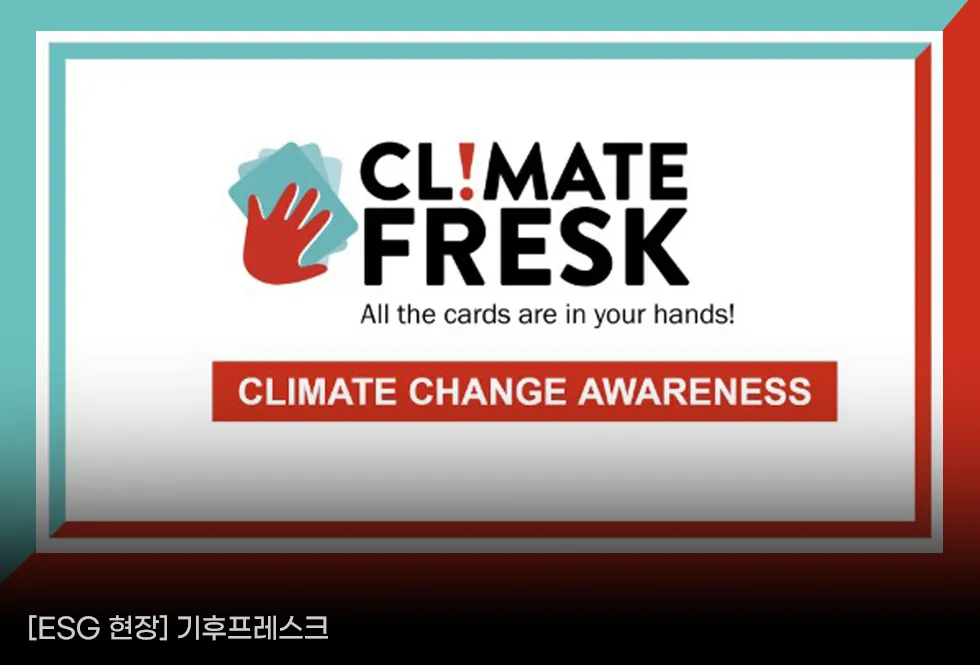
This past Sunday, June 15, a special environmental-education workshop was held in Mullae-dong, Seoul. This "Climate Fresk" workshop — planned and promoted by "Jigureul Jikineun Baeumteo (Learning Ground That Protects the Earth)," a group of young environmental activists, and run on-site by the citizens' environmental group "People Who Think About the Environment" (hereafter "PWTE") — was a venue for ESG experiential learning that approached the climate crisis easily and enjoyably through play and discussion, heightening participants' immersion.ESG.ONL met PWTE again — introduced at the "Earth Day" event this past April — and, by taking part in this workshop in person, had a meaningful time of learning together with various people interested in the climate crisis.The Climate Crisis Unpacked with "Climate Fresk Cards"The workshop uses cards made based on the sixth report of the "Intergovernmental Panel on Climate Change (IPCC)," which has published six reports from 1988 to the present. Arranging a total of 42 cards based on scientific data by group, it strengthens awareness of climate change. This movement began in 2015 when Cédric Ringenbach, a French engineer and expert in the field of climate and energy transition, did an exercise with students at a university, arranging IPCC graphs in order of cause and effect. It then spread rapidly worldwide, the "La Fresque du Climat (Climate Fresk) association" was established in 2018, and it has now established itself as a global education movement in which more than 1.9 million people in over 100 countries participate.Workshop participants form teams and, following the facilitator's guidance, place and adjust the cards themselves to visually understand the causes and effects of the climate crisis. Because the cards are organically connected to one another, following the larger context lets you grasp more accurately the reasons that created the climate crisis we now experience.[The scene of heated discussion during the Climate Fresk card game ⓒ ESG.ONL]The Cause and Effect Surrounding the Climate CrisisThe fact that "when carbon emissions increase, sea levels rise, and this in turn leads to the destruction of ecosystems and the risk of humanity's collective demise" is now a well-known story. Looking at this in more detail, the climate crisis begins from the initial cause of human activity. Various human activities such as agriculture, industry, and deforestation caused environmental problems, and the excessive use of fossil fuels caused an additional greenhouse effect, accelerating global warming. Water temperatures rise, and as glaciers, ice sheets, and sea ice melt, sea levels rise. Sea-level rise not only floods low-lying areas but also seriously damages the water-circulation and exchange system, becoming the cause of the extreme weather anomalies we are directly experiencing — heat waves, droughts, wildfires, and more.Such environmental problems reduce crop yields, threaten our health, and cause the loss of animal and plant habitats. Through a chain effect, they expand into global problems such as deepening inequality, famine, population movement, and armed conflict.Through the game of arranging cards, participants explained the structure they understood, adding the power of collective intelligence, and built up learning by asking questions. Once the scattered cards found their places, and the connecting lines between cards were drawn with a pen to internalize the complexly entangled structure of the climate crisis, by the time the workshop ended, anyone who participated could explain the climate crisis in detail.[PWTE head Lee Dong-ho ⓒ ESG.ONL]Sharing Climate Emotions and Pledging Climate ActionThe Climate Fresk workshop, beyond simply conveying knowledge, continued into a time for participants to share their thoughts and emotions with one another. The process in which people of various occupations and age groups gather and solve problems with the power of collective intelligence teaches the necessity of the citizens' environmental movement and the importance of participation. Participants shared impressions such as, "Sharing our anxiety about the climate crisis, I felt camaraderie communicating with those who have the same worries and want to act." Another attendee revealed the ambition to widely publicize such a citizen-action workshop to those around them, saying, "Behind one person are ten, and behind those ten are another ten, so I believe my actions and practice efforts can spread quickly."[Seen on a five-year-average basis, 1.5 degrees still holds hope ⓒ ESG.ONL]Before the 1.5-Degree Rise: The Chance Still Left to UsThe news that the 1.5-degree line of the Earth's average temperature was already exceeded in 2024 dealt a shock to many people. At the Climate Fresk theory-education session, PWTE head Lee Dong-ho conveyed that there is still hope, saying, "If you set the period as a five-year average and check, it has not yet exceeded 1.5 degrees." The reason international organizations such as the WMO (World Meteorological Organization) and the IPCC look at a five-year average of temperature rise is to remove natural variability and grasp the essential trend of human-caused climate change. So Lee emphasized that an attitude of striving for individuals and society to change together, starting now, is important.Climate Fresk gives ESG stakeholders good insight into the climate crisis and sustainable development, and gives general readers interested in environmental issues the stimulus to join in climate action. If there are ESG stakeholders who talk about ESG in practice but found it hard to share climate emotions in real life, or citizens who had a heart for the environment but pondered how to understand and confront this problem, we recommend experiencing the Climate Fresk workshop together. In the process of setting and presenting positive practice goals for a better future, you will encounter a small hope for the future that will change.by Editor L
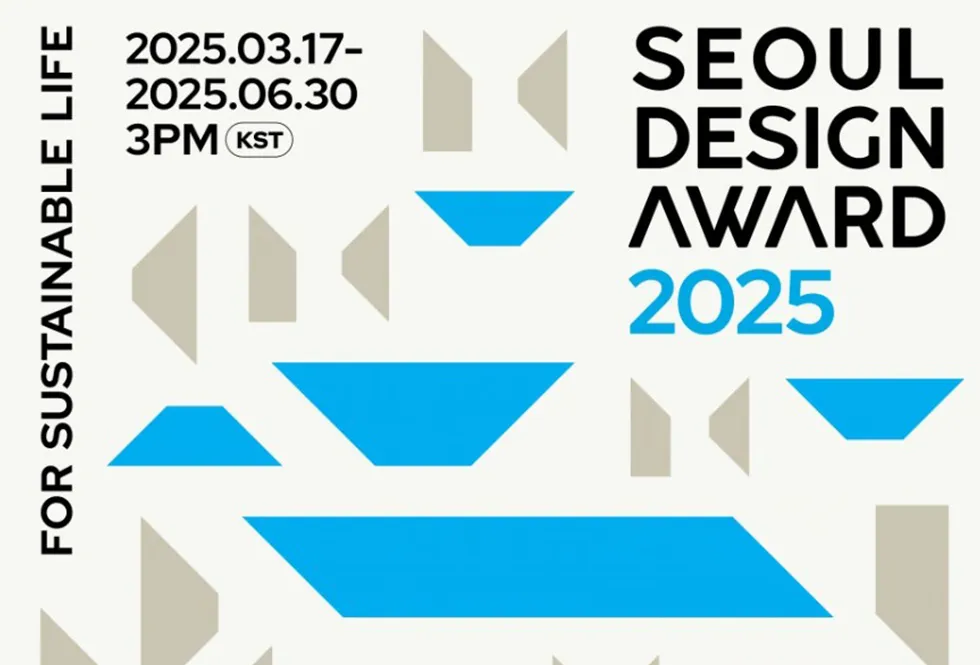
The World's Only "Sustainable Design Award," Together with Global Design LeadersEntries for the "Seoul Design Award 2025" are in full swing. The Seoul Design Award, which marks its 6th edition this year, is the world's only "sustainable design award," developed with sustainability and social value at its center. The Seoul Design Award, established by the Seoul city government in 2019 and organized by the Seoul Design Foundation, has discovered design projects that solve real social problems and have a positive impact on the local community and the environment. Starting with 75 entries at its launch, last year this award gathered 575 projects from 65 countries, establishing itself as a truly internationally prestigious platform.2025: The Further-Evolved "Seoul Design Award"The core philosophy of the Seoul Design Award, which once again seeks to gather with designers from around the world and deliver a powerful message about sustainability, is that "design is the language of problem-solving, and a practice of advancing toward a better society." Keeping the message that illuminates the true "role of design" beyond mere aesthetic excellence, this year's Seoul Design Award proposes a broader stage and an innovative format to participants.An Opportunity to Receive Feedback from 32 World-Class Global Experts from 21 CountriesThis year's Seoul Design Award operates a panel of judges made up of 32 design experts from 21 countries around the world, to further strengthen the fairness of judging. The judges, composed of the highest authorities in the design world, will provide participants with in-depth feedback throughout the entire process from the preliminary round to the final round. Design leaders from various countries who will make designers' hearts flutter join in — Ezio Manzini, a scholar in the field of sustainable social-innovation design; Patricia Moore, a pioneer of universal design; Andrea Cancellato, an expert in design policy and public culture; Pradyumna Vyas, a global leader driving India's design policy and the incoming president of the World Design Organization (WDO); and Dawn Lim, who leads Singapore's design ecosystem. The judges will evaluate the essential value of design, focusing not simply on form or function but on the relationship design forms with society.The judging method is also new. In particular, this year "on-site presentation judging" is newly introduced, so that the 10 teams advancing to the final round will present their projects in person at the "Dongdaemun Design Plaza (DDP)" on October 24. The grand-prize winner is to be selected by combining the scores of the global judging panel and a citizen evaluation panel, confirming a meaningful and original structure in which design experts and ordinary citizens together evaluate "valuable design."Submissions Until June 30 — Now Is the Moment to Take the ChallengeSubmission to the Seoul Design Award is free. Any project in which a designer participated, such as a social-value project, can be entered. The eligibility range is also broad so that anyone — individual designers, studios, companies, students, and more — can participate. The entry categories are divided, based on the "UN Sustainable Development Goals (SDGs)," into four categories: health and peace, equality of opportunity, energy and environment, and cities and community. Realized projects can be entered in the "Main Award" category, and prototypes and ideas in the "Concept Award" category; the total prize money is to be awarded to a total of 61 winning works on a scale of 150 million won, including one grand-prize team (50 million won), nine best-award teams (10 million won each), and two concept-award teams (5 million won each).If you want to be a designer who seeks to change the world through sustainable design, it is now your turn. The Seoul Design Award seeks to provide not a mere chance at an award but a stage where change can be realized. Submit an idea that will change the world to the Seoul Design Award right now.[How to Submit] Apply through the [Submission] menu on the website (www.seouldesignaward.or.kr) by 3 p.m. (KST) on June 30, 2025.by Editor L
Sometimes I imagine this. If the thousands of coffee machines in the city stopped at once, what would happen? In that silence, what would we hear? Might we not hear a voice beyond the system, a sound long ignored?Seoul moves in "attoseconds" (an attosecond, an extremely short instant that divides one second into a quintillion). The subway stops at intervals of a few minutes, commercial districts change in a few months, and people pour several dictionaries' worth of emotion onto small screens. Whatever the case, there is exactly one place in this city where time flows slowly: the café.The Pil-dong of a May afternoon — the second floor of a building that was once a print shop was saturated with the scent of coffee beans. People talking, people writing, people holding meetings, people with their eyes closed. Everyone was reconstructing the space through the conductor called coffee, swimming inside the engine of the megacity. As a single nervous system maintained only through caffeine.To put the café back into the history of art, a coffee cup is a still life. It symbolizes the unresolvedness of relationships rather than the completeness of objects. Here coffee cuts the scenery into pieces, adds rhythm, and defines relationships. A sharp ritual that awakens a fear-soaked sense of reality, a way to endure the humiliation of work, a brief escape before a company dinner, a healing method that soothes the emptiness of a breakup. Eventually the latte foam became a shield that supports everyone in an era when mornings are hard, relationships are difficult, and emotions wear out quickly. Among the drinks of this planet, only coffee will grant the sense that one is holding on.More impressive than the statistic that one Korean adult drinks hundreds of cups of coffee a year, twice as impressive, is how coffee has seeped into the high-density life that is Seoul. Franchises and independent cafés, dessert cafés and theme cafés, even cafés without coffee, have seized the city with a power stronger than churches. Is this some pathology, or a form of evolution? Utterly crazy about coffee. The barista of three in the afternoon explained that he had roasted Guatemalan beans himself to bring out the acidity, but in my mouth, before coffee, quiet spread first. The senses always speak quietly. To let me briefly hide my flesh within the coffee.Coffee passes through two times. The consumer's time — choosing, under the lighting, a photo to post to social media while looking at the latte foam, then swallowing it down the throat. A pattern of excess and choice and self-esteem. There is also the producer's time — five in the morning in Colombia, the knees climbing a slope at an altitude of 1,800 meters. The time of knees clutching land drying up from climate change. When the two times mix in coffee, we understand something. Who made it? How did it come all the way here?Here ESG is an incompleteness that smooths over unbalanced time.To me, the reality thousands of kilometers beyond the coffee cup was too far away. But now I see that the bitter aftertaste that touches the tip of my tongue all day was the taste of the time a girl in the southern hemisphere harvested while inhaling dust. The humidity of the highlands in the early dawn, the prophecy of climate change, the weight of carbon, the shadow of an opaque supply chain, the knuckles of a boy sorting out worm-eaten coffee beans, the carbon footprint left by a single lungo, pesticide disguised under the part of speech "organic," the shell of fair trade's strange smile, the accounting ledger of a coffee brand, the scent of distant ports and sea routes faintly mixed in.The heart-shaped steamed-milk foam of the 5,800-won latte I drink today is, so to speak, a crystal that set out from the hand of a tenant farmer trapped between a valley of Brazil and the sea, and came through a cooperative in Costa Rica, an importer in Switzerland, a price-negotiation table in Amsterdam, and a washing plant in Southeast Asia — a moral fluid, a liquid ejected by the Earth's pressure difference.The labor is hot and long. Boy and girl workers, instead of going to school, hold baskets and turn like clockwork inside a disposable cup. A system designed to be beautiful yet not appear cruel. That is this coffee right now.In the process by which the alarm that wakes the morning transforms into a never-sleeping narrative of self-reproach, a question crouched — about how one drinks rather than what one drinks. Is this coffee really good? If I drink this coffee, will I really become a good person? The important questions are always like that, complex, ambiguous, with subtle acidity and guilt swirling. Just like coffee.Koreans are fast. They love efficiency.ESG's speed sometimes lags. Or it is so slow it wears you out. Some days even the process of drinking coffee is tiring. From the moment you open the café door. What should I drink? Latte? Americano? How should I ask them to grind the beans? Medium? Coarse? Milk? Half my personality is decision paralysis, the other half the guilt at the end of a decision. Ordering a single cup of coffee, I hesitate between helplessness and guilt. Too many choices, too much information, too much morality. The infinity of everything and everything. The act of drinking coffee is the product of labor that humanity has finely divided. I walk a tightrope between the compulsion to be a good consumer and ethical numbness. And even at the moment the ESG frame tries to grant legitimacy to that tightrope-walking, the motto of takeout coffee — drink it and throw it away right away — meddles not with the problem of paper cups or plastic straws but with the very attitude toward time itself.Just as a painter carefully lays color and line onto the canvas, today's barista, neither fast nor slow, adjusts the beans, water, temperature, time, and shape of the hand, quite like an ink-wash painter. The sound of ground beans falling as water droplets, the sight of the kettle's thin stream slowly sprinkled, abridges how this era handles coffee. Through that crevice, will is revealed. In fact, isn't ESG another name for will?When I brew hand-drip coffee at home, I too pour the water that way and gaze at the coffee swelling as I slowly draw circles. For a few minutes, becoming a citizen of the world called coffee. But that sense was arrogance. I did not labor, I did not sweat, and I directly experienced nothing. Choosing and drinking coffee was a consumer's privilege given to me without my knowing.The time I was truly convinced I had drunk ethical coffee was six years ago, at 11:37 a.m. on a Wednesday. I know the exact time because of guilt. In a Brooklyn café whose entire space was wrapped in exposed concrete, watching the shoulder of a barista dazzling with sapphire-dyed hair and the Chinese characters 李 (plum) and 竹 (bamboo) and lettering tattoos, I ordered a Colombian Cauca coffee, described in lowercase letters as "rich berry aroma and a multilayered citrus finish, with a floral scent rising at the end." The name of the coffee, which cost 7.25 dollars a cup, was, astonishingly, "The Scent of Your Child." There were also names like "Maria's Hill" and "The Warmth of a Rainy Afternoon," said to have been named by a community of Colombian women farmers. The fact that the menu marked the farm name, the processing method, and even the altitude of the origin was not a boast but a respect beyond imagination. Another narrative surrounding a single cup of coffee, a tender and clear message, mixed ethics into my discernment without threat or accusation. That sustainability could function as a design element.But the relief when seeing the "fair trade" mark connected to ignorance. In the status of a consumer, looking at the badge, one buys a kind of indulgence. But does that guarantee a fair life for the coffee-growing farmer? As the politics of everyday consumption, or a very private matter, what kind of consumer will I be? Whom do I think of, what do I believe, and in what way will I touch the world? How much do I know, how much do I turn away from, and how much can I take responsibility for? I am not perfect. Nor am I in complete ignorance. But that day, with a single cup of coffee, I tried to save myself, soothing my moral self, captured by the narrative of "good consumption."Space conceals responsibility. Or reveals it. The large franchise café on Gangnam-daero, while thousands of cups of coffee pass through in a day, lets you hear almost no information, no source, no voice. On the other hand, in the corner of a café on the third floor of an Euljiro shopping arcade, the edge of a coffee-bean sack was laid out. The gunny sack touching the floor declares that the coffee's origin, the land, and even the workers' body heat participate in the store. Here ESG would be revealed not as a slogan but as ethics in the choice and arrangement of space, in materials and structure, between the coffee cup and the trash can.Now some franchises have reduced disposable cups and give a small discount if you use a tumbler. Though I don't know how a few coins will handle the enormous vocabulary of corporate ethics and environmental protection. A coffee shop in Jeju melts plastic to use as cup coasters, a roastery in Gangneung creates a direct-trade structure with origin workers, a small café in Pohang provides coffee grounds as local fertilizer, and a coffee house in Mangwon-dong made tables from recycled wood. As a quiet and slow form of resistance, as an attitude that tunes cultural sensibility, slow and limited though it is. People are far more sensitive to the word "inconvenience" than to the word "sustainability." But detail is like a device that senses invisible pain.ESG, in the end, arises from the generosity of accepting inconvenience. When the consumer briefly withholds convenience, the system will have room to leap. Not so much a revolution as a subtle crack. But cracks change the world.This spring, I read a poem by a migrant worker who works at a coffee farm in Ethiopia.Before sunrise,this land catches its breath.Until my footprints are printed on the muddy path,I am neither a shadow nor a name.The basket is empty,the hand recalls memory.Before the sweat falls on my brow,the sunlight calls the red fruit.Crouching under the tree,I recall the sound of my daughter's footsteps.Seeping under my fingernails,the red juice of the husk,the collapsed knuckles,I do not leave the shade of the coffee tree.Every morning I drink coffee. To be exact, I drink the aftertaste of my dream, lick the tail end of my hesitation, and wash the clarity of my morality. About to call this time recovery, I stop and murmur. Whose life did this coffee pass through? Without swallowing everything floating on top of the coffee, I can no longer say I know coffee.By Lee Choong-gul (essayist, former editor-in-chief of GQ Korea, author of the novel "Your Face")
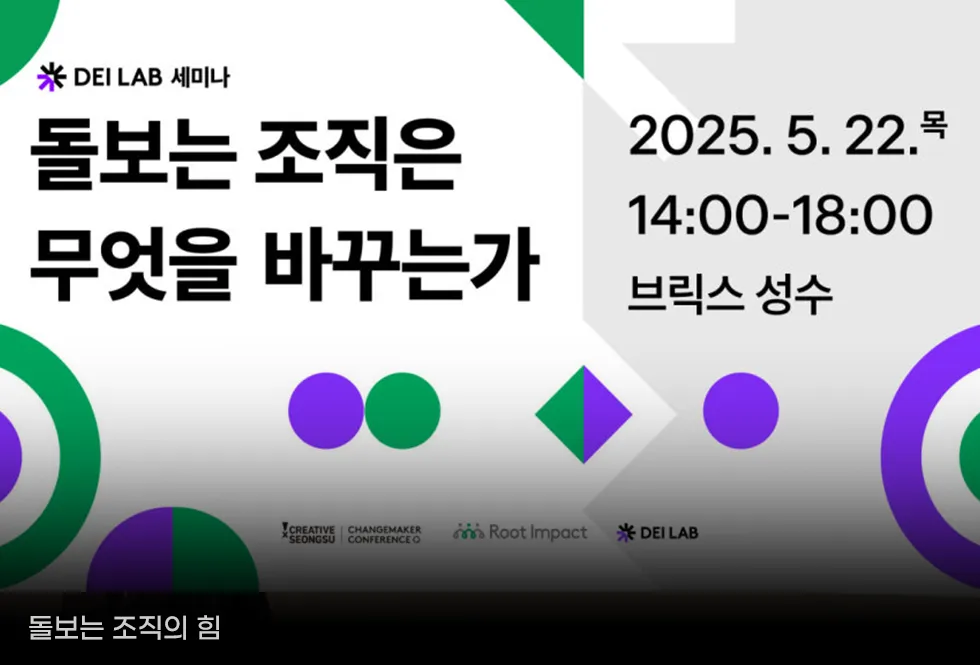
This past May 22, the DEI (Diversity, Equity, Inclusion) Lab seminar "What Does a Caring Organization Change?", held at Bricks Seongsu, was an occasion to share about the inclusive workplace, centered on the keyword "care." Here, through a keynote speech and three sessions, "care" was redefined and it was examined from multiple angles how a caring organization can affect the lives of its members. In particular, in the session "The Power of a Caring Organization," which ESG.ONL paid attention to, three organizations practicing DEI — "Root Impact," "FastFive," and "Toss" — introduced the workplace-daycare cases they have implemented. Let us confirm the power of the three organizations, which emphasized that care is an important task the organization should take responsibility for together, beyond a mere welfare system.[The DEI LAB seminar "What Does a Caring Organization Change?" © ESG.ONL]A Workplace-Daycare Solidarity That Shares the "Experience of Caring Together""Root Impact," a nonprofit incorporated association that pursues social value and impact, operates a consortium-type workplace daycare named "Everyone's Forest Daycare." It is the result of keenly feeling the need to establish a workplace daycare, as members faced the task of care according to their life cycle and experienced cases of being unable to return to work after childbirth. Though the intention was set, given the nature of a small organization, it was not easy to establish a daycare on its own. After much deliberation, Root Impact arrived at the solution of "a workplace-type daycare jointly operated in cooperation by multiple impact organizations.""Everyone's Forest Daycare" was designed as a space where children, parents, and teachers all create a culture together, beyond a mere childcare space. It maintains a teacher-to-child ratio lower than the legal standard and operates through parents' voluntary participation. Making use of the advantage that linkage activities among various organizations are possible, it is raising both the quality of and trust in care. Through this model, Root Impact presents the alternative that "it's hard alone, but possible together." It also shows the possibility of an organizational culture that expands care into a shared responsibility. The message resonates that one can experiment with an inclusive workplace through the "experience of caring together" and expand an organizational culture of care through organizational solidarity.[Panelists from Root Impact, FastFive, and Toss during the DEI LAB seminar © ESG.ONL]The Link Between Business Continuity and Care"FastFive," widely known as a shared-office-space service company, operates "Daram FastFive Daycare" to practically reduce the childcare burden of startup members. It began with the recognition — based on the fact that members of startups and other founding companies find it hard to enjoy welfare, and from seeing cases of women CEOs suspending their businesses over childcare issues — that childcare support is directly linked not merely to welfare but to business continuity. FastFive emphasized that expanding its scope beyond providing workspace to supporting the whole lives of its tenant members also connects to the company's brand value.True Care That Meets Members Close ByThe fintech company "Toss" developed the "Our Neighborhood Toss Daycare" model tailored to members' living environments, instead of installing physical infrastructure. Existing workplace daycares had the problems of low accessibility due to the inconvenience of having to commute with a child, and a low capacity-fulfillment rate. To solve this, Toss partners with excellent daycares in the base areas where members actually reside, supporting members in using childcare services closer to home. After introducing this model, a culture in which members naturally share childcare stories formed within the organization, and female members in particular came to feel the possibility of balancing work and life even after childbirth and childcare. The explanation is that this model, in that it could provide members with the trust that they can maintain the same performance as before even after childbirth and the sense of stability that it's okay to raise children, had a positive impact on the organizational culture as a whole, beyond mere welfare.[Care done together leads to immersion in work © ESG.ONL]Creating an Organizational Culture for a Sustainable OrganizationThe three organizations approached care in different ways, but commonly emphasized "the power of culture that goes beyond systems." The point is that, beyond simply providing parental leave, flexible work, and workplace daycare, real change is possible only when a culture is in place that lets members actually use those systems "safely" and "without being self-conscious." It was also an answer to how an organization can ease the parenting guilt and the anxiety about career interruption that female members commonly feel when they take on care responsibilities.Care in our society is no longer the responsibility of individuals and families alone. An organization can create sustainable relationships when it recognizes members' lives not as an "area outside of work" but as a condition of living together. This seminar showed with concrete cases what change a movement to embrace care as an organization's strategy and culture — rather than an individual's share — can create. The empathy and trust that arise in an organization that embraces care ultimately become an important foundation that raises the organization's resilience and prevents talent outflow. If you want to create a sustainable organization, you must first ponder how the organization "cares together" with its members.by Editor L

Kim Ha-yeon, CEO of Nanum Vitamin, is a young entrepreneur who confronted the reality of children at risk of missing meals while doing educational volunteer work. CEO Kim, connecting her warm heart for children with technology, is presenting a new welfare paradigm to Korea's donation market, which reaches 16 trillion won. ESG.ONL met Nanum Vitamin CEO Kim Ha-yeon to hear about the innovative business model and social impact she has unfolded, and her bold vision toward an ESG unicorn.CEO Kim Ha-yeon, on leave one semester before graduating from Seoul National University's Business Administration department, founded the social venture "Nanum Vitamin" in her early twenties and began operating "Nabiyam," an innovative meal-sharing platform for children at risk of missing meals. Having done educational volunteer work at local children's centers and libraries for more than six years since her high-school days, she came to hear in detail, through deep emotional communion with children, the inner circumstances and problems of those in welfare blind spots. Rather than merely worrying about their difficulties as an individual-level problem, CEO Kim Ha-yeon connected them to an idea for "solving a social problem."[Nanum Vitamin CEO Kim Ha-yeon © ESG.ONL]The "Nabiyam" App That Goes Beyond the Limits of the Existing Welfare System"Even if technology advances and resources increase, it's meaningless if they aren't properly delivered to those who need them."Children at risk of missing meals are in many cases hard-pressed to access information on welfare services. Even when they do access welfare benefits, it can be hard to use the service freely because of self-consciousness or an uncomfortable feeling. Such feelings cannot be known until one is in their position. CEO Kim realized that, although there are many well-intentioned shops and good owners here and there, there was no platform that could connect these shops with children at risk of missing meals. That is when the first business idea came to her — to connect shops and children directly.["Nabiyam," the meal-sharing platform of the social venture "Nanum Vitamin" © Nanum Vitamin]"The existing welfare system goes through intermediary support organizations, but in our app the user is at the center."Born on the basis of that idea, Nanum Vitamin's flagship service "Nabiyam" is a donation-matching service that overcame "decoupling," a limit of the existing welfare system in which donors and recipients are hard to match. Rather than the form of the existing welfare system, in which benefits are received only for designated items, it lets the party using the service choose "what to eat" through mobile meal vouchers.*Decoupling refers to a situation in which the provided institution or service is separated from actual activity.It also supports securing the transparency of welfare-service operation in administration and finance by providing donors with data-based reports through the app. Transparent information disclosure is made possible by Nabiyam's real-time dashboard. Reports based on general data and behavioral data have the advantage that partner companies or institutions can immediately confirm the effect of their social contribution and their brand favorability. Companies and local governments satisfied with Nabiyam's data often carry out projects again. Of the 30-odd domestic companies and local governments — including SK E&S, POSCO, the Korea Association of Health Promotion, and Woowa Brothers — more than 85% of partners chose to re-collaborate with Nanum Vitamin. CEO Kim emphasized that such digital-welfare innovation is the core of a new welfare model created by the public and private sectors together.[Various collaboration cases of "Nanum Vitamin" © Nanum Vitamin]Stigma-Free Connection Through User-Centered Welfare"Our customers should become subjects who 'choose and enjoy,' not 'recipients of benefits.' Instead of the 'stigma' of receiving a donation, we want to give the experience of naturally 'using' a rightful meal entitlement."Korea's children at risk of missing meals number about 280,000. In addition, there are still many who experience difficulty with a single meal among youth preparing for self-reliance, elderly people in tiny sublet rooms, and the unemployed young population. Nabiyam seeks to expand the meaning by having these people, beyond simply receiving benefit-based support, be provided a service that raises their self-esteem. First, it changed the term for the support target to "user." It is the result of listening to the voices of those who have experienced receiving donations. It also designed a UX that enables two-way communication so that cheering messages and thank-you messages can be exchanged. Users connected to some 60,000 small businesses nationwide gathered in this donation app, which allows real-time two-way communication, can now build a usage experience free of psychological burden amid natural communication as they use meal vouchers.[The participation menu for the general public on "Nabiyam" © Nanum Vitamin]The Sustainable Social-Impact Structure Nanum Vitamin Creates"At the boundary of social welfare and innovation, I pondered a structure that can be self-sustaining without external support."Nanum Vitamin is realizing transparency in welfare-service operation through a "structure in which 100% of donations are transparently delivered to users." One cannot help but wonder how it covers company operating costs. CEO Kim explained that Nanum Vitamin is building a profit structure by contributing to local-community sales through public-institution collaboration and external donations and discount linkages. She also said that while the connection between donors and users on Nabiyam is done transparently, the company built a model in which multifaceted profit can arise through platform brokerage fees, campaign-operation costs, advertising, and so on. The brokerage fee is receiving a portion of sales in the form of a donation through the connection with the merchant the user uses; the shop likes it because users come through the app and sales rise, and it feels great meaning in being able to realize social value while making a small per-transaction donation. Leading the economic value created through linkage with the local community and small businesses — beyond the frame of welfare-service users and donors — into sustainable social impact: this is, in effect, Nanum Vitamin's ESG management model.A Next-Generation Leader's Responsibility and the Ambition of an ESG Unicorn"We will become a company that maximizes social value with technology and data, without losing the essence of donation and welfare."CEO Kim Ha-yeon has also won the "Presidential Award, Grand Prize at the grand championship of the Public Data Utilization Startup Competition" and the "Republic of Korea Talent Award" conferred by the Minister of Education. With such awards and four technology patents, she is recognized for her expertise in the social-services field and for extraordinary achievement in technological capability and innovation. Not long ago, she also had the honor of being named — as the only Korean — to SisaJournal's "100 Next-Generation Leaders of 2024" and "Forbes 30 Under 30 Asia 2025." "Winning an award or being selected doesn't change anything. But using these awards as an occasion, I have to strive to grow more professionally together with stakeholders," she conveyed her calm aspiration.[The various award plaques Nanum Vitamin CEO Kim Ha-yeon has received © ESG.ONL]What is CEO Kim's goal for 2025, having achieved various results in only three years? CEO Kim first wants to ponder platform scalability more. Innovative projects — such as creating an algorithm for automatic connection between food companies and donation recipients, and digital-transformation collaboration with domestic marts — are already under way. She is also seeking overseas expansion, beyond the domestic donation market, to Southeast Asia and other places where welfare-delivery systems are not yet built up.CEO Kim Ha-yeon and Nanum Vitamin are creating a new donation-and-welfare ecosystem combining technology, data, and a warm heart. Under the philosophy that "donation is connection," they aim for a platform where the socially disadvantaged, local communities, and companies grow together. The keynote of the world she dreams of is "connection where everyone is respected, a society where everyone grows." Finally, CEO Kim resolved, "I will prove firsthand that, even as a social venture, one can develop in a sustainable and scalable direction through system-based innovation." We cheer that the confidence of CEO Kim Ha-yeon — who fulfills social responsibility by combining forward-thinking awareness and technology — leads to a bright future for our society's ESG social-contribution field and sustainable management.By Editor L
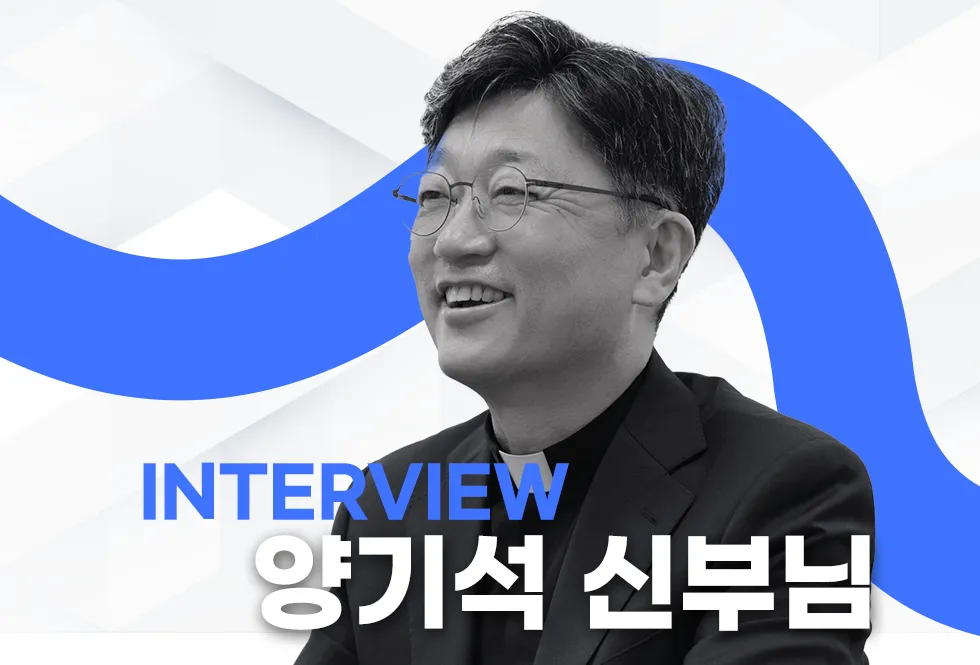
With Pope Francis's passing, a conclave to elect a new pope was held, and a great wave of change swept through the religious world. Following the wish of Pope Francis, who during his life gravely worried about environmental issues, we met Father Yang Ki-seok (Stephen) — the author of "The Climate Is Changing — Won't We Change?" and chair of the Ecology and Environment Committee of the Catholic Diocese of Suwon — to hear about the "ecological spirituality" that copes with today's climate crisis.The "Prayer for Our Earth" of Pope Francis, who passed away last month, contains the words "let us protect the world rather than harm it, and sow seeds of beauty, not of pollution and destruction." Sharing this spirit, the "Ecology and Environment Committee of the Catholic Diocese of Suwon" was established with the purpose of preserving the order of creation by having the church community achieve an ecological transition. Crossing between home and abroad, it carries out energy-transition and carbon-neutrality-related activities, and strives at various ecological-environmental ministry, such as publishing educational materials and conducting educational activities for ecosystem conservation.• Ministry (samok) usually means, in Catholicism, the work of a priest guiding the faithful.Father Yang Ki-seok (Stephen), chair of the Ecology and Environment Committee of the Catholic Diocese of Suwon, has, since his ordination as a priest in 1999, pondered while seeking the point of contact between social justice, ecological issues, and faith, and is playing a major role in raising interest in ecology and the environment within Catholicism today. Let us hear Father Yang Ki-seok's story about ESG as spoken of in Catholicism.The "Eco Priest" Who Fused Faith and the Environmental MovementFather Yang Ki-seok is called the "Eco Priest." Living up to that name, carrying a tumbler is basic; when doing everyday shopping, he always brings reusable containers to carry home what he buys, and strives to find products with less packaging. Pondering ecology and the environment even during his daily work, he has been deeply involved in environmental issues within the diocese since 2007. In the early days, he recognized environmental problems as issues of social justice and irregularity. But as he gradually began to realize the importance of life and ecology, his eyes opened even to the seriousness of environmental destruction carried out — within the range not defined by law — to the extent of harming human life. To prevent environmental destruction driven by economic logic, he began to live a "life of action." Those efforts connected with the major civil-engineering-project issues our society experienced. His activities — opposing the Korean Peninsula Grand Canal project in 2008 and issuing a statement against the Four Major Rivers project in 2010 — continuously created a fusion of faith and the environmental movement.[The Ecology and Environment Committee, following Pope Francis's ecological spirituality © ESG.ONL]The Catholic Community and a Catholic Way of Practicing ESGIn the Catholic faith, responding to the ecological crisis is a matter directly linked to religious salvation. The Catholic encyclical "Laudato Si'," proposed by Pope Francis in 2015, has the subtitle "an encyclical on caring for our common home" for the future of humanity. This was the first environmentally themed encyclical written by a pope. This encyclical, which points out that "humanity's attitude of prioritizing economic gain and slighting life" is the fundamental cause of the climate crisis, may be somewhat unfamiliar to non-Catholics, but it is an indispensable point when discussing ecological faith. This is because it also reveals the actual state of ecological problems and the approach and mode of action at the Catholic level, and contains in detail content calling for a climate-justice movement.Accordingly, Father Yang said, the Catholic Church seeks to have all the faithful and good neighbors open a sustainable society through ecological conversion and achieve climate justice by practicing "the values of coexistence, care, and consideration." In particular, he emphasizes that, following the doctrine of keeping away from excessive growth-first thinking and forbidding the worship of material things, if this is not overcome, the path of human life and salvation is threatened. For this reason, Father Yang emphasized that a faith-based response to the climate crisis is also needed, in order to fulfill environmental, social, and ethical responsibility that touches on the ESG spirit.Contrary to the outside perception that the Korean Catholic Church is a centralized organization, in reality the faithful's awareness and practice determine the ministry policies and operation each parish priest unfolds. Father Yang pointed out that a task is that, although there are already concrete practice guidelines such as energy transition and eco-friendly consumption, the faithful do not recognize these as their own concern. If the diocesan bishops deliver clear ESG-related messages, the faithful of each parish will accept them as a natural responsibility and be able to lead change in the church and society. If faith-based action guidelines based on Pope Francis's "Laudato Si'" encyclical are also clearly presented so as to be applicable to the Korean situation, Father Yang said, one can also expect a substantive spread of ESG culture and change within the church.[Father Yang Ki-seok, chair of the Ecology and Environment Committee © ESG.ONL]The Catholic Diocese of Suwon's 2040 Carbon-Neutrality Roadmap, Ahead of UN and Government TargetsThe Catholic Diocese of Suwon, to which Father Yang Ki-seok belongs, seeks to achieve energy independence by converting 100% of the electricity used at the 222 churches within the diocese to renewable energy such as solar by 2030. It declared, as the first in Korea's religious community, that it would realize carbon neutrality by 2040. This plan, which reflects the Vatican's 2021 carbon-neutrality declaration and the climate-crisis warning of the "Intergovernmental Panel on Climate Change (IPCC)," is a target brought forward by ten years from the UN and government targets.In fact, the Catholic Diocese of Suwon installs solar power plants on each church's roof and idle land, and secures funding through establishing energy cooperatives and cooperating with the government and local governments. It also commissioned the Energy & Climate Policy Institute to create a report examining whether the Suwon Diocese's carbon-neutrality plan is feasible. Newly built and remodeled churches apply zero-energy building certification to raise energy efficiency, and it also developed a carbon-reduction campaign with the faithful through "46 practice items in daily life." Despite such efforts, the outlook for achievement is not very bright. From 2022, when implementation began, to the present, it has achieved a target of about 2,000 kilowatts (kW), falling short of the target of 20,000 kilowatts.It is a regrettable reality, but one cannot stop. Raising awareness of and expanding participation in solar power remain a task, he says. Father Yang carefully conveyed that, sadly, installing solar power plants in Korea often meets opposition depending on political and ideological conflicts and the local community's leanings. He added that even the faithful hold various political views, so opinions on installing solar power are divided. Because of this, he stated that when pushing solar projects, a strategy is needed of strengthening communication with local residents beyond ideological conflict, an approach considering convenience and consideration, and maintaining political neutrality. Creating a culture that naturally settles eco-friendly habits will also play an important role in easing conflict, he says. Still, Father Yang said with a smile that there are more supporters than before he took action, and revealed his resolve that the Suwon Diocese will lead a sustainable future through concrete, systematic practice for climate-crisis response.Religious Solidarity for Climate-Crisis Response and Sustainable DevelopmentFather Yang Ki-seok emphasized the importance of solidarity with other religions, beyond Catholicism. Expressing gratitude and respect to fellow religious figures who have long carried out the environmental movement together, Father Yang introduced the case of the Won-Buddhist order, the first in the religious world to open its eyes to the energy transition. Won-Buddhism worked hard with a plan for its 100 temples to create 100 "sunlight power plants," and, seeing this, Father Yang has worked with Won-Buddhism since 2008. Buddhism too, after various attempts, is carrying out activities to lead climate-crisis response and the energy transition through the "Birojana Natural Energy Cooperative."There is another example too. The cooperation of Korea's five major religious orders (Catholicism, Protestantism, Buddhism, Won-Buddhism, and Cheondoism), which began in 2002 from opposition to the Saemangeum development plan, developed into a solidarity body called the "Korea Religious Environment Conference," which for 24 years has carried out activities for various purposes such as nuclear phase-out, expansion of renewable energy, and the realization of environmental justice. In particular, after the Fukushima nuclear-power-plant accident, the orders even visited Germany's nuclear-phase-out sites together, and each order, with strengthened interest in and cooperation on the energy transition, strives to spread faith-based environmental activism and ecological faith. Father Yang said that Catholicism's carbon-neutrality target again promoted collaboration with other religions and became an important occasion for religious joint action toward Korean society's climate-crisis response and sustainable development.[Father Yang Ki-seok's book "The Climate Is Changing — Why Won't We Change?" © ESG.ONL]"There Are So Many Environmental and Ecological Problems; We Must Change Our Actual Living Habits"A large amount of carbon is emitted through our daily lives. So, Father Yang Ki-seok said, we need to recall the words Pope Francis left: "the present era is a time to distinguish what is most important from what is less important." "Is what I am about to buy really necessary, is it something I cannot do without?" Father Yang recommended thinking about this at least once, adding the thought that, to reduce consumption and save energy, we must make efforts to change our own daily lives.Father Yang, who established the meaning of ecological faith, participated in the environmental movement, and sought solutions to the environmental crisis through faith. Realizing the values of ESG through pursuing the diocese's carbon-neutrality roadmap and broad solidarity with other religions, he is opening a new path of ecological spirituality for our society.After meeting Father Yang, there was one sentence that came together clearly: "The climate is changing, so we too must change." What the quiet but sure footsteps of action he has walked tell us is that, whether one has a religion or not, we must, through reflection at this very moment, start with "one action."By Editor L