Loading Data
Please wait a moment...
Update Cal.
2026.08
03
Mon
04
Tue
05
Wed
06
Thu
07
Fri
08
Sat
09
Sun
Update Calendar
2026.08
01
Sat
02
Sun
03
Mon
04
Tue
05
Wed
06
Thu
07
Fri
08
Sat
09
Sun
10
Mon
11
Tue
12
Wed
13
Thu
14
Fri

Loading Data
Please wait a moment...
Evening ESG news and briefings to wrap up your day.

As the year-end tax settlement season approaches, we naturally start going over what deduction items exist and whether there are any we might have missed. Not infrequently, this leads to situations where one expects a refund but ends up facing an unexpected tax burden. This is why many people think at least once of the ‘charitable contribution tax credit.’ From 2023, the ‘Hometown Love Donation System’ (Regional Love Donation System), which expanded the target of donations from individuals to regions, was introduced. It is a system that provides a tax credit benefit by donating to one’s hometown where one was born and raised, or to a region one personally wishes to support. The Hometown Love Donation System, operated with the purpose of revitalizing the local economy, connects individuals’ tax-saving choices to regional support. Now, roughly three years after implementation, is the Hometown Love Donation System being implemented as well as expected?Amazing Changes Brought by Small GesturesThe Hometown Love Donation System has gained great popularity as a ‘cost-effective donation’ because, in addition to a full tax credit of up to KRW 100,000, donors can receive thank-you gifts such as local specialties or services from the relevant region within a certain range of the donation amount. In terms of numbers, the nationwide Hometown Love Donation fundraising amount in 2025 was KRW 150 billion, a 72% increase from the previous year, with the number of donations also increasing by 80%, showing clear quantitative growth.Amid this trend, the Hometown Love Donation System is creating direct changes in the lives of local economies and residents. Gokseong-gun in Jeollanam-do used the Hometown Love Donation funds to open its only pediatrics clinic in the county, resolving a medical gap. In Cheongyang-gun, Chungcheongnam-do, participation from all across the country poured in for designated donations to support a specialized table tennis school, far surpassing the target amount. [‘Pediatrics You See Every Day’ operated with Hometown Love Donation funds © Gokseong-gun]The utility of the Hometown Love Donation System has also proven itself in crisis situations. In multiple local governments declared special disaster zones due to the large-scale wildfires in 2025, donations for recovery purposes proceeded rapidly through the system, with donation funds on the scale of tens of billions of won being utilized for disaster response and resident support. Going beyond a simple tax benefit, the Hometown Love Donation System functions as a system that sustains regions in both ordinary daily life and crisis situations.[Table tennis team members of Jeongsan Elementary, Middle, and High Schools who raised competition fees through the Hometown Love Donation System © Cheongyang-gun]Challenges Encountered Behind the Positive ChangesHowever, not everything has been smooth. As the system entered its third year of implementation, side effects have emerged in which competition over thank-you gifts among some local governments has overheated. Exploiting the fact that the gift display structure of the integrated Hometown Love Donation system ‘Hometown Love e-eum’ arranges items in ‘order of new registration,’ cases have arisen in which some local governments repeatedly register the same gift items or use automated tools to artificially boost their display ranking. An ‘exposure competition’ that is far removed from the system’s purpose has occurred.Moreover, there are cases in which the actual donation amount does not even reach 0.1% of some local governments’ budgets, raising questions about whether the system’s original purpose is being sufficiently realized. For this reason, local governments are raising their voices that, in order to vitalize the Hometown Love Donation System, the tax credit limit should be expanded and corporate donations should also be permitted. There is an expectation that if corporate donations are allowed, a structure in which regions and companies grow together can be established through the inflow of corporate ESG funds.[Screen showing items using macro systems pushing out new gifts and being displayed on the main page © Hometown Love e-eum]Toward a System for Regional SustainabilityThe goal that the Hometown Love Donation System should pursue is to resolve the pressing challenges of regions through donations and to mitigate fiscal disparities and the risk of extinction across regions. To this end, the discussion surrounding the system must also not remain at the level of ‘participation rates’ or ‘gift competition’ but expand to what public value the donation funds create for local communities.When the system can clearly explain what policies and projects the donation funds led to, and what changes those results left in the lives of local residents, the credibility of the system will also rise. The next stage of the Hometown Love Donation System should be not to stop at maintaining the system but to become a long-term policy instrument that enhances regional sustainability and supports community restoration. by Editor N

‘Economics for the Climate’ begins with an uncomfortable question. Climate crisis response has now reached a stage that demands changes in economic and social systems beyond the realm of the natural sciences, so why is our economics still repeating old answers? Kim Byung-kwon, a research fellow at the Green Transition Institute and the author of this book, notes that mainstream economics has failed to find answers in the face of the climate crisis and draws readers’ attention to the unfamiliar economic tradition of ecological economics.If you are curious about a new perspective on the climate crisis and economics, read this book.[Economics for the Climate Ⓟ Chakhan Chaekgage]Why Mainstream Economics Has Failed to Find Answers to the Climate Crisis‘Economics for the Climate’ states that the climate crisis cannot be resolved with the existing economic paradigm. Policies to date have failed to fundamentally solve the climate crisis and ecological problems, and it argues that new answers must be found through ecological economics. The book conveys that solving the climate crisis requires ecological economics — an economic perspective that understands the human economy within the Earth’s ecosystem. Ecological economics fundamentally prioritizes sustainability based on optimal economic scale and focuses on the long-term process toward that end. Even if not yet theoretically perfect, the crisis will deepen if we do not attempt new approaches. Degrowth: Beyond Misunderstanding to Its EssenceAuthor Kim Byung-kwon focuses on the inverse proportional graph formed by carbon neutrality and unlimited economic growth. Let us recall the time of the COVID-19 pandemic. Governments around the world chose citizens’ lives over economic growth and mobilized fiscal resources to respond to the crisis. This was the actual experience of degrowth we went through. The degrowth spoken of in the book does not mean reducing the scale of the economy and consumption for the sake of the environment, but rather reducing energy throughput to restore the balance of the living world. It means bringing resource and energy use back to a level the ecosystem can sustain. We stand at a fork in the road: whether the climate crisis will forcibly halt economic growth, or whether we will first practice actions for the environment within a degrowth economy. ESG: The Limits of VoluntarismMark Carney, former governor of the central banks of Canada and the United Kingdom who served as the UN Special Envoy for Climate Action and Finance, emphasized ESG management in his book <Value(s)> as follows: pursuing a balance between financial returns and social value benefits shareholders in the long term as well. However, this book poses the question of whether investors can pursue social value to the end even when returns decrease. Whether a company can forgo even a portion of profits and performance for the pursuit of values is a question that must inevitably be addressed when discussing ESG management. Author Kim Byung-kwon, while encouraging companies that voluntarily practice ESG, emphasizes the need for methods that ensure companies comply with socially agreed-upon carbon emission rules and systems. It is a sober diagnosis that the climate crisis cannot be averted by relying solely on voluntary commitments.‘Economics for the Climate’ poses the question of how economics ought to explain the era of the climate crisis. Those who are pondering climate crisis response and ESG practice will be able to confirm through this book the questions we must ask and the direction of change needed to find the answers. by Editor N
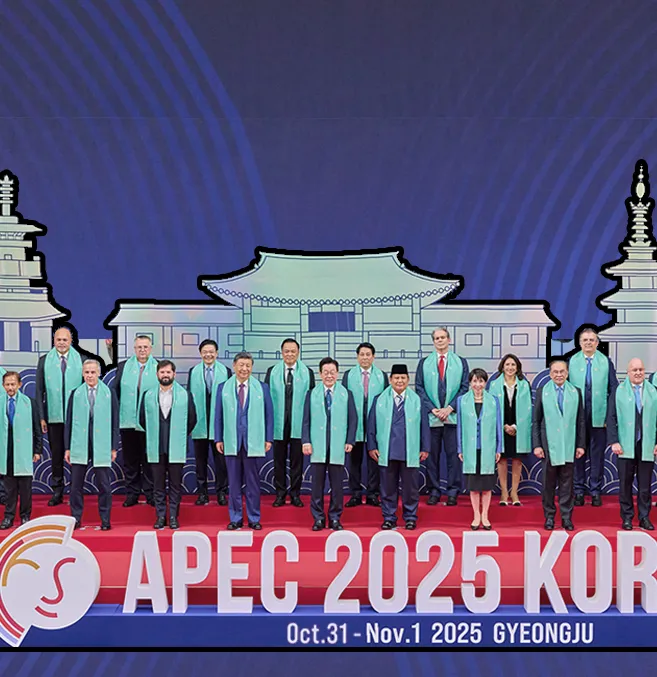
The 2025 Asia-Pacific Economic Cooperation (APEC) Summit, held in Gyeongju from October 31 to November 1, concluded successfully. Some 20,000 people including heads of state and delegations from 21 member countries, businesspeople, and journalists visited the thousand-year-old city of Gyeongju, injecting vitality into the local economy. The commercial districts around Gyeongju Hwangridan-gil and Bomun Complex bustled with domestic and international visitors, and APEC commemorative merchandise and events became daily topics of conversation. Industrial achievements led by AI and the shipbuilding industry, as well as diplomatic outcomes, also drew favorable responses. As the worries of large companies — which occupy a significant share of our industry — were resolved, interest in the stock market also grew. [Heads of state gathered at the Gyeongju APEC Ⓟ Office of the President]APEC with Economic Effects Worth KRW 7.4 Trillion, Vitalizing Local Small Business Districts TooIt is only natural that the economic effects of APEC, where nationwide discussions took place, also injected vitality into Gyeongju and local small business owners. Gyeongju City actively stepped up to support small business owners on the occasion of APEC by holding ‘BeLocal Week’ in partnership with Naver, introducing 30 local shops. Amid concentrated international interest in K-food, opportunities expanded for small business owners presenting Korean cuisine such as tteokbokki and chicken, and Hwangridan-gil is evaluated to have been more vibrant than usual thanks to the APEC boost.[Gyeongju City and Naver’s ‘BeLocal Week’ Site Ⓟ Gyeongju City]To examine somewhat more tangible effects, there was a noteworthy event held just before APEC: the 31st APEC SME Ministerial Meeting, held at the Jeju International Convention Center from September 1 to 5. The APEC SME Ministerial Meeting is one of the sectoral ministerial meetings of APEC, discussing tasks encompassing APEC SMEs, venture companies, and small business owners. Ministerial-level figures from APEC member countries visited Jeju to attend this SME Ministerial Meeting.[APEC SME Ministerial Meeting held in Jeju Ⓟ Ministry of SMEs and Startups]Jeju operated a ‘Receipt Admission Ticket’ program to draw international conference participants out into the local business districts beyond the conference venue. During this period, APEC participants visiting Jeju who presented receipts of KRW 50,000 or more spent at local restaurants, cafés, shops, and the like were able to visit representative tourist sites such as Jeju Stone Culture Park and Fantasy Forest Gotjawal Park at discounted prices. Additionally, APEC tour courses linking the original downtown alley commercial districts and traditional markets were operated, and a Food Expo and Beer Festival were held during the APEC period to expand opportunities for local small business owners to tangibly benefit from the APEC boost. This Jeju approach shows the possibility that international conferences can connect not only large companies and specific industries with benefits but also substantive benefits for the region and its small business owners.The significance of the ‘Jeju Initiative,’ adopted under South Korea’s leadership at the main event, the APEC SME Ministerial Meeting, is also great. It is the first case in which a new initiative was adopted among the various APEC ministerial meetings held this year. Its core is the launch of the ‘APEC Startup Alliance,’ linking the startup ecosystems of APEC member countries, and going beyond a mere declaration, it is planned to include implementation programs such as regular forums and the establishment of a standing network. Why Greater Ripple Effects Are Expected from the Gyeongju APECAt the September Jeju meeting, under the theme ‘SMEs: Engines of Sustainable and Inclusive Growth,’ policy cooperation among APEC member countries regarding SMEs, venture firms, and small business owners was concretely discussed. Cooperative measures were presented for the challenges facing SMEs, such as the rapid advancement of AI and changes in the global supply chain. And these discussions were further concretized through the ‘Gyeongju Declaration’ of the Gyeongju Summit. The Gyeongju Declaration includes cooperation among startups, and mentions small business owners and SMEs as subjects for securing trust in the digital economy roadmap. How far can the achievements of an apparently successful international event spread? Despite support measures such as the expansion of various policy funds and debt restructuring, the accumulated debt and high-interest burden continue to worry SMEs and small business owners. There are also complaints that the policies and environmental support arising from large meetings are concentrated on startups. Beyond Large Companies: New Opportunities for Regions and Small Business Owners Created by International ConferencesFor the APEC event not to end as a one-off event that merely presents a hopeful future across the industry as a whole, declarations must, as a matter of course, lead to implementation. Packages linking international event host regions with small business owners could be applied so that the charm of K-culture experienced by global media and businesspeople in Jeju and Gyeongju can be experienced again at the next international event. To expand the outcomes of international events, especially international conferences dealing with industrial agendas, an implementation plan that concretizes a win-win growth model from large companies down to small business owners as far as possible must not be missed and must be carried forward. From Jeju to Gyeongju, a model of international conferences broadly encompassing industrial sectors including small business owners and startups has unfolded. Going forward, we look forward to this success case becoming the standard for all international conferences that South Korea hosts, establishing a virtuous cycle structure in which the economic effects of large-scale events are evenly distributed not only to large companies but to the small business owners of alleyway commercial districts.by Editor N

On the 8th, Reuters reported that the European Union has agreed to significantly narrow the scope of the Corporate Sustainability Due Diligence Directive (CSDDD). Citing EU officials, Reuters reported that a plan to raise the applicable company thresholds to 5,000 or more employees and annual revenue of at least 1.5 billion euros (approximately KRW 2.5 trillion) has effectively reached the final coordination stage. This represents a dramatic increase from the original criteria of 1,000 or more employees or annual revenue of at least 450 million euros (approximately KRW 740 billion), and it is estimated that roughly 70% of European companies would be excluded from the regulation. As a result, concerns are growing over a retreat from corporate social responsibility obligations.[EU headquarters ⓒ European Parliament Multimedia Center]Time to Consider the Economic Burden on CompaniesCSDDD is a core piece of supply chain-based ESG legislation that the EU has been advancing for several years. The directive requires companies to prevent risks such as human rights violations and environmental destruction that may arise throughout their supply chains and to disclose these efforts. Companies that violate CSDDD could face fines of up to 5% of global revenue. The shift in circumstances is primarily attributed to economic instability. As economic concerns driven by high interest rates and slowing growth have spread across European countries, major players such as France and Germany have argued for scaling back the legislation to ease burdens on businesses. Analysts note that even the majority bloc in the European Parliament has shifted toward narrowing the scope of CSDDD.Concerns Over the EU's Retreat from Global ESG LeadershipCivic organizations focused on climate, human rights, and related issues are voicing unanimous opposition. This is because the EU, which has served as a global standard-setter for ESG regulation, climate change response, and sustainable management, now appears to be abandoning its own standards. There are growing concerns that the progress made in codifying corporate social responsibility is being undermined just over a year after formal implementation, under pressure from countries such as the United States and multinational energy giants like ExxonMobil.[Dutch MEP Lara Wolters of the Socialist Party, who resigned in protest against the CSDDD rollback ⓒ European Parliament Multimedia Center] As the obligations stipulated under CSDDD are relaxed and companies are able to focus on their direct trading partners rather than the entire supply chain, critics point out that it will become even harder to address ESG-level issues such as climate change and labor exploitation in the developing world. Global ESG Regulation: Entering a Period of Consolidation, Not ExpansionThis decision signals that the ESG regulatory trend is shifting from full-scale expansion to a phase of adjustment. The EU, which has played a pioneering role in ESG regulation, has now chosen to retreat. In the U.S., President Trump does not even acknowledge climate change and is in the process of canceling budgets for clean energy projects. The situation in Asian countries is different. Japan and China are moving forward with implementation of their established ESG regulations without reversing their existing positions. What does this mean for us? While major Korean companies operating in EU supply chains are now more likely to be partially excluded from the scope, firms that have already built ESG management systems face uncertainty about their return on investment. Demand for due diligence from European corporate clients is likely to persist for the time being, but a fluid period is likely to follow during which the extent to which ESG standards within global procurement networks are relaxed at the private-sector level cannot be confirmed.ESG's Growing Pains Have BegunThe EU's move to relax ESG regulations reveals the tension between the institutionalization of the regulatory framework and its real-world application, rather than a simple retreat. In other words, ESG as a topic is transitioning from the stage of "moral declarations" or "establishing principles" to the stage of "policy-coordination for practical implementation." As a result, full-fledged discussions on applying ESG standards among global supply chains, regulators, and investors — all within the ESG management domain — may now begin in earnest.Korean companies, too, need an approach that responds to this fluidity based on voluntary ESG strategy development and due diligence, rather than relying solely on changes in standards themselves.by Editor N
The content of the UN Framework Convention on Climate Change (UNFCCC), adopted at the 1992 UN Conference on Environment and Development (UNCED), was that developed and developing countries would reduce greenhouse gases according to "common but differentiated responsibilities." In effect, it is a promise to try to curb the rise in the Earth's temperature through greenhouse-gas reduction. The Paris Agreement, adopted at the 21st Conference of the Parties (COP) held in Paris in 2015, prescribes limiting the rise in the Earth's temperature to 1.5℃ above pre-industrial levels and, to this end, requires all countries to submit their post-2020 climate-change response plans to the UNFCCC every five years.Since submitting its first Nationally Determined Contribution (NDC) in 2015, Korea revised its NDC in 2020 and is ahead of its second NDC revision this year. At this point, when various reduction plans are being considered to achieve the 2050 carbon-neutrality goal, on August 14, at a senior-secretaries' meeting, President Lee Jae-myung hinted at an electricity-rate increase.Humanity, Already in Debt to the Earth[Overshoot ©GFN]Overshoot—that is, Earth Overshoot Day—is an indicator estimated by the international research organization the Global Footprint Network (GFN), converting into a date the point at which the ecological resources and environment that humanity consumes over a year exceed the Earth's regenerative capacity. This year's Earth Overshoot Day is July 24, and if converted using only the consumption of Korean citizens, that point is moved up to April 9. This means that, generously counted, more than three Earths would be needed to sustain Koreans' resource consumption.The Cost of Failing to Stop Climate Change—We Are Already Paying ItPresident Lee Jae-myung's remark on raising electricity rates immediately caused a great stir in public opinion. This is because, regardless of scale, electricity is an essential good that cannot be absent from everyone's daily life. Also, this is closer to the investment costs put into the renewable-energy transition process than an incentive to reduce electricity use itself. It means it is a cost that is absolutely necessary to reduce greenhouse gases and to keep the Earth's temperature from rising further.Even for such essential cost spending, people's nerves are on edge. But we are already paying the cost of the rise in the Earth's temperature caused by failing to sufficiently reduce greenhouse gases. According to a report by the multinational climate-change research organization World Weather Attribution (WWA), this spring's large wildfires that swept Korea were affected by the high temperatures of a long-term trend due to climate change. As high temperatures persisted, they dried out the soil and vegetation, and this doubled the likelihood of extreme wildfires occurring.[The enlargement of wildfires caused by high temperatures ©Getty Images Bank]According to the Korea Forest Service, wildfires occurring in Korea over the past 10 years averaged 545 per year, and large wildfires occur every year. In particular, the 2022 Uljin-Samcheok wildfire destroyed 16,302 ha of forest, and the scale of economic damage reached about 881.1 billion won. The damage from large wildfires occurring since 2020 is estimated at about 1.0727 trillion won.Large wildfires are not the only problem. According to what the Ministry of the Interior and Safety announced on the 17th of last month, the damage from concentrated heavy rain that occurred this year is 1.0848 trillion won, and more than 2.7 trillion won will be invested for recovery. The heavy rain is caused by the hot, humid stationary front covering the Korean Peninsula, and behind this cause is global warming. In addition, because the tree roots that hold the soil of mountainous terrain were lost due to the spring wildfires, the probability of a compound disaster—in which landslide risk increases—is also growing.The per-capita electricity consumption for 2023 presented by Statistics Korea is 10,637 kWh, and the average annual electricity bill per person, calculated by applying seasonal progressive rates, is about 3,106,820 won. People are on edge over electricity-rate increases, but the damage from wildfires over five years and this year's concentrated heavy rain each amount to about 345,000 people's worth of one year's electricity bill.The Climate Crisis, Into the Realm of Survival, Not MoralityNatural disasters caused by climate change also greatly affect daily life. R. Jisung Park, an environmental economist at the University of Pennsylvania's Wharton School, analyzes in figures the damage climate change inflicts on society in his book "The Price of 1 Degree" (original title Slow Burn) (Willbook, 2025). For instance, when temperatures of 32.2℃ or higher persisted for a week, the monthly rape-crime rate increased by more than 5%, and murder and violence rose by about 3%.Not only in cost but in the social and cultural realms, and even in the realm of survival, we are paying the cost of climate change. Do you still think we must protect the environment to prevent the extinction of polar bears and coral reefs? Climate change is real, and its consequences are revealing themselves in places we did not expect. If it is a cost that must ultimately be paid, it is a point that needs the wisdom of policy and civil society to choose when and in what way to pay it. by Editor N

The European Union (hereafter EU) haS shifted its policy in a direction that greatly reduces companies' sustainability-reporting burden. On August 1, the "European Financial Reporting Advisory Group (hereafter EFRAG)" released a revised draft of the European Sustainability Reporting Standards (hereafter ESRS), stating that it had greatly simplified the reporting requirements under the Corporate Sustainability Reporting Directive (CSRD).Seeking a Balance Between Corporate Competitiveness and Sustainability ReportingThe core of this revision is the easing of the reporting burden. EFRAG removed all voluntary disclosure items and cut reporting data points by 68%. Mandatory data requirements were also reduced by 57%. This standard simplification was pursued as part of the European Commission's "Omnibus I" proposal. This proposal aims to reduce the burden of sustainability-related regulations—not only the CSRD but also the Corporate Sustainability Due Diligence Directive, the Taxonomy Regulation, and the Carbon Border Adjustment Mechanism.In the revision process, EFRAG focused on organizing sustainability reports to be more readable and concise and on strengthening their connectivity with corporate reporting. It also adopted the same terminology as far as possible to increase interoperability with the sustainability-reporting standards of the "International Financial Reporting Standards (hereafter IFRS)," and it emphasized a "Fair Presentation" framework.Patrick de Cambourg, chair of EFRAG's Sustainability Reporting Board, explained that "EFRAG is fully aligned with the strategic vision presented by the European Commission," and that "this revision provides what Europe needs at this point—a more focused and practical sustainability-reporting system that maintains ambitious goals while not placing an excessive burden on companies."[EFRAG releases simplified draft ESRS standards ©ESG.ONL/ESG Today]The Strategic Meaning in the Global ESG-Reporting Standardization CompetitionThis ESRS simplification is interpreted as aiming, beyond mere regulatory easing, for the EU's strategic repositioning in the global ESG-reporting-standard competition. Amid the U.S.'s ESG-policy retreat and the accelerating establishment of Asia's own ESG frameworks, the EU is assessed as having presented a "third way" that satisfies both practicality and effectiveness.In particular, strengthening consistency with IFRS sustainability standards is analyzed as an intention to reduce global companies' multiple-reporting burden. This can be seen as the EU taking a practical approach for the global spread of its own standards.The ESRS simplification also offers several implications for Korean companies. First, the practical burden on Korean companies operating in the EU is expected to decrease considerably. The 68% reduction in data points allows for great savings in report-writing time and cost. It is also expected to affect the domestic ESG-disclosure standards being developed by the "Korea Sustainability Standards Board (hereafter KSSB)." The KSSB is already preparing Korean-style standards based on IFRS sustainability standards, and the EU's simplification direction can be a reference for enhancing the practicality of Korean standards.In a situation where Korea's large companies are subject to the CSRD, this simplification is welcome news. CSRD reporting obligations apply in stages from 2025 to Korean companies operating in the EU, such as Samsung Electronics, LG Electronics, and Hyundai Motor, and the reporting burden is expected to decrease greatly under the revised standards.The Future of Sustainability-Reporting StandardsEFRAG plans to conduct 60 days of public consultation on this draft. The European Commission extended the deadline for EFRAG's technical advice submission, originally scheduled for the end of October, to the end of November. The final standards are scheduled to be finalized at the end of 2025. Experts assess that this simplification will greatly improve the practicality and efficiency of ESG reporting. However, how the delicate balance—reducing the reporting burden while maintaining the transparency of core ESG information—will work in the actual application process remains to be seen. by Editor N

An analysis has emerged that the world's major cities are achieving carbon reduction at a faster pace than national governments. While the per-capita greenhouse-gas emissions of major cities belonging to the "C40 Cities Climate Leadership Group (hereafter C40)*" decreased by an average of 7.5% from 2015 to 2024, global emissions still show an increasing trend, so city-level climate policy is drawing attention as a new breakthrough.*C40 Cities Climate Leadership Group: a council formed in 2005 at the proposal of London Mayor Ken Livingstone, in which 40 major cities worldwide actively respond to climate change; Seoul joined in 2006.Three-Quarters of C40 Cities Show Faster Reduction Results Than Their National GovernmentsAccording to a report released on July 2 by the U.S. environmental media outlet "Grist," about three-quarters of the major cities that joined C40 are reducing greenhouse-gas emissions at a faster pace than their national governments. The population of cities belonging to C40—Seoul, as well as New York, London, Paris, Tokyo, and others—accounts for about 12% of the world's population, but they account for about 25% of greenhouse-gas emissions, so their reduction results can have a decisive impact on achieving global climate goals. New York City reduced its emissions by 22% compared with 2015, and London achieved a 35% reduction over the same period. Paris recorded a 10% decrease over the three years from 2019 to 2022, meaning it achieved a rapid reduction of more than 3% per year.[The 2022 C40 World Mayors Summit ©Juan Pablo Barrientos/C40]The Reason Cities' Results Are Faster Than Nations' Is "Rapid Policy Execution"The reason cities achieve faster results than nations lies in the difference in policy-execution capacity. At the level of a nation's executive branch, one cannot but consider diverse stakeholders. Relatively, city politics is smaller in scale than the national unit. Therefore, cities can pursue execution after relatively rapid decision-making.In fact, many cities are quickly pursuing policies aimed at immediate effects—improving building energy efficiency, expanding public transport, transitioning to renewable energy. For example, New York City set and enforced by law a cap on the carbon emissions of large buildings, and London introduced and regulated zero-carbon standards for new buildings. Innovative approaches are also possible in the transport sector: Paris greatly expanded bicycle lanes on the occasion of the 2024 Summer Olympics, and Los Angeles accelerated the introduction of electric buses. These policies directly affect citizens' daily lives while leading to visible reductions in greenhouse-gas emissions.Seoul is also active as a C40 member, but its concrete reduction results are still inadequate compared with leading cities. There is much room for improvement in building energy efficiency and the renewable-energy transition. The key is the execution of the "2050 carbon-neutral city achievement" that Seoul has recently set as a goal. Not only Seoul but also Korea's major cities such as Busan, Incheon, and Daegu are establishing carbon-reduction strategies suited to their own characteristics. Attention is on whether Busan's "Green New Deal policy," Incheon's "RE100," and Daegu's "Smart-Green City project" can achieve substantial results by benchmarking the achievements of leading C40 cities.A New Climate Governance Created by Inter-City CooperationIn a situation where inter-national climate negotiations struggle to gain speed, the more cities accelerate climate action, the more the policy initiatives that C40 cities jointly pursue will become verified best practices and direct references for other cities' policy-making. Major cases that cities share across borders—eco-friendly building standards, circular-economy policies, low-carbon transport systems—are increasing. It is a point at which we must more actively use international cooperation and experience-sharing through the C40 network to actively create and share substantial carbon-reduction results.[Cities faster than nations, the carbon-reduction leadership of global cities ©ESG.ONL/ESG Today] by Editor N
[The EU formalizes its 2040 target of a 90% carbon-emission cut ©ESG.ONL/ESG Today]The European Union (hereafter EU) has presented a concrete roadmap toward its 2050 carbon-neutrality goal. On the 2nd, the European Commission announced that, through an amendment to the EU Climate Law, it had officially proposed the interim target of cutting net greenhouse-gas emissions by 90% compared with 1990 by 2040.This proposal reflects the recommendation of the "European Scientific Advisory Board on Climate Change (ESABCC)," set as a feasible target based on the 90–95% reduction range. The path toward the EU's 2030 reduction target appears smooth. As of the end of 2023, the EU's greenhouse-gas emissions had achieved a 37% reduction compared with 1990. It was confirmed that over the same period economic growth was also achieved at the level of 68%. This also shows that the "decoupling" of economic growth and greenhouse-gas reduction is a feasible goal.[The announcement of the "Clean Industrial Deal" ©The Parliament Magazine]Simultaneously Strengthening Clean-Industry Competitiveness and Global Climate-Diplomacy LeadershipThis target is closely connected to the EU's economic strategy, beyond a mere environmental policy. The strategy is to secure the leadership of EU companies in the clean-technology market and private investment by signaling long-term, consistent policy in connection with the "Clean Industrial Deal"—pursued this past February to simultaneously strengthen the EU's industrial competitiveness and achieve decarbonization—and to strengthen energy independence by reducing dependence on fossil fuels. There is also strategic significance in global climate diplomacy. Combined with the U.S.'s withdrawal from the Paris Agreement, this EU target-setting can be seen as carrying even greater significance. Ahead of the 30th UN Framework Convention on Climate Change Conference of the Parties (COP30), to be held in Brazil this November, the EU plans to induce other major emitters to set more strengthened targets through the submission of its 2035 "Nationally Determined Contributions (NDC)." In particular, with major emitters such as China, India, Japan, Australia, and Mexico set to announce updated plans within nine months, the ripple effect of the EU's preemptive target-setting on global climate action is drawing attention.Checkpoints of This EU TargetThe EU's ambitious target-setting also offers several implications for us. First, from the perspective of the "Carbon Border Adjustment Mechanism (CBAM)," which will be implemented in earnest in 2026, Korean companies need to re-examine their response strategies. As the EU presents stricter greenhouse-gas-reduction standards, an expansion of the CBAM's scope and a strengthening of standards are also expected. If this happens, one cannot but consider the direct impact on the steel, chemical, and automotive industries—Korea's main export industries. It is a situation where the decarbonization of our companies' production processes and their transition to renewable energy will be actively required. When our government sets mid- to long-term targets through 2040—going beyond the 2030 national greenhouse-gas reduction target of a 40% cut compared with 2018—it is highly likely to also reference the EU's approach.This proposal is to be finally adopted after review by the European Parliament and Council, followed by the ordinary legislative procedure. Experts assess that this target will be technically feasible, but they also emphasize that problems remain to be solved—large-scale renewable-energy expansion, a sharp reduction in fossil-fuel use, improved energy efficiency, and the sweeping electrification of end-use sectors. Attention is on whether this ambitious roadmap the EU has presented can become a new reference point for global climate action, and whether it can draw the participation of other major economies. by Editor N