Loading Data
Please wait a moment...
Update Cal.
2026.08
03
Mon
04
Tue
05
Wed
06
Thu
07
Fri
08
Sat
09
Sun
Update Calendar
2026.08
01
Sat
02
Sun
03
Mon
04
Tue
05
Wed
06
Thu
07
Fri
08
Sat
09
Sun
10
Mon
11
Tue
12
Wed
13
Thu
14
Fri

Loading Data
Please wait a moment...
Evening ESG news and briefings to wrap up your day.

Park Yong-nam, director of the Sustainable City Research Center and author of "Happy City Curitiba"—a book that captures the secrets behind the success of Brazil's ecological city "Curitiba"—has, as an urban scholar of more than 30 years, compiled into a book this urban-innovation model that he has steadily researched. With concrete policy cases, Director Park introduces the story of how Curitiba grew into a green city, smart city, and citizen-happiness city boasting the world's finest reputation. Anyone involved in ESG relating to the urban environment—urban innovation, sustainable transport, urban-environment policy, citizen participation, and the like—should give "Happy City Curitiba" a read. [Happy City Curitiba ©Doublebook] A Symbol of Innovation: the "Bus Rapid Transit System" In 2000, Director Park introduced Curitiba through "Curitiba, the City of Dreams." That book had a great influence on urban-environment policy, and it contributed especially to Korea's adoption of eco-mobility systems (car-free streets, public bicycles, bus rapid transit, walkable cities, and so on). Among these, the "bus rapid transit system"—the model for Seoul's central bus-only lanes and transfer system—is like a symbol of Curitiba's innovation. This policy, which we too now use routinely, is a groundbreaking case of shifting the transport system from conventional car-centered urban planning to a public-transport-centered one. On top of this, Curitiba improved the sustainability of public transport with 100% biodiesel buses and an intelligent transport system, and Curitiba's transport-system transformation was even selected as one of the "50 Most Influential Projects in the World." Poverty and Food Insecurity: Creative Policy Cases the City Presented Looking at Curitiba's systems, one finds them full of traces of deliberation—not only about transport but about the city's problems as a whole—with a sustainable future as the standard. Amid Brazil's poverty and food-insecurity problems, which grew serious after COVID-19, Curitiba protected citizens' basic standard of living, including the right to food, through a variety of creative city-led policies such as the free-meal "Solidarity Tables," the inexpensive public restaurants "Popular Restaurants," and the "Family Warehouses" that sell daily necessities cheaply. In particular, the "Green Exchange Program"—which exchanges 4 kg of recyclable waste for 1 kg of fresh fruit and vegetables—drew great response from citizens and is a creative policy case that produced the achievement of raising the city's recycling rate to the world's highest level. Careful Policy Design to Improve Citizens' Quality of Life and the Environment Together "Happy City Curitiba" also introduces policies closely tied to citizens' lives—housing, education, culture, urban landscape, parks, and more. The "Path of Wisdom" program is a kind of field-learning program that helps children and students experience the city's history and environment firsthand and cultivate local identity and pride. The book also contains living-oriented policy ideas that spark interest by their names alone, such as the "Innovation-type Lighthouses of Wisdom," created for civic education and the experimentation and making of ideas, and the small libraries "Houses of Reading" for expanding reading culture. Through a climate-action plan, Curitiba is also pushing various projects toward the goal of becoming a carbon-neutral city by 2050. A representative example, the "Pyramid Solar do Caximba"—a landfill transformed into a solar power plant—is a globally noted success case of landfill utilization. One can also find resource-circulation program cases such as the "Municipal Composting Program," which composts organic waste generated in the city; projects like these show just how carefully designed a city Curitiba is. Curitiba's ecological-city policies have been certified by major city-related awards around the world, such as the "C40 Cities Bloomberg Philanthropies Awards 2016," the "LatAm Smart City Awards 2022," the "World Smart City Awards 2023," and the "Global Green City Award 2024." "Happy City Curitiba" introduces in concrete terms the creative policies and citizen-centered urban management that have earned the city international renown. Having continuously monitored Curitiba and organized its changes so they can be read at a glance, Director Park says, "Urban growth must be led by humans," and proposes applying Curitiba's spirit to Korean society. In June, with a new government beginning, it would be good to solve the tasks of the climate crisis, the future of cities, and citizen happiness while consulting Curitiba's creative innovation and citizen-centered urban-management cases. by Editor N
A "Zero-Energy Building (ZEB)" refers to an eco-friendly building that minimizes the building's energy consumption through insulation, high-performance windows and doors, and heat-exchange ventilation systems, and that produces energy directly at the building with new and renewable energy such as solar power, making its actual energy use nearly "zero." In fact, Korea's energy self-sufficiency rate is about 9%, and more than 60% of total power generation relies on coal or fossil fuels. Considering that the OECD average share of fossil-fuel dependence is in the 50% range, we are still a country centered on fossil-fuel energy. To reduce fossil-fuel-energy dependence and realize carbon neutrality, our government is expanding the policy of making zero-energy buildings mandatory in stages.[A symbol of zero-energy buildings ©Zero Energy Building]Zero-Energy Building Certification Standards — When Do They Apply?Originally, Korea was set to apply zero-energy-building certification to private apartments and other multi-family housing from 2024, but in consideration of the construction industry's burden and economic conditions, implementation had been deferred by one year to 2025. According to the rules, from this year, private multi-family housing of 30 or more households and private buildings of 1,000㎡ or more must also meet the standard of zero-energy-building Grade 5. This certification is graded according to the energy self-sufficiency rate: 100% or more is Grade 1, and 20–40% is Grade 5. From late June, private apartments become subject to the mandatory Grade-5-standard zero-energy-building requirement.[The Seoul Energy Dream Center, a case of a zero-energy building ©Zero Energy Building]Higher Initial-Cost Burden and Disputes over Effectiveness Remain Tasks to SolveThe zero-energy-building certification system plays an important role in spreading eco-friendly construction, but there are also several concerns. First, the introduction of high-efficiency materials and new-and-renewable-energy equipment greatly increases initial construction costs, which can be a large burden for small and mid-sized construction firms or individual building owners. Because a zero-energy building must make its energy consumption "zero"—the amount of energy used over a year being equal to, or less than, the amount produced directly at the building—planning is needed from the design stage. For this reason, a realistic problem is that advanced design and construction, efficient operation of equipment, and the cost and capacity for maintenance are all greatly required.Administratively, there are also concerns that the certification procedure is complicated and that additional costs, such as certification fees, arise. In fact, it is pointed out that a considerable number of certified buildings remain at low grades, so there are limits to achieving policy goals. The fact that a post-completion management system meeting the standards has not been established is a part that must be steadily supplemented along with the policy's application going forward.Although there are piles of tasks to solve, zero-energy buildings have the great advantage of minimizing a building's energy consumption and greatly reducing energy costs over the long term. It should also be considered that high-performance insulation, airtightness, and ventilation systems maintain a comfortable indoor environment, which can improve our health and quality of life.Despite the limits, zero-energy buildings are our homework for increasing the share of renewable energy. Accordingly, voices are growing that the effectiveness of eco-friendly construction should be raised by improving the shortcomings and expanding support.Policy Incentives for Energy-Cost-Saving EffectsOf course, the initial investment cost will be somewhat high, but the spread of zero-energy buildings can realize economic benefits through continuous energy-saving effects, and it is a way to be less affected by unstable energy conditions such as electricity-rate increases. The government plans to ease building owners' burden and work to settle the certification system by providing various incentives—such as acquisition-tax and property-tax reductions, floor-area-ratio easing, and financial support—for buildings that have received zero-energy-building certification.Now, ahead of the national goal of carbon neutrality by 2050, the introduction of zero-energy buildings is an option that can realize environmental responsibility and social value at the same time. If policy effectiveness continues to be strengthened, the possibility of achieving carbon neutrality in sustainable cities will also rise. by Editor N

On April 28, a large-scale blackout occurred, throwing Europe into great chaos. In this outage that struck Western Europe, all of Spain and Portugal and some southern regions of France experienced a cutoff of power supply, and major infrastructure such as transport, communications, and finance was paralyzed. For the transport systems of large cities like Madrid and Barcelona in Spain to stop means that hundreds of thousands of citizens are isolated. Humans, facing a world without electricity, were powerless.[*[Image unavailable: Europe thrown into chaos by the great blackout ©Reuters]*]Was the Cause of the Blackout a Sudden Frequency Change Due to the Climate Crisis?The exact cause of the blackout is currently under official investigation. However, according to experts interviewed by major European media, the expectation is that abnormal climate and the expansion of renewable energy likely acted as causes of this great blackout. First, regarding abnormal climate, attention is on a phenomenon in which the density and pressure of air layers changed abruptly amid recently severe daily temperature ranges in inland Spain. When cold air and warm air mix and atmospheric-molecule activity becomes abnormally active, ultra-low-frequency atmospheric vibrations occur. The analysis is that these vibrations resonated with a 2.8 GW (gigawatt)-class extra-high-voltage power line connecting Spain and France, shaking the transmission lines. Weight is placed on the possibility that this sudden change in frequency vibration automatically shut down the power system, which must maintain a constant frequency.[*[Image unavailable: Citizens shine their phone lights in a supermarket to hurriedly buy groceries ©Reuters]*]Or Was It a Problem with the Renewable-Energy System?There is also analysis linking the Western European blackout to the expansion of renewable energy. As the share of renewable-energy generation such as solar and wind within Europe has recently risen, problems can arise in the real-time control of the power grid. Among the countries where the blackout occurred, Spain relies on solar and wind energy for 60% of its energy and Portugal for 80%—so high is their dependence on renewable energy. The "energy storage system (ESS)," which stores and supplies renewable energy, is supposed to play the role of stabilizing the power supply when grid frequency changes abruptly, but there is also a possibility that the ESS in these regions could not produce a sufficient response speed. An imbalance—the ESS deployment rate lagging relative to the pace at which renewable energy is expanding in southwestern Europe—can also be a cause of the problem.[*[Image unavailable: Citizens wait inside a station as subway operations are suspended ©Reuters]*]Concerns over the "Energy Island" of the Iberian Peninsula: the Chaos the Great Blackout Left BehindThe great blackout caused social and economic shock to the European continent at the same time. With banks and electronic-payment systems paralyzed, all commerce stopped. With the internet and communications cut off, smooth emergency-rescue requests and the provision of medical services also became impossible, and citizens had to experience anxiety beyond merely being unable to carry on daily life. In particular, there was an accident in which more than 100 trains of Spain's state railway made emergency stops, trapping some 35,000 passengers in the cars for about six hours. At airports, too, hundreds had to tremble in fear, stranded on the runway. International events such as the Madrid Open tennis tournament were immediately postponed. The economic loss of the great blackout, in which such incidents continued, is estimated at up to 7.3 trillion won (4.5 billion euros). Europe's GDP fell by 0.1%, and the cost of production disruptions from the paralysis of corporate activity was added on top.Eighteen hours after the outage began, 99% of the power grid was restored and citizens cheered the return of electricity, but the weakened grid connectivity and the inadequate renewable-energy management system of the Iberian Peninsula—isolated as an "energy island" due to its geographic position at the far end of Europe's power grid—remained as problems to be solved.Spain's power company "Red Eléctrica" announced that it would reinforce extra-high-voltage transmission lines in preparation for the expanding share of renewable energy and accelerate the "adoption of a Smart Grid," grafting information and communications technology onto the existing power grid. It also stated that it would introduce AI-based power-supply-and-demand forecasting technology to strengthen risk management regarding the "intermittency of renewable energy." It further set a goal of expanding transmission-line capacity with France—raised as a major problem—to resolve the "energy island" state of the Iberian Peninsula. Portugal's state-owned power and gas supply company "Redes Energéticas Nacionais (REN)" stated that it would proceed with decentralizing the system for regional power stability by building "microgrids"—meaning small-scale ESS and distributed power grids.[*[Image unavailable: Citizens walk through dark streets because of the great blackout ©Reuters]*]The Importance of "Grid Resilience," Highlighted by the Great European BlackoutThe great European blackout occurred as a complex interplay: facing situations such as extreme climate change and the transition of generation facilities to renewable energy, the intermittency problem deepened, and a shortage of ESS deployment combined with weakened transmission-grid connectivity. In particular, the point that extra-high-voltage-line resonance and the shutdown of the France-Spain transmission line triggered the grid collapse suggests that, when expanding renewable energy, technical stability, social stability, and risk management must be considered at the same time. This incident left the lesson that innovative infrastructure investment is needed for energy management—AI forecasting technology, distributed ESS, smart grids, and the like—and that "grid resilience" is as important as achieving carbon-neutrality goals. by Editor N

Korea's climate-tech industry is growing rapidly. Along with it, government support is also gradually strengthening. But as several problems with climate-tech investment have been raised, there are also voices of awakening that it is time to re-examine the situation.Is It Time to Re-Examine Korea's Climate-Tech Investment?[Shall We Re-Examine Korea's "Climate-Tech Investment"? ⓒESG.ONL]The Government's Vision of Fostering 10 Climate-Tech UnicornsOur govErnment set a goal of investing 450 trillion won in Green Finance by 2030 and fostering 10 climate-tech unicorn companies. It plans to invest 145 trillion won through public-private cooperation, but currently there are no climate-tech unicorn companies in Korea. With the total number of unicorn companies at 15, the question is being raised of whether the goal of fostering 10 from climate-tech companies alone is excessive optimism.Startup Alliance pointed out the problems of this government policy in a recently released report.As of February 2025, a total of 272 climate-tech companies are active in Korea. Among these, "eco-tech" (25.7%) and "food-tech" (27.6%) account for more than half, because they are fields where small-capital startups are possible compared with other fields. On the other hand, "geo-tech" (11.4%)—related to carbon observation and carbon-emission rights—shows a relatively small share. "Geo-tech" has a comparatively small share of companies in that domestic regulatory barriers trip it up first, it requires advanced technology and infrastructure, and it is hard to start without large-scale investment.Currently, investment in climate tech is concentrated in clean-tech companies related to renewable energy and carbon-tech companies related to carbon-capture technology. This is because the technologies have already entered the commercialization stage, so returns relative to investment are clear. Solar, wind, energy-storage systems, and the like have high market growth potential, and global initiatives such as RE100 are stimulating this market. Since 68% of global climate-tech companies belong to the clean-tech and carbon-tech fields, this concentration of investment can be seen not as Korea's problem alone but as a global trend.Although eco-tech and food-tech are numerous in company count, they are being pushed out of investment priority. Currently, the domestic average cumulative investment amount is about 25 billion won for clean-tech and about 15.8 billion won for carbon-tech. On the other hand, eco-tech is about 7.5 billion won, food-tech about 7.1 billion won, and geo-tech only about 2.5 billion won. This shows that a clean-tech- and carbon-tech-centered investment strategy is relatively suppressing investment in eco-tech and food-tech.The Need for Consistency in Government Policy and a Long-Term VisionLooking at the climate-tech-fostering cases of the U.S. and China, one can see that a long-term roadmap and consistent policy are important. The U.S. achieved large-scale investment in the climate-tech field through powerful government support programs such as the "Inflation Reduction Act (IRA)." China, given its political characteristics, grew competitive companies through investment with policy consistency and a long-term vision. From these cases, Korea can draw the lesson that it should choose a more long-term plan and a way of concentrating investment first on specialized technologies.Yoon Min-hye, senior researcher at Startup Alliance, emphasized, "Because the climate-tech field requires long-term investment and stable market formation for technology development and commercialization, creating a sustainable ecosystem and support strategy should take priority over simple numerical targets." For this reason, it is important to invest in the climate-tech field with a long-term outlook and form the market. In particular, since Korea is a country that shows strength in food-tech, biased investment even within climate tech should be avoided.In conclusion, Korea's climate-tech industry needs the fostering of innovative companies that can substantially contribute to responding to climate change, rather than simply fostering unicorn companies. The government must strive to resolve market uncertainty and must reorganize its support policy by improving regulations and overcoming the limits of individual companies. Through this, it will be possible to overcome the climate crisis and build a world where we can all live well together. by Editor N
[An image of Ulsan City's hydrogen-electric tram ©Ulsan City]Last week, 17 cities and provinces nationwide, including Seoul, each announced climate-crisis-response policies. Seoul stated that it would disclose the greenhouse-gas emissions of private buildings in 2026, and local governments submitted their First City/Provincial Basic Plan for Carbon Neutrality and Green Growth to the Ministry of Environment. They are drawing attention for having taken up the climate-crisis response through policy, but opinions continue that these policies are nothing more than a guideline role and have no policy effectiveness.Seoul is implementing a "low-carbon building certification" policy by introducing LEED (Leadership in Energy & Environmental Design), an eco-friendly, low-carbon evaluation and certification system. On the grounds that 70% of Seoul's greenhouse-gas emissions occur in the building sector, it is pushing a project for 1 million low-carbon buildings and has also set out to introduce a total-cap system on building greenhouse gases. Representative LEED-certified buildings are Seoul's Gangnam Finance Center, Yeouido IFC, and Jamsil Lotte Tower. However, criticism follows that, without enforceability, it does not help actual greenhouse-gas-emission reduction. It has significance in being the first in Korea to set out to measure the total energy of private buildings, but the view is that it does not help actual reduction.The U.S., which is actively taking up the climate-crisis response, has run the "Energy Star" system, which evaluates buildings' energy use, since the 1990s. It is a system for voluntarily measuring energy use, but New York City and Seattle are moving quickly for actual greenhouse-gas-emission reduction.Under the Climate Mobilization Act enacted in 2019, New York City has been imposing fines from this year to reduce greenhouse gases emitted from mid- to large-sized buildings in New York by 2050. If a building's energy-efficiency grade is not submitted within the deadline, it is charged $1,250; if a report is not submitted within the deadline, $500; and depending on conditions, a fine of up to $2,000 per year is imposed. The fine system that Seattle will apply from 2031 carries a bit more enforceability. Buildings exceeding the greenhouse-gas-emissions standard are fined up to $10 per 0.1 square meter, depending on building type. Under alternative-payment rules, one may have to pay $190 per MTCO2e (million tons of carbon-dioxide equivalent).[Examples of region-specific projects in the First Basic Plan for Carbon Neutrality and Green Growth ©Ministry of Environment]The First Basic Plan for Carbon Neutrality that the 17 local governments submitted to the Ministry of Environment is likewise evaluated as a plan lacking in concreteness and sincerity. This is because it appeared to focus only on region-specific projects instead of connecting energy sectors—such as district heating and cooling, which are effective for actual energy-use reduction. Besides the Seoul case, the basic plan contains content such as Daegu planting 60 million trees by 2026 and Ulsan newly establishing two tram lines operated by hydrogen-electric power by 2032. A skeptical view follows that, unlike the reduction targets set, it presents plans that still remain at the level of specifics, so it will have no effect on actual reduction.This basic-plan submission was carried out according to nationwide local-government plans aligned with the national target of the Ministry of Environment reducing greenhouse-gas emissions by 40% compared with 2018 by 2030. Each local government, after considering on-site conditions and reflecting residents' opinions, prepared the basic-plan action guidelines through deliberation by the local Carbon Neutrality and Green Growth Committee. The Ministry of Environment is known to plan to report the analysis of the local governments' basic plans to the presidential "2050 Carbon Neutrality and Green Growth Commission" next month. by Editor N

On April 30, Korea's exposure draft of sustainability-disclosure standards was announced. Going forward, as in the U.S., domestic listed companies will have to disclose sustainability- and climate-related risk information in line with the disclosure standards. For example, if a company purchased greenhouse-gas-emission-reduction facilities in line with the Scope 1 standard, it can disclose the facility-purchase cost and the greenhouse-gas emissions that the facilities will reduce.The timing of the disclosure's introduction has not been finalized. Scope 3* disclosure, which had been at the center of controversy, was classified as optional to ease the corporate burden. It appears that the mandating and timing of application will be decided through later discussion.*Scope 3: a supplier's greenhouse-gas emissionsThe exposure draft is broadly divided into three items: No. 1, general matters for the disclosure of sustainability-related financial information; No. 2, climate-related disclosure matters; and No. 101, additional disclosure matters considered for policy purposes. The purpose of this exposure draft is to provide sustainability information to help corporate investors' decision-making. According to the disclosure standards, a company must provide information on sustainability- and climate-related risks and opportunities that are expected to affect its management.[A summary of the sustainability-disclosure-standards exposure draft, No. 1 General Requirements ©KSSB]No. 1 includes content that must be complied with when preparing and reporting sustainability-related financial information. Going forward, companies must prepare prior-period comparative information, the fact of compliance with the sustainability-disclosure standards, key elements when disclosing non-climate matters, information on significant judgments in the process of preparing sustainability-related financial disclosures, measurement-uncertainty information, and information on previously reported errors. Besides the disclosure standards, it proposes referring to the standards of the "Sustainability Accounting Standards Board (SASB)" or the "Climate Disclosure Standards Board (CDSB)" for water and biodiversity.No. 2 requires climate-related risk information regarding a company's governance, strategy, risk management, and metrics. Companies must disclose both the negative physical risks and the transition risks that climate will pose to the company. In the governance item, they state the decision-making body that will oversee climate-related risks and the climate-related risks that management considers in the decision-making process. In the strategy item, they disclose information on the impact of climate-related risks on the company's business model and value chain, along with information on the company's capacity to respond to its climate risks. The risk-management item records the process of assessing and monitoring climate risks and opportunities. In the metrics item, information belonging to the following seven metric categories must be indicated.1. Greenhouse-gas emissions2. Information on assets or business activities vulnerable to transition risk3. Information on assets or business activities vulnerable to physical risk4. Information on assets or business activities aligned with opportunities5. Capital deployment6. Internal carbon price7. Executive compensationFinally, the No. 101 exposure draft—an additional disclosure matter considering policy purposes—requires the disclosure of information already being disclosed under law, as well as additional information such as childcare-friendly management and safety management. It is part of a policy that proposes that companies, too, help solve social problems in line with the intent of ESG policy.The Korea Sustainability Standards Board (KSSB) will hold an opinion-consultation period until August 31 and plans to seek stakeholders' opinions before announcing the final disclosure draft. The questionnaire for the disclosure-standards exposure-draft opinion consultation can be found on the Sustainability Standards Board's website. by Editor N
ThEre is an opinion that the Korean government's climate policy is insufficient for crisis response. Amid this, the release date of the domestic climate-disclosure draft was announced as the 30th of this month. Unlike the industry's expectation that it would be released this week, the full text of the draft will be viewable on the 30th, delayed by a week. In the draft, among the ESG areas, climate (E; Environment) disclosure—for which international consensus has formed—is set to be introduced first, and since it is estimated highly likely to include "Scope 3 disclosure," which was even omitted from the U.S. climate-disclosure final draft, voices of concern are growing in some quarters.[The basic structure of the climate-disclosure draft ©Financial Services Commission]At the fourth meeting of the ESG Finance Promotion Group, held on the 23rd, the basic structure and key content of the draft—allowing an advance look at the draft to be released next week—were shared. The structure is basically divided into mandatory-disclosure standards and selectable additional-disclosure standards, with the gist being "governance for climate-risk management" and that "a company must disclose its response strategy and management process related to climate risk." Among these, the phrase "a company must disclose the impact of climate-risk factors affecting corporate value on the value chain" is specified, giving rise to the opinion that the draft will include Scope 3.Scope 3, beyond a company's direct and indirect greenhouse-gas emissions, designates even the value chain as a target for emission reduction. In the U.S., which announced its climate-disclosure adoption draft this past March, the intent to actively respond to the climate crisis was good, but the opinion that it realistically burdens corporate management clashed, and a tense controversy arose. In the end, Scope 3—which had been included in the 2022 draft—was excluded from the final draft. Domestically as well, one could approach the greenhouse-gas-reduction target quickly, but because companies' cost burden grows, attention is focused on whether Scope 3 will be included in the draft to be released.[The fourth meeting of the ESG Finance Promotion Group, where heated debate was exchanged ©Financial Services Commission]Another point of contention is expected to be the "timing of mandating." The earlier the introduction timing, the more effectively one could mitigate the climate crisis and respond to international standards, but there is also an opposing opinion that the burden on companies unprepared for climate disclosure grows. Such a clash can also be confirmed in the case of domestic ESG disclosure, which was originally to be mandated from 2025 but was delayed to 2026 for the reason of easing corporate burden. It was expected that the mandating timing would be released simultaneously with the announcement of the disclosure-standards draft, but the mandating timing was reportedly not included in the agenda of the fourth ESG Finance Promotion Group meeting, which discussed the climate-disclosure draft.The Korean climate-disclosure draft will be prepared by the "Korea Sustainability Standards Board (KSSB)" within the Korea Accounting Institute, which belongs to the Financial Services Commission. Because the Accounting Institute establishes accounting standards for companies' financial reporting, it takes on the role of presenting the government's sustainability guidelines. The Sustainability Standards Board has been reviewing appropriate climate-disclosure guidelines to apply to domestic companies ever since it was newly established in 2022 to effectively respond to the mandating of climate disclosure in advanced countries such as the EU and the U.S.[The Korea Accounting Institute reviewing points of contention with the Hong Kong Institute of Certified Public Accountants ©Korea Accounting Institute]In particular, as this draft is the first domestic climate disclosure to be released, bilateral talks were held with major sustainability-disclosure-standard-setting bodies on the 17th and 18th to review international compatibility. With the Australian Accounting Standards Board (AASB), the Sustainability Standards Board of Japan (SSBJ), the Hong Kong Institute of Certified Public Accountants (HKICPA), and the International Public Sector Accounting Standards Board (IPSASB), they checked and discussed recent exposure-draft trends and the points that became contentious in each country.In early April, the U.S. Securities and Exchange Commission (SEC)—which had put forward climate-disclosure-mandating regulation—decided to temporarily suspend the mandating regulation for listed companies as various lawsuits contesting the system's legality continued. Following this, according to Bloomberg, Europe's private banks are also reportedly appealing to the European Central Bank (ECB) to "not take the lead in responding to the climate crisis," worried that the competitiveness gap between U.S. Wall Street and European banks will widen. As lukewarm moves regarding the mandating of climate-crisis disclosure and the inclusion of financial elements continue in Europe and the U.S.—which released climate disclosures ahead of others—the direction of Korea's draft announcement is also hard to conclude. by Editor N
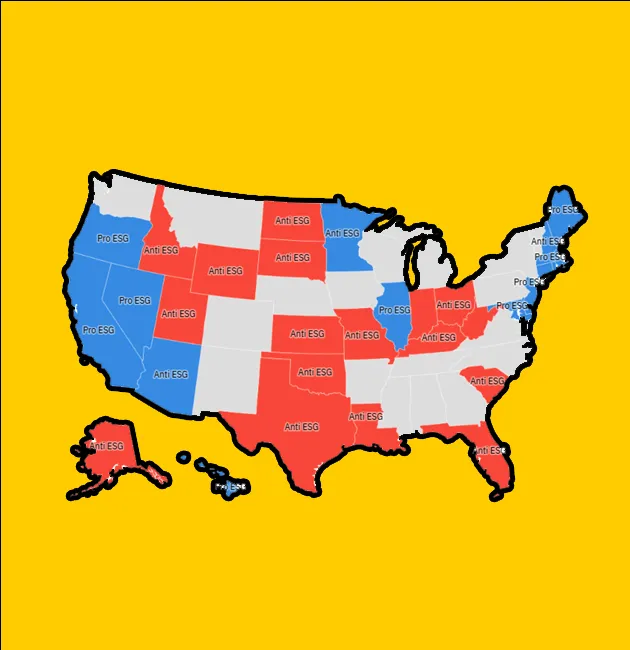
The pandemic that swept across the world. During the pandemic, office workers grew accustomed to the work-from-home format of working somewhere other than the office. But as companies such as Amazon, Meta, and IBM—which brought all their employees back to the office the moment the pandemic ended—have increased, so too has the lively discussion over whether working from home helps a company's long-term ESG strategy.According to Forbes, in 2023, 12.7% of full-time employees worked from home and 28.2% worked in a hybrid form using both the office and home. There is also an analysis by the video-conferencing technology company "Owl Labs" that, worldwide, 16% of companies operate remotely without a physical office. The freelance brokerage company "Upwork" predicted that, if the current trend of actively encouraging work-from-home continues, by 2025 about 32.6 million people—22% of the entire U.S. labor force—will choose to work from home.[2020 Future Workforce Report. ©Upwork]Cutting Commutes Cut the Carbon Footprint TooDuring the pandemic, when working from home was actively encouraged, positive assessments continued that working from home helps a company's ESG strategy.On the environmental side, working from home is a way to reduce a company's carbon footprint by cutting the time spent riding cars or public transportation to commute and by shrinking the office space used on a fixed basis. According to the "Spanish Institute of Environmental Technology," working from home can reduce by about 10% the amount of nitrogen dioxide, a major air pollutant emitted by means of transportation. Between 2020 and 2022, numerous San Francisco–based IT companies are known to have switched their work format to work-from-home or to have relocated offices while downsizing. As a result, in the third quarter of last year the San Francisco office vacancy rate rose to as high as 34%.[San Francisco office vacancy rate graph. ©CBRE Research]There are advantages on the social and governance sides as well. 35% of work-from-home employees answered that their productivity improved, and 71% said it helps in maintaining work-life balance. Moreover, because people can work without physically gathering in one place, the breadth of hiring diversity widens, and an organization's inclusiveness and flexibility can grow. In addition, because employees can be hired across various regions, the talent pool widens and the possibility of providing more jobs increases.Tom Wilson, the CEO of the U.S. insurance company "Allstate," said that after Allstate adopted work-from-home, the company's hiring diversity increased by as much as 30%. The U.S. Department of Labor has stated that, because the need to commute disappeared, the number of workers with disabilities employed across the United States also increased by about 28% compared with February 2020, when the pandemic began, reaching about 1.8 million.Carbon Emissions That Occur Out of SightOn the other hand, there is also criticism that many ESG values have been lost with the adoption of work-from-home. This is because a company cannot manage its level of environmental pollution in an integrated way, since individual employees cannot account for their own impact on the environmental side. The "Harvard Business Review" raised the possibility that, whereas commuting to a set office allows the carbon emissions from a fixed travel distance to be measured and managed, when working from home it is difficult to manage the extent to which an individual moves to change their work location or generates waste, so the degree of environmental pollution may become higher than when working in a fixed office.There are also opinions pointing out the risks that work-from-home carries on the social and governance sides. Because people communicate remotely, cases have increased of isolated employees feeling no sense of belonging and complaining of loneliness. The point that people easily experience burnout by carrying out work only through video conferencing and messengers was also cited as a drawback of working from home. In addition, along with an analysis that the cyberattacks that increased by 238% during the pandemic are related to work-from-home, management has been shown to be worried about the security risks that arise when information is exchanged without using an internal network.Companies Setting Out to Cut Direct and Indirect Carbon Emissions Through Hybrid WorkIn its "2023 State of Hybrid Work Global Report," "Owl Labs" analyzed that companies working fully in the office reach 54%. As companies adopting hybrid work or mandating office attendance increase, discussion of how closely the work format a company adopts and its ESG strategy interact is also expected to become more active.The "Sustainable Finance Disclosure Regulation (SFDR)," whose mandatory scope the EU recently expanded, includes both a company's direct and indirect emission sources in the calculation of its carbon footprint. Going forward, EU-based companies and companies active in the EU market will calculate their direct and indirect carbon emissions according to work format and concentrate their goals on reducing total carbon emissions.The CEO and CTO of the British office-management software company "Kadence," together with a vice president of the real-estate company "CBRE," announced a "Hybrid Manifesto for Sustainability." Through this manifesto, they expressed the aspiration to find a way to achieve an ESG strategy without gathering to work in one fixed office, while combining working from home and commuting.As with the goals of the companies that joined the Hybrid Manifesto, companies going forward are expected to give more thought to the need to build work environments that can simultaneously improve work efficiency and pursue ESG values, rather than maintaining traditional work systems. by Editor N