Loading Data
Please wait a moment...
Update Cal.
2026.08
03
Mon
04
Tue
05
Wed
06
Thu
07
Fri
08
Sat
09
Sun
Update Calendar
2026.08
01
Sat
02
Sun
03
Mon
04
Tue
05
Wed
06
Thu
07
Fri
08
Sat
09
Sun
10
Mon
11
Tue
12
Wed
13
Thu
14
Fri

Loading Data
Please wait a moment...
Evening ESG news and briefings to wrap up your day.

When April 5 arrives, corporate press releases pour in without fail. The articles contain a familiar scene: a photo of dozens of employees holding shovels in front of saplings, the phrase ‘a first step toward carbon neutrality,’ and even a wooden plaque inscribed with the number of trees planted. The sight of a company that emits hundreds of billions of won worth of carbon annually planting one hundred trees on Arbor Day and distributing a press release has, before we knew it, become a standardized ESG activity among domestic companies. However, fundamental questions about corporate forest-related ESG activities have recently been raised both at home and abroad. Does ‘having planted’ trees mean they have ‘lived’?[Social contribution activities through tree planting Ⓟ Hyundai Motor Company CSR Digital Magazine]The Evolution of the Tree-Planting Business: From Citizen Participation to Corporate PartnershipsThe tree-planting business has a history of approximately 15 years in South Korea. The social venture Tree Planet, which began as a mobile game in 2010 and drew attention for its model in which ‘users planting trees in virtual space leads to actual trees being planted in reality,’ is regarded as a pioneer in the field. At its peak, it was selected as the official app of the UN Convention to Combat Desertification (UNCCD), one of the three major UN environmental conventions, and attracted participation from overseas fans through ‘Star Forest’ campaigns named after K-pop stars such as ‘TVXQ Forest’ and ‘Girls’ Generation Forest.’ However, the center of gravity of Tree Planet’s business today is no longer the citizen participation app. Tree Planet has agreed to carry out a five-year forest ecological restoration project with Hyundai Motor Company starting in 2024, and has signed partnerships with corporations and local governments, including a business agreement with Chilgok-gun, Gyeongsangbuk-do for the creation of honey source forests.The Credibility Crisis of Carbon Credits Hidden Behind ESG DemandThis change signifies an overall directional shift in the tree-planting business: from a B2C emotional model in which consumers directly ‘purchase’ trees, to a B2B commissioned model in which companies ‘order’ forests for ESG performance. Behind this is the trend of corporate demand for visible nature-based activities surging after the declaration of 2050 net zero targets. However, this demand does not always lead to genuine forest restoration. The carbon reduction effect of the Brazil REDD+ project (activities to prevent deforestation and degradation) purchased by Samsung Electronics’ UK subsidiary in 2025 was found to be zero, and the reduction effect of the Cambodia REDD+ project purchased by SK Securities amounted to only 11.52%. In July 2024, Google completely halted its purchase of forest carbon credits — emission rights that are certified based on the amount of greenhouse gases reduced and absorbed and can be traded on the market — and declared a shift toward directly reducing its own emissions. MSCI Carbon Market, a global carbon market research firm, estimated the size of the voluntary carbon market in 2024 at approximately USD 1.4 billion (about KRW 2 trillion), but the actual quantity of carbon credits purchased, used, and retired has remained at 180 million tons for three consecutive years from 2023 to 2025. This is a signal that companies are beginning to question the credibility of carbon credits. [Pacajai REDD+ Project Ⓟ Kluthe]Steps Toward Verified ForestsThe simplistic notion that ‘one tree-planting event completes ESG’ can only diminish now. The strengthening trend of greenwashing regulations is also a pressure factor. During the 2024 National Assembly audit, it was pointed out that the greenwashing judgment criteria of the Korea Environmental Industry and Technology Institute under the Ministry of Climate, Energy and Environment are ambiguous and the level of punishment is weak. Accordingly, the government has signaled amendments to related laws. The EU has already adopted the ‘Green Claims Directive,’ which mandates the presentation of verifiable evidence when making eco-friendly claims. This stricter environment may, in fact, become an opportunity for operators equipped with the quality of ecological restoration and a transparent verification system.Ultimately, the conditions for survival in the tree-planting business today are not merely the number of trees, but clearly establishing the quality of ecosystem restoration, multi-year tracking and management rather than one-off events, and the role as verification infrastructure rather than a marketing tool. The scene of companies holding shovels and standing before cameras every time Arbor Day comes around will not disappear for the time being, but if five years of monitoring data does not follow behind that single photo, the meaning of tree planting will gradually fade. [Related Article]Tree Planet Director Jung Min-chul: “Until Everyone in the World Becomes a Tree Planter”

What drove the KOSPI index to its all-time highs were large-cap stocks such as semiconductors and secondary batteries. While the KOSPI index makes headlines day after day and we discuss the business environments and performance of large-cap stocks like those in the semiconductor industry, there is something that goes unmentioned, as if it did not exist: the ecosystem usage of electricity, water, land, minerals, and other resources that forms the very foundation of that performance. Natural Capital as the Real Foundation of Financial CapitalThe semiconductor and battery industries that have driven the recent stock surge consume enormous amounts of energy and minerals. The International Energy Agency (IEA) projected in its 2020 Net Zero Emissions scenario that, with the expansion of electric vehicles, lithium demand could increase by up to 40 times or more by 2040. While the expansion of EVs is a core strategy of the climate transition, it simultaneously accompanies the ecological burden of expanded mineral extraction and water resource use. Lithium-ion batteries — secondary batteries — the key component of electric vehicles, are connected to lithium salt flats in Chile, nickel mines in Indonesia, and cobalt mining in the Congo. At the salt flats, thousands of tons of brine evaporate daily for lithium extraction, and at the nickel mines, expanded mining is increasingly linked to tropical forest degradation and ecosystem fragmentation, heavy metal contamination, and child labor issues.[Chile’s Lithium Salt Flats © THE NET-ZERO CIRCLE]The semiconductor industry is no exception. Large-scale semiconductor complexes are known to use over 100,000 tons of industrial water per day. Industrial expansion leads to surging energy demand. The problem is that these costs are not sufficiently reflected in corporate valuations. As a result, the long-term cost burdens of labor ethics issues and ecosystem degradation become the responsibility of future society, while the immediate profits are recorded as corporate performance.In particular, the Korean stock market has a high dependence on nature given that the top market-capitalization stocks are concentrated in resource-intensive industries such as semiconductors, secondary batteries, oil refining, and chemicals. These industries create high added value while simultaneously premised on the consumption of enormous amounts of electricity, raw materials, and water resources. A rise in the KOSPI index signifies an expansion of the structure of natural resource use, making financial performance and the consumption of ecological resources an inseparable relationship.An Era Where Natural Capital Becomes a Financial VariableIn this way, the destruction of nature is moving beyond ethical debate into the realm of financial risk. According to the 2023 report ‘Nature-related Financial Risks: a Conceptual Framework to Guide Action by Central Banks and Supervisors’ issued by the Network for Greening the Financial System (NGFS), analysis and policy directions reveal that nature-related risks such as rising costs and supply chain disruptions can affect financial stability. In its ‘Global Risks Report’ published in 2023, the World Economic Forum (WEF) identified biodiversity loss and ecosystem collapse as among the most severe global risks within the next ten years. Furthermore, its 2020 report ‘Nature Risk Rising’ analyzed that 55% of global GDP, an economy of approximately USD 44 trillion, is moderately or highly dependent on nature and ecosystem services.[‘Project Natick,’ Microsoft’s eco-friendly data center development research experiment building an underwater data center. Container-type data centers were installed on the seabed to reduce cooling costs and energy use. © Microsoft]In Europe and the United States, the Taskforce on Nature-related Financial Disclosures (TNFD) is spreading. Since the final recommendations were announced in 2023, more than 300 global companies and financial institutions have endorsed or adopted them. They have begun to analyze how dependent companies are on nature and how nature degradation can lead to financial risks. This trend is also connected to the International Sustainability Standards Board (ISSB) system, which creates international disclosure standards. In 2023, the ISSB incorporated ESG disclosure into the financial reporting framework with the issuance of the climate disclosure standard (IFRS S2). The European Union is institutionalizing corporate responsibility for human rights and environmental risks through the Corporate Sustainability Due Diligence Directive (CSDDD, an EU law mandating companies to directly identify, prevent, and mitigate the adverse human rights and environmental impacts of their own operations, subsidiaries, and supply chain partners, and to disclose them transparently). South Korea likewise plans to pursue mandatory ESG disclosure from 2028.A rise in the KOSPI can clearly be a signal of economic growth. But if it is an outcome obtained at the cost of environmental degradation, it is no different from consuming future assets ahead of time. Only when the costs of resource use and sustainability are reflected in business budgets and ecosystem risks are incorporated into corporate decision-making processes can stable growth be discussed. This is why, even as we celebrate the KOSPI record, we should also ask what process produced those numbers. by Editor N

In Gyeonggi Province, approximately 13% of areas are agricultural and fishing villages where city gas supply is difficult. Since 2015, Gyeonggi Province has been creating energy self-sufficient villages by supporting solar power generation facilities centered on such energy-underprivileged regions. Previously called ‘Gyeonggi RE100 Villages’ or ‘Apartment RE100 Pilot Projects,’ these initiatives were consolidated in 2023 into ‘Gyeonggi RE100 Income Villages.’ Recruitment has begun for the ‘Gyeonggi RE100 Sunshine Income Villages’ (hereinafter RE100 Income Villages) — projects that draw resident participation, return income, and contribute to regional circulation. So what exactly is an RE100 Income Village?Sunshine as Income, Income as Carbon NeutralityRE100 Income Villages are resident-participatory renewable energy projects that install solar power facilities in villages or apartment complexes and return the generation revenue to residents in the form of sunshine income dividends, village fund accumulation, and electricity bill savings. Eligible recipients include areas without city gas supply, energy-vulnerable villages, and apartment complexes. For the village type, 70% of installation costs are subsidized (provincial funds 30%, municipal funds 40%), and for the apartment type, 60% of rooftop solar installation costs are subsidized (provincial and municipal funds 30% each). [Gyeonggi RE100 Income Village © My Gyeonggi]From 2023, Gyeonggi Province expanded the initiative into the ‘Energy Opportunity Income Village Creation Project,’ subsidizing the installation costs of village communal solar power plants and providing monthly income to residents from the proceeds of solar electricity sales. The structure involves Gyeonggi residents, villages, and public facilities participating together to produce renewable energy, returning it as income, and then linking that income back to the renewable energy demand of companies. Under the name ‘Gyeonggi RE100,’ the province has connected villages and industry to regional carbon neutrality. As a result, approximately 1.7 GW of additional solar power facilities were expanded from 2022 to 2025 — a meaningful change for Gyeonggi Province, where renewable energy production had been difficult due to challenges in securing suitable sites. Ten Years of ‘RE100 Income Village’ Results — What Is the Goal for 2030?Over the past ten years, a total of 473 RE100 villages have been created across Gyeonggi Province. The Machimi Village in Pocheon is cited as a representative success story: in 2024, 33 households invested KRW 5.5 million each to achieve approximately KRW 40 million in generation revenue, and from 2025 onward, they receive an average monthly sunshine income dividend of KRW 200,000. The Eungol Village in Icheon also produced concrete results last year, distributing sunshine income of KRW 2.2 million per person annually. The apartment complexes in Suwon and Pyeongtaek that installed 120 kW of rooftop solar as a pilot project last year are also projected to achieve annual savings of KRW 30 million in communal electricity costs. [Gyeonggi RE100 Income Village Project Announcement © Gyeonggi Environment and Energy Promotion Agency]This year, Gyeonggi Province is investing KRW 12.8 billion in provincial funds to support 200 villages, pursuing the long-term goal of creating a total of 2,000 income villages by 2030. By activating a ‘one-stop support system’ through the Gyeonggi Environment and Energy Promotion Agency, the province plans to provide close support for administrative procedures such as permits and shorten the timeline to project implementation. If income villages spread, we can expect a virtuous energy cycle in which the welfare of energy-vulnerable areas improves and the renewable energy transition advances simultaneously. Villages and apartment complexes wishing to participate in the RE100 Income Village creation project may submit project proposals and supporting documents through their respective cities and counties to the Gyeonggi Environment and Energy Promotion Agency by March 20 (see contact information below). RE100 Income Villages make a significant contribution to the practice of energy welfare, including reducing individual household electricity bills, creating village welfare funds, and generating opportunity income. A village where sunshine becomes income is not as far away as one might think.☞ Gyeonggi Environment and Energy Promotion Agency — Gyeonggi RE100 Income Villages: Application Information Page☏ Project Inquiries — Village Type: 031-985-0834 / Apartment Type: 031-985-0519 by Editor N

The 2026 Milano Cortina Winter Olympics are in full swing. A standout feature of this competition, in which 71 members of the Korean national team are competing across 12 disciplines, is the surge in snow sports. Kim Sang-kyum won the silver medal in the men’s parallel giant slalom in snowboarding on his fourth consecutive Olympic attempt, becoming the first medalist for Korea at these Games and the winner of Korea’s 400th medal in Olympic history. Following that, Yoo Seung-eun captured the bronze medal in women’s snowboard big air, achieving the first multi-medal performance in a single Winter Olympics for Korean ski and snowboard events in the 66 years since Korea’s first participation. In the women’s snowboard halfpipe final, Choi Ga-on won the gold medal, delivering the news of the first gold medal for the Korean delegation at these Winter Olympics, while short track men’s national team member Lim Jong-eon captured the bronze medal in the 1,000m short track final, securing the fourth medal for the Korean delegation. [Winter Sports Ⓟ gettyimages]The stage on which the Korean athletes are racing toward medals did not overlook ESG. The 2026 Milano Cortina Winter Olympics is the first Winter Olympics to comprehensively apply the International Olympic Committee (IOC)’s ‘Olympic Agenda 2020+5.’ The 2020+5 Agenda is a set of priority tasks designated by the IOC in 2021, containing 15 recommendations including digitalization, embracing esports, strengthening the rights and responsibilities of athletes, and promoting clean sport. Additionally, under the sustainability strategy called Now26, the IOC organized what the Olympics will pursue for sustainability into what to protect now, what to renew, what to include, what to move, and what to empower.An Olympics That Does Not Build Disposable VenuesThe most striking feature of this Winter Olympics is the eco-friendly approach epitomized by the ‘Olympics that does not build.’ At the 2026 Milano Cortina Winter Olympics, 85% of venues used existing facilities — the highest building reuse rate in Winter Olympic history. The Stelvio slope in Bormio, Italy, the Antholz biathlon venue, and the Cortina alpine ski slopes were all existing landmarks already situated at host sites. Also notable is the circular economy strategy put into action by repurchasing some 20,000 pieces of equipment used at the 2024 Paris Summer Olympics. Power used during the games is supplied from 100% certified renewable energy. Emergency generators and snow groomers are operated on biofuel, and a low-carbon transport plan is in operation to reduce automobile use by 20% compared to the 2006 Torino Winter Olympics.The newly constructed Milano Porta Romana Olympic Village also embodies eco-friendly design. The Olympic Village was built to meet zero-energy building standards. A post-Olympics plan has also been established: after the Games conclude, the Village buildings will be converted into student dormitories and affordable housing, becoming a hub for Milan’s urban regeneration. The Cortina Village was built with reusable modular units to be dismantled and recycled after the Games. Given the characteristics of a Winter Olympics held in mountainous regions, where concerns over damage to the natural environment were unavoidable, the host sites minimized new construction by maximizing the use of existing hotels as athlete accommodations.Not only the Olympic venues but also the symbols of the Olympics — the medals and torch — are special. The medals for this Games were cast from recycled metals using renewable energy. The torch, which would otherwise be disposable, uses 100% recycled bio-LPG from waste cooking oil, animal fats, and agricultural by-products, and is designed to be recharged up to 10 times. The complete abolition of paper tickets and the operation of digital-only tickets is also a feature of these Games.[Cortina, Italy Ⓟ unsplash/Betty Subrizi]The Expanding Scope of Inclusion at the OlympicsShining another light on a different dimension of sustainability at these Games, they are also the most gender-equal Winter Olympics in history. The female athlete ratio reached a record high of 47%, and the number of women’s events reached 50, surpassing the 46 of Beijing 2022 to achieve an all-time high. Including 12 mixed-gender events, the proportion of events in which women participate reaches 53.4% of the total. Four new women’s disciplines were added for the first time: freestyle skiing dual moguls, luge women’s doubles, ski jumping large hill women’s individual, and ski mountaineering sprint. It is also a first for the Olympics that 12 of the 16 detailed disciplines achieved perfect gender parity. In cross-country skiing, men and women will compete over the same distance for the first time.Changes are also continuing outside the competition venues. The proportion of women in the organizing committee’s senior leadership is 45%, and 55% of volunteer applicants are women. Athlete maternity leave support (€1,000 per month for up to 10 months), CONI Maternity Scholarships, and a ranking protection system during childbirth periods have also been newly introduced. The first Italian translation of the IOC’s gender portrayal guidelines has been published, promoting fair gender portrayal in Olympic communications as well. When compared to the fact that at the first Chamonix Winter Olympics in 1924, women could only participate in a single discipline — figure skating — the changes over the past 100 years hit home.The scope of inclusion has expanded beyond gender to encompass persons with disabilities and the local economy. The Olympic facilities invested approximately €20 million in accessibility improvements, enhancing hotel, restaurant, and tourism information accessibility for persons with disabilities. Impact programs to vitalize the local economy of the host areas were also planned. More than 400 local SMEs came together to support the hosting of these Olympics, and through this, job creation for local youth was also made possible.Persistent Problems Accompanying International EventsThat said, it is not without regrets. The total carbon emissions of this Winter Olympics are estimated at approximately 930,000 tons, and considering the roughly 410,000 tons of carbon emissions unavoidably generated by spectators and officials traveling by air, this is a difficult problem to improve as long as international events are held. There is also analysis that sponsorships from carbon-intensive industries such as Italy’s fossil fuel company Eni and airline ITA Airways indirectly generate induced carbon emissions.Meanwhile, the felling of approximately 20,000 m² of larch forest in the process of restoring the Cortina sliding track used during the 1956 Olympics drew criticism not only from Italian environmental groups but also from Greenpeace. The Italian government, which carried out the restoration work, sought to explain by presenting a plan to utilize the restored infrastructure for the local economy and to plant trees elsewhere in compensation for the felling, but could not stop the criticism of a greenwashing Olympics.In this way, this Winter Olympics became a stage testing whether large-scale international sporting events can be sustainable even in the climate crisis era. Achievements as impressive as the athletes’ passion and remaining homework have unfolded before our eyes. As we enjoy the remaining competitions, let us also look forward to the 2028 LA Summer Olympics and the 2030 French Alps Winter Olympics, wondering whether the global festival can someday be reborn as a festival for the planet. by Editor N

Wetlands Day has come around again this year. Every February 2 is ‘World Wetlands Day.’ It was designated as a global commemorative day to widely promote the value and importance of wetlands, in celebration of the signing of the ‘Convention on Wetlands of International Importance Especially as Waterfowl Habitat,’ commonly known as the ‘Ramsar Convention,’ in Ramsar, Iran on February 2, 1971. Wetlands Disappearing Faster Than ForestsThe Ramsar Convention is the first intergovernmental convention in the environmental field, created with the purpose of conserving and wisely using internationally important wetlands. Although wetlands cover only 6% of the Earth’s land surface, they store 30% of the carbon produced on the planet and perform many roles such as flood control and water purification. They also play a key role in maintaining biodiversity. According to the ‘Global Wetland Outlook’ report published by the Ramsar Convention, such important wetlands are disappearing ‘more than three times faster than forests’ due to global development pressure. Already, more than 85% of the world’s wetlands have been lost from 1700 to recent times, and in particular, 35% of wetlands disappeared between 1970 and 2015. The rate of loss is accelerating.[Inland Wetland © Ilgan Today]Why Korea’s Wetlands Are SpecialSouth Korea is no exception. Korea is the 101st country to accede to the Ramsar Convention. Having joined the Ramsar Convention in 1997, the ‘Yongneup of Daeamsan Mountain,’ Korea’s only high moor, was designated as a Ramsar Wetland in the same year. Since then, South Korea has held 26 wetland sites to the present. In particular, the tidal flats of Seocheon, Gochang, Shinan, and Boseong-Suncheon were inscribed as UNESCO World Natural Heritage sites in July 2021, earning international recognition for their value. [Commemorating the 2021 UNESCO World Natural Heritage inscription of Seocheon, Gochang, Shinan, and Boseong-Suncheon tidal flats © Korea Heritage Service]Given that there are approximately 2,500 Ramsar Wetlands worldwide, 26 sites may not seem like much. However, the UNESCO World Heritage Committee assessed that “Korea’s tidal flats are among the most important and significant habitats globally for the conservation of the Earth’s biodiversity, and are particularly valuable as a stopover for endangered migratory birds.” Korea’s tidal flats are home to 2,169 species of marine flora and fauna, including endangered migratory birds, and 27 species of waterbirds listed on the IUCN Red List (the International Union for Conservation of Nature’s Red List of Threatened Species) such as the spoon-billed sandpiper, black-faced spoonbill, oriental stork, and white-naped crane inhabit them. Furthermore, South Korea serves as a critical mid-way stopover on the East Asian-Australasian Flyway, playing a vital role in the protection of migratory birds. It is part of an international wetland network connected to the Yellow Sea-Bohai Bay Migratory Bird Sanctuaries in China and the Wadden Sea of Germany, the Netherlands, and Denmark. The reason Korea’s wetlands draw international attention is that, despite being a country with top-tier biodiversity and strong pressures from urbanization and industrialization, it actively maintains an interest in wetland conservation. [Upo Wetland in Changnyeong-gun © Yonhap News]Activities to register wetlands with international bodies based on their value are also steadily expanding. Currently, a total of nine cities in South Korea have designated Ramsar Wetlands (Changnyeong, Inje, Jeju, Suncheon, Seogwipo, Gochang, Seocheon, Gimhae, Mungyeong). For Gwangju Metropolitan City, a plan was announced in December 2025 to submit a Ramsar Information Sheet (RIS, an official document that specifically describes the ecological value of the wetland and the need for its protection in accordance with international standards for Ramsar Wetland registration) to the Ministry of Climate and Environment for the designation of the Jangrok Wetland as a Ramsar site. The designation decision will be made in the first half of this year. In 2025, the Korea Heritage Service submitted an application for the extended inscription of ‘Getbol, Korean Tidal Flats (Phase II)’ as a World Heritage site to the UNESCO World Heritage Centre, concerning the tidal flats of Seosan in Chungcheongnam-do and Yeosu, Muan, and Goheung in Jeollanam-do.Although wetlands may seem removed from our daily lives, the benefits of clean water and a regulated climate that wetlands produce are being enjoyed by all of us at this very moment. From 2025, the Ramsar wetland registration of the Gwangju Jangrok Wetland is being pursued, and we look forward to the expanded inscription of the Yeosu, Muan, and Goheung tidal flats as World Natural Heritage sites. Let us also take an interest in wetland conservation policies. by Editor N

Wherever you go these days, talk of the ‘Dubai Chewy Cookie’ (hereinafter Du-Cheon-Coo) can be heard. People willingly engage in open runs and wait in long lines to get their hands on one. This unfamiliar dessert, which harmonizes crispy kadaif, savory pistachio, and chewy marshmallow, has gone beyond being a mere food item to become a cultural phenomenon. But there is a fact we have overlooked, intoxicated by the flashy visuals and sweet taste: the ‘uncomfortable truth’ left behind by the ingredients that crossed the globe to complete this single piece.The popularity of Du-Cheon-Coo has gone beyond scarcity to lead to market distortion. As the supply of the key ingredients — kadaif and pistachio — cannot keep up with demand, prices have skyrocketed. Some businesses and consumers complain of fatigue from dessert inflation fueled by industry collusion or the pretext of rising costs. Let us examine the questions we missed, buried in the consumer psychology of ‘it’s trendy so I have to try it’ — where these ingredients came from and how they reached our tables. [Dubai Chewy Cookie © Newsen Talk]The Pistachio Craze: The Environmental Cost Behind ItPistachio, the key ingredient of Du-Cheon-Coo, has been on a steady upward popularity trend. From 2023, the franchise beverage and bakery industries began utilizing pistachio as an ingredient in drinks and croissants. In the same year, Capital Press (an American agricultural newspaper) reported that California’s pistachio economy was booming and projected further expansion. Then in December 2023, a Dubai chocolate video posted on TikTok by influencer Maria Vehera went viral, sparking the global Dubai chocolate craze, which led to the current Du-Cheon-Coo trend. The market is moving quickly to catch up with demand. According to the Administrative Committee for Pistachios, pistachio trees are increasing by approximately 35,000 each year in California alone, the largest growing region. Environmental costs are hidden here too.[Pistachio Tree © Treeinfo]The amount of water consumed to obtain 1 kg of pistachios reaches a staggering 10,000 liters. The main growing regions, California and the Middle East, already face severe drought and groundwater depletion. Furthermore, the method of large-scale monoculture cultivation causes soil degradation and loss of biodiversity, while the excessive use of chemical fertilizers to meet increased demand leads to water pollution. Pistachio consumption, which has surged globally under the name of a trend, is even impacting the environment.Carbon from Transportation, Waste from ConsumptionWhat is easily overlooked is the environmental cost embedded in the import process of the ingredients. The core ingredients of Du-Cheon-Coo — pistachio, kadaif, marshmallow, and others — mostly rely on imports. The longer the distance food travels from its place of origin to reach consumers, the proportionally greater the environmental burden.According to the Korea Rural Economic Institute, imported agricultural products emit far more carbon dioxide in the transportation process than domestic ones. Imported grapes leave 4.4 times more carbon than domestic ones, and kiwis leave 3.3 times more. As of 2019, the carbon dioxide emissions from South Korea’s food imports amounted to approximately 11.46 million tons, a figure exceeding half of the emissions from the entire domestic agricultural production sector. A single thoughtlessly enjoyed bite of Du-Cheon-Coo contains the massive carbon emitted while crossing the Pacific Ocean from the other side of the planet. [Packaged Dubai Chewy Cookie © Yonhap News]And the Du-Cheon-Coo made in this way is delivered to consumers surrounded by disposable items. To handle the explosive demand, most stores handling Du-Cheon-Coo focus on packaged sales. The plastic boxes, vinyl shopping bags, and cooling packs used to package a single cookie are discarded intact as waste after a single use. In effect, we are discharging waste that will not decompose for hundreds of years for the sake of a moment’s sweetness.Enjoying rare ingredients from across the world airlifted in real time is an unprecedented privilege enjoyed by modern humanity. However, as the UN Food and Agriculture Organization (FAO) has pointed out, 33% of global greenhouse gas emissions originate from the food system. The reason the European Union is pursuing the ‘Farm to Fork’ strategy for carbon neutrality is that the sustainability of food is directly tied to our survival.The money paid for a single Du-Cheon-Coo may not simply be the price of taste, but a debt incurred for drawing forward the Earth’s resources. We need to maintain awareness of the real cost we are paying amid the sweet trend. by Editor N
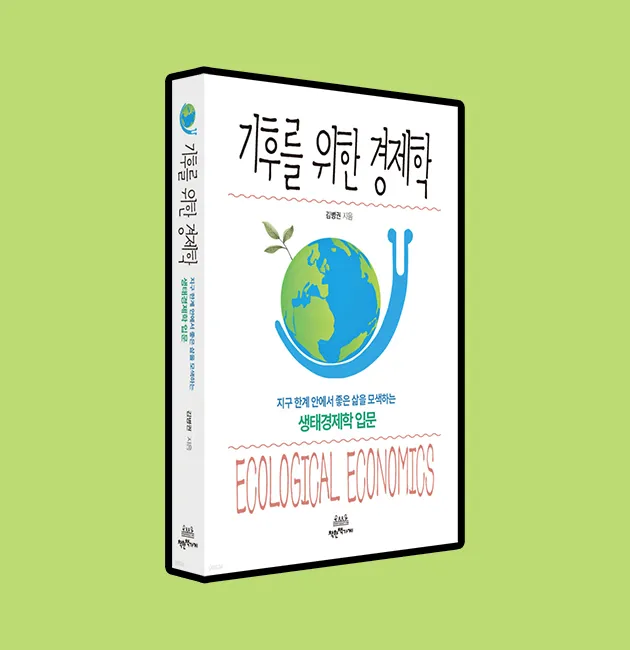
‘Economics for the Climate’ begins with an uncomfortable question. Climate crisis response has now reached a stage that demands changes in economic and social systems beyond the realm of the natural sciences, so why is our economics still repeating old answers? Kim Byung-kwon, a research fellow at the Green Transition Institute and the author of this book, notes that mainstream economics has failed to find answers in the face of the climate crisis and draws readers’ attention to the unfamiliar economic tradition of ecological economics.If you are curious about a new perspective on the climate crisis and economics, read this book.[Economics for the Climate Ⓟ Chakhan Chaekgage]Why Mainstream Economics Has Failed to Find Answers to the Climate Crisis‘Economics for the Climate’ states that the climate crisis cannot be resolved with the existing economic paradigm. Policies to date have failed to fundamentally solve the climate crisis and ecological problems, and it argues that new answers must be found through ecological economics. The book conveys that solving the climate crisis requires ecological economics — an economic perspective that understands the human economy within the Earth’s ecosystem. Ecological economics fundamentally prioritizes sustainability based on optimal economic scale and focuses on the long-term process toward that end. Even if not yet theoretically perfect, the crisis will deepen if we do not attempt new approaches. Degrowth: Beyond Misunderstanding to Its EssenceAuthor Kim Byung-kwon focuses on the inverse proportional graph formed by carbon neutrality and unlimited economic growth. Let us recall the time of the COVID-19 pandemic. Governments around the world chose citizens’ lives over economic growth and mobilized fiscal resources to respond to the crisis. This was the actual experience of degrowth we went through. The degrowth spoken of in the book does not mean reducing the scale of the economy and consumption for the sake of the environment, but rather reducing energy throughput to restore the balance of the living world. It means bringing resource and energy use back to a level the ecosystem can sustain. We stand at a fork in the road: whether the climate crisis will forcibly halt economic growth, or whether we will first practice actions for the environment within a degrowth economy. ESG: The Limits of VoluntarismMark Carney, former governor of the central banks of Canada and the United Kingdom who served as the UN Special Envoy for Climate Action and Finance, emphasized ESG management in his book <Value(s)> as follows: pursuing a balance between financial returns and social value benefits shareholders in the long term as well. However, this book poses the question of whether investors can pursue social value to the end even when returns decrease. Whether a company can forgo even a portion of profits and performance for the pursuit of values is a question that must inevitably be addressed when discussing ESG management. Author Kim Byung-kwon, while encouraging companies that voluntarily practice ESG, emphasizes the need for methods that ensure companies comply with socially agreed-upon carbon emission rules and systems. It is a sober diagnosis that the climate crisis cannot be averted by relying solely on voluntary commitments.‘Economics for the Climate’ poses the question of how economics ought to explain the era of the climate crisis. Those who are pondering climate crisis response and ESG practice will be able to confirm through this book the questions we must ask and the direction of change needed to find the answers. by Editor N

A Green Christmas, unlike a White Christmas with falling snow, refers to a Christmas spent in an environment where snow does not fall or there is little accumulated snow on the ground. Recently, with growing interest in environmental protection, ‘green’ is also being used to mean ‘environment.’ Accordingly, on Green Christmas, as befits the meaning of the day, people practice environmentally conscious actions such as recycling Christmas supplies or using reusable dishes and containers instead of disposables. They also convey feelings toward neighbors they have not been able to reach out to until now. Let us take a look at what events were held and are being held during this December to mark Green Christmas.Green Christmas: Thinking of Regional Co-ProsperityGangbuk-gu Christmas Market <Green Santa’s Gift Box>Seoul Gangbuk-gu held the 2025 Gangbuk Christmas Market ‘Green Santa’s Gift Box’ from December 19 to 21 in the area around the Gangbuk-gu Office. This year’s event was the third edition of the Christmas Market, which has established itself as Gangbuk-gu’s representative winter commercial district festival, and was special in that it was the last winter event to be held at the current government building before the relocation to the new office. This market, filled with colorful experiences, featured a Christmas flea market, busking performances, and photo zones under the name ‘Green Santa’s Gift Box.’ Additionally, the ‘Green Santa’s Snack Warehouse’ on the sidewalk in front of the district office offered winter snacks, while the Sonyeosang Street was arranged as a local brand zone. Local artists also participated, with craft experience programs drawing direct participation from attendees.[2025 Gangbuk Christmas Market ‘Green Santa’s Gift Box’ Ⓟ Munhwa Ilbo]Gimpo Cultural Foundation <Our Family’s Green Christmas>How about experiencing the value of sharing and exchange with family at Christmas? The Gimpo Cultural Foundation held the family-friendly year-end event ‘Our Family’s Green Christmas!’ on December 20–21 at the Hanok Village in Gimpo Art Village. ‘Our Family’s Green Christmas’ carries the meaning of ‘a Christmas that the family draws together while thinking of the environment.’ The Hanok accommodation experience building, which was normally operated only for a fee, was specially opened and set up as a Christmas market and experience space. The main programs included family experience activities such as making pop-up book cards and creating Christmas ornaments. Additionally, the ‘Toy Circulation Market,’ where neighbors shared toys and clothing, and the ‘Green Christmas Market’ featuring local artists allowed participants to experience the value of sharing with neighbors. A foundation official stated, “We will create a new year-end culture unique to Gimpo through an eco-friendly festival utilizing the Hanok space.”[Our Family’s Green Christmas Ⓟ Gimpo Cultural Foundation]Spending an Environmentally Conscious ChristmasKORA Circular Resource Promotion Center <Pubel Santa’s Green Christmas> EventWhat if you could write a letter to Santa and receive an eco-friendly gift in reply?The eco-friendly experience program ‘Pubel Santa’s Green Christmas’ was held every weekend from December 6 to 23 at the Circular Resource Promotion Center under the Korea Circular Resource Distribution Support Center (KORA). The event, themed around ‘Pubel Santa’s Eco Post Office,’ featured a special program in which visitors wrote letters with heartfelt sentiments and sent them. The experience was conducted in the form of completing a workbook stamp mission at the promotion center. 1) Explore various parts of the promotion center and collect all 5 stamps in the workbook. 2) Submit the fully stamped sheet, receive a postcard, and write a letter to Dr. Pubel.3) Place the completed letter in the mailbox and receive a gift.Participants, including child visitors, who sent their letters could receive a special ‘eco’ gift along with a reply personally written by Pubel Santa. A KORA official conveyed, “We hope you will not miss the special sentiment of a Green Christmas that both protects the environment and warms the heart.”[Pubel Santa’s Green Christmas Ⓟ Environment Broadcasting]Lexus <CONNECT TO 2025 GREEN CHRISTMAS>There is an event where you can enjoy various programs themed around a Green Christmas in one space. It is Lexus Korea’s <CONNECT TO 2025 GREEN CHRISTMAS>, held from December 1 to December 31 at the multi-cultural space CONNECT TO. Programs are prepared through which you can experience Lexus’s philosophy of community contribution and the value of carbon neutrality. Suited to the eco-friendly concept, you can taste winter dessert menus including strawberry and matcha beverages made from Lexus Young Farmers’ produce. Additionally, a book donation campaign was held throughout December to deliver books to small libraries in the community. The book donation campaign is a representative participatory social contribution program of Toyota Korea, which has been donating to small libraries in communities in need since 2014. Last year, approximately 14,000 diverse books were collected and delivered to children in the community. [CONNECT TO Green Christmas Ⓟ Lexus Korea]How about thinking of the environment this Christmas season by experiencing the diverse events prepared for Green Christmas? Even without going out, there are ways to spend a Green Christmas at home. Anyone can easily spend a Green Christmas by keeping the environment in mind — whether by composing a vegetable-centered meal instead of meat, preparing just enough food to eat, or renting Christmas decorations. To all who put into practice a mindset of environmental consciousness even at Christmas, Merry Green Christmas! by Editor N