Loading Data
Please wait a moment...
Update Cal.
2026.08
03
Mon
04
Tue
05
Wed
06
Thu
07
Fri
08
Sat
09
Sun
Update Calendar
2026.08
01
Sat
02
Sun
03
Mon
04
Tue
05
Wed
06
Thu
07
Fri
08
Sat
09
Sun
10
Mon
11
Tue
12
Wed
13
Thu
14
Fri

Loading Data
Please wait a moment...
Morning features and interviews. A morning story over a cup.
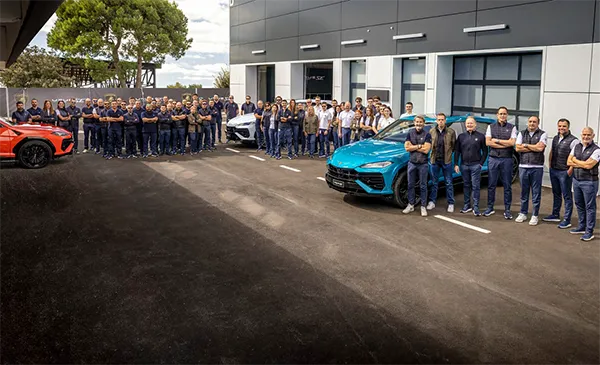
"F1: The Movie," directed by Joseph Kosinski, director of "Top Gun: Maverick," and starring Brad Pitt, set a new box-office record by surpassing 60 million dollars (about 810 billion won) at the worldwide box office. Prompted by this film, made to commemorate the 75th anniversary of F1, the world's fastest car race, much interest is gathering around F1 and motorsports in general.[A scene from F1: The Movie © f1themovie.com]Meanwhile, according to the International Energy Agency (IEA)'s "World Energy Outlook 2024" report, energy demand in the transport sector will increase by about 10% by the end of the 2020s, and the main factor is road transport. However, while the number of vehicles corresponding to road transport increases by about 10%, the growth rate of road-transport energy use is expected to stay at around 5%. The spread of electric vehicles offset the energy use of existing internal-combustion-engine cars that use fossil fuels.The Fédération Internationale de l'Automobile (FIA), which governs many motorsports, is responding to this change by holding Formula E, electric-powered open-wheel racing, since 2014. So then, in what way is a mobility company that makes the fastest cars on the road raising its speed toward ESG?[Cover of Lamborghini's sustainability report © Lamborghini]Toward Taurus (Direzione Cor Tauri)Ferrari, Aston Martin, McLaren, and Lamborghini — the brands that represent supercars — each practice sustainability in their own way. Ferrari has steadily published sustainability reports since 2018, Aston Martin since 2019, and McLaren since 2021. Lamborghini published its sustainability report for the first time this year, beginning to officially share the brand's ESG moves.Under the slogan "Driving Human Beyond," Lamborghini aims for the goal of newly creating not only what is visible but even the experience. The strategic direction "Direzione Cor Tauri" — that is, "Toward Taurus" — launched in 2021, was to the extent of electrifying all of Lamborghini's models, but in 2024 it expanded its goal and scope to the decarbonization of the company's entire value chain. This means achieving decarbonization in the true sense not only in Lamborghini's cars but in all processes encompassing the brand, such as production and transport.[Lamborghini's production process © Lamborghini]Lamborghini's Sustainable Value ChainLamborghini continues to collaborate, through ongoing communication, with partners who pursue common values in social, environmental, and quality terms. Through this, it consistently maintains a high level in the basic quality of products and in the experience the products deliver to consumers. Since joining the Audi Group in 1998, Lamborghini has been innovating its supply chain, collaborating with related departments to create synergy with Volkswagen Group brands.Lamborghini's headquarters and manufacturing plant are in Italy, and it reduces transport-related greenhouse-gas emissions by sourcing parts from suppliers in the Europe, Middle East, and Africa region. In addition, as part of a project to employ the socially disadvantaged, it signs supply contracts with local cooperatives. This can be called a mutually beneficial value chain that solves the problem of excessive greenhouse-gas emissions arising from long-distance transport while at the same time realizing local development.[Lamborghini's high-performance electric car "Revuelto" © Lamborghini]An Upright Promise for Future GenerationsIn line with Lamborghini's Direzione Cor Tauri strategy, the "Revuelto" model, unveiled in 2023, is the brand's first hybrid HPEV (High Performance Electrified Vehicle) supercar, a model combining a 12-cylinder engine with three electric motors. The following year, Lamborghini also unveiled the Urus SE, a hybrid version of its super SUV, and the Temerario, its second HPEV. At the 2024 Asia-Pacific unveiling event for the Temerario, Lamborghini CEO Stephan Winkelmann stated, "We will convert our entire lineup to hybrid in sequence, and we are waiting for the right time to apply electrification technology that maintains the driving experience Lamborghini pursues." A pure electric car inheriting Lamborghini's performance and driving pleasure is scheduled for release in 2030.Besides making its existing internal-combustion supercar lineup all hybrid and electrified, Lamborghini operates various policies for environmental protection: saving energy and resources, reducing greenhouse-gas emissions to minimize environmental impact, and protecting biodiversity. Paying particular attention to water-resource management, Lamborghini uses water supplied through the waterworks network as domestic water for the cafeteria, cleaning, and the like, and supplies the water needed for the production process from its own wells. Lamborghini covered 82% of its total water use from 2023 to 2024 with well water, also using water treated in its own purification facilities as a major supply source. Going forward, Lamborghini aims for a zero-discharge plant that completely reuses, until depletion, the intake resources of process wastewater, domestic sewage, industrial wastewater, and rainwater generated in the process. By reducing unnecessary waste of water resources and recycling used water, it is expected to contribute to environmental protection and resource circulation.Like the speed approaching 300 km/h and the tremendous performance, many of the elements that represent the sentiment of a supercar originate from the internal-combustion engine. Supercar brands are preparing for changes in future mobility by exploring various methods such as e-fuel, hybrids, and high-performance motors. If you are curious about what the future of mobility that Lamborghini is preparing — and further, its future as a sustainable carmaker — will look like, how about reading Lamborghini's sustainability report, whose meaning is all the greater for being its first? by Editor L
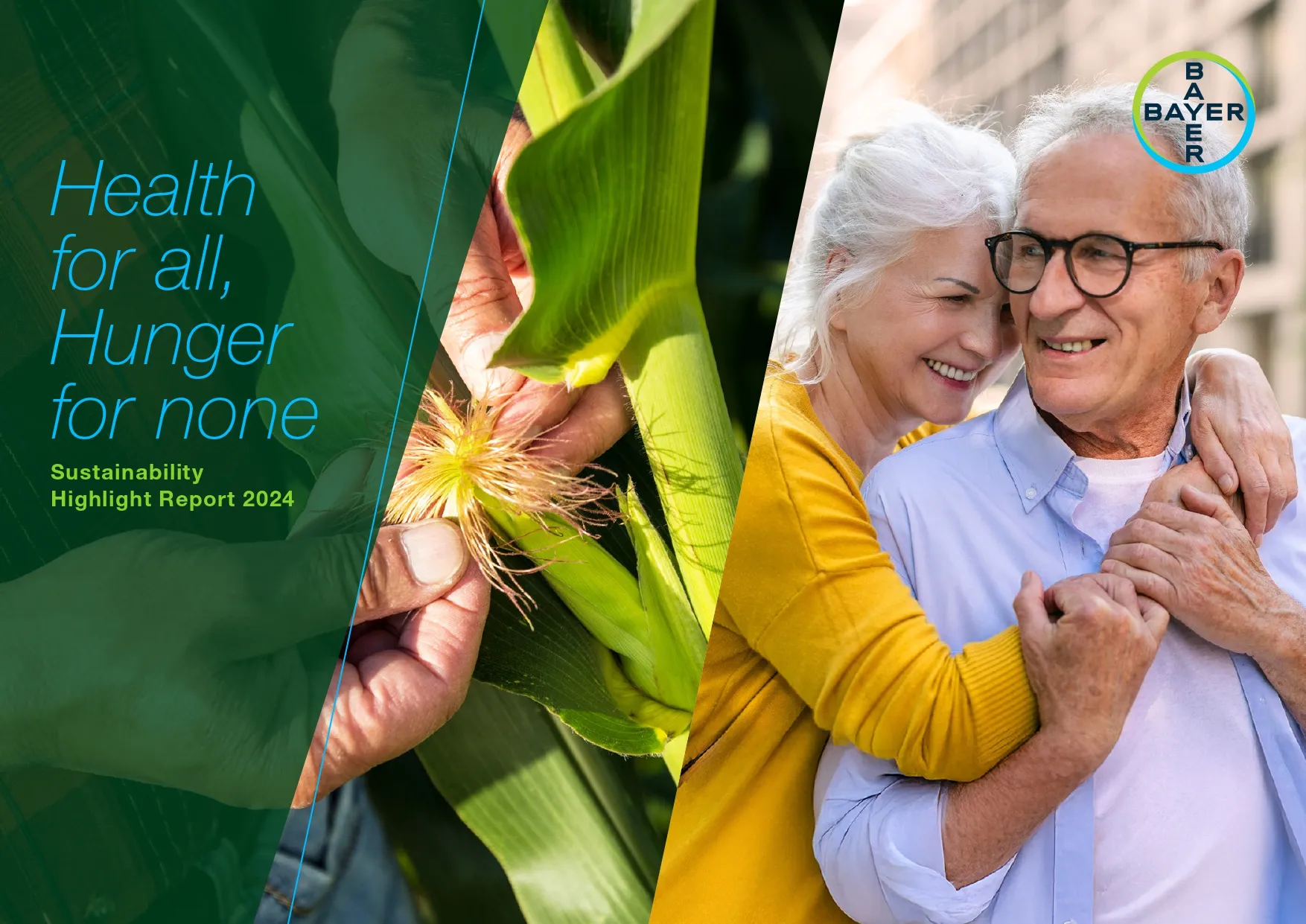
The world-renowned demographer Dr. Jennifer D. Sciubba, in her book "8 Billion and Counting" (2023, Hyeoreum Publishing in Korean), proposes viewing the population problem from a global perspective. This is because, while most advanced countries including Korea are experiencing the problem of population decline, worldwide the poverty and social turmoil accompanying population growth are a bigger problem. Indeed, the "World Population Prospects 2024" report of the United Nations Department of Economic and Social Affairs (UNDESA) predicts that the world's population will reach 10.29 billion in 2084, and that the region driving this will be Asia — excluding Africa and East Asia. And such population growth carries a strong risk of inevitably accelerating Environmental and resource consumption.A World Where No One Goes Hungry (Health for all, Hunger for none)[Cover of the highlights of Bayer's 2024 Sustainability Report © Bayer]The global life-sciences company "Bayer," which marks the 70th anniversary of its entry into Korea this year, is also carrying out business in various areas with this awareness of the problem. Bayer takes "Inclusive Growth," "Reduced Ecological Footprint," and "Acting Responsibly along the Entire Value Chain" as its three pillars of sustainability. Today, we look at the sustainability report of Bayer, which carries out various activities for health for all and "a world where no one goes hungry (Health for all, Hunger for none)."Based on its rich portfolio in the healthcare and agriculture fields, Bayer is striving to improve the quality of life in low- and middle-income countries (LMICs). Bayer is also supporting food security in various ways — providing agricultural knowledge and partnerships and developing innovative seeds for smallholder farms in low- and middle-income countries that find it hard to respond resiliently to climate change and population growth. Last year, Bayer collaborated with Solynta, a hybrid-potato breeding company, to distribute a new potato variety in Kenya and India. Unlike the usual method of growing potatoes from tubers, this potato is distributed as seed, making it easy to store and transport, and it has characteristics advantageous against disease and climate change. Through this, Bayer presented another possibility to the potato-cultivation market, which reaches 20 million hectares worldwide.Freedom to Choose: Broadening Its Scope[Contraception awareness-improvement activity © Bayer]In addition, Bayer is increasing access to modern contraception for women in low- and middle-income countries by supplying modern contraceptives and devices at reasonable prices. Through this, over the single year of 2024 alone, 51 million women in low- and middle-income countries were able to make proactive family plans and manage their health with Bayer's products. This will become a foundation guaranteeing women the most basic rights for their bodies and health, and for their social advancement and economic status. Bayer is raising product availability by adjusting product prices to local purchasing power and strengthening patient-access programs for its products.In addition, Bayer's sustainable moves continue in the self-care field, which drew attention as we passed through COVID-19. Half of the world's population is said to still not enjoy basic medical services. In place of specialized medical services hard to reach as far as remote areas, Bayer last year provided educational programs to about 73 million people to help them choose self-care products as well as over-the-counter medicines and health functional foods. It is, in effect, an effort to provide all kinds of health to everyone.A Vision Practiced Through ESG Management[Carbon-reduction targets © Bayer]Along with sustainability through its products, Bayer establishes and practices various goals for sustainable management. Bayer set a goal of reducing greenhouse-gas emissions by 42% by 2029 and reaching net zero in 2030 by offsetting the unavoidable carbon emissions arising from facility operation and the like through Carbon Offsets. To this end, Bayer is gradually implementing action measures such as using renewable energy, investing in process optimization, and switching to electric vehicles. As a result of such efforts, Bayer stated that it reduced greenhouse gases by 21.3% in 2024. This is a figure reaching more than half of its final greenhouse-gas reduction target.Beyond this, Bayer is continuing efforts such as producing all product packaging from 100% recyclable materials by 2030 and allocating 36% of its procurement costs to suppliers leading decarbonization. Furthermore, it is working on overhauling and establishing systems to foster a healthy workplace culture — such as expanding the ratio of women hired in management positions from the 2024 level of 44.1% to 50% by 2050, and providing parental leave and health-and-rest programs. Not only the lives of the consumers who use its products but also the lives of the employees who strive for this are precious values that Bayer pursues.Bayer's moves — having entered 145 countries and striving for humanity's healthy life — have expanded into protecting future generations and the ground they will live on. This means that Bayer's vision of health for all and a world where no one goes hungry is no different from protecting the environment, such as by reducing carbon emissions and expanding recycled goods. In addition, Bayer's ESG management, which encourages the flexibility of the work environment and women's social advancement, suggests the various meanings that sustainability holds. Bayer's all-around ESG strategy can be found in Bayer's annual report. by Editor L
By Lee Choong-gul (essayist, former editor-in-chief of GQ Korea, author of the novel "Your Face") · August 27, 2025In Korean society now, a home has become documentary evidence of wanting to live like a human being, and a longing beyond mere space. When a friend who grew up in the same neighborhood, who rode the same bus all along and listened to the same music, buys a house with a parent's help and leaves the neighborhood, the young person finally realizes that the bus does not stop in front of his own semi-basement home. At that moment, how leisurely must the saying that a home is a place that remembers how much you loved and how you empathized sound to the young person?[ⓒESG.ONL]The sighs of those left behind bite one another's tails. My parents wrongly co-signed a guarantee, so even I have lived as a pauper all this time. My parents left me debt instead of light. Until I was in college, four family members lived in an 11-pyeong house. I was pushed by the jeonse crisis all the way to a gosiwon. At some point the question "Why am I still living in monthly rent?" is transformed, as if overwritten, into "Why do I seem to have failed?" Because now, like it or not, it is the era of "home-ownership authoritarianism," in which one's own home becomes housing stability, a future asset, and the only achievement accomplished without a parent's help.The nuance of the word "desire" is elegant and sensual, but the desire concerning a home is far denser than that, closer to appetite. Woven, one might say, with some measure of frustration and shame. From one angle it is a little funny and slightly chilling. Because a home is, astonishingly, a new way of destroying the internal order of a family by combining individual cases, statistics, and cracked emotions. Now class has been divided even within a family. Siblings staying in different economic strata cannot be said to live in the same world.A reason for silence, grounds for jealousy, and blocked anger. The home burns without rest, north, south, east, and west. Today too, somewhere in Seoul, a parent with means is gifting a child an apartment subscription. Because a home is another statement of account, the parent writes the contract and the child signs it. But who could call it a gift, this spectacle in which the word "registration transfer" runs rampant like a windfall?Sometimes I get so angry. Why on earth does the news make such a fuss every single day that apartment prices have risen? Whatever the case, stop showing celebrities' homes. When the camera licks the marble floor, the ceiling-high windows, the electric fireplace, and even the terrace where a pet dog frolics, and sweeps over the kitchen cabinets and the hangers of the dressing room, a "so what?" forces its way out of my polite mouth. Right on cue, when the subtitle does its "This home — is this for real?" nonsense, comments like "Wow, I want to live like that too" run wild. Ah, isn't this the very reproduction of housing fantasy? Doesn't watching something repeatedly ultimately prove that one comes to believe it?Every second, ads, variety shows, content, and dramas join forces to trumpet the absolute value of ownership. "You must live in a good house. Spacious, clean, sunlit, and above all, under your own name." Besides, drama characters live in Gangnam apartments every single day (that damn Gangnam. Even a single fish cake is pricier there, the utility-pole wires tangled over that expensive Apgujeong land like rain-soaked Indian water ghosts, that Gangnam where store clerks strut about pretending to be the owner). YouTube real-estate channels whisper, sirens be damned. "You have to buy now." "This place is going to skyrocket." "Leveraging everything isn't crazy. It's strategy, investment, calculation." Prophesying a society with no jeonse and threatening that you'll become a lightning-strike pauper if you don't listen, the camera happily scans an apartment model house. The mother walking in holding a child, the father reading a book in the parlor, the kitchen faucet embracing every scene, the bathroom slathered with marble, and the lighting cozy as the Virgin Mary. They bully you that it is your future.[ⓒESG.ONL]In Korea of this era, the words "owned or jeonse?" determine the phase of a relationship. At a blind date, at a loan window, at a family gathering, the question follows annoyingly. There is a heavy premise here. A home in my name is settling down, but a rental is temporary or unstable dwelling. The high and mighty cry out for an inclusive society, but slogans like that don't even reach our neighborhood, nor do they embrace those rejected by loan-screening standards. In a reality where the absolute power of "my home" blazes, society whispers even to the young person struggling with dirty Converse, a ramen-cooled aluminum pot, and a 30-million-won deposit. A person without a home is incomplete. A home is a game. Who enters first, who wastes less of their youth. And the young person believed it. Very deeply, like bone.But, as you know, most of Europe lives in rental housing. 80 percent of Berlin's citizens are tenants, Paris 60 percent, more than half of Copenhagen. They live without conflict under a long-term public-rental system provided by the government and the city. No loans, not chased by interest, they immerse themselves in life without the anxiety of dwelling form. Seen that way, the dignity of renting seems like the opposite of ownership. Human dwelling beyond the contract, one might say. But here, everyone shrinks their own domain on their own. "It's not my house anyway."In someone else's house anyway, the tenant lives with the Siamese twin called a moving plan. Two years or four, as the expiry approaches, searches catch fire. Contract renewal means a rent hike, and there is no fixed life. Jeonse is the passage to leveraging everything, monthly rent a kind of failure. A young person who must find a new home in September puts a rooftop or veranda where he can grill samgyeopsal onto his wish list. What is ironically sad about the tenant's naive daydream is that, on a night of wildly scrolling the real-estate page on the monitor, he will end up seeing, on the screen, not listings but a withered face. A home is a "place to live," not a "thing to buy," yet this generation's home is bigger than a home and more important than a human being. This is why "I want to live there" turns into meaning "I want to buy it even by going into debt."And so he spent five seasons for a single house in Seoul. The season of enduring, the season of preparing, the season of anxiety, the season of resignation, the season of calculating. The future dried up like credit spent out by a loan. Hell is another name for a present that has mortgaged its future. Overtime was a given, he saved 60 percent of his salary, and turned down both coffee and chicken. He dated, but deleted marriage. Because there was no house to live in together. The thoughts that would not be realized were all the more tenacious. He buried his individual life within the market's margin of error. Now is the last chance. If he missed it, it seemed he could never again set foot in Seoul.Even after six seasons changed, the home did not come. An impossible dream, a hope not grasped, a flowing phantom (幻影). The home was heavy. The ratio of concrete and desire was the same. He tried to burn the present to build the wall of later, but the wall did not protect him. To the young person who, as soon as he left the cradle, dreamed of his own home and ran aground, Mother Earth asks, "Why do you try so hard to wrap me in walls?"Ten years ago, before I built a house at the foot of Namsan, I lived in an apartment in Seongsu-dong. It wasn't my choice. I liked the old house. I wanted to live my whole life in that apartment, perched slightly on a mountainside so that a high wind blew year-round. But one winter, seeing my mother buy two radishes at the traditional market down below and carry them up to the house, I moved to a place where one could step on flat ground. In that not choosing is itself the most common choice, that too was my responsibility. Once I moved, I was confused whether it was a "place to live" or a "space bought and set aside." The exterior wall was the beautiful glass of the postmodern era, safe and clean at once. But somehow I couldn't adapt to the new home's sociability. If there hadn't been an enormous supermarket in front of the apartment's main gate, it might have been terribly lonely. Eventually, a few years later, I built a house somewhere on Namsan. My major is architectural engineering, but I also felt that its usefulness had run out with the building of this house.Apartments built these days come with words like premium, wide-type, master zone. Because a construction company's language is not architecture but marketing. Here ESG suitably slips in. High-efficiency materials, solar panels, LED lighting, eco-friendly wallpaper, smart meters... But the real structure of a space is not that simple. More important than how luxurious a wall is, is the question of whom that wall is pushing out.[ⓒESG.ONL]The city moves around homes, but the people within it grow ever more distant, outward. Individual characteristics are excluded from every blueprint, and social equity does not appear on the floor plan. An apartment-sales video emphasizes eco-friendly finishing materials but does not mention the damage to the nearby ecosystem. Greenwashing, which deceives consumers by feigning eco-friendliness with a straight face, is quite smooth and persuasive. Like a tree green on the outside but rotten within. No one asks: for whom was that house built, and who are the people outside the screen?I often wonder. Does the Earth build houses, or do houses tear down the Earth? It is doubtful how much environmental factors are considered when building a large apartment complex. The energy waste during construction, the structural pressure of cutting and filling earth, the disappearing green space and animal habitats — all are offset by a single image of a bird's-eye rendering, a single line saying a park is planned. Where did the village that was there go? And to whom will that energy be used? Might it, rather than a house where three generations live, fatten the bank account of a rich person expecting rental income? What connection is there between energy efficiency and structural inefficiency?Here a subtler item follows. What construction companies put forward as documentary evidence of fulfilling social responsibility is often things like community spaces, children's playgrounds, and convenience facilities for the elderly and infirm — but what if there are very few children at the playground, the community center is run by reservation, and no one sits on the benches?Building a home must answer not only the technical solution of erecting a structure but also the ethics of dwelling. Before drawing the plans, one must sense the days that will unfold in that home; before choosing materials, one must hear the voice of the land; and one must ponder what to anticipate and permit in others' lives. Who can live there, who is pushed out, and for whom it was prepared.Honestly, I don't expect too much. Because a story that is emotionally deep yet logical, and requests ethics even within pessimism, seems rather far from a company's priorities. I just want to ask that, next time you build, please pay a little attention to the view from the small units, let sunlight reach the lower floors well, don't spend money on bizarre garden stones but plant one more tree where shadow lingers. Anyway, when apartments swallow up everything of the city, what should we protect?Sometimes I look at construction companies' apartment floor plans. Out of some lingering attachment. Windows opening in all directions, an expanded living room, a dressing room, a powder room, a utility room each separate, a king-size bed, a bookshelf running wall to wall — imagining these, I stopped and grew doubtful about why people want such wide homes. Is area itself presence? A structure of self-confirmation that one is recognized by others? Ah, that's right. In the world there was a unit called pyeong. In the Republic of Korea, the right to breathe is guaranteed by the number of pyeong, indeed.[ⓒESG.ONL]Numbers always point to a place wider than reality. The notion that the hierarchy of the human species is determined by area is primitive, yet it has multiplied into a more sophisticated form. So in this era no one says "I want to live in a small house." Because a big house is a class system that architecture has brought upon itself. A 24-pyeong is one thing, but a 34-pyeong extorts others' meaningful glances. From 46 pyeong the words change. "Now that's a livable place." But what does "livable" mean? One more room, one more closet for stacking dead time — is that what it's about? Here the weight of the single line "That person lives in a Raemian" willingly implies the social truth of "a person worthy of living in such a place."I openly sneer. Even if I moved to the Han riverside and were pleased to death every day, I wouldn't collapse in happiness gazing out each day. The medal of living by the Han River excludes the metallic-thunder noise of the Olympic Expressway and the riverside road. However wide a house is, it only increases the cleaning. The wider it is, the greater the loneliness too. The unseen crevices will be taken by dust swollen like a ball.The comfort a pricey, wide home gives was sometimes wordless. No — it said much. If you live in Lotte Tower, you have to change elevators just to buy a single cigarette, and you'd have to attach an oxygen mask to the stingily opening windows. If you feared the electricity bill you wouldn't live there in the first place, but anyway you'd never know the joy of clear wind and bright moon. A space made too tidy by hiring a cleaner would surely push you into an organized sorrow. That place isn't a real home but like a set, so you'd feel you've briefly rented something — how would one live there? ...Even picking a fight, it only leaves my insides raw.A home is built on the ground, but sometimes it stands upon people. Yet even the smallest home has my dining table, my night, and a wall that swallows my resentment. Even where the ceiling leaks, the wall has collapsed, and the wallpaper is peeling, children grow. A home is the wish to be protected. A place not to forget who I am. A map of relationships, not an address. Now the story must be rewritten. A home must be defined as a right, not a commodity; that right must not shrink according to whether it is registered; and we must quickly agree that a value more important than ownership is a sense of stability. Dignity comes from staying and the everyday, from repetition and attachment. Therefore the starting point of a home must begin from a small room, a floor where one person can lie comfortably.What we want of a home is to find our own place on the ground. Not to invade another's space, and, that night, laughter spreading like a silver bell. And now I write the last sentence.[ⓒESG.ONL]I want not to "own" a home but to "live in" one.By Lee Choong-gul (essayist, former editor-in-chief of GQ Korea, author of the novel "Your Face")
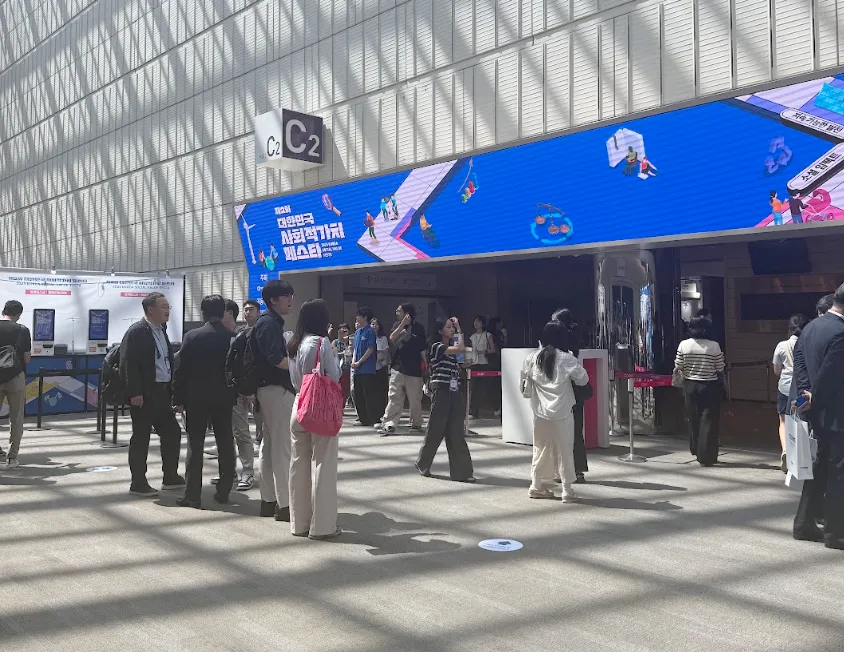
At last, the second "Korea Social Value Fest" (hereafter "Fest") has begun. Held at COEX in Seoul for two days, August 25 and 26, the Fest offers an abundant program under the theme "Designing the Sustainable Future" — booths of some 170 participating organizations, and presentation and discussion sessions bringing together government, companies, and academia. When you're pondering how to navigate the Fest venue, refer to the booths that ESG.ONL toured and recommends in person.[Locolor market booth, a social-venture company strengthening regional mutual prosperity © ESG.ONL]① Path of Cooperation — Strengthening Regional Mutual Prosperity: LocolorThe "Locolor" booth, with its familiar yet cute character visuals, makes passersby stop in their tracks. Locolor, which created popular regional characters such as Daejeon Metropolitan City's "Kkumdori" and Suwon Special City's "Suwoni," is a social-venture company that develops products and content using regional resources. Containing, as its name suggests, the meaning of "adding color to the local," it builds brands that convey the charm of a particular region and returns part of its profits, creating a virtuous cycle of growing together with the region.[Equal Table, which offers "low-carbon coffee" © ESG.ONL]② Path of Cooperation — Overcoming the Climate Crisis: Equal TableAbout 15 kg of carbon dioxide is emitted per 1 kg of coffee beans? Equal Table's "Tomorrow's Coffee" booth showed the connection between coffee and carbon emissions intuitively. Collaborating with an outside environmental-assessment specialist institution, they precisely measured the carbon footprint via LCA and presented "Low Carbon Coffee," which systematically reduces carbon emissions across the entire process from production to packaging. This coffee, which you can also taste at the booth, is said to be grown at carbon-neutral-certified farms using organic fertilizer and renewable energy while reducing water use as much as possible. At the booth, the carbon figure that one cup of Tomorrow's Coffee reduces is visualized so that the actual carbon-reduction effect can be easily understood, and companies such as hotels actually use Equal Table's coffee and use the coffee-consumption data in their sustainability management reports.[Green Oceans' eco-friendly resource-conversion products from oyster shells © ESG.ONL]③ Path of Cooperation — Promoting Natural Circulation: Green OceansKorea is the world's second-largest oyster producer. In particular, Tongyeong alone is said to produce 80% of the oysters produced in Korea. But behind this hides a serious environmental problem. Of the annual oyster production of 350,000 tons, a full 310,000 tons of shells come out as waste in order to obtain 40,000 tons of oysters. There is a startup that noticed the situation in which, this problem unresolved for the past 20 years, more than 1 million tons of accumulated oyster shells are now being dumped into the East Sea — the company called Green Oceans. Green Oceans, noticing calcium carbonate, the main component of oyster shells, is developing various eco-friendly upcycling products, from art-education supplies to plastic fillers, reusable containers, construction boards, and artificial leather.[The Happiness Alliance's "Happiness Photo Studio" booth © ESG.ONL]④ Path of Future Generations — Happiness Alliance: Happiness Photo StudioAs hot as the interest gathered at the Fest venue, there were also booths where visitors lined up waiting to enter. The Happiness Alliance booth was one of them. The Happiness Alliance, operated by SK Happynarae, offers various campaign programs with the goal of providing a social safety net for children. When you enter the Happiness Photo Studio booth following the docent's guidance, you can accompany the journey of a child growing together with the Happiness Alliance. Through video viewing and hands-on programs, you can experience the companionship with the Happiness Alliance, which approaches children in difficulty and helps them with a healthy meal and everyday life, extending beyond simple growth to self-reliance. Fitting the concept of a photo studio, you can also take a commemorative photo together. As you move along the route, the information about the Happiness Alliance's services, which you naturally become familiar with, is a bonus.[Products that Peace Hana provides in cooperation with local communities © ESG.ONL]⑤ Path of Cooperation — Overcoming the Climate Crisis: Peace HanaAgricultural products discarded for lack of marketability — must they really just be thrown away? Peace Hana is an upcycling innovation company that creates fragrances and functional products that enrich daily life, using as raw material agricultural products whose value went unrecognized due to prejudice over appearance or falling short of specifications. From aroma oils to functional bio products, it makes eco-friendly products usable in daily life. Peace Hana aims at realizing a sustainable circular ecosystem that goes beyond mere product manufacturing. It gives resources on the brink of disposal a new reason for existence, and through mutually beneficial partnerships with local agricultural communities, simultaneously realizes the dual values of environmental conservation and local-economy vitality.[The Social Solidarity Bank booth and finance Jenga © ESG.ONL]⑥ Path of Cooperation — A World We Make Together: Social Solidarity BankSocial Solidarity Bank proposes solving social problems based on social finance. It provides problem-solving measures — from emergency-fund support to financial solutions and financial education — so that financially vulnerable groups such as youth preparing for self-reliance, low-income or low-credit people, and small business owners can achieve financial self-reliance. At the Social Solidarity Bank booth, which creates a virtuous cycle in which such support helps vulnerable groups find stability and contribute to our economic life, you can check and build knowledge about social finance through activities, and experience a Jenga game that teaches how to manage your credit score. Experience vicariously, at Social Solidarity Bank, the virtuous-cycle loop that runs from sponsorship to support for vulnerable groups and on to their self-reliance. by Editor L
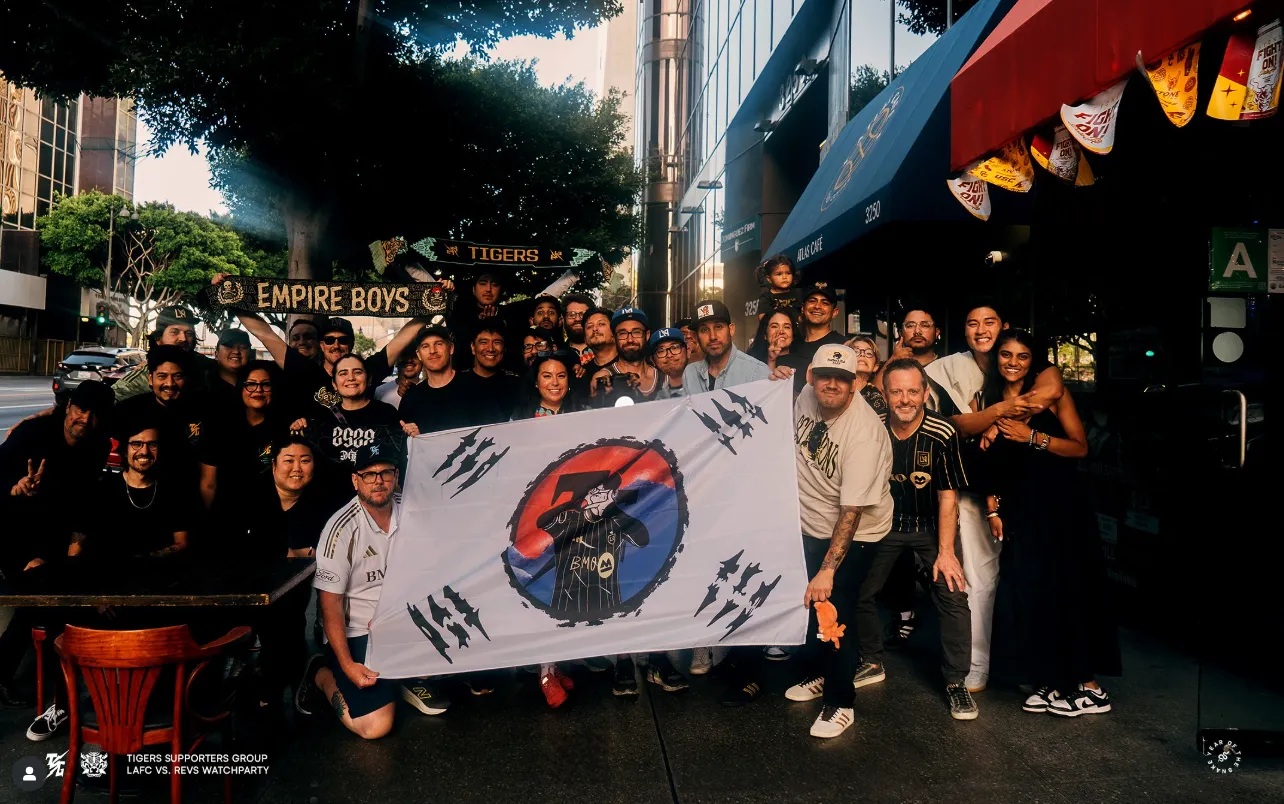
The ownership group of LAFC, Son Heung-min's new team, is stacked with famous figures such as NBA legend Magic Johnson and US women's soccer legend Mia Hamm. What the LAFC ownership group, made up of 26 people in total, has in common is that they are figures who have created boundary-breaking innovation in their respective fields.[The achievements of LA84's activities © LA84 Foundation]Magic Johnson, after publicly disclosing his HIV infection in 1991, led social change by fighting prejudice against the disease, and Mia Hamm proved the possibility of women's sports to the whole world. Along with this ownership group, a phrase that stands out when you access the LAFC Foundation website also reveals LAFC's character. The phrase "We are a proud member of the LA84 Alliance, a joint diversity, equity, and inclusion (DEI) initiative of 11 LA-area professional teams in partnership with LA84" introduces the goal of the LA84 Alliance, which goes beyond a mere alliance of sports teams. The LA84 Alliance — a cooperative body jointly pursued by 11 LA-area professional teams, from the LA Dodgers, Lakers, Clippers, Rams, Chargers, Kings, Ducks, Angel City FC, Sparks, to LAFC — is moving for social change across the entire city. The core of this program is to expand each team's individual efforts into city-level synergy. At the "Alliance Unity March," held in July 2021 to mark the first anniversary of George Floyd's death, LAFC Vice President Benny Tran even gave a speech in person.[Notice of the 2025 Women's Empowerment Night © LAFC]Women's Empowerment Night: Practice Beyond a SloganOn March 1 this year, LAFC partnered with Cinnamon Toast Crunch to hold a "Women's Empowerment Night." This event, attended by high-school girls, was not a mere marketing event but an occasion to publicize a platform for developing women's leadership and expanding opportunities. At the event, a panel talk by LAFC's female staff was held. Mia Hamm participating as an owner also takes on meaning seen in this context. Mia Hamm is not a mere investor but a partner who draws up, together, LAFC's long-term vision for the development of women's sports. What is interesting is that after Son Heung-min's joining, Asian women's interest in soccer has sharply risen. At BMO Stadium, you can now easily find female fans conversing in Korean, Japanese, and Chinese. It is a diversity-spreading effect created by a single global star.LA County is the region with the largest Asian population in the United States. About 1.5 million Asians live there, a figure reaching about 15% of the total population. But apart from the baseball player Shohei Ohtani, a star representing Asians has not been prominent in mainstream sports. Son Heung-min's appearance is a symbolic event that fills this gap. The figure of the highest transfer fee in the history of the US professional soccer league MLS makes this symbolism felt even more greatly. It can also be seen as meaning that LAFC views the Asian market not as a mere "niche" but as the "mainstream."There was an effect. In fact, at Son Heung-min's debut match against Chicago Fire on August 10, 22,000 seats sold out. Fans wearing Korea, Tottenham, and Bayer Leverkusen jerseys were spotted throughout the stadium, and some fans even shed tears of emotion at this historic moment.Diversity Gathered by the Common Denominator of SoccerThe name of the LAFC supporters' group "3252" is taken from the capacity of the supporters' section at the north end of BMO Stadium. The cheering songs they sing are sung in three languages: English, Spanish, and Korean. This multilingual cheering culture began with the Koreatown-based "Tigers Supporter Group (TSG)." Founded in 2017 with 15 members, this group has now grown to more than 100 and is one of 3252's major fan groups. LAFC's strategy is to integrate diversity rather than divide it. While respecting each community's unique culture, it binds them into one identity through the common denominator of soccer.[The Tigers Supporter Group © lafc_tsg]The new scenes witnessed at BMO Stadium prove this: the fusion of Korean traditional cheering culture and Mexican-American cheering culture, cheering banners made in various Asian languages, and the increase in Asian family-unit spectators across generations. The lesson LAFC's diversity strategy gives to companies is clear: diversity is not a mere slogan but a core driver of business success. In particular, our companies competing in the global market cannot help but consider such an inclusive approach. For companies aiming to advance overseas, LAFC's case provides a practical benchmarking point.The Future of the Partnership Son Heung-min and LAFC Will CompleteOn the occasion of Son Heung-min's entry into LAFC, ESG.ONL examined the meaning of this new encounter. Part 1 illuminated community-based trust, Part 2 the social-contribution system, Part 3 sustainable eco-friendly infrastructure, and the final Part 4 the philosophy of diversity and inclusion, the foundation for the preceding elements to work in harmony.The true values of LAFC discovered through Son Heung-min were: the symbolism of an Asia-based global star and the opportunity to connect to global impact, natural communication and exchange with various cultures, the alignment of a personal brand and organizational values, and a practical platform for social change through soccer. It is worth expecting that LAFC will open up the possibility of providing Son Heung-min not simply a place to play soccer but a stage that changes the world. by Editor L
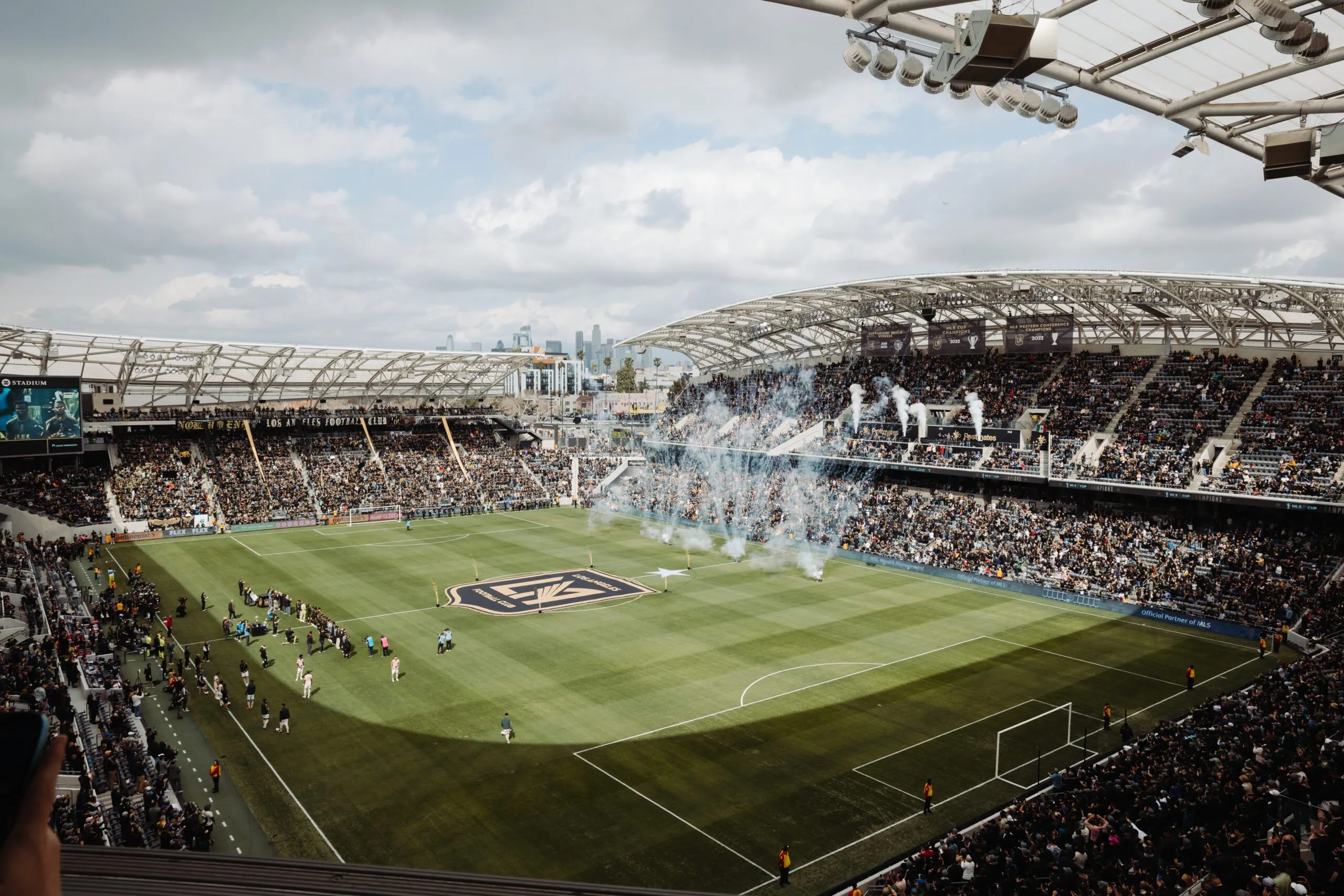
Let us tell the third story about Son Heung-min. This time it is the physical backdrop, the stadium. LA's BMO Stadium is not a mere soccer field. This 22,000-seat stadium, designed with eco-friendliness as its goal from its opening in 2018, is physical proof of sustainability. Unlike ordinary stadium construction, BMO Stadium applied an integrated design premised on obtaining LEED (Leadership in Energy and Environmental Design) Silver certification even before groundbreaking. LEED is the world's most widely recognized eco-friendly building certification system, provided by the U.S. Green Building Council (USGBC). The certification result, which reviews everything from a building's design, construction, and operation to maintenance, aims at improving the process of building and managing a building — energy saving, water saving, carbon-emission reduction, and the like. Certification is divided into four levels: Certified (40–49 points) → Silver (50–59 points) → Gold (60–79 points) → Platinum (80 points or more), and BMO Stadium obtained a Gold grade, higher than planned.[A view of BMO Stadium © BMO Stadium]LEED certification in the sports-facility field is even more demanding. This is because the attributes a building must have — accommodating large crowds, high energy consumption, complex infrastructure — conflict with eco-friendly design. Tom Penn, one of LAFC's owners, said at the time of the Gold-certification announcement, "From the early stages of the project, we were committed to building an environmentally friendly stadium," and "we strove to build a building that uses minimal resources while having no impact on the environment."The Economic Virtuous Cycle That Sustainability CreatesThe eco-friendly technologies of BMO Stadium, which thus received LEED Gold certification, are producing concrete results. The stadium, built as an eco-friendly building to the extent of being certifiable, reduced energy consumption by 30% and cut water consumption by 40%, saving more than 770,000 gallons of water annually. There is also a rainwater-recycling system. Turning LA's dry climate to advantage, it collects the rainwater from the occasional torrential downpour and uses it for the turf and landscaping. Behind the green turf that visitors see hides such invisible wisdom. It is also equipped with mechanical conditioning facilities that use refrigerants with a low global-warming index, and devices to mitigate the heat-island effect are designed through the rooftop design.The reason BMO Stadium's eco-friendly operation is important is economic sustainability. The operating-cost-saving effect from introducing eco-friendly technologies is considerable. Where does the cost saved by the reduced 30% of energy consumption and 40% of water use go? It is reinvested straight into the LAFC Foundation's social-contribution programs. It becomes the financial foundation of the various regional-mutual-prosperity partnership programs confirmed in Part 2 of the Son Heung-min series.This investment may also connect to long-term investment in preparation for the 2028 LA Olympics. Among the LA Olympics scheduled for 2028, BMO Stadium is to be used as a venue for soccer, lacrosse, and more. The International Olympic Committee has, since 2020, taken sustainability as a core criterion for hosting the Olympics. BMO Stadium's eco-friendly operation know-how is expected to contribute directly to the successful hosting of the 2028 Olympics as well.As Son Heung-min joined LAFC, stadium-development officials from various Asian countries are said to have begun taking interest in BMO Stadium. The new stadium of Tottenham Hotspur, the English club Son Heung-min previously belonged to, also introduced eco-friendly technologies on a large scale, but BMO Stadium has a point of differentiation in that it was designed on the premise of sustainability from the start. The key is that it is a newly built stadium in which green-building principles were planted from the beginning, not a renovation of an existing facility. That it possesses measurable results is also an important point. The concrete operating-cost-saving effects and environmental-protection results prove that eco-friendliness is not mere marketing but real management efficiency.[Son Heung-min at his debut match at BMO Stadium © LAFC]440 Bicycles Changing LA's Daily LifeOne of the scenes surrounding BMO Stadium is the bicycles lined up around the stadium on match days. It is a daily scene created by 440 bicycle parking spaces. LA in the US is one of the cities heavily dependent on cars. BMO Stadium is challenging this environment. From bike lanes to EV charging stations, it uses the stadium itself as a testing ground for sustainable mobility. In fact, 5% of the parking lot consists of EV charging stations, and 20% is equipped with EV-ready infrastructure. Also, as part of "My Figueroa," a community-regeneration and development project jointly pursued by the City of LA and LAFC, a bike lane leading to the stadium was created.What is interesting is the fans' reaction. People who at first found it odd that one could come to the stadium by bicycle in LA now accept coming by bicycle as a match-watching culture. A new routine has even appeared of stopping by nearby restaurants on a bicycle before and after matches.We should pay attention to the economic and cultural sustainability that BMO Stadium is realizing. A stadium that spent more money on eco-friendly technology at the initial investment stage reduces operating costs over the mid-to-long term and recovers its investment. More importantly, the saved money leads to community contribution and even raises brand value. It is a time when a new perspective of "eco-friendly = management efficiency" is needed, breaking out of the fixed notion of "eco-friendly = cost burden." The team Son Heung-min chose was not simply a good team but an organization preparing for the future. It is a point for domestic sports facilities, too, to reflect on whether they are preparing for the future with such a long-term outlook. by Editor L
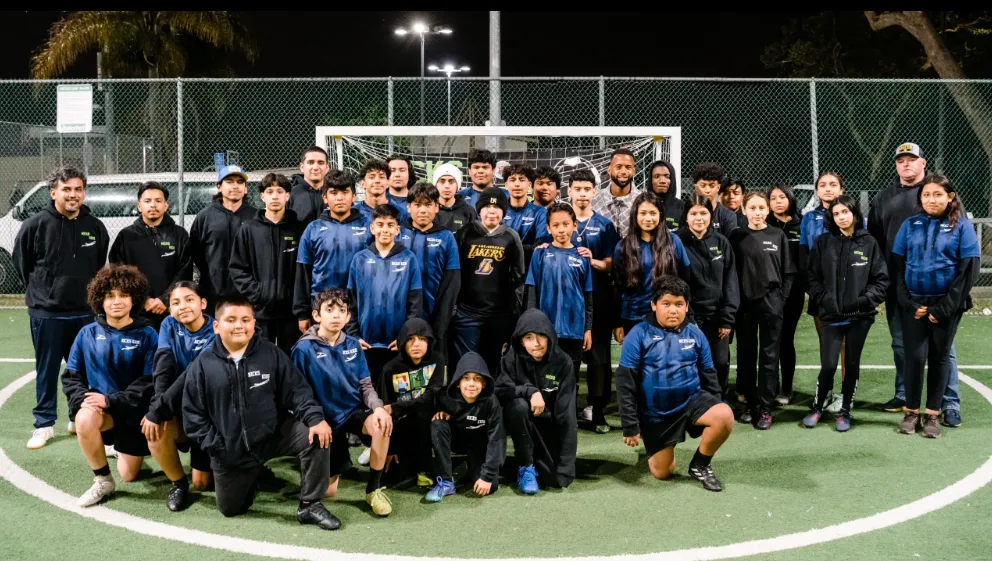
When you access the LAFC website and click the Foundation page, multi-digit numbers catch the eye. Number-based information such as more than 30,000 underprivileged youth and more than 40 futsal courts represents the concrete results the LAFC Foundation has contributed up to this very moment.Today, we would like to talk about the philosophy and system by which those numbers — which Son Heung-min likely noticed — were made. Most corporate social contribution is generally carried out in the form of one-off events or the delivery of donations, based on the company's current situation. The LAFC Foundation chose an approach completely different from this flow. Under the mission of "changing lives through soccer," it plays the role of a sustainable social-change platform, consistently built.LAFC, a Brand That Chose Good Inconvenience"The era in which convenience changes the world is now over. Now comes the era in which inconvenience changes the world."This is the message of Toun28 CEO Park Jun-su, introduced on ESG.ONL a while ago. This message also connects to the LAFC Foundation's philosophy.There was an easy path — holding dazzling donation events under the names of star players, or donating a large sum at once and receiving media attention. But LAFC chose "inconvenience." It creates and expands soccer communities for various local-community youth — the "Nicks Kids Soccer Program," a soccer program that meets 100 children in LA's Watts area every week; the LAFC So Cal Youth Program, in which about 4,000 young people participate in leagues and receive coaching; and the management and opening of more than 40 futsal courts benefiting more than 12,000 students year-round. Through this, it contributes to the healthy cooperation and growth of the local community. It is not easy. Every program is a continuation of inconvenient choices requiring continuous attention and investment.[Participants of the "Nicks Kids Soccer Program" in the Watts area of LA © LAFC]The result created by LAFC's such inconvenience is clear. Together with the global company "Chevron," with which it has partnered since 2018, it has newly refurbished 7 futsal courts to date. Most recently, it completed a new futsal court at Bud Carson Middle School in Hawthorne, donating an additional 10,000 dollars. Chevron's soccer-program manager Jenny Macintosh said, "Through our partnership with LAFC, we provide soccer to children through various programs year-round," adding, "this supports their growth on and off the field."In fact, soccer-court refurbishments have been carried out across all of Southern California, including Chipman Junior High School in Bakersfield and several schools in Hawthorne. This functions not as mere facility improvement but as building social infrastructure that provides local youth with safe play spaces.A Community System That Creates Motivation for Beneficiaries to Make Better ChoicesThe LAFC Foundation's point of differentiation lies in continuity. A representative example is the comprehensive service provided free of charge within schools through a partnership with "Beyond the Bell," an after-school program of the LA Unified School District. Howard Serpas, regional director of Beyond the Bell, explained, "Through the LAFC Foundation's support, children can access sports programming, gain opportunities to bring their families to matches, and invite pro players into the community." Such a partnership provides a win-win situation for both sides. It motivates children through programs and provides the resources they need in life, while LAFC can gain lifelong fans. The Nicks Kids Soccer Program, which focuses on the well-being of each child and aims to ensure that children are surrounded by positive people and a positive environment and guaranteed a positive future, has the potential to achieve the same effect. The LAFC So Cal Youth Program fosters youth soccer players and provides an environment of expertise for player development targeting local youth.[The LAFC Foundation logo © LAFC]John Gerard Thorrington, LAFC co-president and general manager, said, "The LAFC So Cal Youth partnership is very important to us," adding, "our club seeks to be a positive influence not only on the players already in the academy but on all youth players and parents in Southern California."Because of this, the changes appearing in the educational field are even more concrete. Program participation leads not to mere contact with a soccer environment for youth but to change in the entire educational ecosystem. Teachers are confident of the course's popularity. They testify specifically that a single program changes the learning atmosphere of the whole school, raises teachers' educational effectiveness, and boosts students' learning motivation. This shows the "power of a brand that leads to better choices" that the LAFC Foundation pursues. It is not simply giving help but providing an environment and motivation for the community's beneficiaries to make better choices themselves.[Recruitment for the fall 2025 "So Cal Youth Program" © LAFC]The Results Made by Meaningful InconvenienceLong-term partnerships more complex than one-off donations, everyday program operation beyond dazzling events, the pursuit of structural change rather than visible results — all are inconvenient choices requiring more time and effort. But the result of this — what LAFC gains — is clear: a beneficiary scale continuously expanding from 30,000, the 2024 Kevin Payne Community Impact Award, cooperation with 11 local pro teams through the LA84 Alliance program, and the choice of the global star Son Heung-min.From a Korean's standpoint, it would be a shame to view Son Heung-min's choice of LAFC as a mere transfer. Evidence continues that Son Heung-min has an interest in social and community contribution through soccer, including his personal soccer classes. In that respect, we come to view, from an ESG standpoint, his transfer to LAFC — assessed as evolving into a sports organization That Acts directly for society beyond simply playing soccer.Son Heung-min's choice also aligns with the brand values that the MZ generation and Alpha generation demand — the trend of preferring brands that not only provide good products or services but also create social meaning and value together. To Son Heung-min, who seeks to be reborn not as a player who simply loves and is good at soccer but as a player who uses his influence for creating social value, LAFC can provide a perfect platform.The LAFC Foundation's impact, reaching 30,000 people, is the result of trust and systems accumulated over seven years. It is the result of continuous action and a systemic approach that cannot be made with dazzling marketing or one-off events. What Son Heung-min discovered was precisely this point. Not charity dependent on individual goodwill, but a social-change infrastructure built at the organizational level, and a sustainable operating system supporting that infrastructure, will be with him. by Editor L [Reference Article] [Brands and ESG] "Toun28," Skincare That Acts *
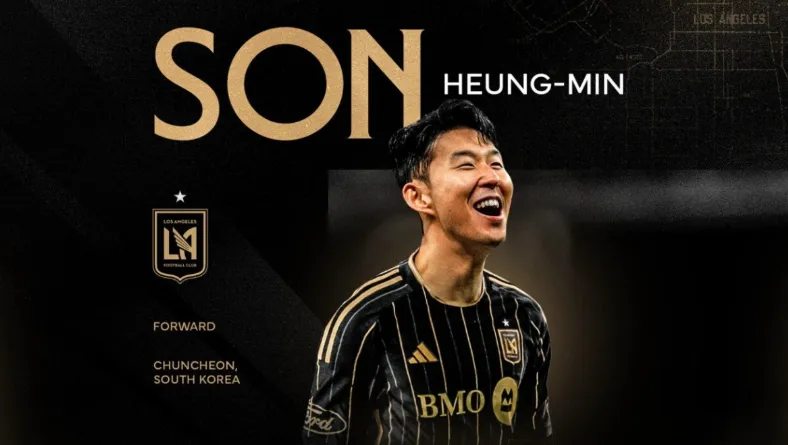
Son Heung-min's MLS debut match, held on August 10 at BMO Stadium in California, USA, carried meaning that was more than a mere soccer game. That Son Heung-min, substituted in at the 61st minute, drew a penalty kick and contributed to the team's 2-2 draw was an expected scenario. But what should really be noted is the change happening outside the stadium.Why did the EPL's best Asian player wrap up his ten years at Tottenham and head to the United States? Was it simply because of a high salary? Or was it a strategic choice to adapt for the 2026 World Cup? The answer lies in a far deeper place than one might think.[LAFC officially announces the signing of Son Heung-min © LAFC]Four Years of Building Trust That Began Before the Club's FoundingLet us learn about the club called LAFC. LAFC's real point of differentiation began long before its founding announcement in 2014. When most sports teams try to build a stadium first and then gather fans, LAFC took the exact opposite approach. It first put down roots in the community.[LAFC, which declared it would exert a positive influence on LA as a medium of positive change beyond the game of soccer © LAFC]"LAFC built a presence in LA before the team was even created," sports-marketing experts note. The analysis is that it deliberately engaged with the community and focused on creating positive impact in order to build its fan base. In fact, LAFC built up trust in the LA community for four years until it played its first match in 2018. The result was astonishing. In its founding year, it recorded an average home-match attendance of 22,000, marking the most successful team debut in MLS history.The Discovery of Son Heung-min's Value, Proven by 26.5 Million DollarsTo understand Son Heung-min's choice of LAFC, one must consider his philosophy. What Son Heung-min showed over the past ten years at Tottenham was not simply goals and wins. That alone is hard-pressed to fully explain the love he received as an Asian foreign player. What mattered was communion with the local community, communication with fans, and spreading positive influence through soccer. LAFC provides the optimal stage for precisely such a player who pursues these values. The philosophy of this team, which has given real help to more than 30,000 underprivileged youth since its founding in 2018, also connects with Son Heung-min's philosophy.This is exactly where Son Heung-min's belief that "soccer is not merely a sport but a power that makes people one" connects with LAFC's mission of "uniting the cities of the world through the game of the world."LAFC's Sincerity Proven by the NumbersLAFC's sincerity is proven not by slogans but by data. The installation of 36 futsal courts, youth programs for more than 30,000, and the 2024 Kevin Payne Community Impact Award* are the evidence. In addition, through participation in the LA84 Alliance, it is pursuing diversity, equity, and inclusion (DEI) cooperation together with 11 LA-area pro teams. A player who considers sincere impact could find it appealing.[The result of Son Heung-min's debut match © LAFC]The Perfect Timing Made by Asian Fandom and LA's MulticulturalismSon Heung-min's joining of LAFC goes beyond a mere player signing. As his Asian fandom meets LA's multicultural character, an entirely new synergy is expected to be created. LA is one of the US cities with a high proportion of Asian population. About 15% of the total population — 1.5 million — is Asian, and of these, Koreans alone number about 120,000. Excluding the Korean mainland, it is where the most Koreans reside. Until now, the Asian community has been relatively marginalized in mainstream sports. But with Son Heung-min's appearance, this situation is changing.LAFC's judgment in paying Son Heung-min 26.5 million dollars, the highest transfer fee in MLS history, proved its worth from the very first match. That 22,000 seats sold out at the debut match against Chicago Fire was expected, but that fans wearing Korea, Tottenham, and Leverkusen jerseys were spotted throughout the stadium was a new phenomenon. What is interesting is that LAFC already has a success case. Just as the LA Dodgers, a baseball team based in the same LA, secured Asian fandom through Shohei Ohtani, LAFC too appears to be employing a similar strategy through Son Heung-min. But there is a difference. If the LA Dodgers rely on promotion based on Ohtani's personal brand, LAFC reads as a picture of adding the global star Son Heung-min on top of an already-built community foundation.[Son Heung-min at BMO Stadium © LAFC]The True Conditions for Global-Local Synergy Where 1+1=3With Son Heung-min's joining, LAFC's social-contribution programs have entered a new dimension. As Son Heung-min's global influence combines with LAFC's local impact, a synergy where 1+1=3 is being created.Concrete changes are already appearing. After the Son Heung-min announcement, partnership inquiries to the LAFC Foundation surged, and cooperation proposals from Asian community organizations in particular poured in. With Asian media's intensive spotlight on this transfer, LAFC's global recognition also rose greatly. Korea's major broadcasters began broadcasting LAFC matches, and Japanese and Chinese media are also showing interest.The greatest lesson the meeting of Son Heung-min and LAFC gives is that true synergy comes from value alignment. Many companies focus on marketing that puts a celebrity front and center, but what really matters is how well that person's values match the company's philosophy. The success factors of the LAFC–Son Heung-min synergy are clear. First, there was the "already-built trust" that LAFC created through seven years of community investment. LAFC generated value through its belief in social impact, and shared with the local community a long-term vision pursuing sustainable change rather than short-term buzz. Above all, sincerity proven by action rather than words was the foundation.This gives an important implication to companies as well. The success of star marketing depends not only on that star's recognition but on how naturally the company's sincerity and the star's values blend together. by Editor L