Loading Data
Please wait a moment...
Update Cal.
2026.08
03
Mon
04
Tue
05
Wed
06
Thu
07
Fri
08
Sat
09
Sun
Update Calendar
2026.08
01
Sat
02
Sun
03
Mon
04
Tue
05
Wed
06
Thu
07
Fri
08
Sat
09
Sun
10
Mon
11
Tue
12
Wed
13
Thu
14
Fri

Loading Data
Please wait a moment...
Morning features and interviews. A morning story over a cup.

The Ministry of Environment has been expanded and reorganized into the ‘Ministry of Climate, Energy and Environment.’ The establishment of the ‘Ministry of Climate and Energy’ (hereinafter the Climate Ministry), one of the key presidential campaign pledges of President Lee Jae-myung, was decided in the form of transferring the energy policy of the Ministry of Trade, Industry and Energy (hereinafter the Industry Ministry) to the Ministry of Environment. At the launch ceremony held on October 1, Minister Kim Sung-hwan, in his inaugural address that opened with the severity of the climate crisis, expressed his ambition to achieve a ‘great transformation into a decarbonized green civilization centered on renewable energy’ rather than fossil fuels, creating a sustainable future.The newly launched Ministry of Climate, Energy and Environment is receiving both expectations and concerns. Various voices are heard, from the prospect that effective climate crisis response will become possible to the problems anticipated in the transfer of energy policy. Let us examine the expectations and concerns regarding the Climate Ministry in more detail.[Ministry of Climate, Energy and Environment Ⓟ Ministry of Climate, Energy and Environment]What Has Changed from the Ministry of EnvironmentThe Climate Ministry is a department that combines the climate policy coordination function of the Ministry of Environment with the energy function. While the Ministry of Environment had a structure of one Vice Minister and three offices, the Climate Ministry was reorganized into a structure of two Vice Ministers and four offices, having transferred most of the functions of the Energy Policy Office under the Second Vice Minister of the Industry Ministry. The Resource Industry Policy Bureau, which handles resource security and oil, gas, and coal-related affairs, remains under the jurisdiction of the Industry Ministry, while the Climate Ministry manages renewable energy and nuclear power, which are classified as ‘carbon-free power sources.’ However, nuclear power export affairs remain with the Industry Ministry, while the Climate Ministry is responsible for nuclear power construction and operation. Meanwhile, the Ministry of Trade, Industry and Energy was renamed the Ministry of Trade and Industry.To summarize, the Climate Ministry now oversees carbon neutrality, renewable energy expansion, and power supply and demand coordination, on top of the existing functions of ecological conservation, pollution management, and environmental regulation. In addition, the Climate Response Fund and the Green Climate Fund, which were under the jurisdiction of the Ministry of Economy and Finance, have been transferred to the Climate Ministry, enabling it to design the entire process of climate crisis response and execute budgets.Why the Ministry of Climate, Energy and Environment Is Needed NowIn the first half of this year, global renewable energy generation surpassed coal-fired generation for the first time. While many countries are increasing their renewable energy generation, South Korea’s share of renewable energy generation stood at 10.5% as of 2024, still at the lowest level among OECD countries. The Nationally Determined Contribution is at a low level compared to advanced countries, but even this is expected to be difficult to achieve, and in the Climate Change Performance Index, it ranked 63rd among 67 countries.One of the causes cited is the gap between the ministry in charge of climate crisis response affairs and the ministries responsible for greenhouse gas emission sectors. The Industry Ministry manages the energy sources that account for 76.2% of greenhouse gas emissions, but given the nature of the ministry, it is difficult to prioritize carbon neutrality, while the Ministry of Environment, which responds to the climate crisis, cannot control other ministries. A clear example is the case in which the Ministry of Environment and the Carbon Neutrality and Green Growth Commission requested the Industry Ministry to increase the proportion of new and renewable energy in the 10th and 11th Basic Plans for Electricity Supply and Demand, but the Industry Ministry repeatedly refused.[Climate Change Performance Index (CCPI) Ⓟ CCPI]As the climate crisis worsened, energy demand continued to increase due to the AI industry and other factors, and concerns emerged that the delayed transition to renewable energy would also affect industrial competitiveness. Accordingly, President Lee Jae-myung had shown his will to solve the problem by putting forward the pledge to ‘establish the Ministry of Climate and Energy’ since his time as a candidate. The process was not smooth. Various reorganization proposals were put forward regarding the form of the new ministry — such as newly establishing the Ministry of Climate and Energy, transferring the energy sector to the Ministry of Environment, or transferring the climate sector of the Ministry of Environment to the Industry Ministry — and debate continued as the process faced difficulties. While many sympathized with the need for the Ministry of Climate and Energy, social discussion continues even on the finalized form. Cases of Integrating Government Ministries for Climate, Environment, and EnergyWe were not alone in carrying these concerns. Among OECD countries, 15 have established ministries that integrate climate, environment, and energy, 3 have integrated climate and energy, and 20 operate them separately. The new government’s ‘Industrial Policy Promotion System and Government Reorganization Plan,’ announced last May, stated that four countries that newly established ministries in which energy and climate policy are integrated, like the current Climate Ministry, showed results in which the greenhouse gas emission reduction rate increased from an average of 5% to 18% in the five years before and after the establishment of such ministries.Denmark, a representative success case of establishing a Ministry of Climate and Energy, established the ministry in 2007 and supplied 50% of its total power generation from wind by 2020. It developed the industry by consolidating wind power generation permits into a single window to reduce procedures and proceeded toward carbon neutrality. Germany, cited as a failure case, launched the Ministry for Economic Affairs and Climate Action in 2021, integrating the climate policies of the Federal Ministry for Economic Affairs and Energy and the Ministry for the Environment, but energy costs surged and manufacturing competitiveness weakened, leading to a reversion to its pre-reorganization form. The United Kingdom, which achieved coal phase-out as the first G7 country in 2024, is mentioned as both a success and failure case. In 2008, the UK established the Department of Energy and Climate Change and achieved results, and the policy framework of that time is still maintained today. However, in 2017, this department was merged with the Department for Business, Innovation and Skills to simultaneously manage industrial and energy policy, and it was criticized for causing energy cost and security problems and weakening manufacturing due to the Russia-Ukraine war. Currently, it is again separated and operated as the Department for Energy Security and Net Zero (DESNZ). In this way, the integration of energy- and climate-related ministries is not a finalized policy but a new attempt that must be managed to produce policy effects tailored to each country’s circumstances. [Minister Kim Sung-hwan at the Launch Ceremony of the Ministry of Climate, Energy and Environment Ⓟ Ministry of Climate, Energy and Environment]The Path the Climate Ministry Must Take, Beyond Concerns and ExpectationsThere are three major concerns shared by the ruling and opposition parties, industry, and environmental groups regarding the launched Climate Ministry. First, the Climate Ministry has been simultaneously charged with the conflicting policy objectives of ‘climate and environmental regulation’ and ‘energy industry promotion,’ and both could end up fizzling out. Second, with the Industry Ministry continuing to handle nuclear power export affairs, domestic energy industry policy and overseas nuclear power exports will be dualized, with confusion expected. Third, carbon-based power sources and carbon-free power sources are organically connected, as are electricity (generation) and gas (resources), yet dividing the managing ministries impairs policy coherence and reduces effectiveness. In addition, environmental groups are concerned that the Climate Ministry, by taking on industrial promotion functions, will see regulations weakened and is likely to focus on energy transition policy. The industry sector reacted against the recently raised NDC target of the Climate Ministry, also anticipating higher electricity costs. While many express concerns, there is also the positive outlook that the Climate Ministry will prepare climate crisis response measures that consider greenhouse gas reduction, renewable energy expansion, and ecosystem conservation together, and that as a responsible ministry has been created, faster execution will follow. Regarding electricity costs, which many are concerned about, it is also possible to anticipate that stable operation will ultimately become possible through the decline in renewable energy unit costs and the expansion of the power grid. Immediately after its launch, the Climate Ministry’s minister visited the Taean coal-fired power plant, which is scheduled to be decommissioned, and demonstrated the will to transition to decarbonized new and renewable energy. It remains to be seen whether the Climate Ministry can, as its name suggests, become a true control tower for responding to the climate crisis at the balance point between climate and energy.by Editor L
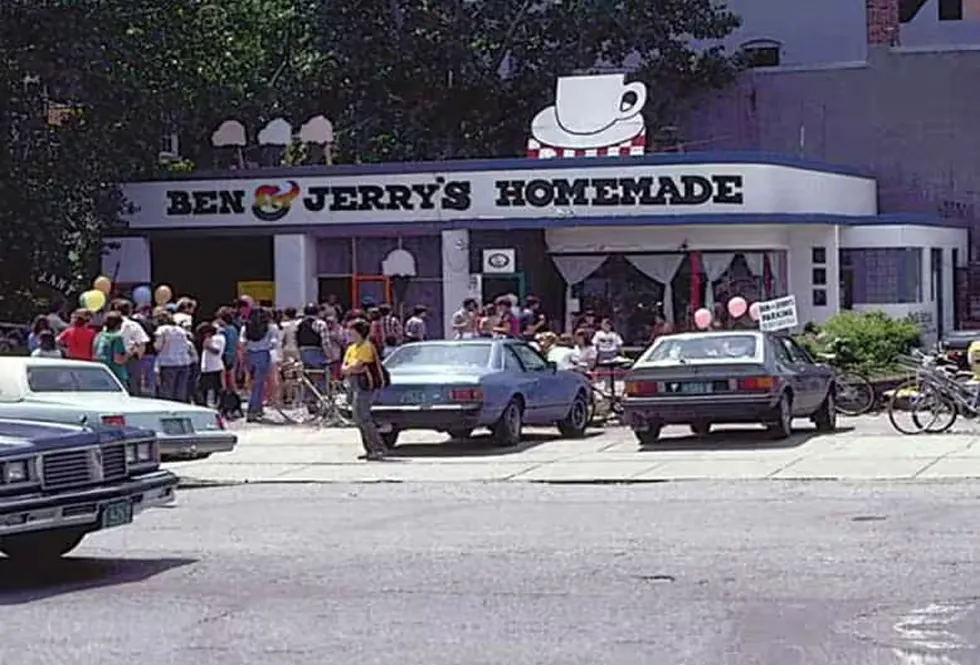
Every store of the global skincare brand Aesop has a sink where customers can try products. All Five Guys locations, a fast-food brand that has also entered Korea, offer free peanuts. And then there is a brand that gives away free ice cream at all its stores worldwide on a single day each year — the world's best-selling ice cream brand, Ben & Jerry's. Ben & Jerry's Brand ActivismBen & Jerry's was founded in 1978 when founders Ben Cohen and Jerry Greenfield converted a gas station into their first store. The two founders believed that the company's success was rooted in the local community, including its residents. As a way of giving back, they started "Free Cone Day," an annual event where visitors at all stores worldwide receive free ice cream — an event that has become synonymous with the Ben & Jerry's brand. If you think of Ben & Jerry's as just a cute brand with warm, fuzzy events thanking customers and soft, sweet ice cream, that would be a huge misconception. When you learn that the most powerful value underpinning Ben & Jerry's is brand activism, that pint of Chocolate Chip Cookie Dough in your freezer starts to look very different. [Ben & Jerry's first Free Cone Day ⓒ Ben & Jerry's website]Brand activism refers to brands taking active stances on social issues to drive positive change. Ben & Jerry's business philosophy rooted in brand activism was made unmistakably clear by the way co-founder Jerry Greenfield recently left the company. When multinational corporation Unilever acquired Ben & Jerry's in 2000, management made it a condition that Unilever not interfere with the company's business policies. Unilever agreed to this condition, but over time it began to curb Ben & Jerry's outspoken social engagement. In response, Ben & Jerry's filed lawsuits against Unilever twice, and as tensions escalated, Greenfield decided to leave Ben & Jerry's entirely on September 17. "I can no longer remain as an employee who has worked at Ben & Jerry's for 47 years, feeling pangs of conscience," he stated. It is hard to find a more emblematic example of brand activism, where action to uphold the values a brand stands for is treated as paramount.[Jerry Greenfield's resignation announcement ⓒ Ben Cohen's X] Ben & Jerry's, which takes an active stance even on politically sensitive social issues, pursues creating "a small number of passionate fans" rather than "being vaguely loved by many." How are the convictions behind each scoop of Ben & Jerry's ice cream being realized internally?You Cannot Sell Happiness While Creating UnhappinessDiversity, Equity, and Inclusion (DEI) is a core corporate value that global companies are devoting themselves to. This is not merely a charitable perspective where companies give socially disadvantaged groups opportunities to enter society. DEI is critical to the success of modern organizations. Numerous studies support this — DEI can cut the risk of employee turnover by nearly half, and companies with above-average executive diversity have been shown to generate higher innovation revenue than those below average. Naturally, it also improves brand perception and contributes to higher sales performance. The more diverse a workforce, the better equipped an organization is to solve the complex and individualized problems of our time. [Overall race and gender composition of U.S. operations ⓒ Ben & Jerry's 2023 Sustainability Report]Ben & Jerry's also maintains that its business and the world improve when every characteristic that constitutes and defines an individual — race, gender identity, and more — is respected. To verify that this conviction is properly applied in its business operations, Ben & Jerry's has publicly disclosed the gender and race breakdown of its U.S. manufacturing and office workers since 2020. The disclosure specifies Black, Hispanic, Asian, Native American, and multiracial categories, with white employees comprising the largest share. Since the racial composition was first disclosed in the 2020 report, the proportion has been gradually declining. Ben & Jerry's DEI policy does not stop at the hiring level. Ben & Jerry's also champions diversity as a key value in its ice cream ingredient supply chain and runs a program called Values Led Sourcing (VLS). VLS sets supply chain diversification, shared value creation with social enterprises, regenerative agriculture and animal welfare, and the success of farmers and farmworkers as its primary goals. To this end, Ben & Jerry's sources ingredients from farms operated by Black, Indigenous, and People of Color. It is Ben & Jerry's way of supporting cultural diversity through ice cream. [Ben & Jerry's carbon footprint graph ⓒ Ben & Jerry's website]When the Earth Melts, Ice Cream Melts TooFifty-three percent of the carbon footprint from manufacturing Ben & Jerry's ice cream comes from dairy products. Other ingredients, aside from dairy, make up the next largest share. Carbon emissions from the ice cream production process far outweigh those from transportation and distribution. Ben & Jerry's has set a goal of reducing greenhouse gas emissions by 100% by 2025, but dairy products like milk are essential ingredients that are hard to eliminate from ice cream. That is why Ben & Jerry's operates the Caring Dairy Program. Now in its second phase since 2020, this program pursues values of farm economic success, healthy soil and clean water, animal welfare, and low-carbon dairy, with the goal of creating a dairy farming environment that ultimately places less burden on the planet. Farms participating in this program practice cover cropping (planting non-cash crops during fallow periods to strengthen the soil) and conservation tillage (covering the soil with crop residues such as roots and stalks). Through these practices, they foster a healthy soil environment. They also feed cows a diet designed to reduce the methane emitted during digestion, making efforts to cut greenhouse gases from livestock operations. In 2023, 48 farms participated in the Caring Dairy Program, producing approximately 190 million liters of milk and accounting for 84% of the U.S. dairy supply chain. While building a dairy farming structure that does not burden the environment is important, Ben & Jerry's is also continuing its efforts to create ice cream without milk. It has already introduced sorbet ice cream, which uses no dairy ingredients, and a non-dairy product line that uses sunflower butter instead of milk. The non-dairy ice cream line, which launched in 2016 with four products, has been praised for faithfully replicating the taste of the original dairy-based flavors, and the variety has been steadily expanding. Ice cream is a food that delivers comfort and happiness regardless of the season with its sweet, smooth taste. If you want to explore a successful case of brand activism that brings the cultural meaning of food to life in social and environmental terms, why not read Ben & Jerry's Social & Environmental Assessment Report (SEAR) yourself?by Editor L
October 4 is "World Animal Day," which encourages action for animal-rights protection and animal welfare. In Korea, its meaning has grown greater as, starting this year, the same day has been established as the statutory commemorative day "Animal Protection Day." The topics we might say to pay attention to on Animal Day cover a very wide range — protecting endangered species, welfare for living together with companion animals, protecting the rights of service animals and laboratory animals, and so on. This year's "World Animal Day" dealt with the protection of endangered species and a sustainable Earth shared with animals as its main themes, while the domestic "Animal Protection Day" event dealt with the protection and welfare improvement of animals around us, showing a direction that is similar yet different.On October 4, in celebration of the day, let us look at the establishment processes of "World Animal Day" and Korea's "Animal Protection Day." Dividing them into the two broad frames that are the two days' themes — "protecting endangered animals" and "improving animal welfare" — we have organized the current state of animal-protection activities and the activities of domestic local governments and companies commemorating "World Animal Day."[World Animal Day poster © WorldAnimalDay]How "World Animal Day" Came to Be Established as "Animal Protection Day" in KoreaWorld Animal Day was designated at an international animal-protection congress in 1931, on the proposal of the German writer and activist "Heinrich Zimmermann." Zimmermann was a person devoted to animal protection — publishing the biweekly magazine "Man and Dog (Mensch und Hund)" to make the general public aware of the concept of animal welfare and carrying out a movement to ban animal cruelty. The reason it was set as October 4 is that it is the feast day of "Francis of Assisi," a 13th-century Roman Catholic saint who spent his life for animals and nature. Since 2003, World Animal Day has been run by the UK animal-welfare organization "Naturewatch Foundation." Naturewatch Foundation put forward "Save animals, Save the planet" as this year's theme; this theme was selected to make people aware that the way we treat animals and the environment directly affect each other — from the loss of biodiversity and habitat destruction to industrial agriculture and pollution.[Animal Protection Day poster © Ministry of Agriculture, Food and Rural Affairs]In Korea, various local governments, public institutions, and companies have carried out their own related events commemorating World Animal Day. Although the Seoul city government designated October 4, 2024, as "Seoul Animal Protection Day," this year is the first time it has been established and commemorated as a statutory commemorative day. The Lee Jae-myung government selected "a society where people and animals are happy together" as a national policy task and designated and proclaimed October 4 as the statutory commemorative day Animal Protection Day. Regarding the day's designation, bills were proposed to the National Assembly several times even in the 2010s but did not come to fruition; it is the result of finally passing after the full revision of the Animal Protection Act in 2023.Efforts to Protect Disappearing AnimalsAccording to 2024 statistics from the World Wide Fund for Nature (WWF), over the 50 years since 1970, the size of wildlife populations worldwide has decreased by an average of 73%. Amid worldwide efforts for the conservation of endangered species, Korea established the "Comprehensive Plan for the Conservation of Endangered Wild Species 2018–2027" and is aiming to restore 25 endangered species by 2027. Because problems such as damage to the food-chain structure due to habitat destruction and overhunting had previously been pointed out, it is focusing not on simply raising and releasing endangered animals but on restoring habitats and creating a healthy food chain. As a result, this past June, footage was released of a fox — a Class-I endangered species — hunting a water deer, and a Eurasian eagle-owl and a marten — Class-II endangered species — hunting a hedgehog and a hare. From a human standpoint, one's heart may go out to the small animals, but the realization of such a food chain is proof of the result that endangered species returned to the wild are adapting well and recovering into a stable ecosystem.[A fox carrying off a water deer © National Park TV]Around World Animal Day, many campaigns are carried out in the private sector to call for interest in endangered species; last year, Cheil Worldwide and the World Wide Fund for Nature drew attention with "AniStay," a unique donation campaign using a travel platform to commemorate World Animal Day. When you search for domestic accommodations, lodgings whose "owners" are endangered animals living nearby are shown, and on the detail page you can check information about the endangered animals and their habitats. Donation is made through the action of pressing the "sponsor by booking" button, and the entire donation is used for the World Wide Fund for Nature's protection of domestic endangered species and habitat-conservation activities. This campaign drew much interest by effectively and wittily capturing that endangered species, which feel somewhat distant, exist closer than one might think. Besides this, education and campaigns related to endangered species are carried out each year at domestic private and public zoos and aquariums.[The AniStay campaign © World Wide Fund for Nature]Efforts for Animal Welfare, Where Animals Are HappySince the Universal Declaration of Animal Rights was announced at the UN in 1978, the perception that "all animals must be respected as beings that feel pain" has begun to spread. The EU defined animals as "sentient beings" and, on this basis, created welfare standards and enacted laws for farm animals, laboratory animals, and companion animals alike. On September 27 this year, at the Animal Protection Day event, Korea for the first time declared an "Animal Welfare Charter" recognizing "animals as living beings, not possessions." It also gave concrete shape to content addressing animal welfare — welfare tailored to the animal life cycle, protection in disaster situations, scientific animal-welfare indicators, building an evaluation system, and public-private cooperation. Though it has no legal force, it is greatly significant in that it presents a direction for animal policy and promises standards of practice for the government and the private sector. Furthermore, our government is moving to change the "Animal Protection Act" into the "Animal Welfare Act."[The signing ceremony of a business agreement to support retired national service dogs, held last year © Ministry of Agriculture, Food and Rural Affairs]What drew attention in the process of spreading awareness of animal welfare was the "national service-animal adoption business agreement ceremony." National service animals serve in public duties for more than two-thirds of their lives. Yet 8 out of 10 service animals, after retirement, live confined in kennels due to failed adoption. All six agencies where service animals work — police, fire services, and others — pooled their intentions in this business agreement for improving service animals' welfare and operated adoption-promotion booths. Last year, the Ministry of Agriculture, Food and Rural Affairs signed an agreement with several private institutions so that those who adopt a retired service animal can receive large discounts on treatment costs, feed costs, and funeral costs. A program in which a retired service animal and a prospective adopter go on a trip together before adoption to decide whether to adopt also drew attention. A recently held policy forum for invigorating adoption also drew the interest of the media and citizens, and related legislation has proceeded, so improvement in service animals' welfare is anticipated.There are so very many agendas we should pay attention to on World Animal Day. The population raising companion animals is steadily increasing, interest in animal rights has grown, and the movement to prevent species extinction accelerated by the climate crisis is also large. In order to live together, we hope it becomes a commemorative day on which we can think about the animals around us or far from us, and let us continue to pay attention to the movements of various domestic local governments, institutions, and the private sector, which will grow even richer going forward. by Editor L
By Kim Won-sang (Media Communications, Solutions for Our Climate) · September 29, 2025I am an early adopter. I have great interest in new tech and often buy electronic devices. It is a hobby of resolving the curiosity a new product brings and filling a craving for new experiences. But sometimes the thought suddenly comes to me that this hobby and consumption habit could be criticized. It is because electronic products inevitably emit greenhouse gases in the process of production, transport, and sale. The awareness comes to me that consumption chosen not because it is truly necessary but at the level of curiosity or hobby is not climate-friendly.[ⓒESG.ONL]This worry was not mine alone. One of my colleagues was an ardent fan of F1, but after starting work on climate change, he said that out of guilt he was even hesitant to watch "F1: The Movie," which recorded millions of viewers. F1 machines that run around the world with huge teams, burning fuel lavishly and circling the track countless times — and a sport in which, while some people barely change their car's tires a few times over its life, the tires must be changed several times after circling only a few laps. On one hand it is a reasonable worry, but on the other hand the thought "is there really any need to go that far?" also came, and I once laughed it off heartily. The moment when consuming the culture one likes and empathizing with and responding to the climate crisis collide is a dilemma anyone faces at least once.If I keep following the thoughts that bite one another's tails, I reach a larger problem awareness — that all the activities of eating well and living well ultimately contribute to warming. That is, the act of consumption itself is connected to the climate crisis. Come to think of it, there are times I am seized by a contradictory sense that the activity of solving the climate problem and my consumption stand at exact opposites. And the fundamental question thrown out is this: Are the prosperity of human civilization and the response to the climate crisis really compatible problems? Like the joke often seen in the comments of internet articles, can humanity approach carbon neutrality only if Thanos comes to Earth and wipes out half of humanity?This question spreads beyond personal reflection into structural skepticism. Until now, economic development has revolved around consumption. Making a lot, selling a lot, and thus individual income increases and again leads to larger consumption than before. A belief formed that this is a virtuous-cycle structure in which the whole collective prospers and the economy grows. But where is the end of this model? Can that process be said to be sustainable? In the era of the climate crisis, might this feedback structure rather drive us to catastrophe? If so, instead of an economic model like the present one, in what way should we live? I still have not found a clear answer to such questions.Yet amid such worries, there is also an interesting case. I once tried to give a modest souvenir to an influencer I got to know through work. But he declined the gift, saying he would accept only the intention. It was an unremarkable item, fine to receive or not, but he viewed the very culture of exchanging gifts differently. What was more interesting was his story about birthday gifts. He said he asks the people around him not to send gifts or gift vouchers, but to donate to an institution or organization he recommends. Instead of goods easily thrown away or wasted in the process of ritual exchange, he expanded the meaning of a gift into social value and sharing. I thought that such small cultural practices could be the starting point that cracks the paradigm built around consumption.There is another hint too. In 2023, Apple released the Apple Watch as its first carbon-neutral product. Of course, there is room for debate over the method of carbon-neutral certification. But the mere fact that the world's most famous brand planned and released a carbon-neutral product line created a small hope. This shows the possibility that even when I engage in consumption activity, I might not contribute to greenhouse-gas emissions. What if the majority of the products and goods I consume were certified carbon-neutral and came onto the market? Then might a future in which consumption and carbon neutrality coexist be realized? If so, there would be no need for Thanos to appear and wipe out half the population.Of course, this is not a simple problem. We cannot overturn the consumption-centered capitalism that made humanity prosper in one stroke and open a new system. But nor can we turn away from the fact that greenhouse gases, a byproduct of the current system, threaten humanity's survival. We have now entered a phase in which we must create a human civilization where the whole world can eat well and live well, while at the same time creating a sustainable Earth environment good for humans to live in. It is not for nothing that people say a greater transformation than the effort humanity poured into the Industrial Revolution is needed.[ⓒESG.ONL]This is by no means a problem that can be solved by individual practice or the efforts of a few. But one thing is clear: that participation and solidarity are the fundamental driving force in drawing such a picture and moving forward. Not me alone, but everyone must look in the same direction together. It begins from pondering for a moment before pulling out a card at a fashion store, before bringing up a simple-payment QR code at an electronics store.In the end, whether it is essential consumption needed to make a living, or the hobbies and leisure activities that make one feel like oneself, and even the social task of responding to climate change — they in fact start from the same root. It is the question of what and how we will consume. The answer does not lie in reducing consumption. It begins from redefining consumption. What kind of consumption we do — that is precisely what tells us what kind of future we will choose.By Kim Won-sang (Media Communications, Solutions for Our Climate)

By Lee Choong-gul (essayist, former editor-in-chief of GQ Korea, author of the novel "Your Face") · September 19, 2025I wondered every day. Why do people watch others eat? And what's so fun about it? (Here the word "fun" resembles, rather than science, your emptiness as you kneel to the urge to boil ramen at two in the morning.)Sometimes I think mukbang is the Colosseum of the 21st century, a laboratory of digital crowd psychology. The Roman emperors' governing strategy was bread and circuses. Now it's pizza after chicken, chocolate cake after pizza. Algorithmic autoplay rules us. Roman citizens shed no blood thanks to sword-wielding gladiators; we, watching a circus substituted by others' satiety, forget our calorie worries.A bite, a sip is a unit of flow. The title of the first review of a new menu item, the countdown of clearing ten pizzas in ten minutes. Speed instead of rules, curiosity instead of loyalty, updates instead of memory. Experience is paid in installments. The play button is more generous than a credit card, taking dwell time as its credit limit. The algorithm does not know your stomach. It knows only time spent, the probability of staying. Call it the streaming of appetite. No matter how full the belly, the feed is not sated. A night when not the belly but the fingers starve and cannot stop scrolling. Resolve is carried over to tomorrow. Diet from the weekend, unsubscribe from the next video.[ⓒESG.ONL]Mukbang disciplines while pretending to liberate desire. Following a recipe in which broadcasters and platforms, advertisers and restaurants join forces, broth flows on the screen. Every ingredient is standardized to a collective standard the algorithm has designed. Soy-marinated crab must be plump, jelly must be chewier than a heart, rice must gleam with luster. The cheese wound around chopsticks is the rope of click counts, matter of data converted into ad rates. Who directs the stage's hunger, commodifies overeating, and pockets profit from appetite is crystal clear. A considerable share goes to the platform, the YouTuber gets about living expenses, the small business owner gets new customers and an intermittent sales bump. The YouTuber who ate three bowls of monster jjajang may be embarrassed by hyperlipidemia numbers at a health checkup, but a channel casually flipped to sustains someone's livelihood. Some call this a virtuous economic cycle and the practice of social justice, but I still can't find another name for coexistence.In any case, we willingly become captives. In the moment of being tamed, smiling, by the program, the smell of skate is sweeter than the smell of power. When the YouTuber takes a bite of chicken, our unconsciously opening a beer can may be a promise. The spicier the tteokbokki, the more resistance melts like spring snow. As if biting into bread, we chew and swallow the warning bell in our hearts.ASMR demonstrates that mukbang has evolved beyond visual consumption into auditory experiment. (It sounds like a thesis title, but) something like the effect that the coincidence of sound has on humans? Solitude needs noise. Her breathing as she eats saves us. When the sound of dipping assorted sashimi in chojang fills the empty space of solitude, another person pulls the trigger of rage. Whatever it is, even when the food disappears the sound remains and props up the world we live in.In fact, the YouTube algorithm gives generous scores to the sound of shaking off donut powder, the fricative of tearing open a hamburger wrapper, the sound of jjamppong broth coming to a boil, the performer's roaring laughter. The editing act of mukbang, which composes rhythm and time out of cut ASMR points, interlocks with this. On a stage that reveals human clumsiness, rhythm and time entwined, the happenings — hands flustered as broth spills, sneezing from the spice, scrambling to find tissues — raise the view count.Mukbang always leaves the residual heat of salvation. A heart made a mess today can only be embraced by a wrist-thick roll of gimbap. Late at night, a hand hovering over the immortal delivery app clicks the mouse. Right on cue, the man who ate raw sea squirt yesterday puts a fried-vegetable chip into his mouth. Even if the crunching sound rings out through the speaker, no one is there to hear it directly. The molars of the YouTuber, eating on behalf of subscribers, are simply earnest.The old dining table was a place to review the grammar of "we." Now a portfolio of tastes stands in for me. Vegan, carnivore, extreme spice, keto, halal, ramen ASMR. We carry several citizenships of taste and stamp them as the occasion demands. A like is a declaration, notification settings a signature. The playlist gains weight faster than the diet app sheds it.Tonight again, without eating anything for two whole hours, I listen to the sound of a 15-meter scarf of gopchang disappearing into his intestines. Ingesting images? I'm hungry, yet somehow I feel full too. Is it the psychology of keeping cake in the kimchi fridge while claiming to diet? Is the very act of storing it a display of will? Why does watching someone else eat faintly fill my own empty stomach? Could mukbang be a calorie-free diet? If you ask what kind of nutrient-circulation system that is, I'll answer it's something like mental vitamin B12. Who's to blame someone for filling emptiness by watching another's gastroptosis?[ⓒESG.ONL]"Let's eat together" is, after all, the lubricant of present-day humanity. But now many live alone. They eat alone, wash dishes alone, scroll alone. Instead, they watch together. Mukbang is a digital banquet without a video call. The word "lonely" is common, but even oneself doesn't know when loneliness will strike. Mostly after 11 p.m., when there's nothing to eat in the fridge, mukbang fills the gap. Biology might explain this as the workings of mirror neurons. Comments like "it feels like eating together" drift across the chat window, but that is not a relationship but a connection. The banquet's conversation is anonymous laughter, the Korean abbreviation "ㅋㅋㅋ," the alphabet "Mukbang!!!" A connection can be undone, so if the heart cools and you leave, it's over. We are tourists of the feed, and the creator's body is a vagabond who takes on the excess. The tourist has the freedom of movement; the vagabond is forced to move. And yet the subscriber has the right to leave, while the creator must draw up a tomorrow more stimulating than today.The algorithm joins in too, constantly whispering that where you should stay is "next." But when can we stay in "now" rather than "next"? Would some grand revolution be needed? If tonight I turn off the screen, boil one less ramen, and take one more spoonful of the story of the person beside me, could I stay, even for a moment? That moment might be the sturdiest dining table we can sit at in this virtual world.In fact, mukbang is a narrative genre. The protagonist is the food, the narrator the one who eats. The one who stirs kimchi stew and brings up the old days of going hungry, the one who pokes at sundae-guk and unspools army stories, the one who chews crackers and pours out yesterday's love life. When food works as a medium of story, we, scrolling the video as if turning pages, glimpse the failures and peace of strangers. Because mukbang is, rather than a spectacle of overeating (or bizarre eating), a stage of a trinity seasoned with desire, deficiency, and isolation. Because it is a device that sets a communal consciousness in our stead, the socializing of a lonely city, evidence that we still, as a crowd, laugh, sigh, and are pitied.The LCD screen at last becomes a folding-legged dining table, drawing people from every direction. Because that woman YouTuber says it's delicious, the solitary table seems to widen, and even cold rice seems needlessly warm. Mukbang's allure shimmers upon the illusion of connection. The delusion of not being alone, the sensation of eating together — whether real or fake, what matters is the fact that one is less lonely, even for ten minutes. If it's a moment when a monologue turns into a dialogue, then just then one is not alone. Even if, in trying to soothe solitude, one ends up proving solitude, everyone accepts the irony. Because no one can completely defeat solitude.Delusion is a very efficient energy that maintains community. Believing in the imagined community of the nation, following the scrap of paper called money, insisting that love will be eternal — all are delusions. Ah, we've come back to delusion again. In a world of the class Mammalia, order Primates, genus Homo living on delusion, when the art of delusion runs wild, mukbang is the most easily digested version of delusion.But now and then I think humans exist as a hole. A hole called the mouth, into which we shove things endlessly. Everything begins with a single piece of chicken. The ever-so-young woman YouTuber neither encourages nor restrains overeating. Exploring the middle ground, the moment she bites into chicken before the camera, she becomes two beings at once. One is a human getting through a meal; the other, an actor who becomes the subscriber's stomach and performs the chewing on their behalf. In the line "They said a new menu item came out, so I wanted to try it," the theater of demolishing 50 chicken wings shimmers. As the crowd cheered when a gladiator fell, when the chicken-leg bones pile up on the floor, the chat window catches fire.In fact, sometimes the person shoving food in like a machine looks like a pipe. When the stomach expands to its limit, and the jaw and tongue labor to cramping. When the creator crosses the boundary of pain and pleasure and unfolds a strange, wondrous, subtle suction show, the followers enjoy the overload of that body. Here the comments of admiration and emotion are like a solemn collective rite. And that person's body will soon become a text inscribing power.Ten giant pork cutlets, twenty packs of ramen, thirty chickens. Overeating disguises itself as a challenge, and the screen converts the quantity of food into capital. The sound of fried chicken poured onto a tray. Flesh being torn off. The chicken is already dead, yet it seems to die twice. Honestly, it's eerie and then funny. The face comedy of taking a big mouthful and shouting, "Wow, awesome!" The person who writes the comment "magnificent" is comedy too. The subscriber consumes the violence of mukbang and at the same time performs it in their own life. Eating more, buying more, watching more. Because in fact they too, little by little, live like a pipe.But no one is full. The one who eats, the one who watches, alike grow the emptiness in their bellies. Mukbang is a system of eternal deficiency. The process by which laughter and reward, indulgence and morality, voyeurism and compassion, asceticism and transgression are mixed and tuned into a single piece of content is simply astonishing. Even while thinking "he's going to burst like that," the psychological nutrient that one didn't eat it oneself rises up this side's gastrointestinal tract...Drugs are banned, sex is embarrassing, violence is dangerous. But food is a permitted pleasure, a guilt-free addiction, an easy festival. Police, priests, politicians, office workers — all are equal folk before a cut of top round. Mukbang blatantly shows who we are, what we yearn for, and in what way we are ruled. In an era past hunger, there is no narrative as powerful as overeating. Exaggerated abundance, paradoxically, reveals the memory of poverty. But can setting out a heap erase the famine of long ago? The paradox is not erased.At last the wedding hall stages a carnival of DNA. Biological fear (you mustn't starve), social signal (let's all eat together), financial ostentation (I spent a lot laying this out). At this point a light stronger than the flash the bride and groom receive pours out from the dining hall. The guests, valuing food over ritual, swarm to the dining hall like wild beasts. The bride and groom are the background. Flowers are decoration. The buffet is the lead. In the procession of those lined up holding plates flickers the shadow of a rice-ration station a century ago. As spoons are raised in unison like a military review, the plates are partitioned like national borders. The white pleats of the wedding dress are empty as air, the flower decorations wilt in haste, the MC's remarks scatter like distant cannon fire. The spoon is faster than congratulations, the teeth applaud. That moment is the most frightening. Because it seems the stomach walks about.Before the wall of hunger, everyone eats and laughs, eats and swallows. Laughter always goes awry because anxiety is not digested. Our ancestors starved for thousands of years, war was ceaseless, the table was never at ease. The alarm engraved in our cells sends its command whenever it gets the chance. Eat. Eat again. To starve is death. Miss the time to eat, and there is no next generation. But what could be more precious than the certainty of not starving, the promise that there will be food tomorrow too?The camera catches the eater head-on and persistently follows their mouth and utensils. I'm dying under the pressure of not being able to eat everything I want, while the fully made-up woman YouTuber demolishes a whole chicken as if dismantling it. Chicken grease glistens at the tips of slender fingers, the paper wrapper rustles rhythmically. The snap of her wrist, the sound of white foam as garlic sinks into oil, sounds like a small chorus. The next day, the monitor is drenched all over with a tomahawk steak juicy enough to relieve Gangneung's drought. And the day after that, steam rises from a thread of cheese dangling from chopsticks. When the camera persistently close-ups texture and gloss like a forbidden body part, an ecological gloom briefly creeps in.[ⓒESG.ONL]A meat-grilling screen is like a smoke laboratory — no texture, no smell, no carbon — but before it can even be moved to a real table, the Earth has already taken on the debt. The water and soil and air that became the fuel for a single plate of steak are nowhere to be found. The oil droplets rolling on the grill are not heralds of taste but small carbon bombs, and the mad gloss of samgyeopsal is a weather forecast of methane gas. A single bite of beef is said to weigh on the Earth as heavily as a plane ticket, but the camera would never measure the weight. Yet everyone, whether the Earth boils or not, listens more closely to the sound of ramen boiling.When indifferent-ized morality returns to the back alley of food, we share memes instead of guilt and stamp timestamps instead of asking questions. Through the crack of "10:12, the legendary meat-flipping clip," the politics of waste wafts up. Plates warmed and then cooled for filming, excess sauce hired for a single bite, wasted viewing time. But waste is converted not into sin but into performance. Dwell time is spoils, a skip is a loss, a revisit is loyalty. All that's left of the leftover food is a promise not to leave any next time. Even if this side cries out to make waste zero, that side unfolds a dazzling panorama of surplus. Upon the perverse bridge that connects the two poles of the LCD screen.The lips of the YouTuber chewing highway rest-stop dumplings are not the same color as the lips of the young man who eats only convenience-store triangle gimbap all week long. When someone's salivary glands are happy, another's stomach is an empty granary. Discord is often obscene. Society may be unequal, but in half a day one is bound to get hungry. The gaze is never neutral. Because it is a gaze that looks at the Other.In the days of Western imperialism, explorers recorded the tables of the East. The purpose of the record was to consume the strange customs of the Orient. It faintly overlaps with mukbang. Before the eyes of simultaneously connected viewers worldwide, Buldak spicy fried noodles are transformed into a challenge called extreme spice, and kimchi becomes an object of wonder called a biologically fermented food.A person's life is probably the sum of what they ate and whom they ate with. In the end, mukbang, I think, is documentary evidence left for later humanity to study why 21st-century Koreans ate so much, why the camera watches while eating food. Because the moment someone eating sundae-guk says, "Today the offal ratio is high," the food of the age will be recorded. People of the Joseon era left diaries and paintings saying, "Today at the table I grilled and ate sweetfish." Now we save the crunching sound of cartilage in 4K resolution. If future archaeologists excavate the YouTube servers, they would render a complex answer — the peak and the regression of civilization — and write: "These people's stomachs are worth looking into. But what's really strange is the hobby of stretching cheese. Long enough to reach from Pil-dong in Seoul to Choryang-dong in Busan." I'm truly curious how they would understand the genre called the cheese waterfall.Now I leave the last sentence. The reason tomorrow's me is less lonely than today's me is that I can eat something more delicious.By Lee Choong-gul (essayist, former editor-in-chief of GQ Korea, author of the novel "Your Face")
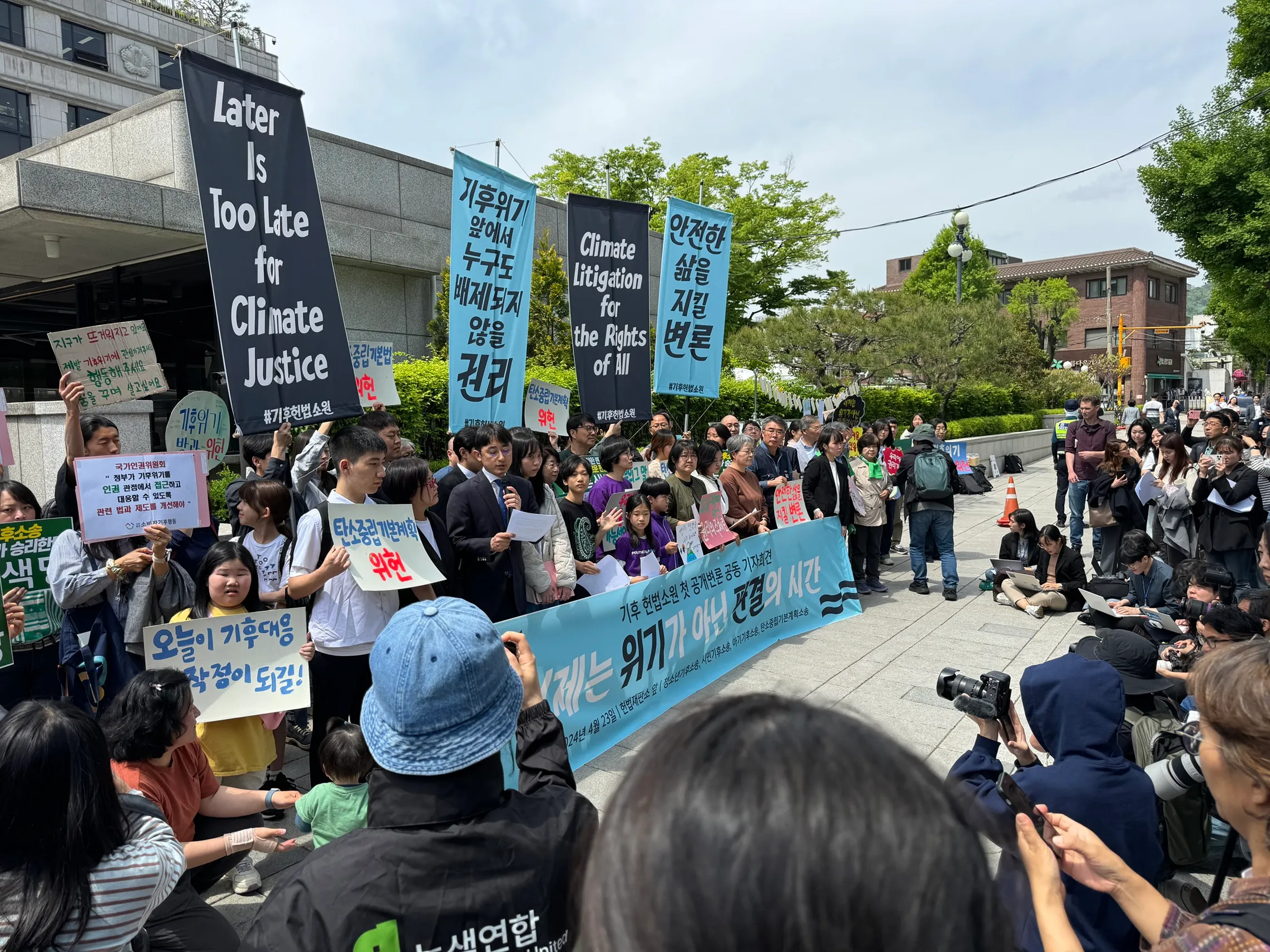
By Kim Won-sang (Media Communications, Solutions for Our Climate) · September 15, 2025In 2013, the film "The Attorney" surpassed 10 million viewers, and in 2022 the drama "Extraordinary Attorney Woo" saw its domestic ratings soar to nearly 20% and drew great popularity abroad as well. The reason a trial as drama is attractive is not simply genre fun. It is because a courtroom dispute is a narrative that most vividly reveals the themes of social justice, institutional contradiction, and the protection of the weak's rights, while at the same time containing the catharsis in which conflict is dramatically resolved through a verdict. The history of content that takes courtroom narrative as its material goes far back to ancient times. Trials presided over by gods in the Greek tragedies of the BC era, or the Judgment of Solomon handed down in the Bible, were the first scenes in which human society tried to resolve conflict through law and justice. This tradition continued into the early Hollywood era of the 1930s–40s, and the courtroom established itself as a stage with powerful appeal in film and drama.In Korea, as democratization progressed in the 1980s, the independence of the judiciary was institutionally guaranteed, and due process and legalism began to settle into daily life. As litigation became a relatively familiar subject to citizens, films and dramas began to use courtroom scenes as the climax of dramatic tension, and entering the 2000s, full-fledged courtroom works featuring lawyers and judges as main characters gained popularity, and over time the courtroom work firmly established itself as a genre. At the same time, it became a genre that reflects the changes in society.Watching "Woo," I was greatly moved and inspired. Seeing the news that Season 2 was confirmed and going into production, I wrote a proposal email to the head writer asking them to deal with climate litigation. It was because the thought came to me that, since what moves us as we watch courtroom dramas is, in the end, the fight for justice and rights, the case that best suits that stage in reality right now is precisely climate litigation. Putting on the courtroom, beyond the rights and wrongs of a particular individual, generations and society as a whole, and further the future of the Earth and humanity — could there be any story more dramatic than this? Unfortunately, at that time I did not receive a reply.[The joint press conference for the first public hearing of the climate constitutional complaint © Solutions for Our Climate]In the era of the climate crisis, demands containing the implementation of carbon neutrality and everyone's sustainability are also emerging clearly in the form of litigation. Courts around the world are facing lawsuits with no precedent or case law — claims that greenhouse-gas emissions have infringed on life, liberty, and property rights, or that sea-level rise has infringed on cultural rights or the right to housing. The climate problem has aspects that are unfamiliar or vast to handle within law's traditional framework. But because a challenge of the times that cannot be turned away from is dissolved within it, the majority of climate lawsuits are treated as significant not only by each country's judiciary but also in the media.Symbolic climate lawsuits are appearing in Korea too. There was a constitutional complaint filed against the state, with young people and various citizens as complainants, arguing that the government's response to climate change was not sufficient and thus infringed on the basic rights of citizens, including future generations. In August 2024, the Constitutional Court ruled that the level of the government's climate-crisis response partly violated the Constitution. This ruling was assessed as a historic milestone in climate litigation, both in Korea and internationally.This past August, too, a climate lawsuit that drew social interest appeared. Six farmers from across the country who grow apples, rice, tangerines, peaches, strawberries, and more filed a lawsuit for damages against the Korea Electric Power Corporation and five power-generation subsidiaries over harm caused by the climate crisis. This is greatly significant in that it is the first civil lawsuit in Korea to directly hold the corporate group with the largest greenhouse-gas emissions legally responsible for climate damage in the agricultural sector. Depending on the judiciary's judgment, it means that going forward, high-emitting companies — that is, the parties who actually contributed to the climate crisis — could directly or indirectly compensate those who suffered harm.[The press conference for the farmers' climate-damage compensation lawsuit held at Gwanghwamun © Solutions for Our Climate]The reason climate litigation is special does not lie simply in distinguishing the fault of one individual or company. Different in form though they are, climate lawsuits all converge on one question: the question of what kind of society we will move toward now. The inadequacy of the climate-crisis response, the responsibility of high-emitting companies, and the question of future generations' rights are all questions asking what kind of society we will move toward now. In that it is a verdict staking complex interests, a long-term time axis, and the fate of society as a whole, climate litigation is in itself a new narrative that can contain genre tension and emotion.Recently, the JTBC drama "Esquire" ended amid great viewer response. At the base of each episode's case was "love" in a broad sense. PD Kim Jae-hong explained the drama as "a drama that deals with law but ultimately talks about people." In fact, climate litigation is no different. The actions of farmers and fishers who lose their livelihoods due to the climate crisis, and of young people who worry about the future, also ultimately arise from the heart of wanting to protect people and lives. If today's conflict and tomorrow's hope intersect on the stage of the courtroom, that alone can make a story with enough resonance. This time, I intend to pester the production team to deal with climate litigation. If I use as a weapon the old connection continued since university days, might I not expect a slightly different result?By Kim Won-sang (Media Communications, Solutions for Our Climate)
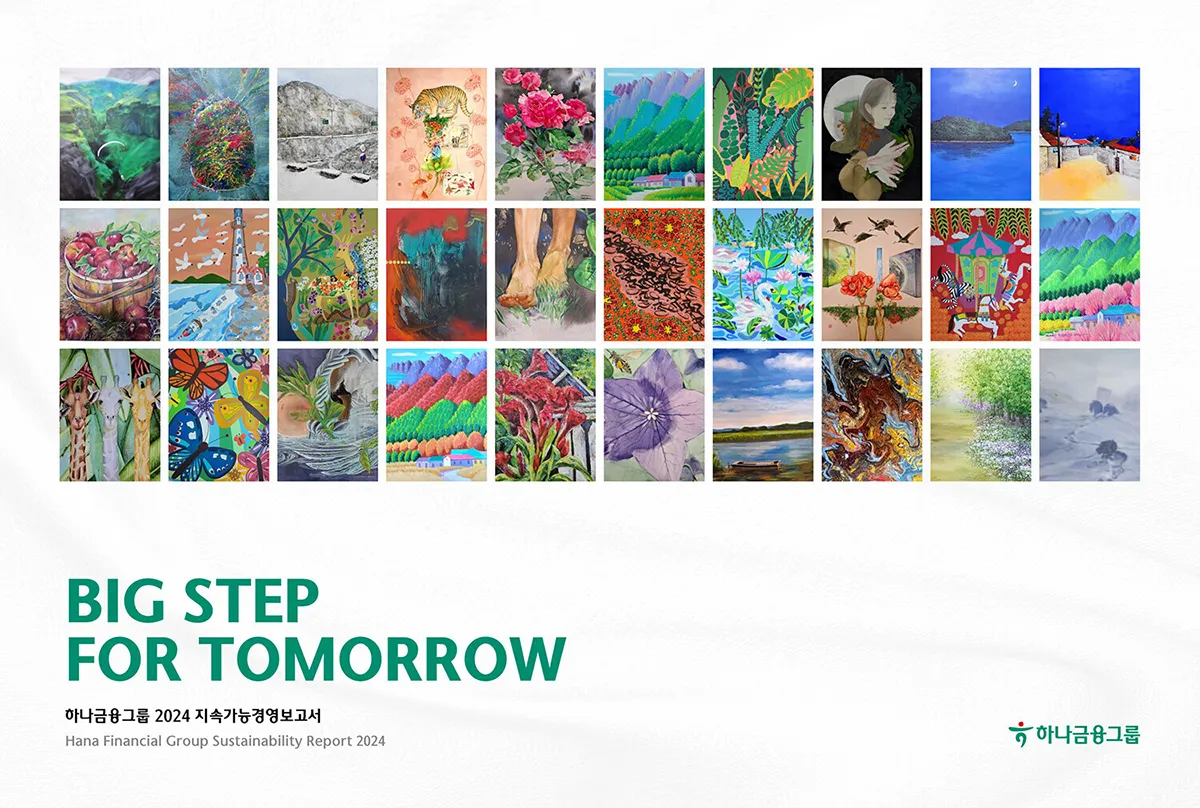
Manufacturing can have itS environmental contribution assessed by reducing the greenhouse gases and hazardous substances generated in the process of making products, or by using methods that emit no carbon at the supply-chain level. So then, how does a company that provides intangible services establish and implement an ESG strategy? Today, let us look at the sustainability report of Hana Financial Group, which dreams of "finance that grows together and shares happiness."[Hana Financial Group Sustainability Management Report © Hana Financial Group]BIG STEP FOR TOMORROWUnder the ESG vision "BIG STEP FOR TOMORROW," Hana Financial Group has selected and is implementing 3 mid-to-long-term strategies and 9 concrete goals. Each detailed goal follows 10 of the 17 Sustainable Development Goals (SDGs) presented by the UN.[The UN Sustainable Development Goals © UN SDGs]First, in the E (Environment) area, Hana Financial Group set the promotion of the transition to a low-carbon economic system as its mid-to-long-term strategy. To this end, in line with its coal-phase-out declaration, it restricts coal P/F (Project Financing, a financing method that raises funds against future revenue) and, while expanding ESG bond issuance, is expanding green finance and ESG-theme finance. Specifically, Hana Financial Group aims to raise a total of 60 trillion won by 2030 in the green and sustainable sectors, combining ESG bonds, loans, and investments. While providing funds to companies continuing eco-friendly moves, it also pursues a method of excluding carbon-intensive industries from its investment destinations. It induces businesses in high-carbon-emitting sectors to transition into eco-friendly companies by introducing carbon-reduction facilities or reducing carbon emissions themselves in order to attract investment. In addition, efforts continue to make the greenhouse-gas emissions generated at Hana Financial Group's sites zero by 2050. It has also set concrete goals of a 42% reduction by 2030 compared with 2020, and a 75% reduction by 2040. It plans to practice these goals by improving energy efficiency and expanding new and renewable energy.Finance That Contributes to Customers and SocietyHana Financial Group's mid-to-long-term strategy in the S (Social) area is "social contribution through finance." Hana Financial Group practices social contribution through two approaches: mutual-cooperation activities and social-contribution activities. Mutual-cooperation activities are divided into common programs and autonomous programs; a representative common program is the banking sector's common livelihood-finance support plan, decided through the Financial Services Commission's task force for preparing a banking-sector livelihood-finance support plan in December 2023. This is a plan to ease, to a certain level, the interest burden that rose after the end of the COVID-19 pandemic, providing interest refunds to borrowers holding sole-proprietor loans. Hana Financial Group provided a total of 194.4 billion won through the common program, and additionally provided 147.9 billion won through an autonomous program it prepared on its own, practicing total support of 342.3 billion won. In addition, by providing 294.5 billion won to social-contribution activities such as Mecenat (private-sector arts patronage), local-community and public-interest support activities, and microfinance activities, the scale of the social contribution Hana Financial Group made over the single year of 2024 reached 641.8 billion won.Meanwhile, Hana Financial Group is carrying out the "Hana Power On Project" as a social-value-creation program to practice the group's vision of "finance that grows together and shares happiness" and to create a society where all members are happy. This project is divided into a Challenge program that supports youth internships and start-ups, a Care program that supports the socially disadvantaged, and a Community program that supports areas that enrich life, such as sponsorship of sports and the arts.[Hana Financial Group's ESG project "Hana Power On" © Hana Financial Group]Among these, the Hana Power On Challenge program is Hana Financial Group's flagship social-value-creation program. This project is divided into "Hana Social Venture University," which raises young people's start-up capabilities; "Innovative Enterprise Internship," which connects social-innovation enterprises with people with disabilities, women with career gaps, and young job seekers; "Hana ESG Double Impact Matching Fund," which financially supports the growth of social enterprises; and "Second Life," which supports the continued economic activity and social participation of mid-career and older talent. The Hana Power On Challenge program, which encompasses various strata of society and all ages who have entered society — social enterprises, youth, the middle-aged and older — produces thousands of participants and participants who achieve real results each year, creating social value while also contributing to the diversity of social-value-creation activities.The Process That Raises the Value of ESG FinanceThe mid-to-long-term strategy in the G (Governance) area, ESG's final area, is decision-making based on transparency and responsible management. To systematically manage environmental and social risks in the loan and investment decision-making process, Hana Financial Group operates an Environmental and Social Risk Management Framework (ESRM). ESRM is a standard for identifying, assessing, and managing the potential environmental and social risks of corporate finance, investment and advisory services, project finance, and securities-issuing institutions, based on Hana Financial Group's policy and industry policy. It also added an effort to strengthen the system by applying the K-Taxonomy (the Korean-type green taxonomy) to the standard it established on its own. Through this process, Hana Financial Group can manage the group's portfolio in a more environmentally friendly way.[Hana Financial Group's ESG financial services © Hana Bank Corporate Banking]In addition, Hana Financial Group provides services that help other companies with sound ESG management by supporting the various procedures needed for ESG management. At Hana Bank's Corporate ESG Lounge, since ESG management is directly linked to a company's investment attraction and regulation, companies can receive consulting services in which the financial company itself resolves ESG-management difficulties and presents customized solutions. It also helps companies' ESG transition and expansion by providing various services that are needed for ESG management but were not easily accessible — such as a greenhouse-gas emissions calculation program and corporate ESG education. Beyond this, Hana Financial Group operates various systems and guidelines for customers of all strata of society who use its products and services — such as operating mobile branches for the elderly, supporting Gyeonggi Province's child meal cards to address meal blind spots, introducing text-consultation-only tablets for hearing-impaired and hard-of-hearing customers, and introducing braille security cards for the visually impaired. Because financial life is a service used by everyone living in society, Hana Financial Group continues multifaceted activities to make finance where "everyone" is happy — not only customers, employees, and business owners, but reaching to the environment and society. If you are curious about what Hana Financial Group has done to become finance that grows together and shares happiness, take a look at Hana Financial Group's sustainability report. by Editor L
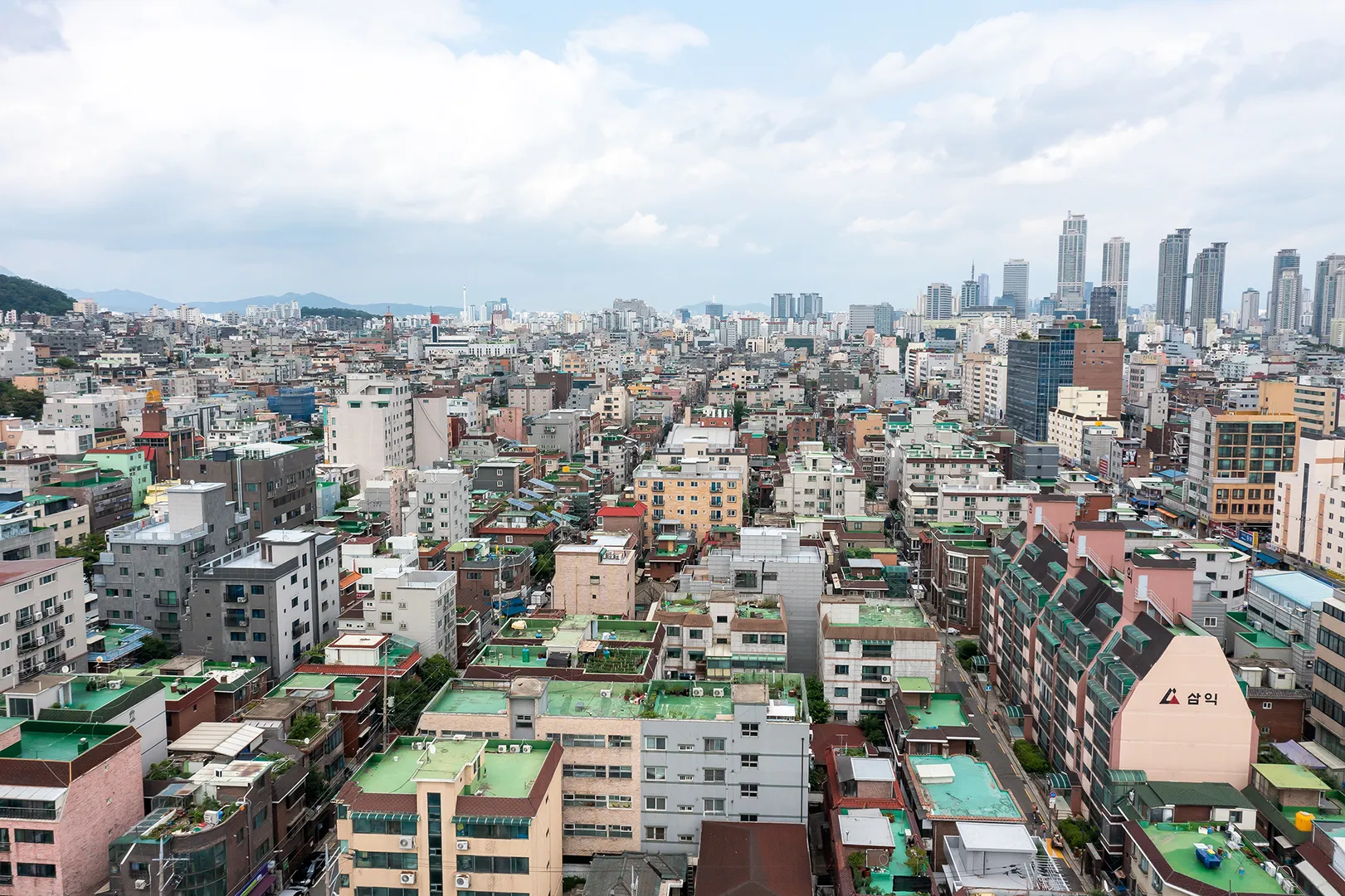
27.3 people per 100,000 population. It is the figure for the number of people who took their own lives over the single year of 2023. Although it has been on a downward trend since 2010, it is about twice the OECD average. Statistics that the proportion of self-harm/suicide patients visiting emergency rooms recently increased 3.6-fold over ten years — and surged especially among people in their teens and twenties — became known, adding to the shock.September 10, 2025, marks the 22nd year since World Suicide Prevention Day was established, but Korea's suicide rate is still high and does not show a meaningful decline. However, over the past 20-odd years, many points have certainly changed. Our society has begun to accept suicide and self-harm not as an individual problem but as something that the state, local communities, and private institutions must cooperate to solve. Also, suicide-prevention safety nets and campaigns tailored to the individual characteristics of women, adolescents, and sexual minorities are being carried out. Let us look at cases in 2025 of people reaching out to one another.[Graph of Koreans' suicide rate from 2003 to 2023 © Statistics Korea (Index Nuri)]A Neighbor's Life, Protected by the Local CommunityFor a helping hand to properly reach the high-risk group for suicide, neighbors' attention is essential. The "Life-Respecting Safe Village" project, run jointly by the Ministry of Health and Welfare and the Korea Foundation for Suicide Prevention, actively draws out local-community cooperation. Various institutions — neighborhood clinics, cram schools, supermarkets, police boxes, and more — detect people showing warning signs of suicide early and connect them to specialized institutions. As of 2024, this project is being implemented in 56 cities, counties, and districts nationwide, and the number is increasing.Gangseo-gu in Seoul designated Hwagok 1-dong and Hwagok 8-dong as "Life-Respecting Safe Villages" this past April. Both have a high proportion of single-person households and are representative densely housed areas within the district. Strengthening patrols of frequent suicide locations, monitoring the sale of dangerous drugs at pharmacies within the area, and carrying out respect-for-life campaigns and education in parallel were key to the selection. In particular, Gangseo-gu previously led a suicide-prevention project successfully by designating "Gayang Complex 4 Apartment," which had a high proportion of single-person households aged 60 and over, as a "Life-Love Safe Apartment" back in 2021, adding to the expectations.[Hwagok 8-dong and others, designated as "Life-Respecting Safe Villages" © Gangseo-gu Office]Incheon Metropolitan City is also implementing a similar "life guardian (gatekeeper)" project. In Incheon, selected as an "excellent local government for suicide prevention" for three consecutive years since 2022, 2,632 "field-specific life guardians" are active. The drivers of the "Life-Love Taxi," operated for the first time in the country in 2017, played a big role in suicide prevention by listening to passengers' hearts and, when there was a problem, connecting them to specialized institutions. Starting with this, Incheon expanded the "field-specific life guardian" project by connecting various occupations and spaces — "Life-Love Pharmacy," "Life-Love Hospital," "Life-Love Cram School," "Life-Love Lodging," and more. Many cases continue — a cram-school director discovering signs of a student's self-harm and helping with treatment together with the parents, or a pharmacist listening to a customer's complaints of depression and insomnia, offering comfort, and connecting them to psychiatric treatment. The city is focusing in particular on continuous education for life guardians and on operating a system that links them to specialized support.The mental-health support project of the Korea Land and Housing Corporation (LH), which received a Minister of Health and Welfare commendation at the "2024 Mental Health Day Ceremony," also has the institution act as a neighbor to residents, saving the lives of residents in crisis. The "Mind Health Committees" of 1,160 rental-housing complexes nationwide — composed of management-office heads, welfare officials, mental-welfare centers, public-health centers, and other public and outside experts — identify and support residents at mental-health risk. Over one year, they helped 1,128 residents suffering from depression and hoarding disorder. In one example, a rental apartment in Jeungpyeong-gun visited a household that was behind on maintenance fees and out of contact, discovered a resident in crisis due to hoarding disorder, and provided support. Twenty local-community volunteers cleared the trash together, and the institution added financial support, so that neighbors in various forms are helping toward a hopeful life for a resident in crisis.Distinctive Companies and Institutions Spread the Message of Respect for LifeThe MOU signed in 2022 by the Ministry of Health and Welfare, TikTok, and the social-welfare corporation Lifeline Korea is a good example of public-private cooperation for suicide prevention. Lifeline Korea, the country's first telephone-counseling institution, and TikTok, the global video platform most used by teens, developed a "respect-for-life education program for teens" with the solid support of the Ministry of Health and Welfare. Contrary to worries that it might be an MOU merely for a "suicide-prevention TikTok challenge," the three institutions joined forces to create a substantive program over five months. "Life-Love, Care for Me" is an 8-hour program for late adolescents, in which young people strengthened their psychological and emotional functioning by creating outcomes themselves. By September 2023, more than 9,000 students had participated in "LaLa," a group education program for middle-school students. Even after the project, TikTok and Lifeline Korea continue their partnership. TikTok participated as a sponsor in the "Life-Love Night Walk" campaign co-hosted by Lifeline Korea and KBS. Lifeline Korea participated in the "TikTok Korea Creator Summit 2025," presenting to TikTok creators the mental-health problems within digital media and directions for solutions, and guiding them to a list of resources usable in crisis situations.[The "Ongi Mailbox" installed at CGV © CJ Newsroom]The incorporated association "Ongi," which runs the nonprofit "Ongi Mailbox" project — in which, if you put in a letter about your worries, a volunteer "Ongi postman" replies with a handwritten letter — has had a business agreement with CGV since 2021. Located at 21 CGV theaters, it seeks to build a psychological safety net for society and helps people ease feelings of depression in an everyday space to recover their mental health. The worry-letters delivered in this way numbered more than 6,000 over the single year of 2023. The incorporated association Ongi cooperates continuously not only with companies but also with public institutions. The mailbox at a memorial park operated by the Seoul Facilities Corporation is greatly meaningful in comforting those with the pain of loss. When a letter arrives expressing extreme depression, psychological-counseling volunteers write a first reply and connect the person to a mental-health center in their area. Companies, institutions, and the incorporated association cooperate to go beyond the act of exchanging comfort of the heart, building even concrete suicide-prevention measures.Beyond simply crying out that "life is precious," the voices heard on Suicide Prevention Day in 2025 are more concrete and warmer. Local communities look out for one another, provide suicide-prevention education tailored precisely to those concerned, and naturally spread the preciousness of life through various campaigns. In order to live together, it is time for everyone to join hands. by Editor L